Saturday, November 28, 2026
Home Blog Page 963

Senators fault Buhari’s budget, vow overhaul

0

    Lament higher debt servicing, lower capital expenditure
Say projection on increased oil production flawed
Fiscal plan is focused, APC chieftain insists

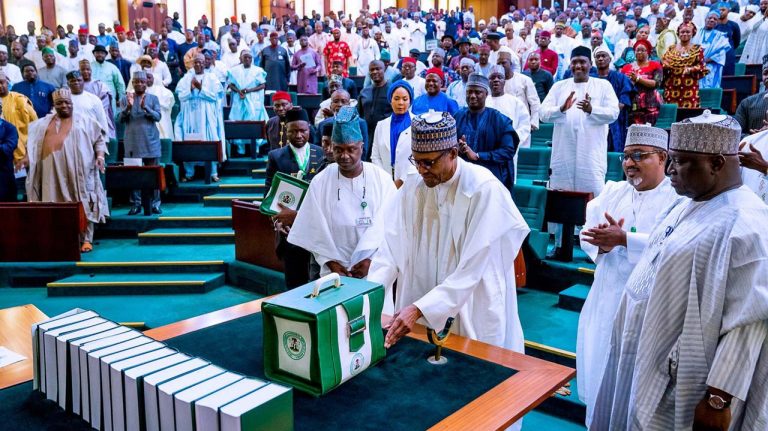
Senators yesterday criticised the N10.33 trillion 2020 budget presented by President Muhammadu Buhari for lacking the capacity to boost growth, declaring they would “take over” and “redirect” the economy.Leading the debate, Senate Majority Leader Yahaya Abdullahi said: “The Capital Budget to GDP Ratio is rather too small, (about two per cent of GDP).” According to him, “The injection of this amount is a mere drop in the ocean and is incapable of stimulating the economy to higher growth, wealth creation and employment generation.”

He noted: “The projections of increased oil production averaging 2.18 million barrels/day, in the medium term, are subject to very high risks that have had devastating consequences in recent times. Volatility, both at the international market and in the Niger Delta, is a factor that could make these expectations only tentative.”

Abdullahi reviewed the allocation for capital development in the budget bill, saying: “When viewed in terms of per capita, the 2020 capital expenditure of N2.46 trillion, is paltry.” He argued that the projected high deficit of N2.18 trillion for 2020 is a direct function of the economy-wide revenue shortfall, as well as the choice and cost of borrowing.

“Government, particularly the collecting agencies, must improve on their collection capacity. But to do this, there must be robust investments in the real sector so that it could grow to earn taxable revenues.”He faulted the Central Bank of Nigeria’s “baffling” pursuit of restrictive monetary policy “in the face of a clear economic necessity to reflate the economy, particularly by ensuring cheap money to power the real sector of the economy.”

“I have, on the floor of this chamber, repeatedly called for the realignment of the country’s monetary and fiscal policies to ensure the right structural momentum in the economy,” he said.

Minority Leader Enyinnaya Abaribe rose to speak thereafter, thanking Abdullahi for making his (Abaribe’s) job easier. He described a fiscal plan as “nothing but a budget of taxation,” wondering how Buhari could talk about job creation, having failed to invest in things that create jobs.He said: “Debt servicing, as a component, is higher than capital expenditure,” noting that the projected growth, as read by the president, is 1.9 per cent less than the population growth of 2.6 per cent.

“So, if you look at it globally, we are still struggling. That is why I was very happy when the Senate Leader said we may have to take over and redirect the economic policy of this government, having seen that the executive has not done anything.”Senator Gabriel Suswam warned that the economy should not be allowed to deteriorate further. “Our economy has come to a level that this Senate needs to take over and redirect its affairs,” he said. He further expressed concern that persistent borrowings would increase budget deficit.

Former Deputy Senate President Ike Ekweremadu advised lawmakers to fashion out a good budget that would grow the economy. “The president has done his job,” he said but added: “It is left for us to subject the budget to legislative scrutiny. We can’t blame the president if we fail to subject the budget to scrutiny.”

He further expressed disappointment that at a time the nation is seeking ways of diversifying its economy, the budget failed to place ample emphasis on solid mineral development.On his part, Senator Adamu Alewo (APC, Kebbi State) regretted that the budget does not address poverty. “The level of poverty is still very high therefore we should monitor whatever vote is allocated for social investment programmes,” he said.

He suggested increasing the benchmark from $57 per barrel to $60 per barrel to tackle poverty. He also urged the National Assembly to address the imbalance in the distribution of projects across geo-political zones.Senator Thompson Sekibo (PDP, Rivers) said Buhari should have pegged the budget at N8.1 trillion, advising: “Let us restrict ourselves to the money we can generate.” Besides, he noted that the president’s statistics on GDP and inflation reduction are very unrealistic.

In another reaction to the budget, the Chairman of the Society for Analytical Economics, Prof. Godwin Owoh told The Guardian that the president should have reflected the expected half-year spillover that would be cut off in the event that the 2020 plan comes into force on January 1 next year.

“There should be a quantitative recall of the cut-off value, so that it can be reflected on the spending items of the current budget, failing which might lead to abuse because this is already approved spending. Alternatively, he has to present a bill to extinguish the spillover spending, to avert a situation where this spending will be outside the government’s financial control and might affect economic variables,” Owoh said.

But the budget received commendation from Alhaji Shehu Kawo, a chieftain of the ruling All Progressives Congress in Niger State, who described it as “well focused.”

Speaking during an interview with the News Agency of Nigeria (NAN) in Minna yesterday, he said the content of the budget and its distribution to various sectors evidenced commitment, seriousness and transparency.He added that the early submission of the budget to the National Assembly would give the lawmakers ample time to work on the proposed estimates.
 

Brazil identify Iwobi as Nigeria’s potential threat on Sunday

0

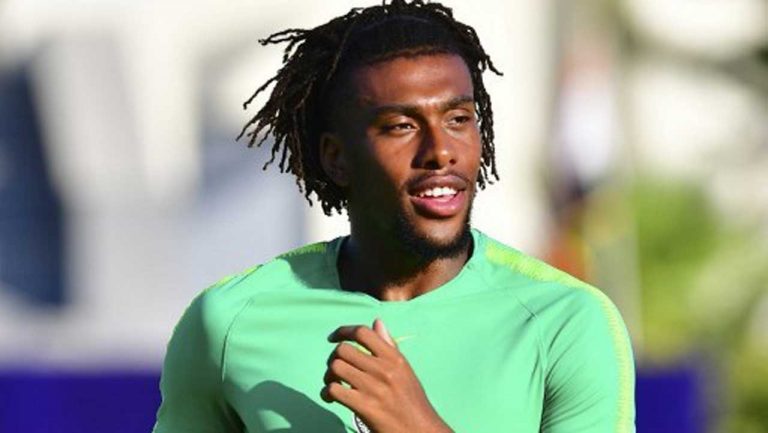
Brazil assistant coach Cleber Xavier feels Everton forward, Alex Iwobi is the man to watch out for when his team faces Nigeria in an international friendly match the National Stadium in Kallang, Singapore on Sunday, reports goal.com.

The two sides will be meeting for the second time ever, having previously played against each other in 2003 when Brazil won 3-0 in Abuja.Nigeria arrive in Singapore with in-form forwards Emmanuel Bonaventure Dennis of Club Brugge and Lille’s Victor Osimhen, but Tite’s assistant coach Xavier has picked Iwobi as Nigeria’s danger man.

“At Nigeria, Iwobi plays more of an inside role as a second striker than at Everton,” Xavier told BBC Sport.“He is the link in the counter-attack, drags opponents out of position and infiltrates well in the box.”Before playing the Super Eagles, Brazil will first clash with Senegal on Thursday.
Xavier feels Nigeria and Senegal provide the challenge they need to prepare for the 2022 Fifa World Cup qualification campaign

“Nigeria defend less than Senegal. The Senegalese are more about positioning with [Idrissa] Gueye marking strongly,” he added.“These two friendlies and the two November friendlies will allow us to test new players and to adjust and tweak some tactical details in attack and defence.“We did this in the preparation for the Copa America. We succeeded in the objective of winning and did so unbeaten.”For Nigeria and Senegal, they will be preparing for the 2021 Africa Cup of Nations qualifiers, which begin in November.

Meanwhile, Ola Aina has been ruled out of the match against Brazil. According to the Nigerian Football Federation (NFF), Aina picked up an injury after a domestic accident and will not be available for this weekend’s clash as a result. Aina has made 10 appearances for Italian Serie A club Torino across all competitions this season, coming off the bench in the club’s goalless draw at home to Napoli this past weekend. Nigeria return to action for the first time since holding Ukraine to a 2-2 draw in Dnipro, having ended third at the 2019 Africa Cup of Nations hosted in Egypt in July.

Aina played the full 90 minutes in Ukraine, having featured five times at the 2019 AFCON, including the bronze medal match in which the Super Eagles beat Tunisia 1-0 thanks to an Odion Ighalo goal. The players in the Nigerian camp, which opened yesterday in Singapore, are goalkeepers Francis Uzoho (Omonia FC, Cyprus); Ikechukwu Ezenwa (Heartland FC); and Emil Maduka Okoye (Fortuna Dusseldorf, Germany).

Also in the team are defenders Abdullahi Shehu (Bursaspor FC, Turkey); Chidozie Awaziem (CD Leganes, Spain); William Ekong (Udinese FC, Italy); Tyronne Ebuehi (SL Benfica, Portugal); Jamilu Collins (SC Padeborn 07, Germany); and Oluwasemilogo Ajayi (West Bromwich Albion, England).Iwobi (Everton FC, England) leads the midfield, which also has Anderson Esiti (PAOK Salonica, Greece); Oghenekaro Etebo (Stoke City FC, England); Wilfred Ndidi (Leicester City, England); Joseph Ayodele-Aribo (Glasgow Rangers, Scotland); and Ramon Azeez (Granada FC, Spain).

The forwards are Victor Osimhen (Lille OSC, France); Moses Simon (FC Nantes, France); Samuel Chukwueze (Villarreal FC, Spain); Efosa Solomon-Otabor (PFC CSKA Sofia, Bulgaria); Paul Onuachu (KRC Genk, Belgium); Emmanuel Dennis (Club Brugge, Belgium); and Peter Olayinka (SK Slavia Prague, Czech Republic).


Buhari inaugurates economic team, urges reliable data

0
  • Promises inclusive administration, receives Tor Tiv
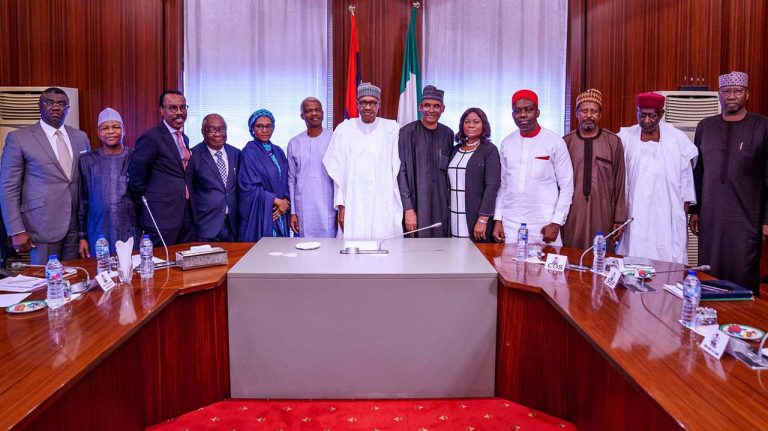
    President Muhammadu Buhari yesterday inaugurated members of the newly constituted Presidential Economic Advisory Council (PEAC) with a charge for reliable data that truly reflect the happenings in the country. He told the eight-man team chaired by Prof. Doyin Salami that: ‘’As you develop your baseline study, I would like you to focus on primary data collection.”

The president continued: ‘’Today, most of the statistics quoted about Nigeria are developed abroad by the World Bank, IMF and other foreign bodies.
‘’Some of the statistics we get relating to Nigeria are wild estimates and bear little relation to the facts on ground.

On the Social Investment Programmes (SIPs), he told members of the panel that his administration was working to measure the impact of the scheme targeted at improving the well being of millions of poor and vulnerable citizens.

Consequently, he directed the Minister for Humanitarian Affairs to commence a comprehensive data-gathering exercise in all Internally Displaced Persons (IDP) camps in the North East.

The president also ordered the advisory council to coordinate and synthesize efforts to lift 100 million Nigerians out of poverty in 10 years in collaboration with the various employment-generating agencies of government.He assured the panel of his administration’s readiness to meet its needs and requests before the next technical sessions in November.

In a related development, the president has promised to “carry everyone along on my last lap as a democratically elected leader.”He gave the assurance yesterday while some of the ministers who served under him as military Head of State between December 31,1983 and August 27,1985 visited the State House.

Also yesterday, the president decried the incessant herders-farmers clashes in parts of the country, blaming the development on social and cultural factors “grossly misunderstood as religion.” He spoke when he received a delegation of the Benue State Traditional Council led by the Tor Tiv, Prof. James Ayatse, at the Presidential Villa, Abuja. Buhari appealed for better understanding of the nation’s diverse cultures in order to engender healthier co-existence among the people. He restated the commitment of his administration to the unity of Nigeria.


We’re ready to pay new minimum wage, says Okowa

0

Governor Ifeanyi Okowa of Delta State has reiterated his administration’s readiness to pay the new N30,000 minimum wage once the Federal Government and organised labour finalise negotiations.He urged the organised labour to always disseminate appropriate information to the workers for industrial harmony in the polity.

Okowa stated this in Asaba yesterday when the new executive council members of Trade Union Congress (TUC) in the state visited him. The governor, in a statement by his Chief Press Secretary, Mr. Olisa Ifeajika, told the labour leaders that if they worked hard and made their mark, the people would recognise and appreciate them.

He expressed the belief that for the society to progress, there should be peace in the work place.“There has to be a lot of partnership between government and workers; when the partnership is real, the people will enjoy the benefits of government. So, organised labour should disseminate necessary information to workers to boost the partnership between workers and government.

“We need to re-assure Deltans and the working class that we will do our best to uplift the standard of living and ensure development in the state,” Okowa said.The chairman of TUC in the state, Martins Bolum, thanked the governor for his numerous achievements, and pledged that trade unions would help in enlightening workers on government’s activities.

In another development, the governor has urged the church to engage more in soul-winning programmes, as true Christians will become change agents in the society.He stated this yesterday in Asaba when the General Overseer of Omega Fire Ministry, Apostle Johnson Suleiman, visited him.

The governor said that the world was witnessing challenges, hence the need for more religious crusades to win souls that would contribute to national rebirth.“The global challenges have impacted on us as a nation and it calls for prayers; the church should continue to pray for our nation and keep hope alive.

“We must continue to intercede for our country, as God will make things better for us. We are happy that the prayers said at crusades not only win souls but also touch our land spiritually and positively. This soul-winning will help in the development of our society, because the people who are converted will become agents of change.”Earlier, the cleric had said that he was in Asaba for a crusade and thanked the governor for the enabling environment, which made it possible for such activities to take place.He described the governor as a “Godly man” who provided positive leadership in the state.


Criticism trails renewal of 42 oil block licences

0
  • ‘Nation risks being hugely shortchanged’
    • How govt should handle it, by stakeholders
    • Reps move to check crude oil theft

Stakeholders, including civil society organisations, have raised the alarm that the country risks being greatly shortchanged in the way the Federal Government is renewing licences for 42 oil blocks held by international and indigenous companies.The Petroleum Act of 1969, as well as the Petroleum (Drilling & Production) Regulation of 1969 (as amended in 2001), authorises the minister of petroleum resources to renew oil licences once statutory payments in terms of applicable royalty, concession rentals and fees are paid.

But the stakeholders argued that renewing the licences without passing the Petroleum Industry Bill (PIB) remained a major setback for the country.
Some civil groups, including the Policy Alert and Human and Environmental Development Agenda (HEDA) which noted that eagerness to encourage investment had led the Federal Government to negotiate lower rates for taxes and royalties, thereby shortchanging the country of enormous revenues, said Nigeria must no longer be in a hurry to renew or re-award the licences of expired oil blocks.

The blocs include 35 oil mining licences (OML) and seven oil prospecting licences (OPL), some of which expired between August and September this year, while others are due to expire this October.

A former Minister of State for Petroleum Resources, Dr. Ibe Kachikwu, had told The Guardian that all oil blocs that were due for renewal would be approved by the first quarter of the year, adding that over $2 billion was generated from the renewal to enable the country to finance its budget. Earlier this year, the Federal Government said there were no irregularities in the ongoing renewal of the licences.

In a document obtained from the groups yesterday, they insisted that the Federal Government must exhibit the highest standards of transparency, fairness and accountability in the entire process.

They demanded publication of the rules for the award of the various licences, including timelines and application requirements, clear technical and financial criteria against which companies are being assessed, and information about appeal processes.For the process to follow international best practice, the groups urged government to publish the names of all the companies applying for the oil and gas prospecting and mining licences, including during prequalification

They also asked government to request and disclose information on the beneficial owners of bidding companies and use the information to screen applicants for conflicts of interest and corruption risks at the point of prequalification or prior to licence award.To them, there is the need for oil communities to be carried along on the awards, especially on matters that directly concern the community, including community development agreements as well as documents on environmental and social impact assessments (ESIAs) and environmental and social management plans (ESMPs) for all future licences

“Government must publish the current and historic owners and operators of all oil blocks, including marginal fields and transferred licences, and the total reserves of oil and gas, including total amounts recovered thus far and total revenues outstanding.“There is the need to disclose for each oil block licence awarded, the full text of the main agreements/contracts, as well as annexes and amendments in user-friendly and machine readable formats in line with Nigeria’s open contracting commitments at the 2016 U.K. Anti-Corruption Summit and the Open Government Partnership (OGP).”

According to them, Nigeria has lost billions of dollars in potential revenue due to the continued refusal of government to conduct an open and competitive bid round for oil blocks in the country.“The country especially missed the opportunity of conducting a licensing round during the oil boom years of 2010 to 2014. In the last 12 years, no competitive oil licensing round has been held for Nigeria’s oil blocks, and even those before that period were riddled with controversy. The executive discretion, cronyism and lack of openness that have characterised decision-making around the award of blocks over the years have driven down competition, fuelled massive corruption and adversely affected returns to Nigeria from the sector,” the groups said.

The Chief Executive Officer of Degeconek and former president of the Nigerian Association of Petroleum Explorationists (NAPE), Abiodun Adesanya, said there was the need for improvement in the processes of the renewal and re-award of oil blocks, insisting the country could be shortchanged if the process was not scientifically proven.

Calling for adequate capacity for the DPR, Adesanya noted that there was the need for accurate and detailed data that would enable government to negotiate and get the best value for Nigerians on the rent collected from the process.He also asked DPR to pay attention to mandatory work presentation, which is made yearly by the oil firms to determine the value of the blocks.“It is from that opportunity that clear rent value can be determined. Instead of a flat rent, the process should be based on what the opportunities or potential are. That way, Nigeria will benefit the more.

There is the need for fairness and transparency,” Adesanya said.Professor of Geology, Nuhu Obaje, had earlier told The Guardian that poor acreage evaluation in the country, created challenges for oil blocs allocation.Projecting that legal tussles might ensue should the prevailing challenges remain unaddressed, Obaje said the gaps in acreage evaluation played some roles in the challenges the country was facing in the controversial Malabu oil deal, as well as the rift between Famfa Oil and Agbami.

The Associate Director, Energy, Utilities & Resources, Habeeb Jaiyeola, said that ongoing licence renewal presented the government an opportunity to fix the mistakes that were made when the blocs were awarded.

According to him, the government must check for technical as well as financial capacity, and must not offer or renew the licences of companies that have not made the best of the offer.The Head, Public Affairs at DPR, Paul Osu, stated that the early renewal policy introduced by Kachikwu helped in addressing some of the issues in the process.

According to him, there is a new angle to the process, where people are able to renew early instead of waiting for the blocs to expire.The document obtained from the civil organisations, which cited the Department of Petroleum Resources (DPR) 2017 oil and gas annual report, listed the licences as OML 29, OML 117, OML 18, OML 114, OML 24, OML 116, OML 40, OML 42, OML 26, OML 34, OML 64, OML 65, OML 66, OML 30, OML 115, OML 4, OML 38, OML 41, OML 11, OML 17, OML 20, OML 21, OML 22, OML 23, OML 25, OML 27, OML 28, OML 31, OML 32, OML 33, OML 35, OML 36, OML 43, OML 45 and OML 46. Others are OPL 322, OPL 2012, OPL 247, OPL 2005, OPL 2006, OPL 281, and OPL 248.

Meanwhile, the House of Representatives has restated its resolve to tackle crude oil theft in the country and also ensure that revenue derived from petroleum products is remitted to the Federal Government for development projects.The chairman of the ad hoc committee on crude oil theft, Peter Akpatason, who reaffirmed the resole yesterday at the inaugural meeting of the panel, decried the age-long menace allegedly perpetrated by cartel.

Akapatason, who doubles as the deputy leader of the House, lamented the alarming rate of oil theft in recent time and recalled that the Federal Government under the leadership of former President Olusegun Obasanjo set up a committee to look into oil theft in 2001, which reported that the stealing by a group of highly placed persons posed a threat to the oil sector.He said the committee would kick off its investigation from the perspective of the 2001 report to determine those perpetrating the act and put in modalities to put a stop to it.


EXPOSED: How Buhari Illegally Extended Service Of Nephew In Police Force By 3 Years

0

It was gathered that Dauda was illegally promoted twice in three years and his promotion was influenced by President Buhari. The leaked memo, approving his extension in service, which was signed by the Secretary of the Nigeria Police Force, AIG Usman Alkali, with reference number DTO:041500/10/2019, noted that Dauda, a Commissioner of Police, would remain in service till 2023.

A leaked memo has revealed how President Muhammadu Buhari recently approved and ordered the Nigeria Police Force to extend the stay of his nephew, Abdulkarim Dauda, in the force by three years.

Dauda is currently serving as the Personal Chief Security Officer (PCSO) of Buhari.

Dauda, who is directly related to Mamman Daura, removed the name Daura from his public documents to avoid public suspicion.

Dauda joined the force in 1985 and he is due for retirement from active service in January 2020 but his stay was extended by three years.

It was gathered that Dauda was illegally promoted twice in three years and his promotion was influenced by President Buhari.

Dauda also gained rapid promotion from the rank of Chief Superintendent of Police in 2015 to become the Commissioner of Police in just four years.

The leaked memo, approving his extension in service, which was signed by the Secretary of the Nigeria Police Force, AIG Usman Alkali, with reference number DTO:041500/10/2019, noted that Dauda, a Commissioner of Police, would remain in service till 2023.

The memo reads in part, “Extension of Service P.No 23853 COMPOL Abdulkarim Dauda (CP) X. The President X Commander in Chief of the Armed Forces X Chairman Police Council X has graciously approved the extension of service of CP Abdulkarim Dauda to May 13, 2023, X When he would have attained sixty (60) years of age X COMPOL Info-Tech only X Amend your records X please.”

The extension of Buhari’s nephew has added to the existing spat between the Nigeria Police Force and the Police Service Commission. Leaked Memo SaharaReporters Media

The PSC had ordered that no recruitment should be done to the force but the inspector general of police continued boasting he has the backing of Buhari.

This spat has stalled the promotion of officers in the force and has affected the administrative duties of the force.

DIG in charge of Training and Development, Yakubu Jubrin, was queried for misconduct by the PSC for the recruitment process.

He has had approached the National Industrial Court seeking an order to restrain the commission from sacking or demoting him.

The PSC also accused the DIG of making disparaging remarks against the commission’s Chairman, Alhaji  Musiliu Smith, and a member of the board in charge of recruitment, Austin Braimoh.

The plaintiff in suit no. NICN/ABJ/294/2019, also sought a declaration of the court that the  PSC could not subject him to further disciplinary measures or dismissal.

The suit filed by his lawyer, Alex Izinyon (SAN), stated that the Attorney General of the Federation and Minister of Justice, Abubakar Malami (SAN), had informed the police that they had the mandate to handle the recruitment of 10,000 constables as directed by  Buhari.


INEC to list 23 parties

0

THE Independent National Electoral Commission (INEC) has confirmed that 23 parties will be listed on the ballot papers for the November 16 governorship election in Kogi State.

Making the clarification during a workshop for journalists and media influencers, on the 2019 Kogi governorship election, on Wednesday, in Lokoja, the National Commissioner and Chairman, Information and Voter Education Committee, INEC, Mr. Festus Okoye, disclosed further that of the total 92 registered parties in Nigeria, 64 conducted primaries in readiness for the Kogi governorship poll, at the end of which 49 filed their nominations, out of which 41 were valid, while 18 withdrew.

He said 23 parties would be on the ballot papers on the election day.

Okoye said that notice of the poll will be given on November 2, adding that any party that fails to submit the names of its agents for the election; such will not be accepted thereafter. Campaigns, he said, would end on November 14.

Okoye said INEC will train 16,139 ad-hoc workers for the exercise, besides creating 3,508 polling points across the 21 local governments.

He urged the media and other stakeholders to arm themselves with the relevant laws guiding the electoral process.

Okoye solicited partnership between INEC and the media, as well as effective coverage of the election, asserting that it is a panacea for peaceful and sustainable democracy.

“The media is indispensable in the task of nation building and instituting democratic and electoral order in Nigeria. This task is a national imperative, as the business of conducting credible election is a shared responsibility of all the critical stakeholders in Nigeria. Media practitioners are critical stakeholders in the electoral process, with the constitutional responsibility of holding the government accountable and acting as the tribunal of the people,” he said.


Nigerian Stock Exchange, Luxembourg Stock Exchange sign MoU to expand the green bond markets

0

The Nigerian Stock Exchange (NSE) and the Luxembourg Stock Exchange (LuxSE) have signed a Memorandum of Understanding (MoU) to cooperate in promoting cross-listing and trading of green bonds in Nigeria and Luxembourg.

The announcement was made at the signing ceremony led by NSE CEO, Oscar N. Onyema OON and LuxSE CEO, Robert Scharfe, which took place during the annual meeting of the World Federation of Exchanges in Singapore.

The MoU further establishes an agreement for the two exchanges to collaborate with a view to sharing best practices and organizing joint initiatives in their respective markets.

According to Oscar N. Onyema OON, Chief Executive Officer of The Nigerian Stock Exchange: “This collaboration reinforces NSE’s drive to foster the growth of sustainable finance in Nigeria, a journey that commenced with the launch of the first Sovereign Green Bond by NSE, in partnership with the Federal Ministry of Environment, Federal Ministry of Finance and the Debt Management Office. With the MoU, issuers will enjoy the benefit of increased visibility through the cross-listing of their securities in Nigeria and Luxembourg. The partnership will further facilitate the growth of the Green Finance industry in Nigeria and ultimately deepen the Nigerian capital market through the mobilization of the foreign green capital needed to fund sustainable projects in Nigeria.”

Robert Scharfe, CEO of LuxSE added: “Sustainable finance is becoming a truly global movement. By joining forces with other exchanges to promote and facilitate green finance, we strive to accelerate the sustainable finance agenda and increase awareness of and interest in investment projects that support the sustainable development that our world needs. We are pleased to cooperate with the Nigerian Stock Exchange to further strengthen sustainable finance in and between our markets.”

The Nigerian Green bond market received international recognition following the issuance and listing on the NSE of the ₦10.69bn Federal Government sovereign green bond in December 2017. This issuance sparked significant interest from the international and local capital market communities as it opened new investment opportunities, especially for domestic investors, to increase their exposure to financial instruments that generate social and environmental impact.

The Luxembourg Stock Exchange operates the Luxembourg Green Exchange (LGX), a platform exclusively dedicated to sustainable finance instruments. LGX now holds a 50% global market share of listed green, social and sustainability bonds. LuxSE works closely with selected stock exchanges around the world to support the growth of sustainable finance.


Nigeria: Oil Pipeline Vandalism Rises By 115% – NNPC

0

Abuja — The Nigerian National Petroleum Corporation (NNPC) has said that the rate at which pipelines of major oil companies are sabotaged in Nigeria has continued to increase, stating that it rose by 115 per cent in July 2019.

In a statement issued by NNPC’s Acting Group General Manager, Public Affairs, Mr. Samson Makoji, the NNPC explained that a record number of 228 points were broken on the country’s pipelines in the month under review.

It said this information was contained in its July 2019 Monthly Financial and Operations Report (MFOR), adding that the breached lines represented an awful increase from the 106 vandalised points recorded in June 2019.

According to it, out of the vandalised points, 15 failed to be welded, while five points were ruptured.

The report also stated that the Aba to Enugu axis accounted for 35 per cent of the breaks, while Port Harcourt to Aba pipeline route recorded 22 per cent, with Ibadan to Ilorin route recording 16 per cent of the breakages.

Similarly, it said the Lagos Atlas Cove to Mosimi Zone logged 12 per cent with other locations recording the remaining 15 per cent of the breaks.

The NNPC noted in the statement that to ensure sustained supply and distribution of petrol across the country, a total of 1.73 billion litres of the product, translating to 55.74 million litres per day were supplied for the month under review, adding that it continued to diligently monitor the daily stock of fuel to ensure smooth distribution of petroleum products and zero fuel queue across the country.

In terms of gas supply, NNPC said a total of 730 million standard cubic feet of gas per day (mmscfd) was delivered to gas fired power plants in the month of July to generate an average volume of about 2,864 megawatts (MW).

It further stated that a total crude oil and gas export receipt of $390.33 million was recorded in the month as against $312.93 million earned in June 2019.

NNPC explained that the contribution from crude oil amounted to $250.35 million, while gas and miscellaneous receipts stood at $76.28 million and $63.71 million respectively.

It equally said that in July, it recorded a trading surplus of N4.26 billion compared to the N3.92 billion surpluses posted in June 2019, adding that the increase was 3.62 per cent in the month and due largely to enhanced surplus posted by the Nigerian Gas Company (NGC), as well as increased surplus recorded by the Petroleum Products Marketing Company (PPMC).


Senate okays Adeleke as NCC commissioner

0

The Senate on Wednesday confirmed the nomination of Adeleke Adewolu as an executive commissioner on the governing board of the Nigerian Communications Commission (NCC).

This followed the consideration and adoption of the report of the Senator Oluremi Tinubu-led Senate Committee on Communications at plenary.

But some Southeast senators raised objections to the confirmation and drew the Senate’s attention to the lop-sidedness in the NCC Board, following the absence of a Southeast representative in the board at the moment.

Francis Onyewuchi (Imo East), citing Section 14(4) of the Constitution, called for the report to be stood down pending when there is a nomination to fill the Southeast slot.

Uche Ekwunife and Rochas Okorocha had observed that there was no Southeast representative on the Board of the NCC.

Senate President Ahmad Lawan said even though the Senate as a law-making body would always insist that its legislation are adhered to, it was not sufficient to stop the confirmation of Adeleke.

He directed the Committee on Communications to get the list of executive directors in the NCC, in view of the alleged marginalisation of the Southeast in appointments into the board of the agency.

Senate Minority Leader Enyinnaya Abaribe, who raised an order for personal explanation, stated that the real issue was that there was a vacancy for the Southeast zone in the NCC board which had not been filled.

Abaribe noted that the Southeast had a representative on the Board of the NCC who left to contest elections in another party.

He said the action of the former Southeast representative on the board had created a vacancy in the NCC board that had not been filled.

The Senate approved the nomination of Adeleke when it was put to voice vote by the Senate President.