Wednesday, November 25, 2026
Home Blog Page 9

Bayelsa United Congratulates Premium Trust Bank On Commissioning Of New Yenagoa Branch

0
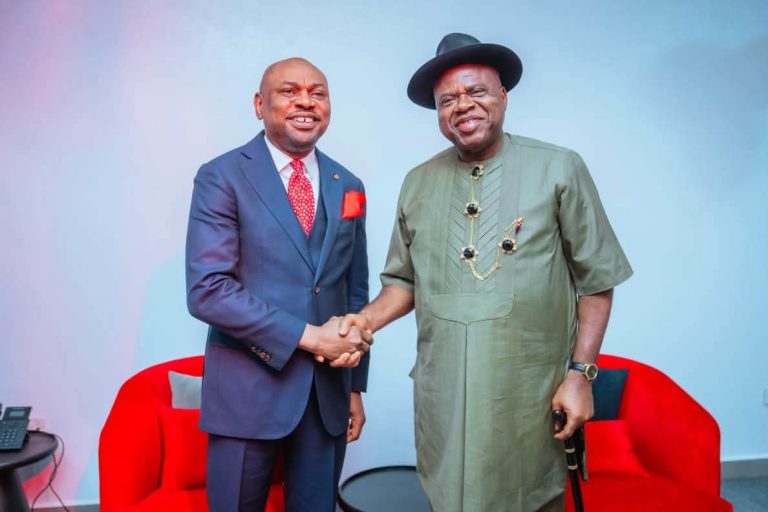
The Management Board of Bayelsa United Football Club has congratulated the MD/CEO, Emmanuel Emiefinim, the management and staff of Premium Trust Bank following the successful commissioning of the bank’s new branch on the Yenagoa-Mbiama Road, Edepie, Yenagoa.
The official tape-cutting ceremony was performed by Bayelsa State Governor Senator Douye Diri on Monday, August 31st, 2026, with dignitaries, customers and members of the Prosperity Cup family in attendance.
In a statement issued shortly after the event, the Chairman of the Board, Dr. Peter Singabele, said the opening of the new branch is a clear demonstration of Premium Trust Bank’s confidence in Bayelsa’s economy and its commitment to expanding access to financial services in the state.
He described Premium Trust Bank as a valued partner of the Bayelsa Governor’s Football Tournament, noting that the bank’s presence on and off the pitch has contributed to the growth of the Prosperity Cup brand, and to football and sports generally in the state.
Dr. Singabele also recalled the bank’s donation of a brand new coaster bus to Bayelsa Queens Football Club, which he said has remained a big boost to the morale of the team and improved the performance index of the elite female soccer outfit.
“Your commitment to growth and service in Bayelsa State is commendable, and we are proud to have you as part of the Prosperity Cup family,” the statement read. “This expansion will bring banking closer to our players, supporters, vendors and communities along the Mbiama-Yenagoa corridor.”
The Bayelsa United Football Club Chairman noted that stronger private sector participation is vital to sustaining sports development, youth empowerment and local businesses that thrive around football activities in Bayelsa.
The new Edepie branch is expected to serve residents, traders and football stakeholders with improved access to banking products and services.
Dr. Peter Singabele further remarked: “Today we celebrate a partner that believes in Bayelsa. Premium Trust Bank’s decision to open this new branch shows faith in our people. More branches means more prosperity for Bayelsa.”
The Board prayed for continued success for Premium Trust Bank and reaffirmed Bayelsa United’s readiness to deepen collaboration with the bank in all its future activities, including the Prosperity Cup and other community initiatives across Bayelsa State and beyond.

NBA-AGC: Rethinking The Choice Of Voices On The Podium

0

 By Emmanuel Umohinyang Esq

The controversy surrounding the invitation of VeryDarkMan (VDM) to the Nigerian Bar Association’s 2026 Annual General Conference should not be reduced to the rather superficial question of whether a non-lawyer ought to be permitted to speak at a gathering of lawyers. That formulation is too narrow. The Nigerian Bar Association is not an association whose intellectual life is confined to lawyers speaking to lawyers about black-letter law. Its Annual General Conference can accommodate discussions on governance, security, human rights, politics, technology, economics, public policy, and other matters that bear upon the legal profession and the administration of justice. Non-lawyers may therefore have legitimate and valuable contributions to make.

However, the NBA’s Annual General Conference is not simply another public gathering. It is the Association’s principal annual forum for continuing professional development, for intellectual engagement with legal and justice-sector issues, and for the consideration of matters affecting the profession and the administration of justice. It also enables interaction with relevant public and private stakeholders and advances the NBA’s wider professional and public-interest objectives. Its programme may therefore properly extend beyond conventional legal education. But the wider the range of voices admitted to the platform, the greater the need for a coherent principle governing their selection. Recall the biblical parable of the wedding banquet (Matthew 22): the king welcomed guests freely, yet still expelled the guest who was improperly dressed, on account of the decorum owed to the occasion. Openness of invitation and fitness of conduct are distinct standards, and an institution may hold both at once.

This distinction becomes particularly clear when VDM’s appearance is considered alongside the earlier controversy surrounding Portable, a street dancer. The fact that neither men was invited to teach law does not, without more, justify either invitation. Portable tested the NBA’s judgment about entertainment; VDM tested its judgment about substantive discourse. The first question asks what sort of entertainment a professional institution may legitimately sponsor or accommodate. The second asks what kind of messenger may legitimately be entrusted with a place in the intellectual programme of the profession. Both, however, return to the same underlying question. What standard does the NBA apply when it decides who, or what, should appear on its platform?

VDM himself reportedly acknowledged that he was not present to teach law but to share his experience. Notwithstanding that disclaimer, he went further, making assertions, drawing conclusions, and offering inferences for which he supplied no supporting evidence and no factual premises.


This is where the institutional character of the NBA becomes important. If the Association invites an unconventional speaker to challenge established narratives, that can be intellectually valuable. But it should not, in the process, abandon the standards of critical inquiry that distinguish a professional conference from a popular rally or a social-media exchange.

The substance of what VDM said is not the only question his invitation raises. His appearance drew comment as well, including his ear and nose piercings, and that criticism deserves to be addressed on its own terms. It would be intellectually indefensible to suggest that body piercings make a person unintelligent, dishonest, or incapable of making a valuable contribution, but such an odious outlook should not become an acceptable norm at a conference of this kind. The point can be illustrated by a simple analogy. If one is offered a chilled drink in a dirty cup, the fact that the drink may be refreshing does not necessarily compel one to take it. Nor does the condition of the cup establish-evidence that the drink is contaminated. The cup and the drink are separate questions. One may acknowledge the quality of the drink while reasonably questioning the condition of the vessel in which it is served. A chilled drink may be perfectly good, but the host cannot entirely escape responsibility for the cup in which it is served. And where the host is the Nigerian Bar Association, the question is not merely whether the drink is drinkable. It is whether the vessel, the presentation and the occasion are consistent with the dignity and decency of the house.

The difficulty is that a professional institution does not communicate only through the substantive content of its conferences. It also communicates through the standards of decorum it sets, the people it places on its platform, and the manner in which those people are presented. For an institution such as the Nigerian Bar Association, decorum is not merely a matter of personal taste; it forms part of the Association’s dignity, identity, and professional image. Professional freedom does not remove the responsibility to observe decorum within a professional setting. Invitations are, in that sense, institutional statements. A keynote speaker, panelist, moderator, or entertainer may occupy different roles, but each reflects a degree of institutional endorsement. The NBA may broaden its platform and welcome diverse voices, but openness should not become an abandonment of decorum. The message matters, but so does the manner in which the institution presents the messenger. A Senior Advocate of Nigeria, Dr. Monday Onyekachi Ubani, observed, popularity and social-media visibility should not be allowed to take precedence over “intellectual pedigree, professional accomplishment and scholarship.” His further caution that “entertainment has its place, but it must never replace intellectual substance” goes to the heart of the controversy.

VDM’s subsequent comments make his selection even more difficult to justify. His concerns about unemployment, underemployment, and weaknesses within the profession may deserve attention, but his dismissal of law as no longer a noble profession went beyond constructive criticism. It sufficiently amounted to a broad denigration of the profession. The NBA should have anticipated this risk when it selected him, and by inviting him, it gave his voice institutional visibility. This, in itself, further reinforces the argument that VDM was an inappropriate choice of speaker. The NBA should have considered whether the particular person chosen possessed the restraint, respect, decency and institutional sensitivity that the platform required. The fault, therefore, lies not with the messenger ; it lies squarely with the institution that chose him.

This same question of platform coherence is illustrated, in a different register, by the earlier controversy surrounding Portable’s appearance at the 2023 “Unbarred” event. That episode raised a legitimate institutional question about the kind of entertainment appropriate to the NBA’s flagship professional gathering. Whether a performer associated with a deliberately provocative public persona was an appropriate entertainment choice for an event carrying the name, prestige, and institutional identity of the NBA. In that sense, the controversy was fundamentally one of decorum and institutional branding. It is significant because it was not an accidental encounter between Portable and lawyers but a programmed appearance at an NBA-associated event, and responsibility for that choice cannot be displaced entirely onto the performer, the audience, or the conference sponsor. Afam Osigwe, SAN, who was then Chairman of the 2023 NBA Conference Planning Committee, reportedly defended the arrangement and accepted responsibility for the conference’s programming. His role is therefore relevant to the institutional judgment under examination, not because he authored Portable’s conduct, but because he was the person responsible for determining what the NBA platform would accommodate. An institution may legitimately entertain its members, but in choosing its entertainment, it also chooses, at least to some extent, what it is prepared to associate with its public image. Yesterday it was Portable; today it is VDM; tomorrow, who will it be?

A related but distinct dimension of platform coherence is illustrated by the choice of the AGC’s keynote speaker rather than its entertainment or its panelists. The choice of George Weah as keynote speaker raises a serious question of institutional consistency for the Nigerian Bar Association under its President, Afam Osigwe, SAN. The NBA presented judicial independence, constitutional democracy, accountability, and the rule of law as central values of its conference. Osigwe reportedly told delegates that “democracy does not survive on strong men, but on strong institutions.” That statement sits uneasily with the choice of a former president whose administration faced serious concerns over judicial independence, the protection of human rights, and the failure to implement decisions of the ECOWAS Court concerning judicial and property rights. The contradiction weakens the moral and institutional credibility of the NBA’s choice, and on this point,  I must agree with the objection raised by the learned silk, Femi Falana, SAN, against the invitation of George Weah. Falana’s criticism was directed at Weah’s record as President of Liberia, and in particular that aspects of his administration’s relationship with the judiciary and its alleged failure to comply with decisions of the ECOWAS Court. These are not peripheral matters when the speaker is invited to address lawyers on democracy, constitutionalism, and judicial independence; they go directly to the credibility of the messenger in relation to the message.

Taken together, the VDM, Portable, and Weah episodes are not three unrelated controversies but three instances of the same institutional question, posed at different points on the programme. The existence of different categories of participation does not establish that one person is inherently worthy and another unworthy; it establishes that different kinds of participation require different forms of justification. That, ultimately, is the question the NBA ought to be able to answer.

If the Association wishes to expand the AGC beyond conventional legal discourse, there is nothing inherently wrong with that ambition. Indeed, there is considerable merit in bringing lawyers into conversation with politicians, judges, economists, technologists, security professionals, academics, activists, journalists, and others whose experience illuminates the operation of law in society. But openness should not become indiscriminate inclusiveness. There must remain a discernible relationship between the person, the subject, the contribution, and the institutional purpose of the conference. That relationship can be tested with a few simple questions to wit:- Who is the person? What does this person know, or what has been this person uniquely experienced? What exactly was the person invited to contribute? Why was that contribution relevant to the AGC? And was the manner of the person’s presentation consistent with the dignity of the institution? These are not questions of elitism. They are questions of institutional accountability.

Nor should criticism of a particular speaker’s selection be read as a demand that the NBA become intellectually closed or socially conservative. A profession confident in its own intellectual foundations should not have any difficulty hearing voices from outside its traditional boundaries; sometimes the uncomfortable voice is precisely the one that ought to be heard. But hearing a voice and endorsing its authority are different things. The NBA can invite anyone to speak without endorsing every assertion that speaker makes. It can recognise the value of lived experience without elevating that experience into technical expertise. It can tolerate unconventional personal appearance without abandoning professional decorum. It can embrace popular culture without allowing celebrity to become the measure of institutional relevance. The NBA must not allow substance to be displaced by a populist agenda, and it should be equally alert to the risk of granting its future platforms to speakers who bring no credible value to the profession, regardless of their popularity.

The difficulty arises only when these distinctions become blurred.

The real concern, then, is not that the NBA invited a non-lawyer, nor that the speaker was controversial. The concern is whether the Association has a sufficiently coherent philosophy of selection to explain why a particular person belongs on its platform, and what institutional significance attaches to that invitation. The message matters, but so does the messenger, and where the NBA itself chooses the messenger, so does the platform. The NBA, as an institution, should be capable of saying all three things at once: we will hear the message; we will scrutinise the messenger; and we will remain conscious of the dignity of the platform on which both appear. The objective is not to serve only a perfectly polished cup, indifferent to what it contains, nor is it to pretend that the condition of the vessel does not matter. It is to ensure that, in opening its doors to new voices, the NBA does not lose sight of what the house represents: the rule of law and justice; professional excellence and decorum; institutional independence, credibility and reputation;  integrity and ethical responsibility.As these form part of the shortcoming of the former President,Mazi Afam Osigwe SAN leadership of the Bar  , it should not escape the reform eyes of the Badejo’s leadership afterall we all desired an NBA that represent the moral aspirations of the Nigerian people

The house can and should change with the times. But changing the furniture is not the same thing as demolishing the very dear and sacred foundations of our cherished Bar.


Umohinyang writes from Westminster, London.


Delta State Governor Flags Off NDDC’s Reconstruction Of Benin-Sapele Expressway

0

The Delta State Governor, Rt. Hon Sheriff Oborevwori has flagged off the reconstruction of Benin-Sapele Expressway being undertaken by the Niger Delta Development Commission, NDDC in Delta State.

Speaking during the Flag-Off of the Reconstruction of the Benin-Sapele Expressway at Amukpe Roundabout, Governor Oborevwori stated that the NDDC had demonstrated considerable partnership with the governors of the nine Niger Delta states, noting that the Commission had executed projects that reflect the aspirations of the people of the Niger Delta region since the inception of the governing board.


The Governor, who was represented by the Delta State Commissioner for Works (Rural Roads) and Public Information, Mr. Charles Aniagwu, commended the President for his policies and programmes under the Renewed Hope Agenda.

He stated: “As a government, we remain open to partnerships with the NDDC to promote sustainable development and improve the livelihood of the people.

In his remarks, the NDDC’s Governing Board Chairman, Mr Chiedu Ebie, said the intervention reflected the Commission’s commitment to complementing the Federal Government’s efforts to restore critical infrastructure and ease the burden on communities and road users across the Niger Delta.

According to him, the NDDC was committed to supporting the President Bola Tinubu’s administration by delivering strategic infrastructure interventions that improve connectivity, stimulate economic activity, and enhance the quality of life of Nigerians.

Speaking in a similar vein, the NDDC Managing Director, Dr. Samuel Ogbuku, said the Commission shared in the pains of motorists who had suffered while using the Benin-Sapele corridor and other bad spots on the East-West Road.

Ogbuku stated: “Following the presidential directive to intervene swiftly, the NDDC has mobilized two civil engineering firms to reconstruct the road. This will help minimize the suffering and gridlock faced by commuters.”

He also commended the Federal Government for responding promptly to the distress cries of road users, expressing confidence that the reconstruction, to be supervised by the Federal Ministry of Works, would provide a lasting solution.

The NDDC boss urged local communities and commuters to be patient and cooperative during the construction period, assuring them that the repairs would be completed quickly. “We have mobilized two contractors to fast-track the work.

The NDDC Executive Director of Projects, Dr Victor Antai, said the NDDC and the Ministry of Works had agreed to work together on the intervention to ensure that any reconstruction conforms to the road’s original design.

He added that the Commission had scoped 15.4 kilometres between Benin, Ologbo Junction and Sapele, describing it as a strategic road section in the region and noting that the bad stretch had become unmotorable, causing gridlock, hardship and crippling the local economy.

He apologised to road users, especially truck drivers, who had been stuck at the bad spot for several days, assuring them that the NDDC would support the efforts of the Federal Ministry of Works.

In her goodwill message, the Chairman, House of Representatives Committee on NDDC, Hon. Erhiatake Ibori Suenu, expressed gratitude to President Tinubu, describing him as a President who listens to the cries of the people.

Ibori-Suenu commended the NDDC for its intervention in the road, noting that the road reconstruction would ensure free movement of goods and people from Delta to Edo, Bayelsa, and Rivers States.


Prosperity Cup DG, Akpe Hails Bayelsa State Government For Support.

0

‎‎… Bayelsa Starlets Win NLO U-19 Youth League
‎
‎Director General of Nigeria’s biggest grassroots football spectacle, the Bayelsa Governor’s Football Tournament tagged Prosperity Cup, Mr. Ono Akpe, says the investment of the government in Bayelsa Starlets Academy, affiliated to FC Barcelona of Spain, is gradually yielding result.
‎
‎Mr. Akpe made this known while reacting to Bayelsa Starlets’ triumph in the Nationwide League One U-19 Youth League held in Yenagoa, the Bayelsa State capital. The Yenagoa centre had six teams that participated in the league.
‎
‎He noted that their emergence as champions of the Yenagoa centre was the beginning of greater things for Bayelsa Starlets, stating that he is elated by the lads’ triumph.
‎
‎Mr. Akpe remarked that the victory was not by accident but by divine providence coupled with months of camping which started in May, urging the players to see the victory as a stepping stone in their respective careers.
‎
‎According to him, the achievement by the Starlets was indicative that the government’s investment in the team has started germinating, maintaining that the feat is a reflection of the avalanche of talents in the State.
‎
‎He appreciated the governor, Senator Douye Diri and his deputy, Dr. Peter Akpe and the Commissioner for Sports Development, Dr Daniel Igali for the immense support to see that the youths in the State realized their potentials.
‎
‎The DG remarked that building a world-class academy was not a three-month project, but the NLO U-19 Youth League victory has rejuvenated the players and coaches ahead of the scheduled visit of officials of Barcelona in September.
‎
‎He hinted that plans are underway to screen 60 players selected from the just concluded U-15 tournament, with a target of having 35 players each in the U-19 and U-15 squads, in line with the Memorandum of Understanding (MOU) with FC Barcelona of Spain.
‎
‎“We want to show the Governor that his support for us in bringing about the Barcelona partnership was not a mistake. According to him, “This is evident in winning the first major tournament we have participated in. It is not a state league but a national league for this region,” Akpe stated.
‎
‎Bayelsa Starlets Academy won the NLO U-19 Youth League in the Yenagoa Centre with 12 points after winning four of their five matches with just one loss against Bayelsa United Feeders, who finished as runners-up with 10 points.
‎
‎Starlets humbled Dolphins ACA FC of Port-Harcourt 3-0 courtesy of Jude Onisoya, Christopher James, Joel Udake goal on 73, 78 and 92nd minute while Bayelsa United Feeders were held to a goalless draw by Obago FC of Port-Harcourt in the last match of the day having won four matches.

NDDC, Works Ministry Intervene In Benin-Sapele-Warri-Agbor Roads

0
The Niger Delta Development Commission, NDDC, the Federal Ministry of Works, the Edo State Government, and other stakeholders have commenced an urgent intervention to address the deplorable condition of the highways between Edo and Delta States.
The Edo State Governor, Senator Monday Okpebholo, the Minister of Works, Engr. David Umahi, alongside the Senate Committee and House of Representatives Committee on Works and the NDDC Managing Director, Dr Samuel Ogbuku, embarked on a joint inspection of failed portions of the Benin-Sapele-Warri and Benin-Agbor roads.
A statement by Director, Corporate Affair, Seledi Thomspon-Wakama noted that speaking during the inspection, Engr. David Umahi stressed the Federal Government’s commitment to fixing the deteriorating sections and finding immediate and sustainable solutions to the challenges along the critical corridor.
He said the quick intervention followed a directive from President Bola Ahmed Tinubu, in response to concerns over the deteriorating condition of the critical road corridors, which have subjected commuters, residents and businesses to severe hardship.
Consequently, the Ministry of Works, in collaboration with the Edo State Government, invited the NDDC, major construction companies operating along the Benin–Asaba axis, and other stakeholders to undertake a joint inspection of the failed portions of the roads.
Also speaking at the road site, the NDDC Managing Director, Dr. Samuel Ogbuku, said the commission received complaints about the sufferings of motorists along the Benin-Sapele corridor and had taken steps to intervene.
He added that the Commission had scoped 15.4 kilometres between Benin, Ologbo Junction and Sapele, describing it as a strategic road section in the region and noting that the bad stretch had become unmotorable, causing gridlock, hardship and crippling the local economy.
Ogbuku said the NDDC and the Ministry of Works had agreed to work together on the intervention to ensure that any remedial work conforms to the road’s original design and can stand the test of time.
He said the intervention reflected the Commission’s commitment to complementing the Federal Government’s efforts to restore critical infrastructure and ease the burden on communities and road users across the Niger Delta.
According to him, the NDDC was committed to supporting the Renewed Hope Agenda of President Bola Ahmed Tinubu by delivering strategic infrastructure interventions that improve connectivity, stimulate economic activity, and enhance the quality of life of our people.
Also speaking, Edo State Governor, Senator Monday Okpebholo, commended President Tinubu for responding swiftly to the challenge, noting the intervention would quickly arrest the deterioration of sections of the critical highway.
Okpebholo said Edo State’s strategic position made the deplorable state of the highway a national concern, describing the state as a gateway to the South-South, South-East, South-West and the North.

When the Street Meets the Bar: Defending the NBA’s Choice of VDM

By Fatai Abiodun Esq

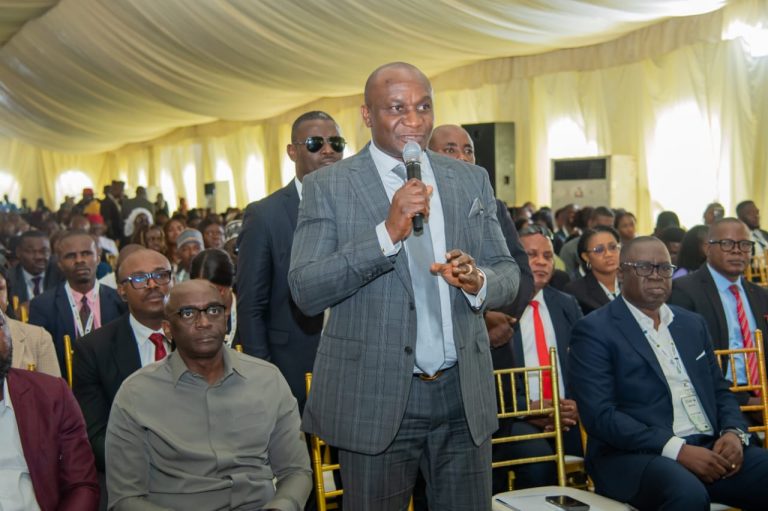
Yesterday, 25th August 2026, social media was busy with the participation of social media critic, Martins Otse known as Very Dark Man, appearing as a panellist on the Day Five plenary titled “Known Gun Men.” The session focused broadly on the legal, security and institutional gaps contributing to insecurity in Nigeria at the 66th Annual General Conference (AGC) of the Nigerian Bar Association in Port Harcourt.

A number of commentators are questioning the basis on which VDM was selected as a panellist for the “Known Gun Men” session. The objection is not simply that he is a non-lawyer; it is that he is a social-media activist whose public persona is controversial and whose expertise in security is being questioned.

Some lawyers questioned whether members who pay registration fees, travel and accommodation expenses should be presented with a social-media personality at what is regarded as the Bar’s premier professional gathering.

There is a general principle that there is nothing inherently wrong with lawyers learning from non-lawyers. It’s also important to reiterate that Courts routinely rely on expert evidence and on-site assessment where eyewitnesses can give explanations, and legal practitioners certainly do not operate in isolation from society. The fact that someone is not a lawyer does not, by itself, make his contribution irrelevant as provided under the Evidence Act.


There are several established legal theories and jurisprudential approaches that support the proposition that lawyers should not rely exclusively on formal legal texts, but should also engage with lived experience, community knowledge and “street-level” realities.


Legal Realists such as Oliver Wendell Holmes Jr., Karl Llewellyn and Jerome Frank challenged the idea that law can be understood entirely as a closed system of legal rules. Holmes famously argued that the life of the law is not simply logic but experience.


Under Sociological Jurisprudence, a theory that posited that law must be understood in its social context. The implication is that a lawyer cannot fully understand a legal problem without understanding the social environment in which that problem occurs.


The criticism that a non-lawyer should not speak to lawyers misses the point entirely. The NBA did not invite him to teach criminal law, constitutional law or legal ethics. VDM was invited to a plenary session on “Known Gun Men”, an issue that goes far beyond the courtroom and directly affects the lives, safety and independence of lawyers, judges and ordinary citizens. The session brought together legal practitioners and security stakeholders, making it an appropriate setting for different perspectives to confront one another.


What makes the invitation particularly significant is the opportunity for lawyers to hear from someone who says he has physically visited communities affected by violence and interacted with victims and survivors. VDM told the conference that he was not there to teach lawyers the law but to share his experiences from places affected by killings, kidnappings and other attacks.

Inviting VDM as a guest speaker does not necessarily mean that the NBA has certified him as a security expert, nor does it mean that every opinion he expressed must be accepted as fact. Sometimes, therefore, the lawyer needs to hear not merely what happened according to a police report, a newspaper story or a legal submission, but what a person who physically went to the affected community says he saw, heard and experienced.

No security officer would have the ‘gut’ to express what VDM said at that panel, and that does not make every account automatically true. It does not convert personal experience into expert evidence. And it certainly does not mean lawyers should accept every allegation without scrutiny.

The value of such an engagement may lie precisely in exposing lawyers to perspectives outside the traditional professional environment. Lawyers do not practise law in a vacuum. The law operates within society, and sometimes the “street” provides perspectives, experiences and narratives that may not find their way into textbooks, chambers or courtrooms.

Indeed, if the NBA only invited lawyers to speak to lawyers, we might unnecessarily limit the profession’s exposure to the realities of journalism, technology, politics, security, business, social media and other fields that increasingly intersect with the law.

As for the argument that there are more qualified security experts, that may well be true. But the purpose of an engagement can determine the choice of speaker. If the objective was to understand how issues of security, governance and justice are perceived from outside the conventional establishment, then VDM’s experience as a prominent public commentator may itself have been considered relevant.

I therefore would not defend the invitation on the basis that VDM is the greatest security expert in Nigeria. That would be difficult to sustain. I would defend it on the basis that lawyers can engage, interrogate and learn from unconventional voices without necessarily endorsing every claim made by those voices.

Ultimately, the real test should be what the participants took away from the engagement. If it provoked lawyers to think differently, question established narratives, understand public perception and engage more critically with issues affecting society, then the engagement has served a useful purpose.

The Nigerian Bar Association deserves commendation, rather than condemnation, for thinking outside the box by inviting VeryDarkMan to participate in a discussion with lawyers on the disturbing issue of insecurity in Nigeria.

Fatai Abiodunn, Esq

Counsel at Levite Solicitors

ICT Expert, Constitutional and Developmental Law Researcher

Writes from Abuja

fatai.abiodun200709@gmail.com


NBA Conference: NDDC Advocates Diversification Of Niger Delta Economy

0
The Niger Delta Development Commission, NDDC, has called for increased investment in agriculture and other sustainable sectors to secure the future of the Niger Delta region.
Speaking on Resource Control during the Nigeria Bar Association’s 66th Annual General Conference in Port Harcourt, the NDDC Managing Director, Dr Samuel Ogbuku, stated that while oil had been a blessing to the nation and had contributed significantly to development, the region could not afford to remain dependent on it indefinitely.
He stressed the need for stakeholders to ask fundamental questions about the region’s future beyond oil, particularly by identifying areas where Niger Deltans could exercise greater control.
He noted: “Data remains a critical component of resource control. Without accurate information on what the Niger Delta produces, it would be difficult to determine what it is entitled to receive. If we do not control the data, we do not know what we produce; we do not know what is to come to us. We need to put the future into our own hands.”
The Managing Director identified agriculture as one area within the region’s control, stressing that increased investment in the sector would strengthen food security, create employment and provide sustainable livelihoods for women and youth.
On environmental remediation, the panellists raised questions about the processes for determining what and who gets remediated, as well as the mechanisms for verifying the effectiveness of remediation efforts.
Speaking during the session, a representative of the NDDC legal team, Paul Emerhana, said the Commission had commenced a deliberate transition from “transaction to transformation,” driven by institutional reforms, digitalisation and sustainable development.
He cited the Commission’s solar street-lighting projects as an example of interventions with environmental, social and developmental benefits, noting that the projects had reduced dependence on conventional energy sources while improving security.
He further highlighted the Commission’s digital transformation, particularly the automation of its contract management processes, describing NDDC as the first agency to fully automate its contract processes.
He noted: “The digital transformation agenda of the Commission is consistent with the policy direction of the present administration and has extended to youth development, with the Commission providing training in Artificial Intelligence and other digital skills to young people across the Niger Delta. The Commission is investing in youths because they represent the region’s future; equipping them with relevant digital skills would improve their ability to participate in the emerging digital economy.’
The NDDC representative also highlighted the establishment of the Corporate Governance Department as part of the Commission’s institutional reforms, explaining that the department was created to strengthen governance, accountability and the sustainability of the Commission’s processes.
He added that the adoption of Environmental, Social and Governance (ESG) principles was important in ensuring that NDDC projects delivered sustainable value to communities and remained beneficial long after completion.
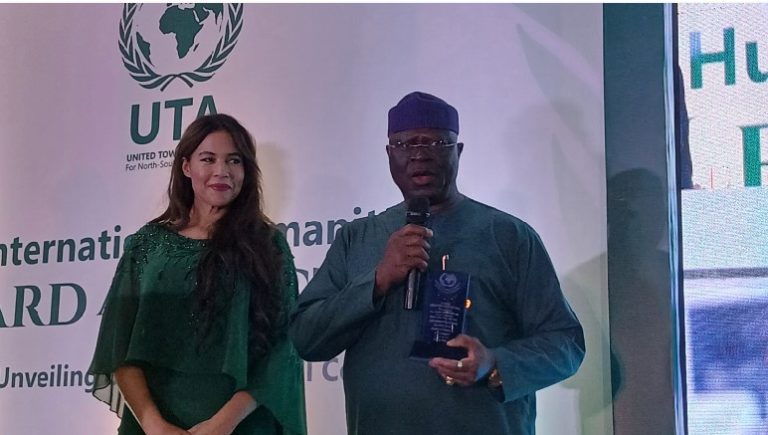
At the conference, awards were presented to the NDDC Board Chairman, Mr Chiedu Ebie, and the Managing Director in recognition of the contributions of the Commission to the development of the Niger Delta region.

Stakeholders Move For Women Inclusion At ITeach Africa Initiative Summit 2026

0

Stakeholders have called for greater inclusion of women in leadership, governance and security, stressing the need to create more opportunities for women to contribute meaningfully to national development.

The call was made on Friday in Abuja at the ITeach Africa Initiative Summit 2026, held at the Federal Ministry of Foreign Affairs, under the theme, “Advancing Women’s Leadership and Inclusive Governance and Security.”

Presenting a welcoming remark, the Convener and Director-General, ITeach Africa Initiative and Empower Her for Governance Initiative, Alaibe-Elezieanya Ebimoboere, decried the persistent national insecurity.

According to her, kidnapping, banditry, terrorism, violent attacks and organised crime have impacted negatively on community residents, particularly vulnerable women.

She emphasised the need for the inclusion of women in decision-making on issues about national security as a means to fostering the early mechanisms in containing insecurity.

“A nation is safest when its people feel they have a stake in its peace, become a voice in its future and play role to ensure its survival, “ she said.

The Minister of Defence, Gen. Christopher Musa (retd), highlighted the need to advance women inclusion in governance to enhance nation-building.

Mr Musa,​‌⁠​‍‍⁠⁠‌‌‍⁠‌‍‍⁠‌‌​ who was represented by the Gender Adviser in the ministry, Lt.-Col. Nneka Olimma, lauded the programme initiative, saying it was imperative for women to play a key role in tackling security challenges.

According to him, terrorism, banditry, violent extremism, kidnapping, and cybercrime, among others, require a holistic approach to ensure lasting solution.

The minister, therefore, stressed the need for women to contribute their quota to tackle complex security challenges within the country.

He also said that such roles should be focused on projecting women as partners in finding solutions to insecurity, rather than as victims of its consequences.

Mr Musa said, “Women are not only affected by insecurity, women are also part of the solution. Therefore, women must listen before conflict escalates.

Head of the Civil Service of the Federation, Esther Walson-Jack, represented by the Permanent-Secretary, Career Management Office of OHCSF, Nkiruka Jones-Nebo, said women’s participation in governance could strengthen  growth.

She added that women’s participation in governance was key to creating room for more women to progress through mentorship, leadership training and creation of safe spaces in society.

She said governance institutions should move beyond celebrating few successful women and instead establish structures that would enable more women to grow in the rank and file, and even lead organisations.

Speaking as the Father of the Day, founding Executive Director of the African Centre for Leadership, Strategy and Development (Centre LSD), Dr Otive Igbuzor said Nigeria cannot achieve sustainable stability without inclusive governance and transformational leadership, warning that excluding women and other marginalised groups from decision-making poses a threat to national security.

Igbuzor said inclusive governance, transformational leadership and national security were deeply interconnected, stressing that greater participation of women was essential to building a stable, democratic and prosperous Nigeria.

Presenting a paper at the summit, Igbuzor explained that inclusion should not be viewed merely as a matter of political correctness, but as a critical requirement for Nigeria’s development and stability.

”Inclusion is a development imperative, a democratic necessity and a national security strategy,” he said.

According to him, Nigeria’s future stability would depend largely on its ability to reform leadership recruitment processes, strengthen institutions, deepen democracy, tackle poverty and inequality, manage diversity and increase women’s participation in governance.

He said the country stood at a crossroads, with one path leading to exclusion, weak institutions, widening inequality, declining public trust, electoral manipulation, insecurity and social fragmentation.

The alternative, he noted, was a system built on transformational leadership, accountable institutions, credible elections, gender equality, youth participation, inclusive development, human security and citizen engagement.

“The choice is ours. But time is not unlimited,” Igbuzor said, urging Nigerians and policymakers to embrace transformational rather than cosmetic reforms.

Also, presenting a paper titled “Inclusion as Security: The Niger Delta Model and its Imperative for Empowering Nigerian Women,” Former Managing Director of the Niger Delta Development Commission (NDDC), Timi Alaibe and Father of the Host, Dr Timi Alaebi explained that Nigeria’s experience in the region showed that sustainable national security requires more than military operations, but must be anchored on justice, economic opportunity and inclusion.

Alaebi argued that communities are more likely to protect systems in which they have a meaningful stake, stressing that addressing the underlying causes of insecurity is essential to achieving lasting peace and stability.

Reflecting on the Niger Delta crisis, he said what was initially treated largely as a security challenge was eventually understood as a deeper problem of development, justice and exclusion.

“The most important lesson is this, people are more likely to protect a system in which they have meaningful stake,” Alaebi said.

According to him, inclusion should no longer be viewed merely as a social policy, stressing that it has become a critical component of national security.

“Inclusion is not merely a social policy. Inclusion is a national security policy,” he said.

Alaebi noted that while soldiers, police, intelligence agencies and other security institutions remained necessary, sustainable security was about creating conditions that make violence less attractive.

He identified justice, opportunity and belonging as the three critical conditions, explaining that citizens must feel fairly treated, have access to jobs and livelihoods, and see themselves as participants rather than spectators in national development.

Using the Niger Delta as an example, he said years of environmental degradation, limited opportunities and the perception that local communities were excluded from the wealth generated from their environment contributed to instability.

“Force can contain violence, but it cannot by itself address the grievance that produced the violence,” he said.

Alaebi cited initiatives including the Presidential Amnesty Programme, Nigerian Content framework, Petroleum Industry Act and community-based pipeline surveillance as examples of efforts to move communities from the margins into Nigeria’s economic and security architecture.

However, he said one major weakness of the Niger Delta peace process was the inadequate inclusion of women.

He noted that women suffered significantly from conflict and environmental degradation, lost livelihoods and family members, and played key roles in sustaining communities, yet remained largely excluded from formal peace and negotiation structures.

“We define peace too narrowly around those who carry the weapons, rather than those who carry the consequences of the conflict,” Alaebi said.

He urged Nigeria to recognise women’s participation as a national capacity, democratic legitimacy and national security issue, noting that women often identify early warning signs of insecurity within communities.

Furthermore, the Director-General of the Plateau State Peace Building Agency, Julie Sanda, called for greater inclusion of women and young people in peacebuilding, governance and national security, stressing that communities cannot achieve lasting peace when critical segments of the population are excluded from decision-making.

Sanda said security and peacebuilding strategies must reflect the composition and realities of the communities they are designed to protect.

“Whatever you’re doing for the communities has to resemble the community. Is there any community in Nigeria that does not have women? No. Is there any community in Nigeria that does not have young people? No. So you must include women and young persons,” she said.

She noted that while not everyone could participate in security through the use of force, individuals could contribute based on their experiences, expertise and understanding of their communities.

“Everybody needs to be at the table. Everyone is affected by insecurity,” Sanda said, warning that solutions would remain ineffective if only one section of society framed security challenges and proposed solutions for everyone.

Sanda urged political leaders to make concrete commitments to women’s and youth inclusion ahead of the 2027 elections, particularly in formal peacebuilding and security structures.

She also called for dedicated funding to implement Nigeria’s National Action Plan on Women, Peace and Security and the Youth, Peace and Security agenda at federal, state and local government levels.

“We must make peacebuilding a national priority,” she said, noting that almost every state in Nigeria is affected by insecurity and the consequences of violence.

Meanwhile, giving a goodwill message, Ambassador Goodknows Igali applauded the orgnisers adding that Nigeria must take advantage of its young and female population to drive change.

He quoted from Kofi Annan, that the only tool for development of any country is the empowerment of its people adding that women should hold 50percent leadership positions.

We must have direct, targeted programs and activities to include women in all sectors of the nation particularly in the area of security’’ he said.

The Summit brought together government officials, diplomats, women in Politics, policy makers, NGOs and young people.

Investigative Legal Analysis: The Judge Who May Have Outlived His Jurisdiction

0

By Chibuzor Godwin

Abstract

This article examines the unresolved legal and institutional questions surrounding the tenure, judicial authority and decisions of Justice M. E. Nwagboso of the Imo State High Court. It focuses on three interconnected developments: the extraordinary 24-hour ex parte order issued in 2022 in proceedings that effectively frustrated the enforcement of a subsisting National Industrial Court of Nigeria judgment; the National Judicial Council’s finding in 2025 that Justice Nwagboso falsified his age records to extend his period in judicial service; and a 2026 High Court ruling finding that a court record connected to a judgment delivered by the judge had been doctored and that the Certified True Copy issued to a litigant was not the judgment pronounced in open court. The article interrogates the constitutional implications of age falsification, particularly the critical question of when Justice Nwagboso constitutionally ceased to hold judicial office, and the possible effect of that date on decisions delivered thereafter. Drawing on constitutional provisions, judicial precedents, the NJC’s disciplinary findings, the Nigerian Bar Association’s fact-finding report and the subsequent judicial ruling on the disputed court record, the analysis argues that compulsory retirement alone does not resolve the broader questions of jurisdiction, judicial record integrity, financial accountability and the validity of decisions made during any period of unlawful tenure. It further identifies the need for disclosure of the authentic retirement date, a comprehensive audit of decisions delivered during the disputed period, forensic preservation and examination of the contested court record, and appropriate investigation where evidence warrants criminal referral. The article concludes that the central issue is no longer merely whether Justice Nwagboso should remain on the Bench, but when his constitutional authority to exercise judicial power actually ceased and what legal consequences should follow from that determination.

Introduction: The morning justice met resistance

On 2 June 2022, court officials moved to enforce an order of the National Industrial Court of Nigeria in Owerri. The amount at stake was not symbolic: ₦1,970,666,584.68. It represented a judgment debt owed by the Government of Imo State to its former Deputy Governor, Prince Eze Madumere. The garnishee order had been made absolute on 27 May. Zenith Bank had not complied. A writ of execution followed, and branches of the bank in Owerri were sealed until the judgment debt was paid.[1]

The law had spoken. What followed, however, was a revealing struggle over whether the law would be permitted to act.

On the same day that execution began, the Attorney-General of Imo State commenced a new action in the Imo State High Court: Attorney-General of Imo State v Zenith Bank Plc & 7 Others, Suit No HOW/590/2022. An originating summons, a motion on notice and an ex parte motion were filed. By the following day, 3 June 2022, the action had been processed, assigned to Hon. Justice M E Nwagboso, called in open court, heard ex parte, and an interim order granted. According to the subsequent fact-finding report of the Nigerian Bar Association, the order was produced, signed and acted upon within the same extraordinary twenty-four-hour cycle.[2]

Justice can sometimes move quickly. Urgency is not, by itself, evidence of wrongdoing. Courts exist to prevent imminent injury, and ex parte powers would be pointless if judges could never deploy them rapidly. But speed becomes institutionally troubling when it is selective, when it is directed against a subsisting order of a coordinate superior court, when the normal appellate route is bypassed, and when the originating action disappears as soon as its immediate tactical objective has been achieved.

That is why the Nwagboso episode cannot now be examined as an isolated difference of judicial opinion. It must be considered alongside two later developments: the National Judicial Council’s formal finding that Justice Nwagboso falsified his official age records to remain longer in service, and a 2026 ruling of another Imo High Court judge that a record book connected with a judgment delivered by Nwagboso had been doctored and that the Certified True Copy issued to a litigant was not the judgment pronounced in open court.

These events do not prove every accusation that has been made against Justice Nwagboso. They do something more disciplined and, in institutional terms, more disturbing: they establish a sufficient evidential basis for an investigation that retirement alone cannot close.

A judgment cannot be appealed sideways

The substantive proceedings began as Prince Eze Madumere v Governor of Imo State & 2 Others, Suit No NICN/OW/16/2019. The garnishee proceedings were numbered NICN/OW/19M/2021. The State had opportunities to defend the substantive claim and to challenge the garnishee process. According to the NBA committee, the Government’s handling of the litigation was grossly negligent. Having failed before the National Industrial Court, the lawful route was an appeal to the Court of Appeal.

That route matters because the National Industrial Court and a State High Court are both superior courts of record. One does not sit on appeal over the other. The constitutional structure does not permit a disappointed litigant to move horizontally from one coordinate court to another in search of an order that neutralises the first. Judicial hierarchy would become meaningless if every adverse decision could be “appealed” sideways.

The NBA fact-finding committee considered the State High Court proceeding an abusive collateral manoeuvre. It described the State Government’s choice as “trickery and illegality” and a “gross abuse of the judicial process”. Its concern was not merely that a new suit existed, but that the relief sought in HOW/590/2022 was crafted to prevent the banks from transferring Imo State funds to third parties—including, in practical effect, the judgment creditor—while the NICN order was under execution. The committee also regarded the sequence as alien to ordinary court practice: filing, processing, assignment, hearing, production, signature and execution of the order within twenty-four hours.[ NBA Report (n 2), findings in paras 4.01–4.02, particularly its treatment of Suit No HOW/590/2022 as an abuse of judicial process and its account of the 24-hour filing-to-execution sequence.]

The State ultimately went to the Court of Appeal, which was the constitutionally proper forum, and obtained relief including an order permitting the unsealing of Zenith Bank and leave to appeal. The fact that an appellate remedy was available—and was eventually used—sharpens the question why the State High Court’s ex parte jurisdiction was invoked in the first place.[3]

What Justice Nwagboso’s order did—and did not do

Accuracy is indispensable here, particularly because the episode has often been simplified in public retellings.

Justice Nwagboso’s enrolled order did not formally set aside the NICN judgment. It did not expressly declare the garnishee order invalid. It did not direct that Zenith Bank be unsealed. The material restraint prevented five banks from paying or transferring funds from Imo State Government accounts to third parties without the State’s mandate pending the motion on notice and originating summons. A contemporary report described this as restraining the defendants from effecting the NICN order, but the precise enrolled terms must prevail over a newspaper’s shorthand.[4]

This distinction does not exonerate the process from scrutiny. An order need not expressly say “I nullify the other court” before its legal and practical effect becomes obstructive. The NBA committee concluded that the process was designed and used to frustrate enforcement. It also found that the Commissioner of Police falsely claimed to be implementing a State High Court order to unseal the bank. No such unsealing direction existed.

The same report recorded a darker surrounding atmosphere: the withdrawal of the NICN judge’s police orderlies and security details; protest activity and burning tyres near his official residence; the arrest, assault and detention of four NICN staff; the seizure of the court’s official vehicle; and the use of police power to impede execution. The committee attributed serious illegality and complicity to executive and police actors. It did not find that Justice Nwagboso personally organised those acts. Fairness requires that boundary to be maintained.[5]

But fairness to a judge cannot mean incuriosity about the judge’s own role. The proper questions are concrete. Who assigned HOW/590/2022 to Nwagboso, and under what roster? What exact time was each process filed, stamped, transmitted, assigned and called? Was the subsisting NICN judgment, the garnishee order absolute and the ongoing execution disclosed fully and candidly? What evidence established an emergency that could not await notice? Did the court confront the obvious abuse-of-process and coordinate-jurisdiction problems? How did the order move from oral grant to production, signature and implementation at such unusual speed? Were there communications among registry officials, assigning authorities, counsel, executive officers or the judge before the matter was called?

These are investigative questions, not declarations of guilt. Yet they are questions the NJC can no longer plausibly avoid. Rule 3.5 of the Revised Code of Conduct for Judicial Officers directs judges to avoid abuse of the power to issue interim injunctions ex parte.[6]

More revealingly, the NJC has itself treated suspicious speed and a judge’s failure to question anomalous garnishee proceedings as evidence capable of supporting discipline. In 2024, it sanctioned Justice G C Aguma after finding, among other matters, that he failed to question why a garnishee proceeding had been brought to his division and that the speed with which he granted the order indicated an interest. The Aguma finding does not establish Nwagboso’s culpability. It does establish the standard the Council has already applied elsewhere.[7]

The age that changed the meaning of everything

For three years, the 2022 episode could have been discussed as an exceptionally troubling use of ex parte power, a coordinate-court collision and a possible abuse of judicial process. Then, on 26 June 2025, the NJC supplied a fact that changed the legal character of the entire inquiry.

Following an investigation involving eighteen Imo judicial officers, the Council announced that nine judges had altered their dates of birth in official records in order to confer on themselves the undue advantage of staying longer in service. Justice M E Nwagboso was the first High Court judge named. The NJC recommended his compulsory retirement.[8]

This was not a rumour, an anonymous petition or a conclusion drawn from social media. It was the official finding of the constitutional body responsible for judicial discipline. The NJC said it had distinguished innocent discrepancies from dishonest alterations: some judges were cleared because their records contained no inconsistency, some because they offered acceptable explanations, and others because their corrections operated to their own disadvantage. Nwagboso was placed in the group found to have falsified their records for extended service.

The finding raises an obvious moral question. A judge determines the truthfulness of witnesses, weighs affidavits, authenticates documents and can invalidate public acts for falsehood. Where the judge himself is officially found to have falsified a foundational personal record for the purpose of retaining public office, the misconduct does not remain private. It strikes at the moral authority with which judicial power is exercised.

But the more consequential question is jurisdictional: when, on his authentic age, did Justice Nwagboso cease to be a judge?

The NJC did not say. It did not publish the authentic date of birth it accepted, the false date or dates used, the records altered, the date of alteration, or the constitutionally correct retirement date. It did not publicly identify the judgments delivered after that date. It did not announce a recovery of salaries and allowances for any over-age period. It did not explain whether the authentic age called into question Nwagboso’s eligibility when he was appointed to the High Court on 7 March 2016.[9]

This omission is not a minor transparency defect. The missing date is the hinge on which the validity of judicial decisions may turn.

Even the administrative record remains disordered. As at 12 August 2026, the official Imo State Judiciary website continued to list Justice Nwagboso—and several other judges affected by the NJC decision—under the heading “Serving Judges”. That may be a stale webpage rather than proof that he continues to sit. But when the controversy concerns false service dates and continued exercise of office, an official institution’s failure to maintain an accurate public roster is not harmless housekeeping. It reveals the very record-governance weakness that allowed the problem to become consequential.[10]

The judgment that changed after court rose

Then came the Ogoh case.

A court’s legitimacy depends on an elementary promise: the judgment authenticated and given to the parties must be the judgment pronounced in public. A judgment is not clay to be remoulded after the judge leaves the courtroom. It cannot announce one winner in open court and emerge from the registry as a victory for the other side. If the record of adjudication cannot be trusted, appeal itself becomes corrupted because the appellate court is asked to review something that may never have been decided.

In Suit No HOR/98/2019, Hon Chief Athanasius Uche Ogoh v Governor of Imo State, Attorney-General of Imo State and Commissioner for Lands, Survey and Urban Planning, the claimant maintained that Justice Nwagboso delivered judgment in his favour in open court on 24 June 2025. The CTC issued on 23 July 2025, however, recorded a materially different decision favourable to the Governor.

The claimant applied in Motion No HOR/317M/2025 to set the CTC aside and to compel the retired judge to produce the judgment actually delivered. On 21 July 2026, Justice S I Okpara found sufficient evidence that the court record book had been doctored and that the CTC issued on 23 July 2025 was not the judgment read by Justice Nwagboso in open court on 24 June. The false CTC was declared a nullity and set aside.[11]

The chronology deserves attention. Nwagboso delivered the judgment on 24 June 2025. The NJC reached its age-falsification decision the next day and published it on 26 June. The inconsistent CTC was issued on 23 July. Chronological proximity is not proof of motive or authorship. It is, however, an obvious reason why every physical and electronic record from that period should have been preserved immediately.

Justice Okpara did not identify who doctored the record. He declined to order Nwagboso to produce the original judgment because the retired judge was not a party to the suit or motion. Public commentary has attributed the alteration personally to Nwagboso and has suggested that his age may have been shifted by ten years. Those assertions are serious, but they go beyond what the published NJC decision and Justice Okpara’s ruling conclusively establish. An investigative publication must resist the temptation to replace proof with narrative convenience.[12] The attribution and claimed ten-year alteration are reported commentary, not findings made in the published NJC decision or Justice Okpara’s ruling.]

The appropriate response is forensic, not rhetorical. The original record book, handwritten judgment, electronic drafts, registry server logs, CTC register, seal register, payment records, printer metadata and file-creation histories should be secured and imaged. The chain of custody from 24 June to 23 July 2025 should be reconstructed. The judge, registrar, clerk, typist, CTC officers, counsel and parties should be interviewed separately. Handwriting, ink, pagination, signatures and document sequence should be examined where necessary. The judgment actually pronounced should be reconstructed from contemporaneous notes, counsel’s records, any audio record and the original court file.

The objective is not to find a convenient scapegoat. It is to identify who altered a judicial record, who knew of it, who benefited from it and whether the conduct amounted to forgery, uttering, obstruction, conspiracy or another offence under applicable law.

When does a judge cease to be a judge?

Before the Constitution of the Federal Republic of Nigeria 1999 (Fifth Alteration) (No 37) Act 2023, section 291(2) provided that a judicial officer appointed to a court other than the Supreme Court or Court of Appeal could retire at sixty and “shall cease to hold office” at sixty-five. The 2023 alteration unified the compulsory retirement age of judicial officers of superior courts of record at seventy.[13]

The language “shall cease to hold office” is not a suggestion to the NJC or an invitation to a governor. It describes a constitutional termination of authority. Section 292 regulates removal for misconduct; section 291 fixes the outer limit of tenure. If the authentic record shows that a judge crossed the compulsory age while the earlier constitutional provision applied, the office ended by force of the Constitution. A later administrative letter does not create the cessation; it recognises what the Constitution has already done.

The 2023 amendment creates an important transitional question. If Justice Nwagboso was still below sixty-five when the alteration took effect, the new age of seventy may govern his continuing tenure. If he had already attained sixty-five and ceased to hold office before the alteration, the later extension should not, without express retroactive language, be presumed to resurrect an office already vacated. If his authentic age placed him above the constitutional maximum when he was sworn in in 2016, the inquiry becomes more fundamental still: it may concern the validity of the appointment and not only a later segment of service.

Only the authentic date can resolve these possibilities. That is why the NJC’s silence is untenable.

The argument that later judgments are nullities

Nigerian constitutional jurisprudence supplies a formidable basis for challenging decisions delivered after a judge has ceased to hold the relevant office.

In Ogbunyinya and Others v Okudo and Others, Justice Nnaemeka-Agu’s appointment to the Federal Court of Appeal took effect on 15 June 1977. He delivered a High Court judgment two days later. The Supreme Court held that the judgment was a nullity because, by the date of delivery, he no longer possessed jurisdiction as a High Court judge.[14]

In Our Line Ltd v SCC Nigeria Ltd and Others, a trial judge continued proceedings and delivered judgment after appointment to the Supreme Court. The appellate courts treated the defect as going to the competence of the court and nullified the judgment.[15]

The principle was forcefully restated in Ude Jones Udeogu v Federal Republic of Nigeria and Others. A judge elevated from the Federal High Court to the Court of Appeal purported to return, under section 396(7) of the Administration of Criminal Justice Act, to complete a criminal trial. The Supreme Court held that the statutory arrangement could not confer the jurisdiction of an office he no longer held. The proceedings and conviction were set aside.[16]

These authorities concern judicial elevation, not age falsification. But the jurisdictional logic is the same. A court is competent only when properly constituted by a person legally qualified to exercise its authority. Once a person has ceased to hold the office, a correct legal analysis cannot transform him back into a judge for the purpose of validating a decision. Jurisdiction is not acquired through good intentions, public convenience, silence by the parties or the apparent correctness of the result.

Accordingly, if Justice Nwagboso’s authentic constitutional retirement date preceded 3 June 2022, the order in HOW/590/2022 is vulnerable on two independent planes: the abuse-of-process and coordinate-jurisdiction questions arising from the way it was obtained and used, and the more fundamental proposition that it was made by a person who no longer possessed judicial authority. If his retirement date came later, the order cannot be attacked as a post-retirement decision, though the circumstances of its assignment and grant remain open to investigation.

The same analysis applies to the judgment pronounced on 24 June 2025 and to every other judgment, ruling, injunction, warrant, committal order or garnishee decision delivered after the authentic cessation date. The merits of each decision would be beside the jurisdictional point. A legally sound judgment delivered without judicial authority is still a nullity.

There is, however, an equally important rule-of-law qualification. “Nullity” does not authorise private disobedience. An order appearing in the court record cannot safely be ignored merely because a party believes the judge was over-age. It should be set aside by a competent court through an appeal, an application invoking inherent jurisdiction, or another procedurally appropriate process. Innocent litigants and third parties may have arranged their affairs in reliance on facially valid orders. An orderly judicial audit must therefore correct the jurisdictional defect without replacing law with chaos.

Nor does falsification invalidate judgments delivered before the authentic retirement date. A judge’s later misconduct does not retrospectively erase lawful jurisdiction that existed when an earlier decision was made. The decisive line is constitutional cessation, not moral disapproval.

Why compulsory retirement is not enough

Compulsory retirement removes a judge from future cases. It does not identify the date from which he lacked authority, restore corrupted court records, compensate the public for salaries paid beyond lawful tenure, or determine whether a false official statement amounted to a criminal offence.

The NJC knows how to impose more complete remedies. In 2018, it found that Justice Joshua E Ikede ought to have retired on 1 October 2016, backdated his retirement and directed that salaries received after that date be deducted from his retirement benefits.[17]

In 2024, it backdated the retirement of Justice T E Chukwuemeka Chikeka to 27 October 2021 and required the refund of excess salaries and allowances. In the same decision, it required another judicial officer, found to have served twelve years beyond his proper retirement, to refund remuneration for that period.[18]

There is also a direct criminal-law precedent. The Independent Corrupt Practices and Other Related Offences Commission arraigned former Imo Customary Court of Appeal judge Francis Chukwuma Abosi for allegedly telling the NJC that he was born in 1958 when the prosecution maintained that his true birth year was 1950. The charge was brought under section 25(1)(a), punishable under section 25(1)(b), of the Corrupt Practices and Other Related Offences Act 2000. Abosi pleaded not guilty, as was his right. The point is not that Nwagboso must be convicted because another former judge was charged. It is that compulsory retirement does not exhaust the lawful consequences of an allegedly false statement made to retain public office.[19]

The Supreme Court’s decision in Federal Republic of Nigeria v Nganjiwa requires misconduct connected with the judicial office of a serving judge ordinarily to pass first through the NJC’s disciplinary jurisdiction before criminal prosecution. That sequencing requirement protects judicial independence; it is not a permanent immunity from criminal law. The NJC has now investigated Nwagboso and made a disciplinary finding. Once the constitutional retirement or removal position is formally perfected—or if age had already terminated the office—the dossier should be transmitted to the competent investigation agency for an independent charging decision.[20]

Due process must remain non-negotiable. Justice Nwagboso is entitled to respond to allegations concerning the 2022 assignment and the doctored record. Registry officers, counsel, litigants and executive officials must be investigated rather than treated as invisible. The NJC should not purport to convict anyone of an offence. But declining to refer evidence because the judge has left office would convert retirement into an escape hatch from accountability.

What a credible institutional response would look like

The first obligation is disclosure. The NJC should publish an appropriately redacted account identifying the authentic date of birth it accepted, every inconsistent date material to its finding, the documentary basis for its conclusion and the exact date on which Justice Nwagboso constitutionally ceased to hold office. Without this information, affected litigants cannot know whether they possess a jurisdictional challenge.

The second is financial accountability. Retirement should be backdated to the lawful cessation date and salaries and allowances paid beyond it calculated and recovered in accordance with law and due process. The Council should explain any different treatment from the Ikede, Chikeka and Mahdi precedents.

The third is a complete docket audit. Every adjudicative act performed by Nwagboso after the authentic date should be inventoried by suit number, parties, decision date, present appellate status and whether the order has already been executed. Affected parties should receive notice and access to an expedited process before judges with no connection to the underlying controversy. The objective should be lawful correction, not indiscriminate invalidation without hearing.

The fourth is a forensic inquiry into the Ogoh record. The evidence should be secured before it degrades or disappears. The true judgment should be reconstructed, the person or persons responsible identified, and evidence of criminal conduct referred for prosecution. The inquiry must follow the evidence even if it leads away from the retired judge—or toward people more institutionally powerful than a registry clerk.

The fifth is a distinct investigation into HOW/590/2022. Assignment records, duty rosters, filing and enrolment timestamps, court processes, phone and official communication records lawfully obtainable, and the steps by which the order was implemented should be examined. The judge, the assigning authority, registry personnel, government lawyers and private counsel should be heard. The question is not whether a judge may ever grant urgent ex parte relief. It is whether this particular judicial process was knowingly used as an instrument to defeat a coordinate court’s subsisting order.

Finally, the Judiciary must modernise the integrity of judgments. A signed judgment should be securely timestamped before pronouncement. Electronic versions should possess immutable audit histories. CTC issuance should require dual control, with every access, alteration, print and seal logged. Handwritten records should be scanned promptly into a protected archive. Parties should obtain authenticated copies within the constitutional timeframe. A system in which an official judgment can allegedly change after delivery is not merely inefficient; it is an invitation to institutional catastrophe.

The question the NJC has not answered

The easiest response to the Nwagboso controversy is to say that he has been compulsorily retired and the matter is therefore over. It is also the least convincing.

Retirement addresses tomorrow. It does not answer yesterday.

It does not tell Prince Eze Madumere whether the order used to impede enforcement of his judgment was made by a constitutionally serving judge. It does not tell the parties in the Ogoh litigation who altered the court’s record or which judgment the law recognises. It does not tell hundreds of other litigants whether the person who decided their rights still possessed jurisdiction on the day he spoke. It does not tell the Nigerian public whether salaries were paid for years of service that the Constitution had already terminated.

The defensible conclusion is therefore precise. The NJC has proved official age-record falsification for the purpose of extended service. The NBA committee has documented an extraordinarily rapid State High Court proceeding used to frustrate NICN enforcement, although Justice Nwagboso’s enrolled order did not itself direct unsealing or expressly set aside the NICN judgment. Justice Okpara has judicially established that the record connected with a later Nwagboso judgment was doctored and that the issued CTC was a nullity, although the responsible actor has not yet been identified.

These are not grounds for a public conviction by insinuation. They are more than sufficient grounds for preservation of evidence, a transparent disciplinary record, financial recovery, a post-tenure docket audit and criminal referral where the evidence warrants it.

The central question is no longer merely whether Justice Nwagboso should remain on the Bench. It is when he ceased to be a judge. Until the NJC answers that question with an authentic date, every decision made during the disputed period remains beneath a jurisdictional shadow.

The Judiciary does not preserve its dignity by concealing such a shadow. It preserves dignity by turning on the light.


August 2026

[1] National Industrial Court of Nigeria, ‘[Writ of Execution] Industrial Court Orders Sealing of Zenith Bank Premises in Owerri’ (2 June 2022) <https://nicnadr.gov.ng/news/1389/writ-of-execution-industrial-court-orders-sealing-of-zenith-bank-premises-in-owerri> accessed 12 August 2026.

[2] Nigerian Bar Association Fact-Finding Committee, ‘Report on the Industrial Court Crisis in Owerri’ (2022), reproduced in BarristerNG, ‘Owerri Industrial Court Crisis: Alozie SAN Committed Gross Professional Misconducts—NBA Fact-Finding Committee’ (1 October 2022) [2] <https://barristerng.com/exclusive-owerri-industrial-court-crisis-alozie-san-committed-gross-professional-misconducts-nba-fact-finding-committee-see-full-report/> accessed 12 August 2026 (‘NBA Report’).]

[3] Jude Aguguo, ‘Court Orders Unsealing of Zenith Bank in Imo’ Daily Trust (8 June 2022) <https://dailytrust.com/court-orders-unsealing-of-zenith-bank-in-imo/> accessed 12 August 2026.]

[4]  ‘Court Stops Madumere, Banks, Others from Tampering with Salaries of Imo Workers’ The Nation (4 June 2022) <https://thenationonlineng.net/court-stops-madumere-banks-others-from-tampering-with-salaries-of-imo-workers/> accessed 12 August 2026.]

[5] NBA Report (n 2), findings concerning the withdrawal of security details, the treatment of NICN personnel and the role of the Imo State Police Command. The report also expressly found that Justice Nwagboso’s order did not direct the unsealing of Zenith Bank.

[6] National Judicial Council, ‘Code of Conduct for Judicial Officers of the Federal Republic of Nigeria’ r 3.5 <https://njc.gov.ng/code-of-conduct> accessed 12 August 2026.

[7] National Judicial Council, ‘Two Judicial Officers Suspended from Office; Two Heads of Court Recommended for Compulsory Retirement’ (15 November 2024) <https://njc.gov.ng/index.php/69/news-details> accessed 12 August 2026.

[8] National Judicial Council, ‘NJC Recommends 21 Candidates for Judicial Appointment; Ten Judges on Compulsory Retirement’ (26 June 2025) <https://njc.gov.ng/index.php/77/news-details> accessed 12 August 2026.

[9] Imo State Government, ‘Okorocha Appoints Eight New Judges for Imo Judiciary’ (7 March 2016) <https://imostateweb.wixsite.com/imo-state/single-post/2016/03/07/okorocha-appoints-eight-new-judges-for-imo-judiciary> accessed 12 August 2026.]

[10] Imo State Judiciary, ‘Serving Judges of the Imo State Judiciary’ <https://imojudiciary.gov.ng/aboutus> accessed 12 August 2026. The continued listing is treated only as an administrative-record anomaly, not proof that the affected judges remained in active service.

[11] Hon Chief Athanasius Uche Ogoh v Governor of Imo State, Attorney-General of Imo State and Commissioner for Lands, Survey and Urban Planning, Suit No HOR/98/2019, Motion No HOR/317M/2025 (High Court of Imo State, Orlu Judicial Division, S I Okpara J, 21 July 2026) (unreported), material portions reproduced in ‘Imo High Court Nullifies “Doctored” Judgment CTC Altered to Favour Governor’ SaharaReporters (11 August 2026) <https://saharareporters.com/2026/08/11/imo-high-court-nullifies-doctored-judgment-ctc-altered-favour-governor> accessed 12 August 2026.

[12] ‘Justice Nwagboso Altered His Judgment After Delivery—Odinkalu Says Imo Judge Was Among Nine Compulsorily Retired for Age Falsification’ TheNigeriaLawyer (12 August 2026) <https://thenigerialawyer.com/justice-nwagboso-altered-his-judgment-after-delivery-odinkalu-says-imo-judge-was-among-nine-compulsorily-retired-for-age-falsification/> accessed 12 August 2026.

[13] Constitution of the Federal Republic of Nigeria 1999, s 291(2) as it stood before the 2023 alteration; Constitution of the Federal Republic of Nigeria 1999 (Fifth Alteration) (No 37) Act 2023 <https://placng.org/i/documents/constitution-of-the-federal-republic-of-nigeria-1999-fifth-alteration-no-37-act-2023/> accessed 12 August 2026.

[14] .[ Ogbunyinya and Others v Okudo and Others (1979) 6–9 SC 32; (1979) All NLR 105; LPELR-2295(SC) <https://nigerialii.org/akn/ng/judgment/ngsc/1979/9/eng%401979-07-05> accessed 12 August 2026.]

[15] Our Line Ltd v SCC Nigeria Ltd and Others (2009) 17 NWLR (Pt 1170) 383; LPELR-2833(SC).

[16]  Ude Jones Udeogu v Federal Republic of Nigeria and Others, SC.622C/2019 (Supreme Court, 8 May 2020) <https://media.premiumtimesng.com/wp-content/files/2020/05/orji-uzor-kalu-sc-judt.pdf> accessed 12 August 2026.]

[17] National Judicial Council, ‘NJC Recommends the Dismissal of Two Judges’ (4 October 2018) <https://njc.gov.ng/index.php/11/news-details> accessed 12 August 2026.

[18] National Judicial Council, ‘Two Judicial Officers Suspended from Office’ (n 8), findings concerning Hon Justice T E Chukwuemeka Chikeka and Hon Kadi Babagana Mahdi.]

[19] Independent Corrupt Practices and Other Related Offences Commission, ‘Age Falsification: ICPC Arraigns Former Customary Court of Appeal Judge’ (17 November 2022) <https://icpc.gov.ng/age-falsification-icpc-arraigns-former-customary-court-of-appeal-judge/> accessed 12 August 2026.

[20] Federal Republic of Nigeria v Nganjiwa (2022) LPELR-58066(SC). See also Nganjiwa v Federal Republic of Nigeria (2018) 4 NWLR (Pt 1609) 301 (CA).

UTA Global Award: Humanitarian Service Must Go Beyond Emergency Relief, Rear Admiral Alade Says

0

Chairman of the occasion and former Commandant of the National Defence College, Rear Admiral Samuel Alade (Rtd), has called for a shift from emergency humanitarian relief to interventions that empower vulnerable people and provide lasting solutions to humanitarian crises.

Alade, who is also the Balogun of Akure Kingdom, made the call while delivering his opening remarks at a humanitarian gathering organized by the United Towns Agency (UTA), where the UTA Social Centre was unveiled as a platform for skills development, youth engagement, healthcare support, welfare services and opportunities for less privileged members of society.

Alade described the gathering as a significant occasion for reflecting on the responsibilities of individuals and institutions towards humanity, stressing that humanitarian service must extend beyond providing immediate relief to people affected by war, displacement, disasters and other crises.

The event attracted prominent personalities, including Vice President Kashim Shettima, Zamfara State Governor Dr. Dauda Lawal, UTA Global Secretary General Ambassador Dr Eya Essif, UTA Country President Ambassador Abigail Amalaha, Comptroller General of Customs Bashir Adewale Adeniyi, NEMA Director General Mrs Zubaida Umar and other government, security, humanitarian and traditional leaders.

Alade stressed that humanitarian challenges cannot be effectively addressed by one institution or country, and advocated stronger collaboration among government, local communities, traditional rulers, women, youths, humanitarian organisations, and other stakeholders. He emphasized that sustainable impact would only be achieved when affected communities are empowered to rebuild their lives.

He identified the public lecture, “Breaking the Cycle: Creating Lasting Solutions to Humanitarian Crises,” and the unveiling of the UTA Social Centre as key highlights of the programme. He urged participants to view the gathering not merely as a ceremony but as a renewed commitment to improving the lives of vulnerable people and creating a lasting legacy for future generations.


In his goodwill message, Vice President Kashim Shettima, represented by NEMA Director General Zubaida Umar, called for collective responsibility in tackling conflict, insecurity and displacement. He stressed that humanitarian interventions must address livelihoods, education, justice, public trust and local governance, while strengthening early-warning and early-action mechanisms.

Zamfara State Governor Dauda Lawal, represented by his Chief of Staff, Mouktar Mohammed Lugga, emphasised the need to link humanitarian assistance to recovery, resilience, and sustainable development. He stressed that displacement should not become permanent and highlighted the importance of security, social cohesion, economic revitalisation and durable solutions for internally displaced persons.

UTA officials, including Ambassador Dr Eya Essif and Ambassador Abigail Amalaha, reaffirmed the organization’s commitment to humanitarian cooperation, dignity, community empowerment and sustainable development. Customs Comptroller General Bashir Adewale Adeniyi also highlighted the Nigeria Customs Service’s role in facilitating the clearance of humanitarian materials and supporting affected communities through its corporate social responsibility initiatives.

The event concluded with the presentation of humanitarian awards to individuals and institutions for their contributions to vulnerable communities, including Rear Admiral Alade, Custom CG Bashir Adeniyi, Governor Lawal, the DG National Human Rights Commission and the National Commission for Refugees, Migrants and Internally Displaced Persons.

The gathering ultimately reinforced the message that humanitarian service must move beyond sympathy and emergency relief to practical action, empowerment, peace-building and sustainable solutions that leave communities stronger and more resilient.