Saturday, April 18, 2026
Home Blog Page 10

Governor Okpebholo Commissions NDDC Roads In Edo Polytechnic

0

The Edo State Governor, Senator Monday Okpebholo, has commissioned the 4.595-kilometre Internal Roads built by the Niger Delta Development Commission, NDDC, on the campus of Edo State Polytechnic, Usen, Ovia South-West Local Government Area of the state.

Speaking at the commissioning ceremony, the Governor stated that the Internal Roads were much more than concrete and asphalt, as they meant better access in and around the campus for students and staff.

A statement by Seledi Thompson-Wakama, Director, Corporate Affairs noted that he declared, “By investing in the Polytechnic, the NDDC has invested in the future of our children. This intervention is a practical demonstration of the Renewed Hope Agenda of President Tinubu.”

Governor Okpebholo commended the NDDC for its commitment to developing the Niger Delta region. He urged the Commission to continue partnering with state governments to execute more infrastructure projects.

In his speech, the Minister of Regional Development, Engr. Abubarka Momoh commended the NDDC Board and Management for responding appropriately to the directives of President Bola Tinubu’s charge to deliver impactful projects in the Niger Delta region.

He lauded the NDDC for collaborating with the state governments in the interest of developing the Niger Delta region.

In his remarks, the Chairman of the NDDC Board, Mr Chiedu Ebie, said that the completion of the road network reflected the President Tinubu administration’s desire to transform the Niger Delta region.

He stated that the Commission was determined to partner with the governors of the Niger Delta states to ensure that the oil-producing states enjoy sustainable development.

Also speaking, the NDDC Managing Director, Dr Samuel Ogbuku, restated the Commission’s commitment to the mandate given by President Bola Ahmed Tinubu to change the narrative in Nigeria’s oil-producing region.

Ogbuku has reassured that the commission is willing to go into a wide range of partnerships with the Edo state government on the provision of socio-economic infrastructure that brings additional value to the people of the state

The Managing Director stated that the commission is committed to spreading the joy of the Renewed Hope Agenda of the present government through infrastructure development and commended President Bola Ahmed Tinubu and the Edo State Government for their support and cooperation, which have led to the feats recorded.

” NDDC is willing and prepared to entering into more partnerships with the government such that immense value is added to life of the people.

He declared, “We will continue to celebrate the dividends of NDDC’s Renewed Hope Agenda. Earlier in the year, we commissioned a series of projects as part of the ‘NDDC Dividends of Renewed Hope’ initiative, as these projects were awarded during Mr President’s tenure, demonstrating that he is working for the region across all nine states.

The NDDC Executive Director of Projects, Dr Victor Antai, gave the brief and explained that the road network comprised 4.8km of asphalt pavement, including 4.595km of internal roads, 205 dual-carriageway main entrance gates, 4.205 reinforced concrete drains, and a 32m by 900mm reinforced concrete ring culvert.

He stated: “For 23 years, this institution stood as a centre of learning without a single meter of tar on its grounds. For over two decades, students and staff battled dust and mud to access classrooms. Today, NDDC is manifesting its establishment as an interventionist agency in this institution of higher learning in Edo State.”

“This project is a testament to the NDDC’s ‘Making a Difference’ mantra. We are not just building roads; we are paving the way for academic excellence. I must commend His Excellency, the Governor of Edo State, Senator Monday Okpebholo, for his administration’s synergy with the NDDC. When the state government and the Commission work in harmony, it is the people who win. “

He stated t hat the project had created motorable access to various departments in the polytechnic. It has also enhanced the transfer of goods and services, thereby boosting the community’s economy.

In his goodwill message, the Chairman of the Senate Committee on NDDC, Senator Asuquo Ekpeyong, thanked President Tinubu for his steadfast commitment to the progress of the Niger Delta through the Renewed Hope Agenda.

He pledged that the Senate Committee on NDDC that it would continue to ensure diligent oversight of the Commission’s activities.


Minister of State, Education Confirms Attendance for 2026 NIPR Int’l Women’s Day

0

The Honourable Minister of State for Education, Prof. Suwaiba Said Ahmad has confirmed attendance as a Guest of Honour at the forthcoming 2026 Nigerian Institute of Public Relations (NIPR) International Women’s Day (IWD) celebration, applauding the Institute for the initiative.

The Minister who spoke while receiving in audience the Chairman of the NIPR International Women’s Day Planning Committee, Haj. Lami Tumaka in her office in Abuja on Wednesday said such programme offers women opportunity to lend their voices in the discourse for nation-building.

She expressed gratitude to the leadership of NIPR under Dr. Ike Neliaku for its continued efforts in driving inclusiveness and giving women opportunity to bring their potentials to bear in raising the frontiers of national development.

Earlier, Hajia Tumaka who formally presented letter of invitation to the Minister, commended her for the remarkable contributions towards the growth and development of the nation’s education sector since her appointment.

Haj. Tumaka, a Fellow of NIPR remarked that the Minister through her dedication to duty and attitude to work has become source of inspiration to many, especially, the young generation of women.

The programme scheduled to hold on 30th March, 2026, at the National Counter Terrorism Centre Abuja with the themed “Communicate to Balance: Gain Equity, Empower Women,” is designed to spotlight strength of women, promote inclusive leadership, and advance gender equity in Nigeria.

The delegation includes: Council Member, Haj. Maryam Sanusi; Chairman, NIPR FCT Chapter, Mr. Stanley Ogadigo; NIPR FCT PRO, Dr. Tope Ojeme; Members of the IWD National Planning Committee – Mrs. Agnes Abaji; Mr. Uzoma Nwosu and Alexandria Eke.

Scapegoating the Judiciary: A Misplaced Critique Of Nigeria’s Electoral Challenges: A Rejoinder To Mr Mike Igini

0


By Tunde Ahmed Adejumo


Mr. Mike Igini, former INEC’s Resident Electoral Commissioner, recently stated on Arise TV that the judiciary in Nigeria has never been on the side of the electorate and that all the problems in the country’s electoral system today can be blamed on the judiciary.


Although his statement resonates and enjoys widespread popular support, it does not hold up under careful examination. It is very unfair, reduces a complex issue to oversimplified terms and fails to account for the deeper political and structural issues that influence our elections.


Firstly, it should be said that in a constitutional democracy, the judiciary is not meant to be on the side of any group, neither the electorate, nor political parties, incumbents, or challengers. Its mandate is to uphold the law. Judges swear allegiance to the Constitution and to the statutes enacted under it. Their role is not to endorse popular opinion or political expectations, but to interpret and apply the law to the facts presented before them, doing so with impartiality. Once a Court begins to decide cases based on who is more popular, who appears more sympathetic, or who commands louder public support, it ceases to be a Court of law and becomes an arena of political contestation.


The truth of the matter is that many of the difficulties that characterise election disputes in Nigeria originate outside the Courtroom. The architecture of our electoral dispute resolution system is a product of legislation. Time limits, evidentiary thresholds, procedural requirements, and the scope of reliefs available are determined primarily by the legislature and by the politicians. Where the law prescribes rigid timelines or narrow grounds for relief, the Courts are bound to operate within those narrow confines. Judicial discretion does not extend to rewriting statutory provisions in the name of equity or even justice.


To lay the entirety of our electoral challenges at the doorstep of the judiciary is therefore unfair. The Courts do not conduct elections. The Courts did not draft the Electoral Act 2022. The Courts do not supervise political parties. The Courts do not deploy security agencies. The Courts do not collate election results. The Courts are called upon only after disputes have crystallised, and even then, they must confine themselves strictly to the law, the facts, evidence and the record before them.


Take, for instance, one of the examples referenced by Mr. Mike Igini regarding the electronic transmission of election results. It is true that the Supreme Court after the last general election held that an election cannot be set aside simply because INEC failed to electronically transmit results in a manner prescribed by its guidelines. But is this judgment truly surprising?


The Court’s position reflects a long-standing and consistent interpretation of the relevant provision of the Electoral Act which provides that an act or omission which may be contrary to an instruction or directive of INEC but which is not contrary to the provisions of the Act shall not of itself be a ground for questioning the election. Numerous decisions of our appellate Courts, predating even the Electoral Act 2022 have repeatedly held that an election can only be invalidated for non-compliance with the Act’s specific provisions, not for failure to follow administrative regulations issued by INEC that do not conflict with the Electoral Act itself. This is not a principle the Courts invented after the 2023 general elections.


In this case, the manner in which electronic transmission of election of results ought to be done was set out in an INEC regulation, not in the Electoral Act itself. What, then, was the Court expected to do? Should it have disregarded decades of settled precedent simply because administrative convenience or public expectation demanded it?


Should it have simply ignored the clear provisions of Section 134(2) of the Electoral Act which specifically provided that an act or omission which may be contrary to an instruction or directive of INEC but which is not contrary to the provisions of the Act shall not of itself be a ground for questioning the election?


Should the real question not be directed at the legislature and political actors? The drafters of the Electoral Act 2022 were fully aware of the settled position of the law and the consistent interpretation of the appellate Courts that an election cannot be challenged solely on the basis of provisions contained in an INEC regulation that are not expressly in the Electoral Act itself. Yet, they failed and some may say deliberately failed to include in the Act specific provisions on how electronic transmission of results should be conducted. By leaving such a crucial aspect of the electoral process to administrative regulation alone, the legislators created confusion and allowed public expectation or administrative convenience to be mistaken for legal obligation. If there is any fault in how the law was applied regarding electronic transmission of election results, it rests squarely with the lawmakers, not with the judiciary, which was bound to apply the law as written.


The Courts cannot create law where the legislature has remained silent. They can only interpret and apply the law as it stands. In such situations, it is not the judiciary that falters, it is the legislature and political actors who, by creating ambiguities and expecting Courts to fill them, place the judiciary in an impossible position.


The truth is that the judiciary is an easy target, and it is deeply unfair. The fact that Judges cannot speak publicly for themselves does not mean they are indifferent, incompetent, or acting against the public. On the contrary, their silence is a cornerstone of judicial independence, yet it leaves them vulnerable to criticism, misrepresentation, and blame for decisions made in strict adherence to the law.


This is not to suggest that judicial decisions are immune from scrutiny. In a healthy democracy, reasoned criticism of judgments is both legitimate and necessary. The development of the law depends on robust engagement by scholars, practitioners, and citizens alike. But such criticism must be anchored in legal analysis rather than sweeping generalisation. It must recognise the institutional limits within which Judges operate and the oath that constrains their role.


When elections are poorly conducted, when internal party democracy collapses, when logistics fail, when political actors disregard the law, or when legislative ambiguities create interpretive challenges, it is intellectually convenient but constitutionally inaccurate to heap the consequences solely on the judiciary. The judiciary is reactive, not proactive, in electoral matters. It cannot by itself repair systemic defects that originate outside the Courtroom except within the narrow confines of adjudication in line with the law.


A balanced assessment of Nigeria’s electoral experience must therefore acknowledge shared responsibility. Political culture, legislative design, institutional capacity, and legal adjudication are interconnected parts of a larger whole. Reform must be equally holistic. To single out the judiciary as the source of all our electoral frustrations is not only inaccurate, it distracts from the deeper reforms required within our politics and our legislative framework. The judiciary cannot, and should not, be made the solitary scapegoat for structural challenges that lie far beyond its constitutional remit.


If we are to single out any arm of government or body, then the biggest problem lies with the lawmakers and politicians themselves. If they truly cared about the integrity of the electoral process, they would enact laws that are clear, precise, and capable of guiding the Courts. In that case, the judiciary would have no choice but to apply the law as written.


The recent debacle in the legislature over the electronic transmission of election results only underscores that the problem is with the lawmakers. They are fully aware of what they are doing, passing laws that are vague or toothless, and then shifting the blame to the judiciary when these laws are applied exactly as written.


Tunde Ahmed Adejumo is a Legal Practitioner based in Abuja, Nigeria.


IPC Terminates Membership of Anthony Odumah Obiora, Issues Public Disclaimer

0

The Office of the World Chairman of the International Peace Commission (IPC) has announced the immediate and permanent termination of the life membership of Mr. Anthony Odumah Obiora, citing multiple violations of the organisation’s constitution and by-laws.

The decision, conveyed in an official statement dated February 12, 2026, was signed by Ambassador Prince Hassan, World Chairman of the IPC. The statement said the action was taken pursuant to Chapter 10, Article 30, Paragraph B-2 of the IPC Constitution, and reaffirmed by the Supreme Council’s IPC Management Meeting held in Washington, D.C., United States, in November 2005.

According to the statement, Mr. Obiora’s Life Membership Identification Code IPC/LMNA/05567, along with all associated roles, privileges, recognitions and affiliations within the organisation, has been revoked with immediate effect.

The IPC said the termination followed a comprehensive review of documented evidence, including the issuance of materials to individuals without authorization, communications conducted outside approved channels, the opening of an unauthorized bank account, and other activities deemed to be in breach of the organisation’s governing statutes.

The Office of the World Chairman further notified the general public, diplomatic missions, law enforcement agencies, regulatory authorities, international organisations, financial institutions and stakeholders in Nigeria and globally that Mr. Obiora no longer holds any position or recognition within the IPC.

“He has been completely and permanently removed from all affiliations, titles, positions, rights, privileges and recognitions of the International Peace Commission (IPC) with immediate effect,” the statement read.

The Commission clarified that Mr. Obiora is no longer a Life Member, Officer, Representative or Ambassador of the IPC in any capacity, either in Nigeria or internationally. He has been directed to immediately cease and desist from using the name, logo, seal, documents, credentials or authority of the organisation.

In addition, the IPC instructed Mr. Obiora to refund all monies allegedly collected from individuals, organisations or institutions under the name or representation of the Commission. He is also required to provide verifiable documentary evidence of such refunds without delay.

The statement further directed him to close all unauthorized bank accounts reportedly opened in the name of the IPC and to submit written confirmation of their closure.

Warning members of the public, the organisation cautioned that any person, institution, government agency or organisation that engages with Mr. Obiora under the claim that he represents the IPC does so at their own risk.

The Commission added that such parties would bear full responsibility for any legal, financial or reputational consequences arising from dealings conducted under false representation.

The IPC also called on law enforcement agencies, regulatory bodies and relevant national and international authorities to take note of the termination and take necessary steps to prevent further misuse or misrepresentation of the organisation’s name and authority.

The statement said the notice was issued for public record, global awareness and enforcement purposes.

It was signed and sealed by Ambassador Prince Hassan, World Chairman of the International Peace Commission, on February 12, 2026.

We Are Ready For Bigger Niger Delta Games – NDDC Executive Director

0

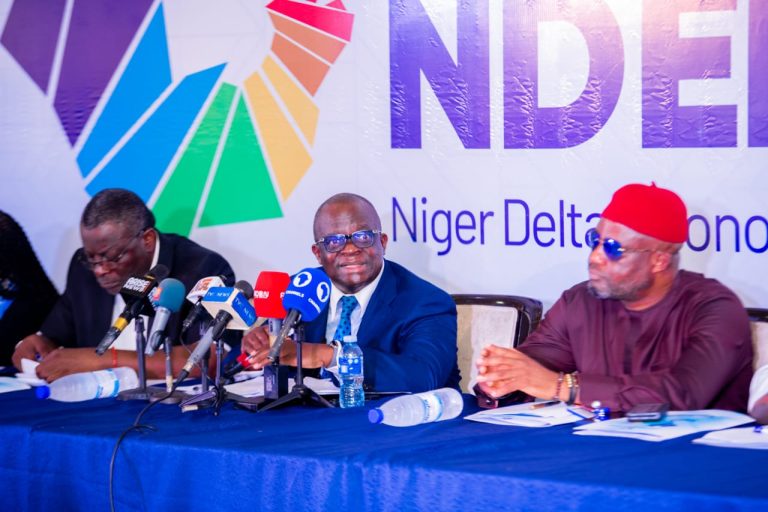
The NDDC Executive Director, Finance and Administration, and the Chairman, Main Organising Committee of the Niger Delta Games, Alabo Boma Iyaye, has assured that all logistics are ready for the kick-off of the games on Friday.

Speaking during a media interaction in Port Harcourt, Iyaye said that this year’s games, featuring 3,000 athletes, would be bigger and better, building on the successes recorded during the maiden edition in Uyo, Akwa Ibom State.

According to Iyaye, “the Niger Delta Games made history as the first regional sports festival in Nigeria, conceived primarily as a platform for talent discovery and development.” He noted that the initiative aligns with the Commission’s commitment to empowering youths and promoting positive engagement across the Niger Delta region.

“The major objective of the Niger Delta Games is talent discovery,” he said. “This event provides a rare opportunity for young athletes to showcase their abilities, launch themselves into the global stage, and begin structured pathways to professional sports careers.”

Iyaye assured that all arrangements had been concluded to ensure a smooth and successful event. He emphasised that officiating would be conducted with the highest level of integrity, guaranteeing fairness and equal opportunity for all participants.

The Chairman of the Main Organising Committee further stressed the role of sports as a powerful tool for social development, noting that organised sporting activities help redirect young minds away from crime.

“Our region is blessed with abundant raw talents, found in the creeks and on the streets of the Niger Delta. These Games provide a platform to harness such talents from the grassroots and bring them into the limelight,” he added.

Iyaye stated that the first edition of the games in Uyo brought peace and togetherness to the region, giving youths the platform to showcase their talents. He said that the games in Edo would further consolidate the gains made so far and provide more young people with opportunities to discover their innate talents.

Beyond sports competition, Iyaye disclosed that the event would also celebrate the rich cultural heritage of the Niger Delta, with cultural displays integrated into the games.


NIPR, NAAIP Forge Alliance to Embed Ethics, Cultural Identity in Nigeria’s AI Future

0

The Nigerian Institute of Public Relations (NIPR) and the National Association of Artificial Intelligence Practitioners (NAAIP) have established a strategic collaboration aimed at embedding ethical values and cultural relevance into Nigeria’s artificial intelligence ecosystem.

The partnership was formally announced in Abuja on Tuesday during a press conference marking the commencement of the 2026 Artificial Intelligence Awareness Day, themed “Harnessing Ethical Artificial Intelligence for National Transformation, Inclusive Growth, and Economic Resilience.”

Speaking at the event, the Acting President of NIPR, Professor Emmanuel Samu Dandaura, stated that Nigeria must deliberately mainstream its voice into global AI systems.

According to him, AI models must reflect Nigeria’s cultural realities, languages, social contexts, and value systems if the country is to play a meaningful leadership role in global artificial intelligence discourse.

“We cannot afford to allow machines to redefine humanity in ways that erase our identity,” he said.

He added, “As regulators of reputation and communication management we are committed to ensuring that artificial intelligence strengthens society without making human values subordinate to algorithms.”

He described NAAIP as one of the most credible bodies of AI professionals in Nigeria, noting that the collaboration would help entrench ethical consciousness across sectors.

Professor Dandaura stressed that NIPR’s involvement in AI governance is rooted in its long-standing commitment to ethics and responsible communication, recalling the Global Alliance AI principles for Public Relations practice which NIPR is a signatory to.

He further noted that ethics is at the heart of the work of the current Council led by Dr Ike Neliaku. This is illustrated by the theme of the forthcoming World Public Relations Forum 2026 (WPRF), scheduled for November 15-21 in Abuja-“Responsible Communication, Voice of the World”. This reinforces the Institute’s focus on integrity in a rapidly evolving digital age.

On fears that AI will eliminate jobs, he offered a pragmatic perspective: “Artificial intelligence will not replace those who are prepared. Young Nigerians must upgrade their skills, reposition themselves, and tap into the immense opportunities this technology presents. This is where training comes in. It is one area we would synergise with NAAIP”

In his remarks, the President of NAAIP and immediate past Vice Chancellor of Obafemi Awolowo University, Ile-Ife Professor Eyitope Ogunbodede, expressed enthusiasm about the collaboration, describing it as timely and strategic.

He urged stakeholders across government, academia, and the private sector to embrace shared responsibility in shaping Nigeria’s AI trajectory.

“The promise of AI can only be realised through coordinated action and visionary leadership,” he said.

Professor Ogunbodede painted a practical picture of what AI-driven governance could look like in Nigeria; Intelligent traffic management systems in Lagos and Abuja that adapt in real time to reduce congestion, AI-powered predictive maintenance for the national power grid to prevent costly failures, as well as Data-driven planning and budgeting systems to enhance transparency and accountability

“This is not science fiction,” he emphasised. “This is the practical application of AI that can strengthen infrastructure, improve public service delivery, enhance governance, and optimise national planning.”

The NIPR–NAAIP partnership is viewed as a decisive shift in Nigeria’s AI conversation, from passive consumption to proactive leadership. Both bodies made it clear that the future of artificial intelligence in Nigeria must be ethical, inclusive, and truly Nigerian.

𝐂𝐫𝐞𝐞𝐩𝐢𝐧𝐠 𝐃𝐢𝐜𝐭𝐚𝐭𝐨𝐫𝐬𝐡𝐢𝐩 𝐈𝐧 𝐔𝐠𝐚𝐧𝐝𝐚: 𝐖𝐡𝐲 𝐀𝐔’𝐬 𝐒𝐢𝐥𝐞𝐧𝐜𝐞 𝐖𝐨𝐫𝐫𝐢𝐞𝐬

0

By 𝗔𝗹𝗲𝘅 𝗘𝗻𝗲𝗺𝗮𝗻𝗻𝗮

Political watchers have posited that democracy in Uganda has come under intense pressure, where the 81-year-old President Yoweri Museveni who came to power as a rebel leader in 1986 still holds grip four decades later. But irrespective of the avalanche of criticisms he has faced in recent times, arising from his poor handling of dissent, forceful clampdown on opposition voices, as well as compromise of the independence of state institutions, he is still remembered for the role he played during his country’s struggle for independence from the United Kingdom. Most importantly, Museveni was a key figure that campaigned for Uganda’s liberation at a time of brutality and turbulence under former leaders, Milton Obote and the not*rious Idi Amin. These memories still linger especially among the generations old enough at that time to witness the sweat and bl00d that went into the struggle. However, the clear drift from a pro-people figure to a sit-tight dictator, whose family members wield undue influence in state affairs has overtime dwarfed the goodwill he once enjoyed. These excesses have slipped, others growing hydra-headed amid deafening silence of regional bodies, including the African Union who ordinarily should serve as protectors of democracy rather than punishers of coup.

Museveni for several years knew little about his actual date of birth. In fact, at the time of writing his memoir, he was quoted as saying, “We had real life-threatening challenges such as extra-judicial killings and looting… we had no time to worry about details such as dates of birth”. In 1967, he travelled to the neighbouring Tanzania and attended the University of Dar es Salaam in the capital where he studied economics and political science.

During this period, Museveni formed alliances with politically active students from around the region. Few years later, particularly in the 1970s, his name gained prominence after a coup by the notorious Amin, under whose watch an estimated 400,000 people were extra-judicially exec-uted in his 8-year iron fist rule. Amin was also infamous for crushing opposing voices and expelling the country’s Asian community. Museveni’s alliance, the Front for National Salvation, one of the rebel groups then with the assistance of Tanzania ended Amin’s oppressive regime and sent him packing.

After Amin’s fall, former President Milton Obote returned to power via a general election. Museveni however rejected Obote, refusing to accord his leadership recognition, alleging that the election that brought him to power was rigged. On the account of this, he launched a guerrilla warfare in 1981 and five years later, his rebel group, the National Resistance Movement (NRM), seized power and Museveni became the leader.

𝐖𝐡𝐞𝐧 𝐓𝐡𝐞 𝐎𝐯𝐚𝐭𝐢𝐨𝐧 𝐖𝐚𝐬 𝐋𝐨𝐮𝐝𝐞𝐬𝐭

Museveni steered Uganda to reconstruction and stability after years of conflict under Amin and Obote. The early days of his government focused on rebuilding state authority and integrating rebel groups into the mainstream military system, achieving key economic milestones, which created a sense of predictable governance after years of anarchy. Before Museveni took over power, Uganda was ravaged by inflation, infrastructure collapse, and capital flight. But these were reversed by policies that targeted economic liberalisation structural reforms, currency stabilisation and reduced hyperinflation. Uganda was at that time used as a reference point by international financial institutions as a model of post-conflict economic recovery in Africa. There was unprecedented growth in agricultural exports, especially coffee, Uganda experienced increased foreign investment and donor support as well as strong GDP growth in the early 1990s.

Health facilities started working again, schools were reopened, roads and public infrastructure were rebuilt while the civil service and tax system were revived. Uganda’s economy began to grow steadily and over 10 years, the country saw an average annual growth of more than 6%. Primary school enrolment significantly increased and HIV levels dropped, arising from anti-AIDS campaign spearheaded by the administration. Literacy and social indicators gradually began to pick up.

Ugandans were proud of the leadership they had in Museveni but unfortunately, things took a new twist and political system became increasingly centralised around him. He became stronger and more influential than the state institutions. He whittled down their independence, a situation that saw tongues wagging. Confidence was lost in the electoral system as transparency and fairness came under question. The legislature and judiciary became heavily arm-twisted. Opposition parties faced hostile restrictions and unfavourable policies.

𝟐𝟎𝟎𝟓 𝐑𝐞𝐦𝐨𝐯𝐚𝐥 𝐨𝐟 𝐓𝐞𝐧𝐮𝐫𝐞 𝐚𝐧𝐝 𝟐𝟎𝟏𝟕 𝐃𝐞𝐥𝐞𝐭𝐢𝐨𝐧 𝐨𝐟 𝐀𝐠𝐞 𝐋𝐢𝐦𝐢𝐭𝐬

Museveni undermined his country’s 2005 Constitution which allows for a maximum of two-term of five years each by seeking tenure extension. This is against the more honourable option of taking his exit while the ovation was at its loudest. When he was approaching the end of his second elected term in 2006, he surreptitiously initiated an amendment to the constitution to get a legal backing to remain in office.

He secured a majority in the parliament and in July 2005, there was an amendment to the constitution and the two-term presidential cap was expunged, allowing him to remain office as long as he wishes. There were also reports of inducement and intimidation of members of the parliament but the government expectedly denied any wrongdoing.

His 2006 electoral victory was seen as an affront to the spirit of the 2005 Constitution as it largely weakened democratic safeguards and entrenched personal rule as against the Rule of Law. In 2017, Museveni also orchestrated another amendment to the Constitution but this time, on age limit so that he would not be constitutionally barred to seek a fresh election as he was approaching the 75 years threshold. Again, this received parliamentary nod and in 2021, he contested and won, setting another negative precedent for altering the constitution at the whims and caprices of the incumbent.

𝐂𝐨𝐧𝐬𝐨𝐥𝐢𝐝𝐚𝐭𝐢𝐨𝐧 𝐨𝐟 𝐏𝐨𝐰𝐞𝐫, 𝐒𝐨𝐧 𝐨𝐧 𝐭𝐡𝐞 𝐋𝐨𝐨𝐬𝐞

Museveni has also been criticised over the manner he has made attempts to consolidate power within his family cycle, sparking nepotism debate in the administration in its 4th decade. Analysts believe that this move is targeted around his succession plan when his tenure expires in 2031. Members of his family are holding influential positions around the education, security and defence sectors. For instance, his wife, Janet Museveni has played a long-standing cabinet role as the Minister of Education and Sports while his brother, a long-time military figure, Salim Saleh is occupying the position of the Senior Presidential Adviser on Defence and Security, an influential position linked to military and security policy.

Most prominent is his son, Muhoozi Kainerugaba who serves as head of Uganda’s military in his capacity as the Chief of Defence Forces. A former commander of the Land Forces, his accelerated promotion to the rank of CDF as well as his deep involvement in politics has raised suspicion that he is being groomed as his father’s possible successor.

He is popular for making unbridled and provocative comments especially on social media, where he in 2022 threatened to invade and capture Nairobi, causing a diplomatic friction between Uganda and Kenya. Authorities had to distance themselves from the threat following a backlash, which was followed by public apologies from his father, Museveni. Not long ago, he also made inflammatory remarks on the military operations in Democratic Republic of Congo, stirring tension with Kinshasa and other actors in the region.

Kainerugaba, 51 has joined forces with his father to stifle opposition in the country and make the civil space even more toxic and hostile, undermining basic principles of liberty and freedom which democracy offers citizens. Under Museveni and his son’s watch, dictatorship is gradually displacing Rule of Law, especially with the way opposition figures and dissenting voices are being hounded and imprisoned under a compromised judiciary.

Before the presidential election last month, Kainerugaba had launched a clampdown on leader of the National Unity Platform (NUP), Bobi Wine, whose real name is Robert Kyagulanyi, incarcerating his supporters, using security forces to disrupt opposition-backed rallies. He had also threatened to beh*ad the opposition leader among other controversial comments, creating atmosphere of fear and tension in the minds of voting Uganda’s citizens.

Even after the opposition lost the election in questionable circumstances, Kainerugaba, using the instrumentality of the state has continued to haunt Bobi Wine and his followers. Last month, he confirmed the killing of at least 30 “ter*orists” in a veiled reference to opposition supporters while 2000 others were arrested and detained in unconventional facilities where they are believed to face tort*re. He went further to pointedly declare that Bobi Wine will join in the number of those killed.

Kainerugaba had also issued Bobi Wine, 43, who went into hiding in view of these credible threats a 48-hour ultimatum to surrender or be treated like a rebel. The President’s son has also unilaterally placed a ban on Bobi Wine from contesting in future elections in view of what he said is in national interest. His exact word – “Whether Robert Kyagulanyi Ssentamu is in the country or not, I, as CDF, in the interests of national security and for the good of the commonwealth, ban him from any further participation in the electoral exercises of Uganda.”

𝐈𝐧𝐬𝐭𝐢𝐭𝐮𝐭𝐢𝐨𝐧𝐚𝐥 𝐖𝐞𝐚𝐤𝐧𝐞𝐬𝐬 𝐨𝐟 𝐀𝐔

While the African Union is usually in a haste to suspend any member nation in matter of hours after each military coup, same energy has not been deployed to ensure that enablers of military incursions are largely mitigated and prevent coups from happening, rather than issuing suspensions that barely have effects. Again, the sovereignty of every nation and non-interference with internal affairs remain undisputed but failure of the pan-African body to adopt diplomatic approaches, including behind-the-scene honest conversations sends the wrong signal to intending emperors in government houses that bad behaviours have no consequences.

Regional bodies shape good governance and citizens’ expectations and serve as custodians of constitutional order, but where leaders are meant to believe that consequences are unlikely, the call for military takeover as seen in parts of the continent become imminent, which indeed serves the continent no good. The body language from the AU to Uganda at the moment speaks to international abandonment which fuels the temptation to resort to self-help, anarchy and unrest.

First published on https://www.theheritagetimes.com/ht-exclusive-creeping-dictatorship-in-uganda-why-aus-silence-worries/

Prosperity Cup Organizers Begin Training of Referees Ahead of Tournament

0

‎The organizers of Nigeria’s biggest grassroots football spectacle, the Bayelsa Governor’s Football Tournament christened the Prosperity Cup, say they are pleased with the progress of the State referees in the last few years of the tournament.

‎Director General of the tournament, Mr Ono Akpe gave the thumbs up while speaking at the opening ceremony of the referees refresher training programme at the Golden Tulip Resort and Apartments, Onopa, Yenagoa, the Bayelsa State capital.

‎The Director General, who was represented by the Deputy Director General of the tournament, Mr Perela Aboro, noted that the training exercise has continued to improve the capacity of the state referees, pointing out that the dream of the tournament is to see Bayelsa excel at the global stage.

‎According to him, the state referees are receiving international recognition as a result of the continuous investment on the umpires, urging them to discharge their duties during the tournament with utmost professionalism.

‎He explained that five Bayelsa-born referees are in the Nigeria Premier Football League NPFL, 12 in the Nigeria National League and five in the Nigeria Women Football League NWFL, maintaining that the quality of officiating has improved since the introduction of the refresher training.

‎Also speaking, Acting Director of Sports, Mr. Aye Andrew, while expressing gratitude to the organizers of the tournament for the laudable initiative, charged the referees to make good use of the opportunity,

‎Chairman of the Bayelsa State Football Association, BSFA, Barr Porbeni Ogun, who was represented by the secretary of the Association, Mr. Diseye Nwankwe, remarked that the refresher course was not just an event but an investment in the future of football in the State.

‎While commending the organizers of the tournament for the exercise, the Bayelsa State Football Association boss noted that since the commencement of the refresher training for referees, complaints of controversial officiating have reduced in the tournament.

‎He explained that the exploits of the state referees outside the shores of Bayelsa State was indicative of the huge steps taken by the Prosperity Cup organizers for umpires in the State to compete favourably with their peers outside the state..

‎Speaking in an interview shortly after the end of the theoretical session of day one of the training programme, CAF instructor and member of the NFF Referees Committee, Chukwudi Chukwujekwu, emphasized that the refresher course would significantly enhance officiating standards in line with global best practices.

‎He appreciated the organizers for their efforts and encouraged other states to adopt similar training programmes to improve refereeing nationwide, stating that the exercise would give referees new directions when the competition begins.

‎Richman Otiti and Rachel Onyekwere, who participated in the training programme, acknowledged that the exercise introduced them to new laws of the game, some of which would take effect in June.

‎The duo expressed gratitude to the organizers for updating them with the latest officiating rules and ensuring that they remained competitive with their counterparts across Nigeria and beyond.

‎The theoretical session of the training programme was immediately followed by a practical session at the Government House pitch. The programme continues tomorrow, Wednesday, February 18, 2026.

NDDC Flags Off CNG Conversion Training Programme For 400 Youths

0

The Niger Delta Development Commission, NDDC, has flagged off a six-week training programme for 400 Niger Delta youths on the Compressed Natural Gas, CNG, Autogas Conversion.

Speaking at the flag-off ceremony at the Dakkada Skills Acquisition Centre, Uyo, Akwa Ibom State, the NDDC Managing Director, Dr Samuel Ogbuku, described the programme as a strategic investment in human capital development and a deliberate effort to position Niger Delta youths at the forefront of Nigeria’s energy transition.

A statement by Seledi Thompson-Wakama, Director, Corporate Affairs noted that Ogbuku, who was represented by the Executive Director, Projects, Dr Victor Antai, said the training, which would run in two batches of three weeks each, was designed to equip participants with practical skills in CNG vehicle conversion, system maintenance, and safety standards, in line with global best practices.

He stated: “The CNG is a cleaner, safer, and more cost-effective alternative to conventional fuels and the growing adoption of CNG-powered vehicles across Nigeria has created a strong demand for skilled technicians.”

According to the NDDC boss, the training programme would reduce youth unemployment, promote entrepreneurship, support environmental sustainability, and create new economic opportunities in the Niger Delta region.

He urged beneficiaries to approach the training with discipline and dedication, cautioning them against selling their starter packs after graduation.

The Director of Commercial and Industrial Development, Mrs Lyna Okara, affirmed that 400 participants were selected for the programme and would be trained in two batches over six weeks. She encouraged the trainees to pay close attention and make the utmost use of the opportunity provided by the NDDC.

In his remarks, a representative of the Presidential Initiative on Compressed Natural Gas (PI-CNG), Mr Olayinka Rufai, commended the NDDC for its forward-looking approach and alignment with the Federal Government’s vision for clean energy. He described the initiative as futuristic and praised the Commission for advancing the CNG agenda in the Niger Delta region.

Also speaking, the Akwa Ibom State representative on the NDDC Board, Apostle Abasiandikan Nkono, urged youths to fully utilise the skills acquired from NDDC-sponsored programmes rather than continually seeking new training opportunities. He noted that the CNG conversion training would expose participants to endless economic possibilities.

The Head Trainer from Viedenburg Energy Resources, Mr Saidu Hamdullahi, encouraged participants to maximise the opportunity to improve themselves and prepare for emerging opportunities in the energy sector.


Prosperity Cup And Its Journey To Success

0

‎By Hananeel Jackson

‎A renowned American wrestler and entrepreneur, Dwayne Johnson once said “Success isn’t always about greatness. It’s about consistency. Consistent hard work leads to success. Greatness will come.”

‎This timeless quote from Dwayne Johnson has continued to be the driving force of the Bayelsa Governor’s Football Tournament tagged the Prosperity Cup, formerly known as Restoration Cup.

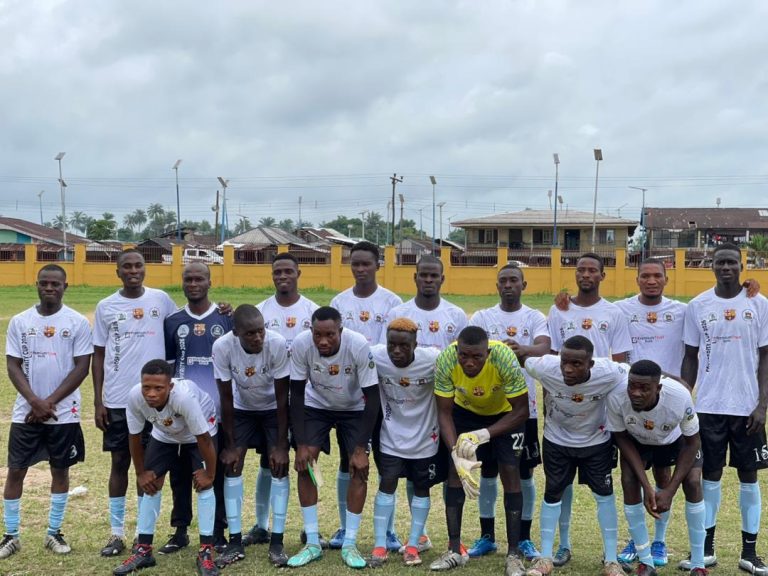
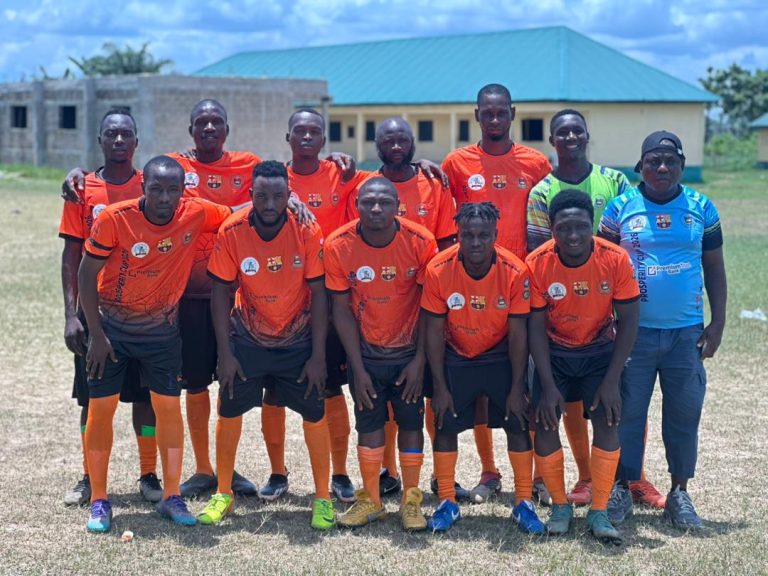
‎Since 2015 when the tournament was conceptualized by the former governor of Bayelsa State, Senator Henry Seriake Dickson, the spectacle has continued to be the bedrock for many grassroots footballers in Bayelsa with some plying their trades with different European clubs ensuring that the dream of the vision bearer, Mr. Ono Akpe is realized.

In the maiden edition in 2015, the tournament witnessed 110 teams in participation with Ewo-ama FC of Brass Local Government Area emerging champions, defeating River Ramos FC of Ekeremor LGA at the Nembe City Stadium, Nembe. Okardi Inikurogha of Ewo-ama FC won the Most Valuable Player of that edition.

However, 2017 saw an increase from communities, tertiary institutions and faith-based organizations as Peretorugbene FC of Ekeremor Local Government Area were crowned champions of that edition. The 2017 edition produced the present Bayelsa United captain, Gabriel Biriduba and Tarabina Bweribo under the tutelage of Meinkeme Fekete with 154 teams in participation.

‎Hon Sunday Dare, former Minister of Sports now Special Adviser on Media and Public Communications to President Bola Ahmed Tinubu, named the Prosperity Cup Nigeria’s biggest grassroots football tournament in 2019 at the grand finale of the spectacle. Okolobiri FC won that year’s edition with 160 teams taking part.

‎The 2018/2019 tournament birthed a selected team called the Restoration Starlets FC that participated in the African Youth Championship in Cape Verde sponsored by the Bayelsa State Government under the watch of Diepreye Teibowei. The Restoration Starlets finished third in the competition. Later in 2019, the team was crowned champions of the Bayelsa State League on their return from Cape Verde.

The showpiece was halted in 2020/2021 as a result of the global pandemic, COVID-19 that ravaged the world.

The competition resumed in 2022 after the COVID-19 pandemic with a total of 210 teams and that edition was won by Eternal Grace Ministry (EGM) FC of Yenagoa. This edition of the tournament attracted International Scouts from France, South Africa, Australia and Eastern Europe. A lot has been achieved by this competition as several players from the tournament are plying their trades with different clubs abroad.

‎The 2022 edition of the tournament witnessed its first scouting programme which was led by the Chief Executive, Supreme Sports International, Mr. Vincent Onyeama alongside the Chief Executive Officer, Aspire Sports France, Mr. Gregory Paul and Mr Passi Gerald of Olympique Marseille of France.

‎Other scouts that attended were from Memelodi Sundowns of South Africa, Thembela Lesly, Head coach and Newcastle Jets coach of Australia, Mr Hussein Skenderovic. Thereafter, the Prosperity Cup had its second scouting programme led by renowned FIFA agent, Ojo Paul Omamomo including Nikita Poliakov, Dimitri Churkin from FDC Vista Academy in Europe as well as former National team gaffer and Bendel Insurance coach, Kennedy Boboye and Ex-international Joseph Eyimofe.

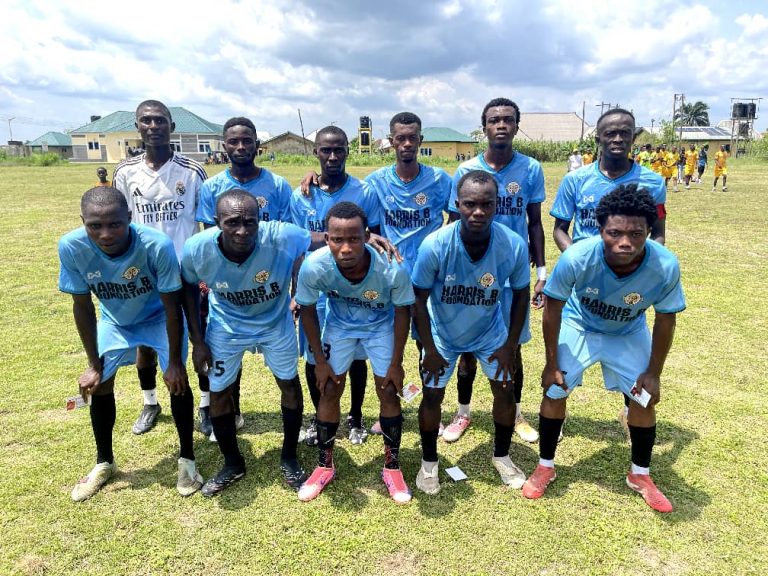
‎Crusaders FC of Peretorugbene in 2023 won the tournament with 214 registered teams playing in 24 centres across the eight local government areas in the State. Beyond the prize money and the trophy, one of the most captivating moments of the 2023 edition was the young Everton of Ikoli side who took the tournament by storm.

‎Despite being the youngest side with a 20-year-old as the oldest in the team, shocked many teams to reach the quarter finals but were knocked out by eventual champions, Crusaders FC, beating De Grace 4-2 on penalties to claim the crown that year.

The visionary Director General of the tournament, Mr. Ono Akpe and his team in the 2024 edition of the spectacle, added more spice to the competition with the introduction of the Women’s category, Para Soccer championship and the Local Government Area finals to decide champions in their respective local government areas.

‎According to Akpe, “the introduction of the women’s tournament was to consolidate on the achievements of Bayelsa Queens in women’s football in the country and continent, having finished third in 2022 in the CAF women’s champions league in Morocco”.

‎Apart from the various participating teams, the organizers have also created a platform to equip referees, coaches, medical personnel and coordinators with modern trends in their various vocations.

‎Ogboinbiri FC won the Prosperity Cup in 2024 beating Nembe City of Nembe at the Samson Siasia Stadium, Yenagoa with 209 registered teams, in the presence of the NFF President Alhaji Ibrahim Gusau and other critical stakeholders in Nigeria football.

‎Eternal Grace Ministry, EGM FC won the Bayelsa Governor’s Football Tournament for the second time in 2025 to become the first team in the history of the tournament to achieve such a feat. EGM FC beat Advanced Dreams FA by 4-3 on penalties after hostilities ended in a barren draw after regulation time at the Samson Siasia Stadium.

The 2025 edition of the tournament was competed among 231 teams, an unprecedented number of registered teams, the highest entry since the inception of the competition in 2015.

‎However, the Women’s version of the Prosperity Cup have witnessed three different champions, Golden Sun Sports in 2023, Niger Delta Queens of Amassoma won the 2024 edition while Afini Ladies FC of Yenagoa in 2025, defeated tournament favourites, Ezougha Soccer Academy 4-2 on penalties to emerge champions.

‎The Prosperity Cup has over the years metamorphosed from being just a football competition to a veritable institution of learning, gathering knowledge and sharpening skills.

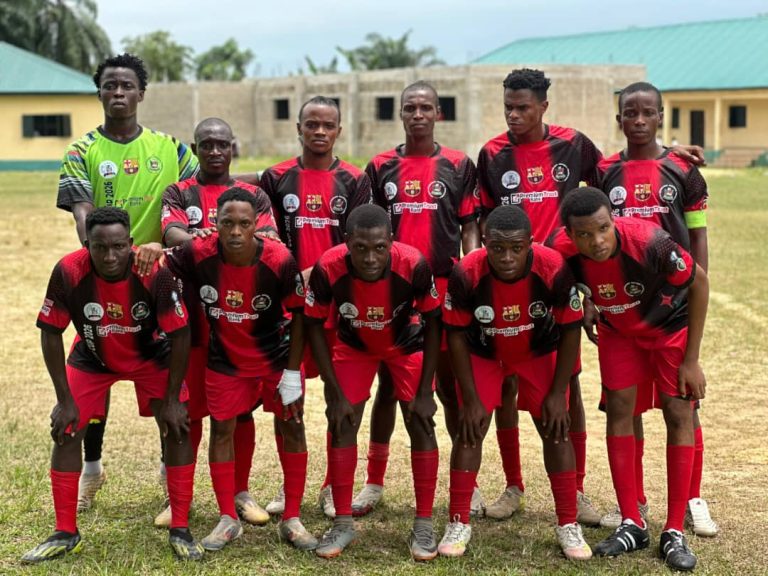
‎Due to the impeccable organization of the tournament, in preparation for the 2024/25 Nigeria Premier Football League, NPFL season, the organizers of the Prosperity Cup held the first pre-season football tournament. They housed eight teams; Abia Warriors, Kwara United, Rivers United, Sunshine Stars, Bendel Insurance, Bayelsa United, and a team comprising selected players from the Prosperity Cup, took part in the pre-season tournament with the name Crusader FC.

‎Handsome Surveyor, one of the players that dazzled in the pre-season tournament was immediately signed by NPFL giants, Rivers United as a result of Crusader FC’s brilliant performance against Rivers United.

‎The Bayelsa Governor’s Football Tournament christened the Prosperity Cup has given grassroots footballers in the state the opportunity to earn a living as well as the opportunity to showcase their talents, with some plying their trade in the NPFL and others with foreign clubs.

‎Benjamin Precious is the latest player to enjoy the Prosperity Cup’s benevolence. He was discovered in Season five of the tournament after his impactful performance with Dream Football Academy, now Advanced Dreams FA under Kenneth Opukume’s watch.

‎Precious was an attacking sensation during the tournament and was admired by many fans and scouts in the SPOCS scouting programme at Remo, Ogun State and the 3rd Governor Douye Diri International Tournament in Yenagoa, thereafter he moved to the Gambian league, where he put up a brilliant performance before joining German Bundesliga side, TSG Hoffenheim.

‎Only recently, Precious shone like a million stars at the U-20 Africa Cup of Nations in Egypt, compelling the State Governor, Senator Douye Diri commending the organizers of the tournament for their foresight. Other players are Joel Izibevie- Nestor who is currently in Bosnia.

‎Half of the Bayelsa United team that won the 2021 Aiteo Cup in Benin City, Edo State are products of the Prosperity Cup, Okardi Inikurogha, Robert Mizo who is currently in northern Cyprus, Gabriel Biriduba, Emo James, Endurance Ebedebiri, Tarabina Bweribo, Edwin Ayiba and Saro Loveday.

‎Alex Oyowah featured in the 2018/2019 edition with the Okordia team where he showcased his skills and got snapped up by Bayelsa United, he moved to Rivers United in the 2022/2023 season, before signing for Remo Stars and helping them to win the league title for the first time. Oyowah was also part of the last home-based CHAN Eagles team.