Wednesday, November 25, 2026
Home Blog Page 8

NDCCITMA Rejects Allegation of Appropriating Niger Delta Economic and Investment Summit Trademark.

0

NDCCITMA Rejects Allegation of Appropriating Niger Delta Economic and Investment Summit Trademark.

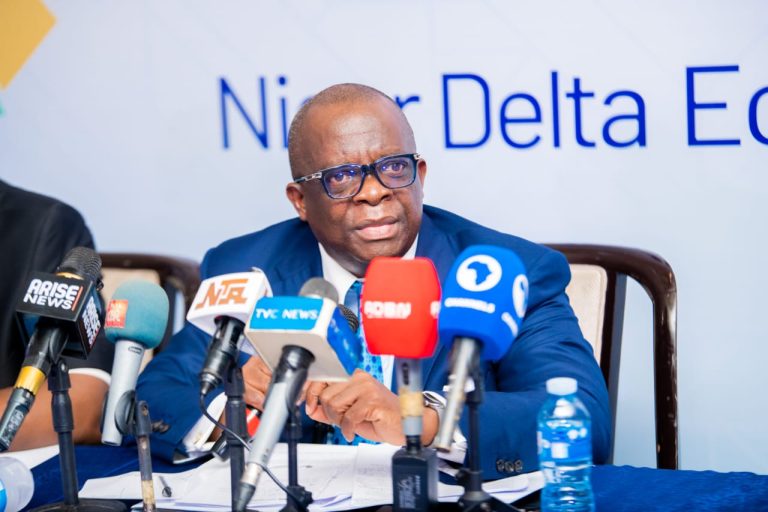
The Niger Delta Chamber of Commerce, Industry, Trade, Mines and Agriculture (NDCCITMA) has rejected claims that it appropriated or “stole” the idea of Niger Delta Economic and Investment Summit from another organisation whose application was reportedly pending before the Federal Ministry of Trade.

NDCCITMA considers the allegation misleading and wishes to set the record straight.

The concept of Niger Delta Economic and Investment Summit is a broad and widely recognised platform used globally to bring together government, the private sector, investors, businesses, development partners and other stakeholders to deliberate on economic growth and development. The use of the term “Economic Summit” does not, in itself, establish exclusive ownership of the concept by any individual or organisation.

More importantly, the chronology of events does not support the allegation being made against NDCCITMA.

While the said application was reportedly still pending before the Ministry of Trade as at September 2025, NDCCITMA had already gone through the appropriate processes and received approval from the Ministry of Trade in August 2025.

NDCCITMA did not rely on, copy, or appropriate the pending application of any other party in arriving at its name or identity

It is also important to distinguish between a concept and legally protected intellectual property, such as a registered trademark, proprietary material or other enforceable intellectual property right.

NDCCITMA remains committed to conducting its activities in accordance with applicable laws and regulatory requirements.Most importantly, in Suit No: FHC/PHC/CS/57/2026 filed on same subject matter in Portharcourt by the petitioner, the learned Judge had restrained the plaintiff from further interfering with the Summit being planned by the NDCCITMA. NDCCITMA will continue respect the rule of law

We therefore urge the public, stakeholders, the media to disregard any narrative unless such claims are supported by verifiable facts and relevant legal documentation.

NDCCITMA firmly rejects the allegation and maintains that its activities and identity were developed and pursued independently and through the appropriate regulatory channels.

The organisation remains focused on its mandate of promoting commerce, industry, trade, agriculture, investment and sustainable economic development across the Niger Delta region.


NCC Opens Free Digital Learning Pathways with Zero-Rated Access to Educational Platforms and Content Initiative

0

The Nigerian Communications Commission (NCC) has launched the Zero-Rated Data Access to Educational Platforms and Content initiative to expand access to learning resources, bridge educational inequalities and support the country’s long-term economic growth by investing in human capital.
The Zero-Rated Data Access to Educational Platforms and Content, which was launched on Thursday, is a coordinated national approach to improving affordable and equitable access to digital education across Nigeria and is also aligned with Nigeria’s broader digital economy objectives.


Under the initiative’s Operator-Sponsored Model, eligible users will receive up to 100 megabytes of free daily data allowance to access designated educational platforms which means a learner receiving the free 100MB would enjoy about 700MB of educational data each week, roughly 3GB every month, and up to 36.5GB annually.
Speaking on the launch of the programme, the Executive Vice Chairman of NCC, Dr. Aminu Maida, explained that the initiative, which provides learners with free access to approved educational platforms, is part of broader efforts by the government to equip Nigerians with digital skills and knowledge.


Maida said the programme aligns with President Bola Tinubu’s vision of building a $1 trillion economy, which he said depends heavily on developing the country’s human capital. “We need to appreciate how critical education is to economic development because of the role of human capital,” Maida said. “The President has made it very clear the role of human capital towards achieving the $1 trillion economy goal,” he stated.
According to him, while government programmes such as digital skills initiatives are helping to build capacity, internet connectivity remains essential for citizens to fully benefit from such opportunities. “This is where this initiative is very critical,” he said.
“One hundred megabytes of data might sound a little, but when you look at it over a month and over a year, and cumulatively over the millions of learners and students that are going to access it, it’s really a significant investment by the industry towards the future of this country,” he noted.

According to available estimates on educational data consumption, the 100Mb free daily data allowance could provide learners with an average of between two and five hours of study time per day, depending on the type of learning activity. While reading text materials, PDF documents and conducting educational searches typically consume about 5 to 15MB per hour, allowing for as much as seven to 20 hours of access, participation in text-based online learning platforms generally uses 10 to 25MB per hour, translating to about four to 10 hours of learning. Audio-based lessons, which consume approximately 30 to 60MB per hour, could still provide between one and three hours of continuous educational engagement. This means the initiative has the potential to significantly expand access to digital learning opportunities for millions of students across Nigeria.
The EVC said improved connectivity could also help address disparities in educational resources across different parts of the country by linking students to teachers and learning materials irrespective of location.
“The gap between certain regions of the country where you would have a deficit in terms of teachers and other regions where you would have a surplus, connectivity is going to bridge that gap,” he said. “It is part of a bigger scheme to ensure that education is delivered to every citizen and that nobody is left behind.”
Industry stakeholders including operators have estimated that the cost implication of providing data to five million student in the programme could run into ₦15 billion monthly and ₦180billions annually.
On this projected cost, Maida described the initiative as a strategic investment rather than a burden to the industry. “If the economy becomes more productive through these people who access these educational platforms, they are the future innovators in Nigeria, they are the ones who are going to come up with ideas and become leaders of tomorrow,” he said.
“So, making them more productive is actually going to create more opportunities for the sector to grow. It’s not about short-term thinking. It’s about securing the future of Nigerians.”
Maida said the initiative was designed with sustainability in mind. The 100MB cap, he noted, is intended to ensure the programme remains viable while government and industry stakeholders assess usage patterns.
“The idea of a cap of 100 megabytes is also towards ensuring sustainability because if we say it’s unlimited from day one, I think we’re going to be stretching ourselves,” he said.
He added that participating educational platforms are being encouraged to optimise their services to minimise data consumption, including reducing or eliminating advertisements and designing content to be delivered efficiently.
“All of these measures are being considered and put in place from the get-go to ensure that as minimum data as possible is used so that 100 megabytes delivers as much of the intended value, which is educational content, first and foremost, to citizens of Nigeria,” he said.
Director, Policy, Competition and Economic Analysis at the NCC, Ayuba Shuaibu, said a key feature of the programme is the establishment of a governance structure through which the Federal Ministry of Education and the NCC will jointly approve and whitelist educational platforms eligible for participation. The framework also requires compliance with telecommunications, cybersecurity, consumer protection, child protection and data protection regulations.
Eligible platforms include Learning Management Systems (LMS), digital libraries, educational repositories, teacher development platforms, and technical and vocational training platforms. The framework for the initiative further incorporates safeguards aimed at preserving net neutrality, promoting fair competition and ensuring inclusivity across the education sector.
As part of the initial rollout, the initiative adopts an Operator-Sponsored Model under which participating mobile network operators will provide a daily zero-rated data allowance of 100 megabytes to users accessing approved educational websites and platforms. The allowance will be reviewed periodically as the initiative evolves.
The initiative also introduces mechanisms for monitoring, quality assurance and periodic evaluation. Performance indicators will include service availability, platform usage, data consumption, consumer complaints, network performance and compliance with relevant regulatory instruments.
According to Shuaibu, several learning platforms have already been assessed, approved and whitelisted for participation in the programme. Only these approved platforms will initially be accessible through the free data allowance, while additional platforms are expected to be incorporated over time.
The NCC and its partners will begin collecting data immediately to support a structured impact assessment of the initiative. The assessment will examine educational, technical, financial, consumer protection and regulatory outcomes, with findings expected to guide future adjustments to the programme’s operating model and expansion strategy.
The Chairman of the NCC Board, Idris Olorunnimbe, described the take-off of the Zero-Rated Data Access to Educational Platforms and Content as demonstration of the Federal Government’s commitment to education.
In his keynote address, Dr. Tunji Alausa, the Honourable Minister of Education, expressed appreciation to NCC for spearheading the initiative, its forward-thinking intervention and the extensive stakeholder consultations that culminated in the programme’s launch.
The Minister further applauded the NCC for addressing one of the most significant barriers to digital learning in Nigeria: the cost of internet access. He noted that by enabling learners to access approved educational platforms and content without incurring data charges, the initiative would expand educational opportunities for students, particularly those from low-income households.

NDDC Will Sustain Investment In Education For Niger Deltans – Ogbuku

0
The Managing Director of the Niger Delta Development Commission, NDDC, Dr Samuel Ogbuku, says the Commission will continue to invest in education, including building hostels, school facilities and equipment for educational institutions in the Niger Delta region.
Ogbuku, who made this known during the World Literacy Day celebration in Port Harcourt, Rivers State, said it was important to keep empowering people in the region to become self-reliant and better prepared for sustainable livelihoods.
In a statement by NDDCs Director, Corporate Affairs, Seledi Thompson-Wakama the NDDC Chief Executive Officer, represented by the Director of Education, Dr Awele Chukwudifu, emphasized that education and literacy would equip people in the region to contribute to the economic growth of the Niger Delta Region.
He assured that the Commission would continue to sponsor foreign and local postgraduate scholarship programmes to ensure people in the region advance in their academic journey.
Ogbuku stated that education opens doors to various opportunities, especially digital literacy.
A facilitator from the Department of Business Administration, University of Lagos, Dr Adesina Osho, who spoke on ‘The role of literacy in National Development’, observed that digital literacy has improved human activities and made information readily available.
He emphasised the need to educate communities across the Niger Delta region on the importance of literacy in development.
Osho stressed the need for digital entrepreneurship, saying that digital skills open opportunities in that area and maintained that literacy supports economic development, social activities, civic responsibilities, among others.
He urged tertiary institutions to establish centres for continuing education, where adults could enrol in part-time educational programmes.
Dr Osho also called on faith-based organisations, NGOs, and communities to support literacy through programmes and scholarships as part of their corporate social responsibility.
The facilitator, who asserted that education begins at home, asked parents to create a reading culture in their homes, encourage curiosity among children, provide access to books and educational materials, and share opportunities with other parents.
In his presentation, the Director, Academic Planning Unit, Ignatius Ajuru University of Education, Rumuolumeni, Port Harcourt, Professor Joseph Kinanee, identified dimensions of literacy to include traditional literacy, environmental literacy, Numeracy, cultural literacy, critical literacy, functional literacy, media cum information literacy, financial literacy, digital literacy and Artificial intelligence (AI) literacy.
Speaking on the theme, which centred on ‘Literacy for People, the Planet and Prosperity’, Professor Kinanee noted that literacy should be all-inclusive, targeting every person regardless of gender.
He said environmental literacy should be taken seriously, given its impact on human health, noting that about 739 million people lack basic literacy, according to UNESCO reports, while four out of every ten children do not meet minimum reading proficiency.
Kinanee acknowledged that NDDC had contributed immensely to literacy levels in the Niger Delta region and encouraged continuous learning through digital platforms.

NDDC Empowers Persons With Disabilities In Akwa Ibom, Pledges More Inclusion

0
The Niger Delta Development Commission, NDDC, has empowered Persons Living with Disabilities, PWDs, in Akwa Ibom State, committing to greater inclusion in its development programmes.
Speaking during the empowerment programme, held in Uyo to commemorate the International Day for Persons with Disabilities, the NDDC Director, Akwa Ibom State office, Engr. Evong Evong, said the Commission was committed to promoting inclusion, empowerment, equality, and improved livelihoods for persons with disabilities and other underserved members of society through advocacy, capacity building, partnerships, and community-based initiatives.
A statement by NDDCs Director, Corporate Affairs, Seledi Thompson-Wakama noted that Evong stated: “Disability should never be a hindrance to achieving one’s dreams or goals. Our aim is to equip youths and women with disabilities with the knowledge, skills, resources and confidence they need to become economically independent and contribute meaningfully to their communities.”
He reaffirmed NDDC’s commitment, in line with the Renewed Hope Agenda of President Bola Ahmed Tinubu’s administration, to promote equal opportunities and create sustainable pathways for youths and women with disabilities to participate fully in social and economic development.
The NDDC Director, Culture and Women Affairs, Mrs Imoni Ahunna, emphasised the importance of creating an inclusive society where Persons With Disabilities have equal access to education, entrepreneurship, healthcare, employment and other opportunities.
Imoni explained: “The NDDC organised the empowerment outreach programme to support youths and women living with disabilities through skills development, inclusion, advocacy, and access to opportunities.”
She added: “A nation or region is truly great not only by what it builds for the strong but how it carries the vulnerable people along.”
Imoni acknowledged the Board and Management of the NDDC, eulogising them for the positive impact they have created in the region in line with President Tinubu’s Renewed Hope Agenda. She promised to transmit the plea from the Special Assistant to the Government of Akwa Ibom State on Persons With Disabilities to the NDDC management for consideration and implementation.
The Special Assistant to the Akwa Ibom State Government on Persons With Disabilities, Hon. Nene Bassey, thanked the NDDC for its efforts in assisting Persons With Disabilities in Akwa Ibom State even before the inception of the International Day for Persons Living With Disabilities in the state.
Bassey pleaded with the Management to employ Persons With Disabilities and give them the opportunity to access the NDDC scholarship without hitch.
One of the beneficiaries, Mr. Godwin Effiong, expressed appreciation for the initiative, noting that the programme provided valuable opportunities to develop his abilities. He said, “With today’s training, I have learned that I have abilities even with a disability.”
Another beneficiary, Mrs. Helen Jeremiah, said she gained valuable lessons that would improve her livelihood and build her confidence.

NDDC Boosts Legal Education In Niger Delta Universities

0
The Chairman of the Niger Delta Development Commission, NDDC, Governing Board, Mr Chiedu Ebie, has assured that the Commission will continue to play a strategic role in the development of legal education in universities across the Niger Delta region.
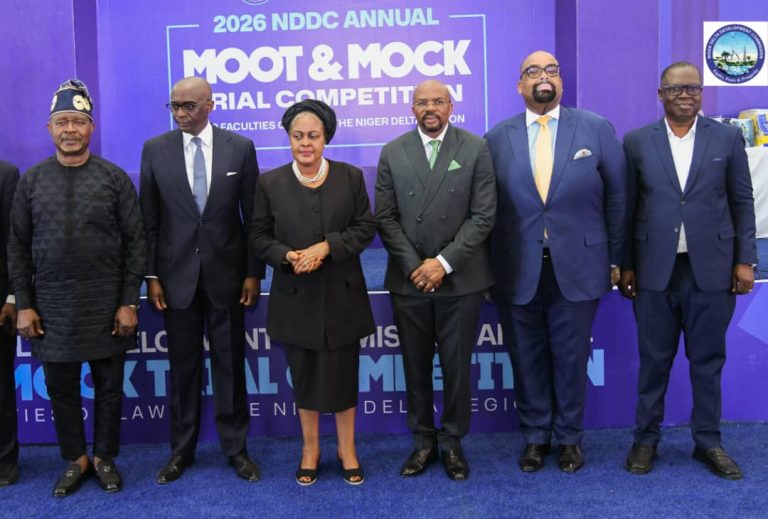
Ebie spoke during the 2026 Moot and Mock Trial Competition for law Faculties in universities in the region, held at the Dr Nabo Graham Douglas Port Harcourt Campus of the Nigerian Law School, Rivers State.
A statement by, Director, Corporate Affairs, Seledi Thompson-Wakama noted that Ebie said that the Commission would continue to play its statutory role in developing and supporting efforts to advance education, especially in legal education through practical training to improve capacity.
He stated: “We have been deliberate about our interventions in the educational and human capacity development of the people of this region. This is evidenced by the repositioning of our foreign and local Postgraduate Scholarship Programmes, and by the provision of infrastructure, roads, hostels, desks and other learning facilities, across many higher institutions in the Niger Delta.”
The NDDC Chairman stressed the importance of Moot Court and Mock Trial competitions in the academic curriculum for law students, and the strategic role they play in shaping and building the confidence of young legal minds.
“Moot Court competitions offer students a platform to hone their advocacy and courtroom presentation skills, and to learn firsthand lessons that will serve them well in their future careers. They offer students an opportunity to step outside the classroom and engage in practical courtroom work,” he said.
“It is our expectation that this competition lays the foundation for the advocacy skills these young legal minds will need to draw attention to the challenges of our region, even at this early stage of their careers.”
In his address, the NDDC Managing Director, Dr Samuel Ogbuku, noted that the Commission was strengthening its partnerships and collaborations with the Judiciary, the Nigerian Bar Association, and, indeed, the wider legal community.
Ogbuku said: “We strongly believe that law, when deployed effectively and efficiently, can be a catalyst for rapid, sustainable development in our region.
He urged the students to look beyond the competition and reflect on how their fresh knowledge and insight could be harnessed toward the sustainable development of the Niger Delta region.
According to the NDDC boss, “We are at a critical stage in the global socio-economic matrix, a period of rapid energy transition from fossil fuels to clean energy. We are also at a technological stage where Artificial Intelligence (AI) is experiencing exponential growth. Therefore, our legal education curriculum in the region must adapt quickly and embrace these global shifts and trends to position and equip the region’s future leaders with the skill set to compete globally.”
In a keynote address, the Special Guest of Honour, a retired Justice of the Supreme Court, Hon. Justice Mary Odili, commended NDDC for sponsoring the Moot and Mock Trial competition for law students, stating that it was an essential component of legal training.
She shared her experiences with the students and advised them to make the most of the competition, as not everything was learnt in the classroom.
Also speaking, the 30th President of the Nigeria Bar Association (NBA), Mr Olumide Akpata, noted that the NDDC understood the transformative powers of legal training.
He observed: “Advocacy is the bedrock of the legal profession. The ability to think on your feet is something AI can’t replicate.”
The Deputy Director-General and Head of the Port Harcourt Campus of the Nigerian Law School, Prof. Chinonso Mmuozoba, stated that human capacity building was a very important factor in the development of any region, adding that it was central to the development of critical thinking in all professions.
He affirmed that the NDDC was helping with legal education and training for lawyers. He also commended the interventions of NDDC in the educational sector generally. He advised the students to see the trial as more than competition.
In his welcome address, the NDDC Director of Legal Services, Mr Victor Arenyeka, declared that the Moot Court and Mock Trial competitions were key components of the training process for law students globally.
He explained: “Through the Moot Court Competition, we bring together law students from Universities across the region in a healthy contest, frame facts from legal issues peculiar to the socio-political environment of the region, where the students discuss topical matters in environmental law, oil and gas law, petroleum industry laws and sustainable development with a view to offering solutions from a legal standpoint.”

Nigeria’s President To Launch Niger Delta Economic Summit Beyond Oil And Gas

0
As Nigeria’s Niger Delta hits the highways of economic drive and evolvement, President Bola Tinubu will be in the region to flag off an investment and economic summit.
On September 15, the president is expected to declare open the Niger Delta Economic & Investment Summit 2026 in Port Harcourt, Rivers State.
The region is naturally the oil and gas bay of Nigeria and made of nine states that cut across the three geopolitical zones of southern Nigeria.
But the focus of the event is to look at the holistic economy of the region beyond just oil and gas to the development and growth of other potentials.
The event sets its attention on: Driving Investment, Innovation & Industrial Growth in the Niger Delta
The Niger Delta Economic and Investment Summit (NDEIS), aims to be a high-impact investment platform and will seek to address development challenges and unlock scalable, bankable, and sustainable opportunities in the Niger Delta Region.
Ambassador Ideare Ogan, Chairman of the Niger Delta Chambers of Commerce,Industry, Trade, Mines and Agriculture, (NDCCITMA), the host agency said the body is out to recreate the economic fortunes of the region beyond just oil and gas, and will use the event to make a statement about the economic robustness of the Niger Delta.
The Summit will position Nigeria’s most endowed region with mineral resources as an emerging multi-sector growth corridor with strong returns for forward-looking investors.
It will reposition the Niger Delta as a competitive hub for innovation, enterprise, and inclusive development
The Summit will convene government leaders, development partners, investors, industry experts, community leaders, and youth innovators to engage in focused dialogue on priority sectors such as energy transition, oil and gas value chain optimization, agriculture, blue economy, infrastructure, manufacturing, technology, environmental sustainability, and human capital development.
The Managing Director of Red Sapphire Consulting, Mr. Onoriode Akpe told Africa China Economy Magazine that the summit that has long been in the offing will reposition the region as the economic centrepiece of the country as it has been with oil and gas, but this time in a multi dimensional way.
Akpe said that the emphasis will be placed on inclusive growth, peacebuilding, climate resilience, and economic diversification, education industry development, manufacturing, service sector and ICT industry enhancement.
The Summit program will present keynote speakers, goodwill messages, technical session and structured plenary sessions, sector-specific investment forums, policy roundtables, and deal-making platforms that will address key issues on the economy of the region.
The Summit is expected to attract key development partners led by our benefactors, the Niger Delta Development Commission (NDDC).
The summit planned to be a world-class event, will align regional development priorities with national economic objectives and global investment trends.
The Steering Committee will provide strategic oversight, stakeholder coordination, and operational guidance to ensure the Summit achieves measurable outcomes, including policy commitments, investment deals, and actionable partnerships.
NDCCITMA sees the Summit beyond dialogue into deal execution. Investment-ready projects, public– private partnership (PPP) frameworks, The Summit will target B2G and B2B engagements that will enable investors and our members to structure partnerships that align profitability with long-term regional stability and impact.

Retired Yet Retained: The Constitutional Limits of Backdoor Extension in Public Service- Fatai Abiodun Esq

By Fatai Abiodun Esq

In Nigeria, the growing practice of extending the tenure of retiring public officers through administrative arrangements by Heads of Government Agencies is increasingly raising concerns about the integrity of Nigeria’s public service. What ought to be a clear and predictable process of retirement, succession and fresh appointment is, in some instances, being replaced by what may be described as a “backdoor extension”.

The issue is not merely about whether a retiring officer should be allowed to continue serving government. It goes to the heart of the rule of law, institutional succession, career progression and fairness within the public service. Retirement rules are designed not only to determine when an officer exits public employment, but also to create room for succession, promotion, institutional renewal and the advancement of younger or next-ranking officers who have spent years preparing to assume greater responsibilities.

Of particular concern is the effect of such extensions on the career of an officer who is legitimately positioned to succeed the retiring officer. Where an officer has put a larger part of his life in the service and is expected to enjoy his sacrifice at the tail end of his career, and someone’s service has been extended with no lawful basis. The continued retention of the retiring officer may effectively block that officer from assuming the office for which he or she has become qualified. In practical terms, what is presented as an extension of one person’s service may become a denial of another person’s career opportunity.

In a structured career service, a delay at one level can have a domino effect throughout an officer’s remaining career, potentially affecting future promotions and the officer’s eventual retirement benefits and professional standing. This practice therefore deserves scrutiny not only from the perspective of the retiring officer, but also from the perspective of the officer whose career progression is being impeded by the extension.

There may, of course, be legitimate circumstances in which government requires the continued expertise of a retired officer. The law may permit such a person to return through a fresh appointment, contract engagement, consultancy or other legally recognised arrangement. However, there is a fundamental difference between a lawful fresh engagement after retirement and the continuation of an officer’s former tenure through an administrative extension that has no clear foundation in law.

The distinction is particularly important in relation to sensitive statutory and financial positions. Where a retired officer continues to exercise the functions of an office, including control over government accounts, statutory signatures or banking mandates, despite the existence of another officer who is expected to be promoted or appointed to succeed him, the question is no longer simply one of personnel management. It becomes a question of legal authority, institutional accountability and the protection of the career rights and legitimate expectations of the next occupant.

Recent developments in some federal, state and government institutions have brought the issue into sharper focus. While the reappointment of a retired officer through a properly authorised fresh appointment may be legally distinguishable from an extension of service, the increasing tendency to retain officers in their existing positions after retirement demands closer examination.

The fundamental question is therefore not whether an experienced officer remains valuable to government, but whether the convenience of retaining one individual can lawfully override the retirement framework and, at the same time, prejudice the career progression of the officer who is entitled to succeed him.

Under the applicable Public Service Rules, compulsory retirement brings an officer’s career service to an end upon reaching the prescribed retirement age or length of pensionable service.

The National Industrial Court of Nigeria, the court of first instance on labour and employment issues, has consistently treated compulsory retirement and conditions of service as matters governed by the applicable Public Service Rules and relevant laws.

In Alo William Nwankwo v. Head of Civil Service of the Federation & Ors[1], Hon. President of the National Industrial Court, Justice Benedict Kanyip, PhD, OFR succinctly held that once retirement has legally taken effect, a subsequent administrative decision cannot ordinarily treat the officer as though he never retired, unless there is a clear legal basis for reinstatement, recall, or a fresh appointment.

In ACP Innocent N. Iloka & 4 Ors v. Police Service Commission & 2 Ors[2], the National Industrial Court applied Rule 020810 of the Public Service Rules 2008, which provides that “No officer shall be allowed to remain in service after attaining the retirement age of 60 years or 35 years of service.”  and made a significant finding regarding the claimants who had subsequently reached retirement age. Justice Olufunke Anuwe held that those who had reached retirement age were no longer entitled to reinstatement, having passed their retirement ages.

This is important because the Court did not treat retirement as merely an administrative event that could be ignored. Once the lawful retirement date was reached, the Court treated the employment as having lawfully ended.

In Abubakar Mustapha & 69 Ors v. Governor of Kaduna State & Ors, Industrial Court considered Regulation 02809 of the Kaduna State Public Service Rules 2005, wherein Justice Sinmisola Adeniyi reiterated that the Rule does not need a person with clairvoyant skills to understand its plain meaning and held that no officer shall be allowed to remain in service after attaining the retirement age of 60 years or 35 years of pensionable service whichever is earlier.

Also in Princess C. Dimgba & 2 Ors v. Federal Medical Centre Umuahia & 2 Ors[3], the NICN considered Rule 020810 of the Public Service Rules 2008 and emphasised the word “shall.”

Justice Ibrahim Galadima clearly stated that the language of the rule is compulsory and held that the Public Service Rules clearly determine that a public servant cannot exceed the prescribed period of 35 years in service or age 60, whichever comes first.

If the rule says:

“No officer shall be allowed to remain in service…”

The question becomes whether a Head of Agency can, by an administrative letter, effectively replace “shall not remain” with “may remain if the Head of Agency approves.”

The decisions of the National Industrial Court establish that compulsory retirement under the applicable Public Service Rules brings the existing employment relationship to an end. Once an officer has attained the prescribed retirement age or completed the prescribed pensionable service, the officer cannot ordinarily remain in the career service, and where the officer subsequently reaches the mandatory retirement point, the Court has treated the officer as having lawfully retired and no longer entitled to reinstatement.”

If retirement terminates the existing career-service relationship, then an administrative “extension” cannot simply be presumed to continue that relationship after the retirement date. The agency must identify the legal authority under which the officer remains in service or establish that a lawful fresh appointment was made by the competent appointing authority.

In the celebrated case of Military Governor of Lagos State v. Chief Emeka Ojukwu[4], Late Justice Mohammed Lawal Uwais, JSC emphasised that government authorities, above all others, must respect and operate within the rule of law. Uwais JSC of blessed memory warned that government authorities are not above the law and cannot exercise administrative power merely because they believe it is convenient or desirable to do so.

For instance, where an accountant officially retired in July 2026, the starting legal presumption is that his employment in the public service ended at that point. The fact that the Head of the Agency subsequently directed him to remain in office does not, by itself, automatically revive his status as a serving public officer.

The most important question that demands an answer is under what law or regulation did the Head of the Agency derive the authority to extend the service of an officer whose retirement had already taken effect?

An administrative Head who swore an oath of office in accordance with the Constitution and the Public Service cannot ordinarily create powers that have not been granted by an enabling statute; the Public Service Rules; Judicial Service Regulations; Financial Regulations; a valid delegation of authority; or approval by the legally recognised appointing authority.

Where the law makes retirement compulsory, an administrative directive cannot ordinarily override that mandatory provision merely because the agency wishes to retain the services of the retired officer.

However, there is an important legal distinction between an unlawful continuation of a retired officer’s former employment and a lawful fresh engagement. A retired officer may, in appropriate circumstances, be brought back through a fresh appointment; a contract appointment; consultancy; or another legally authorised engagement.

More importantly, even where a retired person is lawfully re-engaged on contract, the new engagement does not automatically restore every statutory power the person previously exercised as a career public servant. The authority to occupy an office and the authority to exercise statutory powers must be specifically established.

Under the developmental law, the continued access of the retired accountant raises a serious issue. A bank mandate is not merely an administrative privilege. In a government agency, it concerns the legal authority to participate in the management, approval or operation of public funds. If the retired accountant’s authority to access or operate the mandate was derived from his position as the substantive accountant, then the question arises: Did that authority automatically survive his retirement?

In principle, retirement should trigger a review of all authorities attached to the office, including financial signing powers and bank mandates. Without a clear legal foundation, the continued access of a retired officer to a government financial mandate could expose the agency to serious administrative and legal questions.

In conclusion, the issue of retirement in the public service is not one that should be approached solely from the standpoint of administrative discretion, personal loyalty or the desire to retain the services of a trusted officer. It is fundamentally an issue of law, institutional discipline, fairness and constitutional governance. Heads of government agencies, particularly those entrusted with public resources and sensitive statutory responsibilities, must therefore exercise the greatest caution and ensure that every decision concerning retirement, extension of service or continued engagement of retired officers is firmly anchored on the Constitution, applicable laws, Public Service Rules and other relevant regulations.

The issue of service extension should not be viewed merely as an internal administrative arrangement. It concerns the supremacy of the law over administrative discretion, the integrity of public service appointments and accountability in the management of public funds. A government officer cannot ordinarily remain in public service simply because the  Executive and Head of Agency wishes him to stay after retirement. Public authority must be exercised within the limits established by law.

The Executive and Heads of Agencies must be reminded that administrative discretion is not a licence to circumvent the law. Where the law prescribes a retirement age or period of service, any departure from that rule must have a clear and lawful foundation. An informal, undocumented or “backdoor” extension of tenure risks not only undermining the rule of law but also creating uncertainty over the validity of acts performed by the affected officer after retirement.

There is also a human and institutional dimension to this issue which must not be overlooked. The sacrifices made by serving officers deserve to be rewarded through a fair and predictable system of succession. When a staff member has attained the required retirement age and another officer has been duly promoted, qualified and approved to assume the position, unnecessarily retaining the retired officer may effectively deny the next officer the opportunity to advance, acquire experience, assume responsibility and build his or her own career.

An extension granted to one officer should not become a career suspension imposed upon another. The Executive and Heads of Agencies should therefore be guided by the constitutional principles of legality, accountability, fairness and good governance. The public service cannot be allowed to become a system where retirement rules are applied selectively or where personal confidence in an individual becomes a basis for overriding established succession arrangements.

This is not to suggest that the contributions of a dedicated retiring officer should be forgotten. Far from it. There are several lawful and dignified ways of recognising and compensating a retired officer for years of meritorious service without resorting to tenure elongation through the back door. Such recognition may take the form of commendations, awards, appropriate consultancy or advisory engagements where permitted by law, special assignments, honorary recognition or other lawful post-retirement arrangements that do not undermine the career structure of serving officers.

The proper approach, therefore, is not to keep a retired officer indefinitely in an office simply because of past dedication, but to honour the officer’s service while respecting the law and opening the door for the next generation of public servants to contribute.

Retirement should not be viewed as punishment for a faithful public servant. It is a legitimate stage in the public service cycle, just as promotion is a legitimate reward for those who have served diligently. The integrity of government institutions depends on both being respected.

The message to every Head of Agency should consequently be clear: be guided by the Constitution and the rule of law; respect the prescribed retirement framework; protect the legitimate career progression of serving officers; and allow those who have retired after years of dedicated service to retire peacefully and with dignity.

A strong institution is not one that depends indefinitely on one individual. It is one that builds systems capable of surviving the departure of even its most dedicated officers.

Fatai Abiodun is a Legal Practitioner, ICT Expert and Journalist

Counsel at Levite Solicitors

Constitutional and Developmental Law Researcher

Fatai.abiodun200709@gmail.com | 08072464004


[1] http://nicnadr.gov.ng/judgement/judgement.php?id=8955 accessed 5th September 2026

[2] https://nicnadr.gov.ng/judgement/details.php?id=7350 accessed 5th September 2026

[3] https://nicnadr.gov.ng/judgement/details.php?id=8404 accessed 5th September 2026

[4] Military Governor of Lagos State v. Chief Emeka Ojukwu (1986) 1 NWLR (Pt. 18) 621.

After Retirement: Can a Head of Agency Lawfully Extend a Public Officer’s Service? by Fatai Abiodun Esq

By Fatai Abiodun Esq

In Nigeria, the growing practice of extending the tenure of retiring public officers through administrative arrangements by Heads of Government Agencies is increasingly raising concerns about the integrity of Nigeria’s public service. What ought to be a clear and predictable process of retirement, succession and fresh appointment is, in some instances, being replaced by what may be described as a “backdoor extension”.

The issue is not merely about whether a retiring officer should be allowed to continue serving government. It goes to the heart of the rule of law, institutional succession, career progression and fairness within the public service. Retirement rules are designed not only to determine when an officer exits public employment, but also to create room for succession, promotion, institutional renewal and the advancement of younger or next-ranking officers who have spent years preparing to assume greater responsibilities.

Of particular concern is the effect of such extensions on the career of an officer who is legitimately positioned to succeed the retiring officer. Where an officer has put a larger part of his life in the service and is expected to enjoy his sacrifice at the tail end of his career, and someone’s service has been extended with no lawful basis. The continued retention of the retiring officer may effectively block that officer from assuming the office for which he or she has become qualified. In practical terms, what is presented as an extension of one person’s service may become a denial of another person’s career opportunity.

In a structured career service, a delay at one level can have a domino effect throughout an officer’s remaining career, potentially affecting future promotions and the officer’s eventual retirement benefits and professional standing. This practice therefore deserves scrutiny not only from the perspective of the retiring officer, but also from the perspective of the officer whose career progression is being impeded by the extension.

There may, of course, be legitimate circumstances in which government requires the continued expertise of a retired officer. The law may permit such a person to return through a fresh appointment, contract engagement, consultancy or other legally recognised arrangement. However, there is a fundamental difference between a lawful fresh engagement after retirement and the continuation of an officer’s former tenure through an administrative extension that has no clear foundation in law.

The distinction is particularly important in relation to sensitive statutory and financial positions. Where a retired officer continues to exercise the functions of an office, including control over government accounts, statutory signatures or banking mandates, despite the existence of another officer who is expected to be promoted or appointed to succeed him, the question is no longer simply one of personnel management. It becomes a question of legal authority, institutional accountability and the protection of the career rights and legitimate expectations of the next occupant.

Recent developments in some federal, state and government institutions have brought the issue into sharper focus. While the reappointment of a retired officer through a properly authorised fresh appointment may be legally distinguishable from an extension of service, the increasing tendency to retain officers in their existing positions after retirement demands closer examination.

The fundamental question is therefore not whether an experienced officer remains valuable to government, but whether the convenience of retaining one individual can lawfully override the retirement framework and, at the same time, prejudice the career progression of the officer who is entitled to succeed him.

Under the applicable Public Service Rules, compulsory retirement brings an officer’s career service to an end upon reaching the prescribed retirement age or length of pensionable service.

The National Industrial Court of Nigeria, the court of first instance on labour and employment issues, has consistently treated compulsory retirement and conditions of service as matters governed by the applicable Public Service Rules and relevant laws.

In Alo William Nwankwo v. Head of Civil Service of the Federation & Ors[1], Hon. President of the National Industrial Court, Justice Benedict Kanyip, PhD, OFR succinctly held that once retirement has legally taken effect, a subsequent administrative decision cannot ordinarily treat the officer as though he never retired, unless there is a clear legal basis for reinstatement, recall, or a fresh appointment.

In ACP Innocent N. Iloka & 4 Ors v. Police Service Commission & 2 Ors[2], the National Industrial Court applied Rule 020810 of the Public Service Rules 2008, which provides that “No officer shall be allowed to remain in service after attaining the retirement age of 60 years or 35 years of service.”  and made a significant finding regarding the claimants who had subsequently reached retirement age. Justice Olufunke Anuwe held that those who had reached retirement age were no longer entitled to reinstatement, having passed their retirement ages.

This is important because the Court did not treat retirement as merely an administrative event that could be ignored. Once the lawful retirement date was reached, the Court treated the employment as having lawfully ended.

In Abubakar Mustapha & 69 Ors v. Governor of Kaduna State & Ors, Industrial Court considered Regulation 02809 of the Kaduna State Public Service Rules 2005, wherein Justice Sinmisola Adeniyi reiterated that the Rule does not need a person with clairvoyant skills to understand its plain meaning and held that no officer shall be allowed to remain in service after attaining the retirement age of 60 years or 35 years of pensionable service whichever is earlier.

Also in Princess C. Dimgba & 2 Ors v. Federal Medical Centre Umuahia & 2 Ors[3], the NICN considered Rule 020810 of the Public Service Rules 2008 and emphasised the word “shall.”

Justice Ibrahim Galadima clearly stated that the language of the rule is compulsory and held that the Public Service Rules clearly determine that a public servant cannot exceed the prescribed period of 35 years in service or age 60, whichever comes first.

If the rule says:

“No officer shall be allowed to remain in service…”

The question becomes whether a Head of Agency can, by an administrative letter, effectively replace “shall not remain” with “may remain if the Head of Agency approves.”

The decisions of the National Industrial Court establish that compulsory retirement under the applicable Public Service Rules brings the existing employment relationship to an end. Once an officer has attained the prescribed retirement age or completed the prescribed pensionable service, the officer cannot ordinarily remain in the career service, and where the officer subsequently reaches the mandatory retirement point, the Court has treated the officer as having lawfully retired and no longer entitled to reinstatement.”

If retirement terminates the existing career-service relationship, then an administrative “extension” cannot simply be presumed to continue that relationship after the retirement date. The agency must identify the legal authority under which the officer remains in service or establish that a lawful fresh appointment was made by the competent appointing authority.

In the celebrated case of Military Governor of Lagos State v. Chief Emeka Ojukwu[4], Late Justice Mohammed Lawal Uwais, JSC emphasised that government authorities, above all others, must respect and operate within the rule of law. Uwais JSC of blessed memory warned that government authorities are not above the law and cannot exercise administrative power merely because they believe it is convenient or desirable to do so.

For instance, where an accountant officially retired in July 2026, the starting legal presumption is that his employment in the public service ended at that point. The fact that the Head of the Agency subsequently directed him to remain in office does not, by itself, automatically revive his status as a serving public officer.

The most important question that demands an answer is under what law or regulation did the Head of the Agency derive the authority to extend the service of an officer whose retirement had already taken effect?

An administrative Head who swore an oath of office in accordance with the Constitution and the Public Service cannot ordinarily create powers that have not been granted by an enabling statute; the Public Service Rules; Judicial Service Regulations; Financial Regulations; a valid delegation of authority; or approval by the legally recognised appointing authority.

Where the law makes retirement compulsory, an administrative directive cannot ordinarily override that mandatory provision merely because the agency wishes to retain the services of the retired officer.

However, there is an important legal distinction between an unlawful continuation of a retired officer’s former employment and a lawful fresh engagement. A retired officer may, in appropriate circumstances, be brought back through a fresh appointment; a contract appointment; consultancy; or another legally authorised engagement.

More importantly, even where a retired person is lawfully re-engaged on contract, the new engagement does not automatically restore every statutory power the person previously exercised as a career public servant. The authority to occupy an office and the authority to exercise statutory powers must be specifically established.

Under the developmental law, the continued access of the retired accountant raises a serious issue. A bank mandate is not merely an administrative privilege. In a government agency, it concerns the legal authority to participate in the management, approval or operation of public funds. If the retired accountant’s authority to access or operate the mandate was derived from his position as the substantive accountant, then the question arises: Did that authority automatically survive his retirement?

In principle, retirement should trigger a review of all authorities attached to the office, including financial signing powers and bank mandates. Without a clear legal foundation, the continued access of a retired officer to a government financial mandate could expose the agency to serious administrative and legal questions.

In conclusion, the issue of retirement in the public service is not one that should be approached solely from the standpoint of administrative discretion, personal loyalty or the desire to retain the services of a trusted officer. It is fundamentally an issue of law, institutional discipline, fairness and constitutional governance. Heads of government agencies, particularly those entrusted with public resources and sensitive statutory responsibilities, must therefore exercise the greatest caution and ensure that every decision concerning retirement, extension of service or continued engagement of retired officers is firmly anchored on the Constitution, applicable laws, Public Service Rules and other relevant regulations.

The issue of service extension should not be viewed merely as an internal administrative arrangement. It concerns the supremacy of the law over administrative discretion, the integrity of public service appointments and accountability in the management of public funds. A government officer cannot ordinarily remain in public service simply because the  Executive and Head of Agency wishes him to stay after retirement. Public authority must be exercised within the limits established by law.

The Executive and Heads of Agencies must be reminded that administrative discretion is not a licence to circumvent the law. Where the law prescribes a retirement age or period of service, any departure from that rule must have a clear and lawful foundation. An informal, undocumented or “backdoor” extension of tenure risks not only undermining the rule of law but also creating uncertainty over the validity of acts performed by the affected officer after retirement.

There is also a human and institutional dimension to this issue which must not be overlooked. The sacrifices made by serving officers deserve to be rewarded through a fair and predictable system of succession. When a staff member has attained the required retirement age and another officer has been duly promoted, qualified and approved to assume the position, unnecessarily retaining the retired officer may effectively deny the next officer the opportunity to advance, acquire experience, assume responsibility and build his or her own career.

An extension granted to one officer should not become a career suspension imposed upon another. The Executive and Heads of Agencies should therefore be guided by the constitutional principles of legality, accountability, fairness and good governance. The public service cannot be allowed to become a system where retirement rules are applied selectively or where personal confidence in an individual becomes a basis for overriding established succession arrangements.

This is not to suggest that the contributions of a dedicated retiring officer should be forgotten. Far from it. There are several lawful and dignified ways of recognising and compensating a retired officer for years of meritorious service without resorting to tenure elongation through the back door. Such recognition may take the form of commendations, awards, appropriate consultancy or advisory engagements where permitted by law, special assignments, honorary recognition or other lawful post-retirement arrangements that do not undermine the career structure of serving officers.

The proper approach, therefore, is not to keep a retired officer indefinitely in an office simply because of past dedication, but to honour the officer’s service while respecting the law and opening the door for the next generation of public servants to contribute.

Retirement should not be viewed as punishment for a faithful public servant. It is a legitimate stage in the public service cycle, just as promotion is a legitimate reward for those who have served diligently. The integrity of government institutions depends on both being respected.

The message to every Head of Agency should consequently be clear: be guided by the Constitution and the rule of law; respect the prescribed retirement framework; protect the legitimate career progression of serving officers; and allow those who have retired after years of dedicated service to retire peacefully and with dignity.

A strong institution is not one that depends indefinitely on one individual. It is one that builds systems capable of surviving the departure of even its most dedicated officers.

Fatai Abiodun is a Legal Practitioner, ICT Expert and Journalist

Counsel at Levite Solicitors

Constitutional and Developmental Law Researcher

Fatai.abiodun200709@gmail.com | 08072464004


[1] http://nicnadr.gov.ng/judgement/judgement.php?id=8955 accessed 5th September 2026

[2] https://nicnadr.gov.ng/judgement/details.php?id=7350 accessed 5th September 2026

[3] https://nicnadr.gov.ng/judgement/details.php?id=8404 accessed 5th September 2026

[4] Military Governor of Lagos State v. Chief Emeka Ojukwu (1986) 1 NWLR (Pt. 18) 621.

Patient Apologises After Alleged Assault on UUTH Doctor

0
Retracts unpleasant remarks, seeks forgiveness from resident doctors


UYO, AKWA IBOM STATE — A patient at the University of Uyo Teaching Hospital (UUTH), Adia Susana Ada, has tendered an unreserved apology to a resident doctor and the Association of Resident Doctors (ARD) following an incident at the hospital’s Diabetic Unit.

Ada, in a letter dated September 2, 2026, expressed deep regret over her conduct during a visit to the Diabetic Unit on September 1, during which she admitted to assaulting Dr. Edidiong Ubia.

The apology letter was addressed to the President of the Association of Resident Doctors at the University of Uyo Teaching Hospital, Uyo, Akwa Ibom State.

According to Ada, the incident occurred while she was attempting to seek clarification and obtain her medical prescription.

She acknowledged that her actions resulted in an unpleasant confrontation with the doctor but maintained that the assault was not intentional and was never meant to be offensive.

“I sincerely apologise for this action, and I wish to make it clear that it was entirely unintentional and was never meant to be offensive,” she stated.

Ada also expressed regret over words she may have uttered during the incident, describing them as unpleasant.

She subsequently withdrew and retracted all such statements without reservation and extended her apology to Dr. Ubia and the entire Association of Resident Doctors.

The patient appealed to the doctors to accept her apology in good faith, stressing that she did not want the incident to create continued tension or resentment between herself and members of the medical association.

“I therefore humbly appeal to the Association of Resident Doctors to accept this apology in the spirit in which it is offered,” she said.

She added that she sincerely regretted the incident and sought forgiveness from the affected doctor and members of the association.

“I ask for forgiveness and sincerely retract every unpleasant statement or word I may have uttered,” Ada stated.

The apology is expected to help ease tensions arising from the incident at the Diabetic Unit of the University of Uyo Teaching Hospital.

Ada concluded the letter by once again expressing her sincere apologies and thanking the Association of Resident Doctors for its understanding and consideration.

Prosperity Cup Organizers Celebrate Premium Trust Bank New Branch

0
‎… Describe the MD/CEO, Dr. Emefienim ‎as a Goal Getter
‎
‎Organizers of Nigeria’s biggest grassroots football spectacle, the Bayelsa Governor’s Football Tournament, tagged the Prosperity Cup, have congratulated the board, management and staff of Premium Trust Bank, and particularly the Managing Director/Chief Executive Officer, Dr. Emmanuel Emefienim for inaugurating another branch in Yenagoa, Bayelsa State.
‎
‎Director General of the tournament, Mr Ono Akpe, in a statement on behalf of the Central Organizing Committee, COC, described the development as a significant milestone for the financial institution that has continued to flourish in the State under Dr. Emefienim.
‎He lauded the Managing Director and Chief Executive Officer of Premium Trust Bank, Dr. Emmanuel Emefienim, whom he describes as a goal-getter, for the foresight in expanding its operations and bringing quality banking services closer to the people of Bayelsa State, stating that the financial institution in the past five years has emerged as Nigeria’s fastest growing financial institution.
‎
‎According to him, the latest addition from Premium Trust Bank reflects the bank’s confidence in the economic potential of the State and its willingness to contribute to the development of the State and the Niger Delta region.
‎
‎The statement commended the bank for its investment in the Governor’s Football Tournament, and that the institution’s continued sponsorship of the tournament shows its commitment to the development of sports, maintaining that the institution in the last few years has used the Prosperity Cup to positively engage youths in the State.
‎
‎Mr. Akpe acknowledged the bank’s commitment to growth, innovation and excellent customer service, describing its presence in Yenagoa as a positive development for residents and businesses operating in Bayelsa.
‎
‎The COC equally appreciated the governor, Senator Douye Diri and the Deputy Governor, Dr. Peter Akpe for creating the enabling environment for businesses to thrive in the State.
‎
‎He further expressed pride in having Premium Trust Bank as part of its growing family of partners, that the partnership represents a shared commitment in supporting the philosophy of the Governor’s Football Tournament, pointing out that the platform has become a launchpad for the development of grassroots football in the country.
‎
‎”The entire family of the Bayelsa Governor’s Football Tournament celebrates with Premium Trust Bank on the official inauguration of their new branch in Yenagoa, we are elated with this development” Akpe said.
‎
‎”Your commitment to growth and services in Bayelsa State is commendable, and we are proud to have you as part of the Prosperity Cup family. Your investment in the tournament speaks volume of the institution’s passion for sports development” the statement said.
“We wish to particularly commend the Managing Director, Dr Emefienim, who has been driving the partnership between the bank and the Prosperity Cup for his passion and commitment to sports development in the State”.
‎
‎”We want to, as well appreciate the governor, Senator Douye Diri and the deputy governor, Dr. Peter Akpe for creating an enabling environment for businesses to thrive. Bayelsa under the Prosperity administration has become the safest state in the country due to your investment in security” he added.