Sunday, May 10, 2026
Home Blog Page 167

Biden: US To Block Bomb, Artillery Shell Shipments If Israel Invades Rafah

0


https://www.youtube.com/watch?v=Jwazjuf9I84?si=n8wEvUi65bWxlpXR

BIDEN TO ISRAEL
NO WEAPONS SUPPLY! IF YOU INVADE RAFAH

US President Joe Biden said Wednesday that if the Israeli military launches a full-sale operation in Rafah, Gaza’s southernmost city, the United States will stop supplying it with artillery shells, bombs, fighter jets and other offensive weapons.

I made it clear that if they go into Rafah — they haven’t gone in Rafah yet — if they go into Rafah, I’m not supplying the weapons that have been used historically to deal with Rafah, to deal with the cities — that deal with that problem,” [/b]Biden said in an interview Wednesday night with CNN’s Erin Burnett.

[b]I’ve made it clear to Bibi [Prime Minister Benjamin Netanyahu] and the war cabinet: They’re not going to get our support if in fact they go on these population centers,” he added.

“We’re not going to supply the weapons and artillery shells,” Biden said.

Biden’s comments come after the Israeli army in recent days launched what the White House has called a “limited” operation in Rafah, including seizing the Rafah border crossing on the border with Egypt. 

“They haven’t gone into the population centers. What they did is right on the border. And it’s causing problems with … Egypt, which I’ve worked very hard to make sure we have a relationship and help,” he said.

Cairo, which is working with Qatar and the United States to advance a cease-fire and hostage-release deal between Israel and Hamas, has voiced strong opposition to an Israeli operation in Rafah, fearing it would exacerbate the humanitarian crisis in the city, where 1.4 Palestinians are seeking shelter. Egypt is also concerned that an offensive in Rafah would cause large numbers of displaced Palestinians to attempt to cross the border.

Biden’s pledge to cut off offensive weapon shipments to Israel came hours after Defense Secretary Lloyd Austin confirmed at a congressional hearing Wednesday that the Biden administration had frozen a planned shipment of 2,000-pound bombs to Israel amid concerns in Washington over a potential Israeli invasion of Rafah.

Austin said, however, that the White House has not made a final decision about whether to unfreeze the shipment.

Letters of credit impasse fades as dollar shortage eases

0

Foreign suppliers are no longer rejecting letters of credit from Nigerian businesses, in a boost for manufacturers who had struggled to import critical inputs and ran the risk of shutting down.

The improved dollar supply in Africa’s most populous nation is behind the acceptance of the letters of credit that had been rejected following an acute dollar shortage that saw the Central Bank of Nigeria (CBN) default on forward contract obligations.

“The improved dollar supply has led to the easy access of LCs since last month,” Femi Egbesola, national president of the Association of Small Business Owners of Nigeria, said.

“Manufacturers will now be able to project their plans now that they can access LCs. It will also help stabilise the naira more,” Egbesola said.

He said he expected the prices of goods to begin to cool in the short term in line with the new exchange rate that is about N1,250-N1,300/$.

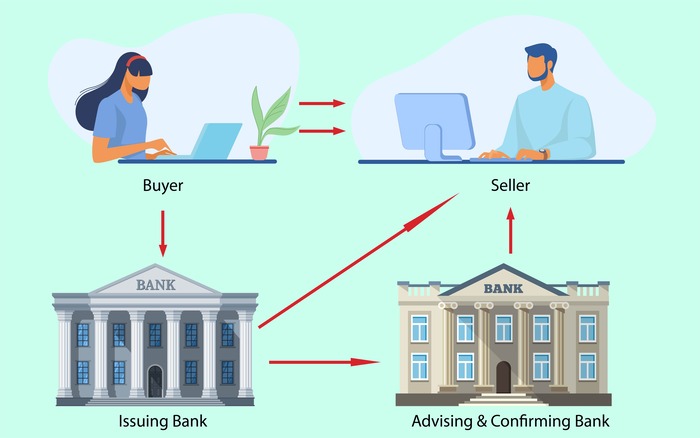
A letter of credit is a mode of payment used for the importation of visible goods.

It is a written undertaking given by a bank at the request of its customer, in which the bank obligates itself to pay the exporter up to a stated amount within a prescribed time frame upon presentation of stipulated documents in exchange for goods.

An official at Manufacturers Association of Nigeria (MAN), who spoke on condition of anonymity, also confirmed the acceptance of LCs, saying that the situation has improved.

“The government was able to settle some of the forex forward payments that the Central Bank of Nigeria had and that was a game-changer,” he said.

“The loan settlement of all the forward payments that Nigeria had created a confidence crisis for exporters, making them not trust our LCs by not honouring them. But now they have started doing it,” he said.

He added that the situation is better now compared to last November to around March when it was terrible.

“This just shows that things are getting back to normal in the sector where there was an abnormal situation over the last six months. The CBN governor has normalised a lot of things, not just paying off the outstanding LCs but by normalising the whole process of applying and booking the process,” Gabriel Idahosa, president of Lagos Chamber of Commerce and Industry, said.

The CBN has since the beginning of this year introduced measures to improve liquidity, including raising its benchmark rate 600 basis points to attract capital inflows and dumping the currency’s peg to allow the market to determine the naira’s exchange rate.

This was after years of unorthodox currency management deterred investors and caused a scarcity of the greenback.

“Our local-currency cash has dropped because of us being able to buy foreign exchange in advance for the materials we need,” Ogaga Ologe, finance director at Cadbury Nigeria, said.

Adetilewa Adebajo, economist and chief executive at Lagos-based CFG Advisory, said by phone that the increased dollar liquidity is providing a respite for companies to pay down debts and cushion the effect of the devaluation.

The liberalisation of the foreign exchange regime as part of measures to revive the economy led to a large devaluation of the naira. The currency measures are part of bold steps introduced by President Bola Tinubu after he took power in May to end Nigeria’s years of economic stagnation.

The reforms, which included scrapping fuel subsidies, have sent inflation to a record high and fanned a cost-of-living crisis that’s caused severe hardship for ordinary Nigerians.

The naira’s collapse, after many years of having its level artificially supported by the central bank on the official market, contributed significantly to the high inflation.

BusinessDay reported last October that foreign suppliers were demanding cash transfers into escrow accounts in place of LCs.

Cocoa rush: Farmers revive old trees amid price surge

0

Nigeria’s cocoa farmers are racing to plant more high-yielding seedlings to replace old trees while expanding their growing areas after a six-fold jump in prices this year.

This, according to the Cocoa Farmers Association of Nigeria, will help boost the country’s cocoa output in three years when they start fruiting.
Production may climb by 500,000 to 800,000 metric tons by 2026, Adeola Adegoke, national president of the Cocoa Farmers Association of Nigeria, said in an interview Wednesday. That would suggest a 132 percent rise from Nigeria’s 2022-2023 production estimates by the International Cocoa Association (ICCO).

“There are lots of investments going in the sector as we speak by farmers because of the record prices,” Adegoke said.

“Cocoa farmers are planting more seedlings and taking care of their old plantations so they can have better yields. Even those not growing cocoa have become emergency cocoa farmers,” he explained.

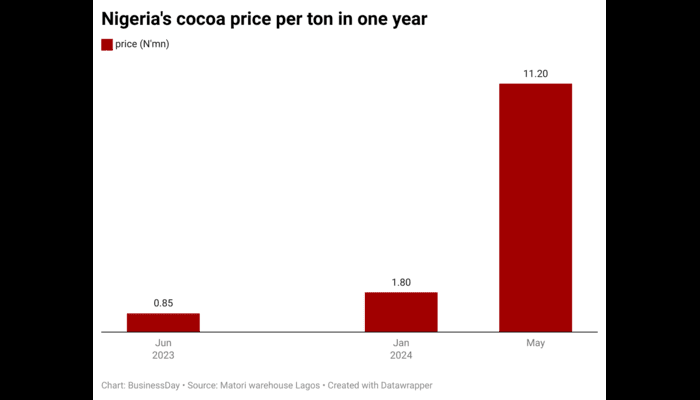
Currently, a metric ton of the commodity sells for an average of N11.2 million at the Matori warehouse in Oshodi, Lagos.

That’s a six-fold jump compared to the N1.8 million a metric ton of cocoa beans sold for in January 2024.

Nigerian cocoa growers are making more money than their counterparts in Ghana and Ivory Coast thanks to a steep naira devaluation that has resulted in a sharp increase in the naira income from the export of the beans.

The international price of cocoa beans has almost tripled since the start of the year owing to bad weather that battered harvest in top West African growers – Ivory Coast and Ghana, causing a shortfall and cutting 50 percent of global supply.

Tempting though it may be to bank the windfall cash, farmers in Africa’s most populous country see an opportunity to invest to produce more. Many are now buying high-yielding seedlings, expanding their growing areas and planting more cocoa instead of less profitable crops.

“With the current price of cocoa, many of us are geared towards engaging in producing more cocoa instead of growing less profitable crops,” Musa Sanda, a cocoa farmer in Kurmi Local Government Area in Taraba, told BusinessDay.

“I just placed an order for 1,000 seedlings to replace my coffee trees as coffee does not bring the kind of money cocoa is giving me now,” Sanda said.

Lawrence Afere, founder and CEO of Springboard Farmers’ Co-operative of Nigeria, said the price rally is not just driving more investments from farmers but also attracting new entrants of farmers into the sector.

“We have a cocoa nursery where we raise seedlings and saplings and lots of farmers not only from Ondo but as far as Abia are coming to buy,” Afere said.

“A man from Abia just placed an order for 60,000 seedlings for four hectares of land he just opened up to grow cocoa,” he noted.

According to him, the push to grow more cocoa owing to the recent price surge is causing encroachment into forest-reserved areas by some farmers as they seek lands to plant more of the beans.

An estimated 1.4 million people in Nigeria depend on cocoa production for their livelihood, according to the U.S. Agency for International Development, and growing more of the profitable commodity would translate to increased income for them.

Cocoa was a major revenue and foreign exchange earner for the country and provided millions of jobs for the people, especially those in the southwest region.

Several years down the line, after the discovery of oil in commercial quantity, the once major cocoa producer now lags behind Ivory Coast, Ghana, and Indonesia in cocoa production, according to the latest data from International Cocoa Organisation (ICCO) 2022-2023 season.

Sayina Rima, former president of the Cocoa Association of Nigeria, said with the current investment drive by farmers and full implementation of the 10-year cocoa plan, Nigeria will triple its production and boost its non-oil export while reclaiming its position in the comity of cocoa growing countries.

Rima noted that the current price surge is causing more young people to rush into growing cocoa in Ikom Local Government Area of Cross River state.

“In Ikom, the price surge is causing more youths to rush into the production of cocoa,” he said from his Ikom farm. “With all this momentum, our production will increase but we need the government to stop paying lip service to cocoa,” he noted.

“Government must fully support the production of cocoa as it remains our main export cash crop,” he added.

Nigeria is currently the world’s fourth largest producer of cocoa, with 280,000 metric tonnes in the 2022–2023 season, according to the International Cocoa Organisation’s latest data on global production and the third largest exporter, after Ivory Coast and Ghana.

Nigeria exported a total of N356.16 billion worth of cocoa beans in 2023, an 18.44 percent increase when compared to 2022 N300.71 billion.

The export of the commodity accounts for 28.72 percent of total agricultural exports (1.24 trillion) in 2023 and 5.6 percent of non-oil exports for the same period.

 

Airtel records $549m foreign exchange loss on naira devaluation

0

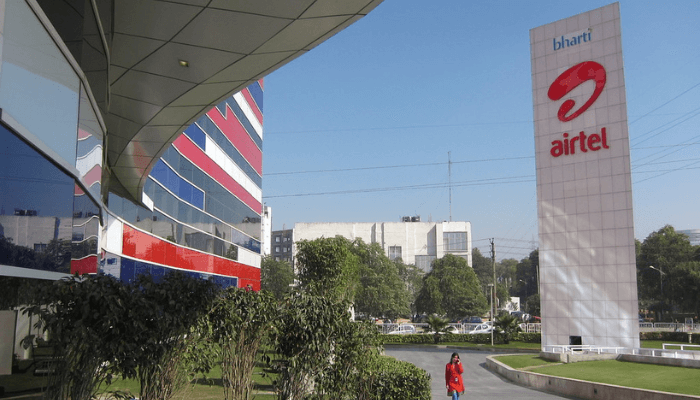
Airtel Africa Plc recorded a loss after tax of $89 million for its full year ended March 2024 because of a $549 million foreign exchange loss caused by the devaluations of the naira in June 2024 and the Malawian kwacha in November 2023.

“Loss aftertax of $89m during the year ended 31 March 2024 was primarily impacted by the $549m net of tax impact of the exceptional derivative and foreign exchange losses,” it highlighted.

In its full year report released on Thursday, the telco said its reported Revenue declined by 5.3 percent to $4.98 billion primarily due to the naira’s devaluation.

It, however, noted that its revenue in constant currency grew by 20.9 percent with growth accelerating to 23.1 percent in its fourth quarter.

“Nigerian constant currency revenue growth accelerated to 34.2 percent in Q4’24 despite the challenging backdrop,” it said.


EDO 2024: N’Delta militant Group, RNDA endorses APC, assures on Sen. Okpebholo’s victory

0

EDO 2024: N’Delta militant Group, RNDA endorses APC, assures on Sen. Okpebholo’s victory

Ahead of the much awaited governorship election in Edo State in September 2024, a Niger Delta militant group, Reformed Niger Delta Avengers, RNDA, has endorsed and assured the governorship candidate of the All Progressive Congress, APC, Senator Monday Okpebholo, victory.

This was contained in a statement signed by self-styled Major General Johnmark Ezonebi (AKA Obama), along with the leaders of the nine militant groups that make up the RNDA respectively.

According to the statement, the RNDA been a foremost militant group in the Niger Delta, which Edo State is part of the region, explained the reason for the decision behind the endorsement and massive support for Okpebholo after a crucial meeting in one of the creeks in the region, where they critically assessed the track records and backgrounds of the various parties’ candidates, therefore, unanimously agreed and threw their weight behind Okpebholo of APC.

The statement reads in part, “It is imperative to make this critical decision, and we the leaders of the dreaded Niger Delta militant group, the Reformed Niger Delta Avengers, RNDA, after our crucial meeting in one of the creeks about the candidates of the various political parties contesting the governorship election in Edo State, critically have assessed and concluded by taking our decision on whom we are endorsing and supporting to victory.

“At this point we want to let the people of Edo State know ahead of the election about who we have endorsed and will support to victory, and he is nobody else than the Governorship candidate of the All Progressives Congress, APC, so the people of the State would not fall into the hands of a party and their candidate that does not mean well for them.

“Senator Monday Okpebholo was nicknamed ‘Akpakomiza’ the Distinguished Senator of the Federal Republic of Nigeria, representing Edo Central Senatorial District, Edo State, in the 10th National Assembly, and Chairman, Senate Committee on Public Procurement, is a man of impeccable character with high sense of humour and passionate about the lives of the Edo people.

“He is a Senator, who has been distinguished based on his track record and achievements, and specifically, what attracted and endeared us to him is his giant strides in infrastructural development and human capital building, and this is what we yearn for in the Niger Delta region.

“We will mobilize massively and megally to ensure the people of Edo State vote en masse for Senator Okpebholo, and this victory will be a landslide victory because we have our structure across Edo State to the ward level, and we have set in motion our mechanisms to sensitize and get the full assurance of the people, and we will not leave any stone unturned as far as this election is concerned.”

The group also disclosed how they have been following activities of the APC candidate, “We have read and heard about his solid and focused views about the people’s plight and how to solve those protracted developmental challenges, which already, he has reached out to relevant federal agencies including the Sustainable Development Goals Office, the Federal Ministry of Works & Housing, Education, Water Resources, Universal Basic Education Commission, National Directorate of Employment (NDE) and other crucial MDAs in other to garner pivotal road projects, construction and rehabilitation of primary and secondary classroom blocks, hospitals and health centres, provision of 500KVA transformers, water borehole projects as well as employment opportunities for his constituents in the federal establishments and the security agencies.

“He has also trained women and youths under numerous skills acquisition schemes and vocational occupations.

“We are happy that his vision and mission to be carried out when elected the next Governor of Edo State, is really in line with our yearnings and struggles for the Niger Delta region, which is to ensure that Edo State becomes the most preferred destination for foreign direct investment in the telecommunications, banking, financial services, manufacturing, industrial and product merchandising sectors in order to provide hundreds of thousands of jobs for the teeming youths in the State.”

According to the RDNA, Senator Okpebholo has the pedigree to cause a paradigm shift in the governance of Edo State, in terms of fighting corruption, promoting accountability and transparency, and overhauling the civil service.

The group also said he is able to adhere to the rule of law and due process, therefore, will ensure corrupt persons are brought to justice, and he will improve the security of Edo State.

Yahoo Mail: Search, organise, conquer

Microsoft Africa Development Center In Ikoyi To Shut Down – Computers

0

There are indications that Microsoft African Development Centre (ADC) may shut down its West Africa operation, located in Lagos, Nigeria.

Industry sources in the know revealed this to The Guardian on Tuesday, though no official statement from Microsoft yet.

It was gathered that the management of Microsoft had on Monday informed the staff of the sudden development.

Affected staff, according to information gathered, might be paid their salaries till June and their HMOs.

A source within Microsoft Lagos office neither confirmed nor denied the development when reached out to yesterday.

“I cannot say anything on that for now. Thank you,” the source stated.

While the immediate cause of the shutting down of the ADC remains sketchy, industry sources claimed it might be due to the current economic situation in the country.

The industry source, however, said that ADC in East Africa, situated in Nairobi, Kenya is not affected, “only that of Nigeria.”

The ADC was launched in Nigeria in 2022 after it was set up in 2019. It formed part of Microsoft’s $100 million investment for two development centres in Africa, with the other located in Nairobi. Since its launch, ADC was reported to have hired 120 engineers and more than 200 total employees in Nigeria.

At the launch in 2022, Managing Director, Microsoft ADC, West Africa, Gafar Lawal, said, “We intended to recruit 500 full-time engineers by the end of the year or by 2023. However, currently, we have exceeded 500. This is to tell you about the abundance of talents we have in Africa.”

The ADC was commissioned by former Minister of Communications and Digital Economy, Prof. Isah Pantami and Lagos State Governor, Babajide Sanwo-Olu.

The ADC aimed to facilitate the creation of tech solutions that will solve both African and global problems.

“We desire to recruit exceptional engineering talent across the continent that will build innovative solutions for global impact. This also creates opportunities for engineers to do meaningful work from their home countries and be plugged into a global engineering and development organisation,” Microsoft had said in a statement.

The ADC facility in Lagos also housed the Microsoft Garage, an entity, launched to scale innovation in the tech ecosystem. An increased Microsoft presence in Africa will empower partners and customers as they use Microsoft solutions in fields important to the continent like FinTech, AgriTech and OffGrid energy.

Binance CEO: Unknow Persons Wanted Crypto Payments To Make Issue Disappear

0

The CEO of Binance, a popular cryptocurrency platform, claimed that some unknown persons, claiming to be agents of Nigerian officials demanded huge payments in cryptocurrency to make their problems in the country “go away”.

Richard Teng, the firm’s chief executive officer (CEO) who took over from founder and former CEO Changpeng Zhao, made the claim in a blog post released Tuesday, May 7, on Binance’s website.

He added that the request was made through a local firm it hired.

Speaking on Binance’s issues with the Nigerian government, Teng detailed how the world’s largest cryptocurrency exchange tried to engage with the Nigerian authorities, including a meeting on January 8 in Abuja, where it was confronted with criminal allegations.

Teng said despite multiple requests, Binance had still not received details of the allegations, “and our employees, therefore, inquired if there was an opportunity to submit our responses in writing and in the absence of a public hearing”.

“There were a number of reasons for that, including the sensitivity of the information and getting the opportunity to see the allegations in full and prepare a thorough substantive response,” he said.

“The meeting ended with the Chair confirming they would consider the matter and revert through Binance’s local counsel.

“However, as our employees were leaving the venue, they were approached by unknown persons who suggested to them to make a payment in settlement of the allegations.

“Later that day, our local counsel — representing us at that time — was summoned by the Committee through someone purporting to be their agent, who relayed the Committee’s terms and instructed our local counsel to advise us.

“Counsel reported back that he had been presented with a demand for a significant payment in cryptocurrency to be paid in secret within 48 hours to make these issues go away and that our decision was expected by the morning.

“Our team grew increasingly concerned about their safety in Nigeria and immediately departed.”

Teng said the payment request was declined “via our counsel, not viewing it to be a legitimate settlement offer”.

The CEO said Binance clarified that it would engage in settlement negotiations on the conditions that the relevant petition or the details of all allegations were seen.

He wrote: “We, of course, declined the payment demand via our counsel, not viewing it to be a legitimate settlement offer, and clarified that we would engage in settlement negotiations on the following conditions:

“Binance needs to see the relevant petition and/or the details of all allegations.

“Any settlement must be official, recorded in writing, and signed by all relevant parties.

“Any settlement must encompass all relevant agencies and be in full and final settlement of all allegations, including any potential historic tax liabilities, if applicable, with guarantees.

“While the exact terms of any settlement may have to remain private, there would have to be some public acknowledgement that a resolution has been reached.”

The Binance boss also requested that the company’s “contractors and employees are not to be intimidated, harassed, or detained.”

He said the Binance counsel relayed its conditions which Nigerian authorities initially objected to before they later agreed.

In continuation of its engagement with Nigeria, two Binance officials, Nadeem Anjarwalla, a 37-year-old British-Kenyan and Binance’s regional manager for Africa; and Tigran Gambaryan, a 39-year-old US citizen and Binance’s head of financial crime compliance, arrived Nigeria to discuss further terms with the Nigerian government but they were arrested on February 28.

Anjarwalla later fled detention and left Nigeria.

On March 25, Nigeria’s government filed a criminal charge against Binance for “tax evasion”.

Teng appealed to the government to “Let Tigran go home to his family, and then Binance will work through the same process that we have done with Nigeria’s law enforcement community voluntarily more than 600 times in the past.”

He added: “We will always work to protect innocent users, and bad actors are not welcome on our platform. We will work tirelessly with public and private partners to remove them. Furthermore, we will continue engagement with Nigeria’s Federal Inland Revenue Service on resolving potential historic tax liabilities.”

Petroleum Marketers Knock FG Policies, Blame Scarcity On Low Refining Capacity

0

The Independent Petroleum Marketers Association of Nigeria has attributed the current fuel scarcity to the combination of low refining capacity and inconsistent government policies in the petroleum sector.

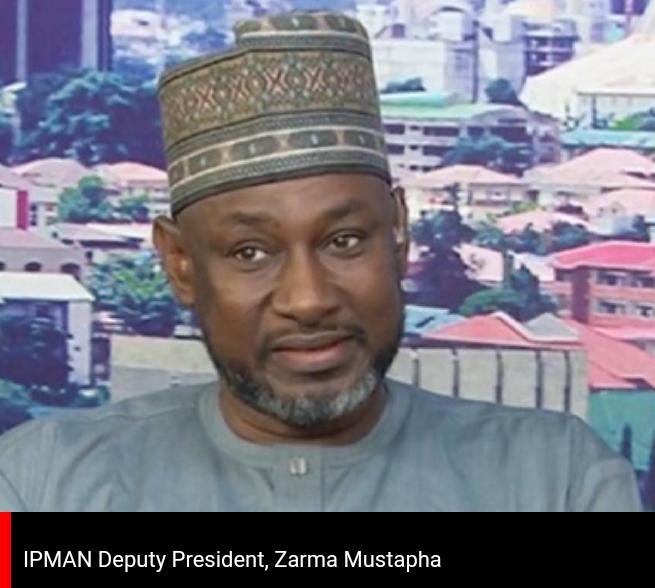
IPMAN Deputy President, Zarma Mustapha, disclosed this on Tuesday while reacting to the concerning development of Nigerians grappling with fuel scarcity, with widespread reports of long queues at petrol stations across the country.

Speaking on Newsnight broadcast by Channels TV, Mustapha said the scarcity is a result of the dwindling supply of petroleum products, particularly Premium Motor Spirit, commonly known as petrol.

According to the IPMAN official, the roots of the current fuel scarcity can be traced back to the late ’70s when the Nigerian government established IPMAN and other major marketers to alleviate supply challenges in the petroleum sector.

He said, “Despite efforts to expand refining capacity and build infrastructure such as depots and refineries, the country has failed to keep pace with the growing demand for petroleum products, leading to recurrent shortages. There is a need for continuous investment in refining infrastructure to meet the needs of Nigeria’s burgeoning population and economy.

“Government policies have also played a significant role in exacerbating the fuel scarcity situation. Inconsistencies in pricing regulations, particularly regarding PMS, have deterred private investors from participating in the importation and distribution of petroleum products. While certain products like Automotive Gas Oil (AGO) and kerosene have been deregulated, PMS remains under the control of the NNPCL, further limiting competition and supply chain efficiency.

“Despite efforts by some independent marketers to import petroleum products, the unfavourable foreign exchange rates and high operational costs have rendered such ventures unprofitable. The disparity between the exchange rates at which NNPC imports fuel and the prevailing market rates has discouraged private importation, leaving NNPCL as the primary importer of PMS. As a result, independent marketers like IPMAN are left to rely on NNPC for their supply, impacting their bottom line.”

The IPMAN official, however, urged the Federal Government to review its policies and increase investment in refining capacity to ensure a stable and reliable supply of petroleum products in the country.

“While IPMAN acknowledges the role of market dynamics in determining retail prices, the association emphasises the importance of consistent supply to meet consumer demand.

“The current situation highlights the urgent need for a comprehensive review of government policies and increased investment in refining capacity to ensure a stable and reliable supply of petroleum products across Nigeria.

“As citizens endure the inconvenience of fuel scarcity once again, stakeholders look to the government for effective solutions to address the underlying issues plaguing the country’s petroleum sector,” he added.

CBN Directs Banks To Suspend Charges On Deposits Till September

0

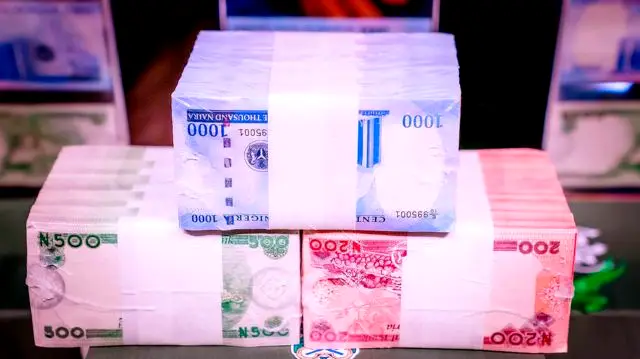
The Central Bank of Nigeria has directed banks to stop charges on cash deposits until September 30, 2024.

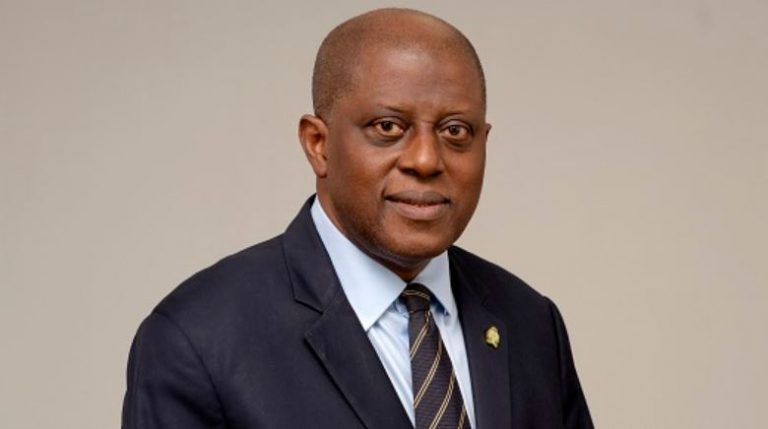
The apex bank disclosed this in a circular dated May 6, 2024, signed by its Director of Banking Supervision, Adetona Adedeji.

Customers of some of the Deposit Money Banks raised concerns that the banks have begun collection of processing fees for cash deposits as of May 1.

Our correspondent sighted this in an email shared by one of the customers of the banks.

Based on the bank’s move, two per cent was to be charged on deposits above N500,000 for individuals, while corporate account holders were to be charged two per cent on deposits above N3m.

According to the latest circular to financial institutions and non-financial institutions, CBN said the processing fees have been suspended.

The circular read, “Please refer to our letter dated December 11, 2023, referenced BSD/DIR/PUB/LAB/016/023 on the above subject, suspending processing charges imposed on cash deposits above N500,000 for Individuals and N3,000,000 for Corporates as contained in the ‘Guide to Charges by Banks, Other Financial Institutions and Non-Bank Financial Institutions’ issued on December 20, 2019,” CBN said.

“The Central Bank of Nigeria hereby extends the suspension of the processing fees of 2% and 3% previously charged on all cash deposits above these thresholds until September 30, 2024.”

The apex bank directed financial institutions to continue to accept all cash deposits from the public without any charges till the end of the third quarter.

Naira Depreciates To N1,415/$ In Parallel Market

0

The Naira yesterday depreciated to N1,415 per dollar in the parallel market, from N1,410 per dollar on Monday.

Similarly, the Naira depreciated in the Nigerian Foreign Exchange Market, NAFEM, to N1,416.57 per dollar.

Data from FMDQ showed that the indicative exchange rate for NAFEM fell to N1,416.57 per dollar from N1,354.21 per dollar on Monday, indicating N62.36 depreciation for the naira.

Consequently, the margin between the parallel market and NAFEM rates narrowed to N1.57 per dollar from N55.79 per dollar on Monday.