Sunday, May 10, 2026
Home Blog Page 166

Three years in, eNaira struggles as transactions crawl to N29bn

0

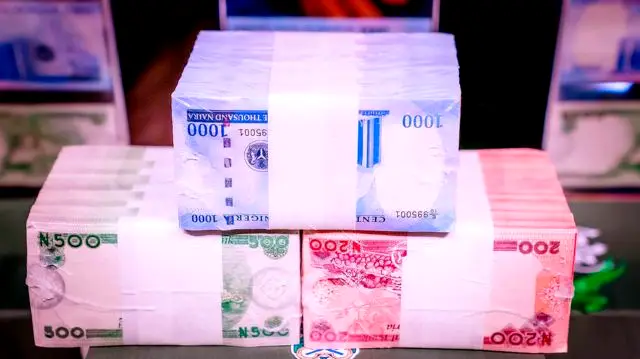
Nigerians have continued to ignore the eNaira, which has now been used for only N29.3 billion worth of transactions since its October 2021 launch.

Unveiled by former president Muhammadu Buhari as a tool to promote financial inclusion and reduce reliance on cash, the digital equivalent of the naira has recorded slow adoption.

For context, the value of electronic transactions in Nigeria was N611.06 trillion in 2023 and N237 trillion in the first quarter of 2024.

In its Nigeria ‘Staff Report for the 2024 Article IV Consultation,’ the International Monetary Fund noted that the adoption of the eNaira has been slow. So far, only 13 million eNaira wallets have been created, with most of them remaining inactive.

“Since the eNaira’s launch, the volume of executed transactions has reached 854,512 transactions, mostly from consumers to merchants, with a total value of N29.3 billion,” the Washington-based fund said.

Nigeria was the first African country to launch a Central Bank Digital Currency, and authorities hoped that it would reduce the use of cash and encourage digital payments, among others, it highlighted.

In its Article IV report on Thursday, the Fund noted that many potential users of the CBDC are worried about their data privacy. It, however, noted that Nigerian authorities aim to broaden the use of the eNaira, with the CBN recently acquiring the technological infrastructure to manage it.

The IMF stated, “Finally, an important challenge is how to make eNaira accessible to all the population while ensuring adequate financial integrity safeguards to prevent its use for financial crimes. eNaira is currently only accessible to those people with bank accounts.”.

It noted that the CBN is currently piloting a program that enables people without a bank account to use eNaira via their smartphones, in a bid to boost adoption.

In May 2023, the IMF disclosed that 98.5 percent of eNaira wallets are inactive and the average value of transactions was 923 million naira per week.

It said, “As indicated by the levels of wallet downloads and transactions, the public adoption of the eNaira thus far has been disappointingly low.” It, however, argued (at the time) that it would be too early to judge the fate of the eNaira project.

Nigeria was the second country after the Bahamas to launch a CBDC, but questions regarding its use case have refused to go away.

As of August 2023, the volume of eNaira in circulation was N9.78 billion, according to the Central Bank of Nigeria. This rose to N13.98 billion by 2023’s end.

A source, speaking to BusinessDay about the eNaira’s fate, said, “It stood no chance with the banks that frustrated it because it did not give them room to make a profit… The banks felt it wasn’t fair that they would be used as a medium to push the adoption of eNaira and not make money from it.”

There have been renewed attempts by the CBN to save its digital currency. In March 2024, it was announced that the apex bank signed a Memorandum of Understanding with a blockchain firm to accelerate the adoption of the eNaira.

Despite this, there are indications that the fate of the eNaira may be sealed with the CBN working on a CBDC to be called cNGN. Unlike the eNaira which is managed by the CBN, the cNGN token will be created and managed by tier-one banks.

Senate Approves Death Penalty For Drug Traffickers –

0

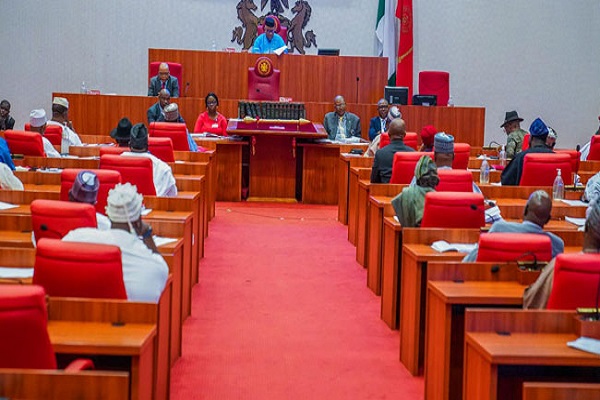
Senate on Thursday, May 9, approved the death penalty for those convicted on the charge of drug trafficking in the country.

The punishment prescribed in the extant NDLEA Act is a maximum sentence of life imprisonment.

The resolution of the Senate followed its consideration of a report of the Committees on Judiciary, Human Rights and Legal Matters and Drugs and Narcotics, National Drug Law Enforcement Agency (NDLEA) Act (Amendment) Bill, 2024.

The Chairman of the Committee on Judiciary, Human Rights & Legal Matters presented the report during plenary, Senator Mohammed Monguno (APC-Borno North).

The bill, which passed its third reading, aims to update the list of dangerous drugs, strengthen the operations of the NDLEA, review penalties, and empower the establishment of laboratories.

Section 11 of the current act prescribes that “any person who, without lawful authority; imports, manufactures, produces, processes, plants or grows the drugs popularly known as cocaine, LSD, heroin or any other similar drugs shall be guilty of an offence and liable on conviction to be sentenced to imprisonment for life” was amended to reflect a stiffer penalty of death.

Although the report did not recommend a death penalty for the offence, during consideration, Senator Ali Ndume moved that the life sentence should be upgraded to the death penalty.

During a clause-by-clause consideration of the Bill, Deputy Senate President Barau Jibrin, who presided over the session, put the amendment on the death penalty to a voice vote and ruled that the “ayes” had it.

But Senator Adams Oshiomhole objected to the ruling, saying that the “nays” had it.

He argued that matters of life and death should not be treated hurriedly, but Barau said it was too late, as he failed to call for division immediately after his ruling.

The bill was subsequently read for the third time and passed by the Senate.

Osimhen Paid ₦186 Million For Scoring Against Maduka Okoye

0

Osimhen received a huge amount of money after scoring against his Super Eagles teammate Maduka Okoye on Monday night.

Super Eagles star Victor Osimhen will receive €125k (₦186m) after scoring against his countryman Maduka Okoye in Napoli’s 1-1 draw against Udinese on Monday night.

Osimhen grabbed the headlines for Napoli in a match that had another Nigerian stand out for Udinese.
The former Lille striker put the Neapolitans ahead in the 51st minute with a brilliant header from a Matteo Politano cross.

Victor Osimhen towers home a header against Super Eagles goalkeeper Maduka Okoye in the Serie A.
Although Isaac Success’ finish in injury time denied Osimhen the winner and earned Udinese a precious point, the Chelsea target went home with €125k.

Before the match, Naples news outlet, Napoli Oniline had revealed that Osimhen would receive €125k bonus if he scored 15 league goals this season.

The Nigerian striker was on 14 going into the match against The Little Zebras, with his header in the match taking his league tally to 15.

As a result, Osimhen earned €125k in bonus for scoring 15 league goals this season as stipulated in his contract.

Osimhen’s 15 league goals in 23 games this season are impressive, even though he has not been able to match the 26 he scored to fire Napoli to the title last season. The 25-year-old missed a major part of the season after helping Nigeria reach the final of the 2023 Africa Cup of Nations. But despite missing a few games due to international commitments and injury, he is on course to have his second-best year in Naples.

Cybersecurity Levy To Tackle Crimes, Terrorism – FG

0

The Presidency yesterday said the cybersecurity levy was introduced to tackle cybercrimes and terrorism.
It said the nation lost over N273billion (approximately $762million) to cybercrime alone in 2022.

It also claimed that the same levy is in place in Ghana and Rwanda.

Opposition to the policy grew yesterday, with the Trade Union Congress (TUC), ex-Labour Party (LP) presidential candidate Peter Obi, and the Coalition of Northern Groups (CNG) rejecting it.

A top source, who spoke in confidence with our correspondent, said the Federal Government “cannot be blind to the grievous effects of cybercrimes on the nation’s economy.”

The source made the clarification against the backdrop of the mounting criticisms on the inclusion of Cybersecurity Fund in the Cybercrime Act 2024.

The source said: “The Cybercrime Act 2024 is meant to protect the nation’s economy from collapse; it is not targeted at the masses. Those criticizing the Act do not have the full knowledge of the rationale behind it.

“According to the Nigeria Inter-Bank Settlement System (NIBSS), the Nigerian banking sector lost over N273 billion (approximately $762 million) to cybercrime in 2022 alone.

“Apart from that, there have been SIM-swapping attacks on Nigerian banks since 2019 to date.

“Flutterwave, a leading African fintech company, has faced several allegations of security breaches in recent months amounting to millions of dollars in losses to customers.

“Even the Nigerian National Identity Management Commission (NIMC) has put adequate security in place to check incidents of data breaches.”

The source said the inherent benefits of the Cybercrime Act are contained in Section 44 of the Cybercrime Act.

He said Section 44 was designed for National Cyber Security Fund in which a levy of 0.005 of all electronic transactions b by some businesses to fight cybercrimes and terrorism.

The source added: “Contrary to insinuations, the Fund will be domiciled in the Central Bank within a period of 30 days.

“Also, an amount not exceeding 40 percent of the Fund may be allocated for programmes relating to countering violent extremism.

“The Federal Government is well-intended with the Cybercrime Act 2024. We live in a global village in Africa, we cannot afford to ignore the reality of the threats of cybercrimes to our economic survival.

“The management of the Cyber Security Fund has enough checks and balances to prevent abuse. This government is determined to fight cybercrime.”

Section 44 of the Act reads: “(1) There is established the National Cyber Security Fund (in this Act referred to as “the Fund”).

“(2) There shall be paid and credited into the Fund established under subsection (1) of this section and domiciled in the Central Bank of Nigeria-

(a) a levy of 0.005 of all electronic transactions by the businesses specified in the Second Schedule to this Act;

(b) grants-in-aid and assistance from donor, bilateral and multilateral agencies;

(c) all other sums accruing to the Fund by way of gifts, endowments, bequest or other voluntary contributions by persons and organisations:

“Provided that the terms and conditions attached to such gifts, endowments bequest or contributions will not jeopardise the functions of the Council:

(d) such monies as may be appropriated for the Fund by the National Assembly; and

(e) all other monies or assets that may, from time to time, accrue to the Fund.

“(3) All monies accruing to the Fund shall be exempted from income tax and all contributions to the Fund shall be tax deductible.

“(4) The levy imposed under subsection 2(a) shall be remitted directly by the affected businesses or organizations into the Fund domiciled in the Central Bank within a period of 30 days.

“(5) An amount not exceeding 40 percent of the Fund may be allocated for programs relating to countering violent extremism.

“(6) The Office of the National Security Adviser shall keep proper records of the accounts.

“(7) The Account of the Fund shall be audited in accordance with guidelines provided by the Auditor-General of the Federation.”

Wave of opposition, rejections

The TUC rejected the planned cybersecurity levy.

Its President, Comrade Festus Osifo, in a statement, urged the Federal Government to give a “marching order to the CBN to immediately withdraw the circular and cancel the planned levy forthwith.”

The statement reads: “It is indeed illogical that this is coming at a time that Nigerians are grappling with the high cost of living that is imposed by the devaluation of Naira, hyper hike in the cost of Petrol, supersonic increment in the cost of electricity tariff, etc.

“Whereas a bank account holder in Nigeria today is currently charged stamp duty, transfer fee, VAT on transfer fee, and all forms of account maintenance levies by both government and the banks.

“So many policies of this government are not only imposing hardship on the downtrodden Nigerians but also on businesses, as some of them are shutting down because of the unfriendly business environment.

“The National Assembly that ought to be the bastion of democracy and the protector of the citizens oftentimes engages in collusion with elements within the executive to exploit the people. “

Obi faulted the levy, saying it was another form of taxation at a time when the government should be nurturing economic recovery and growth.

He said: “The introduction of yet another tax, in the form of Cybersecurity Levy, on Nigerians who are already suffering severe economic distress is further proof that the government is more interested in milking a dying economy instead of nurturing it to recovery and growth.

“This does not only amount to multiple taxation on banking transactions, which are already subject to various other taxes including stamp duties, but negates the government’s avowed commitment to reduce the number of taxes and streamline the tax system.

“The imposition of a Cybersecurity Levy on bank transactions is particularly sad given that the tax is on the trading capital of businesses and not on their profit hence will further erode whatever is left of their remaining capital, after the impact of the Naira devaluation high inflation rate.”

“It is inconceivable to expect the suffering citizens of Nigeria to separately fund all activities of the government.

“Policies such as this not only impoverish the citizens but make the country’s economic environment less competitive.

“At a time when the government should be reducing taxes to curb inflation, the government is instead introducing new taxes. And when did the office of the NSA become a revenue-collecting centre?

“And why should that purely national security office receive returns on a specific tax as stated in the new cybersecurity law?”

Also, the CNG, rejected the proposal, saying it was anti-masses and insensitive.

In a statement its National Coordinator, Jamilu Charanchi, CNG said: “This levy, which is expected to be effective within the next two weeks, exemplified the Federal Government’s lack of compassion and empathy to the plight of Nigerians in the face of the current economic hardship.

“It is crass heartlessness that is a sequel to fuel subsidy removal which now took fuel above N1000 per litre and the electricity tariff abruptly soaring.

“It is tantamount to another daily-light extortion in the offing by the government that came to be through democratic processes.”

 

Speaker Tajudeen Overrules Manu Calling For Suspension Of Cybersecurity Levy

0

The Speaker of the House of Representatives, Abbas Tajudeen, yesterday stepped down a motion calling for the suspension of the cybersecurity levy, which has sparked widespread dissatisfaction.

Daily Trust reports that since the Central Bank of Nigeria (CBN) directed all banks in the country to begin the deduction of 0.5% of the value of all electronic transactions from customers, Nigerians across different spectrums have rejected the levy, describing it as an additional burden on them.

During Wednesday’s plenary session, Manu Soro, a lawmaker from Bauchi State, presented the motion, expressing concerns that the levy’s introduction was ill-timed given the prevailing economic condition in Nigeria.

Soro argued that imposing new taxes or increasing existing ones amidst the ongoing economic challenges faced by Nigerians, exacerbated by the removal of fuel subsidy and the depreciation of the naira, would only add to the burden of citizens already grappling with rising living costs and food prices.

Soro called on the House to prompt the Central Bank of Nigeria to retract the circular on the cybersecurity levy and cease its implementation immediately.

He also urged the Minister of Finance to refrain from introducing new taxes or raising existing rates until the economic situation in the country improves significantly.

However, Speaker Abbas advised Soro to temporarily withdraw the motion to allow the House leadership to deliberate on the best course of action in addressing the issue.

Presidential Amnesty Programme Will Promote Tinubu’s Vision Of Sustainable Peace In Niger Delta- Administrator

0

••• As 26 Amnesty Students Bag First Class In Igbinedion Varsity

The Administrator of the Presidential Amnesty Programme, Chief Dennis Otuaro, PhD, has expressed commitment to sustaining the peace, security and development in the Niger Delta through the Presidential Amnesty Programme (PAP) in line with the vision of President Bola Tinubu.

This was just as the Vice Chancellor of the Igbinedion University, Prof Lawrence Ezemonye, said that 26 PAP scholarship students in the institution had made first class.

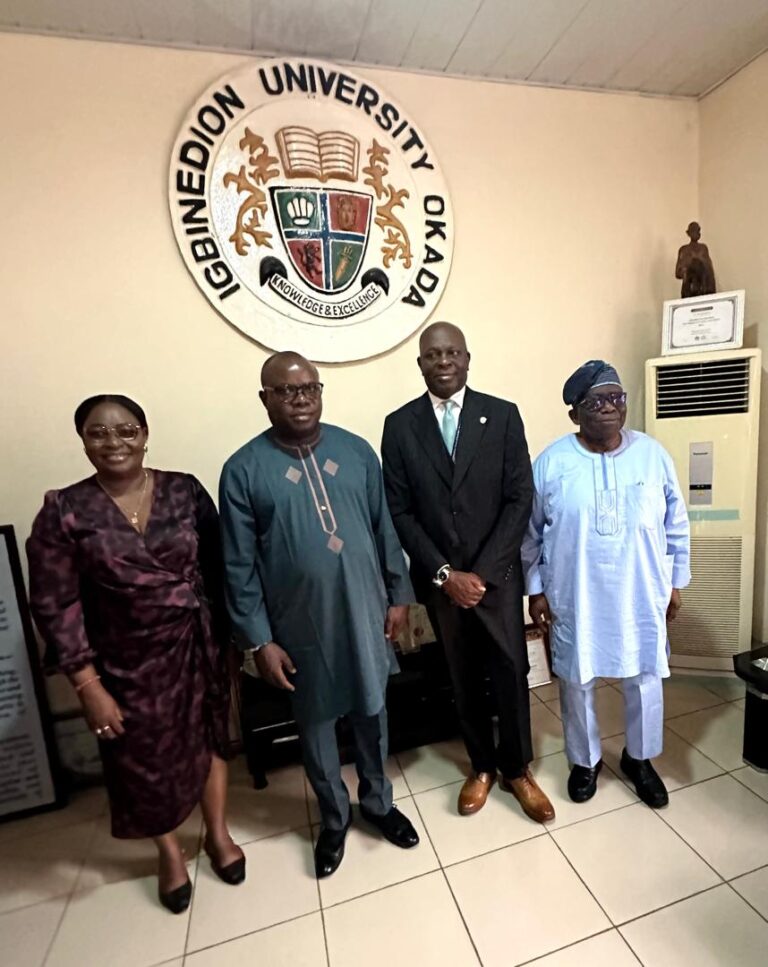
Otuaro spoke when he visited the Igbinedion University, Okada and Benson Idahosa University, Benin, in Edo State to interact with the universities’ managements and students on the scholarship of the PAP in the two institutions on Wednesday.

A statement issued by the Special Assistant on Media to the PAP Administrator, Mr Igoniko Oduma quoted Otuaro as saying that he would implement the Amnesty Programme effectively to build confidence in the region and garner support for the Federal Government.

He said, “The Presidential Amnesty Programme is crucial for fostering enduring peace in the Niger Delta. By implementing it efficiently and effectively, we can garner greater support for the Federal Government’s efforts to promote security and development in the Niger Delta.

“That is the vision of President Bola Tinubu which I seek to execute. He believes in sustaining the peace of the Niger Delta. With the president’s belief in the Presidential Amnesty Programme, we need to work harder to ensure that the confidence reposed in us is strengthened.”

Otuaro acknowledged that the Igbinedion University was the first tertiary educational institution to accept PAP scholarship students, saying that their graduates were part of the success story of the amnesty programme.

The PAP boss said the amnesty programme office would deepen collaboration with its partners with a view to expanding the scope of operations.

He applauded the Founder of Igbinedion University, Chief Gabriel Igbinedion and the university’s management on their 25th anniversary celebration this year.

Interacting with the PAP scholarship students of both universities, who highlighted some of the challenges they were facing, Otuaro assured them that the amnesty programme office would address the problems accordingly.

He urged them to shun social vices and take their studies seriously in order for them to be declared worthy in character and learning at their graduation.

Ezemoye, in his remarks, said that apart from the 26 first class graduates, many other PAP scholarship students also got distinctions in professional courses like medicine, nursing, medical laboratory, among others.

The VC of Igbinedion University noted that the programme was impacting greatly on the students, saying”we have grown beyond entrepreneurial skills, we have grown character.”

The Vice Chancellor commended the PAP for meeting the obligations of the students under scholarship to put them in the vantage position to excel.

He promised a strengthened collaborative relation with the PAP in the area of offering opportunities to students in competitive courses like medicine and surgery, nursing, pharmacy, Law and others especially with the recent increase in its quota of admission.

He said that the institution, which is celebrating its silver jubilee anniversary, ensured that there was no discrimination against amnesty programme students as they share hostels and other facilities with other undergraduates.

Also, the Acting VC of Bishop Idahosa University, Prof. Johnson Oyedeji, said the PAP Administrator was an embodiment of encouragement and hope of better days ahead for the scholarship students as well as the existing partnership.

“We thank God for your life. What we are doing is for national security. We are motivated by a desire to sustain the peace for increased oil production”, he said.

The President of the Amnesty Students Association, Wilcox Peremini Zaccheaus, commended the PAP Administrator for being the first administrator to visit the students for interaction and familiarisation.

He thanked the Administrator for the meeting and appealed for increase in their financial and textbook allowances and provision of laptops, among others.


Industrial Court declares Indefinite Leave Without Pay as Unfair Labour Practice, awards N5m damages against firm

0

The Presiding Judge, Yenagoa Judicial Division of the National Industrial Court, Hon. Justice Polycarp Hamman has declared the action of Metro Digital Limited directing Mr. Christian Okafor to proceed on indefinite unpaid leave as unfair labour practice.


The Court held that Metro Digital Limited could not justify the unilateral decision to force Mr. Christian Okafor to proceed on unpaid leave without any clear understanding of when he would be recalled and how his arrears of salary would be paid to him.


Justice Polycarp ordered Metro Digital Limited to pay Mr Christian Okafor the sum of N480, 000.00 as salary arrears for the months of November and December 2019 and February and March 2020, and the sum of N5, 000,000.00 (Five Million Naira) as general damages within 30 days.


From facts, the claimant- Mr. Christian Okafor had submitted that Metro Digital Limited asked him to proceed on unpaid leave on the 27th of March 2020, and since he was expecting his recall, he did not take any appointment. When he started the unpaid leave, he was owed salary for the months of November and December 2019, and also February and March 2020 amounting to the sum of N480, 000.00 and all efforts to get his entitlement were to no avail.


In defence, the defendant- Metro Digital Limited maintained that since the company was out of business from part of November 2019 till date, and Mr. Okafor never worked for the defendant throughout the period, Mr. Okafor is not entitled to the salaries claimed.


The defendant’s Counsel stated that the Internal Memo issued to Mr. Okafor and others terminated the contractual relationship partially by placing a conditional provision to same by way of not having activities to sustain Mr. Okafor’s continued employment and, urged the court to dismiss the case.


In opposition, Mr. Okafor’s counsel, U. N. Aganin Esq argued that there is nothing before the Court to show that the employment of his client has been terminated, and the fact that an employer does not provide work for an employee does not mean that the employee is not entitled to his salaries. The Court was urged to grant reliefs sought.


In a well-considered judgment, the presiding Judge, Justice Polycarp Hamman stated that the defendant has not denied placing Mr. Okafor on a compulsory unpaid leave and there is nothing before the Court to show that Metro Digital Limited engaged either Mr. Okafor or all the workers in any form of negotiation before the decision was taken.


Justice Polycarp faulted the action of Metro Digital Limited compelling the employees to proceed on an unpaid leave without pay as an unfair labour practice which the court deprecates with attendant consequences.


The Court stated that the contention of Metro Digital Limited that Mr. Okafor hastened to approach the court because over 40 employees were affected is only preposterous because the fact that the other employees chose to sleep on their rights does not in any way foreclose Mr. Okafor from coming to court.


Visit the judgment portal for full details

16 Transaction Types Exempted From CBN’s Cybersecurity Levy –

0

The Central Bank of Nigeria (CBN) on Monday directed banks to start the process of deducting cybersecurity levy to be administered by the office of the National Security Adviser (NSA).

According to a circular sent to commercial banks, mobile money operators, payment service providers, and others, the deduction of the cybersecurity levy is a sequel to the enactment of the 2024 Cybercrime (prohibition, prevention, etc) amendment Act of 2024 which provides for a 0.5% deduction of the value of all electronic transactions to the National Cyber Security Fund which would be administered by the office of the NSA.

While the levy is to be charged on all electronic transactions and applied at the point of transfer origination, the CBN in an appendix to the circular, listed 16 transactions exempted from the levy. According to the banking regulator, these transactions include:

1. Loan disbursements and repayments.

2. Salary payments.

3. Intra-account transfers within the same bank or between different banks for the same customer.

4. Intra-bank transfers between customers of the same bank.

5. Other Financial Institutions (OFIs) instructions to their correspondent

6. Banks Interbank placements

7. Banks’ transfers to CBN and vice-versa

8. Inter-branch transfers within a bank

9. Cheques clearing and settlements.

10. Letters of Credits (LCs).

11. Banks’ recapitalization-related funding – only bulk funds movement from collection accounts.

12. Savings and deposits including transactions involving long-term investments such as Treasury Bills, Bonds, and Commercial Papers.

13. Government Social Welfare Programs transactions e.g. Pension payments.

14. Non-profit and charitable transactions including donations to registered nonprofit organizations or charities.

15. Educational Institutions transactions, including tuition payments and other transactions involving schools, universities, or other educational institutions.

16. Transactions involving the bank’s internal accounts such as suspense accounts, clearing accounts, profit and loss accounts, inter-branch accounts, reserve accounts, nostro and vostro accounts, and escrow accounts

What Nigerians are saying

Meanwhile, reactions have continued to trail the announcement of the cybersecurity levy. Although the levy has been in the Cybercrime Act 2015, which was amended this year but not implemented until now, Nigerians are saying the timing is wrong.

Reacting to the announcement via a post on the social media platform, X, the Founder and CEO of House of Lunettes, Mr. Akin Olaoye, said:

“A ‘Cybersecurity Tax’ to fund the NSA whose expenditures aren’t audited is highly misguided. Where Inflation and a bad economy are causing hardships, making it a wrong time to impose new taxes on Nigerians.”
A serial tech entrepreneur, Mr. Victor Asemota, said it would have been better for the government to allow telecom operators to increase their tariffs, which would yield more taxes, than introducing the cybersecurity levy.

“The government is raising their taxes but telling telcos not to raise their tariff. Wouldn’t they make more money taxing a telco price increase than this meaningless fee?” he said.
Also reacting to the levy, another X user identified as Uncle Jay, wrote:

“The 0.50% charge is too much and stupendous. Imagine paying a whopping N25,000.00 for a N5 million transaction. That is too much. If they wanted this Cybersecurity fee, they could have made it a flat fee of 2 naira only for transactions from N10k and above.”

Microsoft Confirms African Development Center Layoffs But Denies Its Closure

0

Contrary to several local reports, Microsoft has not shut down its African Development Center (ADC) in Nigeria. According to a Microsoft spokesperson, the Lagos facility is still operational.

During a call with Techpoint Africa, the spokesperson clarified that while the engineering team at the African Development Center in Lagos has been let go, the Microsoft office in Nigeria remains operational.

Although the exact reasons for the changes are not specified, the company said, “Organisational and workforce adjustments are a necessary and regular part of managing our business. We will continue to prioritise and invest in strategic growth areas for our future and in support of our customers and partners.”

It’s worth noting that Microsoft has been implementing workforce adjustments and organisational changes since 2023 to align with global market conditions and meet customer needs.

In July 2023, the tech giant initiated layoffs, supplementing the 10,000 job reductions announced earlier in January of that year. Microsoft’s continuous drive to streamline its operations and concentrate on strategic growth sectors necessitated these workforce changes.

Microsoft set up its African Development Center in Lagos, Nigeria, and Nairobi, Kenya, in 2019 to expand its engineering talent pool, focus on student and community engagements, and invest in Microsoft programmes.

The company emphasised its commitment to training, equipping, and hiring engineering talent in Nigeria and West Africa. These efforts were aimed at helping to develop Microsoft products that are used by over 1 billion devices, empowering millions of users and organisations globally to achieve more.

However, despite operating for five years, employing at least 120 engineers and more than 200 total staff members, the company has decided to part ways with the engineering team.

Meanwhile, local news reported that affected employees are set to receive salary payments until June 2024 and will still be covered by health insurance.

As Microsoft lays off the engineering team, the future of its African Development Center in Lagos hangs in the balance. With the core team gone, questions arise about the facility’s continuation.

Speculation is rife about whether Microsoft will shutter its operations in Nigeria or consider AI-driven alternatives. However, indications point to the former, particularly in light of recent developments. On May 7, 2024, Microsoft’s Xbox announced plans to close several gaming studios, including the renowned Arkane Austin.

While the reasons for this decision remain unclear, it reflects broader economic challenges, such as foreign exchange concerns and unfavourable economic conditions, resulting in the closure of several international businesses across Nigeria.

Naira Depreciates Further As Dollar Sales To BDCs Wobble

0

The declining fortunes of the Naira persisted yesterday with further depreciation in the parallel and official markets due to the re-emergence of speculation and hoarding, even as some Bureaux De Change, BDCs withdrew from the Central Bank of Nigeria, CBN’s, dollar sales program.

Vanguard also learnt that despite the sustained nationwide raids and arrest of street currency hawkers, the Naira further depreciated yesterday to N1,435 per dollar in the parallel market, from N1,415 per dollar on Tuesday, and also depreciated to N1,421.06 per dollar in the Nigerian Foreign Exchange Market, NAFEM.

Data from FMDQ showed that the indicative exchange rate for NAFEM fell to N1,421.06 per dollar from N1,416.57 per dollar on Tuesday, indicating N4.49 depreciation for the naira.

Consequently, the margin between the parallel market and NAFEM rates widened to N13.94 per dollar from N1.57 per dollar on Tuesday.

Dollar sales to BDCs

In a bid to intervene in the retail segment of the forex market, the CBN in February resumed dollar sales to BDCs. Since then the apex bank has held three editions of the dollar. At the last edition, the CBN offered to sell $10,000 per BDCs at directing them to sell at the maximum margin of 1.5 per cent

BDC operators however complained dollar disbursement from CBN is too slow that and takes three to four weeks between when they make payment and when the dollars are disbursed to them.

Vanguard reliably gathered that as a result of this delay and the uncertainty in the forex market, some BDCs, have asked the CBN to refund their Naira payment.

Top BDC operators who confirmed this development to Vanguard under the condition of anonymity said that some of the BDCs that asked for refunds have gotten their money.

Speaking to Vanguard on condition of anonymity, the Chief Executive of a BDC said, “I think the CBN is overwhelmed. You pay money and it takes one month for you to collect $10,000. It is over a month now since they intervened and they have not intervened again.

“Even the last one that they did some BDCs are just collecting the dollars. Some are even saying they should return their money. They are asking for a refund because there are many challenges. Some have paid but their name is appearing in another location which makes it impossible to collect the dollars. Some are getting their refund but it is a very slow pace too.”

Also speaking on condition of anonymity, another BDC operator said, “There is no supply. The CBN supply is slow. They sell one tranche for one month. It is too low. If they don’t have the money they should tell us we don’t have the money.”

Speculation reemerges
Vanguard investigations also revealed the reemergence of speculation and hoarding in the forex market due to the steady depreciation of the Naira in the last three weeks.

Speaking anonymously, a BDC operator said, “You know people are still doubtful. A lot of people now at any opportunity, buy dollars and keep, thinking that the rate will go up again. So speculation and hoarding are still happening.

“Before when people are scared, they bring out their dollars to sell. But now nobody is doing that. Supply is not coming into the market. There is no certainty about the frequency and volume of intervention from CBN. And this further encourages speculation and hoarding.”

Efforts for the CBN to respond to the above developments proved abortive as the Director, of Corporate Communication, CBN, Mrs Hakama Sidi-Ali, did not respond to calls and SMS and WhatsApp messages from Vanguard.