Sunday, May 10, 2026
Home Blog Page 165

Naira Declines To N1,510, N1,466.31 At Parallel, Official Markets

0

The local currency depreciated further at the official market, on Friday, closing at N1,466.31 to a dollar at the official market, according to checks by Daily Trust.

The dollar to naira exchange rate increased by N40 between Thursday and Friday having closed to N1,426 to a dollar, according to the National Autonomous Foreign Exchange Market (NAFEM), the official exchange market.

Daily Trust reports that the naira gain has been reversed in recent times after the currency firmed up against the dollar, exchanging below N1000 with businesses and the government heaving a sigh of relief.

This was after the Central Bank of Nigeria (CBN) introduced a string of reforms and interventions tailored towards stabilising the exchange rate market.

The apex bank also supplied more dollars to the Bureau De Change (BDC) operators in a bid to boost liquidity in the market.

While the dollar exchanged at N1,466.31 at the official market yesterday, it further depreciated at the parallel market, exchanging for N1,510.

It earlier exchanged for N1,450 on Friday morning but closed the day with N1,510 at the street market popularly referred to as the black market.

Tinubu Orders Suspension Of Cybersecurity Levy

0

President Bola Tinubu has instructed the Central Bank of Nigeria to halt the controversial cybersecurity levy policy and conduct a review.

This follows the House of Representatives’ resolution last Thursday to request that the CBN rescind its circular mandating all banks to charge a 0.5% cybersecurity tax on all electronic transactions in the country.

The CBN on May 6, 2024, issued a circular mandating all banks, mobile money operators, and payment service providers to implement a new cybersecurity levy, following the provisions laid out in the Cybercrime (Prohibition, Prevention, etc) (Amendment) Act 2024.

According to the Act, a levy amounting to 0.5 per cent of the value of all electronic transactions will be collected and remitted to the National Cybersecurity Fund, overseen by the Office of the National Security Adviser.

Financial institutions are required to apply the levy at the point of electronic transfer origination.

The deducted amount is to be explicitly noted in customer accounts under the descriptor “Cybersecurity Levy” and remitted by the financial institution. All financial institutions are required to start implementing the levy within two weeks from the issuance of the circular.

By implication, the deduction of the levy by financial institutions should commence on May 20, 2024.

However, financial institutions are to make their remittances in bulk to the NCF account domiciled at the CBN by the fifth business day of every subsequent month.

The circular also stipulates a timeframe for financial institutions to reconfigure their systems to ensure complete and timely submission of remittance files to the Nigeria Interbank Settlement Systems Plc as follows: “Commercial, Merchant, Non-Interest, and Payment Service Banks – Within four weeks of the issuance of the Circular.

“All other Financial Institutions (Microfinance Banks, Primary Mortgage Banks, Development Financial Institutions) – Within eight weeks of the issuance of the Circular,” the circular noted.

The CBN has emphasised strict adherence to this mandate, warning that any financial institution that fails to comply with the provisions will face severe penalties. As outlined in the Act, non-compliant entities are subject to a minimum fine of two per cent of their annual turnover upon conviction.

The circular provides a list of transactions currently deemed eligible for exemption, to avoid multiple applications of the levy.

These are loan disbursements and repayments, salary payments, intra-account transfers within the same bank or between different banks for the same customer, and intra-bank transfers between customers of the same bank.

Exemptions include other financial institutions’ transfers to their correspondent banks, interbank placements, banks’ transfers to CBN and vice versa, inter-branch transfers within a bank, cheque clearing and settlements, letters of credit, and banks’ recapitalisation-related funding.

Others are bulk funds movement from collection accounts, savings, and deposits including transactions involving long-term investments such as treasury bills, bonds, and commercial papers, and government social welfare programmes transactions.

These may include pension payments, non-profit and charitable transactions including donations to registered non-profit organisations or charities, educational institutions transactions, including tuition payments and other transactions involving schools, universities, or other educational institutions, and transactions involving the bank’s internal accounts, inter-branch accounts, reserve accounts, nostro and vostro accounts, and escrow accounts.

The introduction of the new levy sparked varied reactions among stakeholders as it is expected to raise the cost of conducting business in Nigeria and could potentially hinder the growth of digital transaction adoption.

‘Stop levy now’

Members of the House of Representatives on Thursday asked the Central Bank of Nigeria to withdraw the circular directing financial institutions to commence implementation of the 0.5 per cent cybersecurity levy, describing it as “ambiguous”.

The development was in response to a motion on the urgent need to halt and modify the implementation of the cybersecurity levy, moved by Kingsley Chinda.

According to the House, the CBN is to withdraw the initial circular, and “issue a more understandable one”.

Chinda had drawn the attention of the House to multiple interpretations of the CBN directive against the specifications in the Cybersecurity Act.

The House then expressed worry, that the Act would be implemented in error if immediate steps were not taken, to address the concerns around the interpretation of the CBN directive and the Cybersecurity Act.

However, sources with knowledge of Tinubu’s position on the issue told Sunday PUNCH that the President was aware of the economic burden on Nigerians since his hardline economic reforms began last May, adding that he did not want to risk adding to the burden with more levies.

A senior presidency official who preferred not to be named told our correspondent, “The President is sensitive to what Nigerians feel. And he will not want to proceed with implementing a policy that adds to the burden of the people.

So, he has asked the CBN to hold off on that policy and ordered a review. I would have said he ordered the CBN, but that is not appropriate because the CBN is autonomous. But he has asked the CBN to hold off on it and review things again.”

Another presidency official who preferred to remain anonymous as he was not authorised to speak on the issue said these discrepancies prompted the President to order a review.

“If you look at it, the law predates the Tinubu administration. It was enacted in 2015 and signed by Goodluck Jonathan. It is only being implemented now.

“You know he (Tinubu) was not around when that directive was being circulated. And he does not want to present his government as being insensitive. As it is now, the CBN has held off the instruction to banks to start charging people. So, the President is sensitive. His goal is not to just tax Nigerians like that. That is not his intention. So, he has ordered a review of that law.”

N’Delta Group warn deviant Ijaw groups to stop blackmailing Olu of Warri

0

….vows to resist war mongers, sponsors of mischievous publications

A Niger Delta coalition, Coalition of Niger Delta Ethnic Nationalities Youth Leaders for Peace Group, (NDENYLPG) has warned some Ijaw groups allegedly blackmailing the Olu of Warri, Ogiame Atuwatse III over unfounded allegations.

The National Coordinator of the group and ex-militant leader, Self-styled General Osama ( Ijaw Ethnic Nationality) and the National Secretary, General Jemine Josiah, an ex-militant leader (Itsekiri Ethnic Nationality) respectively, vehemently warned the sponsored Ijaw groups to henceforth stop their tissues of lies and cheap blackmail sponsored by some unscrupulous elements calling for the termination of the contract to the Niger Delta’s revered monarch of international recognition and repute, the Olu of Warri, Ogiame Atuwatse III.

The group, after a meeting in Edo State on the 2nd of May 2024, Stated that “We the youth leaders of the Coalition of Niger Delta Ethnic Nationalities Youth Leaders for Peace Group, NDENYLPG, deemed it fit to gather from all parts of the Niger Delta, where our leaders from Istekiri, Ijaw, Urhobo, Kalabari, Okrika, Egbema, Isoko, Bini, and others converged urgently on Edo Stat from the creeks of the Niger Delta on the 2nd of May 2024, for an all-important emergency meeting to deliberate and address some pressing issues that is threatening the fragile but sustained peace that is existing in the heart of the Niger Delta region.

“We totally condemn calls for the termination of the contract of Ocean Marine Solutions company that is handling the Trans-Forcados Pipeline (TFP), which the Olu of Warri Kingdom, Ogiame Atuwatse III, OFR, is the Chairman.The Itsekiri Tribe in Delta State owns over 60 per cent of that Trans Forcados Pipeline, while only 30 per cent of that TFP kriss-kross the Ijaw communities in the creek and by virtue of this, who is supposed to awarded with the responsibility of the security of the TFP pipeline surveillance contract, definitely it is well deserved for the revered first class Monarch, the Olu of Warri kingdom Ogiame Atuwatse the III, OFR, to handle it”.

“Therefore, we want to warn that the so-called disgruntled and jobless fellows of this group, Niger Delta Stakeholders Forum NDSF, headed by one Chief Julius Daukoru from Ijaw ethnic nationality to call for the cancelation of the surveillance contract handled by Ocean Marine Solutions Company (OMS) chaired by the revered Monarch, the Olu of Warri kingdom Ogiame Atuwatse III, OFR, is an insult, aberration and sacrilege to the Itsekiri Nation as whole”.

“And calling to re-award it to Tompolo, an ex militant leader, who is an Ijaw man from Gbaramatu Kingdom, is totally condemnable disheartening and uncalled for, which is adding injury to the matter and we therefore stand against this move made by the so-called disgruntled, unscrupulous and notorious group of persons that are playing the script of their paymasters.”

“In the last few weeks or thereabout in April, there was a group who called themselves Niger Delta Stakeholders Forum headed by one miscreant, a jobless fellow and a disgruntled unscrupulous element that is not known in the Niger Delta struggle.”

“He is rather known for cheap blackmail and he is an instigator who creates hatred and animosity between people of different ethnic nationalities in the region by Julius Daukoru or whatever they call him is hired to do”.

“We sternly warn Mr Julius Daukoru and his paymasters to immediately stop this disgusting action and mischief by dancing naked in the market place, and we know those who are behind him and his fabrications of lies against the Imperial Majesty, The Olu of Warri kingdom, Ogiame Atuwatse III with the ploy to drag his personality and image including that of Ocean Marine Solutions Company in the mud.”

“We will not allow these evil minded persons to throw the Niger Delta into a war zone, we will resist vehemently. We also want the people of Niger Delta to discard whatever the so-called Niger Delta Stakeholders Forum, (NDSF), led by Julius Daukuro had published on some so-called online medium.”

The coalition also made it clear that for the purpose of clarity and putting the records straight asserted that, “Ocean Marine Solutions company has never breached its contract terms and guidelines of the contract agreement entered with the Nigerian National Petroleum Corporation Limited, NNPCL, as falsely alleged by Julius Daukuro.

“It is on record that Ocean Marine Solutions had always engaged critical and relevant stakeholders including the host communities in the NNPCL’s Right of Way, RoW, and also it is imperative to let Nigerians and the world know that in the Trans- Forcados and that of Trans-Escravos recruitment, the host communities surveillance guards both the Ijaw communities and the Itsekiris benefitted.

“We, the Coalition of Niger Delta Ethnic Nationalities Youth Leaders For Peace Advocacy Group, condemns in totality the call for the revocation of the Olu of Warri pipeline surveillance contract being handled by a world class and competent oil servicing company with global best practices, Ocean Marine Company.

“We also dismiss as a lie that the highly respected Olu of Warri kingdom was behind a protest organized in Lagos by some group of persons against Government Ekpemupolo also known as Tompolo who is the chairman of Tantita Surveillance Security Company that is handling the major part of the Trans Niger Pipeline (TNP) pipeline surveillance contract, and such purported accusation is faulty, diminishing, condemnable, and should be disregarded by Nigerians and the entire world.

“We want to dismiss this false claim that the Olu of Warri kingdom is responsible for the largest portion of the Trans Niger Pipeline (TNP) surveillance contract job that was being awarded by the federal government through the Nigerian National Petroleum Company Limited (NNPC-L) up to 80 per cent while the Tantita Security Services Limited is handling 20 per cent in the pipeline surveillance contract job.

“We stand here to state categorically that this claim is faulty demeaning because it is untrue and far from the truth, and for the purpose of clarity let us bring it to the knowledge of the general public, the presidency and the entire Niger Delta region know that it was the Tantita Security Services Limited chaired and owned by Tompolo a former militant leader in the Niger Delta from Gbaramatu kingdom that was awarded the largest portion of the contract, which Tantita Security surveillance company is in charge of the Western corridor, which comprises the entire Delta state, the including the Uhrobo land, the Isoko nation, the Kwale part of Delta north and some part in Edo State and that of Ondo State as well, and the same Tantita Security surveillance company is also in charge of the Central corridor, which comprises the entire Baylesa State”.

According to the coalition, “The management of Pipeline Infrastructure Nigeria Limited PNL, under the watch of the great Olu of Warri kingdom never owed any of his subcontractors neither owed any monthly salary to its surveillance employees like that of the so-called ‘almighty’ Tantita Security surveillance company that is owing its workers and subcontractors to six and eight months without any single payment.”

“In order to put the record straight again, the management of Ocean Marine Solutions Company do abide by the Nigerian Local Content laws of doing business as a reputable law abiding oil firm”.

“The Coalition of Niger Delta Ethnic Nationalities Youth Leaders For Peace Advocacy group is saying that enough is enough and that they should not push us to the world to reveal more dirty lies of the ‘almighty’ Tantita Security surveillance company operations.”

EFCC to Foreign Missions: Use naira or face consequences

0

The Economic and Financial Crimes Commission (EFCC) has issued a stern warning to foreign missions operating in Nigeria, prohibiting them from conducting financial transactions in foreign currencies. Instead, they are now required to use the Nigerian naira for all their financial dealings.

The EFCC has also made it compulsory for Nigerian foreign missions abroad to accept naira in their financial businesses.

According to the anti-graft agency, the move is to tackle the dollarisation of the Nigerian economy and the degradation of the naira.

Read also: Naira slips from best performing to worst currency in the world

In an advisory to Yusuf Tuggar, the minister of foreign affairs, titled: “EFCC Advisory to Foreign Missions against Invoicing in US Dollar,” the EFCC expressed reservations and displeasure “regarding the unhealthy practice by some foreign missions to invoice consular services to Nigerians and other foreign nationals in the country in United States dollar(s).”

In a letter dated April 5, 2024, which was addressed to the Minister of Foreign Affairs, Ministry of Foreign Affairs, the EFCC Chairman, Ola Olukoyede expressed dismay over the invoicing of consular services in Nigeria by foreign missions in dollars.

The EFCC cited Section 20(1) of the Central Bank of Nigeria Act, 2007, which makes currencies issued by the apex bank the only legal tender in Nigeria.

The anti-graft agency held that such dollarisation undermines Nigeria’s monetary policy and aspiration for sustainable economic development.

“I present to you the compliments of the Economic and Financial Crimes Commission, and wish to notify you about the commission’s observation, with dismay, regarding the unhealthy practice by some foreign missions to invoice consular services to Nigerians and other foreign nationals in the country in United States dollar,” the letter read.

“This trend can no longer be tolerated, especially in a volatile economic environment where the country’s macroeconomic policies are constantly under attack by all manner of state and non-state actors.

“In light of the above, you may wish to convey the commission’s displeasure to all missions in Nigeria and restate Nigeria’s desire for their operations not to conflict with extant laws and regulations in the country.”

The move by EFCC compliments monetary policy reforms by the Central Bank to strengthen the naira.

Senator Ningi Suspension is Illegal, No thanks to the Senate – Fatai Abiodun

According to the Punch, Senator Ningi was suspended for three months after about three hours of debate over his interview where he alleged that the budget passed by the National Assembly for the 2024 fiscal year is N25tn while the one being implemented by the Presidency is N28.7tn.

The senator representing Bauchi Central in the Senate, Ahmed Ningi, has written the Senate President, Godswill Akpabio, through his lawyer, Femi Falana (SAN) demanding that if his suspension was not lifted in the next seven days he would drag the Senate before the Federal High Court.

Falana SAN had argued that Senator Ningi expressed his views on the budget of the Federal Government in the exercise of his fundamental right to freedom of speech guaranteed by Section 39 of the Constitution of the Federal Republic of Nigeria, 1999 (as amended) and Article 9 of the African Charter on Human and Peoples Rights (Ratification and Enforcement) Act (Cap A9) Laws of the Federation of Nigeria, 2004.

The Learned Counsel also opined that the Senate President acted as the accuser, prosecutor and judge in the case, saying this was in utter violation of the provisions of Section 36 of the 1999 Constitution.

However, it is important to state that I do not hold brief for the Senate President nor the National Assembly, but as a student of International Comparative Constitutional Law and Legislative Process, it’s imperative that I contribute to the discussion.

The National Assembly has unfettered power to make laws for the greater good of the Nation as provided in Section 4 of the 1999 Constitution. A foremost Professor of Constitutional Law and a former Parliamentarian, Prof. Ali Ahmad had observed that misrepresentation of the role of the National Assembly and misapprehension of its process and procedure is not only pervasive but worsening.

Prof Ahmad strongly posited that the quality of analyses in the public space is affected by wrong assumptions and inaccurate generalizations and the surprising aspect is that specialists and professionals do not fare better, and the unfair criticism has affected the steady development of the National Assembly as a branch of government, compared to the Executive and Judiciary.

Unknown to many, similar to the other three branches of government, the Nigerian National Assembly derives its establishment and powers from the Constitution. However, there are four other additional sources that the National Assembly and State Assemblies rely on in the exercise of their legislative powers. These are the Legislative Houses (Powers and Privileges) Act, 2018, the Legislative Rules of each House such as the Senate Rules, 2015 the Standing Orders of the House of Representatives, 2016 and the Standing Orders of various State Houses of Assembly).

Other include legislative conventions practised for centuries and recognized by National Assemblies around the world. Lastly, there are also precedents or rulings by presiding officers.

Does the Senate have the power to suspend Senator Ningi from Parliament? Yes, the National Assembly has unfettered power to suspend any of its members within the period allowed by law and such suspension must be on the offence or crime that were stated in the statute.

The Power of the House to suspend any of its members is guaranteed by the powers conferred on the House through Section 14(1) of the Legislative Rules (Powers and Privileges Act 2018) provides that a person who publishes a report of a committee before it is laid to the Legislative House in a plenary, assaults or obstructs a member of a Legislative House within the chamber, assaults or obstructs a member of a legislative House while in the execution of his duties amongst other commits a contempt of a legislative house.

In addition, Section 14(2) of the same Rules states that where a member commits contempt of the Legislative House, the Legislative House may by resolution reprimand such person or suspend him from service of the Legislative House without pay for such period as may be determined by the House, but not to the end of a legislative session.

What can be deduced from the above provisions is that a member of the House can only be suspended if he/she commits contempt of the legislative house, any suspension that does not fall under the above-listed categories would be invalid on the ground that express mention of one thing means the exclusion of others.

The allegation that led to the suspension of Senator Ningi centred on the interview he granted to the BBC Hausa where he alleged that the budget passed by the National Assembly for the 2024 fiscal year is N25tn while the one being implemented by the Presidency is N28.7tn. The said allegation does not fall under the offences listed under the contempt of the Legislative House as provided by Section 14 of the Legislative Rules.

However, a closer scrutiny of Section 17 of the same Rules provides that a person who publishes any statement which falsely or scandalously defames a Legislative House or any committee, writing reflecting on the character of the President or Speaker, or chairman of a committee of a legislative House in the conduct of his duty or writing containing a gross, willful or scandalous misrepresentation of the proceeding of the Legislative House, commits an offence and is liable on conviction to a fine of N2,000,000.00 or imprisonment for a term of 12 months or both.

The above section is best fit for sanction on Senator Ningi but the provision did not provide for suspension but rather conviction to a fine of N2,000,000.00 or imprisonment for a term of 12 months or both. Relying on the position of the Court in EL-Rufai V House of Representatives, where the Court succinctly put that the National Assembly lacks power to adjudicate on the criminal matter that the clerk can only write to the Attorney General of the Federation for prosecution.

The decision of the Senate slamming a 3-month suspension on Senator Ningi has not only violated the right of the people of the Bauchi Central Senatorial District to representation in the Senate for three months but also unlawful.

Furthermore, the Court in Ndume v. Federal Government held that remanding the plaintiff in a correctional centre without a known offence in law is unlawful and any suspension of a member of the House beyond the provision of the law is also null and void.

In conclusion, it is safe to conclude that the purported suspension slammed on Senator Ningi on the allegation of false claim does not fall under an offence that can warrant suspension from the house. It is a case of false misrepresentation. The best bet the Senate would have done is to report the matter to the office of the Attorney General of the Federation for possible prosecution.

Fatai Abiodun read Law at the Baze University

Otuaro Tasks Presidential Amnesty Students On Consistent Academic Excellence

0

…Promises Support For First Class, Second Class Upper Students In Post-Graduation Pursuit

The Administrator of the Presidential Amnesty Programme (PAP), Dr. Dennis Otuaro, has charged students under the Amnesty scholarship scheme to intensify efforts to sustain their record of academic excellence in the universities.

Otuaro spoke while visiting the PAP scholarship students at the Edwin Clark University, Kiagbodo, the Western Delta University, Oghara, and the Michael and Cecilia Ibru University, Agbarha-Otor, all in Delta State on Thursday.

He had earlier visited PAP scholarship students at the Igbinedion University, Okada, and Benson Idahosa University, Benin, all in Edo State as part of his tour of partnering institutions to interact with the managements and the students, on Wednesday.

Otuaro, who was inundated with the beautiful record of academic performance by students under the PAP scholarship scheme, stressed that the positive reports would only encourage the government to do more to invest in human capacity development.

He stated in a statement issued by his Special Assistant on Media, Mr. Igoniko Oduma, that this was in line with the policy of the Tinubu administration to channel the human resources in the oil-rich Niger Delta to productive activities as part of the sustained efforts to promote peace for economic growth in the area.

Otuaro, who was briefed differently by the Vice-Chancellors of the three institutions, promised that the PAP would give the necessary support to brilliant and serious-minded students under the scheme who might want to do masters degree if they are able to secure admission.

He said, “Formal education is a critical aspect of this programme. We have produced many students who have First Class, Second Class Upper while others made distinctions at post graduate level.

“These excellent grades are a very encouraging way of bridging the human capacity development gap in the Niger Delta. I hold the view strongly that formal education would offer self-reliance and higher chances of success to 80 percent of beneficiaries.

“The Presidential Amnesty Programme is for the poor. When you make a great grade, we will make efforts to support your post-graduate studies. We are committed to their success in life and will offer necessary support to those who make good grades to get employment opportunities.

“We are happy and indeed the President would be encouraged by the record of performance of students of the various partnering institutions.

“I advise the students to improve on their inter-personal relationships. They should adhere to the rules and regulations of the institutions.

“It is the belief of the President that impact of government should be felt by the people not only during elections, and that is why he has taken these steps.”

The story of academic success ran through all the three universities where some of the students were retained as reward for sterling academic performance.

In his remarks, the Vice-Chancellor of the Western Delta University, Prof Augustine Ikelegbe, commended President Bola Tinubu for appointing Otuaro, a stakeholder with tested passion for the development of the region, to lead the PAP.

Ikelegbe said that the institution runs an innovative mentorship programme and had trained several lecturers with certification to take care of students to prevent them from straying.

He commended the amnesty students for putting up a superlative performance in character and academics saying, “One of the best students had several prizes. He topped three years of graduating sets and won several prizes.This shows that your students are very good. One other was retained as a graduate assistant in economics. We retain our best. She is on leave of absence in the UK.”

He added, “I expect the programme to be transformed and more advanced with this appointment. He ran the two masters degree concurrently. Only a brilliant person can achieve that from the University of Benin. That shows class and depth, and capacity to interpret the challenges of the Niger Delta. We should have a broader, systematic and performing PAP.”

At the Edwin Clark University, the Vice-Chancellor, Prof Samuel Ugbolue, said that the institution is proud of the achievements of the amnesty students one of whom was engaged as a Personal Assistant to the Governor of Delta State.

He assured the PAP administrator of the readiness of the institution to embrace a strengthened and expanded relationship with the PAP.

He stressed that the South-South region and indeed country need scholarship opportunity to promote human capital development.

At the Michael and Cecilia Ibru University, Prof Ibiyinka Fuwape, the Vice-Chancellor, said that the feedback on the students was excellent as some of them made the overall best results in the institution.

IMF urges CBN to adopt well‑designed FX intervention framework

0

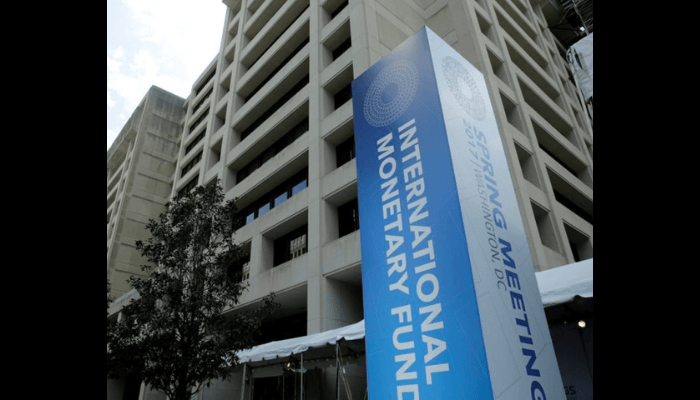
The International Monetary Fund (IMF) on Thursday urged the Central Bank of Nigeria (CBN) to adopt a well-designed foreign exchange intervention framework to ensure the stability of the currency.

The Washington-based Fund applauded the removal of foreign exchange market distortions and encouraged the authorities to continue improving the functioning of the FX market.

This was disclosed by the Fund in its concluded Article IV consultation with Nigeria. The IMF directors commended the Nigerian authorities’ actions to rein in inflation and restore market confidence. They stressed the importance of keeping a tight monetary policy stance to put inflation on a downward path, maintaining exchange rate flexibility, and building reserves.

Read also: IMF urges caution over proposed amendment of CBN Act

Gross international reserves declined in 2023 amid persistent capital outflow pressures. The naira depreciated sharply after the unification of the official foreign exchange windows in June 2023. Following monetary policy tightening in February and March 2024 and a resumption of FX interventions, the naira has started to stabilise, the IMF said.

They recommended caution regarding amendments to the CBN Act that might weaken the Central Bank’s autonomy. They encouraged further progress in implementing the outstanding recommendations from the 2021 safeguards assessment.

The IMF emphasised the importance of close monitoring of financial sector risks. They supported the increase in the minimum capital for banks and urged the CBN to unwind the regulatory forbearance introduced during the pandemic.

The Fund acknowledged the recent improvements in the AML/CFT framework and called for sustained action to exit the FATF grey list. They supported the authorities’ efforts to foster financial inclusion and deepen the capital market.

The executive directors agreed with the thrust of the staff appraisal. They welcomed the bold reforms implemented by the new administration and commended the authorities’ focus on revenue mobilisation, governance, social safety nets, and upgrading policy frameworks in the face of Nigeria’s significant economic and social challenges.

In view of the downside risks, the directors stressed the importance of steadfast, well‑sequenced, and well‑communicated reforms to restore macroeconomic stability, reduce poverty, support social cohesion, and pave the way for faster, inclusive, and resilient growth.

The IMF directors commended the authorities for restarting the cash transfer program and emphasised the urgency of scaling it up to mitigate acute food insecurity. They welcomed the authorities’ work on a comprehensive revenue mobilisation strategy including boosting tax enforcement and broadening the tax base.

They underscored that mobilising revenue and reprioritising expenditure, including phasing out costly and regressive energy subsidies, are critical to creating fiscal space for development spending and strengthening social protection, while maintaining debt sustainability.

The IMF also appreciated the authorities’ commitment to discontinue deficit monetisation and positively noted progress in macroeconomic policy coordination.

The Fund’s directors highlighted the importance of reforms to enhance the business environment, improve security, implement key governance measures, develop human capital, boost agricultural productivity, and build climate resilience.

These reforms are crucial to boost investor confidence, unlock Nigeria’s growth potential and diversify the economy, address food insecurity, and underpin sustainable job creation.

Spotify: Nigerian artists’ streaming income grows by 25 folds in seven years

0

Streaming income for Nigerian artists on Spotify has grown by 2,500 per cent in the last seven years, underscoring the increasing uptake of musical platforms in the country.

In 2023, Nigerian artists earned N25 billion, double what they did in 2022, and there was a 2,500 per cent increase from 2017. Spotify revealed this in its annual report titled, ‘Loud & Clear.’

Spotify highlighted that more Nigerian artists (three times more than in 2018) earned above N10 million in 2023. The music platform said over half of these royalties went to independent artists or labels, and listeners discovered Nigerian artists 950 million times in 2023.

Jocelyne Muhutu-Remy, Spotify’s managing director for Sub-Saharan Africa, stated, “The significant growth in royalties earned by Nigerian artists on our platform is a powerful testament to their talent, creativity, and global appeal.

“We’re proud to amplify their voices and fuel the Nigerian music revolution. As a leader in the streaming economy, we’re committed to supporting African creators to make a living from their art and we’ll continue to invest further in African artists to ensure this momentum continues.”

Despite this growth, Nigerian artists only earned a small fraction of the $9 billion that Spotify paid in 2023. Nigeria’s total in dollar terms amounts to $28.65 million (at N872.59/$ as of December 27, 2023).

A BusinessDay analysis recently revealed that in 2023, South Africa accounted for 77.0 per cent of the total music revenue from the Sub-Saharan African region.

According to the 2024 International Federation of the Phonographic Industry (IFPI) report, the Sub-Saharan Africa market was the world’s fastest-growing music revenue market, with a 24.7 per cent growth increase in 2023. This growth has been fuelled by a surge in paid streaming services, contributing 24.5 per cent of revenue.

Businesses pay 23% more in import duties on volatile naira

0

Businesses and manufacturers that import critical production inputs are now paying 23 percent more as Customs import duties with the naira retreating against the United States dollar after weeks of stability in April.

The cost of clearing imports went up by 23 percent to N1,412.573/$ as of May 8 compared to a year-to-date low of N1,150.16/$ recorded on April 23 when the naira rallied against the dollar after supply of the greenback surged due to reforms by the Central Bank of Nigeria (CBN).

This also represents a 48 percent increase in the cost of clearing compared to the N951.941/$ rate previously used in January before the FX duty rate became volatile.

The naira rally in April brought significant relief to importers who had grappled with a spike in the cost of clearing imports at the ports.

“The infamous tweaking of import duty rates is destabilising importers and further sapping their investments dry,” said Jonathan Nicole, former president of the Shippers Association of Lagos State.

In advanced countries, there are standard windows for calculating import duties and such is not subjected to tweaking at will by government authorities, according to Nicole.

“Our economic policies have failed, and the resultant effect of these inconsistencies in rates is for importers to abandon their goods in the ports or relocate to countries where there is import policy stability,” Nicole told BusinessDay by phone.

He called on the Central Bank to devise a means to stabilise both the naira and the cargo clearing exchange rate to gain investor confidence.

The cost of clearing imports became volatile last year with the 2023 Customs Act. The Act allowed the CBN to use the prevailing exchange rate to determine the rate for calculating import duty.

Ijeoma Ezeasor, secretary general of the National Shippers Association of Nigeria, lamented that manufacturers didn’t plan for the CBN to take over the fiscal policy administration in addition to monetary policy.

She said manufacturers are the worst hit because most of the goods ordered and paid for in 2020 when COVID-19 disrupted the supply chain, are now coming into the country and are being cleared with new and higher exchange rates.

“It is a bit of a crisis for manufacturers and exporters of locally manufactured goods because the numbers are no longer adding up. The economy is chaotic, and we need to know who is in charge of the economy, especially in terms of fiscal administration. The CBN is not putting the impact of the volatile rates on planning and cost of doing business,” she added.

Giving insight into how the exchange rate for paying duties evolved in almost a year, Muda Yusuf, CEO of the Centre for the Promotion of Private Enterprise (CPPE), told BusinessDay that the Nigeria Customs Service Acts 2023 empowers the Central Bank to determine the exchange rate for computation of import duty.

“From a legal and technical point of view, it is legal for CBN to fix the FX rate for import duties. Once the exchange rate of naira to dollar goes up or down, the rate for the computation of import duty does the same explaining the current volatility in the import duty environment,” Yusuf explained.

Ideally, he said, the exchange rate for computing import duty should be within the fiscal policy space because it relates to trade.

“The fiscal policy authorities are more in tune with the realities of business; thus, the FX rate for import duty is used to regulate trade flow and should be within their purview,” he advocated.

Yusuf called for a review of the 2023 Customs Act and quarterly hedging of the exchange rate at N1,000 or N1,100 to protect businesses.

Also, Obiora Madu, director general of the African Centre for Supply Chain, said the issue of determining import duty rates should be handled between fiscal and monetary policy authorities.

He said that the CBN’s trade and exchange department can carry out exchange control responsibilities, which explains why the unit is in charge of determining FX for clearing goods at the port.

Madu, however, said that Nigeria needs to look for what works for the nation’s economy if the country wants to grow trade and enable the manufacturing sector that brings in raw materials through the port to create jobs.


MTN, Airtel’s FX-induced N511bn loss masks stellar Q1 performance

0

Foreign exchange losses overshadowed strong underlying performances by Nigerian telecommunication companies listed on the stock exchange in the first quarter of 2024.

MTN Nigeria and Airtel Africa recorded a combined loss of N511.27 billion, mainly due to a near 30 percent devaluation of the naira this year.

Airtel Africa’s Q1 loss after tax was N118.57 billion ($91 million), a far cry from the N104.65 billion ($227 million) profit after tax it recorded in Q1, 2023. Similarly, MTN Nigeria’s N392.69 billion loss after tax is a departure from the N108.43 billion profit after tax recorded in the same period last year. Both companies attributed these losses to foreign exchange headwinds.

MTN’s foreign exchange loss for Q1 was N575.69 billion, and Airtel Africa’s FX loss for the entire year ended March 2024 was $549 million. Airtel blamed this loss on the naira devaluation in June 2023 and the Malawian kwacha devaluation in November 2023.

Despite these losses, both companies achieved impressive revenue growth in constant currency terms (excluding exchange rate effects) in Q1.

MTN’s revenue reached a record high of N752.98 billion from N568.13 billion. Airtel Nigeria’s constant currency revenue rose to N346.59 billion from N250.32 billion (reported revenue declined to $266 million from $543 million).

“Nigerian constant currency revenue growth accelerated to 34.2% in (the three months through March 2024) despite the challenging backdrop,” Airtel stated.

Airtel Africa (Airtel Nigeria’s parent company), operating in 14 countries, reported Q1 revenue of $1.12 billion, down from $1.34 billion in the corresponding period of 2023. The telco’s overall reported revenue declined by 16.6 percent, reflecting the impact of currency devaluation, particularly the naira.

However, Airtel Nigeria grew both voice and data revenue in naira terms. Voice revenue increased to N161.57 billion ($124 million) from N120.78 billion ($262 million), and data revenue to N151.15 billion ($116 million) from N106.03 billion ($230 million).

MTN also grew voice revenue to N318.92 billion from N277.61 billion and data revenues to N349.51 billion from N227.82 billion.

Airtel Africa would have made $460 million in profit after tax in its full year, which ended March 2024, if not for significant currency devaluations in Nigeria and Malawi.

Meanwhile, MTN would have made a profit of N263.7 billion without the devaluation of the naira.

Olusegun Ogunsanya, chief executive officer of Airtel Africa, said, “The consistent deployment of our ‘Win with’ strategy supported the acceleration in constant currency revenue growth over the recent quarters, which has reduced the impact of currency headwinds faced across most of our markets.”

Karl Toriola, MTN Nigeria’s chief executive officer, during the Q1 announcement of the telco, said, “These factors have caused significant difficulties for businesses operating in Nigeria, including MTN Nigeria, putting additional pressure on consumers, the cost of doing business, and further foreign exchange (forex) losses.”

These financial losses coincide with renewed calls by telcos for an increase in the prices of calls, data, and other services. In a recent communique by the Association of Licensed Telecom Operators of Nigeria (ALTON) and the Association of Telecommunication Companies of Nigeria (ATCON) argued that rising inflation and currency devaluation necessitate higher tariffs.

They said, “For a fully liberalised and deregulated sector, the current price control mechanism, which is not aligned with economic realities, threatens the industry’s sustainability and can erode investors’ confidence.”

These same calls were earlier made in 2022 when ALTON wrote to the Nigerian Communications Commission for regulatory approval to raise tariffs by 40 percent because of surging diesel prices and economic headwinds. The price hike would have raised the floor price of calls from N6.4 to N8.95 and the price cap of SMS from N4 to N5.61.

Toriola, MTN’s CEO, noted in the telco’s Q1 report that the company is engaged with authorities, through its industry body, on a tariff increase because of the effects of challenging operating conditions.

“Importantly, appropriate tariff increases will be necessary to support continued investment and the long-term sustainability of the industry. This will support our commercial interventions in our work to accelerate top line growth,” he said.

Gbenga Adebayo, president of ALTON, noted that telcos are currently facing challenges regarding core infrastructure deployment.

“Both MTN and Airtel have declared significant foreign exchange losses in Nigeria, and the stress is not linked to them alone. The entire ecosystem is battling with a range of challenges that must be addressed. If we fail to do so, the downstream impact on innovation will be severe,” he declared.

He highlighted that while the cost of living has worsened, the price of connectivity must increase in a measured way for people to enjoy its benefits.

“We need to find a long-term, sustainable, and manageable solution to this problem,” he added.

Aminu Maida, executive vice chairman of the NCC, recently suggested that telecom operators must consider strategic actions to stay in business.