Sunday, May 10, 2026
Home Blog Page 168

Alleged Attack On Protesters: CSO Petitions Senate, Reps, Accuses EFCC Of Lawlessness

0

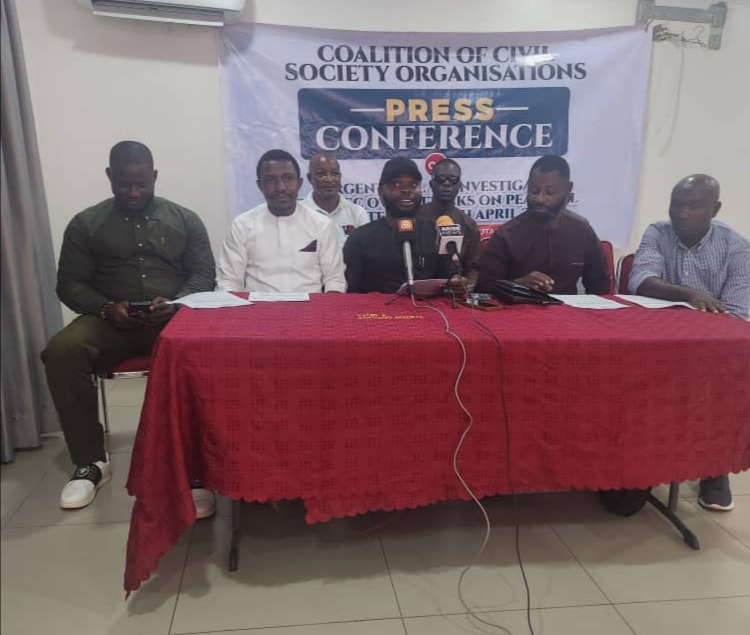
A Coalition of Civil Society Organizations, comprising no fewer than sixty-four registered CSO groups have petitioned the Senate Committees on Judiciary, Human Rights and Legal Matters and House of Representatives Committee on Human Rights against the Economic and Financial Crimes Commission, EFCC over the alleged attack on peaceful protesters at the Commission’s headquarters in Abuja last week.

The Coalition in a four page petition submitted on Monday detailed how a well planned protest turned violent as the officials of the EFCC allegedly attacked demonstrators of the various CSO groups and Kogi Youth.

They had arrived the Commission’s headquarters to show their dissatisfaction over alleged refusal of the EFCC to obey court order on the ongoing case between the Commission and the immediate past Governor of Kogi State, Alh Yahaya Bello which in recent times has generated unusual media frenzy.

The petition which was co-signed by Mr Richard Otitoleke and Clement Nduka alleged that the security Officials of the Commission assaulted, injured and molested the protesters and harrased journalists present.

The petition further accused EFCC officials of vandalisation of the vehicles, musical instruments and gadgets the group brought for the protest, including two luxurious buses belonging to the Abuja Urban Mass Transit.

They accused EFCC of causing loss of valuables belonging to the protesters, including their phones, midgets and laptops.

Details of the petition is hereby attached here

The Chairman,
Senate Committee on Human Rights,
National Assembly (Senate Wing)
Abuja
Sir,

FIGHT AGAINST CORRUPTION: ATTACK ON PEACEFUL PROTESTERS IN ABUJA, VIOLATION OF RIGHTS AND EXECUTIVE LAWLESSNESS BY OFFICIALS OF EFCC: CALL FOR SENATE PROBE OF THE INCIDENT

We are a joint committee of sixty-four registered Civil Society Organizations operating under the auspices of COALITION OF CIVIL SOCIETY GROUPS. We have over a decade ago remained consistent in our advocacy for the advancement of an equitable, fair and just society through the due processes of our establishments as a country, as required of our corporate mandate and as the conscience of the society.

This petition has become expedient and very necessary in view of recent occurrences in our country, which if not properly checked, could further tighten the grip of some of our establishments (which are products of the law) being used as tools for oppression, suppression, intimidation, harassment as well as for perpetration of illegalities which could threaten not only our human rights records before the international community but also portray us as a people with no confidence in our judicial system, hence resort to self-help.

While we choose not to appear sub-judice by commenting on the ongoing impasse between the former governor of Kogi State, Yahaya Bello and the anti-graft agency, the Economic and Financial Crimes Commission (EFCC) because of the pendency of the case in the court of justice, it is important to bring to your notice, Distinguished Senator, that on Monday, April 29, 2024, two groups of protesters staged demonstration at the headquarters of the Economic and Financial Crimes Commission, one clearly against former Governor Yahaya Bello in solidarity with the commission. This group staged their protest seamlessly without hitches as they naturally enjoyed the Commission’s protection and were attended to by the Commission.

On the other hand, Distinguished Senator, the other group, a coalition of Civil Society Organizations and Kogi Youth group, who came with placards, banners with different inscriptions suggesting that the commission should carry out their national assignment within the confines of our constitution were brutally harassed, dispersed with teargas and gunshots.

The protesters which the EFCC might have perceived as pro-Bello had merely taken their demonstration to the Commission’s headquarters to submit a letter, urging it to explore the judicial system to pursue its case instead of the media trial against Yahaya Bello and several other high profile Nigerians whose integrity, name and characters have been assassinated and maligned by same EFCC but later won their several cases, an action that has been severally condemned as unprofessional and unnecessarily dramatic.

The protest according to our findings was largely peaceful and just as the leaders were approaching to submit their protest letter, officers of the commission started firing teargas, releasing their dogs on the demonstrators and dispersing them with gunshots.

That is not all, Distinguished Senator, their vehicles, especially the ones rented from Abuja Urban Mass Transit were destroyed, journalists attacked, and some passersby injured as everyone scampered for safety following the unprovoked attack by those who ordinarily should protect them.

Apart from their paper placards calling on the EFCC to go to the courtroom to advance their case as against playing to the gallery before the camera lens, nothing incriminating was found on any of the protesters, raising questions as to what prompted the EFCC and its official to unleash an unprovoked attack on harmless protesters? Does this give credence to the assumption that EFCC is only interested in persecuting and not prosecuting Yahaya Bello and most of the people they have investigated and tried in court but later won?

Their action is in sheer contravention and outright violation of the Chapter 4 of the 1999 Constitution as amended which confers every citizen with the Right to personal liberty, Right to fair hearing, Right to freedom of thought, conscience and religion, Right to freedom of expression and the press, Right to peaceful assembly and association and Right to freedom of movement.

The action of officials of the Commission is also in violation of the United Nations Universal Declaration of Human Rights which declares that all human beings are born free and equal in dignity and rights.

It further states that they are endowed with reason and conscience and should act towards one another in a spirit of brotherhood. Everyone is entitled to all the rights and freedoms set forth in this Declaration, without distinction of any kind, such as race, colour, sex, language, religion, political or other opinion, national or social origin, property, birth or other status.

These were all brazenly observed in the breach by the EFCC and its officials and it casts our dear country in a negative light when x-rayed in the lens of our Constitution and existing international laws which our great country signed up to.

The Commission did not deny its unprofessional conduct against the coalition of Civil Society Organizations, journalists and passersby who witnessed the disturbing episode. Their defence has only been that the demonstrators were “unruly” without a single trace of evidence, bearing in mind that there are video clips of everything that transpired on the said day.

OUR DEMANDS

1. That this honourable and noble Commission should immediately set up a panel of enquiries to look into this ugly trend with a view to recommend punitive measure for whoever that erred on the matter.
2. That the honourable Committee should invite the Chairman of Economic and Financial Crimes Commission, Ola Olukoyede to appear before it to answer to the issues raised.
3. That the honourable Committee should extend invitation to the Reporters of Africa Independent Television (AiT), Arise Television and all journalists on ground who were also victims of the barbaric attack by an institution like EFCC.
4. That the honourable Committee extend invitation to the drivers of the Abuja urban Mass Transit who drove some of the damaged vehicles and who have been suspended by their employers, Abuja Urban Mass Transit, due to the unfortunate action of EFCC destroying their buses.
5. That the honourable Committee should invite the manager of the filling station beside the EFCC Headquarters whose station and customers on queue for fuel were badly harrased, attacked and two arrested by the Commission.

6. That the honourable Committee should consider such other things that will promote justice, fairness and rule of law in this case.

As distinguished Senators and responsible Committee members who are known for defending the rights of Nigerians where they have been breached, we are counting on you as the last hope of the common man to get justice in the interest of our nation and defence of the defenceless in the society. While we anticipate your usual kind consideration of this, please accept the assurances of our solidarity towards nation building.

Dr Clement Nduka
Convener,
Coalition of Civil Society Organizations in Nigeria

Richard Otitoleke,
Director of Operations.
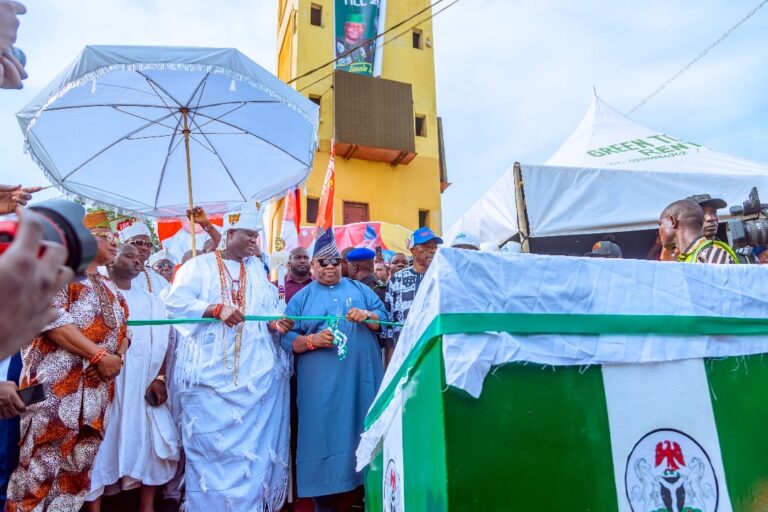
Osun Governor unveils N14bn dualised Flyover Bridge in Ile-Ife

0

The Osun state governor, Ademola Adeleke unveiled the N14 billion flyover bridge project in Lagere to the Iremo area of Ile-Ife on Tuesday, May 7.

At the flag-off at Lagere, Adeleke disclosed that the project would be completed in twelve months as he charged the contractor, Messrs Sammya Nigeria Limited to partner with the host community for the successful execution of the bridge.

He said: “We are flagging off the flyover bridge at Lagere Junction as well as the commencement of 55 kilometres of roads across the 30 local governments and the area office.

“After compliance with the due process and procurement laws, the flyover bridge is awarded to Messrs Sammya Nigeria Limited at a total project cost of N14,938,924,771.45.“

Ooni of Ife, Oba Adeyeye Ogunwusi implored residents to join hands with the Osun state government over the project.

He said: “This is the economic hub of Ile-Ife. We have banks and all manners of businesses here. All the residents of neighbouring communities including Gbongan and many more towns do come to Lagere for trading. People do come from Modakeke to trade here.

“When the governor proposed this project I was very happy. Ile-Ife is the origin, despite that the governor is from Ede, he remembered his ancestral home. I want to plead with the governor to remember Mayfair Road.
“I want to plead with the governor not to deceive us with the flagoff but please help us to complete this project. Don’t just come here to cut the ribbon but please complete this overhead bridge you unveil today. Also, help us to rehabilitate bad roads in Ile-Ife and expand them if need be. Please don’t neglect us and we will continue to pray for you.”

Earlier, the Permanent Secretary of the Ministry of Works and Infrastructure, Engr Idowu Bello, explained that the flyover will take off at Lagere and land at Iremo Road with dualised carriageway.

He noted that the flyover is designed to be a 10-span bridge with retailing walls at the approaches, adding that the existing structure on the ground will be given a facelift to reflect the cradle of the Yoruba race when completed.

He said: “Within the 17 months of this administration, Mr. Governor has completed the rehabilitation of 10Km lengths of roads spread across lle-Ife and another 5Km Local Government roads will be flagged off today.”

Industrial Court orders Forestry Research Institute to reinstate 3 Senior Staff

0

The Presiding Judge, Akure Judicial Division of the National Industrial Court, Hon. Justice Kiyersohot Damulak has set aside the purported employment termination of Mr Bolanle Ojo and 2 others from the Forestry Research Institute of Nigeria for being unlawful.

The Court ordered Mr Bolanle Ojo and 2 others be reinstated to their erstwhile positions in the Forestry Research Institute of Nigeria with the payment of their salaries and allowances from the date of termination 28th March 20233 till date and thereafter.

From facts, the claimants- Mr Bolanle Ojo and 2 others had submitted that they were senior staff and had no prior notice of disciplinary proceedings against them and no query was issued to them before the termination of their employment, and the alleged offence of misconduct was never brought to their notice.

Mr Bolanle Ojo and 2 others further averred that they were not afforded the opportunity to testify personally and were not aware of any witness who testified against them and were not given the opportunity to cross-examine the witnesses.

In defence, the defendants- Forestry Research Institute of Nigeria and the Federal Ministry of Environment prayed the court to strike out the names of the Federal Ministry of Environment for non-disclosure of any cause of action.

The defendants maintained that Mr Bolanle Ojo and 2 others were given prior notice of the allegations against them in the letters of invitation to appear before the disciplinary committee. That the allegation of want of fair hearing cannot fly, that Mr Bolanle Ojo and 2 others chose to send in their letters of resignation rather than defend the allegations against them, and urged the Court to dismiss the case.

In opposition, the claimants’ counsel rejected the defendants’ assertion and urged the court to grant the reliefs sought.

Delivering judgement after careful evaluation of the submissions of both parties, the Presiding Judge, Justice Kiyersohot Damulak dismissed the Federal Ministry of Environment’s objection and held that Mr Bolanle Ojo and 2 others’ termination letters show that the Forestry Research Institute of Nigeria acted with the approval of the Federal Ministry of Environment, which is a sufficient cause of action against the ministry.

The Court stated that a look at the content of the counter affidavit discloses that Mr Bolanle Ojo and 2 others did not attend the disciplinary committee meeting and it’s obvious that they could not have met, heard and cross-examined any witness.

Justice Damulak held that the evidence of the letters sent to Mr Bolanle Ojo and 2 others to respond to is not before the court, and the report of the staff disciplinary committee (if there was any) cannot in itself be such evidence that the defendants are expected to show a counterpart of the letters evidencing receipt by Mr Bolanle Ojo and 2 others.

“I have looked at exhibits HHK 2 and 3, they are mere pieces of paper without weight in that they do not have any trace of a letter ever received by the defendants. They are photocopies and not certified. They are documents of doubtful origin and source. More so, the alleged resignation letters, if actually sent, should be in the custody of the defendants yet they have not been produced.” Justice Damulak ruled.

Visit the judgment portal

Osimhen Refuses To Celebrate After Scoring Against Maduka Okoye

0

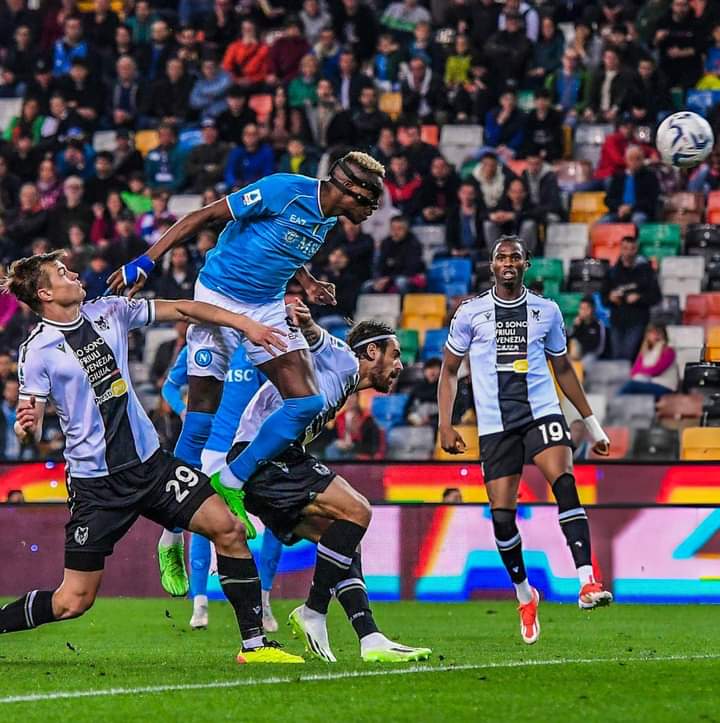
Nigerians steal show as Osimhen refuses to celebrate after scoring against Maduka

The duo of Maduka Okoye and Isaac Success hosted Victor Osimhen and Napoli in Udine.

It was a case of the Nigerian contingent taking centre stage as Victor Osimhen and Isaac Success traded blows for Napoli and Udinese respectively in an entertaining 1-1 draw in Udine.

Osimhen opened the scoring for the Serie A leaders with a towering first-half header but refused to celebrate against compatriot and friend Maduka Okoye in the Udinese goal.

However, fellow Nigerian, Success had the final say, coming off the bench to deny Osimhen and Napoli all three points with a last-gasp equaliser deep into stoppage time.

The clash was a showcase of Nigerian talent on both sides, with Osimhen leading the line for the visitors before Success’ heroics for the hosts.

Okoye also played his part with some smart saves, ensuring the game ended in a stalemate between the contingent of Super Eagles stars.

Osimhen broke the deadlock in typical fashion, outmuscling his marker to power home a bullet header and bag his 15th goal of the campaign.

But the former Lille man opted against celebrating out of respect for his compatriot Okoye, who was beaten by the brilliant effort before his Napoli teammates swamped around him.

Napoli looked to be closing in on a crucial win before Success intervened two minutes into injury time, firing home from close range to spark scenes of delirium.

The Udinese supersub, unlike his fellow countryman, celebrated his timely equaliser for the home side.

While Osimhen will be disappointed to have dropped more points, his goal continued an incredible scoring run but not enough to give the former champions all three points.

On the other end, Okoye’s strong performance will have been a big positive, showing he can match teammates Osimhen and Success at the highest level.

The result leaves Napoli still eighth on the table, but now five points behind the last European spot currently held by Lazio.

But with such a wealth of Nigerian talent in their ranks, Napoli will back themselves to get over the line after a poor season.

CBN Directs Banks To Impose 0.5% Cybersecurity Levy On All Transactions

0

The Central Bank of Nigeria has ordered banks operating in the country to start charging a cybersecurity levy on transactions.

A circular from the apex bank on Monday disclosed that the implementation of the levy would start two weeks from today.

The circular was directed to all commercial, merchant, non-interest and payment service banks, among others.

The circular revealed that it was a follow-up on an earlier letter dated June 25, 2018 (Ref: BPS/DIR/GEN/CIR/05/008) and October 5, 2018 (Ref: BSD/DIR/GEN/LAB/11/023), respectively, on compliance with the Cybercrimes (Prohibition, Prevention, Etc.) Act 2015.

The recent public engagements by the Office of the National Security Adviser on the above subject, also refers.

Following the enactment of the Cybercrime (Prohibition, Prevention, etc) (amendment) Act 2024 and under the provision of Section 44 (2)(a) of the Act, a levy of 0.5 per cent (0.005) equivalent to a half per cent of all electronic transactions value by the business specified in the Second Schedule of the Act, is to be remitted to the National Cybersecurity Fund which shall be administered by the Office of the National Security Adviser.

The CBN said that all banks, other financial institutions and payment service providers are now required to implement the directive, saying, “The levy shall be applied at the point of electronic transfer origination, then deducted and remitted by the financial institution. The deducted amount shall be reflected in the customer’s account with the narration, ‘Cybersecurity Levy’.

“Deductions shall commence within two weeks from the date of this circular for all financial institutions and the monthly remittance of the levies collected in bulk to the NCF account domiciled at the CBN by the fifth business day of every subsequent month.”

Exempted from the levy include loan disbursements and repayments, salary payments, intra-account transfers within the same bank or between different banks for the same customer, intra-bank transfers between customers of the same bank.

Also exempted from the levy were inter-branch transfers within a bank, cheque clearing and settlements, ⁠Letters of Credits, ⁠Banks’ recapitalisation-related funding only bulk funds movement from collection accounts, savings and deposits including transactions involving long-term investments, among others.

The CBN, in recent times, has been making an effort to sanitise the financial sector. It recently issued a directive which barred fintechs from onboarding new customers.

The fintechs have in turn warned their customers against engaging in crypto transactions on their platforms.

This also comes barely a week after the Federal Government had directed Deposit Money Banks to immediately begin the deduction of 0.375 per cent stamp duty charge on all mortgaged-backed loans and bonds.

FG Eyes $750m World Bank Loan, Mulls Telecom Tax

0

In pursuit of securing a new $750m loan from the World Bank, the Federal Government may reintroduce previously suspended telecom tax and other fiscal measures.

This is according to the Stakeholder Engagement Plan for Nigeria – Accelerating Resource Mobilisation Reforms programme between Nigeria and the World Bank.

A copy of the plan’s document posted on the World Bank website indicated that the government might reintroduce the excises on telecom services, and EMT levy on electronic money transfers through the Nigerian Banking System among other taxes.

President Bola Tinubu in July 2023 ordered the suspension of the five per cent excise duty on telecommunications and the Import Tax Adjustment levy on certain vehicles.

However, it appears that this suspension may be lifted to meet the programme targets for a new, yet-to-be-approved World Bank loan with negotiations ongoing between the government and the World Bank.

Checks by our correspondent showed that the government had initially requested to obtain the loan in 2021 but was halted without clear reasons.

The programme’s development objective is to strengthen the government’s financial position by enhancing its capacity to manage and mobilise domestic resources effectively, which includes improving tax and customs compliance and protecting oil revenues.

The planned tax reforms under the ARMOR programme are expected to have significant implications across various economic sectors.

The PforR Programme is part of a larger governmental initiative running from 2024 to 2028, aimed at reforming tax and excise regimes, enhancing the administrative capabilities of tax and customs, and ensuring transparency in oil and gas revenue management.

The World Bank’s contribution of $750m constitutes a significant portion of the programme’s budget and the government is expected to contribute $1.17bn through annual budgetary.

According to the plan, affected stakeholders will include manufacturers of goods such as alcoholic beverages, tobacco products, sugar-sweetened beverages, telecom and banking service providers, as well as the general tax-paying public, importers and international traders.

Key industry groups such as the Association of Licensed Telecom Operators of Nigeria are engaged regarding the excise duties on telecom services.

The draft document stated, “Domestic Revenue Mobilisation drive in the government ARMOR program seeks to increase revenue on some targeted industries and sectors of the economy. Specific groups and agencies within affected sectors include the Association of Licensed Telecom Operators of Nigeria: The introduction of excises on telecom services requires that all telcos are mobilised to fully participate in the collection of such revenue.

“Committee of Bankers: Introduction of EMT levy on electronic money transfers through the Nigerian Banking System would need the buy-in of all banking institutions

“Manufacturer’s Association of Nigeria: Manufacturers of tobacco products, sugar-sweetened beverages and alcoholic beverages who would be required to collect excises on their products are critical stakeholders for the introduction of the new excise regime. They are currently organised into various sectoral groups under the Manufacturer’s Association of Nigeria. Producers of alcoholic beverages organised under the Distillers and Blenders Association of Nigeria also need to key into the reforms.

“Also, strategic partners involved in the importation of different items into the country will be mobilised to participate in the ARMOR programme. A key stakeholder group is the Association of Nigeria Customs Agents.

“Vehicle Importers and Manufacturers: Stakeholders in the automobile trade industry must be engaged in reforms involving the introduction of green taxes on high GHG emission vehicles. Local manufacturing and assembly of vehicles is growing through a phase of growth in Nigeria. The demand for vehicles is mostly met through importation by vehicle importers under the aegis of the Association of Motor Dealers of Nigeria.”

The document also emphasised the importance of engaging vulnerable groups to ensure they are not disproportionately affected by these changes.

It also said, “Services that will be subjected to the newly introduced excises are regulated by key public sector agencies. The introduction of the new revenue measures will require the application of existing regulatory mechanisms available within these institutions. The concerned institutions include the Nigerian Communication Commission, the Central Bank of Nigeria.

“There are also agencies with the mandate for making policies on some of the issues covered in the ARMOR program concerning policy framework on matters of public interest in Health and Environmental Protection. The government institutions relevant to ARMOR in this regard are the Federal Ministry of Environment, the National Environmental Standards Regulatory and Enforcement Agency, and the Federal Ministry of Health.”

Additionally, the programme outlines specific allocations for technical assistance, with $5m each going to the Federal Inland Revenue Service and the Nigeria Customs Service to support their capacity to implement these new measures effectively.

This includes the development of systems for better data sharing, risk-based audits, and compliance processes, as well as substantial investments in program management and capacity building.

“The government program is funded from annual budget allocations of $1.17 billion to FMF, FIRS and NCS. The PforR with results-based financing of $730m, and $20m investment financing, is 62 per cent of the program budget”

“There will also be $10m for project management, tax policy capacity-building and other expenses. In total, the amount makes the $20m investment financing before the release of $730m in line with the fiscal targets met.”

16 Banking Transactions exempted from The Cyber Security Levy (see full list)

0

1. Loan disbursements and repayments

2. Salary payments

3. Intra-account transfers within the same bank or between different banks for the same customer

4. Intra-bank transfers between customers of the same bank

5. Other Financial Institutions instructions to their correspondent banks

6. Interbank placements,

7. Banks’ transfers to CBN and vice-versa

8. Inter-branch transfers within a bank

9. Cheque clearing and settlements

10. Letters of Credits

11. Banks’ recapitalisation-related funding – only bulk funds movement from collection accounts

12. Savings and deposits, including transactions involving long-term investments such as Treasury Bills, Bonds, and Commercial Papers.

13. Government Social Welfare Programmes transactions e.g. Pension payments

14. Non-profit and charitable transactions, including donations to registered non-profit organisations or charities

15. Educational institutions’ transactions, including tuition payments and other transactions involving schools, universities, or other educational institutions

16. Transactions involving bank’s internal accounts such as suspense accounts, clearing accounts, profit and loss accounts, inter-branch accounts, reserve accounts, nostro and vostro accounts, and escrow accounts.

Naira To Be Delisted From Crypto P2P Platforms

0

The Federal Government has announced plans to delist the naira from all peer-to-peer (P2P) platforms.

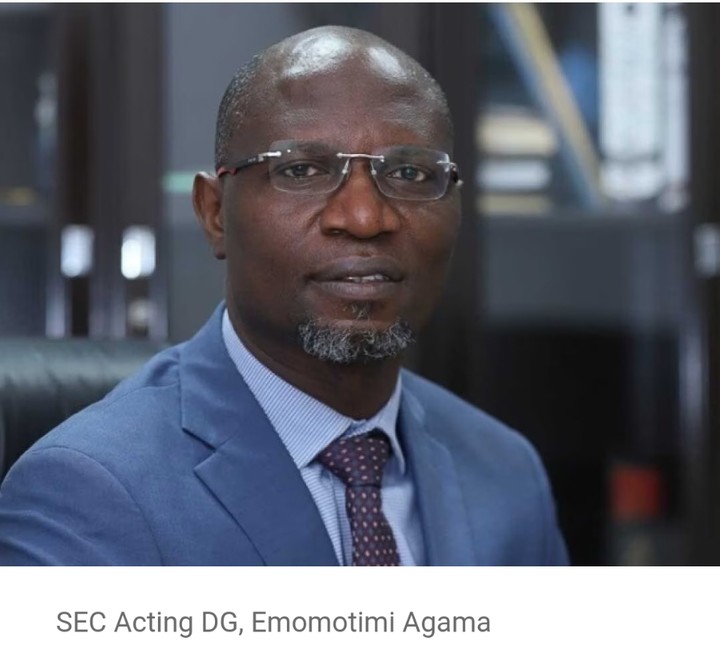
The Director General of the Securities and Exchange Commission, Emomotimi Agama, made this disclosure in a virtual meeting with blockchain stakeholders on Monday.

This decision aims to tackle the manipulation of the local currency’s value in the foreign exchange market.

The country’s regulatory authorities have been investigating and scrutinising cryptocurrency exchanges in recent months.

On March 8, the biggest cryptocurrency exchange, Binance, stopped its naira services.

Photo Speak: Fmr IYC Leader On Courtesy Visit To Amnesty Administrator

0

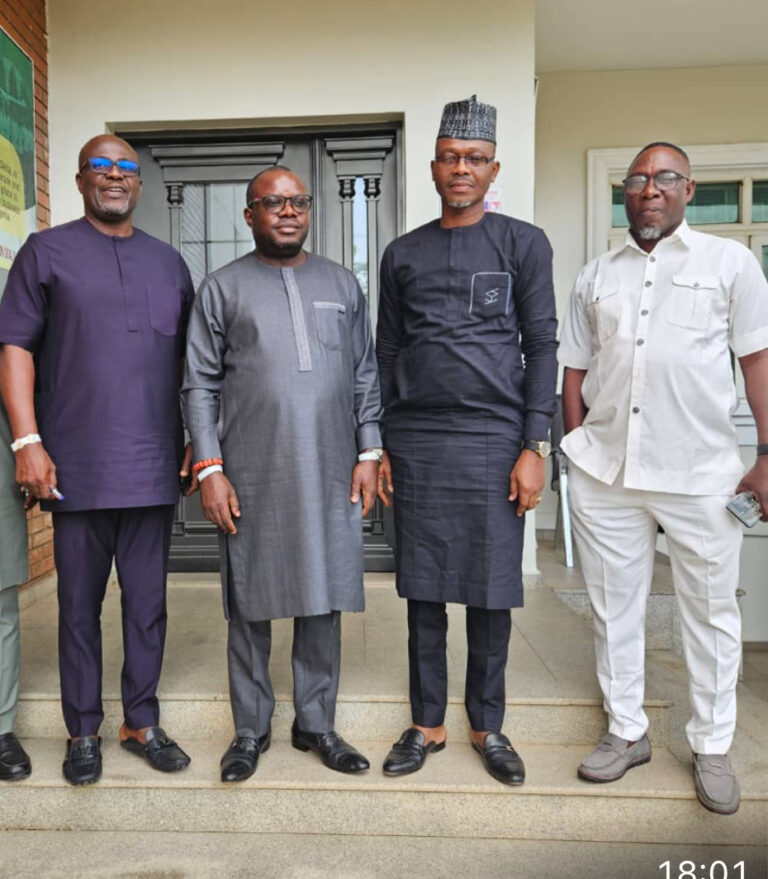
From Left: The Technical Adviser, Presidential Amnesty Programme, Mr Edgar Biu, the Administrator, Dennis Otuaro, PhD, former President of the Ijaw Youths Council, Dr Chris Ekiyor and the Head of Administration, Mr Zorab Monday during a Courtesy visit by the former IYC leader in Abuja on Monday.

The dollarization of weak and underdeveloped economies

0

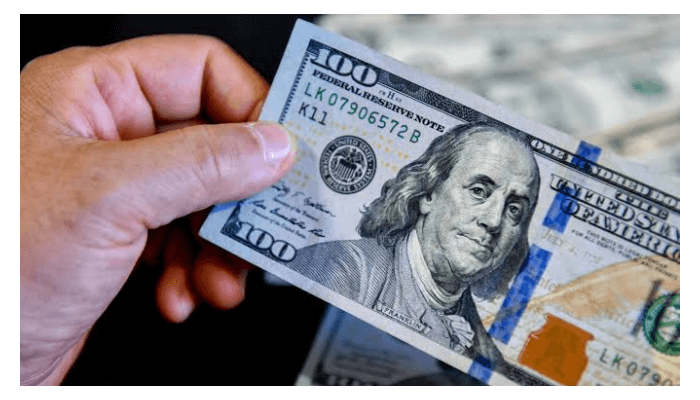
Dollarization is a phenomenon that has become increasingly familiar to inhabitants of weak or troubled economies, invariably developing or underdeveloped economies. It is the official adoption by a country of the United States dollar (USD) as a legal tender side by side with its national currency or as the only and exclusive legal tender for a number of years, which is not usually predetermined. On the other hand, it is or could be the unofficial adoption of the USD as a legal tender or an increasing or overwhelming preference for the USD by business people and other key economic agents in a country. The latter is what by and large approximates the Nigerian experience in recent times: the phenomenal ascendency of the USD as a preferred means of transaction, store of value, or currency speculation. This has been due to the poor economic management of the previous decade, which has plunged the nation into avoidable economic crises. The consequent weakening or unprecedented depreciation of our national currency, the naira, led to a flight to safety in strong foreign currencies, especially the USD.

Quite a few small countries, and especially a good number of island countries in the world with an eye on serving as foreign direct investment or tourism destinations, have adopted the USD as legal tender alongside their national currencies. But I will like to dwell briefly on two countries, one in Central America and the other in Southern Africa, that have used dollarization as deliberate monetary and exchange rate policies for different reasons: El Salvador (with a 2024 GDP of $35.3 billion) and Zimbabwe (with a 2024 GDP of $34.4 billion), respectively. In 2001, El Salvador embarked on dollarization for purely strategic economic reasons. The economy was doing relatively well, inflation was low and stable, external debt was manageable, and the financial system was stable. The dollarization policy was adopted to align the Salvadoran economy more closely with the US economy, attract foreign direct investment (FDI), and spur trade and economic growth.

Q: “The consequent weakening or unprecedented depreciation of our national currency, the naira, led to a flight to safety in strong foreign currencies, especially the USD.”

In the case of Zimbabwe, the economy was ravaged by an unprecedented level of hyperinflation, which, according to a September 2019 report by Al Jazeera cable news service, was “79.6 billion percent month-on-month and 89.7 sextillion percent year-on-year in mid-November 2009. Hyperinflation only ended the following year with the adoption of the US dollar.” These mind-boggling, terribly incomprehensible figures show how totally useless the Zimbabwean dollar has become, necessitating the adoption of the USD.

A month ago, on April 5, 2024, Zimbabwe introduced a new currency, the ZiG, which stands for “Zimbabwean Gold” and is backed by the country’s gold reserves. It was introduced electronically, but currencies and coins have since been issued. But there are early signs that the newest currency in the world will experience turbulence. And predictably so. It will inevitably be faced with the challenges that led to the abandonment of the Gold Standard by the rest of the world in 1971: the limitation it places on economic growth and the volume of financial transactions and economic activities since the value of ZiG is directly linked to gold and Zimbabwe’s gold reserves are limited in supply. Second, the ZiG limits the flexibility of the Reserve Bank of Zimbabwe to respond creatively and strategically to emerging changes and opportunities in the economy.

Coming closer home, the avoidable and wasteful economic mismanagement of the last decade combined with the roller coaster experience of the economy in the last year have combined to make the naira one of the worst performing globally. Mr Aliko Dangote succinctly describes the heart-wrenching experience as the biggest mess created” in the last year with the naira plummeting from N460 to N1,400 to the dollar between May 2023 and the first quarter of 2024. For a precariously import-dependent economy, the pass-through effect on inflation was significant. Headline inflation spiked from 22.41 percent in May 2023 to 33.2 percent in March 2024, the highest in 28 years.

Even the 22.41 percent inflation rate in May 2023 was already indicative of a distressing economic scenario. It revealed that the destruction of our economic fundamentals started manifesting about a decade before in de-industrialization, the stultification and near collapse of the power sector, the unprecedented level of oil theft and mineral theft in the oil and gas sector and solid mineral sector, all combined to limit the productive base of the Nigerian economy, its ability to produce for local consumption, its ability to produce for exports, not to mention hostile economic policies that led to the flight of capital. The net effect of this unpleasant narrative has been our heightened import dependency syndrome, the resultant massive devaluation of the naira, and the consequent dollarization mentality, which has willy-nilly been hoisted on a cross-section of economic agents in Nigeria, albeit unavoidably.

Mr Dangote, speaking from a microeconomic perspective, was right about the mess the massive depreciation of the naira has done to the finances of his businesses and his fortune. On the other hand, President Tinubu was equally right in his macroeconomic perspective when he said at the recent World Economic Forum in Riyadh, Saudi Arabia, that Nigeria was on the brink of public finance insolvency and economic collapse at the point where he introduced fundamental economic reforms by merging the naira exchange rates and largely removing fuel subsidies.

The unofficial dollarization of the Nigerian economy is a consequence of many years of economic mismanagement. It is a national economic challenge that we should all join hands with the government to reverse through enabling policies and decisions to invest and produce locally and to be intentional about buying and consuming locally made goods.