Tuesday, May 5, 2026
Home Blog Page 99

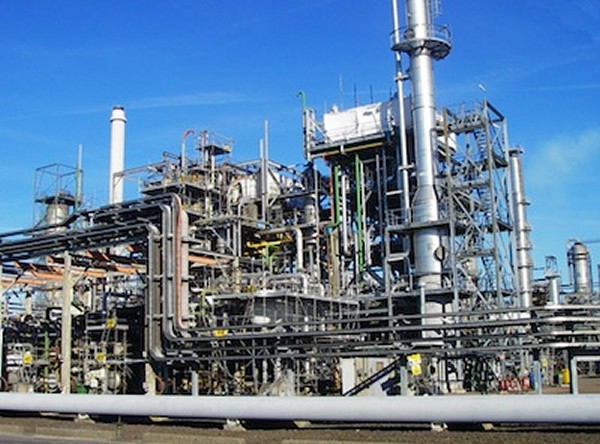
Dangote Refinery Extends Export To Three African Countries

0

The Dangote refinery has exported Premium Motor Spirit (petrol) to Cameroon, Angola, Ghana, and South Africa in the past few weeks.

The Vice President of Oil and Gas, Dangote Industries Limited, Devakumar Edwin, disclosed this while playing host to a delegation from the Japanese Business Community in Nigeria, led by Japan’s Ambassador-designate to Nigeria, Suzuki Hideo.

In a statement on Sunday, the company’s spokesman, Anthony Chiejina, quoted Edwin as confirming that products from the refinery meet international standards and are already being exported globally.

“In recent weeks, we’ve exported petrol to Cameroon, Ghana, Angola, and South Africa, among others. Diesel has gone all over the world, and jet fuel is being heavily exported to European markets. Our products are already making their mark internationally,” Edwin said.

Edwin explained that the facility is the vision of a Nigerian investor – Aliko Dangote, designed and built by Nigerians, and intended to serve the global market.

He said it is a point of pride that a Nigerian company not only designed but also built the world’s largest single-train refinery complex.

According to him, Dangote Industries Limited acted as the Engineering, Procurement, and Construction contractor for the refinery, saying cutting-edge technologies from around the world were incorporated to ensure that the facility meets the highest standards.

Edwin assured the ambassador-designate and the delegation that the company is open to collaboration, always striving to maintain the best possible standards.

“Even now, we have a lot of Japanese equipment inside both the refinery and the fertiliser plant. There are significant opportunities for collaboration, as we always seek the latest technology in any business we engage in. For instance, our cement plant laboratory is managed by robots, and we always embrace advanced technology. With Japan’s focus on technological innovation, there is ample scope for cooperation and for supplying various types of technology,” he said.

Edwin also stated that the Dangote Petrochemical project will significantly boost investment in downstream industries, creating substantial value, generating employment, increasing tax revenues, reducing foreign exchange outflows, and contributing to Nigeria’s Gross Domestic Product.

He added that by leveraging Africa’s vast crude oil resources to produce refined products locally, the Dangote Group aims to create a virtuous cycle of industrial development, job creation, and economic prosperity.

He reiterated that the refinery’s petroleum products are in demand worldwide, as it expands its polypropylene section to reduce Nigeria’s reliance on imported polypropylene, a crucial material used in packaging, textiles, and the automotive manufacturing industries.

The statement disclosed that the Japanese delegation hailed the refinery and the petrochemicals complex, describing it as an astonishing masterpiece, showcasing Nigeria’s technological advancements on the global stage.

The Japanese delegation, which toured the facilities housing both the Dangote Petroleum Refinery and Petrochemicals as well as Dangote Fertilisers, commended the technology, noting that it reinforces Nigeria’s role as the gateway to Africa.

Managing Director of the Japan External Trade Organisation, Takashi Oku, was said to have remarked that while Nigeria remains the gateway to Africa, the refinery stands as a remarkable project that showcases the country’s technological progress.

Oku added that the facility, as the world’s largest single-train refinery, is a point of immense pride for Nigeria.

“We had heard about the excellence of the Dangote Refinery through the media but seeing it in person has left us truly amazed by its vastness and grandeur. It demonstrates that Nigeria’s population is not only growing but also advancing in technology. We are keen to collaborate with Nigerian companies, especially Dangote Refinery,” he said.

Emphasising that the refinery has bolstered Nigeria’s leading position in Africa, he further noted that the facility serves as an ideal introduction to the country for the global community.

The Managing Director of Itochu Nigeria Limited, Masahiro Tsuno, was said to have also praised the sheer size and automation of the Dangote refinery, calling it a miracle and one of the wonders of the world.

I’ve seen many standalone refineries across the globe, including in Vietnam and the Middle East. However, the size of a refinery built by one single investor is probably a miracle in the world. And I’m just actually witnessing a miracle,” he said.

Tsuno indicated that his company would seek collaboration with the refinery across various sectors, including polypropylene and other petroleum products.

Lagos, Rivers, FCT, Oyo Earn ₦‎4.18 Trillion VAT In 11 Months

0

Out of the N5.718 trillion distributable Value Added Tax (VAT) revenue shared by the Federation Accounts Allocation Committee (FAAC) between January and November 2024, three states and the FCT earned N4.183 trillion as their share, leaving the remaining 33 states to share the remaining N1.534 trillion.

Based on the current VAT revenue sharing formula, Lagos State gets 42 per cent, meaning that the state alone takes home N2.401 trillion as its share during the period; Rivers State, which takes 16 per cent, got N914.88 billion during the same period, FCT with 10 per cent got N571.8 billion; while Oyo state that takes 5.2 per cent got N297.336 N285.9 billion.

The VAT sharing formula has become a contentious issue in recent times following the introduction of a new tax reform bill, which proposes radical changes to the current sharing formula.

According to the current formula, the Federal Government receives 15 per cent of VAT, states and the FCT take 50 per cent, while local governments take 35 per cent.

Of the 50 per cent meant for the states, each state retains 20 per cent of the VAT collected within its borders as derivation, 30 per cent is distributed based on the states’ population, while the remaining 50 per cent is shared equally among all the states.

According to the Presidential Committee on Fiscal Policy and Tax Reforms, this sharing formula does not take into account the fact that over 70 per cent of goods and services are consumed outside the head offices of the firms rendering those services or producing those goods but only recognises where VAT is remitted.

The new formula, which it proposes, gives Federal Government 10 per cent of VAT revenue, states and FCT, 55 per cent and local governments 35 per cent.

MEANWHILE, the Independent Media and Policy Initiatives (IMPI) has thrown its weight behind the tax reform bills currently awaiting approval by the National Assembly, hailing it as a bold move to revamp Nigeria’s economy.

Speaking during the organisation’s press conference in Abuja, yesterday, Chairman of IMPI, Omoniyi Akinsiju, emphasised the significance of the proposed legislation, stating that it was crucial for generating revenue, fostering enterprise growth, and enhancing citizens’ purchasing power.

He expressed dismay over what he called ‘unwarranted controversy’ about the reforms, particularly the VAT-sharing formula, calling it a distraction from the transformative benefits of the bills.

Over 200 Terrorism Suspects Bag Death sentence, Life Imprisonment

0

More than 200 suspects who were linked with the terrorism activities in different parts of the country have been convicted by the Federal High Courts (FHC) in the country after they were found guilty of the offences, Daily Trust reports.

Some of the suspects, according to the National Counter-Terrorism Centre in the Office of the National Security Adviser (ONSA), were sentenced to death, life imprisonment and 20 to 70 years depending on the gravity of their offence.

Daily Trust reports that the Director of Public Prosecution of the Federation, under the Office of the Attorney-General of the Federation in collaboration with ONSA oversaw their trials.

Hundreds of the suspects were being tried by 5 FHC judges in phases at the Kainji Detention Facility over their involvement in the heinous crimes with over 500 convictions secured in the past.

Giving an update on Sunday after conclusion of Phase 6 of the trial held between December 9 to 13, 2024, the Department of Strategic Communications in ONSA, explained that a total of 237 cases were heard from the trials.

The department stated that among those sentenced to the maximum penalty were individuals found guilty of heinous offences, including attacks on women and children and destruction of religious sites.

The suspects who were guilty of slaughtering innocent civilians as well as the abduction of women and children in brutal assault at Gina Kara Kai community in Borno State also received maximum penalty.

Describing the recent conviction as “milestone” in a bid to fight terrorism in the country, ONSA said it would not relent in its unwavering campaign against terrorism, including Boko Haram insurgency, IPOB insurrection and banditry.

It stated that the trials were conducted in strict compliance with international standards of justice, adding that it marked a critical step in restoring peace and stability in affected regions across the country.

Terrorism financiers jailed for life

“Additionally, individuals involved in terrorism-financing—a critical enabler of violent activities—were sentenced to life imprisonment, underscoring the Federal Government’s unyielding resolve to dismantle all aspects of terrorist networks.

“This achievement highlights the government’s commitment to delivering justice for victims of terrorism and safeguarding the lives and property of all Nigerians,” the Strategic Communications department explained.

It quoted the AGF and Minister of Justice, Lateef Fagbemi and the National Security Adviser, Nuhu Ribadu to have commended the judiciary, military, police, and other security agencies for their dedication to the “achievement”.

They urged Nigerians to remain united, vigilant and proactive in reporting suspicious activities to appropriate authorities, as the nation strives toward a safer and a more secure future.

It added, “The Director of Public Prosecution of the Federation, under the Office of the Attorney General of the Federation oversaw the trials in collaboration with the National Counter Terrorism Centre (NCTC), Office of the National Security Adviser (ONSA).

“This coordinated effort ensured a transparent and efficient judicial process, the sustenance of effective administration of justice.

“While the Department of the Public Prosecutions led the legal process, the NCTC-ONSA coordinated kinetic and non-kinetic counterterrorism measures, reaffirming the Federal Government’s determination to hold perpetrators accountable, protect victims’ rights and uphold the rule of law.

“At the Phase 5 of the Terrorism Trial that took place in July this year, 143 cases were heard with 125 convictions.

“Under the leadership of President Bola Ahmed Tinubu, GCFR, the administration has significantly strengthened the capacities of institutions, including the military, police, intelligence, law enforcement agencies and the judiciary to facilitate the swift and effective administration of justice.

“Measures have also been implemented to ensure the safety of judicial officers, witnesses, and other stakeholders involved in the trials.

“This initiative reflects Nigeria’s commitment to global best practices in prosecuting terrorism-related cases and aligns with international conventions aimed at protecting fundamental rights.”

2027 Presidency: Not About Zones But Credible Candidate – Shekarau

0

A former Kano State governor, Ibrahim Shekarau, has said that Nigerians should not be bothered about zones but should place priority on credibility ahead of the 2027 presidential election.

The debates about power returning to the northern part of the country in 2027 have been going on for a while now.

Just this weekend, the presidential candidate of the New Nigerian Peoples Party, NNPP, in the 2023 election, Senator Rabiu Musa Kwankwaso met with former president, Olusegun Obasanjo.

However, there is an argument that the southern region, which produced President Bola Tinubu, is yet to exhaust eight years in office.

Shekarau is, however, of the opinion that the region should not be the focus at this point but credibility.

All the parties should come up with their planning in a situation whereby they make the best of choices.

But for Nigerians now to decide, our concern is ‘Let’s look at the candidates produced by the parties’,” Shekarau said on Channels Television’s Sunday Politics.

Our challenge is that all the parties should give Nigerians correct candidates so we have the best to choose from.

But if you give us all evils, we will choose the best from the evils,” the former governor added.

Council Chairmen Halt FG’s ₦‎40 Billion Methanol Plant Project In Enugu

0

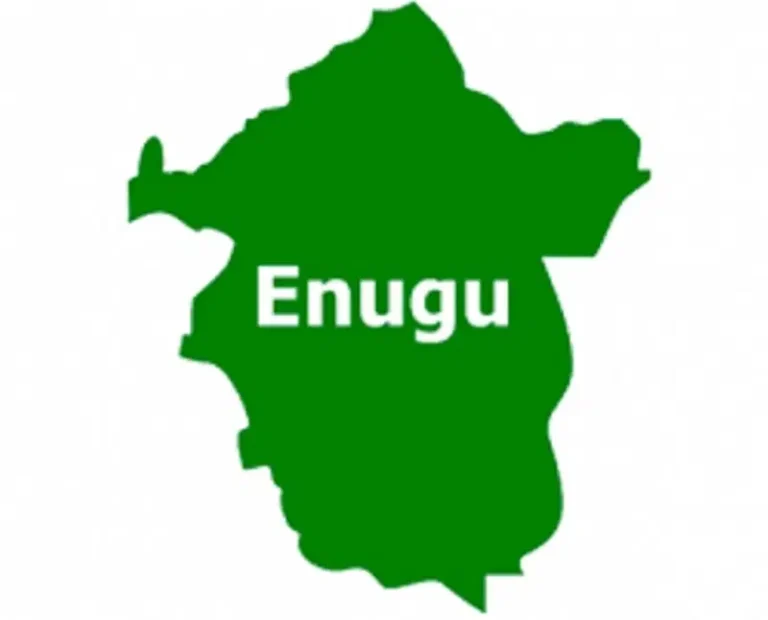
The ongoing construction of the federal government’s multi-billion Naira “Renewed Hope” Bio-Methanol Pilot Plant in Akpugo, Enugu State, has been halted by the Chairmen of Nkanu West and Nkanu East Local Governments, Mr. John Ogbodo and Mr. Sidney Edeh, respectively.

Reports indicate that the two council leaders, accompanied by police officers, visited the construction site over the weekend, where they allegedly arrested construction workers and confiscated batteries from the machinery used for the installation of the plant. These actions caused a disruption of work at the site.

In a phone interview, Nkanu West LGA Chairman, Ogbodo, denied the incident, while his counterpart in Nkanu East did not respond to inquiries. Enugu Police Spokesman, Daniel Ndukwe, also stated that he was unaware of the situation.

However, an official from the Energy Commission of Nigeria (ECN), a federal agency under the Ministry of Innovation, Science, and Technology, confirmed that the council chairmen, accompanied by the police, halted the construction activities.

The plant, which is valued at over N40 billion, is the first of its kind in West Africa and was introduced by President Bola Ahmed Tinubu for the people of the Southeast.

The Energy Commission alleged that Enugu State Governor Peter Mbah had directed the police to arrest the contractors working on the project.

Those detained included Ambrose Edeh, Chibuike Edeh, Monday Nwodo, Obinna Samuel, Ebuka Chukwurah, Chibuike Okereke, and Maduabuchi Okoro.

The workers were initially detained at the RRS Government House in Enugu, before being moved to the Anti-Kidnapping section of the State CID. The Inspector General of Police, Kayode Egbetokun, intervened and ordered the immediate release of the detainees.

Once operational, the N40 billion bio-methanol plant is expected to address many of Nigeria’s and Africa’s industrial needs. Along with a similar N60 billion Solar PV project for solar panel production, both initiatives are among the largest in the Southeast and are key to President Tinubu’s administration’s development efforts.

Ambode: A Proven Leader For 2027 And Beyond 

0

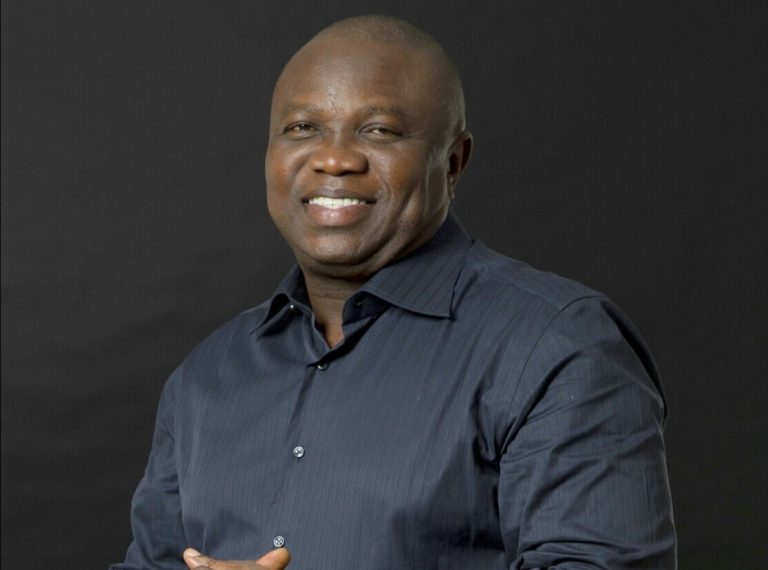
As we look ahead to the 2027 gubernatorial elections in Lagos State, one name stands out among the crowd: Mr. Akinwunmi Ambode. With a track record of exemplary performance during his first term, Ambode remains a beacon of hope for the sustainable development and progress Lagosians yearn for.

From 2015 to 2019, Ambode demonstrated visionary leadership, initiating transformative projects that redefined Lagos’ landscape. His administration delivered on infrastructure, education, health, and economic empowerment, setting the state on a trajectory of growth. Projects like the Oshodi Transport Interchange, Abule-Egba Flyover, and the Ajah Bridge are enduring testaments to his commitment to alleviating urban challenges and improving the quality of life for millions of residents.

Ambode’s governance was characterized by strategic planning, fiscal prudence, and inclusivity. His policies prioritized the welfare of all Lagosians, regardless of social class, and created an enabling environment for businesses to thrive. Under his leadership, Lagos emerged as a hub for innovation and investment, maintaining its position as Nigeria’s economic powerhouse.

However, the journey was cut short before he could complete his second term. The challenges Lagos faces today – population growth, urbanization pressures, and the need for infrastructure renewal – require the steady hand of a leader who has already proven his capacity to deliver. Ambode is the man for the job.

His return to office in 2027 is not just a political aspiration; it is a necessity. Only a leader with his vision and experience can tackle the problems that will inevitably arise in the coming years. Ambode’s ability to anticipate challenges, build resilient systems, and foster collaboration positions him as the ideal candidate to navigate Lagos through its next chapter of growth and stability.

This is not a call for nostalgia but a rallying cry for continuity and progress. Ambode’s unfinished agenda for Lagos is a roadmap to greatness, and it is up to us, the people, to ensure that this vision becomes a reality. Supporting this laudable project is about safeguarding our collective future and giving Lagos the leadership it truly deserves.

Let us come together, set aside political differences, and pledge our loyalty to a leader who has shown us what is possible. Ambode’s return will not just complete his second term but also elevate Lagos to an enviable position among global cities.

*Lagos deserves the best, and Ambode is ready to serve. Together, we can make 2027 a turning point for lasting progress.*

Naira-For-Crude: IPMAN Eyes Petrol Price Reduction

0

Over 23m barrels of crude traded as civil societies knock cabal

Damilola Aina, Ismaeel Uthman and Babatunde Titilola
:

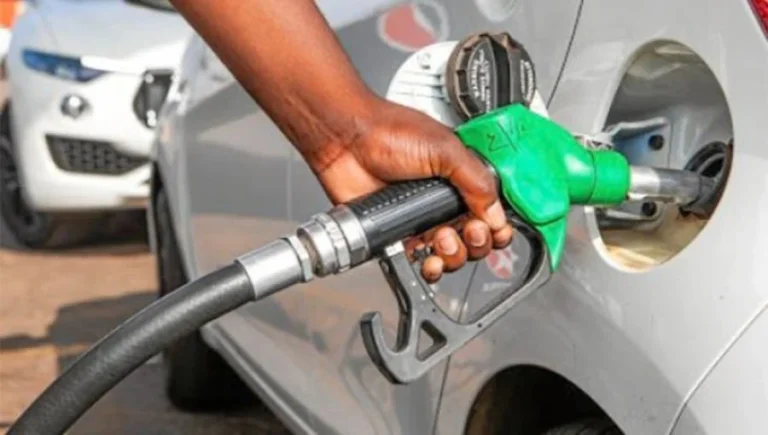
The Independent Petroleum Marketers Association of Nigeria has sought a reduction in the price of petrol across the country.

The group urged the Dangote refinery to consider reducing its ex-depot price from N970 per litre since the estimated cost of landing petrol on Nigeria’s shores has dropped to N900.28 per litre.

President Bola Tinubu had during a Federal Executive Council meeting on July 29 proposed the sale of crude to local refineries in naira.

The FEC adopted the proposal by Tinubu to sell crude to Dangote and other refineries in the local currency.

FEC approved that the 450,000 barrels meant for domestic consumption be offered in naira to Nigerian refineries, using the Dangote refinery as a pilot.

It also approved an initial six-month trial period pending further review by the Technical Sub-Committee on Domestic Sales of Crude Oil in Local Currency.

“From October 1, NNPC will commence the supply of about 385,000 barrels per day of crude oil to the Dangote refinery to be paid for in naira,” the committee had declared.

This implies that NNPC is to supply about 11.5m barrels of crude oil to the Dangote refinery monthly and an equivalent of over 23m barrels in two months.

However, sources who were informed about the local crude sale deal told our correspondents on Saturday that the deal was still ongoing despite little information about the volume of crude traded within the period.

A source said, “There is no information to the contrary, which means the deal is still on. If it had been suspended or ended, you would have seen a statement from the parties involved or the committee in charge announcing that the deal was no longer working. It means if there is no statement, the deal is still ongoing.”

Efforts to reach the Nigerian National Petroleum Company Limited and the Dangote Refinery on the amount traded between parties proved abortive as the NNPCL spokesperson, Femi Soneye, did not respond to enquiries.

In October, The PUNCH exclusively reported that four cargoes of crude oil were delivered to the refinery.

Sources told our correspondent that the refinery was still waiting to receive more crude oil cargo.

But in an interview a month later, the Vice President of Dangote Industries Limited, Devakumar Edwin, said the amount of crude received from the national oil firm was “peanuts” compared to the volume needed to ramp the production of refined products.

He said NNPCL had yet to meet its target to deliver a minimum of 385,000 bpd since the commencement of the programme in October.

“We need 650,000 barrels per day. NNPCL agreed to give a minimum of 385,000 bpd, but they are not even delivering that,” the official informed Reuters.

Meanwhile, the 650,000-barrel refinery has resorted to crude oil imports to ramp up its production capacity and commence export to West African countries.

This development was confirmed by the IPMAN National Publicity Officer, Chinedu Ukadike, who also called on the refinery to consider reducing prices to foster healthy competition within the sector.

Ukadike, speaking in an exclusive interview with our correspondent on Saturday, acknowledged that the 650,000-barrel facility would set its price based on production costs, although the foreign exchange rate remains a significant factor in determining its ex-depot price.

He said, “The cost of production is peculiar to any refinery, and for Dangote analysis, I think the refinery would have to be further reviewed because you would also remember that in one month, the facility has reviewed its processes twice. It dropped the price from N990 to N980 and then reduced it further to N970.

“This situation is a classic example of the deregulation process. Factors of demand and supply, as well as factors of production cost and sourcing, will determine price.

“Also, remember that the benchmark for petroleum products is foreign exchange. Remember, too, that the naira gained recently. This would normally affect the domestic market, especially the price of goods and commodities, including oil and gas.

“You can’t waive the fact that what is happening in Nigeria is a healthy development. Whether Dangote will reduce its price. That is sacrosanct, but he will.”

The IPMAN national officer added that the Nigerian Midstream and Downstream Petroleum Regulatory Authority should be commended for halting monopolistic plans, which had, in turn, fostered healthy competition and pricing.

“The naira-for-crude initiative is still based on foreign exchange, the volume of crude oil the Federal Government has allocated to the refinery since inception and what the production is.

“I have also heard from a great authority that Dangote is still importing crude from the USA. If my assertion is correct, it means that domestic intervention may not be able to encourage lower prices,” he added.

Responding to the disappointment of Nigerians that the naira-for-crude initiative has not reduced petrol prices, he retorted, “No, it is healthy; it will continue to make the sector better, like the telecommunications sector. Now, we are no longer talking about scarcity; what we are talking about is pricing. The issue of scarcity is gone, which was one of the factors that made the price of petroleum products go high. All things being equal, we will reap the benefit of deregulation.

“These things are done for the benefit of Nigerians, and marketers are committed to anything that would alleviate the suffering of people queueing for fuel. Remember, this is a festive period, and fuel needs to be available at a cheaper rate.”

However, the Petroleum Products Retail Outlets Owners Association of Nigeria National President, Billy Gillis-Harry, stated that the association would not be swayed by the reduced landing costs to consider importing petroleum products.

He said, “Please, you people should forget about importation for now. We are not importing, and we have all made a decision not to bother about importing. If Dangote and Port Harcourt refineries do not give us what we want, that is when we will come back to talk about importation.

“Importation is cheaper for us at PETROAN, but we are not going to do that because we have promised the president that we would not import.

“Recall that we had negotiated with some partners to import, and we are not even paying in advance. We negotiated an agreement of $70m just for import. They were to bring in products, and when we bought, we would pay back in naira, but we had to stop all of that.

“The issue of import should be kept in the cooler for now, and let us see what will happen after our meeting in January if our demands on product offtake will be met.

“NNPCL has called us to start applying for products from the Port-Harcourt depot. So, there are quite a lot of benefits.”

CSOs blame cabal, govt

Commenting on why the naira-for-crude transaction to Dangote and the operation of the Port Harcourt refinery have not impacted the price of fuel, the National President, Coalition Against Corrupt Leaders, Debo Adeniran, blamed the ‘fuel cabal’ for the high price of petrol.

He said, “We should know that there is an oil cartel, and usually, the Organisation of the Petroleum Exporting Countries is the leader of the cartel that determines what you produce in your own country and how much you sell it. Not only OPEC, but some world powers also want to determine how much gets into your country. That is why they manipulate OPEC to regulate prices so that you can’t have so much from the world market.

“If you have your products, they make it economically inert as much as they can. That is the first reason we cannot make extra gains from locally refined products, and it can even be more expensive.

“The local cabal is also not helping matters, because they impose all sorts of official and unofficial taxes and regulations on the local producers of fuel. That is the reason imported fuel can even be cheaper than the locally produced ones. It is unfortunate that we have it that way.”

Similarly, the Civil Society Legislative Advocacy Centre condemned the high price of fuel amid local production.

The Executive Director of CISLAC, Auwal Rafsanjani, said the government didn’t care about the people.

“In the past, the government used to say it couldn’t afford to discontinue the importation of petroleum products because our refineries were not working. Now that one of our refineries is working, will you revise the situation, or should we just continue with what we have now? I think if the government cares about the people, they should do something to at least show concern,” he said.

Rafsanjani said the citizens should be relieved with the local production of fuel and operation of the refineries.

He said, “The government decided to withdraw fuel subsidy without taking into consideration that if you have a public-owned refinery, the citizens should be able to have some relief. You cannot have public-owned processed petroleum products and be selling them in the same commercial way as you are importing them into the country or it is Dangote selling them.

“This means that the government has not planned on how to mitigate these rising costs of petroleum products. I think the government is only interested in generating money without considering the citizens’ affordability.

“If you have natural resources and a citizen cannot benefit from it, then it is as good as you don’t have. What is the difference between when the refineries are working and when they are not working, the prices of what you get in a commercial enterprise and what you get from the government?”

2027 Presidency: We’re Not Wooing Jonathan, Says PDP

0

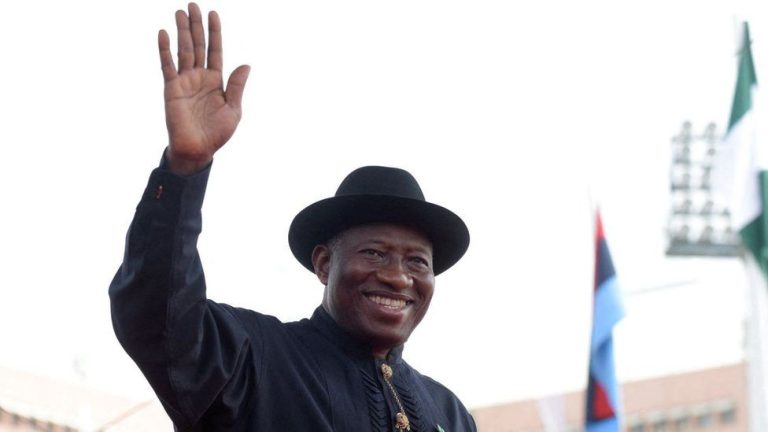
The People’s Democratic Party (PDP) has denied reports that it invited former President Goodluck Jonathan to join the 2027 presidential race on its platform.

Deputy National Publicity Secretary of the PDP, Ibrahim Abdullahi, denied the reports in an interview with BBC Hausa, saying the party did not issue its presidential ticket to Jonathan.

He said, “The report that PDP has issued its presidential ticket to former President Goodluck Jonathan or invited him to contest the 2027 presidential election is not true.

“What happened is this: I had an interview with a journalist where we discussed some issues. But in the course of the interview, he mentioned President Jonathan, asking about our opinion of him, because there are reports that he is being urged to run for the presidency.

“I responded by saying that he (Jonathan) is eligible to contest the election, because he is a Nigerian and has the right to do that by the provision of the law, and he still has one more term left. So, there is nothing wrong about him contesting the presidential election because he is eligible in the face of the law.”

He also added that PDP had done enough for Jonathan and as a member of their party, there was no way they would woo him.

Abdullahi, who explained that they were yet to discuss the issue with Jonathan, said they have 12 governors and many other prominent politicians who are eligible and competent to contest the presidential election.

“It wasn’t long ago that his wife said nothing would make her husband run for the presidency, that he didn’t leave behind or forget anything in the Villa for people to think that he’d come back to contest the position again. How then can we consider him. Ticket is given to someone who has shown interest.”

Nigeria Clears N85bn, $54m ECOWAS Levy After 19 Years

0

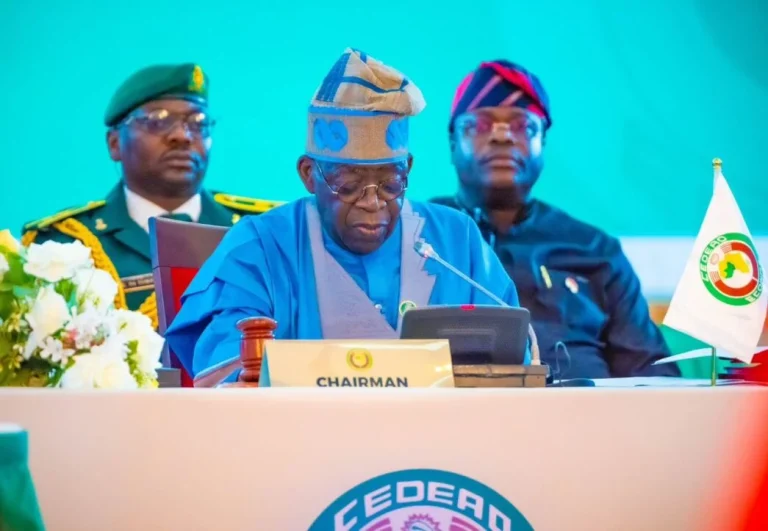
Nigeria has made its first full payment of the Economic Community of West African States (ECOWAS) levy in 19 years, contributing N85.54 billion and $54 million for 2023 and part of 2024.

Omar Touray, president of the ECOWAS Commission, made the announcement during the 66th ordinary summit of ECOWAS in Abuja on Sunday.

He called the payment “a vote of confidence” in the organisation and a demonstration of Nigeria’s leadership in West Africa.

Touray also highlighted the importance of the payment, noting that it would support ECOWAS efforts in regional integration and development.

The payment, made on December 13, 2024, marks a key moment in the relationship between Nigeria and ECOWAS.

Nigeria had struggled to meet its financial obligations to the regional body in previous years, but this move reflects a renewed commitment to the organisation.

At the summit, President Bola Ahmed Tinubu, who is chairing the event, praised Nigeria’s role in the regional body.

The summit also addressed other pressing issues, including the withdrawal of Burkina Faso, Mali, and Niger from ECOWAS, following military coups in those countries.

These nations have formed the Alliance of Sahel States (AES), and leaders are now seeking ways to manage the situation diplomatically.

The summit is also focused on discussions regarding the proposed single currency for West Africa, the ECO, and ways to enhance economic cooperation among member states.

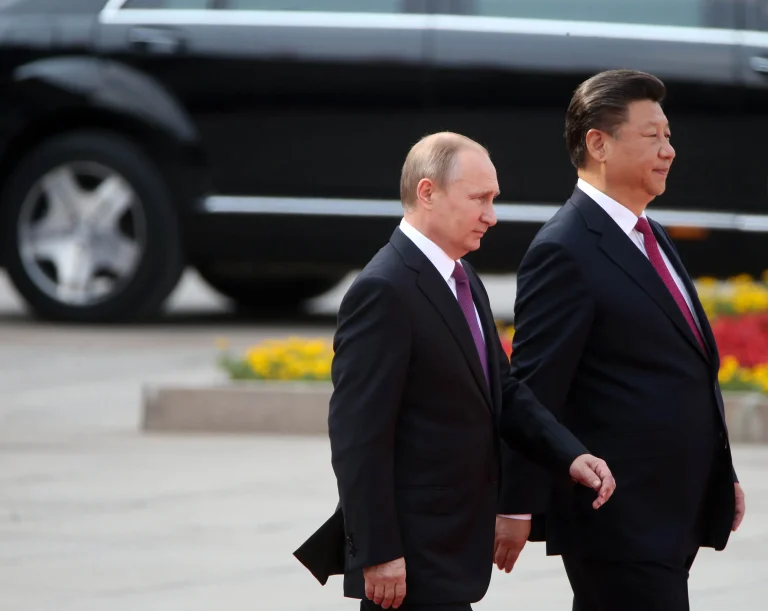
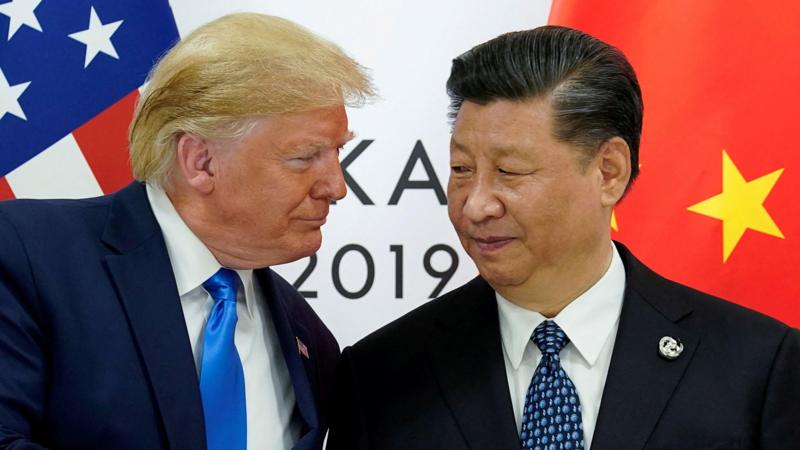
China President Xi Rejects Trump’s Inauguration Invite (Photos)

0

🇨🇳 Chinese President Xi Jinping has reportedly rejected Donald Trump’s invitation for a history-making guest appearance at next month’s presidential inauguration.

The snub, reported by CBS News, will come as a blow to the president-elect and his plans for a spectacular swearing-in event on January 20 to mark his return to the White House.

A foreign head of state has never attended a U.S. inauguration, according to State Department records, but Trump has also invited Italian Prime Minister Giorgia Meloni, Argentinean President Javier Milei, and El Salvador’s President Nayib Bukele to turn it into a global event.

No explanation has been given for Xi’s decision not to travel to Washington. The invite was made just after Trump’s 2024 presidential election triumph.

“This is an example of President Trump creating an open dialogue with leaders of countries that are not just allies but our adversaries and our competitors, too,” his spokeswoman Karoline Leavitt told Fox News on Thursday.

Despite Trump’s claims that he has a good relationship with the Chinese leader, his presidency begins with fears of a trade war with Beijing over punitive tariffs proposed during the presidential election campaign.

China is reportedly considering imposing its own tariffs in a bid to beat Trump to it and force him to the negotiating table.