Tuesday, May 5, 2026
Home Blog Page 100

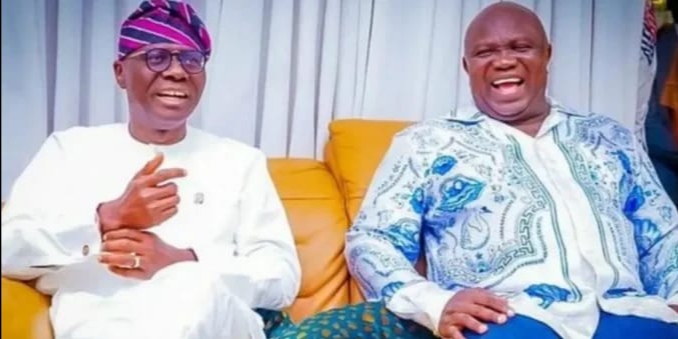
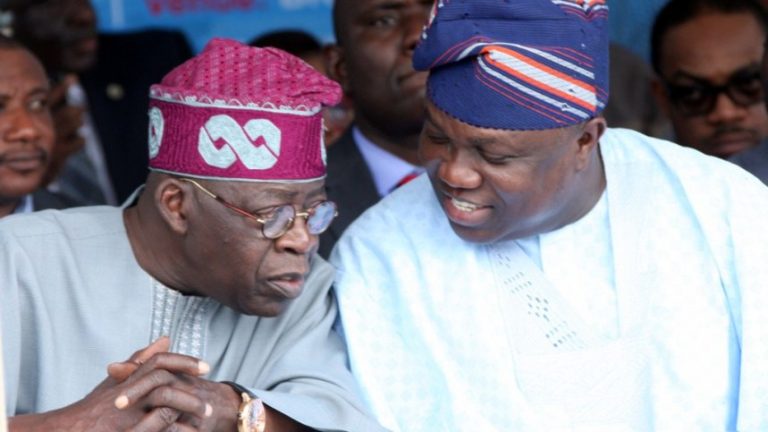
Ambode, The Leader Lagos Needs In 2027, Big Booster To Tinubu’s Second Term Ambition 

0

As Nigeria approaches the 2027 general elections, political conversations are intensifying across the country, and Lagos State is not left out. The prospect of Akinwunmi Ambode returning as Governor of Lagos State has captured the attention of many, especially in light of President Bola Ahmed Tinubu’s potential second-term bid.

Akinwunmi Ambode, the former governor of Lagos State (2015–2019), remains one of the most remarkable administrators the state has ever seen. During his tenure, Lagos witnessed unprecedented infrastructural development, fiscal growth, and innovations that solidified its status as Nigeria’s economic capital. His leadership style combined efficiency, strategic planning, and a commitment to delivering impactful governance.

Ambode’s Legacy of Excellence

Ambode’s achievements in office remain etched in the minds of Lagosians. His administration was notable for its massive infrastructural projects, including the transformation of Alausa, the Oshodi Transport Interchange, road expansions, and lighting up Lagos streets to ensure safety at night. He improved the state’s Internally Generated Revenue (IGR) while maintaining financial transparency and accountability.

His administration also focused on education, health care, and the empowerment of youths and women. Initiatives like the Lagos Employment Trust Fund and the Eko Atlantic Project are examples of his visionary leadership, which continues to inspire hope among Lagosians for a return to his governance.

The Political Dynamics

President Bola Ahmed Tinubu, widely regarded as the architect of modern Lagos, has set the foundation for progressive governance in the state. As Tinubu seeks to consolidate his legacy and ensure a successful second term, Lagos plays a pivotal role in rallying support. Having a governor like Ambode in Lagos would significantly strengthen Tinubu’s chances, uniting the political structure and ensuring the continuity of developmental policies.

Ambode, being a loyal party man and a respected figure, commands respect across diverse political and social groups. His popularity among Lagosians, coupled with his reputation for competence, positions him as the ideal candidate to bridge any gaps within the All Progressives Congress (APC).

A Strategic Boost for Tinubu’s Bid

A synergy between Ambode’s governorship and Tinubu’s presidency would create a robust framework for national and state development. With Lagos as the economic hub, its stability and progress are essential to Nigeria’s overall success. Ambode’s leadership can guarantee this stability while mobilizing grassroots support for Tinubu’s second-term aspirations.

Furthermore, bringing Ambode back would address any lingering concerns of party unity in Lagos APC. His return would symbolize reconciliation and forward-thinking, ensuring that Lagos remains a model state in Nigeria’s political landscape.

The Voice of the People

The clamor for Ambode’s return is not just a political calculation; it reflects the genuine desire of Lagosians who experienced the dividends of his governance firsthand. They remember a governor who prioritized their needs, who listened to their concerns, and who delivered tangible results.

In 2027, Lagos needs a leader with proven experience, vision, and the capacity to take the state to greater heights. Ambode fits this description perfectly.

As the APC charts its path toward 2027, aligning capable leaders like Akinwunmi Ambode with President Bola Ahmed Tinubu’s national agenda is a winning strategy. Ambode’s return as governor of Lagos State would not only restore confidence in governance but also provide a solid foundation for Tinubu’s second-term bid.

The time is ripe for Lagos to embrace a new chapter under the leadership of a tested and trusted hand. Ambode is not just the governor Lagos needs; he is the catalyst for a brighter future for both the state and the nation at large.

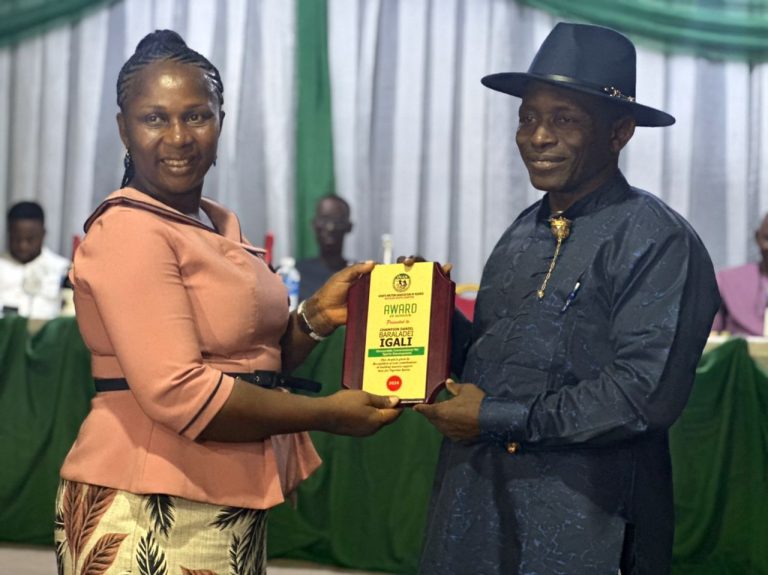
‘Without SWAN sports development is incomplete’, Igali eulogises SWAN as Bayelsa SWAN WEEK 2024 concludes

0

The commissioner for Sports Development, Bayelsa State, honourable Daniel Igali, has eulogised the importance of the Sports Writers Association of Nigeria (SWAN) to the development of sports across the country.

Daniel Igali made the assertion during the Bayelsa 2024 SWAN WEEK awards night to conclude the week-long events that featured Road-walk, football events, and indoor games such as Scrabble, Chess and Table Tennis.

Daniel Igali who doubles as the President of the Nigeria Wrestling Federation, noted that the achievements of athletes and administrators in various competitions can not be widely spread and accepted without the support and reportage of the Sports Writers.

“I want to start by giving kudos to the organisers of this events, each time we have our conversations in private I keep telling them that, especially in the areas of sports, if you don’t have SWAN and broadcasters, it is equivalent to a tree falling in the forest and if nobody is there you don’t hear the sound.”

“The Sports Writers in Bayelsa State have done such a noble job of broadcasting the achievements of our athletes, umpires and administrators not only in Nigeria but to Africa and the rest of the world and I really want to applaud you.”

Honourable Igali, who was elated to be recognised by SWAN, dedicated the award to the Governor of Bayelsa State, Senator Douye Diri, and deputy, Senator Lawrence Ewhrudjakpo for the conducive platform giving him to serve.

Igali reiterated that the state government is ever committed to changing the fortune of sports in Bayelsa, with its drive to improve sports facilities in the state.

“I want to dedicate this award to His Excellency, Governor Douye Diri and his deputy, Senator Lawrence Ewhurdjakpo for all the support they have given to sports and oftentimes when people ask me why we have been able to do the modest things we have done in sports, I tell them it’s because the Governor who has worn the shoes as former Commissioner of sports knows where it pinches.”

“As commissioners of sports, our duty is to ensure that we grow sports beyond what it was before we met it and our current goals are to ensure that we have the necessary facilities not only in the state capital, but Asoama and other parts of the LGAs in Bayelsa.”

Also, Honourable Daniel Igali confirmed that by the end of the first quarter, 2025 the Wrestling Gym at the Samson Siasia Stadium, which was put on hold for sometime will be completed as intensive reconstruction work commenced a few weeks back.

Diri Approves Surveillance Cameras For Yenagoa

0

…Security Watch Africa Honours Bayelsa Gov

Bayelsa State Governor, Senator Douye Diri, has approved the installation of closed-circuit surveillance cameras to cover parts of Yenagoa in order to boost security and crime prevention in the state capital.

The project, which entails the installation of 200 new cameras and the revamping of 50 others, is in furtherance of the administration’s Safe City Programme.

Governor Diri disclosed this during a three-day Security Watch Africa Initiatives-organised conference which ended on Thursday night in Doha, Qatar, as contained in a statement by Chief Press Secretary to the Governor of Bayelsa State, Daniel Alabrah

The keynote address of the Bayelsa governor, who is on annual leave, was presented by the state’s Security Coordinator and Coordinator of the Bayelsa Community Safety Corps, Brig-Gen. Eric Angaye (rtd).

According to the governor, “the use of technology as a critical enabler for security and law enforcement operations has received priority attention through the phased implementation of a Safe City Programme, which incorporates revamping a legacy 50 camera system and addition of 200 cameras to enhance surveillance and domain awareness.”

The governor stressed that his administration’s investment in physical, social and digital infrastructure was crucial for promoting peace and security in the state.

He also stated that implementing digital solutions to crime prevention enhance governance, public services, and economic opportunities.

“In line with our commitment to making Bayelsa State inhospitable to criminal elements, we remodeled, upscaled, and relaunched the special joint security task force known as Operation Doo-Akpo, and subsequently signed the Bayelsa State Community Safety Corps Bill into law on December 14, 2021.

“This law streamlined the operations of the Operation Doo-Akpo along with the special outfits – Bayelsa Volunteers and Bayelsa Vigilante – under one umbrella. The Community Safety Corps was designed to support and collaborate with the statutory security agencies in efforts to rid the state of criminal elements.”

He said at the moment, Bayelsa is ranked as perhaps the safest state in Nigeria.

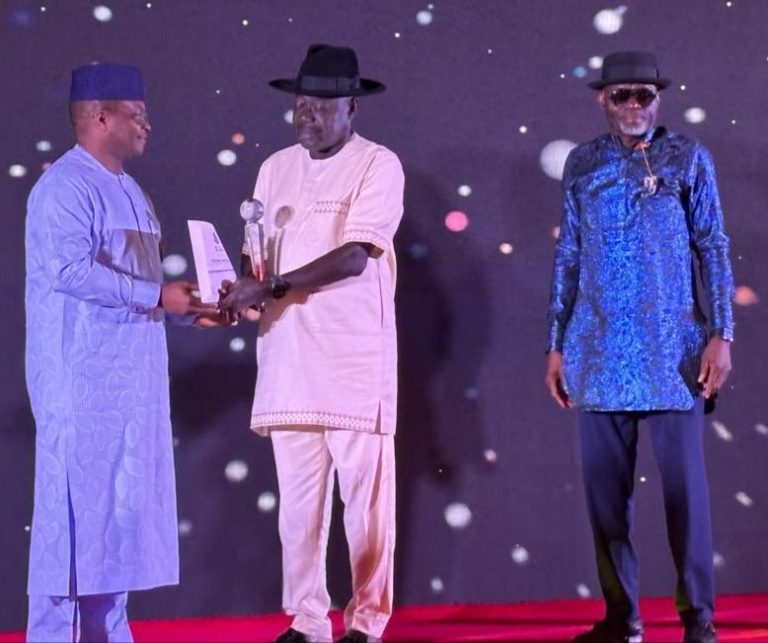
At a dinner event on Thursday, Senator Diri was honoured as the Best Security Conscious Governor alongside his colleagues from Lagos State, Babajide Sanwo-Olu, and Katsina, Mallam Dikko Radda.

Other awardees included the Chief of Defence Staff, Gen. Christopher Musa, Comptroller-General of Nigeria Customs Service, Adewale Adeniyi, Inspector-General of Police of The Gambia, Seedy Touray, and his Ghana counterpart, Dr. George Dampare among others.

The immediate past Chief of Army Staff, late Lt-Gen. Taoreed Lagbaja, was post-humorously honoured as the Most Outstanding Army Chief in National Defence in Africa in 2023/2024.

Receiving the award on behalf of the Bayelsa governor, Gen. Angaye (rtd) expressed appreciation to the Chief Executive Officer of Security Watch Africa Initiatives, Mr. Patrick Agbambu, and the organisation for recognising the modest efforts of the state government in ensuring safety, peace and security in Bayelsa.

He equally commended the organisation for celebrating Africa’s best in security, safety and governance.


2027: Ambode The Governor Lagos Needs, Will Boost Tinubu’s Second Term Bid — Christian Group

0

Ahead of the 2027 general elections, a Christian group has drummed support for the former governor of Lagos State, Akinwumi Ambode, saying a leader like him is needed to continue the transformational campaign he started in the state.

Ambode, a former Accountant General in the state, was the governor between 2015-2019 when he lost the ticket of his party, the APC under controversial circumstances, leading to the election of Babajide Sanwo-Olu

However, the former governor has continued to receive calla to join in the 2027 governorship election.

The latest is coming from a Christian group, North Central Christian Forum (NCCF) Lagos State chapter, which says the four-year tenure of Ambode was one of the most remarkable since return to democracy in 1999.

In a statement on Saturday, the Lagos State Chapter Chairman of NCCF, Pastor Timothy Zakari at a Xmas Carol said a humane and compassionate leader is needed in Lagos, especially someone like Ambode who has a deep understanding of Lagos and its peculiar challenges.

He said, “We have seen leaders come to the stage and left, but former governor Ambode remains a delight to most Lagosians on the account of several life-changing initiatives he embarked upon, especially in the area of human capital development and capacity building.

“He provided platforms for our young people to learn skills that will make them not just employable, but employers of labour. Today, the fruit is those initiatives are felt across families in Lagos.

“He made a huge investment in Lagos infrastructure, leading to a massive decongestion traffic in the commercial city. Transportation that has remained a source of concern received a boost under Ambode as the waterways have been made safer for our people to move freely and transport their goods”, he stated.

He therefore called on the governing APC to give Ambode right of first refusal for the party’s ticket as a result of his loyalty to the party, Lagos State government and His Excellency President Bola Ahmed Tinubu.

The Christian group said a vote for Ambode will reset Lagos in a path of higher progress.

It also said that re-electon Ambode as governor of in Lagos will be of immense boost for President Bola Tinubu’s second term bid.

Institute Of Management Honour NDDC Boss

0

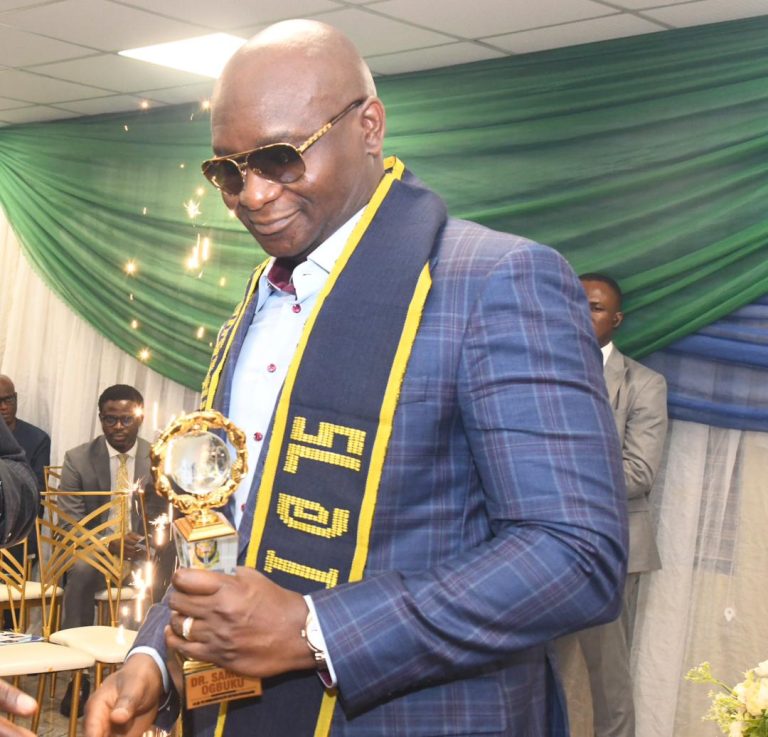
The Nigerian Institute of Management, NIM (Chartered), has given an outstanding leadership award to the Managing Director of the Niger Delta Development Commission, NDDC, Dr Samuel Ogbuku.

Speaking at the End-of-Year Lecture and Award Night of the NDDC Chapter of the Institute, the President and Chairman of the Nigerian Institute of Management, Dr (Mrs) Christiana Atako, lauded the NDDC Chief Executive Officer for his efforts in fostering professional excellence and contributing to the development of Nigeria. She commended him for leading with purpose and distinction.

Atako remarked: “Leadership is not just about authority but about vision, influence, and responsibility to the people, our nation, and the global community. It is the process of influencing, motivating, and inspiring individuals or teams to achieve a shared vision, goal, or objective, and it is central to the Management profession.”

The NIM President observed that the theme of the Lecture, “Leadership: A Panacea for Sustainable Development in a Digital Age,” was not only contemporary and germane but also timely and compelling.
She noted: “It challenges us to explore the intersections of leadership, sustainable development and the transformative impact of digital technology on governance and organizational practices. As we navigate the complexities of a rapidly changing world, it is clear that the quality of leadership will determine our capacity to achieve the sustainable development goals we aspire to.

Atako stated that effective leadership was key to witnessing sustainable development in a digital age. She explained: “Effective leadership involves vision, which entails clearly articulating a compelling direction; inspiring and motivating others to work towards a shared vision; building trust, credibility, and influence to guide and direct others; and making informed, timely, and decisive decisions that support the vision and goals.

“It is effectively communicating the vision, goals, and expectations to stakeholders; demonstrating self-awareness, empathy, and social skills to build strong relationships; developing and empowering others to achieve their full potential; and taking ownership and responsibility for actions, decisions, and outcomes.”

Atako noted that sustainable development demanded forward-thinking, inclusive and resilient leaders, adding: “It requires integrating economic growth, social equity, and environmental protection into the policies and practices of our organizations and institutions.”

In her welcome address, the NDDC Chapter Chairman of NIM, Dr Patience Ezugu, acknowledged the visionary leadership of the NDDC Managing Director and described him as a “Transformational Leader.”

She said the lecture’s focus, “Leadership: A Panacea for Sustainable Development,” highlights the importance of effective leadership in achieving sustainable development worldwide.

Ezugu stressed the importance of good leadership and professional management and how they were vital for success in any organisation. “They provide vision, direction, and guidance, inspire employees, drive growth and innovation, and build a positive work culture,” she said.

The keynote speaker, Prof Joy Eke-Ejiofor, a Food Science and Technology professor at Rivers State University, affirmed that the future of sustainable development in Nigeria and beyond rested on leaders prepared to rise to the challenges of the digital age.
She highlighted the differences between leadership and management, stressing that effective leadership commands good performance.

Eke-Ejiofor stated that leadership was not defined by titles or positions but by positively impacting society.
She remarked: “The digital age presents unparalleled opportunities for leaders to innovate and drive sustainable development. Digital technology has revolutionized how we live, work, and interact, offering tools to enhance efficiency, transparency, and inclusivity.”

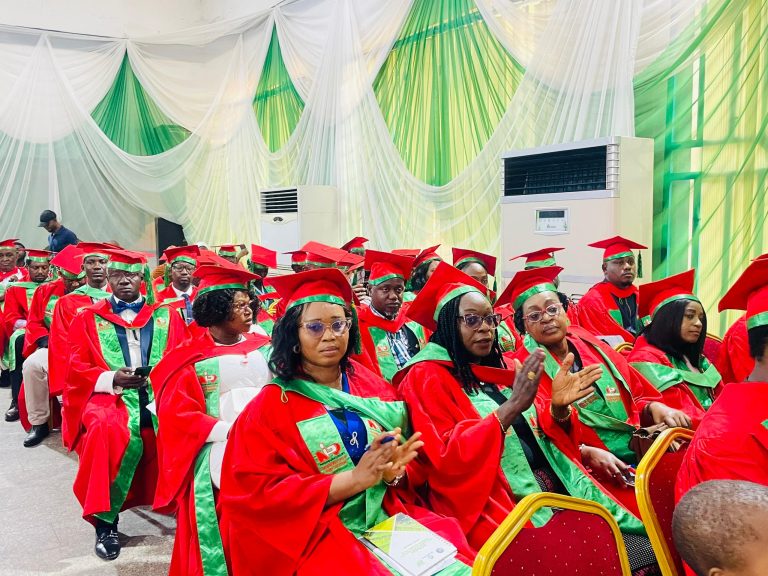
NIPR Inducts 421 New Members, Cautions Against Quackery

0

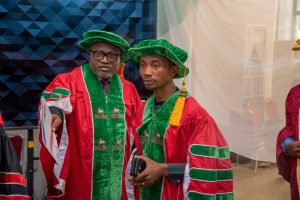
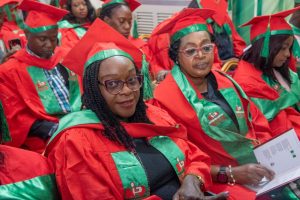
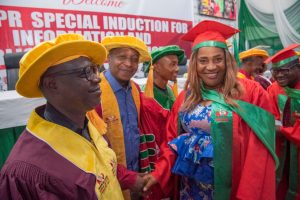
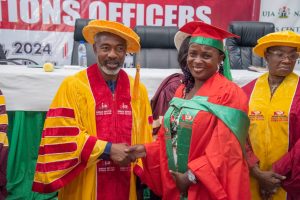
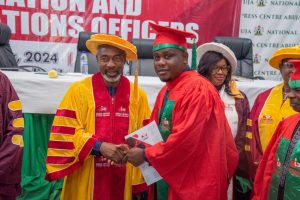
The Nigerian Institute of Public Relations (NIPR) has inducted 421 new members into its fold, with a warning that the full weight of the law will come on those who pretend to be engaging in the practice of public relations without being licensed by the Institute in line with the Act establishing it.

Those inducted are largely information and public relations officers who came to be formally certified as qualified practitioners in line with the advocacy and campaigns the NIPR has embarked upon over the years.

Speaking at the induction ceremony at Press Centre, Radio House in Abuja on Saturday, December 7, 2024, the NIPR, President, Dr. Ike Neliaku described public relations as a solution-providing profession that should not be left in the hands of those without the needed trainings and qualifications.

He said, “As a matter of fact, the Act establishing the Institute provides for criminal prosecution for someone who is practicing public relations for gains without being certified by NIPR.

“If a person is found guilty of breaching the Act, there is option of fine, option of imprisonment and there is provision for both combined but the important thing is that the moment you are convicted, you become an ex-convict along with the stigma that comes with it. We are calling on quacks to stay away from public relations”, he cautioned.

Dr. Neliaku who had earlier in the day in Kaduna, participated in a government-citizens dialogue on Tax Reform Bills before the National Assembly, reiterated the readiness of NIPR to continue identifying and designing programmes that will add values to the nation and the citizens.

“We recognise that we take responsibility to create platforms for effective engagement between the government and the governed, when citizens are properly engaged, they take ownership of government programmes, when they are given the opportunity to air their views, it goes a long way to build consensus”, he stated.

Earlier, the Minister of Information and National Orientation, Alhaji Mohammed Idris lauded NIPR for remaining a bastion of excellence in providing training, certification and a framework for ethical conduct in the field of public relations.

“Through its efforts, the NIPR has nurtured generations of professionals who continue to play pivotal roles in nation-building. I commend the leadership of the NIPR for their dedication to advancing the profession and for organising this induction ceremony, which underscores the importance of continuous professional development”, the Minister represented by the Director of Public Relations and Protocol, Dr. Sulaiman Haruna stated.

The Minister reiterated his commitment to ensure that the country’s public communication systems are robust, transparent, and aligned with the best practices, describing the induction ceremony as part of his broader vision to strengthen the capacity of information officers across all tiers of government to engage meaningfully with the public and counter misinformation effectively.

Kano Governor Yusuf Sacks SSG, Chief Of Staff, Moves Deputy To Another Ministry –

0

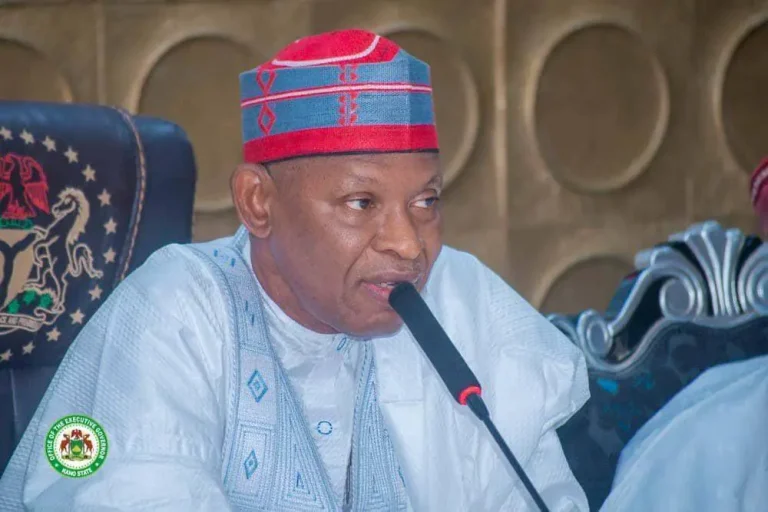
Governor Abba Kabir Yusuf of Kano State has in a landmark cabinet reshuffling, sacked his Secretary to the Government, Abdullahi Bichi and Chief of Staff, Shehu Sagagi and redeployed his Deputy Governor, Aminu Abdussalam.

The hints were dropped by the Governor Spokesperson, Sunusi Bature Dawkin Tofa, explaining that SSG Bichi was sacked on a health ground while the office of the Chief of Staff was completely scrapped.

Nasarawa State To Build Six Mini Stadiums Statewide

0

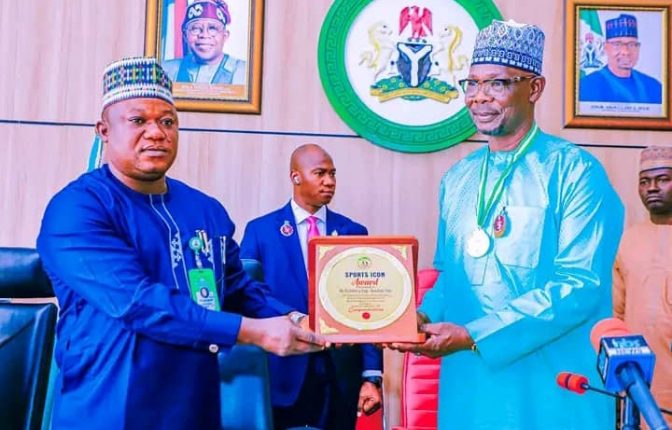
Nasarawa State Governor Abdullahi Sule has reaffirmed his administration’s dedication to promoting sports through the construction of six mini-stadiums across the state. He made this commitment while receiving the National Executive Council (NEC) of the Sports Writers Association of Nigeria (SWAN) and members of its state chapter at the Government House in Lafia.

Enhancing Sports Infrastructure

Governor Sule emphasized that the mini-stadium projects aim to foster unity and encourage sports participation among the youth in different parts of the state.

“The role of sports in bringing peace and development can never be underestimated, hence the need for upgrading sporting facilities,” the governor remarked.

SWAN National Executive Meeting

SWAN’s National President, Comrade Benjamin Isiah, highlighted the association’s appreciation for Governor Sule’s efforts in advancing sports at the state and national levels. He announced that the NEC meeting for 2024 was being held in Lafia, running from December 10 to 12, and commended the governor’s hospitality and leadership.

Recognition for Governor Sule

During the visit, the SWAN National leadership presented Governor Sule with a Sport Icon Award, along with a certificate and medal, recognizing his contributions to sports development. The governor’s hosting of SWAN’s leadership marks a significant gesture, setting an example for other state leaders.

This initiative underscores the Nasarawa State government’s focus on leveraging sports as a tool for peace, youth engagement, and development.

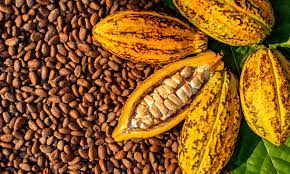
Nigeria Cocoa Exports Jumps By 300% From ₦‎161.8 Billion To ₦‎644 Billion

0

The Nigerian cocoa industry has experienced a recent surge in demand and profitability, with data indicating that the country’s annual cocoa volume of 250,000 tonnes is now valued at over $6 billion.

Adding to the cocoa industry’s sweet success, Nigerian cocoa farmers and exporters had a bountiful first half of 2024, earning an estimated N644 billion from the export of cocoa beans, according to data from the National Bureau of Statistics (NBS).

Nigeria’s cocoa exports saw a 298 percent growth in the first half of 2024, reaching N644 billion compared to N161.8 billion in the same period of 2023.

The surge in exports has been attributed to an increase in the price of the key ingredient in chocolate production. Prices have more than tripled since the start of the year, with a new historic high of $8,246 per tonne recorded on November 27, as reported by the International Cocoa Organisation (ICCO).

Poor weather conditions in the world’s top cocoa-producing nations, Ivory Coast and Ghana, have wreaked havoc on harvests, causing a shortage in cocoa supply.

However, in a silver lining moment for Nigerian farmerstheir cocoa exports skyrocketed due to the devaluation of the Naira, which fell to as low as N1,675 against the US dollar, as reported by FMDQ. This devaluation made Nigerian cocoa exports relatively cheaper, giving farmers a lucrative edge in a cocoa market struck by scarcity.

Although the global cocoa market is currently riding a sweet wave for Nigerian farmers with prices reaching around $10,000 per tonne, the potential for Nigeria to benefit is not fully realised, as the country continues to be a minor player in the global cocoa arena. Despite once being the second-largest producer of the commodity, Nigeria has slipped to the sixth spot in the world rankings and currently contributes just five percent of the global cocoa supply.

Despite Nigeria’s diminished prominence in the cocoa production landscape, cocoa industry stakeholders continue to champion the pivotal role of cocoa in Nigeria’s economic diversification strategy.

This message was front and center at the 25th Anniversary and Awards Ceremony of Starlink Global & Ideal Ltd., a Lagos-based agricultural marketing company that specializes in the export of cocoa, cashew, sesame seeds, and other key agricultural products.

According to Adeyemi Adeniji, chief executive officer of Starlink, the cocoa industry holds the key to unlocking substantial economic growth for Nigeria.

Highlighting the significant potential of the cocoa sector, Adeniji urged the government to implement policies that encourage industrialisation via backward integration, enabling the country to capitalise on the cocoa value chain and enhance the sector’s impact on the Nigerian economy.

“The cocoa market, in terms of volume, is just about 250,000 tons, but in terms of value, it is about $6 billion or more, depending on the international market price.”

“Today, the price of cocoa has risen to $10,000 per tonne. This means Nigeria’s cocoa exports could generate $25 billion, underscoring the potential of the sector,” he noted.

Adeniji also disclosed that the company has collaborated with Odu’a Investment to manage 25,000 hectares of farmland across West Africa, in a visionary partnership aimed at unlocking the potential of agriculture in the region.

As part of this partnership, two pilot sites spanning 5,000 hectares each will be developed in the near term, with plans for further expansion over the next five years. Furthermore, Starlink has acquired Nigeria’s largest cocoa processing facility, which is slated to begin operations by April 2025.

Adeniji explained that with the acquisition of this state-of-the-art cocoa processing facility, Starlink is positioning itself to drive the cocoa value chain forward by producing finished products such as chocolate and cocoa drinks.

Also speaking at the event, Bimbo Ashiru, chairman of Odu’a Investment Group, underscored the need to diversify Nigeria’s economy away from its reliance on oil and toward agriculture as a core driver of growth.

Ashiru stressed the government’s commitment to making Nigeria a more attractive destination for investors, citing the minister of trade and investment’s efforts to improve the ease of doing business and attract more investment. The ultimate goal, he noted, is to generate more than a trillion dollars annually from agriculture.

Expanding on the government’s vision for the agricultural sector, Ashiru also detailed plans to establish an agro-industrial hub in the Southwest, with a focus on high-value cash crops such as cashew and cocoa.

The primary objective of the hub, he noted, is to create a value chain that will facilitate the production of raw materials and finished goods.

“The strategy is to make Nigeria non-oil dependent. We have so much in agriculture that leads to industrialisation. We have no business being an import-dependent economy. We should be exporting more, and the strategy is over a trillion dollars a year so that once we have that, we’ll be less dependent on oil.

“The point is this: as a country, Nigeria was the second largest exporter of cocoa in the world in the 70s. We went wrong when we found oil. But now we should go back to that basis and start doing that, and that is the focus, and that’s what we are looking at now in Nigeria,” the Odu’a Investment Group chairman stated.

The ongoing surge in global cocoa prices, coupled with investments in infrastructure and policy support, positions Nigeria as a key player in the global cocoa market. Stakeholders believe that tapping into agriculture’s full potential will not only diversify Nigeria’s economy but also strengthen the naira through increased foreign exchange earnings.

The Cocoa Farmers Association of Nigeria (CFAN) and other key stakeholders have also underscored the need for cooperation and collaboration in the country’s cocoa sector.

At the recent Calabar 2024 cocoa event in Cross River State, over 300 participants, primarily cocoa stakeholders from Nigeria’s cocoa-producing states, converged to identify the critical challenges confronting Nigeria’s cocoa industry.

Three key issues were identified as hindering the development and sustainability of the industry: low local consumption of cocoa products, inaccurate data on cocoa production and value chain, and inadequate knowledge among farmers about the European Union Delegated Regulation (EUDR), which outlines regulations related to cocoa cultivation, processing, and trade.

In a bid to safeguard the longevity and competitiveness of the cocoa industry, stakeholders at the event recognised the need to engage the youth in cocoa farming and processing through entrepreneurial endeavors.

They also committed to tackling the key issues confronting cocoa farmers in Nigeria, such as soil degradation, pest and disease infestations, the improper use of adulterated agrochemicals, inadequate access to cocoa policy documents, and the need for updated land use and forest cover maps.

The event opened the door to a broader conversation about the cocoa industry in Nigeria, further highlighting the many challenges confronting farmers. These challenges include limited land tenure systems, weak collaboration among industry players, low adoption rates of traceability systems, outdated farming techniques, inadequate access to high-quality inputs, adverse effects of climate change, under-utilisation of mitigation techniques on farms, and insufficient investment in agricultural technology and innovation.

In light of these hurdles, the stakeholders at the Calabar 2024 event proposed a shift towards increasing local processing and consumption of cocoa products as a strategy to strengthen the industry.

The stakeholders at the Calabar event urged the government and the Nigerian Cocoa Marketing Company (NCMC) to take the lead in standardising and updating available data on the cocoa value chain.

Furthermore, they advocated for awareness campaigns to educate all stakeholders in the cocoa value chain about the EUDR and other relevant regulations, ensuring a thorough understanding of the regulations and their implications for the industry.

Adeola Adegoke, president of the Cocoa Farmers Association of Nigeria (CFAN), proposed that the government should conduct a comprehensive review of the current land tenure system. This review, he explained, could potentially address land access and ownership challenges faced by cocoa farmers.

Moreover, Adegoke suggested that a national traceability system should be established, in collaboration with both development partners and industry experts, to enhance transparency and accountability in the cocoa industry.

In line with his call for government action, Adegoke underscored the significance of increased investment in research institutes with a focus on developing climate-smart agricultural practices for farmers.

The CFAN president also called for a conducive environment to be fostered that facilitates private sector and youth involvement in the cocoa value chain, thereby encouraging long-term sustainability and growth in the sector.

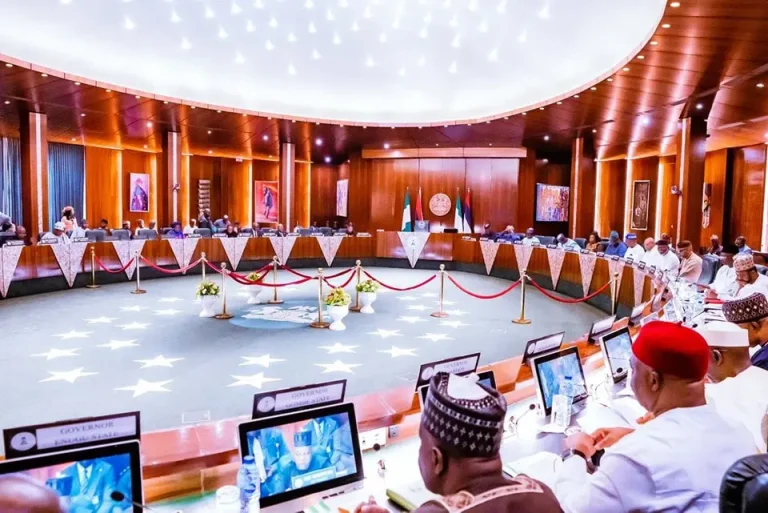
The failure of the Federal Capital Territory Administration under Nyesom Wike to submit its recommendations regarding state police has again stalled resolutions that would culminate in its formation. At the National Economic Council NEC meeting chaired by the Vice President, Kashim Shettima on Thursday, 36 states submitted their recommendations with a majority of the governors in favour of the creation of state police. The endorsement came through the Kaduna State Governor, Uba Sani while briefing state house correspondents. He revealed that at the next NEC meeting to be convened in January 2025, a definite position would be adopted. Recall that at a previous meeting in November, Kwara, Kebbi and Adamawa were said to be pending in terms of submitting their positions on state police. “Today, one of the discussions we had at the NEC meeting was the update on the creation of state police. As you are aware, there was a submission by States toward the establishment of state police. ⁣ ⁣ “Today, about 35 states have already made their submission for establishing state police in Nigeria. And I can say here that from what is available, virtually most of the states are in agreement with the establishment of state police in Nigeria. “But today, the council decided to step down the discussion until the next council meeting, because we need to come up with a report from the secretariat. After the report, there will be deliberation at the next NEC meeting which is likely taking place in January. Not only that, there’s also a resolution in the last NEC meeting, which today the Secretariate have also agreed on that there will be further stakeholder engagement after the panel and deliberation by the members of the NEC. ⁣ ⁣ “So all we are saying here is that 35 states have made their submission, and many states are in agreement for the establishment of state police, considering the fact that virtually every state has their peculiarity in terms of the problem we are having of insecurity in our own states. “Knowing fully well that we have a lot of ungoverned spaces in Nigeria, and also that we have a lot of deficit in terms of number of boots on ground, looking at the fact that a lot of security agencies, the police, the army and other relevant security agencies have no personnel to cover all the government space, that is the reason why most of us agreed that establishment of state police in Nigeria is the way forward toward addressing the problem insecurity in our own country,” he stated.

0

The failure of the Federal Capital Territory Administration under Nyesom Wike to submit its recommendations regarding state police has again stalled resolutions that would culminate in its formation.

At the National Economic Council NEC meeting chaired by the Vice President, Kashim Shettima on Thursday, 36 states submitted their recommendations with a majority of the governors in favour of the creation of state police.

The endorsement came through the Kaduna State Governor, Uba Sani while briefing state house correspondents.

He revealed that at the next NEC meeting to be convened in January 2025, a definite position would be adopted.

Recall that at a previous meeting in November, Kwara, Kebbi and Adamawa were said to be pending in terms of submitting their positions on state police.

“Today, one of the discussions we had at the NEC meeting was the update on the creation of state police. As you are aware, there was a submission by States toward the establishment of state police. ⁣

“Today, about 35 states have already made their submission for establishing state police in Nigeria. And I can say here that from what is available, virtually most of the states are in agreement with the establishment of state police in Nigeria.

“But today, the council decided to step down the discussion until the next council meeting, because we need to come up with a report from the secretariat. After the report, there will be deliberation at the next NEC meeting which is likely taking place in January. Not only that, there’s also a resolution in the last NEC meeting, which today the Secretariate have also agreed on that there will be further stakeholder engagement after the panel and deliberation by the members of the NEC. ⁣

“So all we are saying here is that 35 states have made their submission, and many states are in agreement for the establishment of state police, considering the fact that virtually every state has their peculiarity in terms of the problem we are having of insecurity in our own states.

“Knowing fully well that we have a lot of ungoverned spaces in Nigeria, and also that we have a lot of deficit in terms of number of boots on ground, looking at the fact that a lot of security agencies, the police, the army and other relevant security agencies have no personnel to cover all the government space, that is the reason why most of us agreed that establishment of state police in Nigeria is the way forward toward addressing the problem insecurity in our own country,” he stated.