Friday, November 27, 2026
Home Blog Page 971

200,000 UTME candidates admitted as December deadline nears

0

About 200,000 out of the 1.8 million 2019 Unified Tertiary Matriculation Examination candidates have been admitted so far into universities, according to the Joint Admissions and Matriculation Board on Friday.

The board, in an exclusive mail to our correspondent said the tertiary institutions and other stakeholders were still “working round the clock” and would comply with the deadline agreed at the 2019 policy meeting.

The JAMB at a 2019 policy meeting in Gbongan, Osun State, in June, had agreed with the stakeholders that the admission processes into public tertiary institutions should be concluded by December 19, 2019, while private institutions, should end by February 15, 2020.

The board had noted that the deadlines for admission were not its decisions but by consensus of stakeholders, including the representatives of all the tertiary institutions.

No fewer than 1.8 million candidates took the 2019 UTME which held between April 11 and 17 across 698 Computer-Based Test Centres in the 36 states and the Federal Capital Territory, Abuja.

The JAMB Head of Media, Dr Fabian Benjamin, in an electronic mail to our correspondent on Friday, confirmed that 200,000 candidates had been offered admissions for the 2019/2020 academic session.

He said, “About 200,000 candidates have been offered admissions to tertiary institutions. The speed at which institutions are working and candidates’ compliance shows that all stakeholders are working round the clock to actualise the dateline.

“We remain determined to ensure full compliance to the agreed dateline at the policy meeting. We want to use this opportunity to urge prospective candidates to begin the National Identity Number registration. We also advise the public to report anybody parading questions alleged to be for 2020 UTME to the nearest police station or the board’s office.”

Meanwhile the Imo State University, Owerri, has written to JAMB, asking the board to disregard “illegal and fraudulent satellite campuses” said to be affiliated to the university.

The acting Registrar of the university, Mrs Rose-Kate Ogbu, in the letter, which was published in the JAMB weekly bulletin on Sunday, said the university already shut down all its satellite campuses in accordance with the directive of the National Universities Commission since 2004.


Oil prices dip as gloom gathers over global economy

0

Oil prices fell on Monday, extending last week’s heavy losses, with traders fearing the global economic slowdown will weigh on future oil demand growth while pegging hopes for a rebound on progress in talks this week on ending the US-China trade war.

Brent crude futures LCOc1 edged down 28 cents to 58.09 dollars a barrel by 0300 GMT, while U.S. West Texas Intermediate crude CLc1 was at 52.64 dollars, down 17 cents.

Both contracts ended last week with a more-than-5 per cent decline after dismal manufacturing data from the United States and China, as the lingering row between the world’s top economies hurts global growth and raises the risk of recession.

US and Chinese officials will meet in Washington on October 10-11 in the next, much-anticipated fresh effort to work out a deal.

On the supply side, a faster-than-expected resumption in Saudi Arabia’s production after a September 14 attack on key production facilities also exerted downward pressure on oil prices, although the Middle East remained tense.

“The macro headwinds outweigh supply concerns for oil now, despite tensions in the Middle East and a reduced spare capacity pillow,” said Stephen Innes, Asia Pacific market strategist at AxiCorp.

In Iraq, the second-largest producer among the Organization of the Petroleum Exporting Countries, deadly anti-government unrest is posing the biggest security and political challenge so far to Prime Minister Adel Abdul Mahdi’s year-old government.

Iraq’s oil exports of 3.43 million barrels per day (bpd) from Basra terminals could be disrupted if instability lasts for weeks, Ayham Kamel, Eurasia Group’s practice head for Middle East and North Africa, said in a note.

“Any oil production disruption would occur at a time when Saudi Arabia has lost a significant part of its energy system redundancies (spare capacity),” he said.

“While Saudi oil production is now close to 9.9 million bpd, it is not clear that the capacity is fully operational at 11.3 million bpd and the (attacked) Abqaiq facility has lost a significant part of its redundancy.”

Global supply also faces facility repair and maintenance pressures.

The Buzzard oil field in the British North Sea has been shut for pipe repair work, a spokesman from China’s CNOOC said on Friday.

Buzzard is the main contributor to the Forties crude stream, the largest of the five North Sea oil grades that underpin Brent crude futures.

Meanwhile Libya’s National Oil Corporation (NOC) said on Sunday it will close the Faregh oil field at Zueitina port for scheduled maintenance from Monday until October 14.

(Reuters/NAN)


Xenophobia: Time for Nigeria and SA to calm down

0

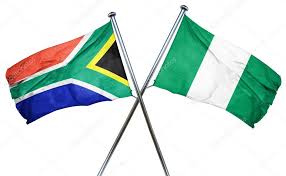
The latest xenophobic attacks in South Africa have ignited the long-standing tensions between the country and Nigeria. These are captured in the retaliatory attacks on South African businesses in Nigeria and the diplomatic outrage by the Nigerian authorities.

Nigeria also boycotted the recent World Economic Forum meeting in Cape Town. More critical was the temporary closure of South African missions in Abuja and Lagos and Nigeria’s decision to recall its high commission.

But in the larger scheme of things, xenophobia is a distraction from the leadership role that Nigeria and South Africa should play on the continent on fundamental issues of immigration and economic integration.

Accurate figures are hard to get. But Statistics South Africa put the number of Nigerian migrants at about 30,000 in 2016, far below Zimbabweans and Mozambicans.

Xenophobia has remained a constant irritant in Nigeria-South Africa relations since the major attacks on African migrants in poor neighbourhoods in Cape Town, Durban and Johannesburg in 2008 and 2015. But, contrary to popular perception, xenophobic attacks do not disproportionately target Nigerians. Nigerians often exaggerate the effect of violence on their citizens. That is probably because Nigeria has a better organised, savvy, and loud Diaspora constituency in South Africa.

Unfortunately, the loudness of the Nigerian Diaspora transforms victimhood into foreign policy, generating the reactions that have been witnessed recently. It also plays into the naïve narrative of the “liberation dividend”. This entails Nigerians seeking to be treated uniquely because of their contribution to the struggle for majority rule in South Africa. There were no such expectations from the other countries that supported South Africa’s liberation struggle.

This narrative has taken on an equally economic tinge. South African companies are heavily invested in Nigeria. So, they often become targets of Nigerian ire in times of xenophobia.

The accurate picture is that xenophobia affects all African migrants. These are mostly migrants from Malawi, Zimbabwe, Mozambique and, increasingly Ethiopians, Kenyans and Somalis. Nigerians are affected. But they’re not on top of the list.

The Nigerian responses are understandable in light of the frequency of these attacks. But, it is important to probe the drivers of xenophobia to understand it more deeply.

First, some studies reveal that the intrusion of foreign migrants into vulnerable communities beset by joblessness and despair inevitability produces a tinderbox that sparks violence .

Migrants are easy targets. That’s because they are seen as being better off by the locals. They therefore become targets of people who feel their circumstances have not been addressed by government. It is no surprise that xenophobic attacks have typically occurred in poor neighbourhoods that have been affected by service delivery protests since the mid-2000s.

Second, xenophobia thrives on ineffective policing in South Africa. Barely two days after the Johannesburg attacks started, the national police spokesman admitted that the police were running out of resources to manage the violence. This prompted the Premier of Gauteng, the country’s economic hub, to threaten to also deploy the army if the violence continued.

Examples of the police’s inability to maintain order and respond to threats to property and livelihoods are legion. This, in part, forces people to take the law into their own hands.

But the police are sometimes complicit in stoking anti-foreign sentiments. The July 2019 raids on foreign-owned businesses in Johannesburg in apparent efforts to stamp out illicit goods added to the current climate of xenophobia. When some business owners retaliated against the police, some local leaders appropriated the language of “threats on South Africa’s sovereignty” to justify the police response.

Reforms are urgently needed to create a competent, less corrupt, better-resourced, and civic-minded police service.

Xenophobia is also an outcome of a rickety migration and border control regime. Efficient border controls are one of the hallmarks of sovereignty and the first line of defence against xenophobia. Broken borders breed criminality. These include human and drug trafficking. Human and drug trafficking feature prominently in the discourse on xenophobia in South Africa.

How, then, does xenophobia distract South Africa and Nigeria from what should be their leadership on core African issues?

The weighty issues of creating a humane and just society for South Africans and migrants alike will ultimately be led by the South African government. Outsiders can make some diplomatic noises and occasionally boycott South Africa. But these actions are unlikely to drive vital change.

In fact, the overreactions by Nigeria and other African countries simply undercut the South African constituencies that have a crucial stake in wide-ranging reforms that address the multiplicity of problems around xenophobia.

In the previous instances of xenophobic violence, Nigeria urged the African Union to force South Africa to take action. But such unhelpful statements only inflame passions and prevent civil diplomatic discourse.

Instead, the best policy would be for Nigeria to engage South Africa through their existing binational commission. Nigerian President Muhammadu Buhari visited South Africa last week.

Rather than the perennial relapse into shouting matches and hardening of rhetoric, it is essential for Pretoria and Abuja to take decisive leadership at the continental level. The two nations must articulate immigration policies.

The newly-inaugurated AU Free Movement of Persons Protocol will not be implemented if South Africa and Nigeria do not join hands to make it a reality. More ominously, migration to South Africa as the premier African economy will only get worse in the coming years. This, as Europe and the United States tighten their borders against African migrants.

Also, without the leadership of its two major economies, Africa is not going to make any traction on the new treaty establishing the African Continental Free Trade Agreement. Ironically, the WEF meeting in Cape Town addressed ways to boost intra-African trade. Nigeria should not have boycotted it because of xenophobia.

Khadiagala is Jan Smuts Professor of International Relations and Director of the African Centre for the Study of the United States, University of the Witwatersrand

This piece was originally published by TheConversation.com


Faction emerges in ASUU, lecturers attack varsity heads

0

The 41-year-old Academic Staff Union of Universities has split with the formation of a new union, the Congress of University Academics.

Lecturers from five universities in the country announced the formation of CONUA in Ile-Ife on Saturday.

The lecturers, who unveiled the new union, were from the Federal University, Lokoja, Kogi State;  Kwara State University, Malete; Ambrose Ali University Expoma, Edo State;  Federal University, Oye-Ekiti and Obafemi Awolowo University, Ile-Ife.

But ASUU President, Prof Biodun  Ogunyemi, in an interview with The PUNCH on Sunday said the union was not aware of any splinter group.

Ogunyemi said some vice-chancellors, who were rebuked for high-handedness, were encouraging members of the union in their institutions to rebel.

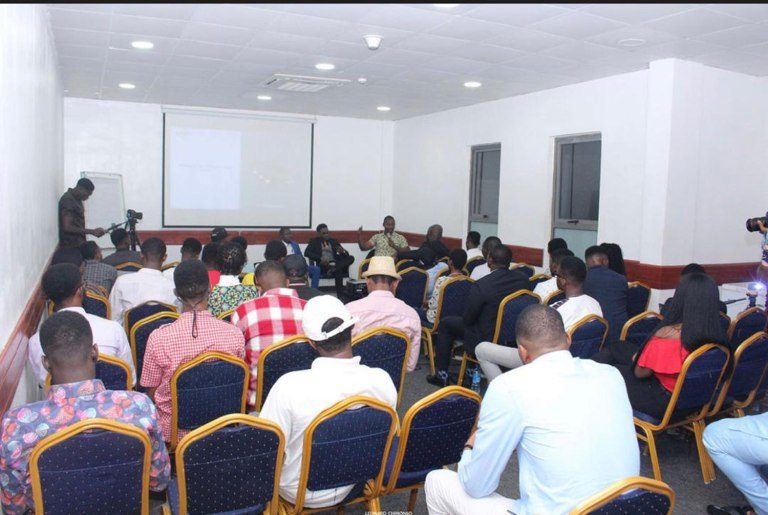
Addressing journalists   during the first stakeholders’ meeting of the new group at the OAU, CONUA National Coordinator, Dr Niyi Sumonu, explained that the new group was formed because of the need for new approach in handling issues affecting universities across the country.

Sumonu said the first mandate of the new union was to ensure a stable academic calendar in order to improve quality of education in the country’s ivory towers.

He said, “For standard of education to be very high, we need a stable academic calendar.  We need to be able to predict academic session.  We need to have innovation which is difficult without continuity.

“We also need to be in tune with modern realities.  Our union will approach the matter of engagement with all stakeholders in an engaging manner to have a common ground for moving forward.”

We are not anti-govt –New union

“Our union is not anti-government, if government and by extension, administrators of universities are doing well, we will let the world know and we will quickly knock them, provide alternative constructive criticism and take them to task where they are not doing well.

“We will not wait for them to make mistakes before we intervene. We have vision and will provide ahead what can be done to have better results. If that is done we are sure we will have a better way to move forward.

“Members believe we should have alternative ways of solving problems. Members have been contributing very well to the finance of the union. When we fulfill and do all that we need to do, financial constraints will be forgotten.

“We have been at this for over three years in Ife.  We have been waxing stronger and members from other universities have been experiencing what we experienced here, hence, the decision to come together to form a national union,” Sumonu added.

Asked if the union was not out to rival ASUU, the flagship umbrella body for lecturers, CONUA National Publicity Secretary, Dr Nwoke Earnest, explained that another key objective of the group was to “redefine academic unionism in Nigeria and is not ready to take issue with any union.”

He explained that CONAU would prefer to proffer solutions to issues before they become problematic, adding that the essence of forming the group was to enhance interaction with the educational system without being confrontational but through a synergy that would involve all stakeholders.

The ASUU National President,  Ogunyemi, said  some lecturers  who were sanctioned by the union about two years ago had decided to kick against the sanctions by forming a parallel group.

Ogunyemi said, “I don’t know that group that they are talking about. What happened at OAU was that there were some people we sanctioned two years back; those people that acted contrary to the letters and spirit of our constitution. We sanctioned them and they decided to kick against the sanctions.

“Some of them agreed to serve the punishment and they have since rejoined the union. But those who do not want to serve the terms of punishment are now saying they will join forces with some individuals who have issues with the union.

“As far as we know, that is what they have been trying to do and we have been on that for about two years now. What I know is that whether in Ife, Oye Ekiti or Lokoja, we know that some vice-chancellors are encouraging rebellion against the union. Particularly in Oye Ekiti and Lokoja, we have issues with their VCs because of the way they are running their universities.

“ASUU has had reasons to complain publicly about the high-handedness of the VCs. Those VCs expectedly will want to take it out on the union and encourage that kind of rebellious attitude.”

On his part, the Minister of Labour and Employment, Dr Chris  Ngige, said  the Federal Government was looking at the application submitted by CONUA.

Although the minister confirmed the group was not registered yet, he noted that he had asked a committee to look into the application.

The Minister of Labour and Employment in a telephone interview on Sunday, said, “They (the new union) are not registered yet. Their application is with the ministry. It has not been treated. We will look at it. We are still looking at their application. I have asked a committee to look at it.

“When we look at the committee report, we will see. The application came since April. It is passing through a process.”

The Federal Ministry of Education said it had no hand in the formation or running of any parallel union under the ministry.

The Deputy Director, Press and Public Relations, Mr Ben Goong, said this in an interview with our correspondent.

He said, “That matter about a new union has not come to the ministry yet. But the fundamental principle is that the ministry does not have any hand and will not have any hand in the formation and running of any union.

“On the issue of whether we will recognise it; everyone has a right to form a union. The recognition by the ministry is immaterial. But like I said, this is coming to us for the first time. When it comes to us officially, the ministry will look at that administratively and deal with it.”

 

FG yet to reconstitute minimum wage team

0

Despite the threat by the organised labour that it could not guarantee industrial peace if the Federal Government failed to meet its demand on the implementation of the new minimum wage by the close of work on October 16, 2019, the FG has yet to constitute a team to negotiate with the Joint National Public Service Negotiating Council.

The Minister of Labour and Employment, Dr Chris Ngige, had on September 28, during a visit by labour leaders in Abuja said a new government team would replace the old one headed by the former Head of the Civil Service of the Federation, Mrs Winifred Oyo-Ita.

During the visit to the minister in Abuja, Ngige said he and other ministers in the former negotiating committee were unable to be part of the first phase of the negotiation because the cabinet was dissolved and permanent secretaries took the places of ministers in the team.

He said the former government team made appreciable progress and promised that the new team would reach an agreement with labour over the implementation of the new minimum wage.

However, more than a week after the assurance was made and about 10 days before labour executes its plan, a source at the Ministry of Labour and Employment told our correspondent on condition of anonymity that there was no sign the team would be constituted immediately.

The source said, “I am not aware that a new team will be constituted this week. The presidency is busy with budget presentation for now. Government has not constituted the committee. I have not heard anything and I don’t know when it will be reconstituted.”

When contacted the Director of Information at the Office of the Secretary to the Government of the Federation, Mr Willie Bassey, said a statement would be made after the team had been reconstituted.


A Ganja Trip With Fela By Babafemi Ojud

0


This is Fela’s week. We must continue to thank Femi, Yeni and their siblings as well as the devotees of The Shrine for keeping the memory of our icon alive . What they are doing billions of Naira left by the rich could not do for the departed owner. Which is to say do what is worthy , and not stashed up wealth and materials things . All of that will never keep your memory in the minds of the living.

This piece is on a lighter mood, an anecdote to further give us an idea of the free spirit of the man who had death in his pouch and will never die. Our own Anikulapo – Kuti. I remember when Fela changed his name from Ransome – Kuti to Anikulapo- Kuti and his elder Brother was asked why he didn’t go with him in the change of name business his retort was that Fela never discussed it with him. He went further to say “ I am a medical doctor who is trained to stave off death how then can I say I have death in my pouch.” Prof Olikoye had a wry sense of humor and he was a delight to be with particularly when in company of his maverick siblings.

This is not the koko of this piece.

It is a different matter altogether. Read it and laugh. We all need laughter to ease the tension of this times.

Now you have seen the title of this piece. Don’t start judging me. I can see some of my enemies, old boy many
they are, saying ah amugbo ti e ni. No wonder ki gbo, ki gba. No I never smoked and will not do although I love the swag of the revolutionary Che Guevara holding the tobacco.

Do try and read this as you follow me on a journey with Abami Eda , Fela Anikulapo – Kuti.

This is not an astral travel. It is real. It was a journey I made with him in 1990(? ).

Beko Ransome Kuti and his comrades in trouble Gani Fawehinmi, Femi Falana, Baba Omojola and I think that young man then, Mayegun, the one with dada hair on his head made a lot of noise in Lagos questioning the authority of Ibrahim Babangida, our then military President.

I learnt the man with the gap tooth had sleepless nights. Our activists brothers even threatened to organize a sovereign national conference. Conference was not the problem but the word ‘sovereign’ just as now that protest is not the problem but the phrase ‘revolution now’. Let me not put my feet on a treason ground, a dangerous path to thread.

As I was saying our brothers, no woman among them o, the Beijing Conference has not held then, were arrested and taken to Abuja. Before we could locate them they have been charged with treasonable felony and remanded in Kuje Prison.

Hearing in their case was to come up in a Kuje Magustrate Court some days after to determine if they qualified to be bailed or not.

To cut a long story short and not delay this trip, we the activists, from veterans to rookies mobilized to give support to our comrades in Abuja on the chosen day.

Fela too was not left out. The abami eda hardly left his house except when on foreign tours or had a show in some parts of Nigeria . He offered to be part of the Lagos crowd storming Abuja. It was exciting that he chose to go. There will be drama with his presence and that we reasoned will provide good copy for the media both local and international.

It was my lot to travel with him and some of his aides as well as three of his numerous wives. Apart from we humans he had with him there were three pillows and a big piece of home baked cake. The pillows were meant to support his bum . He suffered then from a chronic case of hemorrhoid. The cake was to be our snack to and fro.

As we set out he regaled us with stories .You cannot but laugh at Fela stories. He said looking back he consider himself stupid for singing “ my darling valentine” at a point in his musical career . He made jest of Beko and his human rights campaigner crowd and said a lot of self deprecating things.

I didn’t only enjoyed stories but guffaw as I helped myself with his my share of his cake. I have never had any cake that delicious. I learnt from him it was called sponge cake. Sponge cake ? Iyen tun yato. The onijekuje that I was then, had a fill going to Abuja and returning.

Fela got to Abuja, spread his mat on the floor in front of the court and laid face down while people trooped to see abami himself. It was a rare life opportunity , particularly for northerners who have heard of him but have never seen him live.

Case called. The accused persons to our utter surprise were granted bail. Of course there had been an outcry in the media and internationally. Bail was a face saving measure for the then Babangida regime. There was jubilation and back slapping . Lagos here we come. Abuja was like a no no for many of us at that time. It was a bourgeois enclave where we reasoned the national wealth was stolen.
We set out . Fella puffed on his Obiaruku jumbo wrap. We became passive smokers.

It was not only that day I have passive smoked Igbo around Fela. If you were a journalist at this period or human rights activist, you have a sit at a special location at the Shrine. Dele Omotunde , that great journalist, now a Redeem Church pastor , Lance Arogundade, Femi Falana, Chuzi Udenwa , also now a pastor in US among several others , were devotees of the Shrine and we had our special place then. I once returned home one day at about 4.00 am and had my head light and my gaze and steps not stable. It took three days of sleeping before I recovered.

On our way back from Abuja to Lagos I continued sponging on Fela’s cake. We arrived Akure and decided to refuel and empty our bowels. Chief Fawehinmi visited the bathroom. We almost lost him that night . If you know how spiritedly he walked you will imagine what I am talking about . Not seeing the drainage on his path he slipped into it one leg first and fell hard. We rushed to pull him up. It was scary . We thanked God then he didn’t hit his head on the concrete floor.

We proceeded on our journey to Lagos eating Fela’s sponge as if it was going out of fashion. We arrived Lagos and I left for my home. The following morning I found myself in the heart of Mushin where Beko had his clinic being attended to by Dr Balogun. No one could explain what the matter was with me. I couldn’t decode it neither the doctor could. It was assumed it was exhaustion. And I was placed on intravenous drip.

Later in the evening Beko came to see me on my sick bed as he resumed his daily consultation at the poor folks enclave.

“What is the matter with you”, he asked.

Feeling dizzy, couldn’t stand on my feet and my head spinning , I told him. What did you eat in the morning? Nothing, I said. What of of yesterday, he asked? I only had cake , I told him. “You bought it”, he asked . I took from the cake Fela brought along to Abuja, I said.
“Ha ha ha”, he smiled wryly. “O lo je cake Fela ?” ( you ate Fela’s cake)? Igbo lo je yen ( you ate Indian hemp. It was then I discovered that Fela baked his cake with hemp soaked water.

  1. Happy Felabration !

Nigerians still sold as slaves?

0

IN May 1807, Britain abolished the slave trade. A few months later on January 1, 1808, the US followed suit. Thus, slave trade, man’s greatest inhumanity to man perpetrated mainly against Blacks and Africans, became an international taboo, though it continued (albeit illegally) in some parts of the world where religion and culture accommodated it.

The abolition enabled victim communities to get educated and struggle for independence from colonialism which Nigerians celebrate on October 1 every year.

Under the Constitution, Nigerians are not only free but imbued with universal human rights (which enable us to aspire to the very best that life has to offer) and aspire to build a country that is second to none in the world.

It is monumentally shocking to learn that Nigerians are still being sold as “slaves”

It is horrendous enough that Nigerians who try to illegally enter Europe through the Sahara and the Mediterranean Sea often end up in Arab slave camps.

The story that 20 Nigerians from Katsina State were traced to a slave market in Burkina Faso is downright stupefying.

As we celebrated 59 years of independence, some Nigerians were languishing as commodities in slave markets!

We now know that slave trade has been going on quietly in some areas in North West Nigeria, Northern Benin Republic, Chad, Niger and Burkina Faso.

It is no wonder that Boko Haram leader, Abubakar Shekau, often threatened to “sell” the Chibok girls and other captives in his custody.

The question comes back to the table: What exactly are our security agencies doing? Apart from the Police, the Armed Forces and the intelligence agencies, we have the National Agency Against the Prohibition and Trafficking in Persons, NAPTIP, and many NGOs and foundations. Apart from the NGOs, they are all armed with the taxpayers’ money to protect the people, guarantee their freedom and secure Nigeria’s territorial integrity.

Can we now see the self-inflicted danger of leaving our borders porous for all sorts of criminal vermin from the Sahara to come into Nigeria and go just as they like?

The enslavement of Nigerians is a lowering of human dignity which we reject in totality. President Buhari must protect all Nigerians from slavery! Nigeria carried out military expeditions in the past in the sub-region for far lesser infractions.

The Federal Government should immediately meet with its Burkinabe counterpart, close the slave markets and mete out maximum penalties to slave traders and their collaborators.

Expert urges Nigerian youths to engage in local fabrics, others

0

Mr Efetobo Awhana, the Organiser of Nigeria Travel Week, has advised Nigerian youths to take to adire (local fabric) making and mat weaving to liberate themselves from unemployment.

Awhana gave the advice during an interview with the News Agency of Nigeria (NAN) on Friday in Lagos.

According to him, youths can visit cultural destinations like the Adire Village in Abeokuta, Nike Arts Gallery, Badagry and others to learn some of the trades that have existed some hundreds of years ago to make a living.

“Our youths can learn diverse crafts from Badagry which is known for mat-weaving and many other crafts to make a living,” he said. Awhana said that the third edition of Nigeria Travel Week, slated for Nov. 22, would centre on enlightening stakeholders on the need to harness tourism potential in cultural destinations for youth empowerment.

“Nigeria Travel Week and its strategic partners – the Nigeria Tourism Development Corporation (NTDC), National Association of Nigeria Travel Agencies (NANTA) and SKAL International Lagos – will discuss how to attract youths to the sector.

“Other oil-rich nations like Saudi Arabia and Qatar are turning to tourism to reduce their reliance on oil and Nigeria cannot be left behind,” he said.

Awhana said that Wanle Akinboboye of La Campagne Tropicana, Prof. Wolfgang Thome of ATC News, Jermaine Sanwo-Olu, SSA to the Lagos State Governor on Diaspora and Foreign Relations and Dr Adun Okupe of Red Clay Advisory, amongst others, would be on the panel. (NAN)

NASS will include card reader in new electoral act –Omo-Agege

0

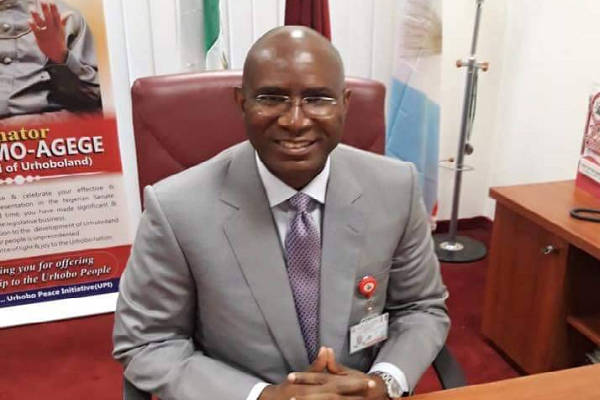
The Deputy President of the Senate, Ovie Omo-Agege says the National Assembly will give legal backing to the card readers in the new Electoral Act, to further enhance the integrity of the electoral process in Nigeria.

He gave the assurance when he received the Nigerian Representatives of the African Union Economic, Social and Cultural Council, (AU-ECOSOCC), led by Dr. Tunji Ashaolu in Abuja on Thursday.

A statement by his spokesperson, Yomi Odunga in Abuja, quoted Omo-Agege as saying that it was important the card reader be made part of the legal regime for elections. He said the senate maintained that card reader would ensure credible polls.

According to him, the mistake of the Eighth National Assembly is that the amendment of the Electoral Act breached ECOWAS Protocol, which will not be repeated.

“I am sure any minute from now, we are going to be coming up with a revised Electoral Reform Amendment Bill that will address issues that are very dear to us and issues that came to the fore in the 2019 elections, most especially revolving around the legality of the card reader.

“We know that there is no way you can have genuine, credible, free and fair elections in this country without addressing the issue of the card reader.

“Most of the litigations that arise from the 2015 and 2019 elections have always centered around the legality or otherwise of the card reader.

“The courts have made it very clear that as far as they are concerned, Section 49 of the Electoral Act is very clear that the only document recognized by law for purpose of accreditation is the voters’ register.

“To the extent that we believe that we want to introduce any innovation including but not limited to the card reader. “We have to do the right thing, the right thing as far as we are concerned is for us to pass the law to make the card reader.

“We are hellbent on doing that, and we actually tried in the committee that I served on in the eighth senate but the leadership of the eighth senate delayed it and by the time it passed, it had run into challenges with the ECOWAS Protocol,” he said. He, however, explained that contentious areas in the amendments made by the eighth National Assembly would be removed before the bill will be passed and sent to the President for assent. Omo-Agege, who represents Delta Central Senatorial District, also expressed the desire of the ninth senate to ensure that the Petroleum Industry Governance Bill (PIGB) was given accelerated approval.

He assured that the bill would have the buy-in of the executive arm of government to avoid the mistakes of the past. He said: “This time around, it is the determination of the ninth senate that we are going to have this (PIGB) passed.

Earlier, the leader of the delegation, Dr. Tunji John Ashaolu, emphasized the need for Nigeria to take its rightful place in the African Union (AU).

He also called on the National Assembly to immediately revisit the Electoral Act Amendment Bill, as well as the Petroleum Industry Governance Bill.

Source: NAN

90% of cars in Nigeria are smuggled, Customs boss, Hameed Ali, says

0

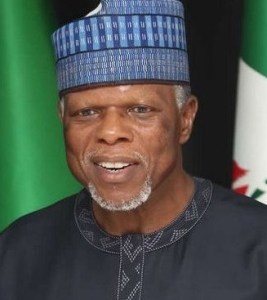
The Comptroller-General of the Nigeria Customs Service (NCS), Col. Hameed Ali (retd), on Thursday, said 90 per cent of cars in the country were smuggled into the country by unscrupulous elements.

Ali, who said this while addressing newsmen in Abuja, alleged that many vehicles on display for sale in auto shops across the country were also smuggled.

He explained that the recent raids of the various car dealers’ spots in some parts of the country were to ascertain whether the vehicles were brought in genuinely or not.

According to him, the country needs revenue for development, hence, it became necessary to collect duties on those smuggled vehicles.

“We want to use this opportunity to ensure that cars within our borders are fully customised, which means duties are paid on them.

”We are looking for revenue from everywhere and we have these people who brought in vehicles and failed to pay duties.

“What we are doing now, we are just enforcing the law, which allows us to collect revenue on behalf of Nigeria and also ensure those vehicles you and I will go and buy have genuine papers that are roadworthy.

“If you meet our officers on the road and they ask for the papers, if they discover you have not paid your duties, they will seize the vehicles.

“We are doing all these to save car buyers from running into trouble,” he explained. The customs boss said the organisation would continue to mount roadblock from time to time to stop vehicles to ensure duties were paid on cars.

“The law allows us to stop you and ask for the car papers, if your papers are intact, we thank you and bless you, if it is otherwise, we will ask you to pay the duties

“If we find out you are not a smuggler, you are just an innocent buyer, we will value the car and ask you to pay the required duties on the car and you will be freed,” he said.