Tuesday, May 5, 2026
Home Blog Page 96

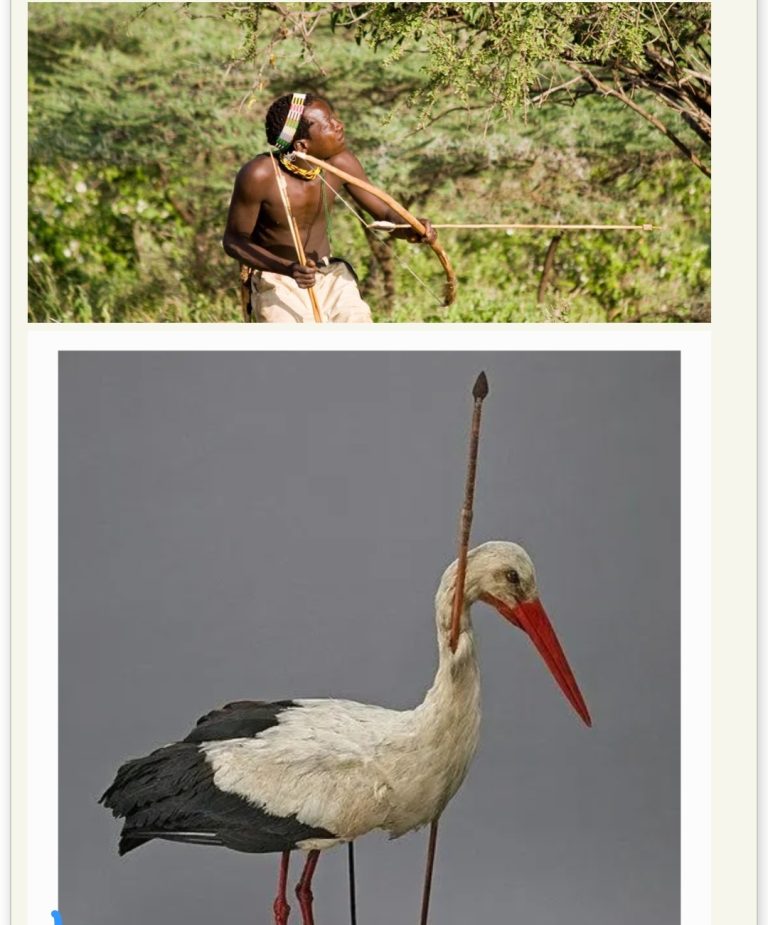
In 1822, An Arrow Shot In Africa Landed In Northern Germany

0

In 1822, An Arrow Shot In Africa Landed In Northern Germany—A Biologist Tells The Story.

By the 1800s, bow and arrow technology was quite sophisticated–the sturdiest recurve bows of the time could send an arrow soaring distances of over 400 yards and could pierce armor at distances greater than a football field.

That, however, does little to explain how a central African arrow landed in the small northern German town of Klutz in 1822. For that, we must look to another master of the sky–the white stork.

The Story Of The Pfeilstorch

Pfeilstorch, a German term meaning “arrow stork,” was the name given to a white stork that alighted in the town of Klutz in the northern German state of Mecklenburg-Vorpommern in the spring of 1822. It came bearing a most unusual scientific gift–an arrow threaded through its neck, fixed well enough to withstand the 3,000+ mile migratory journey but sparing the stork its life due to the fact that the arrow pierced only the stork’s skin.

It was a “gift” to science because, up until this point, debate swirled as to how birds survived the winter.

In 1797, Thomas Bewick, an English artist and natural history author, hinted at the correct answer in his book, A History of British Birds–stating that a ship’s captain, whose opinion he held in high esteem, witnessed between the islands of Menorca and Majorca “great numbers of swallows flying northward.”

This stood in contrast to the spurious but widely held belief that swallows hibernated during winter months. Bewick even conducted experiments with swallows, attempting to keep them warm and fed during winter months, but concluded that, “they leave us when this country can no longer furnish them with a supply of their proper and natural food.”

The hibernation theory wasn’t the only theory Bewick had to contend with. In 1703, a Harvard professor suggested that migrating birds flew to the moon and back. Others believed that birds hibernated underwater or, in certain cases, metamorphosed into other birds.

These debates were put to rest after the arrival of the Pfeilstorch in Germany. There was only one logical explanation for the African arrow: northerly migration.

The Pfeilstorch was the first in a series of migratory birds to arrive in Europe with arrows in their skin. Ernst Schüz, a German ornithologist active in the early 20th century, recorded several instances of birds carrying embedded arrows. Among them were a white-bellied stork found in Tanganyika, a short-toed eagle in Hungary, a honey buzzard in Finland, and a black kite. He also noted swans and eiders struck with Inuit arrows.

Later, Schüz observed that such sightings had become more rare due to the widespread shift from bows and arrows to firearms.

The Path Of The Pfeilstorch

The white stork (Ciconia ciconia) is a migratory bird known for its long-distance journeys between breeding and wintering grounds. These birds primarily breed in Europe, North Africa, and parts of Asia, favoring open landscapes like wetlands, meadows, and agricultural fields.

During migration, they primarily follow two main routes: the eastern corridor, which takes them through the Balkans, Turkey, and the Middle East to wintering areas in East Africa, and the western corridor, which passes through the Iberian Peninsula and into western Africa.

White storks avoid crossing large bodies of water, as they rely on thermals for energy-efficient gliding. This preference directs them along land routes such as the Bosporus in Turkey and the Strait of Gibraltar. They begin their autumn migration from breeding sites between August and October, traveling up to 13,000 kilometers to reach their wintering grounds in sub-Saharan Africa. Spring migration starts between January and March, with storks returning to their breeding areas by May.

While many storks continue to follow these traditional routes, some populations in western Europe have adapted to milder winters and abundant food supplies by halting their migrations and overwintering closer to their breeding grounds. Despite their adaptability, migratory storks face challenges such as habitat loss, hunting, and climate change.

Are you an animal lover who owns a pet–perhaps even a bird? Take the science-backed Pet Personality Test to know exactly how well you know your little friend.

FG Commits ₦‎180 Billion To Agric Varsities, Research Institutes In 2025

0

The Federal Ministry of Agriculture and Food Security has proposed spending N180bn on Federal Universities of Agriculture and research institutes in the 2025 proposed budget.

Of this amount, N54.38bn is allocated specifically to Federal Universities of Agriculture, as part of the ministry’s total N636bn allocation.

The allocations were disclosed in the newly released 2025 Appropriation Bill by the Budget Office of the Federation on December 18, 2024.

President Bola Tinubu presented the N49.70tn budget, titled “Budget of Restoration: Securing Peace, Rebuilding Prosperity,” to a joint session of the National Assembly on 17 December, 2024.

The proposed N54.38bn allocation to universities represents 8.4 per cent of the ministry’s total budget.

The breakdown includes: Federal University of Agriculture, Abeokuta, Ogun State, N13.77bn; Federal University of Agriculture, Makurdi, Benue State, N14.17bn; Federal University of Agriculture, Zuru, Kebbi State, N3.98bn;

Federal University of Agriculture, Bassam-Biri, Bayelsa State, N2.96bn; and Federal University of Agriculture, Mubi, Adamawa State, N3.58bn

Additionally, the ministry has allocated N126.03bn to over 40 research institutes.

Some notable allocations include:

Agricultural Research and Management Institute, Ilorin: N2.17bn; National Cereals Research Institute, Badeggi: N4.29bn; National Veterinary Research Institute, Vom, Plateau State: N6.44bn; National Root Crops Research Institute, Umudike: N6.86bn.

Others are National Institute for Oil Palm Research, Benin: N5.08bn; National Horticultural Research Institute, Ibadan: N4.34bn; Federal College of Agriculture, Akure: N2.30bn; Nigeria Agricultural Quarantine Service: N5.47bn and Nigeria Institute of Oceanography and Marine Research: N5.09bn.

The full list of allocations spans institutions involved in agricultural mechanisation, freshwater fisheries, veterinary health, and cooperative development, underscoring the government’s emphasis on research-driven solutions for food security and economic growth.

A lecturer at the Joseph Sarwuan Tarka University, Makurdi (formerly University of Agriculture, Makurdi), Dr. Moses Ogah described the proposed allocation as a positive development but stressed the need for strategic implementation.

“Yes, it is a step in the right direction. We cannot say it is enough, but I think it has never been like this before. So, if someone is coming out with a proposal like that, it’s good,” Ogah said.

He highlighted the universities’ potential to tackle food security challenges, reduce food costs, and support national development.

“The essence of establishing the University of Agriculture is to engage in food production so that food can be sold to the populace at subsidized rates. Unfortunately, we are not living up to the expectations and mission of these institutions,” he noted.

Ogah urged the government to provide infrastructure like hatcheries, processing plants, and livestock facilities.

An agricultural economist and researcher at the Federal University of Agriculture, Abeokuta, Ogun State, Tobi Awolope also shared his thoughts on the proposed N54.38bn allocation.
Regarding the proposed N54bn for universities in the 2025 budget, there are several expectations from universities, especially those in the agricultural ecosystem, given the increasing importance of the agricultural sector for national development.

“Agricultural universities should prioritize research that addresses pressing issues such as food security, climate change, and sustainable farming practices. The funds could support the establishment of modern laboratories, field research centers, and partnerships with local farmers and agribusinesses for real-world application of research outcomes,” she added.

Awolope noted that “Universities should use part of the funds to improve infrastructure, especially in agricultural faculties. This could include building or upgrading lecture halls, research farms, greenhouses, and demonstration centers that align with current global agricultural standards.”

“The key expectation is that these funds would contribute to transforming agricultural universities into innovation hubs that play an active role in driving the nation’s agricultural transformation agenda,” Awolope emphasised.

President Tinubu emphasised his administration’s commitment to security and infrastructure in his budget speech, stating, “This budget will ensure we secure peace and rebuild prosperity.”

The proposed budget is based on economic assumptions, including a projected inflation rate decline from 34.6 per cent to 15 per cent and an exchange rate adjustment from N1,700 to N1,500 per dollar.

Experts believe these strategic investments in education and research institutes could enhance food security, foster innovation, and promote sustainable economic growth in Nigeria. 

MTN, Airtel And 9mobile To Raise Prices In Q1 2025 After NCC Approval

0

Telecom tariffs to rise in 2025 as NCC greenlights price increases.

The Nigerian Communications Commission (NCC) has approved a long-pending proposal for telecom tariff hikes, with new rates for calls, SMS, and internet bundles expected to take effect in January 2025. [b]This marks the end of over a decade of lobbying by telecom giants like MTN Nigeria, Airtel, and 9Mobile, who have called for price adjustments to reflect economic realities. Despite soaring operational costs driven by headline inflation, telecom operators have been unable to raise prices for 11 years.

A spokesperson for the Nigerian Communications Commission (NCC) confirmed to TechCabal that further details of the tariff adjustments would be shared in an official announcement.

“This announcement will benefit the subscribers and operators because we have taken into account the proposals from the industry and the public,” an NCC spokesperson told TechCabal.

According to the existing proposals, telecoms tariffs could rise by up to 40%. If adopted, the cost of a phone call will increase from ₦11 to ₦15.40 per minute and SMS charges will rise from ₦4 to ₦5.60. For data plans, the price of a 1GB bundle will increase from ₦1,000 to at least ₦1,400.

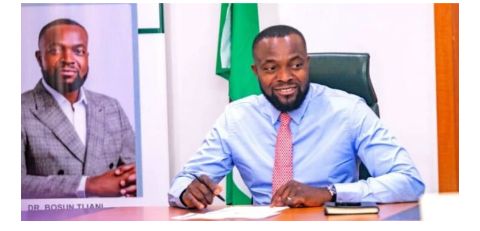
Minister of Communications, Innovation and Digital Economy, Dr Bosun Tijani, acknowledged the need for price adjustments, stating: “We think there may be a need for that” in a December 20 interview on Arise TV.

The NCC is responsible for reviewing and approving tariffs adjustments in the telecommunications industry. In October 2024, it rejected Starlink’s application to double subscription fees to ₦75,000. While the commission aims to balance the financial burden on subscribers, it also recognises that the industry’s operational challenges could affect service quality and investment.

Rising food inflation (39.93%) complicates the telecom tariff increase, with concerns that it could reduce internet usage in a country where digital inclusion is a priority. However, the current situation has led to significant financial losses for the telcos.

MTN Nigeria, for instance, reported a ₦137 billion loss in 2023, with losses expanding to ₦514.9 billion in the first nine months of 2024. Airtel Africa also reported losses of $89 million in FY 2024, largely driven by challenges in Nigeria.

Despite the grim outlook in the telecoms sector for much of the year, President of the Association of Licenced Telecommunication Operators of Nigeria (ALTON) Gbenga Adebayo argues that cost-reflective prices will incentivise investment and help improve quality in the long run.

Saipem Wins $900m EPCI Contract From Shell’s $5bn Offshore Project In Nigeria

0

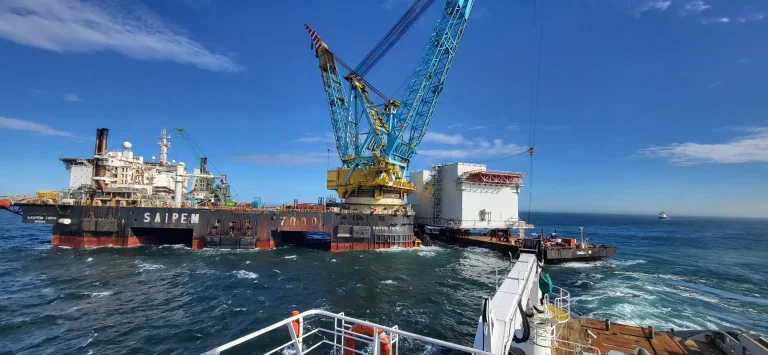
Saipem, in a consortium with two Nigerian companies, has secured an offshore contract worth around $1 billion with Shell for a deepwater oil and gas project off the coast of Nigeria, Offshore Energy magazine has reported.

As part of the contract with Shell Nigeria Exploration and Production Company Limited (SNEPCo), Saipem will deliver the Engineering, Procurement, Construction and Installation (EPCI) of risers, flowlines, subsea umbilicals, and associated subsea structures for the Bonga North Project, located 130 kilometres offshore Nigeria.

Design and fabrication activities will be carried out locally, also involving Nigerian suppliers and subcontractors, the report added.
The contract was secured in a consortium with KOA Oil & Gas and AVEON Offshore, and has an overall value of about $1 billion, while Saipem’s share amounted to approximately $900 million.

According to the report, TechnipFMC will also supply Subsea 2.0 production systems for the development, including the design and manufacture of subsea tree systems, manifolds, jumpers, controls, and services.

With water depths exceeding 1,000 meters, Bonga North will be tied back to the Shell-operated FPSO Bonga in OML 118, where production began in 2005. The FPSO, which can produce 225,000 barrels of oil per day, reached a production milestone in 2023, thanks to its one-billionth barrel of crude oil.

According to Shell, the project encompasses the drilling, completion, and start-up of 16 wells, of which half are production ones and the remaining half water injection wells, modifications to the existing FPSO Bonga Main, and the installation of new subsea hardware tied back to the unit for which Akselos provided a structural digital twin in 2020.

Defined as substantial, meaning it is worth between $250 million and $500 million, the TechnipFMC contract covers the design and manufacture of subsea tree systems, manifolds, jumpers, controls, and services.
President of Subsea at TechnipFMC, Jonathan Landes, , said, “Shell was the first to adopt our Subsea 2.0 configure-to-order solution, and continues to deploy it across multiple basins, underscoring its commitment to the technology globally. This award further positions us for future deepwater opportunities in the region.”

The award will be included in TechnipFMC’s inbound orders this quarter of 2024.

Last week, SNEPCo, a subsidiary of the UK-headquartered Shell, made a Final Investment Decision (FID) for a deepwater oil and gas project off the coast of Nigeria, which will be developed as a subsea tie-back to an existing floating production, storage, and offloading (FPSO) unit.

Shell’s investment in the Bonga North project is expected to generate an Internal Rate of Return (IRR) over the hurdle rate for the firm’s upstream business, which continues to look for ways to boost performance through near-field opportunities, like Bonga North, leveraging technical expertise, strong partnerships, and a model built on simplification and replication.

Shell believes Bonga North will help ensure its integrated gas and upstream business continues to drive cash generation into the next decade. The operator expects the project to sustain oil and gas production at the Bonga facility because of its estimated recoverable resource volume of over 300 million barrels of oil equivalent (boe).

The Bonga North project’s peak production is forecast to be 110,000 barrels of oil per day, with the first oil anticipated by the decade-end, it said.

SNEPCo (55 per cent) operates the Bonga field in partnership with Esso Exploration and Production Nigeria (20 per cent), Nigerian Agip Exploration (12.5 per cent), and TotalEnergies Exploration and Production Nigeria (12.5 per cent), on behalf of the Nigerian National Petroleum Company Limited (NNPC).

Shell’s Integrated Gas and Upstream Director, Zoë Yujnovich, had said, “This is another significant investment, which will help us to maintain stable liquids production from our advantaged upstream portfolio.”

This comes after Shell made arrangements in January 2024 to divest its interest in the Shell Petroleum Development Company of Nigeria Limited (SPDC) joint venture (JV), with a net book value of around $2.8 billion, aiming to turn all its attention to deepwater and integrated gas businesses in the African country.

SERAP Faults Tinubu, Shettima’s ₦‎8.7 Billion Travel Budget For 2025

0

The Socio-Economic Rights and Accountability Project has called on the Senate President, Godswill Akpabio, and the Speaker of the House of Representatives, Tajudeen Abbas, to slash proposed budgets for the Presidency and the National Assembly.

The organisation argued that the funds, amounting to N9.4bn for the Presidency’s travel, meals, and catering expenses, and N344.85bn for lawmakers, could be redirected to mitigate the country’s growing budget deficit.

In a letter dated December 21, 2024, signed by its Deputy Director, Kolawole Oluwadare, SERAP urged the National Assembly to request a fresh supplementary appropriation bill from President Bola Tinubu.

The bill, SERAP said, should reflect reduced allocations for both the Presidency and the legislature, aligning with Nigeria’s dire economic situation.

It warned that “Any proposed unnecessary spending by the Presidency and the National Assembly would amount to a fundamental breach of the Nigerian Constitution 1999 (as amended).

“It would be a grave violation of the public trust and constitutional oath of office for the members of the National Assembly to approve unnecessary spending for themselves and the Presidency.”

SERAP further demanded a detailed breakdown of the National Assembly’s proposed N344.85bn budget, including allocations for personnel costs, salaries, and allowances.

It also urged lawmakers to summon heads of ministries, departments, and agencies implicated in the mismanagement of funds as revealed in the 2021 audit report by the Office of the Auditor-General.

SERAP urged lawmakers to demand a fresh supplementary appropriation bill from President Bola Tinubu that reflects reduced allocations for both the Presidency and the legislature.

“Cutting unnecessary spending by the Presidency and the National Assembly would show that the National Assembly can discharge its constitutional responsibility of amplifying the voices of Nigerians,” the group said.

SERAP highlighted a sharp increase in budgetary allocations for certain items, noting that while the Presidency allocated N14bn for “rehabilitation and repairs of fixed assets” in 2024, this figure surged to N26bn for 2025.

“Many Nigerians will find it quite odd, unfair, and unjust that the government and lawmakers are spending so much money on many of these items in the middle of a public borrowing crisis,” SERAP remarked.

The organisation also expressed concerns over the Presidency’s proposed N8.74bn budget for domestic and international travel for President Bola Tinubu and Vice President Kashim Shettima.

“The Office of the President proposes N7bn for travel and transport expenses, while the Vice President’s office plans to spend N1.73bn,” SERAP disclosed.

Additionally, SERAP revealed other expenditures, including N546.2m for catering materials and refreshment, N87.5m for honorarium and sitting allowance, and N79.6m for drugs and medical supplies.

SERAP criticised the lack of transparency in the National Assembly’s proposed N344.85bn budget, demanding a detailed breakdown of allocations for personnel costs, salaries, and allowances.

“The National Assembly has transparency obligations to disclose the details and breakdown of the proposed budget for the lawmakers,” the organisation said.

The group also urged lawmakers to summon heads of ministries, departments, and agencies implicated in the mismanagement of public funds, as detailed in the 2021 audit report by the Office of the Auditor-General.

“Holding to account the MDAs which are reportedly responsible for the missing billions of naira of public funds would contribute to addressing the widespread and systemic corruption in MDAs,” SERAP stated.

Quoting the Nigerian Constitution, SERAP reminded lawmakers of their duty to prioritize the welfare of citizens. “The National Assembly has constitutional oversight and fiduciary duties to ensure a responsible budget spending,” the letter noted.

“The proposed spending figures by both the Presidency and the National Assembly highlight the lack of political will to cut the cost of governance,” it added.

SERAP concluded by urging Akpabio and Abbas to lead by example and demonstrate that public officials can act in the best interest of Nigerians.

“Cutting waste and apparently unnecessary spending would go a long way in addressing the budget deficit and debt problems,” the organisation emphasised.

World-Record Underwater Shield Tunnel Completed In China – Science/Technology

0
Jinan, a city of 9.4 million people and the capital of Shandong Province in East China, has made world headlines. Crews working there have completed the monumental task of building the world’s largest-diameter underwater shield tunnel.

Using the largest available tunnel boring machine (TBM) on Earth, the China Railway 14th Bureau Group Co., Ltd. is still excavating the main section of the 3.6-mile (5,755 m) tunnel. The 2-mile (3,290-m) section of underwater shield segments, however, is complete.

This section is a colossal 55.8 ft (17 m) in diameter and consists of 500 pipe rings of underwater shielding, making it the largest-diameter tunnel of its kind anywhere in the world.

For comparison, the Channel Tunnel that connects the UK and France has three tunnels, two of which are the public rail tunnels with a diameter of about 25 ft (7.6 m) … though it is significantly longer, at 31.4 miles (50.5 km).

The Jinan Huanggang tunnel will feature six lanes of travel in both directions in a double-decker configuration, with a 60 km/h (37 mph) speed limit. It will be a crucial north-south passage across China’s second-longest river, the Yellow River, enhancing connectivity between Jinan’s main urban area and what is described as “the starting area for the transformation of new and old kinetic energy.”

Aside from setting a world record for the tunnel’s sheer size, the 14th Bureau Group also set a world record for completion time for such a vast undertaking.

Crews began tunneling on September 1st, 2024, and while the entirety of the tunnel hasn’t yet been completed, the underwater shielding portion has. It was accomplished in a mere 110 days. The Shanhe shield machine had a daily advancement rate of 52.5 to 59 ft (16 to 18 m), setting a new world record for 17-meter-class shield construction.

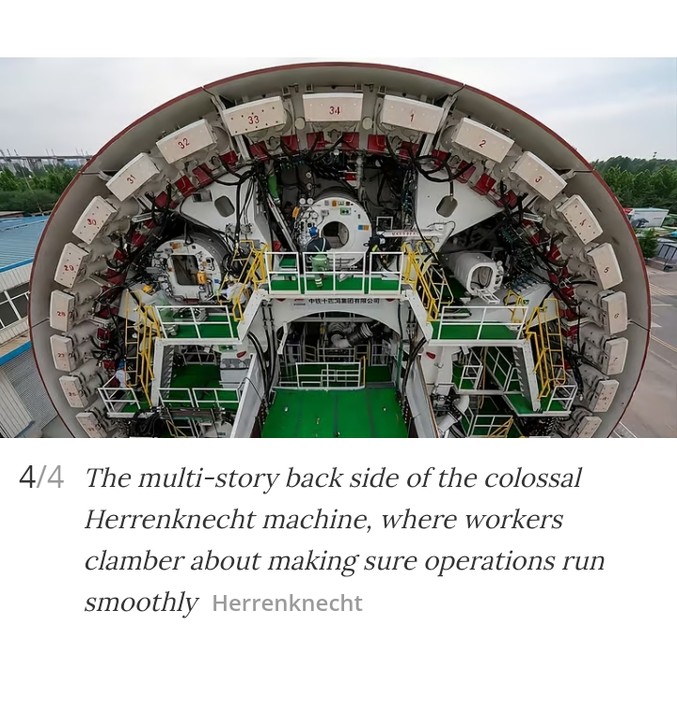
The boring machine in question is the Herrenknecht “Shanhe” Shield Machine, a mixshield tunnel boring machine boasting a 57.4-ft (17.5-m) excavation diameter – roughly 5 stories tall. The cutterhead driver has 7,510 hp (5,600 kW) and about 25,827,209 lb-ft (35,017 kNm) of torque. Yes, nearly 26 million lb-ft of electric motors and hydraulic power.

It’s built to operate and withstand up to 7.5 bar of pressure (that’s 7.5 times normal atmospheric pressure at sea level). The excavation chamber on the business end of the Shanhe can handle up to 15 bar using a specialized automatic air cushion to balance pressure, maintain stability, and prevent collapse or flooding.

The cutting wheel is equipped with a flushing system to help prevent clogging. It also has a telescopic camera system in the excavation chamber to monitor the cutting bits and tunnel face. This reduces the need for hyperbaric intervention by maintenance workers, which is time-consuming and dangerous.

If you want to get a Shanhe for yourself, it’ll likely set you back at least US$80 million or so. This figure is based on the Santa Clara Valley Transportation Authority (VTA) in the US having shelled out a cool $76 million a 16.46-meter diameter Herrenknecht TBM.

The Jinan Huanggang Road Yellow River Crossing Tunnel is scheduled for completion sometime in late 2025.

Source: https://newatlas.com/transport/world-record-jinan-huanggang-road-yellow-river-crossing-tunnel/

We Have Enough Fuel: Avoid Panic Buying – IPMAN Urges Nigerians

0

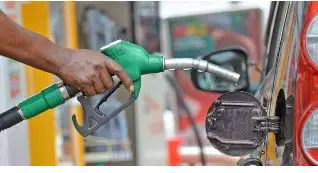
The Independent Petroleum Marketers Association of Nigeria (IPMAN) has urged Nigerian to avoid panic buying as there is enough fuel in the country.

Mr Ukadike Chinedu, IPMAN Publicity Secretary, said this on Sunday in Abuja.


He commended the Dangote Petroleum Refinery for reducing the price of its Premium Motor Spirit (PMS), also known as petrol, to N899.50k per litre.

He said that the gesture would help reduce transport costs for Nigerians ahead of Yuletide holidays.

” You see, that is the beauty of deregulation. Prices are determined by market forces.

” With the Dangote and Federal Government refineries by the corner, this will bring competitive prices,” Chinedu said.

He urged all IPMAN members to adjust their pump to the new pump price to attract more customers.

“We have started ordering on the new price, and even some of our members have already started adjusting their pumps lower to be able to have faster sales.

“If your price is higher, nobody will buy from you.

“You will even find out now that those queues that you normally see in NNPC filling stations have all reduced because most marketers are almost selling the same thing with them,” he said.

The News Agency of Nigeria (NAN) recalls that the Dangote Refinery had lowered its petrol price to N970 per litre in November. (NAN)

Tax Reform Bills: North Is An Asset, Not Liability To Nigeria – Ndume –

0

The assertion follows his opposition to the tax reform bills.

In a statement he released on Monday, Ndume again criticised the timing and scope of the bills, saying that they disproportionately target low- and middle-income Nigerians who are already bearing the brunt of the President Bola Tinubu administration’s economic policies.

According to him, the North was, is, and will never be a parasite or dependent on any region or even the country.

Arguing that the North is an asset and not liability to Nigeria, he stressed that those who think that the tax reforms are only against Northern interests are naive.

He explained, “As it is, the law is against all low- and middle-income Nigerians.

Ndume called for the withdrawal of the tax reform bills, stressing the need for broader consultations and greater stakeholder involvement and advised the Federal Inland Revenue Service, FIRS, to focus on expanding the tax net and improving accountability and transparency.

He opined, “The FIRS should concentrate on expanding the tax net and collecting more. Also, accountability and transparency should be increased.

Ndume urged the Central Bank of Nigeria, CBN, to scrutinise commercial banks, arguing that their substantial yearly profits warrant higher tax contributions.

He stated the importance of prioritising governance reforms over tax reforms, saying that the country’s current personnel and overhead expenditure consumes a significant portion of the budget.

The senator explained that the personnel and overhead expenditure for 2024 is about 50 to 60 percent of the budget itself, lamenting that in November, 20 percent of the budget has not been implemented as the recurrent expenditure has already been exhausted.

He alleged that over 15 to 20 trillion naira is going into personnel, debt servicing and recurrent expenditure.

FG To Provide 50% Funding For 90,000km Fibre Project Through Loans—bosun Tijani

0

The Minister of Communications, Innovation, and Digital Economy, Dr. Bosun Tijani, has said that the federal government will provide half of the $2 billion required to deliver the country’s 90,000-kilometre fibre project.

The Minister, who disclosed this while featuring on an Arise TV program on Friday, said the project, which will be financed by loans is part of the government’s borrowing plans for 2025.

“Earlier this year the FEC approved a memo which was to set up a special purpose vehicle that is meant to deploy 90,000 kilometers of fiber optic cables in Nigeria. Half of that money is what the government will make available.

“The half that the government is making available which is just short of $1 billion is being secured through loans,” the Minister stated.

Presidency’s support

Tijani said the project has also received immense support from President Bola Tinubu, the Ministry of Finance, and the Minister as well.

In addition to the government funding, he said the Ministry has secured private companies that will provide the other half of the funding for the project. While noting that significant progress has been in terms of discussions with funding partners of the project, especially the World Bank, the Minister said the government is hoping to commence digging for the laying of the cables in Q2 2025.

Why the government must invest in backbone infrastructure

On why the government must invest in backbone connectivity infrastructure, Tijani, said many Nigerians are complaining of poor quality of service today because of the inadequacy of the infrastructure deployed by the private operators.

He noted that the operators would only invest in areas where they can get higher returns, which is why some parts of the country have been experiencing a lack of or poor connectivity.

“When we came in the assessment we did was that as a nation you have two options to build in the backbone for digital economy and connectivity.

“For people to truly enjoy quality connectivity, you will either have to rely on private companies, the MNOs, the infracos, to put their private funding into building expansive and extensive network for connectivity within the country.

“But the challenge with that approach, which is the first approach, is that businesses would only invest significantly where they are sure that their returns can be guaranteed almost immediately, at least in a short to medium-term sense.

“The other option, which is the common option that you’ve seen in many progressive countries, is that government will have to understand and of course put its own skin in the game, knowing that connectivity is now clearly an important resource that every citizen should have access to, regardless of where you find yourself,” he explained.

He said this realisation led to the setting up of a special purpose vehicle to drive the deployment of 90,000 kilometers of fibre cable across the country.

According to him, the SPV is not a government entity but the government will invest in it and it will be managed as a private entity with the government representative as part of its board.

2025 Budget: Scrapped N/delta, Sports Ministries Get N2.3trn –

0

The federal government voted N2.3 trillion for the scrapped ministries of Niger Delta and Sports Development in the 2025 budget proposals, checks by Daily Trust have revealed.

Our correspondents could not establish whether it was an error or not, but experts said there was no diligence in putting the budget documents together even if at the end of the day it turned out that the monies earmarked were meant for the new Ministry of Regional Development and the National Sports Commission (NSC).

The Niger Delta and sports ministries were scrapped by the government in October when the Minister of Information and National Orientation, Mohammed Idris, announced the decision after the Federal Executive Council (FEC) meeting chaired by President Bola Ahmed Tinubu.

The National Sports Commission took over the role of the Ministry of Sports Development.

President Tinubu had last week presented the Appropriation Bill of N49.7 trillion to a joint session of the National Assembly.

Checks by the Daily Trust also revealed that the budget proposals did not capture the new Ministry of Regional Development.

The reinstated National Sports Commission (NSC) was also not allocated any funds, according to the document.

For the scrapped Ministry of Sports Development, the budget shows an allocation of N95 billion, with N0.9 billion allocated for personnel, N14 billion for overhead and N79.7 billion for capital expenditure.

The Ministry of Regional Development is meant to supervise all the regional development bodies like the Niger Delta Development Commission (NDDC), the North East Development Commission (NEDC), the North West Development Commission (NWDC), the South West Development Commission (SWDC) and the South East Development Commission (SEDC).

However, in the details of the 2025 Appropriation Bill that was released by the Ministry of Budget and National Planning, the sum of N2.23 trillion was budgeted for the scrapped Niger Delta Ministry.

A breakdown of the budgetary provision for the ministry shows that personnel cost will gulp N2.205 trillion, while N1.7 billion is budgeted for overhead and N24.5 billion for capital expenditure.

What is curious in the details of the budget estimates is that besides the allocation to the scrapped Niger Delta ministry, all the five regional development commissions also have their separate allocations.

Regional commissions to gulp N2.49trn

The Appropriation Bill showed the allocations of N2.49 trillion for the existing NDDC and NEDC, as well as the newly established NWDC, SWDC and SEDC.

A sum of N776.53 billion was proposed for the NDDC; NWDC got N585.93 billion; SWDC got N498.40 billion; SEDC got N341.27 billion; and NEDC got N290.99 billion.

N180m for Villa’s animals

Meanwhile, the State House has been allocated the sum of N179.6 million for wildlife conservation in the 2025 budget proposals.

Daily Trust reports that the Presidential Wildlife Sanctuary (PWLS), formerly known as the State House Zoo, was approved for upgrade during the last administration of then President Muhammadu Buhari.

According to the details of the budget, N124,612,890 would be spent on wildlife conservation while another N54,951,622 was allocated for the conversion/upgrade of Villa Ranch and the construction of Wildlife Conservation Capture.

The Appropriation Bill also showed that maintenance of the Presidential Villa, Abuja, would gulp N5,492,349,184; and procurement of operational vehicles, N3,661,566,123

Budget lacks structural reforms, fiscal discipline – Atiku

Former Vice President Atiku Abubakar, in his assessment of the 2025 Appropriation Bill, said it lacks the structural reforms and fiscal discipline required to address Nigeria’s multifaceted economic challenges.

He said to enhance the budget’s credibility, the administration must prioritise the reduction of inefficiencies in government operations, tackle contract inflation, and focus on long-term fiscal sustainability rather than perpetuate “unsustainable borrowing and recurrent spending patterns.”

According to him, a shift towards a more disciplined and growth-oriented fiscal policy is essential for the nation’s economic recovery.

Atiku alleged that the budget reflects a continuation of business-as-usual fiscal practices.

“This represents a persistent trend under the APC-led administration since 2016, wherein budget deficits have been consistently presented, accompanied by an increasing reliance on external borrowing.

“To bridge this fiscal gap, the administration plans to secure over N13 trillion in new borrowings, including N9 trillion in direct borrowings and N4 trillion in project-specific loans. This borrowing strategy mirrors the approach of previous administrations, resulting in rising public debt and exacerbating the attendant risks related to interest payments and foreign exchange exposure.”

He also said the 2025 budget’s capacity to foster sustainable economic growth and tackle Nigeria’s deep-rooted challenges is questionable.

“Key issues arise from several factors: 1. Weak Budgetary Foundations: The 2024 budget’s underperformance signals poor budgetary execution. By Q3 of the fiscal year, less than 35% of the allocated capital expenditure for MDAs had been disbursed, despite claims of 85% budget execution.

“This underperformance in capital spending, crucial for fostering economic transformation, raises concerns about the execution of the 2025 budget.

“Disproportionate debt servicing: Debt servicing, which accounts for N15.8 trillion (33% of the total expenditure), is nearly equal to planned capital expenditure (N16 trillion, or 34%). Moreover, debt servicing surpasses spending on key priority sectors such as defence (N4.91 trillion), infrastructure (N4.06 trillion), education (N3.52 trillion), and health (N2.4 trillion). This imbalance will likely crowd out essential investments and perpetuate a cycle of increasing borrowing and debt accumulation, undermining fiscal stability.

“Unsustainable government expenditure: The government’s recurrent expenditure remains disproportionately high, with over N14 trillion (30% of the budget) allocated to operating an oversized bureaucracy and supporting inefficient public enterprises. The lack of concrete steps to curb wastage and enhance the efficiency of public spending exacerbates the fiscal challenges, leaving limited resources for development.

“Insufficient capital investment: After accounting for debt servicing and recurrent expenditure, the remaining allocation for capital spending, ranging from 25% to 34% of the total budget is insufficient to address Nigeria’s infrastructure deficit and stimulate growth. This equates to an average capital allocation of approximately N80,000 (US$45) per capita, insufficient to meet the demands of a nation grappling with slow growth and infrastructural underdevelopment.

“Regressive taxation and economic strain: The administration’s decision to increase the VAT rate from 7.5% to 10% is a retrogressive measure that will exacerbate the cost-of-living crisis and impede economic growth.

By imposing additional tax burdens on an already struggling populace while failing to address governance inefficiencies, the government risks stifling domestic consumption and further deepening economic hardship,” Atiku said.

Executive Director, Civil Society Legislative Advocacy Centre (CISLAC), Auwal Musa Rafsanjani, yesterday said making provisions for the scrapped ministries in the 2025 budget proposals was embarrassing, scandalous and ridiculous.

In a chat with Daily Trust, he urged the National Assembly to be very vigilant and not to approve the fiscal document in a hurry.

“The discovery of this insertion or provisions of the budgetary allocation to these ministries that have been scrapped by Mr. President clearly shows that this budget was not done thoroughly and was not done on the basis of need assessment and was not done with the view to ensure that there is a quality service or good governance attached to it.

“We cannot be doing this analogue budget of copy and paste. Mr. President needs to caution the people that are putting this budget because it is very embarrassing to see that government is putting huge amount of money to places where they did not even exist.

“This is very scandalous and very ridiculous and shows really clearly the intention of some people to siphon this money. Because if this budget is not done properly, it is not going to be a good thing for the government. If this budget goes without removing these items, it clearly means that some people are out there to corner this money and that is why in the first place this bogus budget that the government presented is uncalled for.

He said that Nigeria need to do a realistic budget that will really help bring about quality governance and development.

He said, “We need to do a budget that can finance development and reduce poverty, reduce unemployment, create conducive atmosphere in terms of social infrastructure, in terms of security, in terms of the well-being of Nigerians.

“We cannot be doing a budget of copy and paste that clearly showed intention, deliberate and conscious intention to make provision of agencies or ministries that didn’t even exist. This really clearly showed that the National Assembly members have to do something very rigorous to find out all those areas of suspicion, duplication, and areas that are clearly meant to waste public taxpayers’ money,” he said.