Tuesday, April 21, 2026
Home Blog Page 950

A Ganja Trip With Fela By Babafemi Ojud

0


This is Fela’s week. We must continue to thank Femi, Yeni and their siblings as well as the devotees of The Shrine for keeping the memory of our icon alive . What they are doing billions of Naira left by the rich could not do for the departed owner. Which is to say do what is worthy , and not stashed up wealth and materials things . All of that will never keep your memory in the minds of the living.

This piece is on a lighter mood, an anecdote to further give us an idea of the free spirit of the man who had death in his pouch and will never die. Our own Anikulapo – Kuti. I remember when Fela changed his name from Ransome – Kuti to Anikulapo- Kuti and his elder Brother was asked why he didn’t go with him in the change of name business his retort was that Fela never discussed it with him. He went further to say “ I am a medical doctor who is trained to stave off death how then can I say I have death in my pouch.” Prof Olikoye had a wry sense of humor and he was a delight to be with particularly when in company of his maverick siblings.

This is not the koko of this piece.

It is a different matter altogether. Read it and laugh. We all need laughter to ease the tension of this times.

Now you have seen the title of this piece. Don’t start judging me. I can see some of my enemies, old boy many
they are, saying ah amugbo ti e ni. No wonder ki gbo, ki gba. No I never smoked and will not do although I love the swag of the revolutionary Che Guevara holding the tobacco.

Do try and read this as you follow me on a journey with Abami Eda , Fela Anikulapo – Kuti.

This is not an astral travel. It is real. It was a journey I made with him in 1990(? ).

Beko Ransome Kuti and his comrades in trouble Gani Fawehinmi, Femi Falana, Baba Omojola and I think that young man then, Mayegun, the one with dada hair on his head made a lot of noise in Lagos questioning the authority of Ibrahim Babangida, our then military President.

I learnt the man with the gap tooth had sleepless nights. Our activists brothers even threatened to organize a sovereign national conference. Conference was not the problem but the word ‘sovereign’ just as now that protest is not the problem but the phrase ‘revolution now’. Let me not put my feet on a treason ground, a dangerous path to thread.

As I was saying our brothers, no woman among them o, the Beijing Conference has not held then, were arrested and taken to Abuja. Before we could locate them they have been charged with treasonable felony and remanded in Kuje Prison.

Hearing in their case was to come up in a Kuje Magustrate Court some days after to determine if they qualified to be bailed or not.

To cut a long story short and not delay this trip, we the activists, from veterans to rookies mobilized to give support to our comrades in Abuja on the chosen day.

Fela too was not left out. The abami eda hardly left his house except when on foreign tours or had a show in some parts of Nigeria . He offered to be part of the Lagos crowd storming Abuja. It was exciting that he chose to go. There will be drama with his presence and that we reasoned will provide good copy for the media both local and international.

It was my lot to travel with him and some of his aides as well as three of his numerous wives. Apart from we humans he had with him there were three pillows and a big piece of home baked cake. The pillows were meant to support his bum . He suffered then from a chronic case of hemorrhoid. The cake was to be our snack to and fro.

As we set out he regaled us with stories .You cannot but laugh at Fela stories. He said looking back he consider himself stupid for singing “ my darling valentine” at a point in his musical career . He made jest of Beko and his human rights campaigner crowd and said a lot of self deprecating things.

I didn’t only enjoyed stories but guffaw as I helped myself with his my share of his cake. I have never had any cake that delicious. I learnt from him it was called sponge cake. Sponge cake ? Iyen tun yato. The onijekuje that I was then, had a fill going to Abuja and returning.

Fela got to Abuja, spread his mat on the floor in front of the court and laid face down while people trooped to see abami himself. It was a rare life opportunity , particularly for northerners who have heard of him but have never seen him live.

Case called. The accused persons to our utter surprise were granted bail. Of course there had been an outcry in the media and internationally. Bail was a face saving measure for the then Babangida regime. There was jubilation and back slapping . Lagos here we come. Abuja was like a no no for many of us at that time. It was a bourgeois enclave where we reasoned the national wealth was stolen.
We set out . Fella puffed on his Obiaruku jumbo wrap. We became passive smokers.

It was not only that day I have passive smoked Igbo around Fela. If you were a journalist at this period or human rights activist, you have a sit at a special location at the Shrine. Dele Omotunde , that great journalist, now a Redeem Church pastor , Lance Arogundade, Femi Falana, Chuzi Udenwa , also now a pastor in US among several others , were devotees of the Shrine and we had our special place then. I once returned home one day at about 4.00 am and had my head light and my gaze and steps not stable. It took three days of sleeping before I recovered.

On our way back from Abuja to Lagos I continued sponging on Fela’s cake. We arrived Akure and decided to refuel and empty our bowels. Chief Fawehinmi visited the bathroom. We almost lost him that night . If you know how spiritedly he walked you will imagine what I am talking about . Not seeing the drainage on his path he slipped into it one leg first and fell hard. We rushed to pull him up. It was scary . We thanked God then he didn’t hit his head on the concrete floor.

We proceeded on our journey to Lagos eating Fela’s sponge as if it was going out of fashion. We arrived Lagos and I left for my home. The following morning I found myself in the heart of Mushin where Beko had his clinic being attended to by Dr Balogun. No one could explain what the matter was with me. I couldn’t decode it neither the doctor could. It was assumed it was exhaustion. And I was placed on intravenous drip.

Later in the evening Beko came to see me on my sick bed as he resumed his daily consultation at the poor folks enclave.

“What is the matter with you”, he asked.

Feeling dizzy, couldn’t stand on my feet and my head spinning , I told him. What did you eat in the morning? Nothing, I said. What of of yesterday, he asked? I only had cake , I told him. “You bought it”, he asked . I took from the cake Fela brought along to Abuja, I said.
“Ha ha ha”, he smiled wryly. “O lo je cake Fela ?” ( you ate Fela’s cake)? Igbo lo je yen ( you ate Indian hemp. It was then I discovered that Fela baked his cake with hemp soaked water.

  1. Happy Felabration !

Nigerians still sold as slaves?

0

IN May 1807, Britain abolished the slave trade. A few months later on January 1, 1808, the US followed suit. Thus, slave trade, man’s greatest inhumanity to man perpetrated mainly against Blacks and Africans, became an international taboo, though it continued (albeit illegally) in some parts of the world where religion and culture accommodated it.

The abolition enabled victim communities to get educated and struggle for independence from colonialism which Nigerians celebrate on October 1 every year.

Under the Constitution, Nigerians are not only free but imbued with universal human rights (which enable us to aspire to the very best that life has to offer) and aspire to build a country that is second to none in the world.

It is monumentally shocking to learn that Nigerians are still being sold as “slaves”

It is horrendous enough that Nigerians who try to illegally enter Europe through the Sahara and the Mediterranean Sea often end up in Arab slave camps.

The story that 20 Nigerians from Katsina State were traced to a slave market in Burkina Faso is downright stupefying.

As we celebrated 59 years of independence, some Nigerians were languishing as commodities in slave markets!

We now know that slave trade has been going on quietly in some areas in North West Nigeria, Northern Benin Republic, Chad, Niger and Burkina Faso.

It is no wonder that Boko Haram leader, Abubakar Shekau, often threatened to “sell” the Chibok girls and other captives in his custody.

The question comes back to the table: What exactly are our security agencies doing? Apart from the Police, the Armed Forces and the intelligence agencies, we have the National Agency Against the Prohibition and Trafficking in Persons, NAPTIP, and many NGOs and foundations. Apart from the NGOs, they are all armed with the taxpayers’ money to protect the people, guarantee their freedom and secure Nigeria’s territorial integrity.

Can we now see the self-inflicted danger of leaving our borders porous for all sorts of criminal vermin from the Sahara to come into Nigeria and go just as they like?

The enslavement of Nigerians is a lowering of human dignity which we reject in totality. President Buhari must protect all Nigerians from slavery! Nigeria carried out military expeditions in the past in the sub-region for far lesser infractions.

The Federal Government should immediately meet with its Burkinabe counterpart, close the slave markets and mete out maximum penalties to slave traders and their collaborators.

Expert urges Nigerian youths to engage in local fabrics, others

0

Mr Efetobo Awhana, the Organiser of Nigeria Travel Week, has advised Nigerian youths to take to adire (local fabric) making and mat weaving to liberate themselves from unemployment.

Awhana gave the advice during an interview with the News Agency of Nigeria (NAN) on Friday in Lagos.

According to him, youths can visit cultural destinations like the Adire Village in Abeokuta, Nike Arts Gallery, Badagry and others to learn some of the trades that have existed some hundreds of years ago to make a living.

“Our youths can learn diverse crafts from Badagry which is known for mat-weaving and many other crafts to make a living,” he said. Awhana said that the third edition of Nigeria Travel Week, slated for Nov. 22, would centre on enlightening stakeholders on the need to harness tourism potential in cultural destinations for youth empowerment.

“Nigeria Travel Week and its strategic partners – the Nigeria Tourism Development Corporation (NTDC), National Association of Nigeria Travel Agencies (NANTA) and SKAL International Lagos – will discuss how to attract youths to the sector.

“Other oil-rich nations like Saudi Arabia and Qatar are turning to tourism to reduce their reliance on oil and Nigeria cannot be left behind,” he said.

Awhana said that Wanle Akinboboye of La Campagne Tropicana, Prof. Wolfgang Thome of ATC News, Jermaine Sanwo-Olu, SSA to the Lagos State Governor on Diaspora and Foreign Relations and Dr Adun Okupe of Red Clay Advisory, amongst others, would be on the panel. (NAN)

NASS will include card reader in new electoral act –Omo-Agege

0

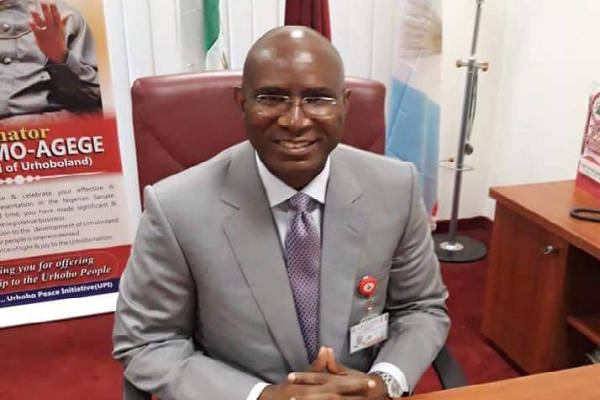
The Deputy President of the Senate, Ovie Omo-Agege says the National Assembly will give legal backing to the card readers in the new Electoral Act, to further enhance the integrity of the electoral process in Nigeria.

He gave the assurance when he received the Nigerian Representatives of the African Union Economic, Social and Cultural Council, (AU-ECOSOCC), led by Dr. Tunji Ashaolu in Abuja on Thursday.

A statement by his spokesperson, Yomi Odunga in Abuja, quoted Omo-Agege as saying that it was important the card reader be made part of the legal regime for elections. He said the senate maintained that card reader would ensure credible polls.

According to him, the mistake of the Eighth National Assembly is that the amendment of the Electoral Act breached ECOWAS Protocol, which will not be repeated.

“I am sure any minute from now, we are going to be coming up with a revised Electoral Reform Amendment Bill that will address issues that are very dear to us and issues that came to the fore in the 2019 elections, most especially revolving around the legality of the card reader.

“We know that there is no way you can have genuine, credible, free and fair elections in this country without addressing the issue of the card reader.

“Most of the litigations that arise from the 2015 and 2019 elections have always centered around the legality or otherwise of the card reader.

“The courts have made it very clear that as far as they are concerned, Section 49 of the Electoral Act is very clear that the only document recognized by law for purpose of accreditation is the voters’ register.

“To the extent that we believe that we want to introduce any innovation including but not limited to the card reader. “We have to do the right thing, the right thing as far as we are concerned is for us to pass the law to make the card reader.

“We are hellbent on doing that, and we actually tried in the committee that I served on in the eighth senate but the leadership of the eighth senate delayed it and by the time it passed, it had run into challenges with the ECOWAS Protocol,” he said. He, however, explained that contentious areas in the amendments made by the eighth National Assembly would be removed before the bill will be passed and sent to the President for assent. Omo-Agege, who represents Delta Central Senatorial District, also expressed the desire of the ninth senate to ensure that the Petroleum Industry Governance Bill (PIGB) was given accelerated approval.

He assured that the bill would have the buy-in of the executive arm of government to avoid the mistakes of the past. He said: “This time around, it is the determination of the ninth senate that we are going to have this (PIGB) passed.

Earlier, the leader of the delegation, Dr. Tunji John Ashaolu, emphasized the need for Nigeria to take its rightful place in the African Union (AU).

He also called on the National Assembly to immediately revisit the Electoral Act Amendment Bill, as well as the Petroleum Industry Governance Bill.

Source: NAN

90% of cars in Nigeria are smuggled, Customs boss, Hameed Ali, says

0

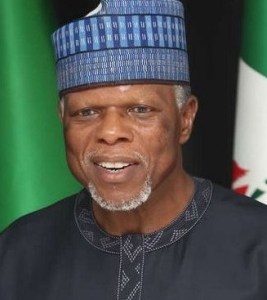
The Comptroller-General of the Nigeria Customs Service (NCS), Col. Hameed Ali (retd), on Thursday, said 90 per cent of cars in the country were smuggled into the country by unscrupulous elements.

Ali, who said this while addressing newsmen in Abuja, alleged that many vehicles on display for sale in auto shops across the country were also smuggled.

He explained that the recent raids of the various car dealers’ spots in some parts of the country were to ascertain whether the vehicles were brought in genuinely or not.

According to him, the country needs revenue for development, hence, it became necessary to collect duties on those smuggled vehicles.

“We want to use this opportunity to ensure that cars within our borders are fully customised, which means duties are paid on them.

”We are looking for revenue from everywhere and we have these people who brought in vehicles and failed to pay duties.

“What we are doing now, we are just enforcing the law, which allows us to collect revenue on behalf of Nigeria and also ensure those vehicles you and I will go and buy have genuine papers that are roadworthy.

“If you meet our officers on the road and they ask for the papers, if they discover you have not paid your duties, they will seize the vehicles.

“We are doing all these to save car buyers from running into trouble,” he explained. The customs boss said the organisation would continue to mount roadblock from time to time to stop vehicles to ensure duties were paid on cars.

“The law allows us to stop you and ask for the car papers, if your papers are intact, we thank you and bless you, if it is otherwise, we will ask you to pay the duties

“If we find out you are not a smuggler, you are just an innocent buyer, we will value the car and ask you to pay the required duties on the car and you will be freed,” he said.

Legal and institutional restructuring for the next Nigeria

0

Introduction: President Mohammadu Buhari’s 2019 Independence Day address to the nation may have created an enabling platform to encourage new discussions on how to transform Nigeria’s economy. The President’ssetting up of an Economic Advisory Council, EAC, is an important tool in this regard.  At the Platform, a biannual televised conference organized by Covenant Christian Centre in Lagos, Prof Chukwuma Soludo and Bismarck Rewane laid out a strategy upon which economic transformation can work.  Prof. Soludo aptly likened Nigeria’s current reality to building a 100-storey building upon the foundation of an old bungalow. I agree entirely with Prof. Soludo that it is not feasible to build a 100-storey building on the foundation of an old bungalow.  Likewise, economic transformation can’t be built on Nigeria’s outmoded economic development model. It is crucial to design a comprehensive institutional development design, which is like an architectural plan to transform Nigeria. It is important that the design take into account development law as it is a vital element of any successful model. Some thoughts.

Development Law as part of economic reforms

Development law is a public policy tool that intersects law and economic development.   Development law scholars agree that there is a strong link between law, regulatory institutions, governance, economic development and national welfare. It is argued that the Nigerian legal and judicial framework is hopelessly outdated and needs an urgent review to meet current challenges. Yet governments generally fail to link legal policy, economic development and governance. The late Prof. Mansur was the leading scholar on this linkage. Economic transformation depends on vital legal institutional, regulatory and governance frameworks. The links unfortunately between legal institutions, political economy and development have often, and in our case, been completely overlooked or missed, hence under-development. HernadoDe Soto in his unique book “The Mystery of Capital”  gives a striking example of law as a key primer of development using just one index; property law. Property consists of two values, physical and conceptual. The physical value may be fixed in say, a house. The abstract or conceptual value is fixed in property law systems. In developed nations, property law allows owners of housing, to represent their value in the conceptual realm. This possibility allows easy access to credit that in turn generates capital for development. In Nigeria with a very weak legal regime, conceptual representation of property to create value is absent. Yet the assets inventory of Nigerian housing exceeds six trillion dollars. But this is dead capital. If the housing value is indexed to the banking system by massive legal reform of the property law system, we can create an instant credit market with major impact on development. In this way, we wake up dead capital for development.It is important therefore that policymakers must, consider that although macro policies are unquestionably important, there is a growing consensus that the quality of business regulations and the legal institutions that enforce it are a major determinant of development. If development law is applied as a public policy tool in the following areas, for example, Financial Services Sector, National Trade Policy, Maritime, Aviation and Space, Legal and Justice Sector, Land Administration, Corruption, Social Security Administration etc. It will transform the economy, create millions of jobs and pull 200 million Nigerians out of poverty.

Financial services sector

The Financial Services Sector, FSS, is the oxygen and lifeblood of a strong economy. The FSS ought to consist of the following key institutions, the Banks, the National Credit Guarantee Agency, a Development Bank and the CBN.  The banks lend to the real sector of the economy and consumers and ensure the economy is stimulated. In Nigeria, it is doubtful if the banks have performed optimally, delivering on cash to the real sector and consumers. They seem to be engaged in short term lending including treasury bills. The result is that the economy is anaemic.  A banking policy that delivers resources to the economy is needed.  In the US, the Glass – Steagall Act and Frank-Dodd Act focused banks on the proper role to lend to consumers at low-interest rates. The second key of FSS institution is the National Credit Guarantee Agency. This is absent in Nigeria. The National Credit Guarantee Agency supports viable business proposals. When viable business proposals are guaranteed, the economy gets stimulated and expanded and that gets converted to goods and services that are sold on to consumers. The economy will benefit from the establishment of the National Credit Guarantee Agency. The third FSS institution is a Development Bank to lend to the vital sectors of the economy. The Development Bank of Nigeria is undercapitalized and so the CBN plays a distorted role. The Development Bank of Nigeria needs to be properly capitalized so it can support the economy.  The CBN is the fourth FSS institution. The CBN as presently constituted is overburdened with far too many things – monetary policy, banking supervision and banking. The major role of the CBN is monetary policy stability and so the CBN may benefit from streamlining and strengthening its legal framework. A new policy and legislation can unbundle the CBN and create a new agency to regulate banks by ensuring they deliver on core mandate. In England, they have the Prudential Regulatory Authority.

National trade policy

Tied to the FSS is the need for a National Trade Policy to stimulate local industry, grow export and reduce dumping of foreign goods. The Central Bank of Nigeria recently stated at the launch of its vision and policy thrust for the next 5 years, that it will target unscrupulous individuals and businesses that embark on massive smuggling and dumping of goods that can be produced in the country thus leading to the demise of our agriculture and manufacturing sectors. This needs to be supported. There is a need to strengthen the National Office of Trade Policy. This Office has to be ministerial level. Trade laws have import substitution as their main goal. This means to reduce imports and create local industries. The National Assembly can pass legislation to establish the Trade Remedies Agency, devoted fully to fair trade issues. This will support our local industries around Rice, maize, cassava, cotton, cocoa, tomato, oil palm, poultry, fish, etc. Trade policy on Fly Nigeria will grow Nigeria Airlines, a strong Cabotage Act will grow shipping lines, oil and gas, legal, banking, insurance, shipping etc. If trade legislation is favourable, trillions of Naira will flow with job creation in the millions.

Review of Nigeria’s bilateral investment treaties

Flowing from the discussion on trade policy; there is a need to review Nigeria’s Bilateral Investment Treaties, BITs. BITs are part of a countries trade policy. Nigeria is a signatory to over 30 bilateral investment treaties. The recent arbitration award secured by a company, Process and Industrial Developments Limited, P&IDL, has raised the question of how fair it is for Nigeria to have arbitration clause with a foreign seat. We understand that an Executive Order is currently under contemplation to make Nigeria the seat of arbitration and require parties to choose an arbitration institution in Nigeria. While the proposed Executive Order is laudable, it is our opinion that the Order might be confronted by challenges that might defeat the essence of enacting it. It will be recalled that Arbitration Agreements are embedded in Bilateral Investment Treaties, BITs, that Nigeria has signed and ratified with many countries. An Executive Order may conflict with the BITs. This is so because BIT’s provide that disputes arising between Nigeria and foreign investors will be determined in foreign institutions of arbitration and seeking to alter this position simply by an Executive Order might generate significant opposition by concerned interests. Furthermore, the Executive Order might conflict with the underpinning principles of arbitration that are premised on the notion that parties to an arbitration have a right to determine the arbitration institution and arbitrators that will undertake the arbitration proceedings. Given the above, we would rather suggest that an Executive Order should create a National Work Group that will be authorized to review the scheme of the arbitration provisions currently incorporated in the BITs, and the task of proposing how Arbitration connected to Nigeria will have Nigeria as seat of Arbitration.

Maritime matters

This is potentially the largest economic sector outside of hydrocarbons. Nigeria’s maritime sector is estimated to be capable of GENERATING 7 TRILLION NAIRA ANNUALLY AND 4 MILLION JOBS OVER 5 YEARS.  However, to tap revenue from this sector there needs to be an overhaul of policy, institutional, regulatory and legal framework. For instance, the Government needs to immediately implement the policy for Inland Container Depots, ICDS. We have 6 (Six) ICDS spread across the geopolitical zones that can generate at least 15,000 jobs for different levels of manpower. Due to the lack of infrastructure to support business and operations by concessionaires, these depots have not been optimally utilized. 80 per cent of Nigerian trade is diverted to ports in Cotonou and other West African ports. Further to this is the need to review our cabotage regime to stem capital flight and boost capacity for Nigeria’s Shipowners. Despite the enactment of the Coastal and Inland Shipping Act 2003 Nigeria loses an estimated 7 Trillion Naira in the shipping sector. Foreign vessels trade in violation of the Cabotage regime. This is responsible for capital flight. There is a need for immediate enactment of several critical bills pending before the National Assembly. This would facilitate the legal framework to move the maritime sector to the next level. Such bills as the Petroleum Industry Bill, PIB, the Ports and Harbour Bill, Maritime Zones Bill, Ocean Bill etc. are yet to be passed into law. There is also an urgent need to review the Nigerian Shipping Policy of 1987.

Aviation/Space

The Aviation Sector requires major reform. Nigeria has no presence in the Aviation business. Nigeria Airways has been long comatose. Foreign aircraft dominate the Nigerian airspace and earn well over a trillion Naira to our exclusion. A trillion Naira is about a quarter of our entire national budget. A Fly Nigeria Bill will ensure that every government Naira used to purchase a ticket must originate and terminate on a Nigerian carrier. This Fly Nigeria Bill will create an instant market for our national carrier. On Space, it has been said that that the future of mankind is in Space. Space has many major applications for developing our economy. We will mention at least three examples. First, space can be applied to the energy sector as remote sensing can tell us the quantum of our hydrocarbons. Second, it is the value of space applications to the Maritime sector. Third, it is the link between space and national security. Satellite technology intelligence gives us vital footprints in the national security infrastructure. The growing threat of terrorism and the adverse impact on economic stability can only be checked by intelligence provided by space satellites. We must upgrade our space legislation.

Legal/Justice sector issues

The legal and judicial system has experienced legal failure.  The judicial system has never really been reformed. The Nigerian judicature is based on the 1875 Judicature Act. The consequence is that cases take too long to resolve. It takes between 5 to 20 years to resolve simple contractual disputes. Investors, whether local and international will not invest in a country where there is no sanctity of contract and simple contractual disputes take between 5 to 20 years to resolve. We must give urgency to this sector and reverse legal failure. A speed of justice policy will reduce delays. In this regard, the National Assembly can consider introducing the Administration of Civil Justice Bill to ensure efficient administration of civil disputes. Also, new methods of dispute resolution should be considered such as Alternative Dispute Resolutions, small claims courts, traditional and customary arbitration. Finally, quasi-judicial administrative tribunals can be established by sector, following the UK example. In England there exist many administrative courts to cover telecommunications, taxation, transportation, insurance, education, financial services, trade, investments, etc.

Land administration

The Land Use Act created a framework for ascertaining title and therefore it became easy to determine title. It also meant that landholding was major collateral for investment and financing. In doing this the state governors play an administrative role, issuing consents, licenses, permits etc. which has become overwhelming. The process has become clogged and as a result of this clog, the impact of land collateralization on lending and borrowing is affected. A recent study shows that the housing asset inventory of Nigerian property exceeds six trillion dollars. Most of this is dead capital. There is a need to wake up this six trillion dollars’ worth of dead capital. A Land Use Administration Commission Bill will make the Land Use Act and consent rules more efficient and instil confidence in financial institutions. This will impact positively, collateralization, lending and borrowing within the financial system.

Anti-Corruption The war against corruption requires an effective strategy. In addition to the strategy of prosecution, it is suggested to consider a 2-year moratorium from criminal prosecution. So legislation may be considered on immunity from criminal prosecution (Moratorium) Act. The Abacha case is now going 20 years with little result. This may be controversial but it is worth considering.

Social security administration

The Federal Government has committed trillions of naira to administer social security to the elderly and vulnerable like the school feeding programme and Trader Moni but there is no legal framework. The standard operating model around the world is the creation of a benefits agency as it is called in England, and a social security agency as it is known in the US, to cater for those who are unable to look after themselves. The government will gain more by giving a legal framework for these benefits. Enacting a Social Security Administration Bill pursuant to Chapter 2 of the Constitution will see to the progressive realization of rights contained in Chapter 2 of the Constitution.

4th Branch of government

This was developed by FDR in the 1930s and is why the US came out of the recession rapidly. The 4th branches are regulators who implement decisions of the Executive branch, which is the first branch. They are called the 4th branch because they exercise executive, legislative and quasi-judicial powers. In Nigeria, regulators like NAFDAC, SON, NERC etc. are part of the 4th Branch of government. They can make regulations, enforce them and impose penalties. Unfortunately, there is no standard operating model for these regulators. Most of them lack a basic understanding of their role as the 4th branch of government. It may be worth doing a high-level training workshop on the role of the 4th branch of government.  A strong 4th branch of government will improve the efficiency of government.

Conclusion

Development law policy has succeeded wherever it has been applied. It has not been applied in Nigeria. If applied it will result in double-digit growth, more revenue and will pull millions of Nigerians out of poverty. It is strongly recommended that the government should adopt a development law policy as one of its economic policy tools.

 

Flood destroys 3,000 farmlands in Jigawa —AFAN

0

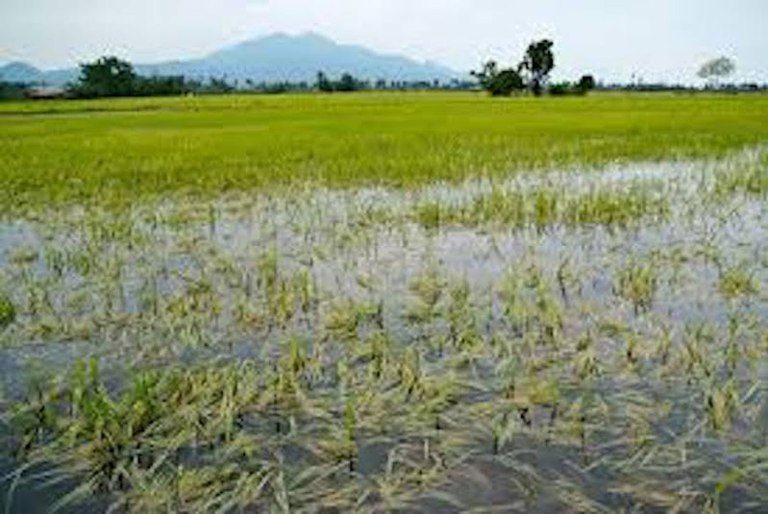
The All Farmers Association of Nigeria (AFAN) in Jigawa on Friday says reoccurring flood has destroyed over 3,000 farmlands in Guri Local Government Area of the state.

Alhaji Yakubu Dolon-Zugo,AFAN Chairman in the area, told News Agency of Nigeria (NAN) in Guri, that farm produce destroyed by the flood included rice, cotton, sesame, maize, and guinea corn.

He listed areas affected by the flood, which was triggered by incessant rain, to include Guri, Wareri, Adyani, Margadu, Zoriyo, Lafiya, Arin, Dagana, Zugo, Kazaga, and Garmaguwa.

Dolon-Zugo, therefore, appealed to the government at all levels to assist the farmers with farm inputs to cushion the effect of their losses.

“We are appealing to the state and Federal Government to assist our members with seeds, fertilizer, herbicides, and pesticides to commence preparation for dry season farming.

“70 to 80 percent of our farm produce was destroyed by the reoccurring flood over two months ago“

We are desperately in need of this support because the losses we recorded will have an adverse effect on our income levels,” the chairman said.

MTN Foundation Awards Scholarship To 6,000 Students

0

The MTN Foundation has awarded scholarship worth N200,000 per session to 6,000 students of science and technology in some secondary schools across the country. The Director of MTN Foundation, Mr Denis Okoro, disclosed this at the Regional Nominators’ Appreciation Dinner, tagged: “What Can We Do Together (WCWDT) Initiative Phase 3” held on Thursday night in Abuja.

He explained that since inception to date, 510 Communities across 454 Local Government Areas (LGAs) in the country have been impacted by the foundation in different social development interventions nationwide. He disclosed that it was a ‘community give-back initiative’ designed to get Nigerians to nominate selected projects in particular communities to be executed by the MTN Foundation.

Okoro said that the projects implemented under this phase included giving out of school learning materials like school bags, exercise books, raincoats, and pencil cases to over 15,000 pupils in 60 Public Primary Schools. He also added that medical equipment and facilities were donated to 40 Primary Healthcare Centres and solar-powered boreholes to 10 communities had been provided.

“Through this the students have formed MTN scholars association and they are proud of it. “We are interested in women and children issues; we have renovated 24 maternity wards of some the communities; by bringing water closer to them, you have denied them that opportunity to visit the river at all times. “For once, let us relate to each community and ask them what they need so that their needs will be satisfied. “When you meet someone at the point of his need, he is a happy person so as long as the project continues, we will continue to do more,” he said.

Mr Musa Ahmed, a beneficiary, said he earned his nomination by introducing the MTN Foundation to a primary school, which benefitted from all the materials given to the less privileged pupils. Ahmed said that the community was fully aware of the donations by MTN and expressed delight, adding that it had gone a long way in aiding the children with their school work. He noted that before the foundation came to their aid, most parents could not afford these materials that their wards needed in school to learn. “The community appreciates what MTN have done in their schools,” he said.

Mrs Blessing Adam, another beneficiary, also expressed joy and thanked MTN for giving her the privilege to be a partaker of this great project. The News Agency of Nigeria (NAN) reports that ‘What Can We Do Together (WCWDT) Initiative’ was launched in September 2015 and was successfully implemented in 400 communities across 347 Local Government Areas (LGAs) under its first and second phases.(NAN)

Industrial Court Declares Dismissal Wrongful, orders Microfinance Bank to pay 3-month salary in lieu within 30 days

0

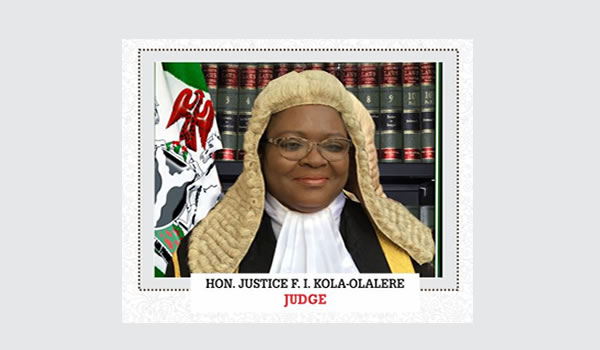
Ibadan—His Lordship, Hon. Justice F. I. Kola-Olalere of the National Industrial Court of Nigeria, sitting in Ibadan has declared the dismissal of Mr. Ganiyu Salami employment by Aiyepe Microfinance Bank Ltd. as wrongful, ordered defendant to pay 3 months’ salary in lieu within 30 days and dismissed other claims for lacking merit.


The court held that Aiyepe Terms and Conditions of Service tendered by the Mr. Ganiyu has no citation, unsigned and undated that has no evidential value in law.


From facts, the Claimant – Mr. Ganiyu instituted the action against defendant – Aiyepe Microfinance Bank, prayed for a declaration that the suspension and summary dismissal of the claimant from the employment of the defendant is unfair, unlawful and illegal.

Likewise, An order directing the defendant to reinstate the claimant into the employment of the defendant and place him on the level which he would have been, had the defendant not unlawfully and unjustly summarily dismissed him, and the sum of Ten Million Naira being compensation/damages for the unlawful and unjust summary dismissal among others.

The case of the claimant is that he was a former employee of the defendant for over 20 years before his alleged unlawful summary dismissal. He pleaded further that the defendant unlawfully and wrongfully terminated his employment by a letter on January 27, 2016 and was not given any query or asked to appear before any disciplinary committee, neither was he given a warning or suspension by the defendant prior to his dismissal as required by the terms and conditions of his contract.

The Defendant pleaded that, the Claimant was not too truthful that there was an avenue open to the Claimant but he failed to take the opportunity by giving satisfactory explanation; however, he could not give any convincing explanation. And so, the claimant was suspended upon the allegations against him and that it was his suspension that led to his termination.

In his final written address, Defendant’s counsel contended that the alleged terms and conditions of service that the claimant front-loaded was yet to be in force, has no citation, no commencement date, no formal copy and was only presented in draft form urged the Court to hold that the suit has no cause of action, lacking in merit and competence.

Counsel concluded that, facts admitted need no further proof and urged the court to dismiss the claim of the claimant for lacking in merit, being frivolous and gold digging.

Delivering the Judgment, the presiding Judge, Hon. Justice Kola-Olalere expressed thus “It is trite that an unsigned and undated document is a worthless piece of paper that has no evidential value in law.

“With all my findings on Document C.3, which the claimant presented to this Court as the terms and conditions of his employment with the defendant; I hold that Document C.3 is a worthless piece of paper, without any legal value and that this Court cannot ascribe any weight to it at all. Therefore, this Court cannot rely on it in determining the merit of this case; and so, Document C.3 is accordingly discountenanced in this judgment.

“By paragraph 4 of Document C4, the letter of termination of the claimant’s employment at page 16 of the record, the termination of the claimant’s employment was with immediate effect. In the circumstance, the defendant has not complied with the term of the contract stated in paragraph 6 of the Letter of Appointment since the Bank did not give the claimant three months’ notice neither did it pay him three months’ salary in lieu of the notice prior to the said termination. On this score, I find and hold that the termination of claimant’s employment is wrongful.”

On the whole, the court ordered defendant to pay the claimant three months’ salary in lieu of notice for the termination of his employment with immediate effect within 30 days and dismissed other claims.

Davido, Kiddominant collaborate with Chris Brown on new album

0

Nigerian music heavyweights David ‘Davido’ Adeleke and Ayoola Agboola aka Kiddominant have been featured on American artist, Chris Brown’s new album.

News Agency of Nigeria reports that the solid 32-song album, titled ‘Indigo Extended’, was released midnight on Friday as a follow up to the original ‘Indigo’ album.

Brown is an award-winning singer and actor who has sold more than 100 million records worldwide, making him one of the world’s best-selling music artists.

Throughout his career, Brown has won several awards, including a Grammy Award, 15 BET Awards, four Billboard Music Awards, and six Soul Train Music Awards.

The latest collaboration with Davido titled ‘Lower Body’ comes a few months after their first collaboration. In July, the music duo released ‘Blow My Mind’ which has garnered over 13 million streams on Spotify.

NAN reports that producer and writer, Kiddominant wrote ‘Under the Influence’, a song on the album. The excited maestro took to Instagram to share the news via his page @kiddominant.

He wrote, “Track 3 written and produced by me. Track 1 produced by me. Thank you, Chris Brown, for trusting me with the sauce. Thank you Davido for gingering all.”

Kiddominant is best known for producing Orezi’s hit single ‘Rihanna’ in 2013.

He also produced Davido’s international hit single ‘Fall’ which peaked on USR&B/Hip-Hop Airplay chart at number 13 and US Hot R&B Songs chart at number 25 on Billboard.

NAN also reports that other artists featured on the album include Tory Lanez, Rich the Kid, Sage the Gemini and Dani Leigh.