Tuesday, April 21, 2026
Home Blog Page 949

Bandits release day-old baby, 14 women in Katsina

0

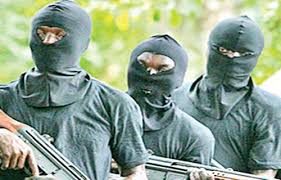
A day old baby girl, 14 other women were reportedly released by armed bandits operating in Jibia Local Government Area of Katsina State.

The victims were said to have been abducted from Mallamawa village in Jibia area of the state.

Speaking while receiving the victims, Governor Aminu Bello Masari said the victims were the last batch of the victims kidnapped and expected from the bandits following the peace dialogue initiative.

This was as he said that the next phase of the initiative would be disarmament of the repentant bandits which he and Governors of Zamfara and Maradi in Niger were working to actualise.

With the release of the women, a number of kidnap victims who were freed under the agreement reached in the initiative is put at over 70.

Murjanatu Isa is one of the 14 victims freed. She gave birth to the day old baby girl delivered in the forest a few hours before their release.

Isa said they were in the kidnappers’ captivity for 45 days and went through a miserable life. Earlier, Chairman, Jibia LGA, Haruna Musa said that with 14 women released put the number of kidnapped victims released in the area, Shinfida area at 29.

Musa lauded the peace dialogue initiative which he said has brought about relative peace in the area and state at large.

Excellence! The Profile of an Erudite Jurist, Justice Nweneka’s—| NICN

0

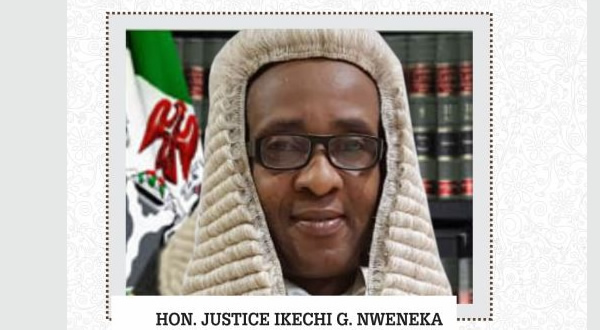
His Lordship, Hon. Justice Ikechi Gerald Nweneka attended State School 1, Elele Town, Rivers State for the First School Leaving Certificate and Akpor Grammar School, Ozuoba for WASC. 

Thereafter, Justice Nweneka proceeded to Federal Government College, Port Harcourt for Advance Level Certificate; University of Lagos, Akoka for LL.B. and and attended the Nigerian Law School, Lagos and was called to the Bar in 1989 as a solicitor of the Supreme Court of Nigeria.


Propelled by an undying thirst to be fully acquainted with Law, Justice Nweneka obtained Masters in Law -LL.M from the prestigious University of Lagos, and also Certificate in Entrepreneurial Management from Enterprise Development Centre, Pan Atlantic University, Lagos; Certificate in Leadership from the Leadership Institute, Virginia, USA to name few.


Justice Nweneka started his legal career with the Lagos State Development and Property Corporation as a Legal Officer [NYSC] service year. At the end of the mandatory 12 months national youth service, My Lord moved to the Law Office of Mike Igbokwe, SAN & Co. [Legal Practitioners] and later to Adedoyin Adedeji & Co. [Legal Practitioners] where he cut his teeth in the legal profession.


At a time when his contemporaries were nursing fear of standing alone, Justice Nweneka set up Ikechi G. Nweneka & Co. [Legal Practitioners] and thereafter joined Excellence Solicitors, a firm of Attorneys, Advisors and Secretaries as the Principal Consultant. 


His Lordship also served as Company Secretary to Unity Registrars Limited, a subsidiary of Unity Bank Plc, and also as Legal Adviser to some other companies until his judicial appointment to the bench as a Judge of the National Industrial Court of Nigeria in 2017 and was sworn-in by the then Chief Justice of Nigeria, Hon. Justice Walter Samuel Onnoghen.


Read Some Judgments/Rulings Delivered

Nigerians react as BBNaija season four ends

0

Nigerians continue to share their thoughts as the light of the fourth season of the Big Brother Naija went off on Sunday.

News Agency of Nigeria (NAN) reports that Mercy Eke emerged winner of the season as the show came to an end on its 99th day.

Mike Edwards come close at second position out of the 26 housemates that went into the house this season.

Still in top five were Chemeke Okoye aka Frodd, Seyi Awolowo and Omashola Oburoh.

Seyi won the ONE health task and Mike walked away with N2 million for the arena games.

Fans shares their thoughts on the choice of the winner, morality of the show as well as the next television content for young people.

Ikechukwu Christopher, a business man and ardent viewer of BB, said: ”The worst of the five finalists won and that is sad.

“We are celebrating mediocrity, we actually stayed glued to our TVs just for the worst of them to win.

“We had Seyi about the most intelligent of the five, Mike a celebrated Olympian and Frodd an intelligent young man, just to see Mercy win.

“This speaks volumes about this country. It is sad indeed,” Christopher said.

A young lady, who calls herself King Towmeey, said Mercy’s victory is a victory for young aspiring women, “a victory for being focused and knowing what you want in spite of your age or gender.

“Young women will be influenced by this victory, knowing that one can move from grass to grace,” she said.

@Dsimodun said, “Make first class at a university, no recognition. Have sex on national TV (BBNaija), win N60 million. What a debased society.”

@TomisinAgboyin tweeted, “#Mercy congratulations mercy, u deserved to win, as for Mike the sky is ur starting point. Always believe in yourself.”

@Hamza said, “Mike and Seyi will make more money than everyone else in that house. Mike and seyi’s story will be similar to that of Tobi and Bisola’s story.

“Congratulations @aireyys and my friend @seyiawolowo. I love you guys.”

@Bello tweeted, “7billion in Naira from votes!! Wow. Wow. Wow. the energy was mad. What else are we putting this energy! Don’t tell me it’s until the next BBN.

“Let’s do something to Nation building, community development and service no matter how little. #BBNaijaFinale.” (NAN)


2020 budget: FEC extraordinary meeting holds today

0

The extraordinary meeting of the Federal Executive Council earlier scheduled for Saturday would take place today Monday, October 7, 2019, by 12 noon.

The Special Adviser to the President (Media and Publicity), Femi Adesina, had said the FEC meeting “is to put finishing touches to the year 2020 budget, which would still be presented to the National Assembly by 2pm on Tuesday.”

It was reported that the Senate had received an official communication from President Muhammadu Buhari to present the 2020 Appropriation bill before a joint session of the National Assembly on Tuesday.

The request, which was dated October 2, 2019 and addressed to the President of the Senate, Ahmad Lawan, was read at plenary on Thursday.

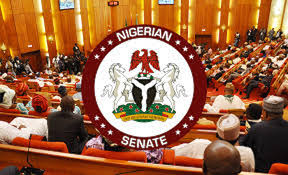
Also, the Senate, after a long debate on Thursday, approved all the 16 recommendations contained in the report of the National Assembly joint Committee on Finance and National Planning, on the 2020-2022 Medium Term Expenditure Framework and Fiscal Strategy Paper.

The red chamber, among others, also increased the proposed nation’s budget for 2020 from N10.002trn to N10.729.4trn.

The Senate President, Ahmad Lawan, said the development had paved the way for President Muhammadu Buhari to submit the 2020 budget.


Presidency: Rep seeks ban of septuagenarians

0

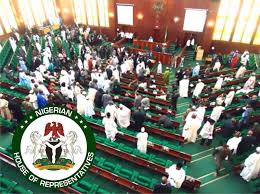
A member of the House of Representatives, Bede Eke, has proposed creation of a law that disqualifies Nigerians older than 70 from contesting in presidential election.

According to Eke, who is representing Aboh Mbaise/Ngor Okpala Federal Constituency of Imo State, with the passage of the ‘Not Too Young To

Run’ bill by the National Assembly, and the assent into law by President Muhammadu Buhari, there is the need to also have a maximum age of qualification.

The #NotTooYoungToRun campaign, which started on the Internet and social media, had led to the reduction of minimum age to contest elections into elective public offices, including the state House of Assembly, governorship, House of Representatives and the Senate.

Eke said he planned to sponsor a bill to put a ceiling on the qualifying age to run for president, when the National Assembly begins another review of the constitution.

The lawmaker, who assured Nigerians that he would lead the debate for ‘Too Old to Run,’ stated that the legislation would be an advancement of the ‘Not Too Young to Run’ and help to inject new blood into the country’s leadership.

The Peoples Democratic Party member said he would first move the motion for the amendment.

He said, “When you look at events now; look at other countries; when you look at France, let us see if we can get a young vibrant man to lead this country. It is a personal decision and that is my opinion; get a man so advanced. You cannot tell me that what somebody in his 50s – whether early 50s or late 50s – can do, a man in his 80s can do the same thing. It is not possible! This is nature.

“That is an area I should be looking at. If you get to an age, you should not be bothering to rule. If it (proposal) sails through, that is it! You should not run for president when you are 70 or 80. It is not targeted at anybody, but we want fresh blood; we want to inject fresh blood.”

Eke, while also advocating for more devolution of powers from the Federal Government to the states, said, “Maybe that will help us succeed, in making sure that we reduce the power at the centre.”

Eke also re-echoed the clamour for the presidency by the Igbo in the South-East geopolitical zone in 2023.


FG warns travellers against Bobrisky

0

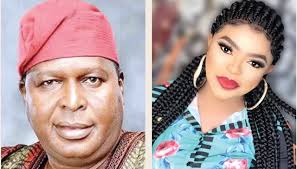
The Federal Government has asked travellers and tourists to be careful wherever they notice the presence of Bobrisky, mostly as it affects sharing of public facilities, including toilets.

The report followed a report received by the Federal Government on how Idris Okuneye, popularly known as Bobrisky, caused a stir at the Nnamdi Azikiwe International Airport in Abuja when he used a female toilet.

While appealing to the leadership of Nigeria Medical Association to enlighten people on the dangers of women sharing public toilet with Bobrisky, the government said that by using public female toilet, Bobrisky had constituted a serious threat to women.

Otunba Segun Runsewe, Director-General of National Centre for Arts and Culture, a parastatal of the Federal Ministry of Information and Culture, raised the alarm in an interview with The PUNCH in Abuja.

He said, “Bobrisky is a serious health hazard for Nigeria and Nigerians. The health hazard Bobrisky has is worse than Ebola Virus Disease; travellers and tourists should be careful wherever they notice the presence of Bobrisky, mostly as it affects sharing of public facilities.

“Women are prone to get various types of disease from the toilet than sexual intercourse. Now, Bobrisky will enter the same toilet with a woman and at the end the woman will contract some kind of diseases.

“When she gets home and sleeps with her husband and the husband discovers he has been infected, the next thing is to seek for divorce without knowing the actual cause of how the wife was infected.”

He added, “In the first place, Bobrisky’s passport shows that he is a man. Why should he turn himself to a woman and use women’s toilets? At the end of the day, innocent Nigerian women who go to same toilet will now be infected with what they did not bargain for.

“If Bobrisky is even using men’s toilet, we can understand.  As I speak, we got a report of how a woman was very upset with the Federal Airports Authority of Nigeria because on this day she saw Bobrisky using female toilet in Abuja Airport.

“Well, for me, we have done our little bit; we have left everything for the medical practitioners.”


200,000 UTME candidates admitted as December deadline nears

0

About 200,000 out of the 1.8 million 2019 Unified Tertiary Matriculation Examination candidates have been admitted so far into universities, according to the Joint Admissions and Matriculation Board on Friday.

The board, in an exclusive mail to our correspondent said the tertiary institutions and other stakeholders were still “working round the clock” and would comply with the deadline agreed at the 2019 policy meeting.

The JAMB at a 2019 policy meeting in Gbongan, Osun State, in June, had agreed with the stakeholders that the admission processes into public tertiary institutions should be concluded by December 19, 2019, while private institutions, should end by February 15, 2020.

The board had noted that the deadlines for admission were not its decisions but by consensus of stakeholders, including the representatives of all the tertiary institutions.

No fewer than 1.8 million candidates took the 2019 UTME which held between April 11 and 17 across 698 Computer-Based Test Centres in the 36 states and the Federal Capital Territory, Abuja.

The JAMB Head of Media, Dr Fabian Benjamin, in an electronic mail to our correspondent on Friday, confirmed that 200,000 candidates had been offered admissions for the 2019/2020 academic session.

He said, “About 200,000 candidates have been offered admissions to tertiary institutions. The speed at which institutions are working and candidates’ compliance shows that all stakeholders are working round the clock to actualise the dateline.

“We remain determined to ensure full compliance to the agreed dateline at the policy meeting. We want to use this opportunity to urge prospective candidates to begin the National Identity Number registration. We also advise the public to report anybody parading questions alleged to be for 2020 UTME to the nearest police station or the board’s office.”

Meanwhile the Imo State University, Owerri, has written to JAMB, asking the board to disregard “illegal and fraudulent satellite campuses” said to be affiliated to the university.

The acting Registrar of the university, Mrs Rose-Kate Ogbu, in the letter, which was published in the JAMB weekly bulletin on Sunday, said the university already shut down all its satellite campuses in accordance with the directive of the National Universities Commission since 2004.


Oil prices dip as gloom gathers over global economy

0

Oil prices fell on Monday, extending last week’s heavy losses, with traders fearing the global economic slowdown will weigh on future oil demand growth while pegging hopes for a rebound on progress in talks this week on ending the US-China trade war.

Brent crude futures LCOc1 edged down 28 cents to 58.09 dollars a barrel by 0300 GMT, while U.S. West Texas Intermediate crude CLc1 was at 52.64 dollars, down 17 cents.

Both contracts ended last week with a more-than-5 per cent decline after dismal manufacturing data from the United States and China, as the lingering row between the world’s top economies hurts global growth and raises the risk of recession.

US and Chinese officials will meet in Washington on October 10-11 in the next, much-anticipated fresh effort to work out a deal.

On the supply side, a faster-than-expected resumption in Saudi Arabia’s production after a September 14 attack on key production facilities also exerted downward pressure on oil prices, although the Middle East remained tense.

“The macro headwinds outweigh supply concerns for oil now, despite tensions in the Middle East and a reduced spare capacity pillow,” said Stephen Innes, Asia Pacific market strategist at AxiCorp.

In Iraq, the second-largest producer among the Organization of the Petroleum Exporting Countries, deadly anti-government unrest is posing the biggest security and political challenge so far to Prime Minister Adel Abdul Mahdi’s year-old government.

Iraq’s oil exports of 3.43 million barrels per day (bpd) from Basra terminals could be disrupted if instability lasts for weeks, Ayham Kamel, Eurasia Group’s practice head for Middle East and North Africa, said in a note.

“Any oil production disruption would occur at a time when Saudi Arabia has lost a significant part of its energy system redundancies (spare capacity),” he said.

“While Saudi oil production is now close to 9.9 million bpd, it is not clear that the capacity is fully operational at 11.3 million bpd and the (attacked) Abqaiq facility has lost a significant part of its redundancy.”

Global supply also faces facility repair and maintenance pressures.

The Buzzard oil field in the British North Sea has been shut for pipe repair work, a spokesman from China’s CNOOC said on Friday.

Buzzard is the main contributor to the Forties crude stream, the largest of the five North Sea oil grades that underpin Brent crude futures.

Meanwhile Libya’s National Oil Corporation (NOC) said on Sunday it will close the Faregh oil field at Zueitina port for scheduled maintenance from Monday until October 14.

(Reuters/NAN)


Xenophobia: Time for Nigeria and SA to calm down

0

The latest xenophobic attacks in South Africa have ignited the long-standing tensions between the country and Nigeria. These are captured in the retaliatory attacks on South African businesses in Nigeria and the diplomatic outrage by the Nigerian authorities.

Nigeria also boycotted the recent World Economic Forum meeting in Cape Town. More critical was the temporary closure of South African missions in Abuja and Lagos and Nigeria’s decision to recall its high commission.

But in the larger scheme of things, xenophobia is a distraction from the leadership role that Nigeria and South Africa should play on the continent on fundamental issues of immigration and economic integration.

Accurate figures are hard to get. But Statistics South Africa put the number of Nigerian migrants at about 30,000 in 2016, far below Zimbabweans and Mozambicans.

Xenophobia has remained a constant irritant in Nigeria-South Africa relations since the major attacks on African migrants in poor neighbourhoods in Cape Town, Durban and Johannesburg in 2008 and 2015. But, contrary to popular perception, xenophobic attacks do not disproportionately target Nigerians. Nigerians often exaggerate the effect of violence on their citizens. That is probably because Nigeria has a better organised, savvy, and loud Diaspora constituency in South Africa.

Unfortunately, the loudness of the Nigerian Diaspora transforms victimhood into foreign policy, generating the reactions that have been witnessed recently. It also plays into the naïve narrative of the “liberation dividend”. This entails Nigerians seeking to be treated uniquely because of their contribution to the struggle for majority rule in South Africa. There were no such expectations from the other countries that supported South Africa’s liberation struggle.

This narrative has taken on an equally economic tinge. South African companies are heavily invested in Nigeria. So, they often become targets of Nigerian ire in times of xenophobia.

The accurate picture is that xenophobia affects all African migrants. These are mostly migrants from Malawi, Zimbabwe, Mozambique and, increasingly Ethiopians, Kenyans and Somalis. Nigerians are affected. But they’re not on top of the list.

The Nigerian responses are understandable in light of the frequency of these attacks. But, it is important to probe the drivers of xenophobia to understand it more deeply.

First, some studies reveal that the intrusion of foreign migrants into vulnerable communities beset by joblessness and despair inevitability produces a tinderbox that sparks violence .

Migrants are easy targets. That’s because they are seen as being better off by the locals. They therefore become targets of people who feel their circumstances have not been addressed by government. It is no surprise that xenophobic attacks have typically occurred in poor neighbourhoods that have been affected by service delivery protests since the mid-2000s.

Second, xenophobia thrives on ineffective policing in South Africa. Barely two days after the Johannesburg attacks started, the national police spokesman admitted that the police were running out of resources to manage the violence. This prompted the Premier of Gauteng, the country’s economic hub, to threaten to also deploy the army if the violence continued.

Examples of the police’s inability to maintain order and respond to threats to property and livelihoods are legion. This, in part, forces people to take the law into their own hands.

But the police are sometimes complicit in stoking anti-foreign sentiments. The July 2019 raids on foreign-owned businesses in Johannesburg in apparent efforts to stamp out illicit goods added to the current climate of xenophobia. When some business owners retaliated against the police, some local leaders appropriated the language of “threats on South Africa’s sovereignty” to justify the police response.

Reforms are urgently needed to create a competent, less corrupt, better-resourced, and civic-minded police service.

Xenophobia is also an outcome of a rickety migration and border control regime. Efficient border controls are one of the hallmarks of sovereignty and the first line of defence against xenophobia. Broken borders breed criminality. These include human and drug trafficking. Human and drug trafficking feature prominently in the discourse on xenophobia in South Africa.

How, then, does xenophobia distract South Africa and Nigeria from what should be their leadership on core African issues?

The weighty issues of creating a humane and just society for South Africans and migrants alike will ultimately be led by the South African government. Outsiders can make some diplomatic noises and occasionally boycott South Africa. But these actions are unlikely to drive vital change.

In fact, the overreactions by Nigeria and other African countries simply undercut the South African constituencies that have a crucial stake in wide-ranging reforms that address the multiplicity of problems around xenophobia.

In the previous instances of xenophobic violence, Nigeria urged the African Union to force South Africa to take action. But such unhelpful statements only inflame passions and prevent civil diplomatic discourse.

Instead, the best policy would be for Nigeria to engage South Africa through their existing binational commission. Nigerian President Muhammadu Buhari visited South Africa last week.

Rather than the perennial relapse into shouting matches and hardening of rhetoric, it is essential for Pretoria and Abuja to take decisive leadership at the continental level. The two nations must articulate immigration policies.

The newly-inaugurated AU Free Movement of Persons Protocol will not be implemented if South Africa and Nigeria do not join hands to make it a reality. More ominously, migration to South Africa as the premier African economy will only get worse in the coming years. This, as Europe and the United States tighten their borders against African migrants.

Also, without the leadership of its two major economies, Africa is not going to make any traction on the new treaty establishing the African Continental Free Trade Agreement. Ironically, the WEF meeting in Cape Town addressed ways to boost intra-African trade. Nigeria should not have boycotted it because of xenophobia.

Khadiagala is Jan Smuts Professor of International Relations and Director of the African Centre for the Study of the United States, University of the Witwatersrand

This piece was originally published by TheConversation.com


Faction emerges in ASUU, lecturers attack varsity heads

0

The 41-year-old Academic Staff Union of Universities has split with the formation of a new union, the Congress of University Academics.

Lecturers from five universities in the country announced the formation of CONUA in Ile-Ife on Saturday.

The lecturers, who unveiled the new union, were from the Federal University, Lokoja, Kogi State;  Kwara State University, Malete; Ambrose Ali University Expoma, Edo State;  Federal University, Oye-Ekiti and Obafemi Awolowo University, Ile-Ife.

But ASUU President, Prof Biodun  Ogunyemi, in an interview with The PUNCH on Sunday said the union was not aware of any splinter group.

Ogunyemi said some vice-chancellors, who were rebuked for high-handedness, were encouraging members of the union in their institutions to rebel.

Addressing journalists   during the first stakeholders’ meeting of the new group at the OAU, CONUA National Coordinator, Dr Niyi Sumonu, explained that the new group was formed because of the need for new approach in handling issues affecting universities across the country.

Sumonu said the first mandate of the new union was to ensure a stable academic calendar in order to improve quality of education in the country’s ivory towers.

He said, “For standard of education to be very high, we need a stable academic calendar.  We need to be able to predict academic session.  We need to have innovation which is difficult without continuity.

“We also need to be in tune with modern realities.  Our union will approach the matter of engagement with all stakeholders in an engaging manner to have a common ground for moving forward.”

We are not anti-govt –New union

“Our union is not anti-government, if government and by extension, administrators of universities are doing well, we will let the world know and we will quickly knock them, provide alternative constructive criticism and take them to task where they are not doing well.

“We will not wait for them to make mistakes before we intervene. We have vision and will provide ahead what can be done to have better results. If that is done we are sure we will have a better way to move forward.

“Members believe we should have alternative ways of solving problems. Members have been contributing very well to the finance of the union. When we fulfill and do all that we need to do, financial constraints will be forgotten.

“We have been at this for over three years in Ife.  We have been waxing stronger and members from other universities have been experiencing what we experienced here, hence, the decision to come together to form a national union,” Sumonu added.

Asked if the union was not out to rival ASUU, the flagship umbrella body for lecturers, CONUA National Publicity Secretary, Dr Nwoke Earnest, explained that another key objective of the group was to “redefine academic unionism in Nigeria and is not ready to take issue with any union.”

He explained that CONAU would prefer to proffer solutions to issues before they become problematic, adding that the essence of forming the group was to enhance interaction with the educational system without being confrontational but through a synergy that would involve all stakeholders.

The ASUU National President,  Ogunyemi, said  some lecturers  who were sanctioned by the union about two years ago had decided to kick against the sanctions by forming a parallel group.

Ogunyemi said, “I don’t know that group that they are talking about. What happened at OAU was that there were some people we sanctioned two years back; those people that acted contrary to the letters and spirit of our constitution. We sanctioned them and they decided to kick against the sanctions.

“Some of them agreed to serve the punishment and they have since rejoined the union. But those who do not want to serve the terms of punishment are now saying they will join forces with some individuals who have issues with the union.

“As far as we know, that is what they have been trying to do and we have been on that for about two years now. What I know is that whether in Ife, Oye Ekiti or Lokoja, we know that some vice-chancellors are encouraging rebellion against the union. Particularly in Oye Ekiti and Lokoja, we have issues with their VCs because of the way they are running their universities.

“ASUU has had reasons to complain publicly about the high-handedness of the VCs. Those VCs expectedly will want to take it out on the union and encourage that kind of rebellious attitude.”

On his part, the Minister of Labour and Employment, Dr Chris  Ngige, said  the Federal Government was looking at the application submitted by CONUA.

Although the minister confirmed the group was not registered yet, he noted that he had asked a committee to look into the application.

The Minister of Labour and Employment in a telephone interview on Sunday, said, “They (the new union) are not registered yet. Their application is with the ministry. It has not been treated. We will look at it. We are still looking at their application. I have asked a committee to look at it.

“When we look at the committee report, we will see. The application came since April. It is passing through a process.”

The Federal Ministry of Education said it had no hand in the formation or running of any parallel union under the ministry.

The Deputy Director, Press and Public Relations, Mr Ben Goong, said this in an interview with our correspondent.

He said, “That matter about a new union has not come to the ministry yet. But the fundamental principle is that the ministry does not have any hand and will not have any hand in the formation and running of any union.

“On the issue of whether we will recognise it; everyone has a right to form a union. The recognition by the ministry is immaterial. But like I said, this is coming to us for the first time. When it comes to us officially, the ministry will look at that administratively and deal with it.”