Wednesday, April 22, 2026
Home Blog Page 939

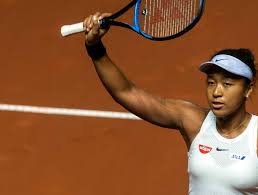
Naomi Osaka picks Japanese citizenship with eye on Olympics

0

Tennis star Naomi Osaka has decided to choose Japanese over American nationality with an eye on the Tokyo 2020 Olympics, public broadcaster NHK reported Thursday.

Osaka, who has a Japanese mother and a Haitian father, told NHK she has completed an administrative step to obtain Japanese citizenship ahead of her birthday next week.

Japanese law stipulates that a Japanese with more than one nationality must chose one before turning 22 years old.

“It gives me a special feeling to try to go to the Olympics to represent Japan,” the two-time Grand Slam champion told the broadcaster in an interview in Tokyo.

“I think I will be able to put more of my emotion into it by playing for the pride of the country,” she said, according to the article published in Japanese on the NHK website.

Osaka added she wants to aim for the gold although she is also worried as expectations will be high.

The young tennis sensation is a household name in Japan, where her every move is followed feverishly by local media, particularly when she is in the country of her mother’s birth.

She is the face of several leading Japanese brands, including the carrier ANA, and “Naomi-chan” — as she is affectionately known — as the main attraction at last month’s Pan Pacific Open in Osaka, which she won.

But she has faced controversies over her dual heritage in a nation that is fairly racially homogeneous, as well as scrutiny for her imperfect Japanese language skills — through others insist they add to her charm.

Mixed-race children can often face prejudice in Japan, although attitudes among younger generations are changing.

Osaka became the first Japanese player to win a Grand Slam last year after beating Serena Williams at the US Open.


Brexit-facing UK economy shrinks but set to avoid recession

0

Britain’s Brexit-facing economy shrank in August, official data showed Thursday, but analysts say a better-than-expected July is expected to help it avoid recession.

Gross domestic product — the combined value of all goods and services produced in the economy — slid 0.1 percent in August from July, the Office for National Statistics said in a statement.

That contrasted however with the upwardly-revised monthly expansion of 0.4 percent in July.


BREAKING: Buhari, ex-President Jonathan meet in Aso Rock

0

President Muhammadu Buhari on Thursday met behind closed doors with former President Goodluck Jonathan at the Presidential Villa, Abuja.

The News Agency of Nigeria reports that the former president arrived the State House at about 3.00p.m, and went straight to the President’s office.

NAN reports that the agenda of the meeting between President Buhari and Jonathan was unknown to newsmen as at the time of filing this report.

NAN observed that the former president, who is visiting the Presidential Villa for the fifth time since the swearing-in of the Buhari administration, was last seen in the State House in 2016.

(NAN)


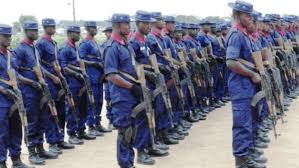
Again, kidnappers abduct civil defence officer, wife, child in FCT

0

Gunmen have again abducted another civil defence officer with his wife and son, at Dafara community in Kuje Area Council of the Federal Capital Territory, Abuja.

Our correspondent learnt that the hoodlums also killed a vigilante group member, who ran into them during the attack on Wednesday night.

This is happening barely 72 hours after armed men in military camouflage kidnapped nine victims in Pegi community, a few kilometres from Dafara. A civil defence officer was among the victims, while one other operative was injured by the assailants.

A resident who identified herself as Laide said the incident happened around 9:00 p.m. on Wednesday when the gunmen invaded the community via the bush and abducted the NSCDC officer, his wife and one of his children.

Laide said, “The invaders came through the bush, bulldozed their way into the civil defence officer’s home and abducted him, his wife and son. A vigilante (member) who ran into them was shot dead. He has been buried today according to Islamic rites.”

The Chairman of Pegi Community Development Association, Mr Taiwo Aderibigbe, confirmed the incident, noting that this showed that “Abuja is under siege.”

“Abuja is under siege. That is the truth but sadly, some people are playing politics with our lives, which is uncalled for,” he noted.

The FCT police spokesman, DSP Anjuguri Manzah, could not be reached for comment.

Details later.


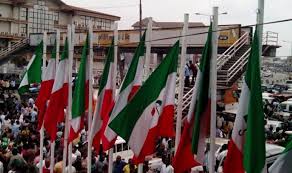
PDP Worried over Arrest of Another Scammer Linked to Presidency

0

The Peoples Democratic Party (PDP) Thursday said that it is worried over the arrest of yet another scammer linked with the Muhammadu Buhari presidency, stating that it confirms its notion that the presidency has become a haven for dubious characters.

The party, in a statement by its National Publicity Secretary, Kola Ologbondiyan, said that the shocking fact that the scammer, Abdulrauf Illyasu, even enjoys an office accommodation within the safety and cover of the Presidential Villa, from where he carries out his fraudulent assignments, is a hard evidence that the Buhari presidency breeds and facilitates swindlers, charlatans and treasury looters.

The PDP however noted that nothing is impossible for a presidency replete with persons who thrive in lies, false claims, certificate forgery, bribery, intimidation and recruiting of fraudulent and corrupt persons as ministers, special advisers and clandestine fronts for financial sleaze.

“Our party holds that it is the height of deceit and duplicity that an administration that boasts of integrity and zero tolerance for corruption could be the very sanctuary of the underworld.

“Only last week, a known confidant of Mr. President, Nasir Danu, was arrested at Heathrow Airport, United Kingdom for alleged international passport scam and money laundering while allegedly ferrying stolen currencies for persons said to be close to the presidency.

“This is in addition to further allegations that Danu has been fronting for a close relation of the president for shady oil deals and huge contracts running into billions of naira in major revenue earning agencies,” PDP stated.

The PDP called on Nigerians to note how the Illyasu and Danu matters bring to mind the case of the former aide to the First Lady, Mr. Baba-Inna, who was earlier arrested over accusations of receiving billions of naira from politicians and businessmen on behalf of the First Lady.

The party also urged Nigerians to recall the confession of one Amina Mohammed, who while being paraded by the Department of State Services (DSS) in 2018, stated in public that persons close to President Buhari were involved in serial fraud and looting of public resources under the cover of the some elements in the presidency.

The PDP described as shameful how the public space has been saturated with allegations of individuals and cabal connected to the Buhari Presidency have been hounding government agencies as well as major domestic and international business concerns for kickbacks while strangulating those who refuse to accede to their demands.

According to the main opposition party, “Today, it is no longer news that the Buhari presidency holds the medal as the most corrupt administration in the history of our nation, which had also mastered the act of concealment with propaganda and deceit.”

The PDP reminded Nigerians that the Buhari presidency has not yet provided answers as to why it has not investigated and prosecuted persons involved in the N9 trillion sleazy oil contract as detailed in the leaked NNPC memo.

“The presidency has also not informed the nation why it has not investigated and prosecuted persons involved in the alleged stealing of over N1.1 trillion worth of crude oil using 18 unregistered vessels since 2017.

“Such inaction in the face of huge sleaze points to nothing but complicity in very high places and Nigerians now know the links as well as those to hold responsible,” PDP stated.


How two brothers allegedly beheaded boy for N200,000

0

Two brothers, Saheed Obadimeji and Ayodeji Obadimeji, were, on Thursday, remanded in prison by an Igbosere High Court in Lagos for allegedly beheading a teenage boy.

The duo allegedly cut off the boy’s head for the purpose of selling it at the sum of N200,000, NAN reports.

Saheed, 19 and Ayodeji, 20, who reside at Ibeju-Lekki area of Lagos, are standing trial on a two-count charge of conspiracy to commit murder and murder.

They, however, pleaded not guilty to the charges.

The Lagos State Prosecutor, Mr Tunde Sunmonu, told the court that the defendants and others at large committed the offences on Nov. 27, 2018 at 8.30 pm. at an uncompleted building in Sapati town, Ibeju-Lekki, Lagos.

He said that the defendants ‘cornered’ one Joseph Makinde, who was sent on an errand by one of their neighbours, lured him into an uncompleted building and killed him.

He said that the defendants cut off the head of the victim in order to sell it at the sum of N200,000.

Sunmonu said that the offences contravened Sections 223 and 233 of the Criminal Law of Lagos State, 2015.

The prosecutor urged the court to remand the defendants in prison and appealed for speedy trial.

Justice Adedayo Akintoye, consequently, remanded the defendants in prison and adjourned the case until Nov. 18 and 19 for trial. (NAN)


Oil attacks on Saudi: Damage may be partially offset – World Bank

0

The attacks on Saudi Arabia’s oil facilities last month are expected to impact economic growth this year, the World Bank said in a report.

The report added that the decline could be partially offset by a boost in government spending in the non-oil sector.

Saudi Arabia’s gross domestic product (GDP) growth this year is forecast at 0.8 per cent, down from an earlier World Bank estimate of 1.7 per cent in April, pressured by oil production cuts and a worsening global outlook, according to the report.

The World Bank’s estimate is well below Saudi Arabia’s own expectations of around 1.9 per cent GDP growth this year.

Government data showed last month the Saudi economy slowed sharply in the second quarter, paying the price of restraining crude production by more than called for by an OPEC-led supply deal to support oil markets.

Saudi officials have said the Sept. 14 strike would not affect state finances or growth, but investors and analysts said they could have a long-term impact on ambitious plans to diversify the Saudi economy and attract foreign capital.

“The attacks on Saudi oil facilities in September led to a significant supply disruption, which is also expected to impact 2019 growth,” said the World Bank.

The attacks initially halved the kingdom’s crude production.

The World Bank added, however, that the slowdown is likely to be partially offset by a boost to the non-oil sector coming from higher government spending this year.

Riyadh blamed adversary Iran for the strikes, a charge Tehran denied.

Rating agency Fitch downgraded Saudi Arabia’s credit rating to A from A+ last month, citing rising geopolitical and military tensions in the Gulf after the attacks.


Buhari promises to review cost of governance

0

President Muhammadu Buhari on Thursday hosted members of Presidential Advisory Committee Against Corruption (PACAC) at State House, Abuja, promising to beam the searchlight on cost of governance, and weed out possible corruption that exists anywhere.

The President appreciated members of the committee for the “major sacrifice “they’ve made in accepting the assignment to serve the country,” noting, “Some of the elite won’t trust you, and you will be alienated, no matter how close you are to them.”

He recalled experience of the past, in which assets were seized from officials who couldn’t explain how they got them, “only for those assets to be returned to them when government was changed.”

President Buhari vowed that such would not recur, as he had given instructions that all forfeited assets be sold, “and the money put in the Treasury Single Account.”

In a statement by the Special Adviser on Media and publicity, Chief Femi Adesina, the President stated “Let’s see who will now take back the money from the treasury, and give back to those people, as was done in the past,”

Chairman of PACAC, Professor Itse Sagay, who led the delegation, said Nigeria was lucky more than ever to have a person of President Buhari’s credentials as leader of government.

“We congratulate you for being a star of the anti-corruption struggle in Africa. You attach a lot of importance to the fight against corruption, and we have tried to achieve the aims you had in mind when you established PACAC,” Prof Sagay added.

He said the committee trains, builds capacity of anti-corruption agencies, and has helped to develop a programme of non-conviction assets recovery, which is recording great successes.

PACAC made some recommendations to the President, in order to move the anti-corruption war many steps forward. They include, reestablishment of the jury system for criminal cases in the country; setting up of a judicial commission on corruption in the judiciary, to be headed by retired judges under the auspices of National Judicial Council (NJC); passage of Proceeds of Crime Act by the National Assembly; the setting up of a Presidential Truth and Restitution Task Force; and a closer look at the cost of governance to weed out all vestiges of corruption.

President Buhari pledged that government would take a dispassionate look into all the requests.

Buhari’s aide reveals how President plans to lift 100 million people out of poverty

0

A Senior Special Assistant to President Muhammadu Buhari on Social Investment Programmes, Barrister Ismaeel Ahmed, reaffirmed and assured of the goal by the current administration to take 100 million Nigerians out of extreme poverty in the next ten years.

The SSA to the President stated that the President had laid the foundation for making this possible in the last four years of his administration and thus Nigerians would see a ‘leapfrog’ in government efforts at alleviating poverty.

“The first four years of the President Buhari administration has been a tedious project of setting up a foundation for the journey ahead. That journey on our part is to see that we empower the less privileged, the poorest Nigerians, the unemployed, and provide them with hands up, giving them the opportunity to lift themselves out of their predicament and empowering them for self-development and fulfilment,” he said at the last United Nations General Assembly af a side event focusing on the Multi-Dimensional Approach to poverty alleviation hosted by the Government of Costa Rica and Oxford University.

“The President is committed to this project, and thus has set a mandate of lifting 100 million Nigerians out of extreme poverty within the next 10 years. It may sound too ambitious to some or perhaps even outlandish, but with the renewed focus and commitment I have seen from the President, this is a feat that can be achieved and we must ensure that we roll up our sleeves to do just that” Ismaeel stated.

When asked how this would be done, Ismaeel said, “We have set targets for ourselves. We are going to up the numbers by reaching more communities, reaching more people who are within our purview. Each of the clusters of the Social Investment Programmes has a target of the number of beneficiaries it must reach within a period of time giving the availability of resources. We are going to make sure that we do not falter, slow down, relax or give up. We are determined”

“Also we are going to ensure that we improve on our monitoring activities – this would ensure that we take stock of where we are and what we are doing at every point in time. If we see that we are not measuring up to targets then we know that we need to scale up.”

Barrister Ismaeel stated that the goal that the President has set is serious business and would be taken with the utmost regard and consciousness. He went further to state that the Social Investment Programmes had made a tremendous impact so far, stating that it was the largest social investment ever seen in Nigeria and West Africa.

“The programmes have reached over 40 million beneficiaries so far. That is both direct and indirect beneficiaries. Over 12 million are direct beneficiaries. These are real people whose lives are being changed and transformed for the better.

“Whenever I meet a beneficiary and he or she tells me their story, I am driven to do more. And I believe that if we have done this much, with the little resources, we can do more with committed leadership, and steady, strategic and precise targets.

“I have a reason to believe that poverty should not be a permanent feature or an affliction that must remain with us. The goal set out by the President on lifting 100 million people out of extreme poverty is a task I am personally committed and dedicated to.” He noted.

Ismaeel also stated that the Ministry of Humanitarian Affairs, Disaster Management and Social Development created by the President was a Ministry that would play a critical role in the fight against poverty.

“There is wisdom in creating the Ministry of Humanitarian Affairs, Disaster Management and Social Development. It streamlines coordination and activities. It demonstrates seriousness in solving Nigeria’s poverty problems. The Ministry has been set up as a strategic arm in revamping and improving the activities of the Social Investment Programmes and all other agencies under it and carrying out the short, medium and long term goals of taking 100 million Nigerians out of extreme poverty.”

At New York, on the sidelines of the United Nations, General Assembly Barrister Ismaeel Ahmed was also honoured as on the World’s Most Influential People of African Descent (MIPAD) under 40.


BBC Documentary and Sexual Harassment: Matters Arising, By Olabisi Deji-Folutile

0

It is so interesting the way the BBC documentary on sex for marks in some African universities has turned many Nigerians into anti-sexual harassment campaigners of sort. Suddenly, almost everybody has something to say, either to condemn or commend those behind the “exposé.” It is important to clarify from the outset that sexual harassment, either in school or anywhere, is wrong and its perpetrators must be adequately exposed and punished. However, the frenzy of excitement that has greeted the BBC report is a major source of concern. The manner, in which people are latching on to the documentary for the purpose of getting attention and scoring cheap political points, is worrisome.

Are we saying that we were not aware of this problem in our schools before now? Sexual harassment is pervasive and entrenched, not just in our institutions at all levels, but also in workplaces and other segments of the society. We have seen videos of naked lecturers released by their sexually harassed students before. We have heard audio tapes of lecturers soliciting sex from their students. One of them was even sacked at the Obafemi Awolowo University, Ile Ife, last year. A lecturer at the Ekiti State University was caught naked while attempting to have sex with a female student in June this year.

We may not have records of organisations where sexual harassment is prevalent in this country, we however know that many chief executives and other superior officers do harass the female folk at work. Many women have terrible tales to tell when it comes to issues of sexual harassment at work. Some have been frustrated, while many have abandoned thriving careers because of predators. In fact, some of us won’t even be surprised if it turns out that many of the men condemning sexual harassment on social media today are themselves predators.

Notwithstanding the hypocrisy that could be behind reactions to the BBC documentary, the report has once again brought to the fore the problem of sexual harassment and assaults on our campuses. To say that lecturers demand sex for marks is just an aspect of the problem. There are many brilliant ladies in our higher institutions today who are being sexually harassed simply for refusing to give in to their lecturers’ sexual demands. These girls are not looking for marks. They have what it takes to pass their courses, just that the lecturers won’t allow them to score high marks. They mark them down as a punishment for refusing to be sexually molested by them. I know this because I was once a victim. I have shared my experience as an undergraduate at the University of Lagos (UNILAG) in one of the past editions of this column.

For the record, this is not the first time that lecturers in the University of Lagos would be indicted in a case of sexual harassment. Some of us could still remember the story of an innocent teenager who was reportedly defiled by a lecturer within the walls of the university community three years ago. What happened thereafter? The university simply disowned the lecturer and moved on. I won’t be surprised if all the reactions to the latest story are just because the report was carried by BBC. The university authorities have so far suspended the lecturers involved and set up a committee to investigate them. This is commendable. At least the institution’s reaction this time around is better than its stance on the same issue in 2015.
The truth is, as students, many of us were harassed by lecturers that exercised academic control over us. Unfortunately, there were no official channels of reporting them then. There was no social media, so we just suffered in silence. At the same time, there were and still are many decent, fantastic and disciplined lecturers in our higher institutions even now. We must be careful not to allow the few bad eggs to becloud our judgment of the decent ones.

…the advancement in technology has made it possible for people to use hidden devices to catch randy men in their acts. No lady should be deceived. There are many male predators out there. Women should arm themselves for the battle ahead and use the social media to their utmost advantage.

The good news now is that the social media have democratised information. Anyone can tell his or her story. As long as there are incontrovertible evidences, people are bound to believe the stories. Not only that, the advancement in technology has made it possible for people to use hidden devices to catch randy men in their acts. No lady should be deceived. There are many male predators out there. Women should arm themselves for the battle ahead and use the social media to their utmost advantage.


Take it or leave it, there is sexual harassment everywhere. There is sex for roles in Nollywood, sex for promotion in workplaces, sex for contract, sex for political appointment, and many more. Some people even have this warped idea that for any woman to reach the top in her career, she must have a sexual affair with them if they are in positions of authority. Of course, there are women who believe in using what they have to get what they want. There are also female students who seduce their lecturers. That, however, is no justification for tormenting innocent women, either for grades, promotion or roles, as the case may be. People should be disciplined enough to resist temptation, especially one coming from their students or subordinates. In any case, the sexual harassment policy is not usually gender based. Anybody can be harassed, be it a man or woman, hence the importance of having an avenue to seek redress when harassed.

As noted earlier in one of the past editions of this column, sexual harassment is not peculiar to Nigerian institutions. It is a well established phenomenon globally. It happens even in well-established universities all over the world, including in the U.K., the home of the BBC. A survey by the Telegraph in the U.K. once found that one in three female undergraduates had some experience of sexual assault while on campus. Similarly, a survey of 2,126 students of Cambridge University by the Women’s Campaign some years back found that more than three-quarters of the students had experienced harassment, while 30 per cent said they had been sexually assaulted. At Egerton University in Kenya, at least two female students reportedly drop out of school yearly due to the problem of sexual harassment.

Do universities here provide names, emails or phone numbers of people that students could contact when in trouble? We know how real the problem of victimisation is in our higher institutions. This is the more reason why victims of sexual harassment should be assured of their protection and freedom from victimisation.

It’s just that institutions in the developed countries take pragmatic steps to solve the problem. In contrast, African higher institutions live in denial. Schools should formulate policies that will ensure that students are well protected. How many higher institutions in Nigeria, for example, have official points of contacts for complaints in cases of sexual harassment or assault? Students should know where to go to for help when they are harassed by randy lecturers. Do universities here provide names, emails or phone numbers of people that students could contact when in trouble? We know how real the problem of victimisation is in our higher institutions. This is the more reason why victims of sexual harassment should be assured of their protection and freedom from victimisation.

Both Harvard and Cambridge have well documented policies on sexual harassment. It is considered a serious offence in these institutions. Everybody is well-protected – both the lecturers and the students. Apart from their well-articulated policies, they also provide counselling services for traumatised victims. Despite these provisions, students are still complaining and asking for better policies. They want the universities to review their working documents in conformity with the latest dynamics of the problem. Many of them believe their institutions’ policies on sexual harassment are out-of-date.

Nigerian higher institutions should emulate these institutions. It is high time they formulated policies and procedures for responding to cases of sexual harassment. They should establish formal channels of communication where students can report cases of harassment. It is not enough to suspend erring lecturers once in a while as a response to public outcry on the malady; there should be a system in place to curb the activities of predators and provide a conducive environment for everyone to study without any form of harassment or sexual assault.


Olabisi Deji-Folutile, a member of the Nigerian Guild of Editors, writes from Lagos; Email: bisideji@yahoo.co.uk.

v It is so interesting the way the BBC documentary on sex for marks in some African universities has turned many Nigerians into anti-sexual harassment campaigners of sort. Suddenly, almost everybody has something to say, either to condemn or commend those behind the “exposé.” It is important to clarify from the outset that sexual harassment, either in school or anywhere, is wrong and its perpetrators must be adequately exposed and punished. However, the frenzy of excitement that has greeted the BBC report is a major source of concern. The manner, in which people are latching on to the documentary for the purpose of getting attention and scoring cheap political points, is worrisome.

Are we saying that we were not aware of this problem in our schools before now? Sexual harassment is pervasive and entrenched, not just in our institutions at all levels, but also in workplaces and other segments of the society. We have seen videos of naked lecturers released by their sexually harassed students before. We have heard audio tapes of lecturers soliciting sex from their students. One of them was even sacked at the Obafemi Awolowo University, Ile Ife, last year. A lecturer at the Ekiti State University was caught naked while attempting to have sex with a female student in June this year.

We may not have records of organisations where sexual harassment is prevalent in this country, we however know that many chief executives and other superior officers do harass the female folk at work. Many women have terrible tales to tell when it comes to issues of sexual harassment at work. Some have been frustrated, while many have abandoned thriving careers because of predators. In fact, some of us won’t even be surprised if it turns out that many of the men condemning sexual harassment on social media today are themselves predators.

Notwithstanding the hypocrisy that could be behind reactions to the BBC documentary, the report has once again brought to the fore the problem of sexual harassment and assaults on our campuses. To say that lecturers demand sex for marks is just an aspect of the problem. There are many brilliant ladies in our higher institutions today who are being sexually harassed simply for refusing to give in to their lecturers’ sexual demands. These girls are not looking for marks. They have what it takes to pass their courses, just that the lecturers won’t allow them to score high marks. They mark them down as a punishment for refusing to be sexually molested by them. I know this because I was once a victim. I have shared my experience as an undergraduate at the University of Lagos (UNILAG) in one of the past editions of this column.

For the record, this is not the first time that lecturers in the University of Lagos would be indicted in a case of sexual harassment. Some of us could still remember the story of an innocent teenager who was reportedly defiled by a lecturer within the walls of the university community three years ago. What happened thereafter? The university simply disowned the lecturer and moved on. I won’t be surprised if all the reactions to the latest story are just because the report was carried by BBC. The university authorities have so far suspended the lecturers involved and set up a committee to investigate them. This is commendable. At least the institution’s reaction this time around is better than its stance on the same issue in 2015.
The truth is, as students, many of us were harassed by lecturers that exercised academic control over us. Unfortunately, there were no official channels of reporting them then. There was no social media, so we just suffered in silence. At the same time, there were and still are many decent, fantastic and disciplined lecturers in our higher institutions even now. We must be careful not to allow the few bad eggs to becloud our judgment of the decent ones.

…the advancement in technology has made it possible for people to use hidden devices to catch randy men in their acts. No lady should be deceived. There are many male predators out there. Women should arm themselves for the battle ahead and use the social media to their utmost advantage.

The good news now is that the social media have democratised information. Anyone can tell his or her story. As long as there are incontrovertible evidences, people are bound to believe the stories. Not only that, the advancement in technology has made it possible for people to use hidden devices to catch randy men in their acts. No lady should be deceived. There are many male predators out there. Women should arm themselves for the battle ahead and use the social media to their utmost advantage.


Take it or leave it, there is sexual harassment everywhere. There is sex for roles in Nollywood, sex for promotion in workplaces, sex for contract, sex for political appointment, and many more. Some people even have this warped idea that for any woman to reach the top in her career, she must have a sexual affair with them if they are in positions of authority. Of course, there are women who believe in using what they have to get what they want. There are also female students who seduce their lecturers. That, however, is no justification for tormenting innocent women, either for grades, promotion or roles, as the case may be. People should be disciplined enough to resist temptation, especially one coming from their students or subordinates. In any case, the sexual harassment policy is not usually gender based. Anybody can be harassed, be it a man or woman, hence the importance of having an avenue to seek redress when harassed.

As noted earlier in one of the past editions of this column, sexual harassment is not peculiar to Nigerian institutions. It is a well established phenomenon globally. It happens even in well-established universities all over the world, including in the U.K., the home of the BBC. A survey by the Telegraph in the U.K. once found that one in three female undergraduates had some experience of sexual assault while on campus. Similarly, a survey of 2,126 students of Cambridge University by the Women’s Campaign some years back found that more than three-quarters of the students had experienced harassment, while 30 per cent said they had been sexually assaulted. At Egerton University in Kenya, at least two female students reportedly drop out of school yearly due to the problem of sexual harassment.

Do universities here provide names, emails or phone numbers of people that students could contact when in trouble? We know how real the problem of victimisation is in our higher institutions. This is the more reason why victims of sexual harassment should be assured of their protection and freedom from victimisation.

It’s just that institutions in the developed countries take pragmatic steps to solve the problem. In contrast, African higher institutions live in denial. Schools should formulate policies that will ensure that students are well protected. How many higher institutions in Nigeria, for example, have official points of contacts for complaints in cases of sexual harassment or assault? Students should know where to go to for help when they are harassed by randy lecturers. Do universities here provide names, emails or phone numbers of people that students could contact when in trouble? We know how real the problem of victimisation is in our higher institutions. This is the more reason why victims of sexual harassment should be assured of their protection and freedom from victimisation.

Both Harvard and Cambridge have well documented policies on sexual harassment. It is considered a serious offence in these institutions. Everybody is well-protected – both the lecturers and the students. Apart from their well-articulated policies, they also provide counselling services for traumatised victims. Despite these provisions, students are still complaining and asking for better policies. They want the universities to review their working documents in conformity with the latest dynamics of the problem. Many of them believe their institutions’ policies on sexual harassment are out-of-date.

Nigerian higher institutions should emulate these institutions. It is high time they formulated policies and procedures for responding to cases of sexual harassment. They should establish formal channels of communication where students can report cases of harassment. It is not enough to suspend erring lecturers once in a while as a response to public outcry on the malady; there should be a system in place to curb the activities of predators and provide a conducive environment for everyone to study without any form of harassment or sexual assault.


Olabisi Deji-Folutile, a member of the Nigerian Guild of Editors, writes from Lagos; Email: bisideji@yahoo.co.uk.