Thursday, May 7, 2026
Home Blog Page 848

SERAP Condemns ‘Intimidation’, ‘Harassment’ Of Journalist By Fani-Kayode

0

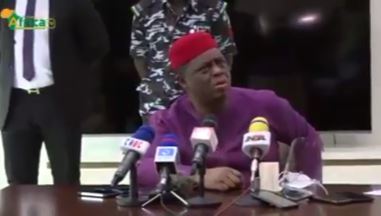
The Socio-Economic Rights Accountability Project (SERAP), has condemned the attack on a journalist by Peoples Democratic chieftain, Femi Fani-Kayode.

In a video of a press conference, Fani-Kayode was seen calling the Daily Trust journalist “stupid”, threatening to hit him hard next time.

The visibly angry former minister of aviation also threatened to report the journalist to his publisher.

SERAP, in a tweet, noted that no one should call any journalist “stupid” for doing their job.

It said the media has a crucial role to play as public watchdog.

The group asked Fani-Kayode to publicly apologise to the journalist.

“We condemn reported intimidation, harassment and attack on @daily_trust journalist by a former Minister of Aviation Femi Fani-Kayode. Mr Fani-Kayode should publicly apologise to the journalist,” SERAP said.

“No one should ever call any journalist “stupid” simply for doing their job.

“Journalistic freedom also covers possible recourse to a degree of exaggeration, or even provocation. The media has a vital role to play as ‘public watchdog’ in imparting information of serious public concern and should not be inhibited or intimidated from playing that role.”

I Don’t Owe Journalist An Apology, Says Fani-Kayode After Press Conference Incident

0

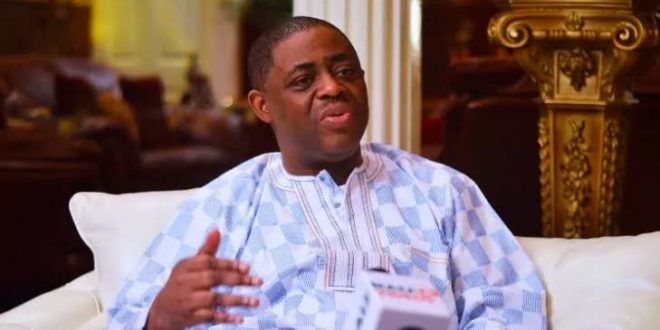
Femi Fani-Kayode, a former minister, has insisted he does not owe the Daily Post journalist, who he lambasted at a press conference in Calabar, the Cross River State capital, an apology.

In a series of tweets of Tuesday, the chieftain of the Peoples Democratic Party (PDP), said the journalist had made an insulting assertion towards him.

The former assistant to former president Olusegun Obasanjo, said the journalist had made an assertion rather than ask a question.

“During my tour of the South and after a long and successful press conference in Calabar, Cross Rivers state, a journalist put up his hand for the last question and said, “Well we do not know who is bankrolling you”. This is not a question but an assertion and an insult,” he tweeted.

“And if this insulting ASSERTION were made before Trump or OBJ I know how they would have reacted. Above is my response & I have no apology to offer for it. The young man apologised to me during the press conference & sent his apologies to me after the conference.

“I have accepted his apologies & moved on. I have always had respect for journalists & always will. Those of them that know me or worked with or for me over the last 30 years can attest to that. However there is a distinction between asking a question & offering an insult.

“This is all the more so when it is clear that the assertion was sponsored and engineered by my political enemies who wanted to use the young man to insult and embarrass me and question my integrity. Well they got more than they bargained for.

“I repeat this was not a question but an assertion and an gratutious insult and I will not accept that from any man born of woman. Thank you,” he said.

Amotekun’s Operational Structure Will Be Determined By IGP – Presidency

0

The Presidency has said the operational structure of the Western Nigerian Security Network, codenamed ‘Operation Amotekun’, and other regional security outfits will be determined by the Inspector-General of Police.

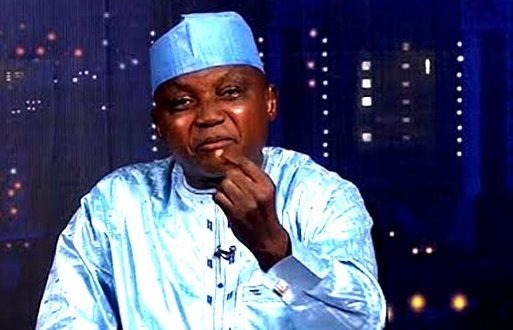
Garba Shehu, the Senior Special Assistant to the President on Media and Publicity, said this on Channels Television’s Sunrise Daily programme on Tuesday.

He said: “Whatever name they go by, Amotekun or whatever, will be streamlined and they will be run in accordance with the structure as defined by the Inspector-General of Police. They will be localised, they will be owned by local communities, they will be managed by them.”

Speaking on the approval of N13 billion by the Federal Government for community policing across the 36 states of the federation, the presidential aide explained that the community policing structure would be the same across the 36 states.

He added that whatever policy by regional security outfits the does not conform with the national police structure would not be adopted.

He said: “You know the constitution of the committees will be defined as including council chairmen, traditional rulers, religious leaders, civil society groups and all of that. So, you are going to have a single type structure of community policing permitted all across the country and whatever is not in line with this does not have a place in the scheme of things. That is my understanding.”

On whether the new community policing being introduced by the Federal Government would not be in conflict with Amotekun which was created by Houses of Assembly in the six South-West states, Shehu said: “They can choose their nomenclature, it doesn’t make a difference. Structurally, there is a governance structure for all state and local council policing mechanisms and this should abide in all of the states.

“Mind you, even in the case of Amotekun, there is no law that is regionally binding on the mechanism put in place. Each state parliament put together their own legislation, yes there are similarities in so many ways but it doesn’t take away the fact that each state Amotekun is an initiative of a given state in the South-West.”

The presidential aide said the state governors were carried along in the process through the National Economic Council which comprises the 36 governors and is headed by the Vice-President.

He said the N13bn approved by the Federal Government would be used for training, enlightenment, and purchase of equipment.

JUST IN: Buhari Reveals Agenda For Next Three Years

0

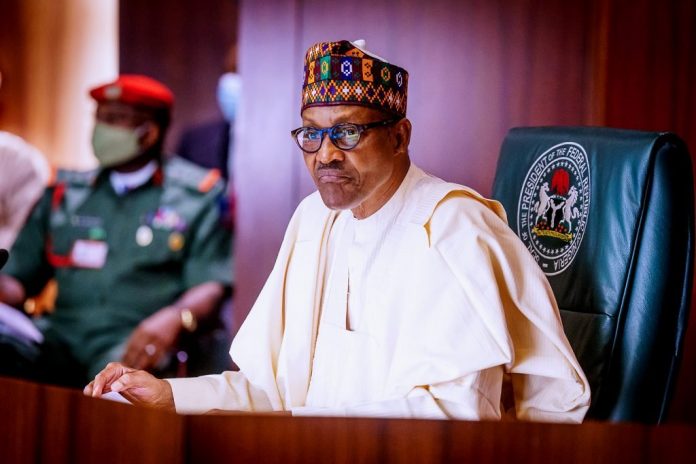
The President Muhammadu Buhari has revealed nine areas his regime would prioritise during his remaining years in office.

Buhari unveiled those priority areas to include improvement of access to quality education, health care, power supply poverty reduction.

This was revealed to our correspondent in a statement by his Special Adviser on Media and Publicity, Femi Adesina, on Tuesday when the President spoke while receiving letters of credence from ambassadors/high commissioners of eight countries at the Presidential Villa, Abuja.

The statement was titled “President Buhari lists nine priority areas to improve livelihood of Nigerians.”

Adesina quoted the President as saying that efforts were being made to sustain Nigeria’s position as a profitable investment destination with unequalled incentives in all sectors, especially large market and flexible tax system which investors from various countries can take advantage of.

He said Buhari told the diplomats about Nigeria’s priority, and the need to streamline on people-focused policies.

He quoted the President as saying, “In our efforts to achieve a realistic domestic and foreign policy, as well as national development, we have identified the following nine priority areas to guide our policy directions over the next few years.

“Build a thriving and sustainable economy; enhance social inclusion and reduce poverty; enlarge agricultural output for food security and export; attain energy sufficiency in power and petroleum products and expand transport and other infrastructural development.

“Expand business growth, entrepreneurship and industrialisation; expand access to quality education, affordable healthcare and productivity of Nigerians; build a system to fight corruption, improve governance and create social cohesion; and improve security for all.’’

He said while describing Nigerians as the “nation’s most prized assets,’’ the President said the nine priority mandates were already reflected in the Economic Recovery and Growth Plan, a medium-term initiative pioneered by the government to restore economic growth and development while leveraging the resourcefulness and resilience of the citizens.

The President urged the diplomats to use the opportunity of working in the country to improve relations with their governments and people.

“I have no doubt that you might have prior and in-depth knowledge of Nigeria’s huge potential which you will hopefully see for yourselves.

“I, therefore, urge you to go around the country, see things for yourselves, and report to your home governments.

“This is important as you all are representatives of both your sending and host states,” he was further quoted as saying.

Buhari said Nigeria would remain steadfast in pursuing deeper and valuable relations among nations, without discrimination.

He said, “Nigeria strongly supports joint action to ensure a democratic and fair world order based on strict respect for the norms of international law, the United Nations Charter, recognition of the unquestionable value of cultural diversity, national sovereignty, and the right of all countries to decide their future freely, without external pressure.

“Nigeria does not divide its partners into big and small; we value and respect every country, and with every country, we are ready to pursue dialogue, as well as build cooperation on the basis of equality and constructive mutual respect.

“These include our cooperation in strengthening regional, continental and global peace and security, resolving complex issues, settling conflicts, as well as addressing dangerous threats to mankind, among which include terrorism, proliferation of small arms and light weapons, human trafficking, cybercrimes, poverty, communicable diseases, and epidemics.’’

Speaking on behalf of the diplomats, the Ambassador of Algeria to Nigeria, Hocine Latil, was quoted as saying that each of the diplomats brings greetings and agenda from their home governments, but the bottom line remains to enhance cooperation and seek advancement in mutual areas of interest.

“On behalf of my colleagues, we thank you for receiving us. We know that your schedule is tight. As the giant of Africa, you are always focused on resolving conflicts in the continent, while taking care of your domestic issues as well,” he said.

The Algerian ambassador said the African ambassadors will leverage the opportunity to further enhance the implementation of the African Continental Free Trade Agreement and learn from one another.

The ambassadors/high commissioners who presented their letters of credence are Hocine Latil of Algeria; Luong Quoc Thinh of Vietnam; Dr Benson Alfred Bana of Tanzania; Traore Kalilou of Cote d’Ivoire; Abakar Saleh Chahaimi of Chad; Jamal Mohammed Barrow of Somalia; Brahim Salem El Mami Buseif of Sahrawi Arab Republic and Mohammed Alibak of Iran.

(Punch)

Trump considers fast-tracking UK Covid-19 vaccine before US election

0

The Trump administration is considering bypassing normal US regulatory standards to fast-track an experimental coronavirus vaccine from the UK for use in America ahead of the presidential election, according to three people briefed on the plan.

One option being explored to speed up the availability of a vaccine would involve the US Food and Drug Administration awarding “emergency use authorisation” (EUA) in October to a vaccine being developed in a partnership between AstraZeneca and Oxford university, based on the results from a relatively small UK study if it is successful, the people said.

The AstraZeneca study has enrolled 10,000 volunteers, whereas the US government’s scientific agencies have said that a vaccine would need to be studied in 30,000 people to pass the threshold for authorisation. AstraZeneca is also conducting a larger study with 30,000 volunteers, although the results from that will come after the smaller trial.

Making a vaccine available before the election could allow US president Donald Trump to claim he has turned the tide on a virus that has killed more than 170,000 Americans following widespread criticism of his handling of the pandemic. In his convention speech on Thursday night, Joe Biden, Mr Trump’s Democratic opponent, said that the US response to the virus was the “worst performance of any nation”.

However, if the Trump administration does rush through emergency authorisation ahead of the election by skirting normal government guidelines, it could dent already shaky public confidence in the safety of vaccines ahead of one of the largest mass-immunisation programmes in US history.

Mark Meadows, White House chief of staff, and Steven Mnuchin, Treasury secretary, have told top Democrats that the administration was considering fast-tracking a vaccine, according to one person briefed on a July 30 meeting the pair held with Nancy Pelosi, the Democratic Speaker of the House of Representatives.

Mr Meadows said in the meeting that there could be emergency authorisation, possibly for the AstraZeneca vaccine, in September. Mr Mnuchin added that the administration expected an EUA for a vaccine before full approval, said the person, who added that Ms Pelosi warned that there should be “no cutting corners” in the vaccine approval process.

The meeting, which included top Senate Democrat Chuck Schumer, was one of many meetings that the group held about the next Covid-19 relief package.

A spokesperson for the Treasury secretary said: “Secretary Mnuchin did not make any comments regarding AstraZeneca, nor is he familiar with the specifics of the AstraZeneca vaccine candidate. He is also not aware of any plans the FDA may have regarding any emergency use authorisation for any potential vaccine, beyond what he has heard publicly stated.

“The secretary believes, and has always believed, that any decision on vaccine candidates and any possible EUA is up to the FDA.”

The White House did not comment.

The FDA on Sunday separately issued an EUA for using convalescent plasma for the treatment of coronavirus in hospital patients, in what the White House said was a “major therapeutic breakthrough”.

“This is what I’ve been looking to do for a long time. This is a great thing,” Mr Trump said at a brief news conference announcing the development.

Mr Trump did not address the issue of a vaccine EUA. But he said he would be talking about vaccine developments in the near term, as he applauded the speed at which his team was acting to tackle Covid-19, which has now claimed the lives of more than 176,000 Americans.

“We’re years ahead of approvals than we would be if we went by the speed levels of past administrations. We would be two years, three years behind,” he said. “That includes vaccines that you’ll be hearing about very soon.”

If the FDA granted emergency approval to the AstraZeneca vaccine based on the Oxford study, it could provoke a string of resignations from the agency.

Earlier this week Peter Marks, director of the FDA’s Center for Biologics Evaluation and Research — which is responsible for assessing the vaccines — told Reuters that he would resign if the agency were to approve a jab before definitive data showing it was safe and effective.

“I could not stand by and see something that was unsafe or ineffective that was being put through,” Dr Marks said. “You have to decide where your red line is, and that’s my red line.

“I would feel obliged [to resign] because in doing so, I would indicate to the American public that there’s something wrong.”

Dr Marks declined to comment to the FT.

Michael Caputo, a spokesperson for the US health and human services department — which contains the FDA — said any claim that the administration would issue an EUA before the election was “absolutely false”.

Mr Caputo said the administration was hopeful that a vaccine would be developed by the first quarter of 2021. “We have always been working towards that goal. I’ve never been told at any point in time that goal has changed,” he said. “Talk of an October surprise is a lurid resistance fantasy. Irresponsible talk of an unsafe or ineffective vaccine being approved for public use is designed to undermine the president’s coronavirus response.”

On Saturday, Mr Trump lashed out at the FDA in a tweet that appeared to accuse the agency of slowing down enrolment in coronavirus vaccine and drug trials to delay the results of studies until after the election.

“The deep state, or whoever, over at the FDA is making it very difficult for drug companies to get people in order to test the vaccines and therapeutics,” Mr Trump wrote in a tweet that tagged Dr Stephen Hahn, FDA commissioner. “Obviously, they are hoping to delay the answer until after November 3rd. Must focus on speed, and saving lives!”

Ms Pelosi hit back at Mr Trump in a press conference on Saturday.

“The FDA has a responsibility to approve drugs, judging on their safety and their efficacy, not by a declaration from the White House about speed and politicising the FDA,” she said.

“This was a very dangerous statement on the part of the president. Even for him, it went beyond the pale in terms of how he would jeopardise the health and wellbeing of the American people.”

Two of the people briefed on the plans said that the relatively small UK trial was not designed to produce sufficient data of the kind that would be required for emergency authorisation in the US. US drugmakers Moderna and Pfizer, which are also trialling vaccines, both plan to enrol 30,000 participants in Phase III studies they started in July. Moderna said it would complete enrolment by the end of September, while Pfizer has said it has already enrolled 11,000.

“Although we have talked about doing this at ‘warp speed’, it is not through any cuts in our efforts for vaccine safety or scientific integrity”

One of the people briefed on the plan said: “I don’t see a way forward for [AstraZeneca],” based on the 10,000-person trial. “They’re not going to get there. They won’t have the clinical end points.”

The person predicted that if Dr Marks were to quit, other scientists in his division of the FDA would follow suit.

A spokesperson for AstraZeneca said it had “not discussed emergency use authorisation with the US government” and that it “would be premature to speculate on that possibility”.

Dr Hahn faced criticism earlier this year after the FDA granted emergency approval for hydroxychloroquine — an unproven drug repeatedly touted by Mr Trump — before reversing its decision when multiple studies showed the drug was not an effective treatment for coronavirus.

Public health officials in the US have repeatedly stressed the importance of following normal processes when approving a Covid-19 vaccine.

In June Francis Collins, director of the National Institutes of Health, told CNN: “Each vaccine needs to be tested on about 30,000 volunteers. We don’t believe that we have enough power in the analysis, to be able to document the vaccine works unless you get to roughly that number.”

Robert Redfield, head of the Centers for Disease Control and Infection, told the FT on Friday: “Although we have talked about doing this at ‘warp speed’, it is not through any cuts in our efforts for vaccine safety or scientific integrity.”

Follow FT’s live coverage and analysis of the global pandemic and the rapidly evolving economic crisis here.

One person working on the US effort to find a vaccine said the Trump administration’s exploration of ways to circumvent normal procedures had prompted infighting among the government’s top scientists.

Anthony Fauci, head of the National Institute of Allergy and Infectious Diseases, and Dr Collins are stressing the importance of scientific rigour whereas Moncef Slaoui, the White House’s vaccine tsar, wants to forge ahead, the person said.

In an interview conducted after publication of the FT’s original story, Dr Fauci said it was “not the case” that Dr Slaoui was taking a less scientifically rigorously approach. “I can tell you, dealing with him, he is straight with the science,” he said.

Dr Collins also said it was “absolutely not true” that there was a divergence of approach. “The three of us are completely in accord about all the steps that have to be conducted and how rigorous they need to be,” he said.

In a separate interview, Dr Slaoui said the three men were on the same page. He said there was “no misalignment on the science” and that any claim to the contrary “undermines the trust that the population can have in the vaccines”.

Asked if the UK study could be used to justify issuing an EUA in the US, Dr Fauci said it was impossible to say without seeing the data. “You have to see the data, the devil is in the details,” he said.

Dr Slaoui said it was possible that it could be used to make an EUA determination, but said he had also not seen the data.

“The UK study, which is run in the UK, Brazil and in South Africa is designed to accrue a number of cases. The exact statistics . . . I don’t know because it’s a study run by Oxford university. But as it generates data, it may, absolutely,” Dr Slaoui said.

Source: www.ft.com

JUDGMENT: Osun Ex-convict Bags 1-Year Jail Term for Stealing Purse

0

Ismaila Sikirullahi, an ex-convict, on Monday, bagged a one-year jail term for stealing.

The convict allegedly stole an Itel mobile phone and N8,360 belonging to a shop owner, Anifat Azeez.

The police prosecutor, Inspector Kayode Adeoye, said, “Sikirullahi, had on August 17, 2020, around 3pm on Bası Bankole Street, Oke-Oniti area, Osogbo, did break into the shop of one Anifat Azeez and stole a purse containing one Itel mobile phone and the sum of N8,360, property of Anifat Azeez.”

Adeoye also told the court that Sikirullahi had just completed a jail term for a similar offence.

The two counts of burglary and stealing were said to be contrary to and punishable under sections 412, 383 and 390(9) of Criminal Code, Cap 34, Vol. II, Laws of Osun State of Nigeria, 2002.

The defendant had no legal representation but pleaded guilty to the charges.

Delivering his judgment, the presiding magistrate, Adebayo Ajala, found Sikirullahi guilty of the offences and sentenced him to one year imprisonment without an option of fine.

BREAKING: Africa to be declared free of polio

0

Africa is expected to be declared free from wild polio, after decades of work by a coalition of international health bodies, national and local governments, community volunteers and survivors.

Four years after the last recorded cases of wild polio in northern Nigeria, the Africa Regional Certification Commission (ARCC) is expected to certify that the continent is free of the virus, which can cause irreversible paralysis and in some cases death.

The achievement is the result of a campaign to vaccinate and monitor children in Borno State, the final front of polio eradication efforts on the continent, and the heart of the jihadist insurgency in Nigeria.

“It’s been a momentous, massive undertaking, with amazing persistence and perseverance, coming in the face of moments when we thought we were just about there, then we’d have a reversal,” Dr Matshidiso Moeti, the World Health Organization (WHO) regional director for Africa, said.

An anti-polio poster in Mali, West Africa.
An anti-polio poster in Mali, West Africa. Photograph: Neil Cooper/Alamy Stock Photo
The WHO, she said, had played a central coordinating role within the Global Polio Eradication Initiative – a coalition of national governments and local leaders, working with Unicef, the Bill and Melinda Gates Foundation, Rotary International, the US Centers for Disease Control and Prevention – and with millions of community volunteers across the continent.

Improved surveillance, tackling violent levels of vaccine scepticism that fuelled deadly attacks on health workers and the inclusion of polio survivors within eradication teams were key factors in wiping out the virus, said Moeti.

“I would really like to pay tribute to polio survivors, who have joined in the fight, who have helped in sharing their experiences of disability with polio and the impact this has had on their lives,” she said.

In 1996, 75,000 children in Africa were paralysed by polio.

The fight now is to improve the lives of survivors, said Moeti.

“This moment underlines the importance of paying attention and better prioritising the needs of people with disabilities in the African region. Health is not just the absence of a disease that can kill, it is a complete sense of wellbeing,” she said.

Musbahu Lawan Didi, co-founder of Nigeria’s Association of Polio Survivors, campaigning for the rights of those with polio , said: “It is incredible that what we have started years ago has built these results. As polio survivors we are the happiest and believe we’ll be the last polio survivors in the country.”

But he added: “Ninety percent of polio survivors in Nigeria live in poverty. Many of us are trawling the streets to survive, begging. It should not be so.”

Dr Rose Leke, chair of the ARCC, an independent body set up by the WHO, said the declaration followed exhaustive assessments of surveillance systems in 47 African countries to ensure no cases were missed

Despite the progress, however, 16 countries in the region are currently experiencing small outbreaks of vaccine-derived polio,which can occur among underimmunised communities.

Efforts to eradicate wild polio globally were spurred by the formation of the Global Polio Eradication Initiative in 1988. Since then, cases of wild polio have fallen dramatically from an estimated 350,000 cases to 33 reported cases in 2018. In Africa, a campaign by leaders from the continent, led by Nelson Mandela, helped drive progress.

But the insurgency in northern Nigeria made the disease hard to shift. In 2013, nine women who were vaccinating children in Kano were shot dead by gunmen suspected of belonging to Boko Haram.

At least 67 frontline health workers involved in polio eradication efforts in the region have been killed, with others attacked and abducted. Several violent incidentswere spurred by a rejection of vaccinations by local communities, said Dr Tunji Funsho, head of Rotary International’s Nigeria polio committee.

“A challenge was insidious rumours that the vaccine is not safe, that it could lead to HIV, Aids, could sterilise women with a view to reduce the population in the northern part of the country,” he said. Suspicion of western aligned medical initiatives, and of efforts to suppress Muslim majorities caught alight in the region.

In July 2003, five states in northern Nigerian suspended the use of polio vaccinations for at least a year. Annual cases in Nigeria then soared, with Nigerian strains of the virus spreading across Africa.

The bitter legacy of controversial medical trials for other diseases in northern Nigeria also fuelled opposition to vaccinations.

But a big effort to appeal to political, community and religious leaders, along with public campaigns and town hall meetings began a gradual turnaround.

In 2015, President Muhammadu Buhari was televised personally administering oral vaccine drops to one of his grandchildren.

“The sad thing is that some rejections are not just because they don’t believe in the polio vaccine, but they have … needs that come first,” said Funsho. For example, polio vaccinations take precedence over healthcare for more fatal diseases like malaria.

“So refusing vaccines becomes a kind of protest against the government,” he said, explaining that it was a way of impressing the need for greater investment in healthcare.

He said in some cases, fathers refused vaccines for their children because they were too ashamed to reveal their children had not eaten and were fearful it would induce a reaction. “We’ve had to make sure we really understand and listen to people’s needs and concerns,” Funsho said.

The increased involvement of polio survivors over the past decade was crucial to addressing the concerns from local communities, said Lawan Didi, who was diagnosed with polio when he was two. “People saw us, and communicated with us. We could explain to them this is not a spiritual thing, but can be prevented with vaccines. It gave them a change of heart.”


Source: amp.theguardian.com

Omo-Agege kicks against scrapping Amnesty programme for Niger Delta ex-agitators

0

The Deputy President of the Senate, Senator Ovie Omo-Agege has called on the Federal Government to shelve alleged plans to scrap the Presidential Amnesty Programme (PAP) for ex-agitators in the Niger Delta region.

This comes as he charged people in the region to come up with a new narrative about holding leaders in the region to account.

Senator Omo-Agege spoke in Abuja at the weekend when he played host to a socio-political organization, New Era Forum.

Describing the move as premature and ill-timed, the federal lawmaker said it would truncate the fragile peace in the region.

In recent times there has been a debate for either the scrapping or retention of the Presidential Amnesty Programme, introduced by late President Umaru Musa Yar’Adua in 2009 for Niger Delta militants who had engaged in armed struggle for a better deal in the oil-rich region.

Speaking on the matter, Omo-Agege said: “I don’t think that the timing is right for the Amnesty Programme to be scrapped. We have challenges right now in the North East, the ravages of Boko Haram, banditry in North West and North Central. Those are enough challenges already in this country. I don’t believe that this is the time to reawaken the agitations of militancy in the Niger Delta region.

“It is my hope and expectation that the policy makers who are around Mr President will convey this to Mr President that to the extent that there is any such plan at this time, it is premature and ill-timed. That is not to say that this programme must stay in perpetuity. But we don’t believe that the goals set have been completely achieved”.

He urged the group to come up with a new narrative about holding leaders in the region to account.

According to him, leaders in the region have failed, having been unable to judiciously utilise funds released for the development of the region.

“I have been privy to all of the budgetary estimates that were passed both in the Eighth Assembly and in the Ninth Assembly. And all that we are entitled to as a region has been given to us.

“But we have failed Mr President because we have not been able to hold to account those to whom these resources have been entrusted. You don’t expect Mr President moving from community to community to ensure that the fundings made available to us have been judiciously utilised.

“It is up to us as the people of the region who cried out to insist that interventionist agencies like NDDC be created for us and properly funded and as a result of the youth agitation in the region that the Amnesty Programme be set up, it is left for us to ask questions that to the extent that the fundings have been released to us how have these been utilised?

“It is left for us to ensure we identify the projects that we believe will best meet the needs of our people.

“It is not in Mr President’s place to come to my community to tell me what project should be sited in my community to alleviate the challenges we face as a result of environmental degradation and oil exploration. It is in the place of my community to come to Mr President through these agencies to say this is our priority.

“And having provided those funds, it is left for us to get back to Mr President either through the National Assembly or the security agencies to say these are the projects that were provided in our communities but not implemented.

“So Mr President has done his part, we are the ones that have failed our people”, he stated.

Earlier, Leader of the group, Sunday Onyewonsa, called for a security summit that will fashion out solutions to challenges facing the region, even as he stressed the need to declare a state of emergency on Niger Delta roads.

Onyewonsa called on the Deputy President of the Senate to prevail on the Federal Government to drop the planned scrapping of the Amnesty Programme, adding that it should be overhauled to run through to the end of the present administration.

NBA’s Apology Over El-Rufai’s Disinvitation ‘Completely Unnecessary’ – SAN

0

A Senior Advocate of Nigeria (SAN), Mr Chinonye Obiagwu, believes it is unnecessary for the Nigerian Bar Association (NBA) to apologise to Kaduna State Governor, Nasir El-Rufai, after he was disinvited as a speaker in one of the panel sessions at the lawyers’ conference.

Obiagwu, who is also a member of the NBA National Executive Council (NEC), stated this during his appearance on Channels Television’s Sunday Politics.

In addition to this, he recommended that the Attorney General of the Federation (AGF) and Minister of Justice and some other government officials should be barred from attending the event.

“I must say that the apology of the present NBA is completely unnecessary because NEC has taken a decision; making an apology does not arise at all,” the senior lawyer said.

He added, “I will have gone further to disinvite people like the Attorney General of the Federation because we have on record more than 50 orders of the court that have been disobeyed by this government and how will you get the Attorney General of that nation to come to NBA conference; the Attorney-General that says national security takes precedence over the rule of law and human rights.”

According to Obiagwu, NBA is a pressure group and the motto of the association is to promote the rule of law.

He explained that the NEC did not just disinvite Governor El-Rufai because of the killings in Southern Kaduna, but the decision was taken also because of his alleged consistent disobedience to court orders.

The legal practitioner insisted that it was the right step to take, stressing that NBA should not allow in its fold, any government official that consistently disobeys court orders.

On the lingering crisis that has claimed many lives in Southern Kaduna, he stressed that the basis for disinviting the governor was ‘very substantial’.

He stated that the situation could be considered as genocide, wondering why the government, in its second term, and “has done little or nothing to curtail the killings”.

Obiagwu said, “We don’t have records of people who have been properly investigated or prosecuted for huge, massive, and systematic massacre going on in Southern Kaduna.”

“It is very appalling that a village will be razed down in a state where a Chief Executive is the Chief Executive Officer and we don’t see the concerted effort, a commitment to bringing to justice those responsible for those massacres.

“So, how will NBA, as a pressure group, justify bringing a Chief Executive that has taken no stand?” he questioned.

A Case Against Blasphemy In Nigeria By Leo Igwe

0

Nigeria’s blasphemy laws have been of focus locally, nationally and internationally following the arrest and detention of Nigerian humanist, Mubarak Bala, the sentencing to death of a Muslim singer, and the imprisonment of a 13-year-old boy for blasphemy in Kano State in Northern Nigeria.

It would appear that Muslim theocrats – within the police and the courts – have gone to great lengths to subvert constitutional provisions and international human rights norms in their quest to enforce the ‘blasphemy’ provision. For instance, the police arrested Bala, who is the President of the Humanist Association of Nigeria, at his residence in Kaduna on April 28, 2020. They took him to Kano the following day, where they have held him incommunicado ever since. The arrest was at the instance of lawyers who lodged a petition with the Kano State Police Command complaining that Bala had insulted the prophet of Islam in a Facebook post.

Leo Igwe
Before his arrest, Bala received death threats from Muslims who were angry over his posts and comments on Facebook, including a Kano State police officer. Police have failed to meet their Constitutional obligation to charge Bala within 48 hours of his arrest. Efforts to enforce Bala’s rights have met a brick wall. The police have not given Bala access to a lawyer. They have not formally charged him in court. There is no information regarding where he is held or the condition of his detention. There is no independent confirmation that Bala is still alive. Bala has a wife and a 6-month old son. His wife has petitioned the police and the parliamentarians urging them to give her access to her husband without success.

Kano is among the 12 states that uphold Sharia laws in Northern Nigeria and is notorious for jailing or murdering alleged blasphemers or desecrators of the Quran. Under Sharia law, the punishment for ‘blasphemy’ is death; however, in the parallel Common Law system, the same crime is seen as a misdemeanour punishable by up to two years in prison. In Northern states allegations of ‘blasphemy’ can end in the extrajudicial killing of the accused.

In the case of Bala, the police and government in Kano State are in a dilemma. They are unable to try Bala in a Sharia court and sentence him to death as many individuals in Kano are demanding. Only Muslims are subject to Sharia law; Bala is not a Muslim. He was born into a Muslim family but Bala renounced Islam in 2014. If the police must try Bala, it would be in a secular state court, not in a Sharia court. Even if the sentence is passed on Bala, the penalty would not placate the extremist base that is behind the petition. So, it would appear that, instead of prosecuting Mubarak Bala as required by law, the police and government in Kano disappeared him to appease the Muslim majority base.

In the cases of the 22-year old singer, Yahaya Aminu-Sharif and 13-year-old Umar Farouq, the allegations of ‘blasphemy’ have been handled differently. Both are Muslims and were tried and sentenced in Sharia courts. Aminu-Sharif was accused of insulting the Prophet of Islam in a song that he circulated on Whatsapp in March. His ‘offense’ was that they lyrics suggested that the Senegalese scholar, Ibrahim Nyass, was greater than Prophet Muhammad. Whilst Farouq was accused of making remarks that insulted the Islamic god, Allah. Even though Aminu-Sharif has 30 days to appeal, some Muslim bodies, like the Muslim Lawyers Association, the Council of Imams, and the Supreme Council for Sharia have issued statements urging the Kano State Governor, Abdullahi Umar Ganduje to immediately authorize the execution of Aminu-Sharif. If some counter pressure is not brought to bear on the Kano State Governor, Aminu-Sharif will be executed. Or he may, as in the case of other members of the Sufi Order convicted for blasphemy in 2015, be left to languish in jail.

Nigeria is a religiously pluralistic country in which an individual’s ethnicity has a bearing on religious demographics. The Hausa-Fulani ethnic group, which is most populous in Northern Nigeria, are predominantly Muslim while the Igbo, a major ethnic group in the south is predominantly Christian. Meanwhile no single religion is in the majority throughout the country. Muslims, who are in the majority in the north are in the minority in Southern Nigeria. Whilst Chirstians, who are in the majority in Southern Nigeria, are in the minority in the north. Nigeria has a volatile ethno-religious mix and ethno-religious violence often erupts. The application of ‘blasphemy’ laws reinforces ethno-religious hatred and intolerance.

Nigeria needs to repeal laws that legitimize religious violence, oppression, and persecution. ‘Blasphemy’ laws are enshrined in both the Sharia and state penal codes. However, these laws are seldom invoked, except in the Muslim dominated states in Northern Nigeria. ‘Blasphemy laws are incompatible with human rights, tolerant pluralism and peace. ‘Blasphemy’ is a victimless crime. ‘Blasphemy’ laws make a mockery of the justice system in Nigeria because laws are there to protect individuals, and not to protect ideologies, beliefs or dogma – however important these may be to people.

Laws are made to guarantee and not violate the rights of human beings. Incidentally, blasphemy laws are used to flagrantly deny basic human rights, including the rights to life, freedom of religion or belief, and freedom of expression. As the cases of Bala, Aminu-Sharif and Farouq have shown, blasphemy laws sanctify religious tyranny and impunity. They are used to legitimize the oppression of minorities, to justify extrajudicial murder, arson, and attacks.

‘Blasphemy’ laws are only a legal recipe for chaos, anarchy, and conflicts in Nigeria. In the interest of peace, justice, and progress, Nigeria should abolish these unjust, incoherent and archaic laws.