Saturday, November 28, 2026
Home Blog Page 75

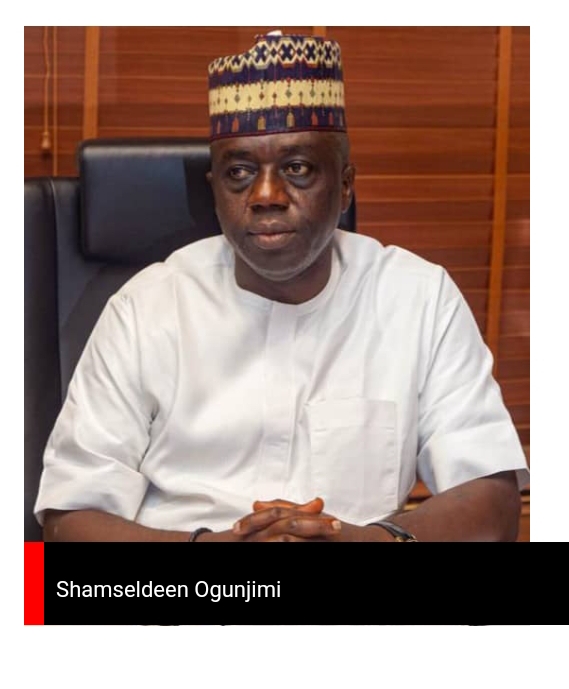
New Accountant-General, Shamseldeen Ogunjimi Assumes Office, Calls For Unity

0

The newly appointed Accountant-General of the Federation, Shamseldeen Ogunjimi, assumed office on Monday, setting the tone for his tenure with a call for unity and a firm stance on maintaining the independence of the Treasury.

Addressing staff at the Treasury House in Abuja, Ogunjimi stressed the enormity of the task ahead, calling for collective responsibility in ensuring the institution’s success. He vowed to dedicate himself fully to strengthening the Treasury’s standing.

“The task ahead is enormous. If I fail, every single one of you here has failed. I am ready to commit myself, my life, to the service of this institution,” he declared. “I am here to do everything possible to make sure the Treasury is at the head of all institutions in Nigeria.”

Ogunjimi urged staff to embrace teamwork, stressing that internal divisions would only hinder progress. “Please, I beg of you. Let us work together. A pass is a pass. Let us work, work,” he appealed.

He made it clear that his administration would not tolerate external interference, particularly from Chief Executives of Ministries, Departments, and Agencies. Reflecting on past experiences, he recalled attempts by some executives to influence personnel decisions, particularly regarding Directors of Finance and Administration.

“I’ve been a victim of a Chief Executive calling the Accountant-General to say, ‘I don’t like this Director of Finance and Admin, I don’t like this director. Please remove him.’ I’m not going to follow that path,” he said firmly.

He assured treasury officials that career-related matters would be handled with fairness, stating that directors posted to MDAs would be allowed to present their cases if issues arose. “If anybody comes to me, I’m going to call the director-in-charge. Tell your own story or whatever you know about it. Then we’ll now decide whether it’s worth it,” he stated.

Ogunjimi acknowledged concerns about workplace hostilities, admitting that an unsupportive environment could undermine officers’ effectiveness.

He assured staff that where necessary, alternative solutions would be explored to ensure their professional well-being.

“Sometimes, your career may also be at stake. If your chief executive doesn’t want you, then there’s no point staying there because he or she may frustrate your functions or your life. So, we will amicably look for a better solution that will make your life not miserable,” he assured.

He reaffirmed his commitment to an open-door policy, urging staff to reach out whenever they faced challenges. “If anything is bothering you in the discharge of your functions, I’m here. Talk to me. I’m your AGF. Feel free to come to me. I will listen to you. I’m a good listener. I will support you,” he assured.

Acknowledging the challenges ahead, he urged the staff to focus on rebuilding and improving the Treasury’s image rather than dwelling on past events. “Whatever has happened, has happened. We have to move on. I am not in any group. We are not going to polarise the house. The task ahead is enormous. We can’t be fighting ourselves. We must achieve,” he said.

Expressing gratitude for the opportunities he had received in the service, he pledged to uphold the integrity of the institution. “I may not have been who I am today if not for the opportunity provided to me by this service,” he noted.

He called on staff to take responsibility for enhancing the institution’s reputation, urging them to reflect on their roles in shaping public perception. “The past is the past. Let us work. Work, work. Begin to ask yourself, what will you do to change the perception of the Treasury? Every second of your work will impact the image of the Treasury,” he said.

Ogunjimi was appointed on March 7, 2025, succeeding Dr Oluwatoyin Sakirat Madein, who retired on the same day.

He holds a Bachelor of Science in Accountancy from the University of Nigeria and a Master’s in Accounting and Finance from the University of Lagos. A fellow of the Institute of Chartered Accountants of Nigeria and the Chartered Institute of Taxation of Nigeria, he has over 30 years of experience in financial management across the public and private sectors.

Industrial Court orders Pharmaceutical Company to return Ex-Staff Certificate within 7 days

0

Hon. Justice Isaac Essien of the Lagos Judicial Division of the National Industrial Court has ordered Greenlife Pharmaceuticals to return her former Staff member, Chinedu’s original Pharmacy certificate from the University of Nigeria within 7 days.

Justice Essien found that irrespective of any claim Greenlife Pharmaceuticals may have against Chinedu, it was wrong for Greenlife Pharmaceuticals to continue to keep Chinedu’s original certificate after his employment had been terminated.

The Court ordered Greenlife Pharmaceuticals to pay Chinedu the sum of N 219,300.00 representing his salary from January 2020 to 16th  March. 2020, and the sum of N200k cost of action within 30 days

From facts, Claimant- Chinedu had submitted that he was offered employment by the defendant on the 15th of July 2016 until his employment was wrongfully terminated on March 16th  2020 without payment of salaries in lieu of notice to the claimant.

Chinedu averred that he was charged to court on the allegation of misconduct and alleged that the defendant held on to his original pharmacy certificate till today, making it impossible for him to earn a living or survive.

Chinedu alleged that his original certificate is being ceased and kept in the custody of the company till date and no benefit, salary and ex-gratia or other entitlements, and urged the Court to grant the reliefs sought.

In defence, the defendant alleged that the Chinedu indebtedness to the company were yet to be properly accounted for. The defendant averred that if the certificate of Chinedu is released to him without the liquidation of his indebtedness, it would be difficult to recover the said sum from Chinedu.

In a well-considered judgment, the Presiding Judge, Justice Isaac Essien, held that the court is not concerned with the allegation of criminal infractions nor is the court going to establish any criminal liability on the part of Chinedu.

The Court stated that Greenlife Pharmaceuticals, in the course of the trial, has led evidence which justifies the reasons given in the letter of termination of Chinedu.

However, Justice Essien found that irrespective of any criminal infarction that may have been committed by the claimant or any claim Greenlife Pharmaceuticals may have against the claimant it was wrong for the defendant to continue to keep the original certificate of the claimant after the claimant’s employment had been terminated and the claimant was no longer in the employment of the Greenlife Pharmaceuticals.

The Court refused the claimant’s claim for general damages for lacking merit.

Visit the judgment portal for full details

President Tinubu Commends NDDC Boss

0
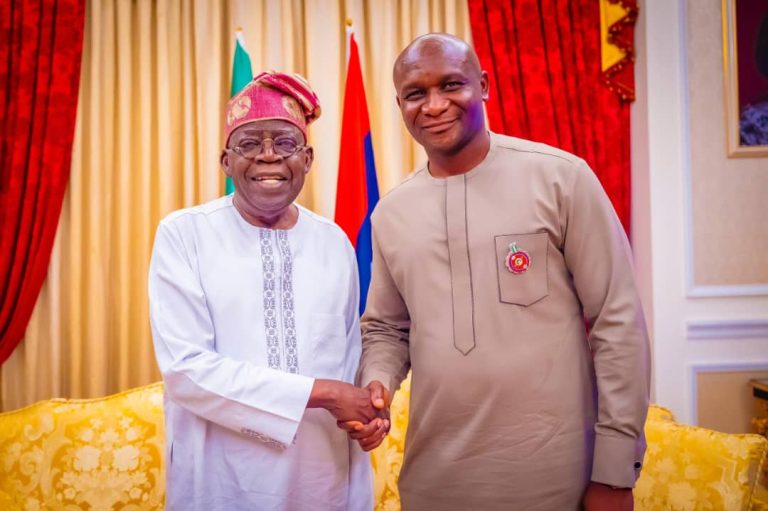
President Bola Ahmed Tinubu has praised the Managing Director of the Niger Delta Development Commission, NDDC, Dr Samuel Ogbuku, for doing a good job in driving the process of development in the Niger Delta region.

Speaking at the State House in Abuja during the inauguration of the Planning Committee for the National Youth Congress, Tinubu urged young Nigerians to take ownership of the country’s development.

The President said: ” Dr Ogbuku of NDDC is here. I commend your efforts. You are doing very well.”

Recall that the President had on July 12, 2024, during the Niger Delta Stakeholders Summit in Port Harcourt, commended the NDDC Board and Management for working in unison to fast track the development of Nigeria’s oil-rich region.

On that occasion, President Tinubu was represented by the Senate President, Senator Godswill Akpabio, who emphasised the importance of unity in driving progress.

At the inauguration of the Committee for the National Youth Congress, President Tinubu reaffirmed his administration’s commitment to youth empowerment, declaring that the government’s policies are designed to secure a prosperous future for the next generation.

He told the youths: “You are the hope of this country. Everything hangs on your future,”

“The Government of the day is all about you. You represent over 60% of our population; you’re the heartbeat of our nation. Take this opportunity very seriously,” Tinubu said.

The President acknowledged Nigeria’s economic challenges but expressed optimism that the country is recovering. “Look at me in the face, tell me whatever you think is wrong and how you want things done. We’ll try to implement all of it as long as it is for the prosperity of this country,” he assured.

The President also encouraged the committee to leverage technology and explore ways to boost agriculture, youth entrepreneurship, and national food security.

Marketers Condemn Fuel Price Reduction, Back Importation

0

Oil marketers under the aegis of the Petroleum Products Retail Outlet Owners Association of Nigeria have condemned the constant reduction of fuel prices, saying marketers are still counting losses.

Despite deregulation, PETROAN said there is a need for a regulation that will make it mandatory that prices can only be changed after six months.

In a statement by PETROAN Publicity Secretary Joseph Obele, the association also made a u-turn, saying imports should be encouraged to put an end to monopoly.

Recently, the Dangote refinery dropped the price of Premium Motor Spirit (petrol) from N890 per litre to N825 at the gantry.

This forced the Nigerian National Petroleum Company Limited to follow suit by lowering its pump price to N860 per litre.

Speaking about price stability, the association argued that volatile fuel prices can have a ripple effect throughout the economy, impacting transportation costs, food prices, and the overall cost of living, saying sudden spikes in fuel prices can lead to financial strain and uncertainty.

“The association stressed that the sudden downward review of prices has resulted in massive losses, with those affected counting their losses in billions of naira. This situation poses a significant fear for further investment in the sector, as investors are wary of unpredictable market conditions.

“Moreover, the threat of price fluctuations is affecting the business boom of the sector, which will definitely lead to retrenchment. This will have far-reaching consequences, including job losses and economic instability.

“To address these challenges, PETROAN proposed that regulatory authorities establish mechanisms to encourage price stability for at least six months. This approach will help reduce the uncertainty and risk associated with investments in the sector, ultimately promoting economic development and protecting the interests of consumers and Nigerians,” the statement stated..

PETROAN called for a collaborative approach among stakeholders, including government agencies, regulatory bodies, and industry players, to establish mechanisms that promote price stability, including transparent pricing models, effective regulation, and strategic reserves that can be tapped into during times of crisis.

Our correspondent observes that some importers selling petrol at N945 in Lagos have now adjusted their prices, selling below N900. This, it was learnt, has led to losses as the importers sell below their costs.

While emphasising the critical role that the downstream sector plays in the nation’s economy, Obele said the sector is facing challenges like fluctuating prices, market monopolies, and unhealthy competition that can undermine the foundations of the economy and the trust of our citizens.

“After due consultation with key stakeholders and players in the petroleum sector, the Petroleum Products Retail Outlets Owners Association of Nigeria has taken a firm stance on promoting healthy competition and controlling price fluctuations in the downstream sector.

“To this effect, PETROAN advocates the importance of preventing monopolies and ensuring local refineries thrive, given their significant economic benefits to the country,” he stated.

He highlighted the importance of healthy competition, saying that when competition thrives, it leads to better choices for consumers and ultimately contributes to economic growth.

“PETROAN firmly believes that a competitive downstream sector is not just beneficial but necessary.

“To achieve this, PETROAN advocates for a multiplicity of supply sources, including Dangote Refinery, NNPC refineries, modular refineries, and imports. This diverse range of sources will foster competition, especially with imports, allowing for comparisons with international market prices and protecting the local market from exploitation.

“We advocate for policies that dismantle barriers to entry for new players, promote fair practices among existing companies, and ensure that no single entity can dominate the market to the detriment of consumers,” he added.

The association commended the Nigerian Midstream and Downstream Petroleum Regulatory Authority and the Federal Competition and Consumer Protection Commission “for their efforts in promoting healthy competition.”

However, the association also urged these regulatory bodies to remain vigilant and prevent unfair competition practices.

To achieve these goals, Obele added that players must advocate for sound policies and regulations that support a competitive and stable market.

This includes establishing clear and fair regulations that govern market practices, and ensuring that all players adhere to the same standards.

PETROAN also called for implementing measures that protect consumers from unfair pricing and practices, ensuring that they have access to quality products at reasonable prices.

The association encouraged investment in infrastructure to support the downstream sector, including refineries, distribution networks, and storage facilities.

“PETROAN is firmly committed to the Petroleum Industry Stakeholders Forum and stands firm to advocating for healthy competition, full liberalisation, and price stability in the downstream sector. We urgently urge NMDPRA to quickly swing into action to ensure fair pricing.

“We believe that by working together, industry stakeholders, government, and consumers, we can create a vibrant, competitive market that benefits everyone. Let us unite in our efforts to ensure that the downstream sector not only meets the needs of today but also paves the way for a sustainable and prosperous future. Together, we can build an industry that is resilient, competitive, and fair for all,” the statement concluded.

Why Retailers, Marketers Dump Dangote Refinery Petrol For Import – Stakeholders

0

Petroleum Products Retailers and marketers have explained why petrol imports have persisted despite the Dangote Refinery and other local refineries’ production capacity.

The President, Petroleum Products Retail Outlet Owners Association and the Chairman, Major Marketers Association of Nigeria, Billy Gillis-Harry and Tunji Oyebanji in an exclusive interview with DAILY POST on Monday cited fear of healthy market competition, competitive pricing and inadequate petrol production capacity as reasons for the product’s continued import.

This comes amid the National Bureau of Statistics’ foreign trade data showing that petrol imports surged by 105 percent to N15.4 trillion at the end of 2024.

Similarly, the report indicated that fuel imports hit N930 billion in February 2025 alone, raising concerns among stakeholders in the country’s downstream sector.

Recall that the Nigerian Midstream and Downstream Petroleum Regulatory Authority said that Dangote Refinery, Port Harcourt and Warri refineries met only 50 percent of the national petroleum products consumption requirement in February 2025. #

However, in a statement last month, the president of Dangote Refinery countered NMDPRA and insisted that the $20 billion Refinery can meet 100 percent of Nigeria’s 100 percent petroleum production requirements.

Nigerians are now left in limbo amid the controversy as NNPC said it has not imported petrol so far in 2025.

Meanwhile, Gillis-Harry and Oyebanji in their insights to DAILY POST put clarity to the debate.

Speaking, Gillis-Harry insisted that petroleum retailers get their products from all sources, including Dangote Refinery, NNPC and import.

According to him, petrol retailers will continue to get fuel from sources with the best pricing to avoid a monopoly of the country’s petroleum downstream.

He frowned at a situation where the refinery would reduce fuel prices overnight without due consultation with its partners and retailers.

Gillis-Harry added that healthy competition and price stability must be guaranteed in Nigeria’s downstream sector for the good of Nigerians.

“Retailers are not running away from Dangote Refinery. We patronize every refinery, but we subscribe to full liberation so that we will not run a monopolized downstream sector.

[b]“A situation where one refinery is shifting prices up and down without consideration of retailers is uncalled for.

“We cannot buy a product at N889, and over the night, the prices are dropped to N825, which is unfair.

“We continue to buy petrol from all sources that are profitable to us, either NNPCL, Dangote Refinery or through import”, he told DAILY POST.[/b]

On his part, Oyebanji explained that local refineries such as Dangote Refinery were not meeting 100 percent of domestic demand- the reason for fuel import to augment the vacuum.

According to him, if local refineries produced enough to meet the domestic market and with competitive prices, no right-thinking businessman would import.

“The report circulated today was for 2024. I don’t understand why it is being played up in the media as if it is new.

“Seems it is to advance a particular agenda. I don’t think local refineries are meeting 100 percent of local demand.

“So, to prevent shortages, some importation is being allowed, but to give the impression that such importation is growing isn’t correct.

“NNPCL, which has been the largest importer up to last year, has confirmed that they have not imported and yet someone is pushing this narrative.

“If local refineries produce enough to satisfy local demand and sell at a competitive price, then no right-thinking businessman will import”, he told DAILY POST.

Recall that earlier this month and last month, NNPC and Dangote refineries reduced petrol prices to between N860 and N880 per liter.

The development sparked a price war among the bigwigs in the country’s downstream sector, as Nigerians now buy petrol between N860 and N970 per liter nationwide.

On October 15, 2024, 650, 000 barrels per day, Dangote Refinery kicked off supply of petrol.

At the same, NNPC restarted petrol production at the Port Harcourt and Warri refineries in November and December 2024.

Now Is Time For Good Politics, Adebayo Welcomes El-Rufai To SDP

0

A former Kaduna State Governor, Nasir El-Rufai, has formally joined the Social Democratic Party on Monday, PUNCH Online earlier reports.

This move, seen as a strategic realignment ahead of the 2027 elections, was warmly celebrated by Adewole Adebayo, the party’s 2023 presidential candidate, who described it as a moment of renewed hope for Nigeria.

Taking to X also on Monday, Adebayo penned a welcome message, declaring El-Rufai’s entry as a vital addition to the SDP’s mission to rescue Nigeria from years of poor governance and underdevelopment.

“On behalf of the teeming members of the @TheSDPNg and patriotic democrats who believe in Nigeria and her promise of inevitable greatness, I heartily welcome my dear brother @elrufai to our party.

“With the hardworking and sagacious Mallam joining our ranks, an avid worker for the people has been enlisted in our forces against poverty and insecurity,” Adebayo wrote.

The SDP flag bearer emphasised the urgent need to fulfill Chapter 2 of Nigeria’s Constitution, addressing fundamental human rights, social justice, and economic development.

He called on all genuine democrats and nationalists to join the party’s mission to restore hope, stating, “Good politics begets good governance. Let no one sit on the fence any further.

“There is no time to waste. Join us on the March Again! God bless Nigeria.”

El-Rufai brings a wealth of experience from his tenure as the Minister of the Federal Capital Territory and Governor of Kaduna State.

His defection, according to multiple reactions, from the ruling All Progressives Congress is seen as a critique of the party’s handling of national issues.

Political analysts are already speculating that El-Rufai’s move could ignite a wave of defections to the SDP as disillusionment grows with both the APC and the People’s Democratic Party (PDP).

The SDP, known for its progressive ideals and focus on ethical governance, now has a heavyweight in its arsenal to challenge the status quo in Nigeria’s political sphere.

Adebayo’s post also took a swipe at the ruling APC and its opposition counterpart, the PDP, labeling their years in governance as “the locust years.”

He reiterated the SDP’s commitment to clean and ethical politics as a foundation for national revival and African liberation.

With this strategic alignment, the Social Democratic Party is positioning itself as a viable alternative for Nigerians yearning for change.

As the countdown to 2027 begins, the SDP’s “Hope Again” campaign may well capture the imagination of a country seeking a fresh start.

PUNCH Online reports that an aggrieved El-Rufai had played down rumours earlier in the year about leaving the APC until today’s official announcement.

Meanwhile, he paid a visit to notable Nigerians on Sunday – the purpose of those meetings he had yet to make public before his defection today.

Mass Exodus Hits Kaduna APC Following El-Rufai’s Resignation

0

Mass exodus has hit the All Progressives Congress, APC, in Kaduna State following the resignation of the immediately past governor, Naira El-Rufai from the party.

Several resignation letters sighted by DAILY POST on Monday showed that party faithful believed to be supporters of El-Rufai are leaving the ruling party in droves.

This comes hours after El-Rufai made it public that he has defected to the Social Democratic Party, SDP.

In the same manner, former commissioners under El-Rufai tendered their resignations from the party.

Former Commissioner for Local Government, Ja’afaru Ibrahim Sani and Human Services and Social Development, Hajiya Hafsat Mohammed Baba have all submitted their resignation letters to the party’s respective wards chairmen on Monday.

The resignation of Sani reads in parts, “With the hatred and disdain shown to us by the leadership of the party we worked hard to nurture, it has become compelling to seek another platform in our desire to bring development and prosperity to our dear people.

“Consequently, after a deep retrospection, re-evaluation, and consultation with key stakeholders in Anchau, Kubau LGA, and Kaduna State, I write to inform you of my decision to withdraw my membership from the APC with immediate effect.

“As I move on, I remain grateful to you and to all members of the APC, as well as the electorates in the Ward, Kubau Local Government Area, and the State for the support rendered to me as Chairman of the APC Stakeholders, Kubau LGA. I recall with a feeling of fulfillment the unprecedented electoral victories the party recorded in previous general elections in the ward and the local government area. The historic feat will remain indelible in the history of party politics in the local government area.

“Accept the assurances of my regards at all times.

“Enclosed herewith is my temporary membership registration card for your Ja’afaru Ibrahim Sani necessary action”.

Also, the letter from Hafsat Baba partly reads: “The Chairman may note that I came into the negotiations to form the APC as the incumbent, and hence, legacy National Woman Leader of the defunct Action Congress of Nigeria. We joined the merger to entrench democratic order and justice to the political space in the country which was in dire need of a new political and governing direction.

“However, the party has lost its sense of direction and purpose and has deviated from its founding principles of justice, peace and unity. As an ardent proponent and follower of these principles, continued association with the party as it is currently constituted is against my principles (Aqida).

“Further actions and political decisions will follow as myself and like-minds deem appropriate and as may keep us on our founding – and still extant- principles of Justice and Political order”.

However, reacting, Kaduna APC said it was not losing sleep over El-Rufai’s defection.

Nigeria Spends N930bn On Fuel Imports In February Despite Rising Local Refining

0

Nigeria Spends N930bn on Fuel Imports in February Despite Rising Local Refining Capacity

Nigeria imported petrol and diesel in February 2025 valued at about N930 billion, despite rising local refining capacity, raising questions as to the economic sense behind the licensing of oil marketers to bring in fresh petroleum products.

Data on the importation of the fuels last month, showed that aside from the N930 billion bill in February, oil marketers licensed by the Nigerian Midstream and Downstream Petroleum Regulatory Authority (NMDPRA), imported products worth N5.5 trillion between October 2024 and January this year.

However, this development is taking place despite the growing capacity of the Dangote Refinery as well as the Port Harcourt Refinery owned by the Nigerian National Petroleum Company (NNPC). Both refineries produce petrol.

In addition, the Warri Refinery as well as other modular refineries scattered mostly in the Niger Delta, refine diesel locally.

In February this year, the petroleum products import licensing body, the NMDPRA, argued that it had continued to approve oil marketers to bring in products, to address shortfalls in the country. It disclosed that the local refinery only meets 50 per cent of daily fuel consumption, justifying the continued importation of petrol to meet the deficit.

Executive Director of Distribution, Systems, Storage, and Retailing Infrastructure of NMDPRA, Ogbugo Ukoha, told journalists: “Just before the current administration came in, the daily PMS (Premium Motor Spirit) supply sufficiency was always more than 60 million.

“In fact, averaging about 66 million a day for PMS. And following Mr. President’s withdrawal of subsidy, the announcement of May 29th, 2023, we immediately saw a steep decline in consumption. And between then and as we speak, we’ve continued to do plus or minus 50 million.

“Of these 50 million litres averaging for each day, less than 50 per cent of that is contributed by domestic refineries. And so the shortfall in accordance with the Petroleum Industry Act (PIA) is sourced by way of imports. So just for clarity, what I’m saying is that the contribution of local refineries towards the sufficiency is less than 50 per cent.”

But President of Dangote Industries Limited (DIL), Aliko Dangote, also speaking in February, said that his refinery holds over 500 million litres of petrol and N600 billion worth of total petroleum products in stock.

A Business Consultant, Mr Dan Kunle, agreed with this position, stating that the sustained import dependency by Nigeria could erode recent gains in the stability of the naira.

In all, the import data for February 2025 indicated that Nigeria brought in 701.75 million litres of petrol and 265.88 million litres of diesel during that month.

Based on landing cost estimates from the Major Oil Marketers Association of Nigeria (MOMAN) as of February 20, the total import bill in February is believed to have exceeded N650.8 billion, while diesel amounted to over N278.5 billion.

The fuel tanker vessels came mainly through Lagos and Port Harcourt, Calabar, and Warri ports.

The NNPC Group CEO, Mele Kyari had stated that the company had not imported petrol this year.

“These significant import figures come at a time when local refining output is increasing. Two of NNPC’s four refineries, in Warri and Port Harcourt, have reportedly resumed operations, while private refineries such as Dangote Refinery, Waltersmith, and Aradel are actively producing.

“Despite these positive developments, the continued large-scale importation of refined petroleum products underscores structural bottlenecks in the industry, including logistics challenges, production scale-up issues, and supply chain inefficiencies,” Kunle explained.

According to him, reducing import reliance will require accelerated refinery optimisation, competitive local pricing structures, and strengthened regulatory frameworks to incentivise domestic supply over costly imports.

Kunle stressed that the continued large-scale dollar-denominated imports could reverse these gains that the naira garnered in the last few months, putting additional pressure on foreign exchange reserves.

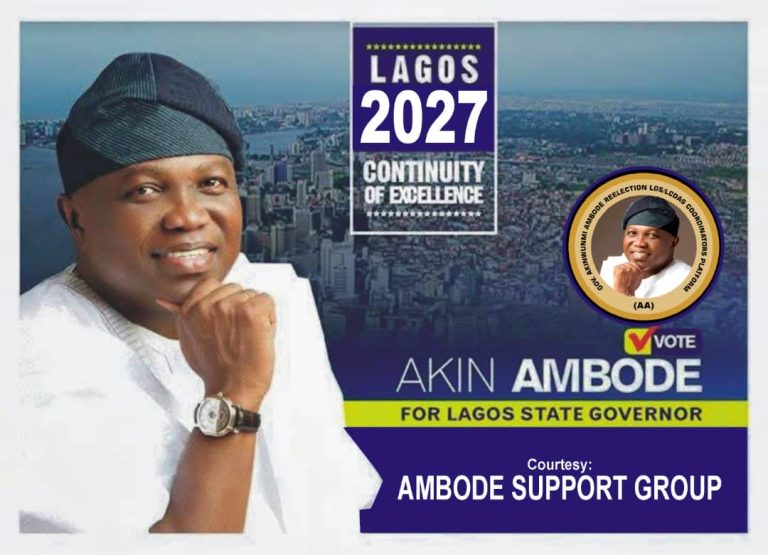
Ambode Support Group Denies Involvement In Viral Online Video

0

The Ambode Support Group (ASG) has strongly distanced itself from a viral video making rounds on social media, in which individuals are asked to say “YES” to former Governor Akinwunmi Ambode’s comeback and then provide their account numbers for financial rewards.

In a firm statement, the ASG described the video as a scam, warning the public to disregard any such messages as they have no affiliation with it. The group clarified that it remains committed to its core values of service, integrity, and support for progressive governance, but it has not initiated or endorsed any financial inducement scheme.

The Ambode Support Group urges well-meaning Nigerians to be vigilant and not fall victim to fraudulent schemes aimed at exploiting political goodwill for personal gain. It further advised members of the public to always verify information from the group’s official communication channels before engaging with any purported ASG-related activity.

For clarification and official updates, supporters are encouraged to follow the group’s verified platforms.

Sign
Pius Ade Babaleye Pab
State Director of information and media
Ambode Support Group

Petrol Price Hike Looms As NNPC Halts Naira-for-crude Deal With Local Refineries

0

The Nigeria National Petroleum Company (NNPC) Limited has discontinued the naira-for-crude deal with Dangote Petroleum Refinery and other local refineries, TheCable understands.

The development could trigger an uptick in the pump price of petrol as local refineries — including Dangote — will now rely on international suppliers for feedstock, gulping huge costs in dollars.

The NNPC reportedly told the refineries it has forward-sold all its crude, although production is now said to be higher than when the deal commenced.

Nigeria officially commenced the sale of crude oil and refined petroleum products in naira to local refineries on October 1, 2024.

The move was meant to improve supply, save the country millions of dollars in petroleum products imports, and ultimately reduce pump prices.

However, multiple sources said the initiative will be suspended until 2030.

A high-level source confirmed that the NNPC has notified Dangote Petroleum Refinery and other local refiners that it will no longer provide crude oil to them, as it has forward-sold all of its crude supplies until 2030.

Despite recent attempts to bolster domestic refining capacity, the country has spent “over $4.3 billion importing 6.38 billion litres of premium motor spirit (petrol) and automotive gas oil (diesel) in just five months”, industry sources said.

The NNPC is said to be among the entities still importing products, an act backed by the recent deregulation of the downstream sector.

Another source said at a time when Nigerians are hoping for further price reductions, “the NNPC unilaterally decided to end the naira-for-crude initiative”.

TheCable has contacted the NNPC for comments.

While the Dangote refinery has declined to comment on the NNPC’s recent move, an official said the company will carefully assess its options and decide on the appropriate course of action.

The decision to stop the naira-based crude supply might lead to volatility in the foreign exchange (FX) market, thereby eroding recent gains, according to market analysts.

THE TROUBLED CRUDE-FOR-NAIRA DEAL

In October 2024, the federal executive council (FEC) approved the allocation of 450,000 barrels of crude intended for domestic consumption to be sold in naira to Nigerian refineries, with the Dangote refinery serving as a pilot project.

Under the scheme, the NNPC was expected to supply 385,000 barrels per day of crude oil to the Lekki-based refinery.

However, the national oil firm has been accused of consistently failing to meet the allocation.

In November 2024, the refinery said the crude-for-naira initiative was faltering, as it was still unable to secure adequate supplies.

“We need 650,000 barrels per day, (state oil firm NNPC Ltd) agreed to give a minimum of 385,000 bpd but they are not even delivering that,” Edwin Devakumar, the vice-president of Dangote Industries Limited (DIL) had said.

He further described the NNPC’s supply as “peanuts”.