

Calls for cooperation, support of FCT residents for ongoing projects
The Honourable Minister of the Federal Capital Territory (FCT), Barr. Ezenwo Nyesom Wike, has announced that the comprehensive renovation of the International Conference Centre (ICC) is progressing rapidly and is on track for completion by May 2024, at a total cost of N39 billion.
This announcement followed an extensive inspection tour conducted by the Minister on Wednesday, March 12, 2024, of key infrastructure projects slated for commissioning to mark the second anniversary of President Bola Ahmed Tinubu’s administration.
During the tour, Minister Wike expressed satisfaction with the progress of the ICC renovation, emphasizing its significance as a national landmark. “This is at the cost of N39 billion that we are spending and all the materials are on ground. So, I can say that they are 70 percent (complete) and they have assured that they will complete it and handover by May,” he stated.
The Minister recalled the original vision for the ICC, as highlighted in former President General Ibrahim Babangida’s memoirs, which aimed to establish a world-class venue for international conferences and meetings. He lamented the previous deterioration of the facility under private concession, but expressed delight at the current rehabilitation efforts.
“Upon completion, the ICC will be a source of national pride,” Minister Wike affirmed. He lauded the quality of work being carried out by the contractors, including reputable firms like Julius Berger and CGC, across all projects inspected.
In addition to the ICC, the Minister also inspected the construction of the 15-kilometer Outer Southern Expressway (OSEX) from Ring Road 1 (RR1) to Wasa junction, and the Life Camp to Karmo dual carriageway. He reiterated the administration’s commitment to delivering impactful projects that will improve the lives of FCT residents.
Minister Wike called for the continued support of all FCT residents, including traditional rulers and youths, for the government’s infrastructure development initiatives. He urged cooperation with contractors to ensure timely project completion, particularly during the current favorable weather conditions.
“We are not here to bring hardship on anybody but to improve our lives. I know how difficult it is but again everybody has to make sacrifices,” the Minister said. “We are pleading with residents to cooperate with the various contractors that are building road projects so that we can have it completed on time”.
Wike Reveals ₦39 Billion Renovation Of International Conference Centre (ICC)

Import Bills On Used Vehicles Fall 65% To ₦354.8 Billion

As economic hardship bites harder, importation of used vehicles has recorded a significant decline with diesel or semi-diesel engine, of cylinder capacity 2500cc dropping by 65.8 percent year-on-year (YoY) to N354.8 billion in 2024 from N1.04 trillion in 2023.
However, the decline also reflects the effect of continuous increase in import duty, levies and taxes on that category of imports.
Breakdown of data from the National Bureau of Statistics, NBS, Foreign Trade in Goods Statistics for the review period showed that no bills were recorded on used vehicles imports in the first quarter of 2024 (Q1’24).
But second quarter (Q2’24) recorded N110.54 billion, and the value grew by 11.9 percent QoQ to N123.77 billion in Q3’24 before declining 2.6 percent QoQ to N120.49 billion in Q4’24.
Recall that in July last year the Ports and Terminal Multipurpose Limited blamed high import duty and taxes on used vehicles for the 60 per cent drop in vehicle importation it experienced in the first half of 2024, H1’24.
In February 2025, the Nigerian Custom Service (NCS) said it intends to grant waivers to vehicle owners to pay duties within a specific time frame to avoid sanctions.
Recently, the Federal Government announced a 90-day window to regularise import duties on specific categories of vehicles.
The National Public Relations Officer of the Nigeria Customs Service, Abdullahi Maiwada, said the development was a proactive move to enhance compliance and streamline import processes.
“In a proactive move to enhance compliance and streamline import processes, the NCS, under the directive of the Honourable Minister of Finance and Coordinating Minister of the Economy, is pleased to announce a 90-day window for regularising import duties on specific categories of vehicles.
“Valuation and assessment of the vehicles would be carried out using the Vehicles Identification Number valuation method. Import duty and a 25 per cent penalty shall be paid in tandem with the import guidelines, procedures, and documentation requirements for used vehicles under the Destination Inspection Scheme in Nigeria (2013) and the NCS Act 2023. Also, duty payments must be made using the procedure code specifically created for this exercise.” Maiwada said.
President Of Ogbia Brotherhood Youth Council Celebrates The Rescue Of The Kidnap Victims From The Abductors
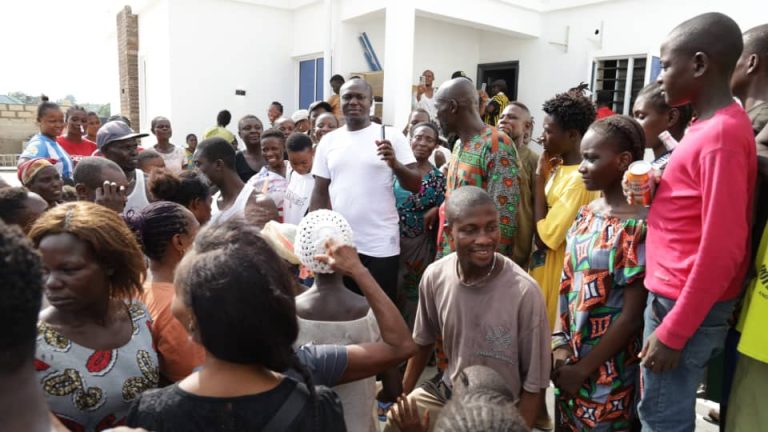
The President of Ogbia Brotherhood Youth Council, Comr. Mipuruaziba Akaragha has expressed his profound joy over the rescue of Mr. Akari, Special Adviser to the MD/CEO of NDDC on Domestic Affairs and Emmanuel Nathan Ogbuku, younger brother to Dr. Sammy Ogbuku.

The President heartily expressed his appreciation to the youths of Anyama clan for their gallantry and bravery throughout the trying period.
In a statement, signed by the president, he equally commended the role played by the Nigerian Security Services, great Joshua Maciver the state coordinator and high chief Ebiango Egai for mobilizing men and officers of the Tantita workforce in the rescue mission.for their professional input, which led to the rescue of the victims.
Equally worthy of commendation is Otuoke vigilantees led by Fred Ademe and Mr.Preye amongst others for their collaborative effort in the operation that led to the rescue of Mr.Akari and Emmanuel from the kidnappers Den. Akaragha noted that this is a practical example of how teamwork and collaborative efforts by all stakeholders can go a long way in combating criminality and violence in our kingdom.
He enjoined all to sustain this spirit going forward so that Ogbia kingdom would be free from criminality and violence.
The youths deserve commendation for ignoring their comfort to sleep in the thick forest for two nights in an effort to free their brother from our common enemies.
He sincerely acknowledged the effort of the youths of the following communities that played a supportive role in the rescue mission; namely Otuoke, Onuebum, Ewoi, Otuabula, Otuobhi, Ologeghe, Anyama, Ologi, and Ayakoro.
Comr. Mipuruaziba also appreciated Hon.Chief Ebiango Okoba Egain-Emafi (IV), who swiftly mobilized funds and materials, and Hon. Faith Ogidi, Hon Omosuo Nimi-wilson Irigha for playing a supportive role in the search team.
“Let me also acknowledge the tremendous effort of the paramount ruler of the Ewoi community who also joined the rescue team. I will not forget the role played by the Executives of Ogbia Brotherhood Youth Council Worldwide throughout the period of the search for kidnapped victims. You have shown me an uncommon love, and i want to thank you, especially my vice president, Comr Alex Amasueba Gurenayam, who was part of the team that went into the forest” he said.
Finally, prayers were offered for the safe return of the kidnapped, and our amieable paramount ruler of Ayakoro enclave HRH Righteous G Inegbegha led the prayer Indeed, God answers the prayers of our leaders.
He added that ” God, in his infinite mercies, has done something great to Ayakoro. community. I want to sincerely thank the Almighty God once again, for this victory to Ogbia Kingdom and Bayelsa state at large.
Indeed, together, we can stop illegality and criminality, he added”
FG Behind PDP, LP, NNPP Crisis – El-rufai
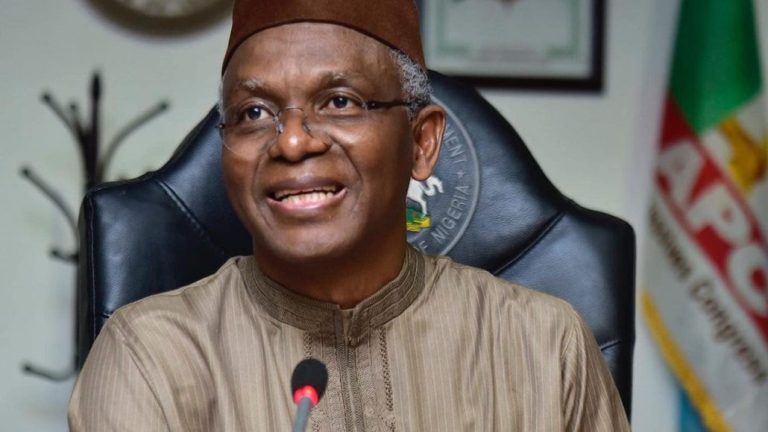
A former governor of Kaduna State, Nasir El-Rufai, has said the crisis rocking the opposition parties in the country are the design of the government of the day.
According to a video sighted by our correspondent, El-Rufai made the claim while addressing some members of the Social Democratic Party (SDP).
The former governor also revealed that there are people who have been contracted to cause problems in the opposition parties]/b].
He said, “[b]The crisis in the Labour Party is caused by the government of the day. Everyone knows it. Jumping from one court to another is all designed to distract the party leadership from focusing on their own functions. The same thing is happening in the PDP, even the NNPP has been targeted for destruction. There are people that have been resourced to go and cause problems in NNPP.
“The last thing I read about the NNPP is that one faction of the party has expelled Kwankwaso and the sitting governor. When you see things like that, you know it is contrived crisis. Which party sacks the sitting governor and the only governor they have?
You know, it is contrived. I don’t have the details. I cannot mention this because I don’t have the details.”
El-Rufai joined the SDP on Monday after dumping the All Progressives Congress (APC).
In a statement, he revealed that he made the decision because developments in the last two years confirm that there is no desire on the part of those who currently control and run the APC to acknowledge, much less address, the unhealthy situation of the party.
“At this point in my political journey, I have come to the conclusion that I must seek another political platform for the pursuit of the progressive values I cherish,”he said.
Wike Supervises Demolition In Gishiri As Residents Reject Compensation
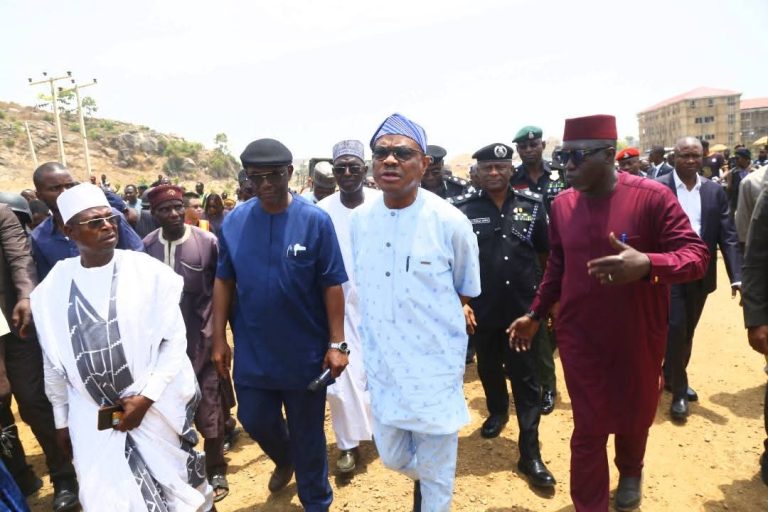
Wike supervises demolition of structures blocking Abuja road project after residents refused to collect compensation, relocate
The Minister of the Federal Capital Territory, Mr Nyesom Wike, on Tuesday, supervised the demolition of parts of the Gishiri community in Katampe District, Abuja.Wike explained during the exercise in Abuja that the demolished structures were built on a road corridor.
According to the minister, the action became necessary due to the failure of the affected residents to relocate.
He recalled that the FCT Administration had awarded a contract for the construction of a dual carriageway from Nnamdi Azikiwe Expressway, by NICON Junction to Wole Soyinka Way, which was expected to be completed in May.
He said that funds for compensation have been made available, including a site for the affected persons to relocate to.
He, however, said that the affected residents refused to collect the compensation and relocate, “meaning the job will not go on. We will not allow that.
“I have been here more than four times.
“We have sat down with the community leaders and told them the need to cooperate with the government so that the contractor will be able to complete the project and hand it over by May.
“The traditional leaders pleaded with us to give them one week. The money for compensation has been made available and we made available somewhere where they can relocate.
“However, with all these assurances, it does appear that work is not going on, and I informed the traditional rulers that this work has to go on.”
The minister, who said “enough is enough”, stressed that no government would fold its arms and allow people to sabotage a project being executed for the interest of the public.He expressed dismay that the people refused to cooperate with the government even when the space was not being acquired by some person to build houses.
“So, I called the community leaders while away in Milan, Italy. I am going to be personally here to supervise this demolition, and that’s what I came for.
“Let them know that it is not going to be business as usual,” he said.
He said that the government had done what was humanly possible by giving the affected persons more than three months to do what was right.The minister added, “I can fold my arms and say let the work stop. No, we won’t do that. We will not do that. We have given them enough time.
“Are we going to say because of few people, the government will not do its work?”
On the way forward, the minister said that the director of compensation and resettlement would consult the community and determine what would be feasible for the affected residents.“If they don’t want it, it is their business,” Wike said.
Reacting to the demolition, some angry residents threw stones at the operators of the bulldozers.
The police and other security agencies at the scene had to use teargas to disperse the angry youths and bring them under control.
https://punchng.com/wike-supervises-demolition-of-structures-blocking-abuja-road-project/
Trump Poses With Teslas In Front Of The WH, The Company’s Slumping Stock Climbs –

New York, CNN— It was an extraordinary scene at the White House South Lawn Tuesday. President Donald Trump effectively held a combination press conference and live Tesla ad outside the White House, accompanied by the company’s CEO and Department of Government Efficiency Head Elon Musk – all in front of a line of shiny Tesla vehicles.
The scene was all the more remarkable because Tesla shares have been in a sharp slump recently, erasing all their gains since Election Day as Musk’s increasing political profile and moves to slash the federal government have drawn a major backlash and Europe sales decline.
Tesla stock climbed on Tuesday, with Trump saying that he would label any violence against Tesla dealerships as domestic terrorism. As he spoke, Trump was holding what resembled a Tesla showroom pitch with a list of vehicle prices, according to Getty Images. “Teslas can be purchased as low as $299/month or $35k,” the note said.
Tesla shares closed up 3.8% Tuesday, regaining some ground from Monday’s losses.
At the White House Tuesday, Trump said he would buy a Tesla and that he had bought a Cybertruck for his granddaughter.
“I think (Musk has) been treated very unfairly by a very small group of people, and I just want people to know that he can’t be penalized for being a patriot,” Trump said, as protests both violent and nonviolent have risen across the country against Tesla and Musk.
Trump had posted on Truth Social overnight he was “going to buy a brand new Tesla tomorrow morning as a show of confidence and support for Elon Musk, a truly great American,” calling boycotts against the company illegal.
But some analysts still remain optimistic on Tesla. Wedbush said in a note Tuesday it was still bullish on Tesla’s innovation and technology outlook and expected only 5% of Tesla owners to second guess buying a Tesla again due to Musk. And other analysts saw the dip in Tesla shares as a buying opportunity.
Trump had said he would buy the Tesla full price.
“I don’t want a discount,” Trump said. “(Musk) would give me discount, but if I do a discount, they’re gonna say, ‘Oh, I got benefits.’”
Vandals Target NLNG Pipelines For Crude Condensates
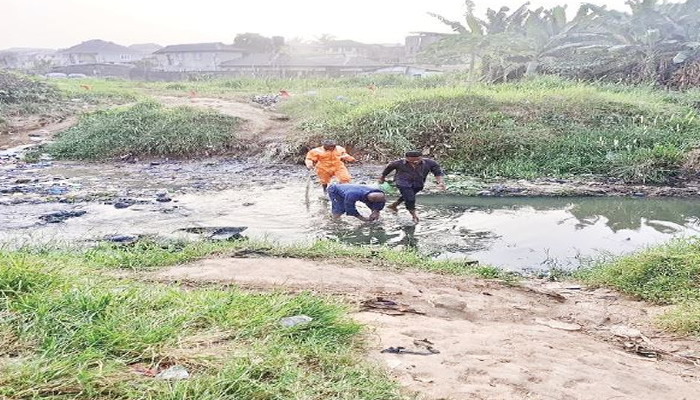
Fresh investigations have revealed that the group of vandals targeting pipelines supplying natural gas to Nigeria LNG Limited are in pursuit of stealing crude condensate — a highly coveted hydrocarbon that commands greater local demand than crude oil – and not the gas transported.
A report by Bloomberg on Tuesday stated that this high-risk act is responsible for an 80 per cent reduction in the gas supply required to meet the company’s needs, triggering an operational crisis at its Bonny Island facility and severely affecting its ability to fulfil export demands.
It noted that the vandals install valves that slow down the pressure on the lines before cutting through pipes to leak out gas so they can collect the condensate at the bottom.
It further stated that light oil fetch prices comparable to Nigeria’s high-end crude grades, such as Forcados and Bonny Light, can be easily refined or directly used in generators.
Investigations showed that the fuel is commonly sold on the streets of southern cities like Port Harcourt and Aba.
This development, which has worsened in recent weeks, is a threat to the nation’s revenue streams and its projected 2025 dividends of N727bn, a 113 per cent growth from N346bn last year.
Vandalism and sabotage have curtailed operations at the plant and curbed exports of liquefied natural gas, or LNG.
Criminal groups have for decades targeted the oil pipelines that criss-cross the country’s Niger Delta region, but a government crackdown on crude theft has driven them to gas conduits where they seek an ultra-light form of oil that’s easy to process at makeshift refineries.
The surge in activity has crippled the gas supply to Nigeria LNG Ltd., a joint venture owned by Nigeria, TotalEnergies SE, Shell Plc and Eni SpA.
The report quoting the managing director of ANOH gas plant, a Seplat Energy Plc subsidiary, Effiong Okon, noted that the rupture of gas pipelines is very dangerous but rewarding if successful.
Okon, who operates a $700 million gas project in the area, said, “It is a very high-risk, very dangerous operation that’s not always successful. But when it’s successful, they make a lot of money.”
“Criminals are willing to face significant danger even though they are accessing small volumes of condensate. High risk, high reward,” he stated.
NLNG was held up as a model state-backed enterprise when exports of the super-chilled fuel started in 1999, but its footprint has dwindled.
Nigeria accounted for 3.5 per cent of the total global LNG supply last year, steadily decreasing from 6 per cent in 2020, according to BNEF.
The PUNCH reports that the vandals’ new theft strategy comes in the wake of the current administration’s announcement to use condensate production to meet its daily crude oil production target of 2.7 million barrels by 2027, following enhanced security measures at oil production and transportation sites.
This is because the condensate output doesn’t count against the oil-production quota Nigeria agreed to as a member of the Organization of Petroleum Exporting Countries.
The Minister of State for Petroleum Heineken Lokpobiri last month said that Africa’s largest producer aims to achieve a combined output target of 3 million barrels per day, with half of that consisting of condensate.
The rise of illegal operations adds another obstacle to increasing that production.
NLNG exports tumbled in February, according to commodities tracking company ICIS.
That month, the plant only received one-fifth of its gas supply, forcing a shutdown of processing units.
The Managing Director of Nigeria LNG Limited, Dr Philip Mshelbila, further revealed at the Nigeria International Energy Summit that only two of the company’s six gas trains are currently operational, attributing the operational challenges to persistent attacks on its gas pipelines by vandals.
While five of its six production units are back up, a disruption of several months of all NLNG exports would have “a significant impact on the global gas markets,” said Anne-Sophie Corbeau, a researcher at Columbia University’s Center on Global Energy Policy.
The vandalism potentially threatens supply for a seventh NLNG unit that’s under construction, along with existing supply contracts and other planned projects to develop the fuel.
“Security issues may put in question future investments in the gas industry in Nigeria, especially if Nigeria wants to expand its LNG exports,” said Corbeau, citing a glut of projects planned globally and additional LNG exports from the US backed by President Donald Trump.
For decades, crude theft has sparked conflict, exacerbated environmental devastation caused by oil companies, stoked corruption and robbed the country of billions of dollars in revenue a year.
In 2022, as Nigeria struggled to meet its OPEC quota, the head of the national oil company estimated that it could be producing as much as 700,000 barrels a day more if not for criminals stealing crude and oil companies holding back for fear of theft.
Since coming into office in May 2023, President Bola Tinubu has increased security at the oil pipelines, sparking a rebound in output — a boost of more than 40 per cent from three years ago — that exceeded Nigeria’s OPEC production pledge in January.
Some of the security measures have been war-like: using drones and fighter jets to drop bombs on illegal refining sites that dot the delta, while on the ground, private security firms managed by former militants — who used to blow up the pipelines and hold workers for ransom — have ensured better protection of the main crude lines.
“Improved security at the oil pipelines is pushing criminals in other directions,” said Salahuddeen Tahir, head of assets and investments management at NNPC Gas & Power Investment, a unit of the national oil company.
While in the past gangs tapped oil pipelines with tools and hacksaws, today’s gas thieves shows signs of more sophisticated engineering skills — in line with the more dangerous nature of the work.
“These pipelines operate at high pressure, and any rupture poses a significant risk of explosion or uncontrolled fire,” said Claudio Steuer, a senior research fellow at the Oxford Institute for Energy Studies and former general manager at Shell Nigeria.
Reacting, the Special adviser to the president on Energy, Olu Verheijen, said the government is dealing with the attacks, but declined to give details.
She said, “NLNG is working with government agencies “to strengthen the security of upstream production and transmission assets.”
Marketers Project ₦800/Litre As Imported Petrol’s Cost Drops To ₦774/Litre
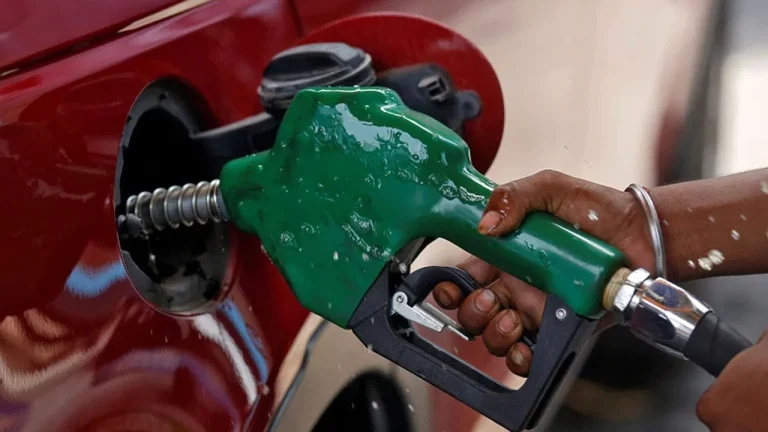
The price war in the downstream oil sector intensified on Tuesday as major oil marketers moved to offer a lower price against the gantry loading cost of N825 per litre set by Dangote Petroleum Refinery.
This development followed a revelation by marketers that the landing cost of Premium Motor Spirit (petrol) imported into Nigeria has dropped to N774.72 per litre. Marketers said the continued price plunge may lead to a reduction in the pump prices of PMS to about N800 per litre.
Dealers said the N774.72 per litre landing cost, which factors in various expenses including shipping, import duties, and exchange rates, is a considerable reduction of N50.28 from the N825 per litre offered at the loading gantry of the Dangote Petroleum Refinery.
The situation, according to industry stakeholders, has ignited a price war, with retail marketers now opting to dump the refinery products for imported products on the basis of lower pricing.
Findings by The PUNCH also revealed that this decrease in landing cost is expected to influence the price at which petrol is sold to consumers and could increase marketers’ interest in returning to petrol imports.
“Crude oil is a major component in the production of fuel, so a further reduction in its price would definitely warrant a drop in petrol price, and it is possible to drop to N800 per litre,” the National Publicity Secretary of the Independent Marketers Association of Nigeria, Chief Ukadike Chinedu, stated.
Recall that last Monday, NNPC dropped its retail petrol price to N860 and N880 per litre from N945 and N965 in Lagos and Abuja, respectively.
NNPC’s petrol price drop followed Dangote refinery’s retail fuel price reduction to N860 and N880 per litre across its retail partners.
The refinery, in its second price reduction in the new year and the third one in a space of two months, reduced its ex-depot petrol price from N890 to N825 per litre to the delight of Nigerians.
But the reduction by NNPC, the country’s largest fuel supplier, sparked a wave of competitive pricing among private marketers seeking to capture the market share in an environment where consumers are highly sensitive to price fluctuations.
The pain of the price reduction was more significant for petrol importers as they lost an average of N2.5bn daily and N75bn monthly due to the PMS price reduction.
But in a swift business survival strategy, these marketers have now secured fresh products at a cheaper cost that is now detrimental to the operations of the refinery.
According to the latest competency centre daily energy data released by the Major Energies Marketers Association of Nigeria and obtained by our correspondent on Tuesday, the on-spot estimated import parity into tanks has reduced to N774.82 per litre, a reduction of N152.56 or 16.5 per cent from the N927.48 per litre quoted on February 21, 2025 (the last energy data on petrol).
The average cost for 30 days also dropped to N864.92 per litre, while on-the-spot sale at the NPSC terminal was N927.53.
The document also noted that the price of Brent crude was benchmarked at $70.36 per barrel, down from $76.48 per barrel quoted on February 21, with an exchange rate of N1,517.24 per dollar. This price was calculated based on 38,000 metric tonnes by the marketers.
This cost is viewed as an improvement for importers, providing private depot owners and independent marketers with an alternative route to profitability and the opportunity to source cheaper products
Further checks by our correspondent revealed that private depots have effected a price change lower than marketers off taking products from the refinery.
An analysis showed that AA RANO depot has reduced its loading cost to N830 per litre, MENJ Depot now sells at N830, MRS TINCAN sold its products at N830, WOSBAB gave its customers a price estimate of N832, AITEO gave a price of N832 and RAINOIL depot sold its products at N831 per litre.
While marketers that bought two million litres from the Dangote refinery at N825 are selling at N835 per litre, indicating an N1 profit and N4 less than the price offered by private depots.
Commenting on the latest development, an oil and gas expert, Olatide Jeremiah, forecasted that the current situation is likely to compel the refinery to lower its ex-gantry price to attract more customers.
Jeremiah, who is the Chief Executive Officer of petroleumprice.ng, emphasized that, due to ongoing price fluctuations, marketers are increasingly choosing to source products from private depots, where they can expect greater price stability. This shift in preference is because the refinery has implemented two price reductions this year.
Giving a detailed explanation of the situation, he stated, “Last week, prices particularly for petrol and diesel started dropping, and on Thursday, it went below Dangote’s ex-depot price. The refinery price is N825 per litre and marketers will pay N9 for NMDPRA fees and other levies making a total of N834 per liter.
“Even as I speak, marketers that bought from Dangote and still have old stock are seeking at zero profit. So most of the marketers stopped buying. Many depots also started selling N830, even MRS, that get products from Dangote, while marketers at the Dangote refinery sold between N835 or N834 today to finish their stock.
“Other private depots are selling at N830 or N831 per liter. The reason is that private depots got a cheaper product even less than Dangote coastal price of N780. But the landing cost is less than that amount. Another scenario is the MRS and Ardova got their product at the coastal price which will enable them to sell at N834.
“The expense to the truck from Dangote refinery is between N40 to N45, so it is not a good deal. I can tell you at the Dangote depot today, the place was deserted, marketers trading there have now switched to private depots. This is likely to force Dangote to reduce its price.
“Rumours are already spreading because private depots are now making good sales. The back and forth of prices has made marketers uncomfortable. They are counting their loss and that is why they now patronise private depots where there is a bit of stability.”
On Monday, oil marketers under the aegis of the Petroleum Products Retail Outlet Owners Association of Nigeria condemned the constant reduction of fuel prices, saying marketers are still counting losses.
Despite deregulation, PETROAN said there is a need for a regulation that will make it mandatory that prices can only be changed after six months.
In a statement by PETROAN Publicity Secretary Joseph Obele, the association also made a U-turn, saying imports should be encouraged to put an end to monopoly.
Nigeria’s Crude Oil Production Declines In February 2025, Fails To Meet OPEC Quo
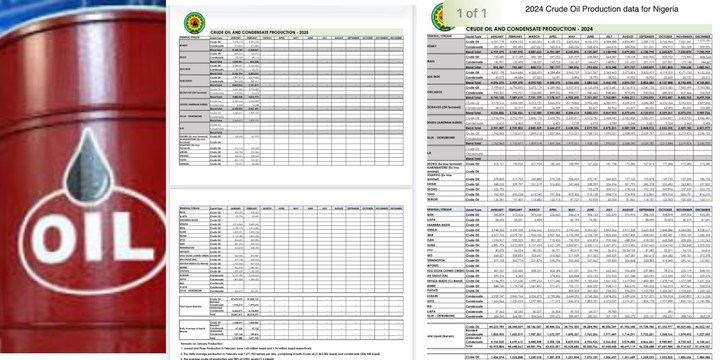
A review of Nigeria’s latest crude oil production data by SaharaReporters has revealed that the country recorded lower crude oil production in February 2025 than in January 2025.
According to the data, total crude oil production, including blended and unblended condensates, stood at 1.671 million barrels per day in February, marking a decline from the 1.737 million barrels per day recorded in January 2025.
However, when considering only crude oil production without condensates, which is the metric used for OPEC quota calculations, Nigeria produced 1.465 million barrels per day in February 2025, falling below the 1.538 million barrels per day recorded in January 2025.
This means the country failed to meet the 1.5 million barrels per day OPEC production target set for its members.
This shortfall is not an isolated incident, as Nigeria has consistently struggled to meet its OPEC production quota in recent years.
A review of past production figures shows that the country also failed to reach the 1.5 million barrels per day quota in December 2024, when it produced 1.484 million barrels per day, and in November 2024, when it recorded 1.485 million barrels per day.
The production figures for the previous months were even lower. In October 2024, Nigeria recorded 1.333 million barrels per day, while in September 2024, it produced 1.324 million barrels per day.
Nigeria’s Crude Oil Production Declines In February 2025, Fails To Meet OPEC Quota
The figures for August, July, and June were 1.351 million, 1.306 million, and 1.276 million barrels per day, respectively.
In May, production stood at 1.251 million barrels per day, while April saw an output of 1.281 million barrels per day.
In March, production was 1.230 million barrels per day, in February it was 1.322 million barrels per day, and in January 2024, it reached 1.426 million barrels per day.
This trend extends beyond 2024. Throughout 2023 and 2022, Nigeria also failed to meet the 1.5 million barrels per day OPEC quota, highlighting a long-standing challenge in the country’s oil sector.
Nigeria’s Crude Oil Production Declines In February 2025, Fails To Meet OPEC Quota
Gbenga Komolafe, the Chief Executive Officer of the Nigerian Upstream Petroleum Regulatory Commission, previously detailed the crude oil production quotas, excluding condensates, approved by OPEC for Nigeria from 2022 to May 2024.
For reference, in 2022, Nigeria’s approved production quotas by OPEC were as follows: January 1.682 million barrels per day, February 1.701 million barrels per day, March 1.718 million barrels per day, April 1.735 million barrels per day, May 1.753 million barrels per day, and June 1.722 million barrels per day.
In July, August, and September, the quotas were set at 1.799 million, 1.826 million, and 1.830 million barrels per day, respectively. For October, November, and December, the quotas stood at 1.826 million, 1.742 million, and 1.742 million barrels per day.
Despite these allocations, Nigeria consistently underperformed, a struggle that has persisted into 2025.
Industry analysts have attributed Nigeria’s ongoing failure to meet OPEC production targets to several persistent challenges, including crude oil theft, large-scale illegal bunkering, frequent pipeline vandalism, and operational inefficiencies.
Additionally, poor infrastructure, aging oil fields, and mismanagement in the sector have contributed to production losses. Regulatory and policy issues, as well as delays in implementing key oil sector reforms, have further hampered growth.
As Nigeria continues to grapple with these issues, its inability to meet the OPEC quota raises concerns about lost revenue, declining foreign exchange earnings, and broader economic implications.
With the global oil market dynamics constantly shifting, Nigeria faces increasing pressure to address its production challenges and regain investor confidence.
The government has pledged to combat crude oil theft and improve security around oil infrastructure, but the effectiveness of these measures remains uncertain.
For now, Nigeria remains below its OPEC-mandated production level, raising concerns about its ability to fully realize the potential of its oil sector in the near future.
Paul Pogba Now Free To Play Professional Football

According to Super-Agent Fabrizio Romano Pogba is officially a free agent…
The wait is over.
Paul Pogba can officially play pro football again from today, still available as free agent.
His ban is definitely over.