Thursday, April 30, 2026
Home Blog Page 69

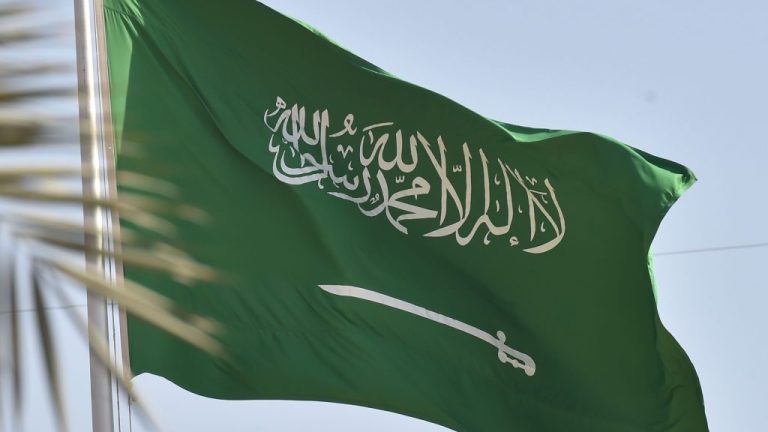
Saudi Arabia Slams Visa Restriction On Nigeria, 13 Other Countries

0

Saudi Arabia has restricted Nigeria and 13 other countries to single-entry visas, limited to 30 days.

The changes apply to tourists, business travellers, and those visiting family members but exclude applicants for Hajj, Umrah, diplomatic, or residency visas.

Beyond Nigeria, the affected nations are Algeria, Bangladesh, Egypt, Ethiopia, India, Indonesia, Iraq, Jordan, Morocco, Pakistan, Sudan, Tunisia, and Yemen.

Explaining the rationale for the new regulations, Saudi Arabia cited the misuse of multiple-entry visas as a key reason for the policy shift.

It further noted that some travellers used long-term visas to stay in the country illegally or participate in Hajj without proper authorisation.

The Saudi government regulates Hajj attendance through a fixed quota per country, and unauthorised pilgrims have contributed to overcrowding.

Officials described the suspension of multiple-entry visas as a temporary measure but have not provided a specific timeline for its review.

The development comes ahead of the 2025 Hajj pilgrimage.

In 2024, over 1,200 pilgrims lost their lives due to extreme heat and congestion, a crisis authorities believe was exacerbated by unregistered attendees.

‎70,000 Minimum Wage: States’ Salaries Rise By 90% To ₦3.8 Trillion

0

The amount budgeted for personnel costs, including salaries and allowances to state civil servants, has increased from N2.036tn spent in 2024 to N3.87tn in the approved 2025 budget.

Although the 36 sub-national allocated a total sum of N2.8tn as salaries costs, it only paid out a total of N2.036tn within the 12 months of 2024, a reduction of N764bn, according to its budget implementation report.

According to data obtained from the 2025 approved budget of the 36 state governments, the increase occasioned by the implementation of the newly approved N70,000 minimum wage and spiralling political appointments reflects an increase of nearly 90.23 per cent.

The approved budgets are also contained in Open States, a BudgIT-backed website that serves as a repository of government budget data.

The budget report also indicated that at least 27 states of the federation would not be able to pay workers’ salaries this year without having to wait for federal allocations from the central government.

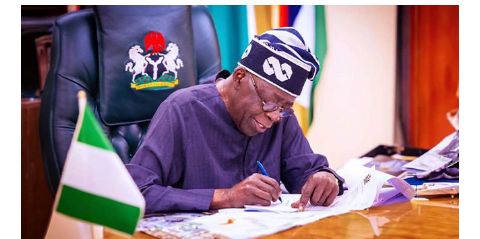
In July 2024, President Bola Tinubu officially approved a significant increase in the minimum wage for Nigerian workers, raising it from N30,000 to N70,000.

This decision came after several months of rigorous discussions and negotiations between the government and labour unions.

However, the implementation of this wage increase has been gradual across the country, with some states still yet to adopt the new minimum wage.

In response to this delay, the Nigerian Labour Congress issued a stern ultimatum to state governments, demanding that they fully implement the new wage structure by December 1, 2024.

Despite this pressure, several states have yet to initiate the payment of the revised minimum wage, further prolonging the financial relief workers were expecting.

An in-depth analysis of the budget document revealed significant variations in personnel costs across states: 20 states saw an increase in personnel expenses exceeding 50 per cent, while 16 states experienced a more modest rise, with salary increases remaining below the 50 per cent threshold.

A further breakdown showed that Abia, Cross Rivers, Ekiti, Niger, Rivers, and Taraba states got the highest increase in its payroll, exceeding 100 per cent of its 2024 personnel cost budget. While Gombe, Osun and Ondo got the lowest salary increase percentage, scoring below 15 per cent.

In a detailed examination of the salary increases across each state, Abia approved a notable increase in its personnel costs, with an escalation from N33.045bn to N77.34bn, representing a 134 per cent increase. Similarly, Adamawa’s personnel cost rose from N48.61bn to N74.23bn, marking a 52.7 per cent increase.

In Akwa Ibom, a sharp surge from N91.74bn to N126.69bn was approved, representing an impressive 38.1 per cent growth.

Anambra state, under Governor Charles Soludo, also approved a significant rise from N34.001bn to N63.41bn, indicating an 86.45 per cent increase.

Bauchi followed suit with an increase from N42.29bn to N70.41bn, showcasing an uplift of approximately 66.5 per cent.

Meanwhile, Bayelsa saw its personnel costs climb from N60.18bn to N114.21bn, a rise of over 89 per cent, signalling an emphasis on investing in its workforce.

In Cross River, the personnel cost grew sharply from N35.02bn to N106.12bn, reflecting a 202 per cent increase, one of the highest among the states. Delta also recorded a notable surge in its expenditure from N139.999bn to N185bn, signalling a growth of about 32.5 per cent.

Ebonyi followed with an increase from N23.076bn to N36.66bn, growing by 58.9 per cent.

Edo with its leap from N74.58bn to N101.29bn, reflected a 35.8 per cent increase, while Ekiti registered a substantial rise from N30.69bn to N62.51bn, almost doubling its personnel cost.

Enugu also saw a substantial rise from N47.988bn to N70.954bn, an increase of 48 per cent.

However, Gombe stood out with a negligible decrease in personnel costs, falling from N40.52bn to N40.28bn, a small dip of just 0.6 per cent.

On the other hand, Imo saw an increase from N41.92bn to N67.4bn, showing an upward trend of 60.9 per cent.

Jigawa experienced a jump from N51.445bn to N90.73bn, an increase of 76.4 per cent, while Kaduna’s personnel costs grew by 23.4 per cent from N68.010bn to N83.94bn.

Kano, one of the largest increases in this analysis, saw its personnel costs skyrocket from N89.97bn to a staggering N150.996bn, an impressive 67.8 per cent rise.

Katsina, which saw an increase from N29.69bn to N58.62bn, experienced a growth rate of 97.6 per cent. In Kogi, the personnel budget grew from N64.798bn to N109.96bn, an increase of 69.8 per cent.

Kwara followed a similar trend, rising from N51.045bn to N69.152bn, a growth of 35.5 per cent.

The largest increase came from Lagos, which saw its personnel costs more than double, from N225.114bn to N401.12bn.

In Nasarawa, personnel costs increased from N48.704bn to N80.456bn, a 65.2 per cent rise, while Niger recorded an even larger leap, from N25.36bn to N104.301bn, reflecting a growth of 311.5 per cent. Ondo saw an increase from N75.96bn to N139.726bn, an uplift of 83.9 per cent, while Osun also registered a significant rise from N55.571bn to N102.89bn, an 85.1 per cent increase.

Oyo experienced a massive increase, with personnel costs rising from N116.207 bn to N214.116bn, an 84.3 per cent increase.

Similarly, Plateau saw its personnel expenditure climb from N38.963bn to N67.144bn, marking a 72.5 per cent increase.

Rivers State, under Governor Siminalayi Fubara, recorded a staggering rise from N167.05bn to N343.196bn, a 105.6 per cent increase.

Sokoto also saw a substantial increase, from N55.32bn to N64.711bn, a 17 per cent rise.

Taraba experienced a significant increase from N36.319bn to N95.23bn, a 162 per cent rise, while Yobe recorded a 34 per cent increase, growing from N47.95bn to N64.12bn.

Zamfara saw a moderate increase, with personnel costs rising from N34.21bn to N58.38bn, a growth of 70.7 per cent.

Meanwhile, the substantial increase in salaries and allowances across various states has introduced a new set of challenges.

With the sharp rise in personnel costs, at least 27 states of the federation now face the stark reality that they will be unable to meet their payroll obligations without relying heavily on federal allocations from the central government.

This means only 9 out of the 36 state governments of the federation can independently pay their workers’ salaries without depending on federal allocations.

This is an increase from 24 states that couldn’t pay salaries without federal allocation in 2024, according to an analysis of the state governments’ approved budgets for the 2024 fiscal year.

The states with robust internal revenue are Lagos, Abia, Benue, Enugu, Ogun, Niger Kaduna, Kwara, and Osun.

According to the analysis of the budget data, 27 states cannot fund salary payments from their internally generated Revenue and, as such, may have to rely on Federal Government allocations or borrowing from banks and related institutions.

The development also means that the respective wage bills of the affected states surpassed their various IGRs, raising concerns about workers’ productivity and state governments’ efficiency in internal revenue generation.

Speaking with The PUNCH, the economist noted that the latest data further stress the need to reduce the cost of governance across the country.

Commenting, the director and CEO of the Centre for the Promotion of Private Enterprise, Muda Yusuf, noted that there are several arguments for the state’s low revenue generation and its bloated civil service workforce.

He said, “The IGR thing, first of all, we need to recognize that there are big disparities in the natural endowment of the states. Not all states are equally endowed. You know, you can’t compare a state that is a coastal state like Lagos or Delta where you have a lot of oil companies, and they pay taxes through P.A.Y.E.

“If you take a state like Jigawa or a state like Gombe or a state like Kogi, most of the businesses there are SMEs. Most of them are agricultural businesses because most of them are farmers. How much IGR can you get from these people? So what you discover invariably is that the IGR that they get in those states are only from the salaries of the workers.

“The second argument is that many of them have the bloated workforce, which they don’t need. If you go to some ministries, many of them are carrying ghost workers. Some of them don’t even show up in their offices.

“Some of them can run all these ministries with half of the government’s workforce. But because of political and other considerations, they have too many workforces that they don’t need.”.

A professor of economics at Babcock University, Segun Ajibola, said, “The states must do all they can to raise internally generated revenue without putting undue pressure on their citizens. Secondly, they must reduce the cost of governance, block wastages, do proper streamlining of ministries, departments, and agencies,numberrofligacy, and ensure accountability and transparency in government.

A former chief economist at Zenith Bank, Marcel Okeke, pointed out that the increase in the ministries and governance at the centre would trickle down to the subnationals and impact their wage bill.

“Most of the things these governors do are done out of political considerations and not economic ones, from the location of companies to the appointments of aides; special advisers, senior special advisers, and so on. There are notorious cases of governors appointing hundreds or thousands of assistants. What are those people doing, and are they paid money? Can they not do with a fewer number of them?

“Do you know we have bloated staff? In some ministries, that should only have about 100, they have 400 to 500, so a job that should be done by one person, you haveeee about five persons hanging around. What some people do is to carry files and they have no job. When these states do staff audits, they report ghost workers. If they look into this area, they can reduce cost,” he said.

Also, the Executive Director of the Rule of Law and Accountability Advocacy Centre, Okechukwu Nwagunma, lambasted Nigerian government officials for their lack of vision, sincerity, and patriotism.

Nwagunma pointed out that despite promises from the president to cut the cost of governance by reducing the number of appointees and ministries, the reality is the opposite—new ministries are being created, and a record number of appointees are being appointed.

He said, “The government at all levels in Nigeria is composed mainly of people who are visionless, insincere, unpatriotic, selfish, and insensitive to the suffering of the people they claim to serve.

“They do the opposite of everything they claim they will do. The president talked about reducing the cost of governance by pruning down the number of government appointees and ministries. But the president is busy creating new ministries and appointing the highest ever number of appointees, both as ministers and aides.

“The same thing is happening at the state levels. State governors appoint needless numbers of aides with almost every other aid having their aides. While the state of the economy continues to worsen, with government policies unable to alleviate the suffering of the majority of Nigerians who continue to groan in deprivation, poverty, and hunger, the same government officials continue to live in obscene and provocative opulence and extravagant lifestyles. And they ask Nigerians to be patient and to continue to make sacrifices.”

2027: 10 PDP Lawmakers In Delta State Set To Join APC – Omo-Agege

0

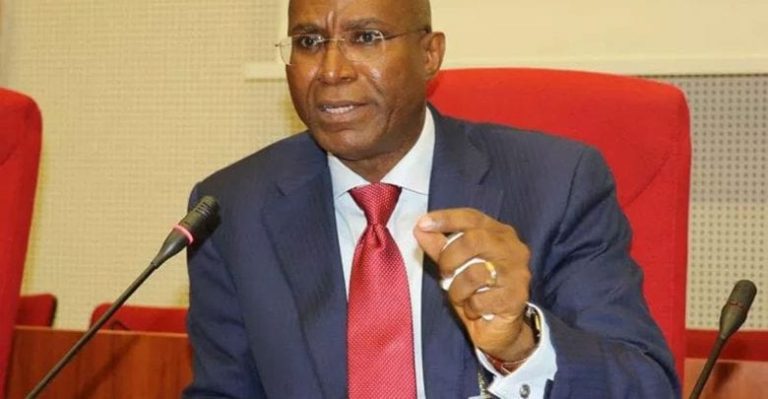
Former Deputy Senate President, Ovie Omo-Agege, has disclosed that 10 lawmakers from the Peoples Democratic Party (PDP) in the Delta State House of Assembly are set to defect to the All Progressives Congress (APC).

Omo-Agege, who was the APC governorship candidate in the 2023 elections, made the revelation on Saturday while welcoming a two-term chairman of Isoko South Local Government Area, Chief Itiako Ikpokpo (aka Malik), into the APC.

Speaking at the event in Uro-Irri, Omo-Agege declared that the PDP’s dominance in Delta State was “rapidly crumbling.”

“A major realignment in the power structure of the Delta State House of Assembly is looming as 10 lawmakers are set to dump PDP for APC,” he stated.

He explained that with seven APC lawmakers already in the House, the defection of 10 PDP members would increase APC’s numbers to 17, potentially shifting the House’s leadership in favour of the opposition.

Omo-Agege attributed APC’s growing strength in Delta State to the economic policies of President Bola Tinubu, which he claimed had boosted the state’s federal allocations to over N1trillion in just a year and a half.

“The financial improvements under Tinubu’s administration show that APC is delivering good governance. More politicians are aligning with the ruling party because of these achievements,” he said.

He described Chief Itiako Ikpokpo’s defection as a turning point for the APC.

“I have persistently pressured Ikpokpo to join the APC, and today, he has finally made the move,” he added.

In his remarks, Ikpokpo pledged to strengthen the APC’s structure in Delta State and expand its political influence.

“We must welcome new entrants with open arms because unity is key in defeating PDP in 2027,” he declared.

Supreme Court Dismisses Gov. Fubara’s Appeal Challenging Amaewhule-led Assembly

0

five-man panel of the Supreme Court led by Justice Uwani Abba-Aji has dismissed the appeal filed by the Governor of Rivers State, Siminalayi Fubara, challenging the leadership of the Rivers State House of Assembly led by Martin Amaewhule.

Justice Uwani Abba-Aji while dismissing the appeal awarded a cost of two million naira against the governor payable to the Rivers State House of Assembly as the first respondent and Martin Amaewhule as the second respondent.

The dismissal of the appeal by Fubara was hinged on the withdrawal of the suit by his counsel, Yusuf Ali.

https://www.google.com/amp/s/www.channelstv.com/2025/02/10/supreme-court-dismisses-fubaras-appeal-challenging-amaewhule-led-assembly/amp/%3futm_source=webpush&utm_medium=push&utm_campaign=Supreme%2bCourt%2bDismisses%2bFubara’s%2bAppeal%2bChallenging%2bAmaewhule-Led%2bAssembly%25C2%25A0

Jonathan, Diri, Others Unveil WEEP Beneficiaries In Yenagoa

0

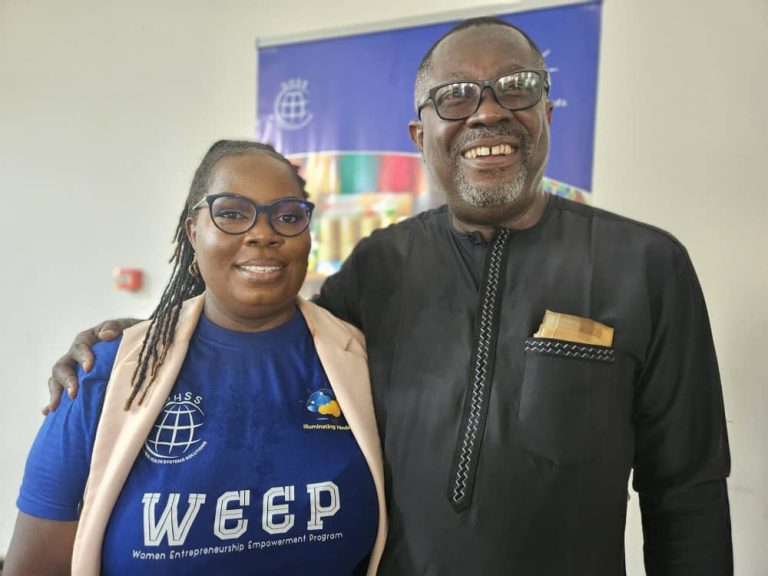
Former President of Nigeria, Dr. Goodluck Ebele Jonathan, GCFR, has launched the Women Entrepreneurship Empowerment Program (WEEP), a transformative initiative funded by Global Health Systems Solutions (GHSS) and implemented by Illuminating Minds.

Speaking as the Chief Special Guest at the launch in Yenagoa, Dr. Jonathan urged the 70 beneficiaries of the pilot program to remain resilient and excel in their chosen fields. He commended the facilitator of the project, Dr. Itari Turner, for her commitment to women’s empowerment and emphasized the need for an innovative model that would depart from traditional approaches to effectively uplift the girl child and combat poverty in local communities.

“The fate of the local economy rests in the hands of women entrepreneurs,” Dr. Jonathan noted, encouraging the beneficiaries to be intentional in their pursuits and serve as worthy ambassadors of the program.

Bayelsa State Governor, Senator Douye Diri, represented by the Secretary to the State Government (SSG), Prof. Nimibofa Ayawei, also commended Illuminating Minds for its targeted intervention in local communities. He reaffirmed the state government’s commitment to supporting the initiative and ensuring its long-term success.

Former Deputy Governor of Bayelsa State, Rear Admiral Gboribiogha John Jonah (retd), who chaired the occasion, and the keynote speaker, Dame Didi Walson-Jack, mni, Head of the Civil Service of the Federation, represented by Bayelsa State Head of Service, Barr. Biobelemeye Onyema, urged the beneficiaries to maximize the opportunity. They cautioned against the common practice of selling starter packs provided after training, stressing that the true impact of the program would be measured by their ability to create sustainable businesses and careers.

Providing an overview of WEEP, the Convener and Executive Director of Illuminating Minds, Dr. Itari Turner, described women’s empowerment as a necessity for societal progress. “Across the world, women have consistently demonstrated that when equipped with the right tools, resources, and opportunities, they can transform communities, economies, and entire nations. Empowering women means strengthening families, driving economic growth, and building resilient societies,” she stated.

She explained that WEEP was strategically designed to address barriers faced by women in business and professional development by offering structured and sustainable interventions.
“The program provides a holistic approach, equipping women with essential skills, financial support, and access to networks. Through business development, employability training, and vocational education, WEEP aims to create thriving communities where women-led enterprises can innovate and compete on a larger scale,” she added.

Also speaking at the event, the Executive Director of GHSS, Prof. Patrick Njukeng, emphasized the importance of giving women and girls a voice in a society that often sidelines their development. He encouraged beneficiaries to seize the opportunity to break free from poverty and societal limitations.
Several beneficiaries expressed gratitude to GHSS and Illuminating Minds, pledging to make the most of the program.

A key highlight of the event was the formal unveiling of the 70 beneficiaries, alongside a cultural display featuring a special dance and drama performance by the Izon cultural troupe.

Judge Blocks Trump’s Bid To Restrict Birthright Citizenship

0

‘Denial of citizenship will cause irreparable harm’ – US judge blocks Trump’s order on birthrighty.

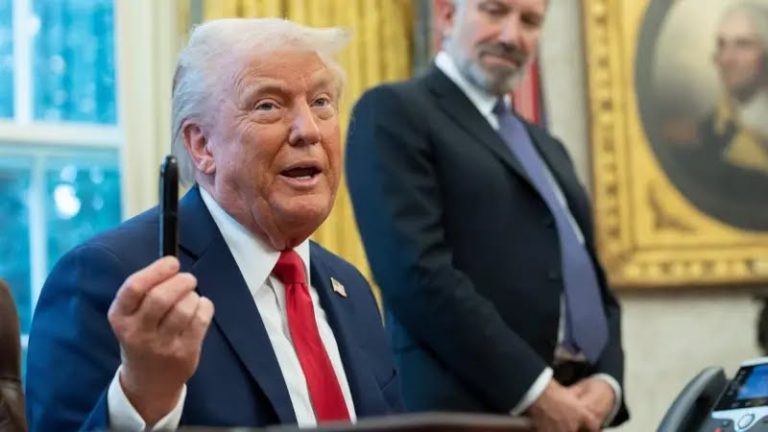
A federal judge on Wednesday blocked the implementation of United States of America President Donald Trump’s executive order targeted at restricting birthright citizenship in the United States.

The ruling indefinitely halts one of Trump’s controversial policies, which was set to take effect nationwide on February 19.

According to The New York Times, District Judge Deborah Boardman stated that denying birthright citizenship would cause irreparable harm.

Judge Boardman emphasized that Trump’s order conflicts with the plain language of the 14th Amendment, which guarantees citizenship to anyone born in the country.

“The denial of the precious right to citizenship will cause irreparable harm.

“No court in the country has ever endorsed the president’s interpretation,” Boardman said, adding “This court will not be the first,” as reported by The New York Times.

The latest ruling follows a similar decision by a federal judge in Washington state, who issued a 14-day stay on the order in January.

Recall that Judge John Coughenour described the measure as “blatantly unconstitutional,” prompting Trump to announce his intention to appeal.

The legal challenge centres on the 14th Amendment, ratified in 1868, which grants citizenship to all individuals born in the United States.

DAILY POST reports that Trump’s executive order put forward the argument that those in the country illegally or on temporary visas were not subject to US jurisdiction and therefore not entitled to citizenship.

Youth Internship Scheme: Placement, Payment of Beneficiaries Begin

0

The Niger Delta Development Commission, NDDC, has commenced the placement and payment of 10,000 beneficiaries of the Youth Internship Scheme for one-year practical skills training in various organisations for sustainable youth empowerment in the Niger Delta region.

With the successful completion of the selection of beneficiaries and their ongoing placement in organisations for practical experience, the payment of the monthly stipends has also taken effect.

In a statement by NDDC Director, Corporate Affairs, Seledi Thompson-Wakama, the selection process was conducted with the utmost transparency, diligence, and fairness after over 3.2 million young people registered in the database at the close of the application period.

This unprecedented response highlights our youth’s immense potential and aspirations. The Commission remains steadfast in ensuring this life-changing opportunity reaches the most deserving candidates, creating a lasting impact and paving the way for a brighter future.

Notably, we have established a comprehensive digital repository of vital information, including the qualifications, skills, interests, needs, and employment status of youths in the region. This data-driven approach enables the Commission to design targeted programmes that address the unique needs of the vibrant and resourceful youth population.
To ensure that all our initiatives are anchored in transparency and ethical practices, the NDDC partnered with KPMG, a globally renowned consultancy, to enhance our corporate governance framework. The KPMG has produced a Governance Advisory Report that will serve as a tool for implementing the Commission’s transition from transaction to transformation policy.

The NDDC remains deeply committed to engaging stakeholders, youth and community leaders in shaping the future of the Niger Delta region.

We appreciate the Niger Delta stakeholders, including those who applied for the youth Internship Scheme, for their patience, unwavering support and understanding during the meticulous selection process for the transformative programme.

Our commitment to transparency and fairness, which aligns with President Bola Tinubu’s administration’s Renewed Hope Agenda, guided the selection of beneficiaries.


16 Local Government Coordinators of Ambode Support Group Hold Strategic Meeting, Aim to Mobilize More Members Into APC 

0

The Ambode Support Group (ASG) held its first Local Government Coordinators’ meeting with the State Director-General and State Executive today, February 6, 2025. The meeting, which commenced promptly at 10:00 AM, was opened with prayers led by Lady Evangelist Esther Olawoye, the Ikorodu Local Government Coordinator.

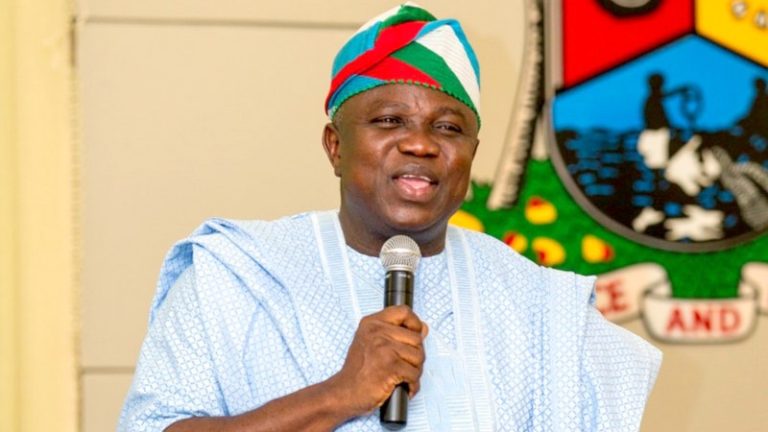
Following the prayers, Hon. Seyi Bamgbade, the State Director-General of the Ambode Support Group, addressed the gathering. In his speech, he emphasized that the primary purpose of the meeting was to strategize towards bringing back former Governor Akinwunmi Ambode in 2027, a mission fully known and acknowledged by the principal himself.

Hon. Bamgbade clarified that the Ambode Support Group serves as the umbrella body for all groups supporting the former governor. He explained that while there are numerous groups working in Ambode’s interest, all of them must report to the ASG to ensure proper coordination and unity of purpose.

He urged all Local Government Coordinators to return to their respective areas and begin mobilization efforts, stressing that the journey towards 2027 had officially begun. However, he warned against the use of political party logos, symbols, or banners at this stage, instructing that such decisions would be made at the appropriate time.

The Director-General emphasized that the ASG represents the broader society that will support Ambode when the time comes. He reiterated that the group’s primary objective is to engage new members, particularly non-politicians, noting that the political class had failed them during the last presidential election.

Hon. Bamgbade also hinted at the upcoming registration of a new members into political party, urging coordinators to mobilize people to participate when the process begins. He further encouraged them to ensure mass voter registration when the Independent National Electoral Commission (INEC) commences the exercise.

“When the time comes and a party settles for Ambode as its governorship candidate, we will be his foot soldiers,” he declared. He concluded by directing all coordinators to return to their local governments and appoint officials to strengthen the structure of the ASG at the grassroots level.

The meeting marked a significant step in the group’s renewed efforts to position Akinwunmi Ambode for a comeback in the 2027 gubernatorial elections.

Sign

Pius Ade Babaleye Pab

Director of media and information

Ambode Support Groups

North West Governors Back Tinubu’s Economic Policies

0

The North West Governors Forum has expressed its full support for President Bola Ahmed Tinubu’s economic policies.

The governors made this declaration following their meeting yesterday at the Katsina Governor’s Lodge in Asokoro, Abuja.

The meeting, presided over by the governor of Katsina State, Dr Dikko Umaru Radda, was attended by Governors Uba Sani of Kaduna State, Dauda Lawal of Zamfara State, Ahmed Aliyu of Sokoto State, and Umar Namadi of Jigawa State.

The deputy secretary-general of the United Nations, Amina Mohammed, UN Resident Coordinator Mohammed Malik Fall, and UN Consultant on the North West, Maryam Uwais, were also part of the closed-door meeting.

Briefing journalists, the chairman of the North West Governors Forum, Dr Dikko Umaru Radda, stated that they are collaborating with the UN to lift the people of the region out of poverty.

He remarked that President Bola Ahmed Tinubu’s economic policies are effective for the populace, adding that they are partnering with all UN development agencies, including the African Development Bank, on Agriculture 2.0.

“This project is targeted at the North West States, and we are implementing agricultural programmes. Starting with Kaduna and Kano, all the North West States are collaborating on these agricultural initiatives.

“All of us have agreed to work together on agriculture, tackling the issue of out-of-school children, poverty levels, and creating employment for the burgeoning youth population,” Radda said.

According to him, “These are the focal points of the administrations in the various states of the North West. We will cooperate and work harmoniously.

All the North West State Governors support President Bola Ahmed Tinubu’s efforts in many of his initiatives to provide economic prosperity for Nigeria. This is the stance of the North West Governors,” Radda added.

“Today, we also confirmed Hajiya Maryam Musa Mohammed as the Director-General of the North West Development Forum for proper coordination of the forum, and all the governors have appointed focal persons to liaise with all development partners for effective coordination,” he concluded.

Marketers May Dump NNPCL As Price War With Dangote Rages –

0

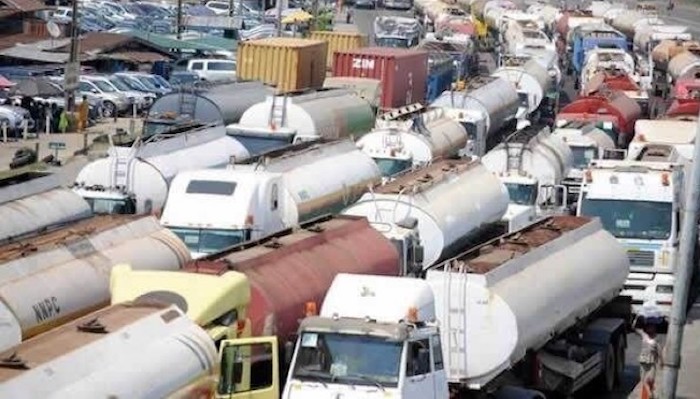
Some oil marketers are beginning to change the logo of the Nigerian National Petroleum Company Limited on their filling stations, as the dealers dump the franchise deals with NNPCL due to the stiff competition in the prices of refined products in the downstream arm of the oil sector.

It was gathered that many others are considering the move, particularly those in Lagos, following the recent crash in the prices of refined products by the $20bn Lekki-based Dangote Petroleum Refinery.

Already some dealers that used to have the NNPCL logo on their filling stations located around Wawa on the Lagos-Ibadan expressway, as well as at Ibafo, still along the busy road, have dropped the name of the national oil firm.

Independent marketers are seeking to achieve adequate product off-take at a cheaper rate, as the deregulation of the downstream oil sector has led to intense competition.

Many filling stations formerly affiliated with the national oil company are now being renamed and rebranded under the ownership of private oil marketers, particularly in Lagos and surrounding states.

It was also learned that more marketers may relinquish their licences with NNPCL due to the reduced loading costs of Premium Motor Spirit (petrol) refined by the Dangote refinery, which is currently lower than the landing cost of imported petrol.

The PUNCH reports that a petrol price war was reignited in the sector recently after the Dangote Petroleum Refinery slashed its loading costs to N890 from N950 per litre.

Dealers explained that the rebranding of filling stations is a tactic by the marketers to pick up cheaper products from the Dangote refinery, and other import sources at a cheaper rate.

This assertion was confirmed by the National Publicity Secretary of the Independent Petroleum Marketers Association of Nigeria, Chinedu Ukadike, during an exclusive interview on Tuesday.

A franchise licence in the oil sector refers to an official authorisation granted to an individual or company to operate a business or distribute products under an established brand or system within the oil industry.

This typically involves a contractual agreement that allows the franchisee to utilise the franchisor’s brand, resources, and operational model in exchange for fees or a percentage of revenue.

Ukadike explained that marketers have adopted this new approach because the NNPCL is no longer the exclusive importer and distributor of refined petroleum products.

He said, “Yes, that observation is correct. Some marketers are changing and rebranding. Remember that there was a time NNPCL was the sole distributor and importer of petrol. So, marketers then gave their filling stations as franchises so that they could get products.

“So marketers normally give their companies to NNPCL to be able to have petroleum products. But now that the game has changed, you can even see some marketers now changing to MRS filling stations. Because MRS is now selling cheaper than any other station.

“People want where they want to get turnover and return on investment. If you are carrying Total on as a brand name and Total is not giving you petrol products, what is the sense of carrying the name? You have to remove it and get a better alternative. Most of those filling stations (that are changing name), NNPC don’t own them. NNPC only collected them on the franchise.”

Attempts to contact the NNPCL spokesperson, Femi Soneye, for an explanation of why marketers are switching from the company’s brand, proved unsuccessful, as he did not reply to messages sent to his phone.

An oil and gas expert, Olatide Jeremiah, who confirmed the arrangement said marketers used the franchise licence as a method to secure cheaper products from NNPCL which was still importing at the time.

He confirmed that the avenue that provided more revenue was disrupted by the emergence of the Dangote refinery and the inability of the national oil firm to secure an agreement to fix petrol prices with the Lekki-based plant.

Jeremiah, who is the Chief Executive Officer of petroleumprice.ng noted, “Yes, it’s true. It all happened after the subsidy was removed but before the emergence of the Dangote refinery.”

He further narrated, “After the removal and petrol price went up, NNPCL was asked to manage the price and should not be allowed to keep skyrocketing. So NNPCL and the majors were pegging the price at N500 but the landing cost was above the amount. This affected importers and independent marketers who imported fuel. For instance, Petrocam imported and claimed that its landing cost was N700 but the majors and NNPCL were selling at N500 per litre. That is a difference of N200 and was a huge loss.

“So actually NNPCL was subsidising internally and when independent marketers noticed this and were losing sales, they began applying for NNPCL franchise lincence. The marketers paid millions to get the franchise licence because they were loading from NNPCL depot at a cheaper rate.

“NNPCL was the one dictating price for all the majors at that time because of public outcry and they used to buy, till Dangote came in. They also wanted to do the same thing with Dangote to fix the price but the arrangement didn’t work because Dangote wanted to sell to everyone. Its price was better and independent marketers could buy directly.

“The franchise licence was also an avenue to make more profit because some marketers got licence for one of their stations but would transport products to other stations and sell at a higher price to Nigerians. The slot of getting fuel tankers at that time was twice in a month.”

The Chairman of PETROAN in Lagos State, Akinola Ogunyolemi, said most of the outlets are not originally owned by the NNPC.

He said the removal of the NNPCL symbol might mean the end of an agreement or a breach of it by either party.

“These are individual outlets. What they do is that, if an NNPCL contract expires and they are not ready to move forward with them or if they get a juicy offer, they will remove the NNPCL logo. They will rebrand again and put other people’s names. That could be the reason.

“Most of the outlets are not NNPCL-owned. You can have your filling station built and put NNPCL there, with your contract to them. Maybe they could not meet up with your agreement with them, (because they too also have some breach of contract sometimes), you might decide to go and give the station to Mobil or Total. It is yours,” Ogunyolemi said.

Experts also noted that more licenses may still be revoked because the price of imported petrol now costs more than products obtained from the Dangote refinery.

According to the latest data released by the Major Energies Marketers Association, the on-spot cost of landing PMS has reached N910.14 per litre at the ASPM and N910.52 at the NPSC depot.

The document also stated the 30-day average cost of petrol surged to N939.03 per litre.

Meanwhile, fresh details emerged regarding the behind-the-scenes developments that contributed to the reduction in the ex-gantry loading cost of Premium Motor Spirit, commonly known as petrol, sourced from the Dangote Petroleum Refinery and a possible reduced retail cost for Nigerians.

The refinery in a statement signed by Group Chief Branding and Communications Officer, Anthony Chiejina, said the strategic adjustment is a direct response to the positive outlook within the global energy and gas markets, as well as the recent reduction in international crude oil prices.

“Dangote Petroleum Refinery has reduced the ex-depot (gantry) price of Premium Motor Spirit, commonly known as petrol, from N950 to N890, effective from Saturday, 1st February 2025.

“This strategic adjustment is a direct response to the positive outlook within the global energy and gas markets, as well as the recent reduction in international crude oil prices,” the statement read.

It noted that the price revision reflects the ongoing fluctuations in global crude oil markets, as highlighted in the refinery’s statement on 19th January, when a modest increase was implemented due to the previously rising international crude oil prices.

Brent crude, the international benchmark, was traded at $76.76 per barrel on Tuesday, marking a reduction of $4 from $81 per barrel recorded in early January.

While this assertion is totally accurate, marketers in the downstream sector informed our correspondent that a pricing competition between Dangote, the NNPCL and some marketers contributed to the decision to reduce its petrol costs.

This fresh pricing war started about a week ago after the NNPCL and some major marketers secured an alternative source to import refined products at a cheaper landing cost compared to Dangote’s price.

Recall that The PUNCH reported last Friday that the national oil firm and other marketers in the downstream oil sector imported more than 633 million litres of Premium Motor Spirit (petrol) and Automotive Gas Oil (diesel) in January 2025 despite the production of these commodities domestically.

A marketer said, “We had noticed for some weeks that Dangote and private depot prices were at the same level unlike before when there was a N20 difference. So we found out that some people are sourcing cheaper products outside the country and that’s why they are going head-on with Dangote. Those depots didn’t want to get out of business and that was why they had to do it to be more competitive.”

Another source who confirmed the development said the concerns expressed by bulk buyers operating at a loss of N31.02 per litre or a total loss of N310,159,109.59 made Dangote senior executives hold a meeting.

The source noted, however, that despite the reduction in output, the refinery continues to maintain a steady profit, demonstrating its ability to adapt and remain financially successful.

He said, “The price reduction from Dangote was somehow inevitable because there were serious complaints and concerns from their buyers. This made Dangote senior executives to meet on Friday between 4 and 5 pm to discuss. What has happened is basically the effect of deregulation in the downstream sector and Nigerians should expect more pricing war between competitors in the sector.”