Saturday, November 28, 2026
Home Blog Page 63

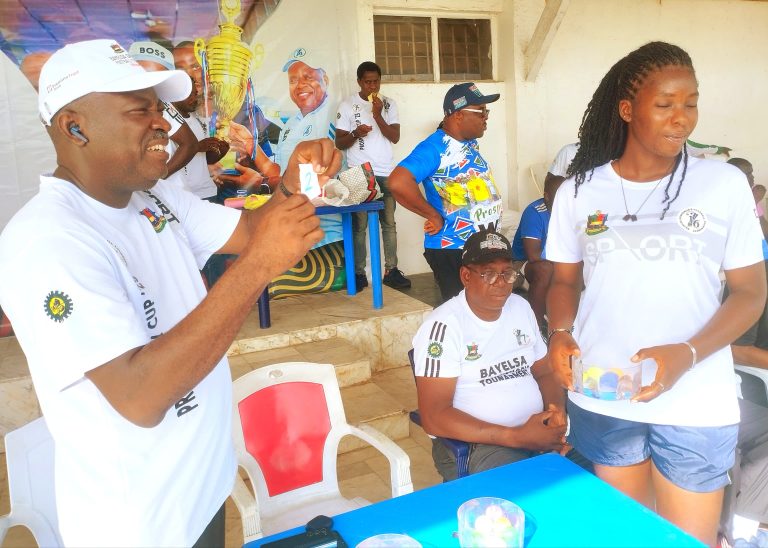
Prosperity Cup 2025: Women’s Tournament Gets Underway

0

Action begins on Thursday, April 24, 2025 in the women’s version of Nigeria’s biggest grassroots football showpiece, the Bayelsa Governor’s Football Tournament tagged the Prosperity Cup.

Chairman of the women’s tournament committee, Mr. Ebi Avi says the opening fixture of the spectacle will see Federal University Otuoke go up against God’s Mercy City by 3.00p.m. at the Samson Siasia Stadium, Yenagoa.

According to him, Diamond Stars will battle Ezuogha Soccer Academy at the same venue by 4.30p.m, pointing out that the duration of each match would be sixty minutes, at thirty minutes each half.

He disclosed that straight penalty kicks will be used to determine the winners, in the case of a draw at full time, stressing that participating teams and officials are expected to report at match venues one hour before kick-off.

Mr. Avi also advised the various participating teams to always play by the rules and regulations governing the tournament and not engage in activities that are capable of tarnishing the image of the competition and bring the game of football to disrepute,

The Chairman of the women’s tournament committee notes that the Director General of the tournament, Mr. Ono Akpe and the entire organizing team are desirous of seeing more home grown players broke into the ranks of Bayelsa Queens and other top club sides in the Nigeria Women’s Football League NWFL in the nearest future.

Presidency Budgets ₦10bn For Solar Power

0

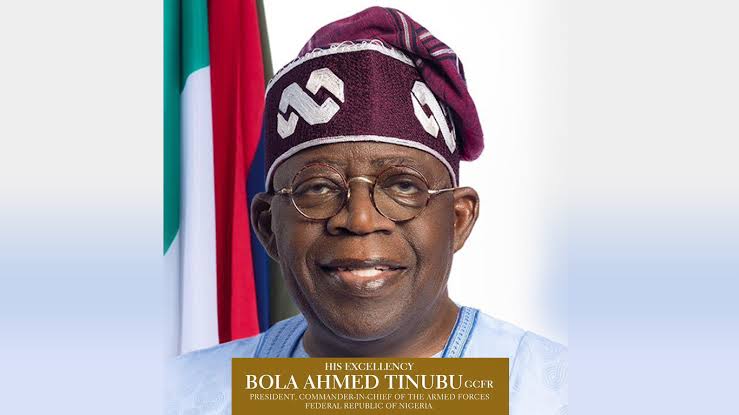
The State House has allocated the sum of N10bn in the 2025 approved budget for the installation of a solar mini-grid at the Presidential Villa, The PUNCH reports.

This follows an increase in the overall budgetary allocation to the State House Headquarters, which rose from N47.11bn in the initially proposed 2025 budget to N57.11bn in the approved version.

The additional N10bn was traced to a jump in capital expenditure, which moved from N33.55bn to N43.55bn.

A breakdown of the new capital items reveals that the increase was solely due to the planned solar project, titled “Solarisation of the Villa with Solar Mini Grid,” with a full allocation of N10bn.

The move comes amid growing concerns over unreliable public electricity supply and the high cost of electricity for both households and government institutions.

The solar project is expected to reduce dependence on the national grid and limit the impact of tariff hikes on government finances.

The PUNCH observed that electricity costs have continued to soar, especially for Band A consumers, who receive at least 20 hours of electricity daily.

In April 2024, tariffs for Band A consumers surged from N68/kWh to N225/kWh, representing an increase of over 230 per cent.

Although this was later adjusted to N206.8/kWh and then slightly to N209.5/kWh in July, it remains one of the highest energy cost brackets in the country.

Institutions such as the State House, which fall within Band A, have therefore seen their electricity bills increase dramatically in the past year.

The State House has also struggled with unpaid electricity bills. In February 2024, the Abuja Electricity Distribution Company listed the Presidential Villa among top government debtors, with an outstanding bill of N923.87m.

However, following a reconciliation process, the debt was revised down to N342.35m. President Bola Tinubu subsequently ordered the immediate settlement of the amount to avoid disconnection, according to statements issued by the Presidency.

The incident underlined long-standing issues around power supply reliability and rising utility costs at the nation’s seat of power.

The PUNCH further learnt that the State House spent a total of N483.34m on electricity bills in 2024, representing a 40.17 per cent increase from the N344.82m it expended in 2023.

This is according to payment records published on the GovSpend platform, which tracks expenditures by Ministries, Departments, and Agencies of the Federal Government.

An analysis of the data showed that while the State House Headquarters made regular monthly payments to the Abuja Electricity Distribution Company, the largest payment of the year was a lump sum of N316.88m made in October 2024.

The payment was tagged as a settlement for “total outstanding electricity debt as at August 2024,” indicating that the presidency may have accumulated unpaid bills over several months before clearing them in bulk.

In contrast to 2024, the State House’s electricity spending in 2023 was more consistent, with monthly payments ranging between N28m and N30m, and no recorded arrears payment.

Despite the lower monthly amounts paid in 2024, the October clearance significantly raised the total spending for the year.

Meanwhile, the Federal Government has approved N311.09m as the electricity budget for the State House in the 2025 fiscal year.

The figure is contained in the approved 2025 budget and falls under the subhead ‘Electricity Charges’ within the broader ‘Utilities – General’ allocation for the State House.

The reduction from the actual spending in 2024 suggests a return to more moderate billing or an expectation of fewer arrears.

However, it remains unclear whether the 2025 budgeted sum will be sufficient, given the spending patterns of previous years.

The decision to transition to a solar-powered grid at the Villa is seen as a cost-saving and energy-efficient move that aligns with broader sustainability goals.

In addition to the solar mini-grid, several other projects make up the capital allocation to the State House in the 2025 budget.

One of the highest line items is the N11.92bn earmarked for the settlement of liabilities owed to Julius Berger Nigeria and other maintenance contractors dating from 2022.

This includes work done in Kaduna, the VIP wing of the Villa, as well as utility charges and waste disposal obligations.

Another N6.04bn has been budgeted for annual routine maintenance of mechanical, electrical, building, and environmental systems within Villa facilities, including the President and Vice President’s residences, offices, lounges, and the conference and banquet halls.

The State House will also spend N5.49bn on general maintenance works at the Presidential Villa in Abuja.

Construction of a new office complex for Special Advisers and Senior Special Assistants will continue with N1.83bn in ongoing funding, while the renovation of four Army residences along Ali Akilu Crescent in the Upper and Lower Artillery Quarters is expected to gulp N534.13m.

An additional N120.28m is set aside for renovation works at the State House security quarters.

Other key capital items include N366.16m for the purchase of PMS and ECM equipment, and N38.45m for the procurement and installation of auditing software tools and related staff training.

The State House is also budgeting N73.35m for facility management services at the gymnasium, auditorium complexes, guest houses, and other residences, as well as N73.23m for the replacement of Villa’s telecommunications infrastructure.

Digital infrastructure and administration are receiving attention, with N50.26m allocated for maintaining the electronic document management system and N56.08m for the procurement of office equipment across various departments, including Finance, ICT, Procurement, and Audit.

A further N25.16m is allocated for systematic data collection to improve project and programme decision-making.

For mobility and logistics, the budget provides N3.66bn for the purchase of new State House operational vehicles and N1.09bn for the replacement of SUVs.

Tyres for bulletproof and other operational vehicles are to be procured at a cost of N164.99m.

Additional allocations include N12.9m for upgrades to the State House Library, N4.59m for digital medical references, N31.21m for the rehabilitation of the Villa’s animal enclosure and veterinary equipment, N38.45m for plant nursery equipment and floral landscaping, and N54.95m for upgrading the Villa Ranch and building a wildlife conservation enclosure.

The solarisation project, however, remains the single most expensive new item in the 2025 budget and reflects a growing shift towards renewable energy in government infrastructure.

President Bola Tinubu earlier signed into law the N54.99tn 2025 Appropriation Bill.

Tinubu signed the budget in the presence of principal officers of the National Assembly and other top government officials in a small ceremony in his office at the State House, Abuja.

The bill was passed by the two Chambers of the National Assembly on February 13, after Tinubu asked for an increase from the proposed N49.7tn.

The National Assembly approved a N54.99 trillion ($36.6bn) budget for the fiscal year, surpassing President Bola Tinubu’s initial proposal of N54.2tn.

This increase reflects additional anticipated revenues from agencies such as the Federal Inland Revenue Service and the Nigeria Customs Service.

The budget aims to address key areas, including security, infrastructure, education, and health, with an allocation of $200m to mitigate the impact of recent US health aid reductions.

The 2025 budget is based on ambitious economic assumptions, including a crude oil production target of 2.06 million barrels per day at a benchmark price of $75 per barrel.

Also, the Federal Government projects an exchange rate of N1,500 to the U.S. dollar and aims to reduce inflation from 34.8 per cent to 15 per cent within the year.

The 2025 Appropriation Act represents a 99.96 per cent increase from the 2024 Budget of N27.5tn.

The PUNCH earlier reported that the Federal Government allocated N1.99bn to procure diesel for the electric power generators for the State House in 2025.

This comes amid delays in the FG’s solar power project, initially slated to come on stream between December 2024 and January 2025.

It was gathered that the FG disbursed N88.75m for diesel within the first half of 2024.

Checks by our correspondent on GovSpend, a civic tech platform that tracks and analyses the Federal Government’s spending, show four separate diesel payments totalling N88.75m between March 15 and May 20, 2024.

Earlier, official sources familiar with the project told The PUNCH that the prolonged instability of the national grid, coupled with repeated collapses, rising diesel prices, and generator maintenance, forced the State House to resort to alternative power.

The Senior officials who spoke to our correspondent on condition of anonymity say once operational, the 40MW solar power plant could slash the State House’s N6bn annual energy bill by at least N5bn.

The project was expected to be ready by December 2024 for the State House Medical Centre and the State House complex, including Dodan Barracks in Lagos, by January 2025.

While the construction of a 1.2MW solar plant had begun at the medical centre in October 2024, checks by The PUNCH revealed no works at the State House as of February 2025.

An official with knowledge of the solar project said paying hefty bills for infrequent power and still running diesel-guzzling generators daily was no longer sustainable.

NNPCL Reduces Fuel Price

0

The Nigerian National Petroleum Company Limited has reduced its premium motor spirit price, DAILY POST reports.

DAILY POST correspondent observed on Saturday that the petrol price at NNPCL filling stations in the Federal Capital Territory, Abuja, has been reviewed downwards to N935 per litre from N950.

Some motorists in Abuja confirmed the new fuel price adjustment at NNPCL retail outlets.

Abdullahi Hashim, a resident of Kubwa, Abuja, said, ‘I observed the drop in the fuel price to N935 per litre on Saturday morning. It is a welcome development.”

“I think I first saw this new price adjustment in Town, Wuse Zone 4 area, on Friday. NNPCL filling station at Kubwa Expressway is just reflecting it,” Bukola Adewole told DAILY POST.

The development comes after Dangote Refinery announced a drop in its ex-depot petrol price to N835 per litre from N865.

The 650,000 barrels per day refinery had announced that its partners, such as MRS and AP filling stations, are expected to sell petrol between N890 and N920 per litre, depending on the location.

Meanwhile, DAILY POST observed that MRS filling stations in Abuja have not been dispensing fuel since Wednesday, April 16, 2025, when Dangote Refinery announced a slash in ex-depot petrol price.

10-Day Power Outage Cripples Socio-economic Activities In Kano

0

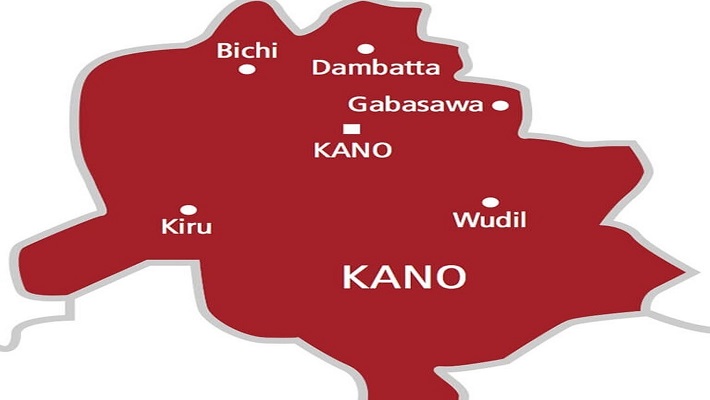
The prolonged power outage experienced in Kano over the past 10 days has disrupted socio-economic activities across the metropolis.

Some Kano residents who spoke to journalists on Sunday lamented that the situation — compounded by recurrent national grid failures — had left many communities in darkness, affecting businesses and households.

Many entrepreneurs also decried the adverse impact of the blackout on their operations.

A hotelier and bar owner, Mr Jude Michael, from the Sabon Gari area of Fagge Local Government, described the situation as frustrating.
Michael said he had lost customers due to the lack of electricity to preserve drinks.

“I have been running on a generator for days, which is making me incur losses. Sometimes customers come, and other times they do not. It is not encouraging,” he said.

A welder in the Dakata quarters of Nasarawa LGA, Abubakar Bala, said relying on diesel to keep his business running was unsustainable.

“We have paid for electricity, yet we do not have access. [b]If power is not restored soon, my business might collapse,” [/b]he said.

Bala urged the government to resolve the issue and consider alternative power sources.

Another welder in Tarauni LGA, Aminu Sani, said he had suspended operations due to the high cost of fuel needed to run his generator.

“We charge more when we use generators, but not everyone can afford the increased prices. Now, we are stranded without work,” he said.

A frozen food dealer along Zaria Road, Manu Garba, said the persistent outage had plunged many business owners into debt as they struggled to prevent their goods from perishing.

“We had expected to make good sales during Easter, even if the profit would be minimal due to the country’s economic situation. But the epileptic power supply since then has pushed many of us into serious debt.

Cartons of frozen chicken and fish got spoiled after a week. While some of us managed to salvage what we could, others were not so lucky,” he said.

A hairdresser in Kumbotso, Bunmi Ola, also said the persistent outage had left many businesses heavily indebted.

She described the situation as a huge blow to those relying on electricity for survival.

Ola added that, despite their losses, electricity companies were still issuing estimated bills.

However, mobile phone charging operators reported increased patronage.
One such operator, Malam Isa Umar, said he had raised his prices due to fuel costs, charging between ₦150 and ₦200 per phone.

Checks across the state further revealed that the water supply had also been affected, with the price of a 25-litre jerrycan rising from ₦100 to ₦200 in some areas.

The Head of Corporate Communications at the Kano Electricity Distribution Company, Sani Bala, attributed the drop in supply across the franchise area to ongoing network upgrades and vegetation control on feeders.

Bala said the maintenance was necessary to improve infrastructure and ensure safety for engineers working on the network.

He added that the upgrades were part of efforts to sustain progress in electricity distribution, including longer supply hours and improved service delivery.

China Turns To Nigeria, Other Emerging Economies As US Markets Freeze

0

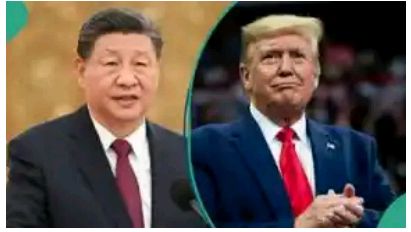
Product manufacturers in China have turned their attention to Nigeria and other emerging markets following the imposition of trade tariffs on their products by the US President, Donald Trump.

Trump, on April 2, slapped a 46% tariff on Vietnam and a 17% levy on the Philippines before paring those back to 10% for the next three months as he begins bilateral negotiations on trade with about 75 different countries.

Manufacturers say that after Washington raised tariffs on Chinese goods by 145%, U.S. orders for products have vanished.

“It’s a matter of life and death because 60-70% of our business is with American clients,” marketing manager of Conmo Electronic Co, Candice Li SAID in a survey obtained by Channels Television on Tuesday, adding,g “Goods cannot be exported and money cannot be collected. This is very severe.”

Most exporters Reuters spoke with said U.S. orders have either been delayed or stopped coming – a bad sign for the world’s second-largest economy, whose growth last year relied heavily on running a trillion-dollar trade surplus.

Kobe Huang, sales representative at Shenzhen Landun Environmental Technology, which makes water filters and smart toilets, says that for now, European sales are up, but the U.S. market is “frozen.”

U.S. customers and distributors haven’t cancelled orders, he said. “They have asked us to hold on. We are holding on.”

No other country comes close to matching China’s sales of more than $400 billion in goods to the U.S. each year.

And while Trump’s tariffs on the rest of the world are much lower, they are likely to curb global demand in coming months – and implicitly, the appetite for Chinese goods in other countries.

Despite the tariffs on China, exports from China to other countries, including to Nigeria, have surged.
A poll by AFP said China is expected to post first-quarter growth of around five percent on Wednesday, buoyed by exports.

Analysts polled by AFP forecast the world’s number two economy to have grown 5.1 percent from January to March.

Figures released Monday showed Beijing’s exports soared more than 12 percent on-year in March, smashing expectations, with analysts attributing it to a “frontloading” of orders ahead of Trump’s so-called “Liberation Day” tariffs on April 2.

Many exporters said they have been either diversifying their production bases outside China, or the markets they sell to, away from the United States.

Henry Han, sales manager at Apexto Electronics Co, which makes SSD and micro SD flash drives, says the U.S. market only accounts for 10% of direct sales, down from 30% before the pandemic. Many of their customers now take shipments of components for final assembly in a third country to avoid the tariffs.

Sales manager David Du, from speaker maker Zealot, said an order from Skechers for 30,000 speakers to be distributed to their U.S. stores was put on hold after Trump’s tariffs. But he said he can rely on other markets.

Zealot got a big and unexpected break in 2015, when an all-in-one speaker, power bank and emergency flashlight became a hit in Nigeria.
He added that its market in Nigeria is now twice as big as the U.S., accounting for 40% of total sales and taking in 45 containers monthly.

“We are as big as JBL” in Nigeria, Du said, referring to the Californian audio equipment brand.
READ ALSO: Global Investors Dump US Stocks At Record Pace — Survey

China’s exports to Nigeria are diverse and significant, with a focus on manufactured goods, particularly electrical and electronic equipment, machinery, and vehicles. In 2023, these top exports included electrical and electronic equipment ($2.88B), machinery, nuclear reactors, and boilers ($2.13B), and vehicles (other than railway or tramway) ($1.34B).

The bilateral trade between Nigeria and China reached an all-time high of $15.1 billion (about N25.7 trillion) between January and September 2024, with China’s imports from Nigeria increasing by 36.1 per cent year-on-year.

IMF: Nigeria Will Navigate Global Shocks Due To Tinubu’s Reforms

0

The International Monetary Fund (IMF) says Nigeria will navigate global shocks due to the reforms implemented by President Bola Tinubu.

Axel Schimmelpfennig, IMF mission chief for Nigeria, spoke during a visit to Lagos and Abuja from April 2 to 15, where he led a delegation to hold discussions for the 2025 Article IV Consultations with Nigeria.

The team met with Wale Edun, minister of finance and coordinating minister of the economy; Abubakar Kyari, minister of agriculture and food security; Yemi Cardoso, governor of the Central Bank of Nigeria (CBN); ministry of environment and other stakeholders in the private sector, academia, labour unions, and civil society.

In a statement by the IMF, Schimmelpfennig said authorities had taken “important steps” to stabilise the economy, enhance resilience, and support growth.

The steps, he noted, include ending the CBN’s financing of the fiscal deficit, removing costly petrol subsidy, and improving the functioning of the foreign exchange market.

“The Nigerian authorities have taken important steps to stabilise the economy, enhance resilience, and support growth,” Schimmelpfennig said.

“The financing of the fiscal deficit by the central bank has ceased, costly fuel subsidies were removed, and the functioning of the foreign exchange market has improved. Gains have yet to benefit all Nigerians as poverty and food insecurity remain high.

”The outlook is marked by significant uncertainty. Elevated global risk sentiment and lower oil prices impact the Nigerian economy.

“The reforms since 2023 have put the Nigerian economy in a better position to navigate this external environment. Looking ahead, macroeconomic policies need to further strengthen buffers and resilience, while creating enabling conditions for private sector-led growth.

“The authorities communicated to the mission that they will implement the 2025 budget in a manner that is responsive to the decline in international oil prices.”

TIGHT MONETARY POLICY REQUIRED TO CURB INFLATION’

The IMF official also recommended a neutral fiscal stance to support monetary policy in bringing down inflation.

He added that fiscal savings from petrol subsidy reforms should be channelled into the national budget to protect critical investments.

Schimmelpfennig further advised that the CBN maintain a tight monetary policy stance to curb inflation.

“In particular, adjustments should protect critical, growth-enhancing investment, while accelerating and broadening the delivery of cash transfers under the World Bank-supported program to provide relief to those experiencing food insecurity,” he said.

“A tight monetary policy stance is required to firmly guide inflation down.”

Schimmelpfennig said the monetary policy committee’s data-dependent approach has served Nigeria well and will help navigate elevated macroeconomic uncertainty.

Epileptic Electricity: FG To Inject 1,900MW Solar Power Into Grid

0

The Federal Government has revealed plans to construct modular solar power plants with a combined capacity of 1,900 megawatts for the 19 northern states, as part of efforts to boost renewable energy adoption and expand the national grid.

It also disclosed its target to generate and distribute about 8,000MW of electricity before the end of President Bola Tinubu’s first term in office in 2027.

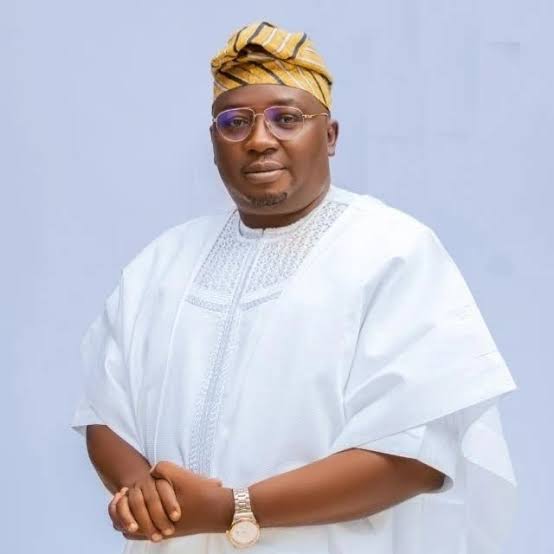
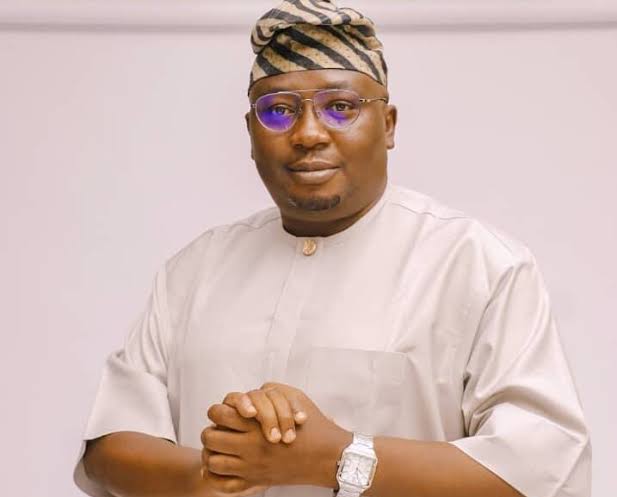
The Minister of Power, Adebayo Adelabu, announced this during the sixth edition of the 2025 Ministerial Press Briefing Series held on Thursday in Abuja.

Adelabu said each solar-powered station will produce approximately 100MW of electricity, enabling states to become more energy-independent and reducing reliance on the national grid.

He also stated that the government is pursuing private investment to help expand the grid and improve generation.

The PUNCH recalls that the northern region recently faced challenges with a stable power supply due to a surge in vandalism and theft of critical transmission infrastructure.

Last October, vandals destroyed the important 330kV Shiroro-Kaduna power line that supplies the states of Kano and Kaduna, and another line that supplies Bauchi, Gombe, and other parts of the northeast.

This incident led to a month-long blackout in 17 out of 19 northern states in the country. Following the repairs, the governors of the 19 northern states called for the diversification of energy to ensure improved electricity supply.

The states include Niger and Kwara, Kaduna, Kano, Jigawa, Gombe and Katsina. Others are Sokoto, Zamfara, Bauchi, Yobe, Borno, Adamawa, Taraba, Niger, Plateau, Nasarawa, Kogi and Benue.

But speaking at the event to update the public and highlight achievements recorded so far, the minister emphasized that with Nigeria’s abundant sunshine, there is no reason the country cannot achieve utility-scale solar power generation.

He said, “In addition to these initiatives, private investors like Sun Africa Energy and Skipper Electric are keen to invest in Nigeria’s power sector, emphasising renewable generation and grid expansion. What we have today on our grid are just two types of power, hydropower and gas-powered plants.

“But with the abundance of sunshine that we have in Nigeria, nothing stops us from having utility-scale solar power generation. And we have two companies that have expressed interest in this. We have evaluated, and discussions are at a very, very high stage.

“Number one is Sun Africa, which intends to bring in about 1,000MW of solar energy to complement the efforts of Niger Delta Power Holding Company at their various locations. And this will go straight into the grid. That’s adding solar power to our grid.

“Then the second is Skipper Energy, who has also decided to construct modular solar power plants in the 19 states of the northern part of Nigeria, about 100MW each, so that each state will be independent and the independence of the national grid will be reduced. This will ensure that we have solar power in our national grid.”

Continuing, Adelabu described the 8,000MW target as realistic, noting that power generation has already improved by about 40 per cent since the current administration took office.

He said average daily generation rose from 4,100MW in Q3 2023 to 5,700MW in the last quarter of 2025, peaking at 5,800MW.

He highlighted that while it took Nigeria nearly 40 years, from 1984 to 2022, to grow from 2,000MW to 4,000MW, the current administration added 1,700MW in just over a year.

“I assumed office in August 2023, and within a short time, we’ve moved from an unstable 4,100MW to a steady 5,800MW,” he said, adding that if past governments had added just 1,000MW each year since 1999, Nigeria would now be producing over 30,000MW.

Adelabu credited the recent progress to President Tinubu’s support and expressed confidence that, if current momentum continues, the country could reach 8,000MW by 2027.

“Now that we have created a trajectory, if we sustain this trajectory, I can assure you that before the end of this administration in 2027, we should be able to generate and distribute nothing less than 8,000MW of power,” he assured.

The minister further observed the paucity of funds, stressing that given the competition for funding among various ministries and agencies, the government is looking to the private sector to secure financing for the construction of new transmission lines, substations, and the installation of additional transformers.

“We have received various offers from private investors. The national grid is owned 100 per cent by the government. But I can tell you, with other ministries competing for funds, we cannot fund the national grid alone. We are looking to expand the national grid. If you look at the grid, I will give you the features of the grid. It is too large, and there are some dedicated lines in which some private investors have expressed interest.

“And with the Nigerian Independent System Operator, it will be much easier for us to invite the private sector investors and let them finance the construction of new lines, construction of new substations, and introduction of new transformers,” the former CBN director noted.

As part of its achievements, the minister said the national grid has been stronger in Tinubu’s administration, as the Transmission Company of Nigeria strengthened the critical network by commissioning 61 new transformers.

“It is a huge grid to cover over 200 million people, and it’s been there for so long, and we know that the maintenance history has been poor, replacement history has been poor, expansion history has been poor,” the minister said.

He added, “It is old, so collectively enabling our grid 8.7 gigawatt operational capacity, as of today, if we grow our generation to 8,700 megawatts, the grid can still carry it, thanks to the activities of the TCN and the FGN power company. Two years ago, once it gets to 5,000MW, the grid collapses, then we have evacuated 5,800MW successfully without the grid blinking, it was still stable, so we can transport 8,700MW.

“To strengthen this critical network, TCN commissioned 61 new transformers, totalling 5,589 MVA in 2024. Followed by nine additional transformers in quarter one of 2025 across key locations in Lagos, Benin, Bauchi, Oshogbo, Kano, and Kaduna, we have the list of the sites. I once mentioned that TCN had over 100 unfinished projects.

“In the 2025 appropriation, we already have N25 billion to support TCN to complete some of these projects, and that will also improve power supply. Beyond TCN, we have the activities of the presidential power initiative, which is being executed by the FGN Power Company. The pilot phase delivered infrastructure across 13 locations, adding 700 megawatts to the national grid.

“We experienced several grid disturbances towards the end of last year, but since January up till today, four months into the new year, we have not seen any major disturbance to the grid. I can assure you, we do everything possible to maintain and sustain the current scenario. If there’s any little disturbance, our turnaround time is being worked upon; within one to two hours, the grid will be up.”

As a result of these efforts, Adelabu stated that around 150 million Nigerians now have access to adequate electricity, while an estimated 80 million still lack a reliable power supply.

“As it is today, Nigeria—a country with about 240 million people—has access for 150 million people already, while about 80 million lack access to adequate electricity in Nigeria.

“The real challenge lies in the stability and affordability of electricity. That’s how we measure reliability. We must ensure that those who have access enjoy consistent and affordable power,” he said

Another remarkable initiative announced during the briefing is the progress made towards regionalising the national grid, adding supergrid eastern and western supergrid approvals currently in progress, which will revolutionise the national grid and reduce failures.

The minister added that Nigeria needs regionalisation of the national grid so that if there is a problem in one part of the country, it will not affect other parts.

On the previously abandoned Kaduna Power Plant, he said that the facility is being revamped, now 87 per cent complete, and is expected to become operational by the end of 2025.

The 215MW facility constructed by the Federal Ministry of Power had been abandoned for six years before the current administration intervened.

Adelabu emphasised that his inspection of the project led to securing President Bola Tinubu’s approval for its completion.

“It is 87 per cent completed, but was neglected for six years since 2018/2019. They have stopped working on it.

“I inspected it and ensured that we got Mr President’s approval for us to complete this project, and it has a capacity of 215MW. So, before the end of the year, the Kaduna Power Plant will be in operation. I can assure you,” Adelabu stated.

The power plant contract, awarded in November 2009 to General Electric and Rockson Engineering for a dual thermal plant running on Low Pour Fuel Oil and natural gas, was originally scheduled for completion by December 31, 2013.

“Past Administrations To Blame For Power Sector Rot” Adelabu To World Bank

0

Adebayo Adelabu, minister of power, has blamed the rot in the sector on the neglect of past administrations. In a statement on Wednesday, Bolaji Tunji, special adviser on strategic communications and media relations, said Adelabu made the comments while hosting the World Bank delegation in his office in Abuja.

The minister blamed the previous governments for the degeneration that the sector is passing through, noting that there has been significant improvement since President Bola Tinubu took over.

According to Adelabu, the issue of the power sector is of utmost concern to the president and he has given total support to all efforts at making the sector work.

He acknowledged the support of development partners, especially the World Bank, across various segments of the power sector — including generation, transmission, distribution, and renewable energy. The minister implored them to continue in that spirit to ensure that the investment of the current administration succeeds.

“We’ve seen your support in transmission, we’ve seen your support in distribution, we have seen your support in renewable energy, almost in every facet, even in generation,” Adelabu said.

“One thing that this administration has brought to the table is the seriousness, the determination, the commitment to make sure that the power sector is transformed.

“There is very little you can achieve in your agriculture sector, in your transportation sector, in your defense, education, health; without stable and efficient electricity supply. That is why the President is really focusing on this, and he is supporting whatever we need to do to make sure that we transform this sector. He is ready to give us that support.”

He acknowledged that previous attempts to reform the power sector yielded little or no results. “We actually have a past that we are not proud of. Over the years, we have only been paying lip service to transforming the power sector. We have not worked the talk,” he said.

“Previous administrations have kept on doing the same thing all the time and you cannot get different results for that, which is why we have decided to do things differently this time. In all the segments across the sector, we must run away from the past.”

“NEGLECT OF POWER INFRASTRUCTURE OVER THE YEARS INCREASING CHALLENGES”

The minister said the neglect of critical power infrastructure over the years — including thousands of kilometres of transmission lines and hundreds of thousands of transformers — has deepened the challenges in the sector.

“How will you explain the kind of infrastructure that we put together for our transmission network across the country? Thousands of kilometers of power line, thousands of power transformers, hundreds of thousands of distribution transformers that we have not maintained over time and expect them to keep sustaining our energy supply. It is not possible,” Adelabu said.

“How do we allow our people to be vandalising infrastructure and expect stable electricity? So how do you have a sector with over 12 million customers and our meter is not more than six million and we expect to have a stable industry? No, it’s not possible. So what has happened with past governments?

“In 1984, when the military was in power here, we achieved a 2000 megawatts. Between 1984 and 2023, it took us 40 years to add additional 2000 megawatts. Now we have an average of 5,800 megawatts generation within one and a half years that we came to the office.

“What I’m saying is that, if the past administrations have been adding things like this, we will not be where we are today. And that is why I said that President Tinubu is actually laying the kind of foundation that we need for our country to grow.”

He also criticised the Muhammadu Buhari administration for stalling on the Siemens power deal signed in 2019. “We entered into Siemens contract since 2019. We never lifted a finger until 2023, when this government came on board. So you can now imagine since this President came in and now look at the mileage we have achieved,” he said.

The minister, however, noted that the pilot phase of the Siemens power project is nearly complete in under two years, expressing confidence in a brighter future for the power sector.

Nepotism Under Buhari Worse Than Tinubu’s Government  —  Shehu Sani –

0

Amid the accusation of nepotism against President Bola Tinubu’s administration, former federal lawmaker Senator Shehu Sani said that former President Muhammadu Buhari’s government committed worse nepotism.

President Tinubu’s administration has been heavily criticised lately, particularly by northern politicians, who strongly believe his appointments are largely skewed in favour of his home region, the southwest.

In a recent interview, Ali Ndume, the Senator representing Borno South Senatorial District, accused the president of running a ‘non-inclusive’ government, saying his political appointments do not reflect the federal character principle.

However, on Thursday, while speaking on Channels Television’s Politics Today, Sani countered the nepotism allegation against Tinubu, arguing that the Buhari administration was worse in terms of favouritism.

It is clear the nation has a very short memory, and then we simply forget what happened the last time Buhari was in power. What was the profile of nepotism at that time? He asked.

Sani recalled that during the ex-president’s administration, about 30 federal appointments were given to people from Katsina, Buhari’s state.

“The DG of SSS, Daura was from Katsina state, the DG of NIA, Rufai was from Katsina state, the MPA, my sister Hadiza, she’s from Katsina state, Director of Federal Mortgage Bank, Katsina state, SMEDAN, Katsina state, FRCN Katsina state, NIMET Katsina state, NIMASA Katsina state, Railway Corporation, Katsina state, all those things, you don’t talk of Chairman of federal civil service about 30 (of them) We don’t have time, I can state all of them. All from Katsina state,” he said.

To further prove his point, the former lawmaker said most military and para-military appointments were skewed in favour of the northern region.

“At a certain time in this country, the Controller General of Immigration, which is Babendede, is from northern Nigeria. Customs, Hamid Ali is from northern Nigeria, Civil Defense, Audi is from northern Nigeria, Chairman of Federal Road Safety Corps is from northern Nigeria. Inspector General of Police, Alkali Baba is from northern Nigeria, the Chief of Nava staff, the Ch

Sani also questioned the moral stand of Tinubu’s critics, saying they kept quiet when nepotism perpetrated by Buhari favoured them.

“I will appreciate the morality of your position if I can hear your voice when you’re on man from your tribe, from your ethnic group and from your own tribal identity by perpetrating those evil attitude against it. And when you keep quiet when it favored you, and now you speak out when it doesn’t favor you,” he said.

While admitting that two wrongs do not make a right, he warned Tinubu to be careful. He said the President does not have to toe the line because his predecessor filled major positions with people from his state and region.

Nigeria Set To Host 68th Meeting Of UN Tourism Commission For Africa

0

The Federal Government of Nigeria has confirmed its readiness to host the 68th meeting of the UN Tourism Commission for Africa (CAF) in Abuja.

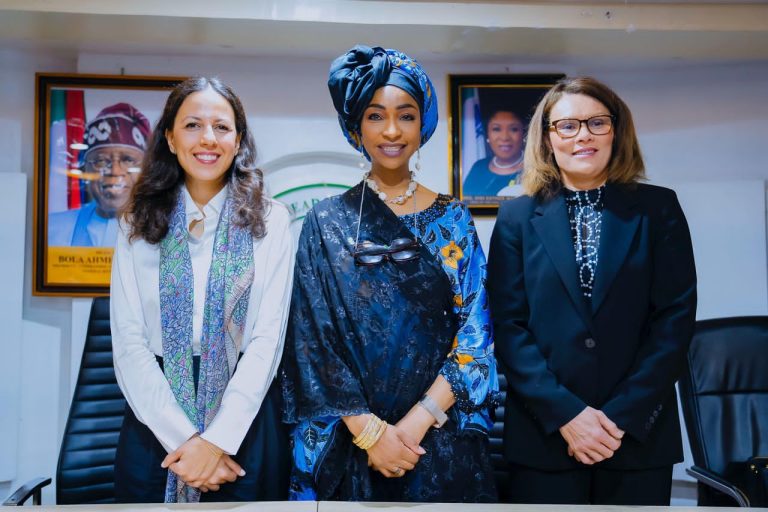
Art, Culture, Tourism and Creative Economy Minister, Barr Hannatu Musa Musawa, gave the assurance when a two-man team from the United Nations Tourism Commission for Africa, (CAF) paid her a courtesy visit in Abuja on Tuesday.

The Minister said during her preliminary meeting with the team that the mission is a unique opportunity to strengthen collaboration and drive the shared vision of tourism for sustainable development across the African continent.

Musawa added that Nigeria will showcase its rich cultural heritage and also highlight the resilience of the tourism sector.

“We are excited to host this important event and showcase Nigeria’s rich cultural heritage and tourism potential. We look forward to working closely with the UN Tourism and other stakeholders to make this event a resounding success”.

She also spoke on the benefits of the Tourism sector and government’s readiness to host the conference which is expected to bring together stakeholders from across the continent to discuss the future of tourism in Africa.

”The tourism sector creates both direct and indirect economic benefits by generating income from tourist activities, including accommodation, transportation, food services and entertainment. Beyond the immediate economic impact, tourism stimulates ancillary industries such as construction, retail and agriculture, leading to job creation and fostering a more diverse and resilient economy. As more people travel to Nigeria for business, leisure, and cultural exploration, the sector’s contribution to national revenue continues to grow.

“I wish to reaffirm Nigeria’s strong partnership with the UN Tourism, recognizing the critical role collaboration plays in achieving sustainable growth for Africa’s tourism industry. Through its continued engagement with the UN Tourism, Nigeria actively contributes to shaping policies, promoting best practices, and supporting initiatives that foster responsible tourism development across the continent. This partnership is essential not only for strengthening Nigeria’s tourism sector but also for advancing Africa’s position as a leading global tourism destination, ensuring that the continent’s rich natural and cultural heritage is preserved for future generations”.

Earlier in her address, the leader of the UN Tourism team, Elicia Grandcourt expressed confidence in Nigeria’s ability to host a successful event, citing the country’s experience in hosting previous meetings. She highlighted the potential benefits of the meeting, particularly for Nigerian youth, who can leverage AI for empowerment opportunities. This event, she said, aims to boost social impact and education in tourism through innovation, AI, and creative industries.

“It’s not just about the meeting but also what you, as a country will gain out of this meeting. We will be coming here in June with all the Tourism Ministers in the region. We have seen how the tourism sector in general has shifted on the continent, whereby countries who earlier depended on oil are now moving to the tourism sector because of the economic value, environmental and social impact.

“We will make this valuable, especially for local participants. We will run a technical workshop that focuses on innovation and artificial intelligence, so, we will be capacitating the local team on how they can maximize this sector through the use of the new technologies”.

In her welcome address, the Director of International Tourism Relations and Cooperation of the Ministry, Dorothy Duruaku, thanked the UN team for their visit, recalling that Nigeria has hosted the event four times.

“Our ability to host CAF 2025 is not in doubt as members of the organizing committee have been working assiduously to ensure a successful meeting. We will commence inspection of the meeting halls, hotels and other facilities immediately and ensure that everything needed is in perfect order ahead of the meeting”.

CAF 2025, themed ‘Boosting the Social Impact and Education in Tourism through Innovation, AI, and the Creative Industries’, holds in Abuja from June 11-13, 2025.

The 68th meeting of the UN Tourism Commission for Africa aims to promote sustainable tourism development and cultural exchange across the African continent.