Tuesday, June 9, 2026
Home Blog Page 234

FG Workers To Start Receiving January Salary – AGF

0

The Accountant General of the Federation has said federal workers will start receiving their January salaries from Thursday evening (today), attributing the delay to a glitch from the Government Integrated Financial Management System (GIFMIS) platform.

There have been rising concerns over delay in the payment of January salaries of federal workers. The delay was blamed on the non-conclusion of the 2024 appropriation on the GIFMIS platform by the Office of Accountant-General of the Federation (OAGF).

A January 31 memo titled, “Delay in the payment of January 2024 Salary”, from the bursary department of the National Mathematics Centre, Abuja, to all its staff informed them of the development.

The memo referenced NMC/BUR/GC/Vol.1, and was signed by the acting Bursar, Pius Ukwah, who said, “We wish to inform you that January 2024 salaries will be delayed beyond normal”.

“As of today, the OAGF is still working on finalising the 2024 appropriation on the GIFMIS platform and as a result, the personnel warrant for January is yet to be released”.

The memo which copied the Director/CE, the Registrar and pasted on all notice boards stated further, “The same situation applies to all MDAs and not just the centre. We regret the inconvenience caused by this delay.”

Responding to enquiries by Daily Trust on the delay, the Director Press and Public Relations at the Office of the Accountant General, Bawa Mokwa, said the issue had been sorted out and payment would commence today.

“We have sorted out the issue and workers will start receiving their payment from this Thursday evening,” he said.

NSA, Nuhu Ribadu Bans Camouflage For Para-Military

0
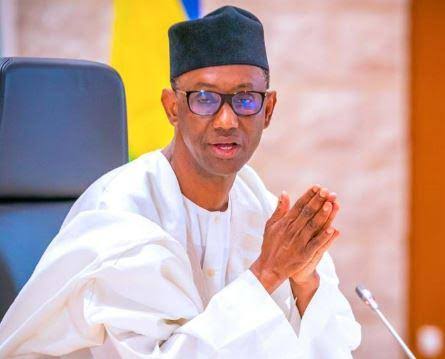
The NSA(National Security Adviser) Nuhu Ribadu has instructed and banned the use of Camouflage by para-military and other security services, except for only the 3 arms of Military.

Below is an enclosure which conveyed the banned and instructions for your necessary awareness.

Abakaliki High Court Disqualifies PDP From Ebonyi South Senatorial Bye-election

0

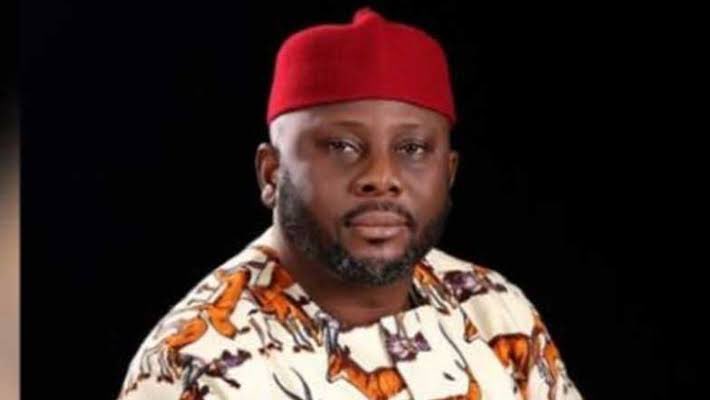
The Federal High Court in Abakaliki on Thursday, February 1, nullified the candidacy of Silas Onu as the PDP candidate for the Ebonyi South senatorial bye-election scheduled for 3rd of February.

Ruling on the matter, Justice Hyeladziya Ngajiwa affirmed that the party failed to conduct the required three-man ad-hoc and one-man national delegates who were mandated to vote in the primary election.

The Court, therefore, ordered the immediate removal of Onu’s name from the INEC portal.

CBN Sets $1m As Capital Requirement For International Money Transfer Operators

0

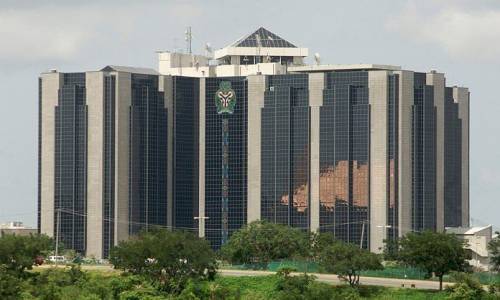
The Central Bank of Nigeria (CBN) has established a minimum operating capital requirement for International Money Transfer Operators (IMTOs) at $1 million for foreign entities and an equivalent amount for local IMTOs.

This significant development was outlined in the revised guidelines for the operation of IMTOs, which were officially released on January 31, 2024.

According to the guidelines, applicants must adhere to the CBN’s anti-money laundering, combating the financing of terrorism, and countering proliferation financing of weapons of mass destruction regulations.

These regulations are detailed in the CBN guidelines for licensing banks and other financial institutions in Nigeria.

IMTOs intending to operate in Nigeria are required to submit their applications to the director of the trade and exchange department, along with various documentation.

This includes a non-refundable application fee of N10 million only, or an amount specified by the Bank. Other necessary documents encompass approval to operate in other jurisdictions or agency agreements, evidence of tax clearance, and incorporation documents for indigenous IMTOs.

Furthermore, the ownership structure of the IMTO, board approval to operate international money transfer services, and profiles of the company’s board and management are essential requirements.

The documentation process also mandates information on beneficial owners (BO) of the company, credit reports from licensed credit bureaus for shareholders and key officers.

These stringent measures aim to enhance transparency, accountability, and regulatory compliance within the international money transfer sector. IMTOs are also expected to provide any other information, documents, and reports specified by the CBN from time to time.

The CBN’s decision underscores its commitment to fostering a robust financial environment and ensuring the integrity of money transfer services within Nigeria.

The CBN also introduced a mandatory annual renewal process for IMTOs, signaling a heightened commitment to regulatory oversight in the financial sector.

Tinubu Orders AGF, Lokpobiri To End $1.3 Billion Oil Block Dispute

0

President Bola Tinubu has ordered the Attorney-General of the Federation, Lateef Fagbemi (SAN), Minister of State for Petroleum Resources, Heineken Lokpobiri, and other agencies of government to clear all court cases around the $1.3bn deepwater OML 245 oil block located in southern Niger Delta.

Other agencies that also received the order include the Economic and Financial Crimes Commission, Nigerian Upstream Petroleum Regulatory Commission and Nigerian National Petroleum Company Limited.

Lokpobiri disclosed this in Abuja on Wednesday, as he revealed that parties in the deal were currently negotiating to end the over 28 years crisis and litigations surrounding the prolific oil block in the next one month.

The Malabu OML 245 deal and subsequent litigations with the Nigerian government is a complex and long-standing saga involving allegations of corruption, fraud, and legal battles.

The oil block in question, OML 245, is considered one of Nigeria’s most prolific oil blocks. In 1998, Malabu Oil and Gas, a company with links to former Nigerian Minister of Petroleum, Dan Etete, acquired the block for $2m.

In 2001, the Federal Government under former President Olusegun Obasanjo revoked Malabu’s license due to “questionable practices.”

In 2006, Malabu challenged the revocation in court, eventually reaching an out-of-court settlement with the government under former President Umaru Yar’Adua.

In 2011, Shell and Eni, two major oil companies, acquired the block for $1.3bn from Malabu in a deal approved by the Nigerian government.
But since then there have been allegations and litigations, as Transparency International and other anti-corruption groups alleged bribery and corruption in the deal, with funds allegedly funneled to Nigerian government officials.

This resulted in litigations involving Nigeria versus Eni and Shell, as the Nigerian government under former President Muhammadu Buhari pursued legal action against Eni, Shell, and Malabu, alleging corruption in the deal.
Commeting on the issue, Lokpobiri said,

“The previous administration initiated most of the cases that we are talking about today, and they took us to court, while we took Eni, Malabu, others to different courts in Europe, Canada, etc, but we didn’t win any of the cases.

“To even shock you, there is one that got us a penalty of over 70 million pounds. How did that happen?”
He explained that JP Morgan sued the government for trying to dent its image in the saga, adding that the penalty was now binding on Nigeria.

“So we have been fined over 70 million pounds by the court. Who will pay that? You and I will pay that, or our children will pay, because it is a judgement debt. And in all the ones that we pursue both in Switzerland and other locations, we have no evidence to get conviction.

“And so it makes sense for this government to come and say that for 28 years, this block has been idle. This block is a prolific block that will add so much value to our economy, so let’s see how we can resolve the problem.

“So we are talking to Eni and Shell, and saying let’s sit down and see how we can resolve all the problems. We have taken you to court on multiple occasions, you have also taken us to court, but let’s see how we can resolve these problems,” the minister stated.

Customs Generated N3.21Trillion In 2023, Targets N5.08 Trillion In 2024

0

The Nigeria Customs Service generated a total sum of N3.21 trn in the year 2023, Comptroller General of the Service, Bashir Adeniyi told members of the House of Representatives Committee on Customs and Excise on Wednesday.

Adeniyi who appeared before the committee accompanied by top officials of the NCS told the lawmakers that though the service targeted the sum of N3.67trn in the outgone year, it was only able to generate N3.21trn owing to a combination of factors.

This is even as he stated that all things being equal, men and officers of the NCS will work diligently to generate N5.08trn for the nation in 2024.

He said, “In 2023, the revenue target for the service was N3.67tran and remarkably, the service collected a total revenue of N3.21trn from January to December 2023.

“When we compare what we collected in 2023 to what was projected as our targets, there was a negative variance of N462.9 bn, which represents 12.62 per cent of what was approved as revenue targets.

“Though we didn’t achieve what we projected, but we want to say with all sense of modesty that we did our best. And when we consider all factors, we will appreciate the fact that we at NCS did the best we could.”

Port Harcourt Refinery Undergoing Test-Run, Production To Begin Soon – Lokpobiri

0

The Nigerian Government has said the Port Harcourt Refining Company was still being test-run, adding that refined petroleum products from the plant would hit the market soon.

The Minister of State for Petroleum Resources, Heineken Lokpobiri, told journalists on Wednesday that the plant was still being test-run.

Speaking at a briefing in Abuja, Lokpobiri, said the mechanical aspect of the refinery has been completed

According to him, the Port Harcourt refinery is one of the projects that were very fundamental to the survival of the country economically.

I believe that very soon products will start coming from there…and the Warri refinery is in top gear.

“If you ask me, in the next few months, we would have tremendously increased our refining capacity.

“So I believe that very soon the Port Harcourt refinery and the other refineries will all come on stream,” he said.

CBN Moves Against Banks For Hoarding $5billion

0

The Central Bank of Nigeria (CBN) hit the nail on the head yesterday.
It accused commercial banks of hoarding over $5 billion in foreign currencies against the threshold approved by the apex bank.

CBN blamed the prevailing forex scarcity and naira’s free-fall against the dollar on the actions of the Deposit Money Banks (DMBs).

The accusation came a day after the apex bank expressed concern about banks’ excessive forex exposure.

At the close of the market yesterday, the naira exchanged N1,450/$ at the parallel market.

It was a substantial gain (N70) against the dollar, having closed on Wednesday at N1, 520/$.

Consequently, the CBN has mandated these banks to release any excess foreign currency they hold to individuals and businesses in need of foreign exchange by today’s deadline.

“Failure to comply with this directive will result in sanctions in accordance with existing rules and regulations.”

To show how serious the CBN is about this directive, the official said that “teams of examiners have been deployed to all commercial banks heavily engaged in FX transactions to monitor compliance with the directive.”

The CBN has moved to address the biting scarcity of foreign currency.

By releasing the surplus foreign currency, it is expected that the market will experience increased liquidity, and subsequently alleviate the strain on naira’s value, it was learnt.

Initial market response to the CBN directive, the official said, can be described as mixed.

Some banks have swiftly adhered to the directive, ensuring they meet the deadline for releasing the excess dollars.

The approach is seen as a positive step towards easing the pressure on the naira and promoting a more favourable exchange rate.

On the other hand, some financial institutions, the source said, “are cautious about revealing their exact dollar reserves and are treading carefully before fully complying”.

Their hesitation might stem from concerns about potential disruption to their operations and the potential impact on their customers.

“Just as some Nigerians prefer to keep their money in dollars because the naira is not a good store of value, banks also hold excess dollar liquidity to make gains. They do their own at the institutional level.

“What the CBN is saying with this new circular is that you cannot hold excess dollar liquidity again.

“Any foreign exchange you are holding must be committed to something, a transaction or obligation you can prove.

“Banks have made a lot of revaluation gains. Some banks, I believe, got approval under the last administration to hold more dollars than the requirement.

“The idea is that if banks sell all these excess dollars, there will be liquidity and the exchange rate will stabilise. Foreign investors will come in,” the top banker explained.

The source added: “The CBN remains resolute in its stance and all banks must cooperate to stabilise the naira and address the foreign currency shortage.

Read Also: Tinubu to University unions: prioritise dialogue to avoid frequent strikes
“The apex bank aims to ensure adequate foreign exchange supply for critical sectors such as manufacturing, agriculture, and essential imports.”

What the expert says:

Dr. Wahab Balogun of Ambosit Capital Managers
 sees potential benefits and drawbacks in the CBN directive.

He said: “While increased FX liquidity and a stabilised Naira are desirable, managing potential disruptions to banks, inflation, and other sectors is crucial.

“Careful monitoring, adjustments, and communication from the CBN and banks will be vital for navigating the complexities of this intervention and achieving its intended positive outcomes.”

Balogun highlighted the positive implications of the development to include: increased FX liquidity as releasing excess foreign currency into the market can alleviate the current shortage, leading to smoother transactions and potentially stabilizing the naira’s exchange rate.

He argued that “businesses reliant on foreign exchange, especially critical sectors like manufacturing and agriculture, could benefit from easier access to funds for imports and operations”.

The directive to the banks by the CBN, he noted, will encourage “banks to adhere to regulations and avoid excessive foreign currency holdings, potentially promoting a more efficient and transparent FX market in the long run.”

“Addressing the FX shortage and stabilizing the Naira can contribute to overall financial stability, boosting investor confidence and economic activity.”

On the negative side, Balogun stated that releasing large amounts of foreign currency might cause temporary operational challenges for banks, which in turn would impact their liquidity and financial ratios.

He said: “Banks earn income through foreign exchange transactions, and a sudden decrease in their holdings could affect their profitability. Most importantly, increased liquidity could fuel inflation if not managed carefully, especially if demand for goods and services rises faster than supply.

Balogun noted that “the sector’s heavy reliant on a weaker naira (e.g., exports) could face challenges if the exchange rate strengthens significantly and the reaction of foreign investors and speculators to the increased FX liquidity could influence the exchange rate and market stability”.

AFCON Prize Money For Winners, Runner-Ups, Others

0

The Confederation of African Football has revealed the financial rewards for participating nations at the ongoing 2023 Africa Cup of Nations tournament (AFCON prize money) in Cote d’Ivoire.

The winner of AFCON 2023 will take home $7 million for lifting the trophy. The runners-up will pocket $4 million. The two losing semi-finalists (two teams) will each receive $2.5 million.

Further down the ranks, the losing quarter-finalists (four teams) will each receive $1.3 million. The eight teams knocked out in the round of 16 will get $800,000 each.

Furthermore, two teams that finished third in their group but fail to advance wilk receive $700,000. The six teams that finished last in their groups got $500,000 each.

The AFCON 2023 prize money, as revealed by CAF

Winner: $7,000,000

Runners-up: $4,000,000

Semi-finalists (two teams): $2,500,000 x 2

Quarter-finalists (four teams): $1,300,000 x 4

Round of 16 (eight teams): $800,000 x 8

The teams ranked 3rd in their group but fail to qualify for the round of 16 (2 teams): $700,000 x 2

The teams ranked 4th in each of the six groups (six teams): $500 000 x 6

As the tournament begins the quarterfinals stage on Friday (today), eight teams are playing, seeking to advance to the next round (semifinals).

At the Felix Houphouët-Boigny Stadium in Abidjan on Friday (today), Nigeria will face old foes, Angola, as they continue their quest for their fourth Africa Cup of Nations title, which they last won in 2013.

Information Minister Unveils NIPR’s Nat’l Spokespersons’ Summit

0

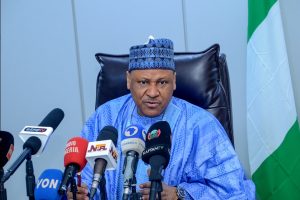
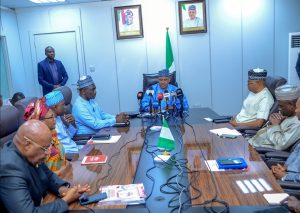
As part of his support towards reclaiming the country’s reputation, the Minister of Information and National Orientation, Alh. Mohammed Idris Malagi, has unveiled the action plan on the National Spokespersons’ Summit being organised by the Nigerian Institute of Public Relations (NIPR) in partnership with the Federal Ministry of Information and National Orientation Agency.

The Minister who commended the Institute during the unveiling ceremony today in Abuja said the NIPR’s initiative to equip spokespersons with the right skills aimed at repositioning the nation’s reputation is commendable move, noting that spokespersons play key roles in the development of any society.

“Whenever you have a spokesperson who is not properly trained or who shouldn’t be there, talking about his organisation or the government entity he represents, then there is a big challenge. That is why this effort by the Nigerian Institute of Public Relations (NIPR) to address that is very critical. It is also part of the vision of President Bola Tinubu to see that the correct narratives come out of Nigeria, without which the shared prosperity the President is campaigning for will not happen”, he said.

He therefore, charged all leaders at public, private and civil society organizations to subscribe to the Summit with the theme, “Change Narrative, Change Society”, which is scheduled to hold on 25th – 28th March, 2024 at International Conference Centre Abuja, Nigeria’s capital.

The Minister’s unveiling of the Summit’s action plans and award component marks a milestone in the life of this project.

In attendance at the event were: the Institute’s Acting President, Prof. Emmanuel Dandaura, Chairman, National Planning Committee, Dr. Sule Ya’u Sule, Council Member representing the Federal Capital Territory (FCT), Mrs. Olubunmi Badejo, among others.

Stanley Ogadigo
Director, Public Relations
1-2-2024