Indications have emerged that the organised labour is prepared to lower its demand for N1m minimum wage for workers in the country in line with realities on the ground. The shift in position will likely be communicated to the Federal Government during the second meeting of the tripartite committee on the minimum wage on Monday and Tuesday.
Sunday PUNCH gathered that the meeting would enhance deliberations between all parties involved in negotiations to allow for the announcement of a new minimum wage on or before April 1 following the expiration of the current N30,000 minimum wage as provided by the law.
President Bola Tinubu, through his deputy, Kashim Shettima, had on January 30, 2024, inaugurated a 37-member panel on the new minimum wage at the Council Chamber of the State House in Abuja.
With its membership cutting across the federal and state governments, the private sector, and organised labour, the panel is to recommend a new national minimum wage for the country.
In his opening address at the inauguration, Shettima urged members to “speedily” arrive at a resolution and submit a report early as the current N30,000 minimum wage expires at the end of next month.
“The timely submission (of the report) is crucial to ensure the emergence of a new minimum wage,” Shettima said.
He also urged good faith in collective bargaining, emphasising contract adherence and encouraging consultations outside the committee.
In May 2017, the House of Representatives moved to amend the National Minimum Wage Act for a compulsory review of workers’ remuneration every five years.
The Minimum Wage Act of 2019 signed by former President Muhammadu Buhari empowers the committee to deliberate and come up with an agreed wage, which will be eventually ratified by the National Assembly after due legislative scrutiny.
Buhari had also signed the Minimum Wage Act that approved N30,000 for both federal and state workers in the same year.
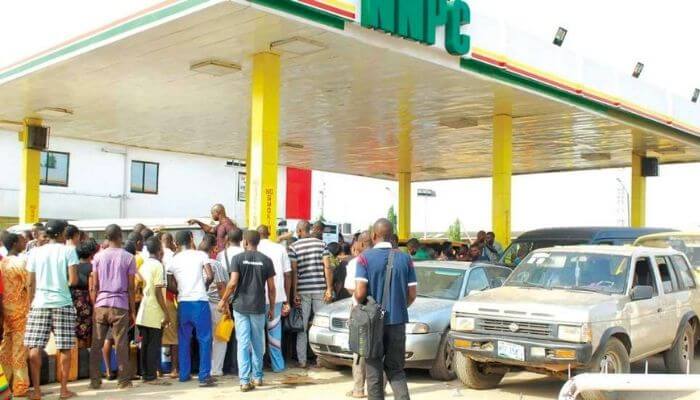
However, President Bola Tinubu announced the discontinuance of fuel subsidy on May 29, 2023, which triggered a sharp rise in the general cost of living.
Although the administration approved an additional N35,000 wage award for six months starting from September 2023 to alleviate the impact of the subsidy removal, the organised labour maintained that this was only a provisional solution and called for a complete review of the minimum wage.
Chairing the panel is a former Head of the Civil Service of the Federation, Bukar Aji, who at the inauguration affirmed that its members would come up with a “fair, practical, implementable and sustainable” minimum wage.
The inauguration of the committee follows months of agitation from the organised labour, which expressed concerns over the Federal Government’s failure to inaugurate the new national minimum wage committee as promised during negotiations last October.
On the government’s side, members include the Minister of State, Labour and Employment, Nkeiruka Onyejeocha, representing the Minister of Labour and Employment; Minister of Finance and Coordinating Minister of the Economy, Mr Wale Edun, who was represented by the ministry’s Permanent Secretary, Mrs Lydia Jafiya.
Others are the Minister of Budget Economic Planning, Atiku Bagudu; Head of the Civil Service of the Federation, Dr Yemi Esan; Permanent Secretary, GSO OSGF, Dr Nnamdi Mbaeri; and Chairman/CEO, NSIWC – member/Secretary, Ekpo Nta.
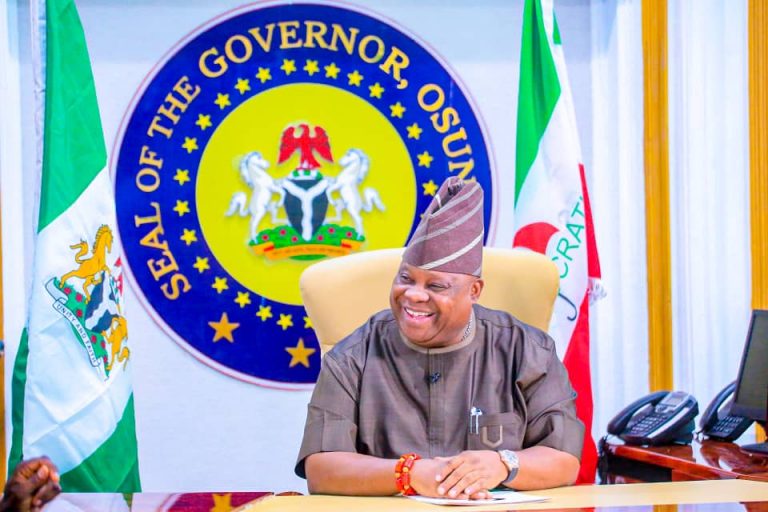
Representing the Nigerian Governors’ Forum are Mohammed Bago of Niger State (North-Central); Senator Bala Mohammed, Bauchi State (North-East); Umar Dikko Radda, Katsina State, (North-West); Prof Chukwuma Soludo, Anambra State (South-East); Senator Ademola Adeleke, Osun State (South-West); and Otu Bassey, Cross River State (South-South).
From the Nigeria Employers’ Consultative Association, Adewale-Smatt Oyerinde, Director-General, NECA; Mr Chuma Nwankwo and Mr Thompson Akpabio; representing the Nigeria Association of Chambers of Commerce, Industry, Mines and Agriculture are Asiwaju Michael Olawale-Cole, National President; Ahmed Rabiu, National Vice-President; and Chief Humphrey Ngonadi, National Life President.
Representatives of the National Association of Small and Medium Enterprises are Dr Abdulrashid Yerima, President and Chairman of Council; Theophilus Okwuchukwu, private sector representative; Dr Muhammed Nura Bello, Zonal Vice-President, North-West; and also from the Manufacturers Association of Nigeria are Mrs Grace Omo-Lamai, Human Resource Director, Nigerian Breweries; Segun Ajayi-Kadir, Director-General, MAN; Lady Ada Chukwudozie, Managing Director, Dozzy Oil and Gas Limited.
From the organised labour are Joe Ajaero, President, Nigeria Labour Congress; Emmanuel Ugboaja; Prince Adeyanju Adewale; Ambali Akeem; Benjamin Anthony and Prof Theophilus Ndukuba.
From the Trade Union Congress of Nigeria are Festus Osifo, President, TUC; Tommy Etim Okon, Deputy President I; Kayode Surajudeen Alakija, Deputy President II; Jimoh Oyibo, Deputy President III; Nuhu Toro, Secretary-General; and Hafusatu Shuaib, Chairperson Women Comm.
Speaking with our correspondent on the deliberations of the committee following the announcement by the President of the NLC, Joe Ajaero, that rising inflation in the country might push the organised labour to demand N1m as minimum wage, a representative of the NLC, who is also a member of the committee, Akeem Ambali, said one of the principles of collective bargaining allowed all parties to look into all factors before an amount would be agreed on.
“The principle of collective bargaining allows compromise once the parties look at all factors to ensure an agreeable amount is reached,” he stated.
Speaking on the next sitting of the committee, Ambali said, “The second meeting of the minimum wage committee has been slated for Monday and Tuesday.
“On the timeline of March for the expiration of the current minimum wage, we hope that the committee, the Presidency, and the National Assembly will expedite action to ensure that the new Minimum Wage Act would have come to replace the old one by April 1, 2024.”
Ambali also expressed shock at the N500m approved by the President for the committee.
A leaked memo had disclosed the request for N1.8bn for the inauguration of the committee. The memo, signed by the Secretary to the Government of the Federation, Senator George Akume, and dated January 18, 2024, was addressed to President Bola Tinubu.
It underscored the committee’s need for substantial funds to kick-start its operations. The document sought approval for the release of N1bn, with the inauguration set for January 26, 2024. The memo also emphasized the legal requirement to establish a new minimum wage by April 1, 2023.
President Tinubu, in response to the memo, approved N500m for the committee’s inauguration, while acknowledging the importance of the committee’s work, and also highlighted the necessity of efficient resource management.
Commenting on the amount, Ambali said, “On the purported allocation of funds to the committee, it is unbelievable because we were never informed or given a kobo. We will unravel the fact behind this soon.”
The Deputy President of the Trade Union Congress, Tommy Etim, who also confirmed Monday and Tuesday’s meeting of the committee, stated that the N1m proposed minimum wage was reflective of the country’s economic realities.
He said it was unfortunate that a Nigerian worker was not earning up to N1m monthly but members of the National Assembly were being paid humongous amounts and acquiring luxury vehicles at the nation’s expense.
“How many months did those in the National Assembly put in that each of them is going home with huge amounts and they have vehicles worth N250m each?” he queried.
Etim told Sunday PUNCH that with the removal of the fuel subsidy, the cost of living had increased, causing the workers to lose hope.
The TUC deputy president added, “How much is for accommodation now? How much is food? By right, civil servants on Level 17 are supposed to be entitled to a two-bedroom flat. Now, a two-bedroom flat costs about N3.5m to rent in Abuja.
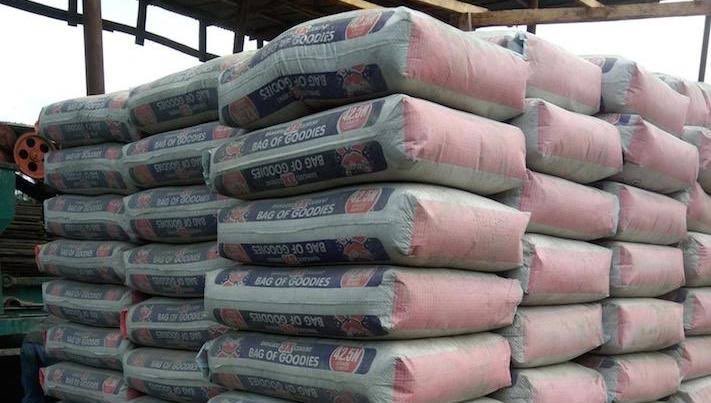
“Have you looked at the cost of cement and building materials now? Have you taken time to look at the cost of transportation? So, if you think that the workers cannot earn N1 m, and politicians are earning N3.5m in a month; who is fooling who?
“If the government cannot pay the N1m minimum wage; what the NLC has put forward is a proposal to let them come out to say what they can pay and let it be justifiable in line with the cost of living.”
Etim noted, “If insecurity does not allow people to go to the farm, what will they eat? It is like what the Bible describes as ‘to eat and die’. Have you taken time to look at the cost of a loaf of bread?
“Is it not because of the increase in the cost of bread that led to the revolution in Sudan in 1980? So, if Nigerians have been patient with the government, they need to pay.”
On food hoarding, he said, “If you have the advantage of having food, do not hoard it. Hunger does not recognise food hoarding, and it can turn into a crisis. Hoarding of food is a recipe for revolution.
“My advice is that those in privileged positions to have food should release it to those who need it rather than hoarding it. If you continue hoarding it, it is going to spoil.
“There is hunger in the country and the President is aware of it. That is why he had a meeting with the governors to let them know there is hunger in the country, so that they will release money and pay the necessary salaries they are supposed to pay, and should let people have access to money to reduce poverty.”
‘FG will consult’
Reacting to the N1m minimum wage demand by the organised labour, the Federal Government said it would prefer to wait for the final decision of the 37-man committee.
The Minister of Information, Idris Mohammed, told one of our correspondents that the government would take a reasonable position that would take account of the interest of the people after due consideration of Nigeria’s resources and other factors.
“It (N1m demand) is a proposal but the Federal Government will not pre-empt the work of the 37-man committee that includes labour itself. The government will do what is right in the interest of the nation as a whole, taking into account our resources and other factors.”
On whether the payment of N1m is sustainable by both federal and state governments in the face of the rising inflation, the minister said he would “leave Nigerians to imagine that.”
‘Tread with caution’
A developmental economist and financial expert, Dr Segun Ajayi, said the Federal Government must tread with caution in negotiating with the TUC and the NLC over their demands.
“N1m in this economy is not a lot of money, but the problem is that I am sure the government will say they cannot afford it. From the current economic realities, it is also obvious that the government cannot pay workers N1m as minimum wage. But, in negotiations, it is a good point to always start big. So, by the time it is beaten down and subtractions are made, the workers would have something substantial to bank on,” he said.
Another senior economist, Dr Ade Dayo, said, “The government and the Organised Labour must be reasonable. Nigeria cannot afford to enter into a recession. The country can also not afford another industrial action. The economy is at its lowest ebb. We have never had it this bad in more than 20 years.
“It is true that the N30,000 minimum wage is too meagre to take any worker through the month. The government must understand that. Labour, too, must also understand what the government can afford at this time. But, I believe that everything will melt at the negotiation table; compromises will be made and things will be fixed amicably.”
Also commenting, a senior lecturer at the Department of Political Science, Nnamdi Azikiwe University, Awka, Anambra State, Dr Ugwueze Emmanuel, said the government should consider the plight of Nigerian workers and respond speedily to their requests to increase the minimum wage to “something reasonable.”
He stated that N1m was not too much to ask for, adding that some politicians with little or no qualifications “earn much higher while doing so little.”
“The government people should not act like they are not in the country. How can a worker take home N30,000 as a monthly salary in this economy? How much is bread? How much is garri or rice? The government must also learn to see things from the lenses of the people,” he added.