Thursday, May 14, 2026
Home Blog Page 217

Crisis Brews Between Kogi Governor Ododo, Yahaya Bello Over Sacking Of Loyalist

0

Crisis Brews Between Kogi Governor Ododo, Predecssor Yahaya Bello Over Sacking Of Loyalist, 1200 Bags Of Rice

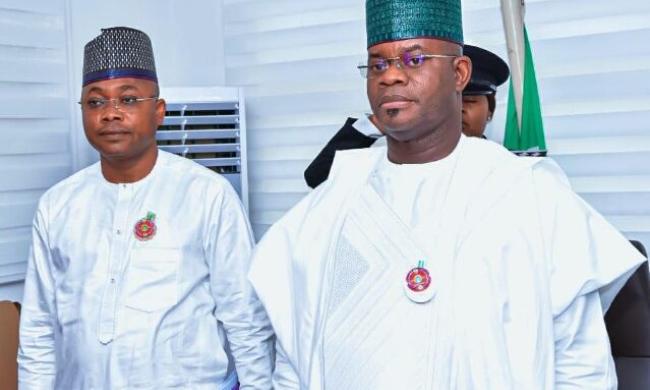
Governor Usman Ododo of Kogi State is on a collision course with his predecessor, Yahaya Bello following the sack of the transition committee chairman of the Ofu local government area, Hassan Atawodi, SaharaReporters has learnt.

Atawodi was handpicked to head the Ofu local government transition committee chairman on 9th January 2024 by the former Governor, Bello.

Meanwhile, the sack of Atawodi by the present governor is believed to be used to test the waters in what has been described as a “silent crisis” going on between the two leaders.

Although the real reason behind the sack of Ofu Transition Chairman may not have been heard, political watchers suspected it was in connection with the alleged diversion of palliative rice meant for distribution to indigent constituents.

The governor according to sources accused the chairman of diverting 1,200 bags of rice which the deputy governor hijacked but wanted to pin on the Chairman.

Insider sources told SaharaReporters that trouble for Atawodi started when he allegedly disobeyed instructions of the Deputy Governor, Joel Salifu Oyibo, who is also from the same Ofu local government area.

The deputy governor was said to have told him (the chairman) to share the palliative rice meant for the indigent citizens of Ofu to party stakeholders instead of the targeted poor.

The idea of sharing the rice to party stakeholders, which the lion share had been prepared to go to the former Vice Zonal Chairman of the All Progressives Congress (APC) Hon. Alfa Muhammed and the Deputy Governor himself, was allegedly opposed by the caretaker chairman, Mr Atawodi, who saw it as heartless considering the current economic hardship, high rate of inflation and high cost of living.

“Atawodi ignored the arrangement and made it clear to the deputy governor, Mr Joel Oyibo that the people are going through a lot this time and it would be unwise to share 1,200 bags of rice to stakeholders when in actual sense, the rice was not even enough to distribute to indigent families.

“This got the deputy governor infuriated and consequencetly threatened to deal with the caretaker chairman Hon. Atawodi for daring him.”

Continuing, the source said “Atawodi was subsequently, barred from the venue where the rice was shared. Instead the deputy governor appointed one Alfa’s loyalist in the person of Musa Muhammed Lawal a.k.a Solar whom he directed to take charge.”

In a video made available to SaharaReporters on the sharing of the palliative, it shows Musa Lawal when he was collecting the 1,200 bags of rice meant for the Ofu council.

According to the source, the rice he collected were allegedly sold in Lokoja the state capital to a business tycoon as directed by Hon. Alfa and Joel Oyibo (deputy governor).

Sequel to the development, Kogi State Governor, Ododo, on Monday, approved the immediate removal of Hon. Hassan Atawodi as the Transition Chairman of Ofu Local Government Area.

Governor Ododo, however, approved the appointment of Musa Muhammed Lawal a.k.a Solar as the new Transition Chairman of Ofu Local Government Area with immediate effect.

In a statement issued on Monday by the Secretary to the State Government (SSG), Mrs Folashade Ayoade, said the appointment of Lawal was immediate and ordered Atawodi to hand over government property to the new TC chairman.

The source, however, revealed that Hon. Atawodi who is a loyalist of former Governor Bello, is seen as a threat to the new governor while Hon. Alfa who was once Bello’s loyalist has switched loyalty to Governor Ododo as he is no longer in the good books of Bello.

Another source told SaharaReporters that “there was a kind of little dispute from the day one of the flag off palliative rice. The day of the flag off palliative rice there was a meeting called by the deputy governor in his residence. He called the meeting and invited the transition chairman from Ofu.

“In the first place, they accused him of excesses. They accused of not carrying the stakeholders along. Then after the flag off palliative the time he supposed to go and look for trucks to carry the Rice for the Ofu to the council Secretariat, they were calling him here and there for their meetings. He, then went for the meeting and by the time he came out of the meeting it was late. Then, the following day he supposed to get clearance to pick the rice to the Secretariat, unfortunately they denied him of the clearance.

“They now said that only the local government secretary, the party chairman and one other person will be assigned to the collection of the palliative rice. So they denied him of getting that clearance.

“When he called the deputy governor of the state who is from the same council to explain to him what was going on, he told him that he was on his way travelling. He never got back to that. Throughout that, no response from the deputy governor. He called the House of Assembly member representing the local government at the state assembly, there was no response and that day passed.

“The following day being the third day, that was the day they cleared him and now told him that it is only the Council Secretary, DLG and party chairman that would be assigned to get the rice. Luckily I was one of the house that was dissolved, so I was asked to be in venue to monitor things going on when loading the rice. And DLG of the local government, the secretary and the party chairman and one external body by name Danjuma were part of them collecting the rice

“They came that day with four small vehicle called Diana and loaded 110 bags each and that four contained 440 bags. Then big trucks were loaded 760 bags a total is 1,200 bags allocated to Ofu local government. All was captured on video and pictures but they never knew. So after the whole thing, when the rice were loaded they packed the truck the same place and covered with tarpaulin.

“I also captured and videod it. I now approached the party chairman and asked him, Mr Shagari, does that mean that the trucks will not move to the Secretariat? He said no that they are moving the vehicle down to the deputy governor’s house.

“He said that they cannot move the rice to the council headquarters because night had come. That the following day it will be moved to the Secretariat and up till now as speak the rice has not arrived the council Secretariat. However, in a twist of event, this afternoon the Caretaker Chairman was sacked for allegedly diverting the rice.”
Tinubu Hails Tunji-Ojo Reforms As Interior Minister

0

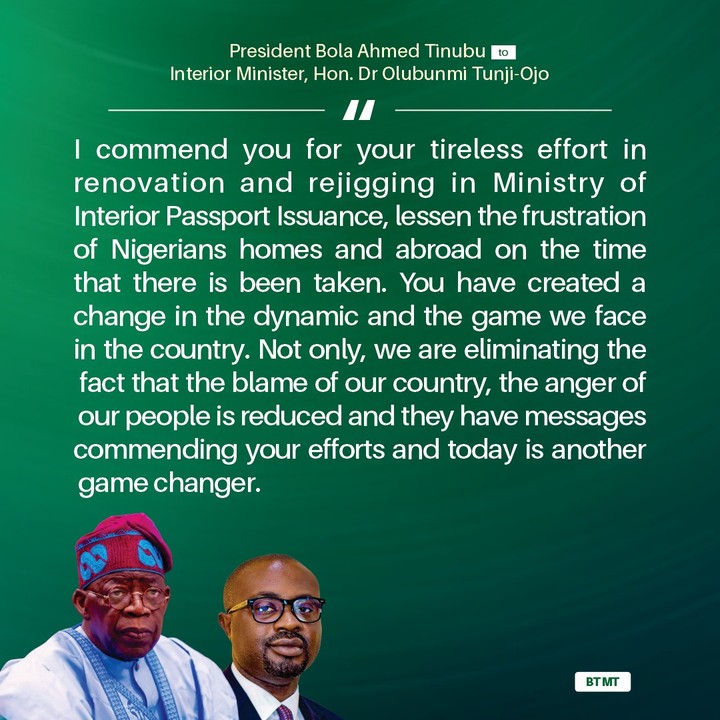
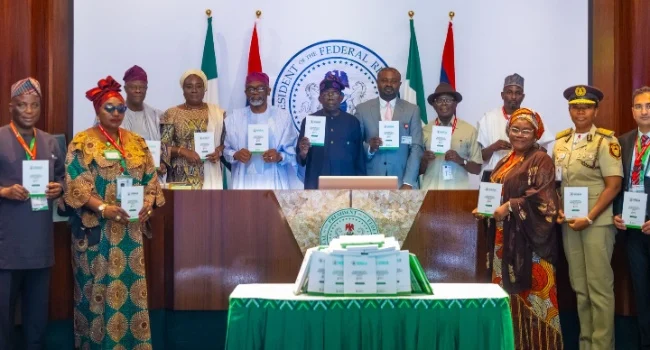
President Bola Ahmed Tinubu has commended the Minister of Interior, Hon (Dr.) Olubunmi Tunji-Ojo for the reforms he has facilitated in the ministry.

Tinubu, while speaking during a federal executive council meeting, stated that the frustrations of many Nigerians have been significantly reduced owing to the strategic initiatives of Tunji-Ojo

While singling out the minister of Interior, he stated that he has been receiving various positive reviews of the various reforms which has been introduced by Olubunmi Tunji-Ojo

According to him, this has started to give the nation a good image while also reducing the anger of Nigerians towards the system.

Since assumption as minister of Interior, Olubunmi Tunji-Ojo within two weeks cleared over 20,000 passport backlogs at no extra cost to the federal government.

He has also seen to the automation of the passport application process which has been gathering positive commendations from Nigerians globally.

Also under him, the ministry of interior is set to launch the installation of E-Gates across international airports in Nigeria.

Tinubu Launches Expatriate Employment Levy (EEL)

0

President Bola Tinubu has launched the expatriate employment levy (EEL) to close wage gaps between expatriates and the Nigerian labour force.

The EEL also mandates firms to pay levies for hiring expatriates and provides guidelines on the employment of Nigerians in foreign-owned companies.

Tinubu said the policy, which was initiated to oversee expatriate employment in the country, should not become a hindrance to foreign investment.

The initiative, according to the EEL handbook, aims to diminish reliance on foreign skills and encourage companies to prioritise the hiring of Nigerians by supporting the development of the local workforce.

The policy document also said the government intends to find a balance between leveraging foreign expertise and fostering local talent in Nigeria’s job market through the EEL.

“I consider it a game changer. It is important to know that EEL is a contribution recently approved by the government, which will impose effective timeline on expatriates working in this country to be able to train and develop Nigerians,” Tinubu said.

“I’ve been further assured that the project has the capacity of plugging loopholes and gaps that have bedevilled the country in dealing with security challenges, and movement of foreigners in and out of the country.”

Tinubu said with the initiatives currently undertaken by his administration, Nigerians will begin to see improvement in their standard of living, adding that several arms of government are partnering to accomplish this purpose.

He said continued cooperation among MDAs would spur advancement and development that would retool and reengineer the nation’s financial system.

“There will be clear lines of implementation and effective acceleration of aims and objectives of this programme,” the president said.

“Immigration matters, expatriate quotas and relevant stakeholders have to be effectively guided to make Nigeria the focus of the objective of this EEL.”

EXPATRIATE WILL ONLY WORK IN NIGERIA IF NO NIGERIAN HAS NEEDED SKILLS’

On his part, Olubunmi Tunji-Ojo, minister of interior, said the Nigeria Immigration Service (NIS), a private company, and the federal government will run the initiative through a public-private partnership (PPP) model.

He said the project, which was approved by the federal executive council (FEC) in May 2023, would ensure that expatriates only work in the country where no Nigerian has the needed skills for such jobs.

“That’s the major objective of this particular initiative; balancing employment opportunities between Nigerians and expatriates,” Tunji-Ojo said.

“And of course, closing wage gaps between expatriates and the Nigerian labour force by making it more attractive to hire Nigerians.

“As a guide, the comprehensive handbook has been developed on the project to guide stakeholders, especially foreign-owned companies, joint venture companies, organisations and indigenous company that employ expatriates, to understand the concept as well as to comply with the new ideal.”

Part of the driving force, he said, is to reduce the reliance of companies on foreign personnel as well as the frequency with which businesses pursue the renewal of their expatriate quota.

Tunji-Ojo said the policy would also give priority to the transfer of knowledge, training Nigerians, and creating more opportunities for the youths in the nation.

Dangote, PH Refineries Face Crude Shortage Over Low Production – FG

0

The Minister of State Petroleum Resources (Oil), Heineken Lokpobiri, has said the newly inaugurated Dangote Petrochemical Refinery, Port Harcourt Refinery, Warri Refinery and modular refineries in the country may not get enough crude oil locally for the production of petroleum products unless deliberate efforts are made to increase investments and crude production in the sector.

Lokpobiri said unless the country ramped up production by handing over its oil wells to capable investors, the refineries would not get enough feedstock to produce enough oil, even for local consumption.

On January 12, the Dangote refinery announced that it had begun the production of both diesel and aviation fuel.

The Dangote refinery, a subsidiary of Dangote Industries Limited, is a 650,000 barrels per day crude oil refinery, located in Dangote Industries Free Zone, Ibeju-Lekki, Lagos, Nigeria

As of January, it was said that the facility had received six shipments of one million barrels each of crude oil from the Nigerian National Petroleum Company Limited.

Recently, Shell Nigeria Plc said it had completed the supply of 450,000 barrels of crude oil to the newly rehabilitated Port Harcourt refinery.

However, both the major and independent marketers said they had yet to receive refined products from any of the refineries as the NNPCL continues importation of fuel with scarce foreign exchange.

Speaking at the seventh edition of the Nigeria International Energy Summit held in Abuja on Tuesday, the minister said the Dangote refinery alone would need up to 650,000 barrels of crude oil daily, while the government-owned ones would gut about 450,000 barrels too.

According to him, Nigeria has in the last five years slowed down investments, saying “We are the lowest in the world, if you talk of investment to reserves ratio, Nigeria is 25 per cent. Nigeria is the least in the world. Between 2017 and 2022, if you look at the figures, Nigeria’s investments compared to our reserves is 25 per cent. There is something we are not doing right.”

He lamented that many oil wells have been left idle even in the face of dwindling crude production.

“We need to ramp up production, there are so many idle wells that we can give to the right people. We need to ramp up production in the upstream, so that the midstream and the downstream can also be successful. We need to increase our production in the upstream so that we will be able to produce the right quantity that will service our obligations, both locally and internationally.

“Dangote Refinery needs about 650,000 barrels a day; we are rehabilitating our government-owned refineries which may need about 400,000bpd. We have a couple of modular refineries coming up. On the whole, we need to ramp up production so that we will be able to meet our domestic needs and to guarantee energy security,” Lopkobiri explained.

He held that unless the country made the investments, the proposed transition from fossil fuel to gas would also be a mirage.

The oil minister opined that Nigeria does not need to import fuel, expressing concerns that the bulk of the country’s foreign exchange goes into fuel importation.

“We must find a solution to our forex problem. Nigeria has no need importing fuel. We should free our scarce forex for other sectors of the economy. I am aware that the bulk of our forex goes to the importation of refined oil products. But now, we are rehabilitating our own refineries, which will come into full operation by the end of this year.

“Port Harcourt refinery’s first phase has started; Warri refinery is about to be completed between now and the next two months, Kaduna will come; all will be rehabilitated this year. Even after rehabilitation, if we do not ramp up production, if we do not get the right investment, we won’t be able to get the feedstock,” he said.

The former Senator noted that Nigeria suffers energy poverty despite its abundance of oil and gas reserves, which he said had not translated to economic prosperity like in the Middle East.

“We need to unravel what other climes have done to bring economic prosperity to their nations that we have not done. If you have reserves underground and you don’t bring them out, they won’t translate to anything.

“We need to give it to those who have the proven capacity to explore oil and gas for the benefit of Nigerians and the global energy landscape. In the past, the allocation of blocks was politicised. The easiest way to guarantee energy security is to get the right investment,” the minister added.

Speaking on energy transition, Lokpobiri joined the Organisation of the Petroleum Exporting Countries to reject the call to stop investing in fossil fuels.

According to him, the West is asking Africa to stop investing in fossil fuels while it is not slowing down the same fossil fuel investment.

“We will transit at our own pace. Our target is to explore these resources in a more environmentally friendly way. We are not stopping it, we need the money to be able to transit, and for us to transit, we must get the right investments,” he said.

Hardship: Tinubu Not Responsible For Economic Woes – Ambode

0

Hardship: Tinubu not responsible for economic woes – Ambode

Former Lagos State governor, Akinwunmi Ambode, has said President Bola Tinubu is not the originator of the current economic challenges in Nigeria.

He said Nigerians need to face the current hardship and economic challenges frontally.

The former governor said this when he addressed attendees at the 2024 Leadership Colloquium and Award hosted by the Akinjide Adeosun Foundation (AAF) at Alliance Francaise in Lagos.

The ex-governor said citizens would continue the blame game if they do not understand the fundamentals of the problems facing the country.

“It has nothing to do with the singular person called Mr President; but if we don’t understand the fundamentals, we will start playing the blame games. We need to face our problems frontally,” he said.

“The major issue is that we are even tired of not fixing our issues. Now, we have found somebody that has decided in person of President Tinubu.

“Until we decide ourselves to say that we should unite for the common cause called Nigeria, the security issues will not go.

“We don’t have to wake up in the morning and talk ill of Nigeria. We get what we profess about Nigeria.”

NLC’s Planned Protest, Contempt Of Court -AGF

0

The Attorney General of the Federation and Minister of Justice, Lateef Fagbemi, (SAN) has urged the Nigeria Labour Congress to shelve its proposed nationwide protest.

On February 16, the NLC announced a nationwide protest scheduled for February 27 and 28, in response to the economic challenges facing the country.

This decision followed the conclusion of a 14-day ultimatum issued to the Federal Government regarding the widespread hardship.

However, in a letter addressed to the counsel for the NLC, Femi Falana, (SAN) dated February 23, 2024, Fagbemi reminded the NLC of a subsisting order restraining the union from embarking on any industrial action.

The letter read, “I wish to draw your esteemed attention to the Joint Press Release dated 8th February 2024, containing a 14-day ultimatum, jointly issued by the President of the NLC and President of the TUC as well as the notice of a two-day national protest issued by the NLC President on 16th February 2024.

“A cursory perusal of the above press release clearly shows that the planned protest is premised on or connected with alleged non-implementation of the 16-point agreement reached with the Federal Government on October 02, 2023, consequences of the hike in the price of PMS, and other associated issues. It is therefore safe to assert again that the proposed cause of action by NLC is targeted at achieving objectives or promoting issues connected with a hike in fuel price and consequential matters of palliatives workers ‘ welfare, and associated government policies.

“You may wish to note that the foregoing issues or objectives are at the core of the pending case before the National Industrial Court. Upon the submission of grievances to the court, parties in the suit cannot resort to public protests over the same issues, as such conduct amounts to gross contempt and affront to the institution of our courts of law. Therefore, the proposed nationwide protest action in all ramifications is in clear violation of the pending interim injunctive order granted in SUIT NO: NICN/ABJ/158/2023-FEDERAL GOVERNMENT OF NIGERIA & ANOR V. NIGERIAN LABOUR CONGRESS & ANOR on 5th June 2023 restraining both NLC and TUC from embarking on any industrial action or strike of any nature.

“It is not in doubt that the planned protest is designed to compel the government to accede to the demands of organised labour, therefore, such action qualifies as an industrial action which comes within the ambit of the restraining order. This restraining order has neither been stayed nor set- aside and therefore remains binding.”

He noted that the government had substantially met the demands of the union as contained in the Memorandum of Understanding entered with the NLC.

Fagbemi said, ” I wish to note that the government has substantially and reasonably complied with the items in the MOU and it is only appropriate and equitable for organized labour to engage more with the government to ensure the full implementation of same, especially in areas that have been inhibited by unforeseen challenges.

“May I, therefore request that you kindly implore and enjoin your clients to refrain from self-help by shelving the proposed protests which are antithetical to the mediatory engagements leading to the execution of the MOU, tantamount to undermining subsisting restraining court order, and occasioning disruption of public service, order, and safety”

CBN Pegs Rate For Import Duty Payment

0

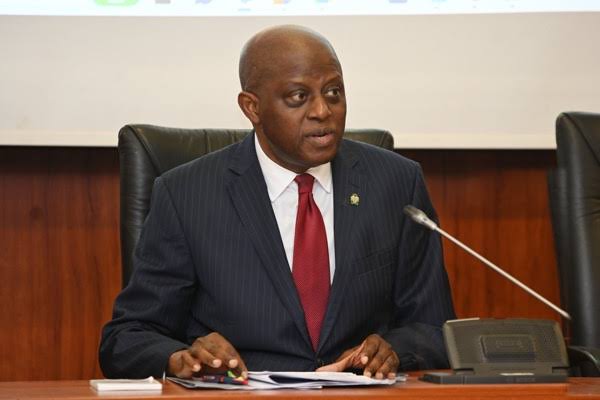
The Central Bank of Nigeria has pegged the duty rates to be paid by importers to the Nigerian Customs Services during goods clearance.

This was as the bank instructed the Customs to utilise the FX closing rate on the date of the ‘Form M’ submission by importers for the clearance of goods and import duty assessment.

The CBN stated this in a circular signed by its Director of Trade and Exchange Department, Hassan Mahmud, and posted on its website on Friday.

Form M is a mandatory statutory document used as a declaration of intention by importers for the importation of physical goods into Nigeria.

This measure aims to tackle the volatility and frequent updates on the customs website concerning the liberalisation of the foreign exchange market.

Recently, the Nigeria Customs Service through the CBN has been regularly reviewing and adjusting the exchange rate for import duties and clearance of goods on its website to reflect the prevailing market rate following the unification of the forex market in June.

Since the beginning of this year, the service has adjusted the forex rate almost twice weekly.

The last adjustment of the exchange rate by Customs saw the rate move upwards from N1537.07 to N1605.82 per USD.

In response to the complaints from members of the public and the business community, the Comptroller-General of the NCS stated during an interview that the service does not fix the exchange rate rather they follow the directive of the CBN on such matters.

The circular read, “To this effect, the Central Bank of Nigeria wishes to advise the Nigeria Customs Service and other related parties to adopt the FX rate on the date of opening the Form M for importation of goods, as the FX rate to be used for import duty assessment. This rate remains valid until the date of termination of the importation and clearance of goods by the importers.

“This would enable the Nigeria Customs Service and the importers to effectively plan appropriately and reduce uncertainties around varying exchange rates in determining revenue, or cost structure respectively.

“Therefore, effective 26th February 2024, the closing rate on the date of opening of Form M for importation of goods and services would be the rate that would apply for assessment of goods and services. This supersedes the requirement of Memorandum 9, J (2) of the Central Bank of Nigeria Foreign Exchange Manual (Revised Edition) 2018.

While the CBN is mindful of the initial volatility and price distortions in the aftermath of the FX market liberalization, the Bank is confident that these reforms, would in the medium term, ensure stability in the market and entrench market confidence necessary to attract investment capital for the growth and development of the Nigerian economy.”

The Central Bank of Nigeria in June 2023 unified the foreign exchange market in a move geared towards floating the market. Since then, the naira has lost over 100 per cent of its value on the official window.

The weakness of the naira coupled with other fiscal policy initiatives like the removal of fuel subsidy pushed inflation to a 28-year high as of January at 29.90 per cent.

The inflation is mainly driven by food and transport with the former’s inflation rate at 35.4 per cent in January.

US Man Accused Of Making $1.8m From Listening To His Wife’s Remote Work Calls

0

US regulators have accused a man of making $1.8m (£1.4m) by trading on confidential information he overheard while his wife was on a remote call, in a case that could fuel arguments against working from home.

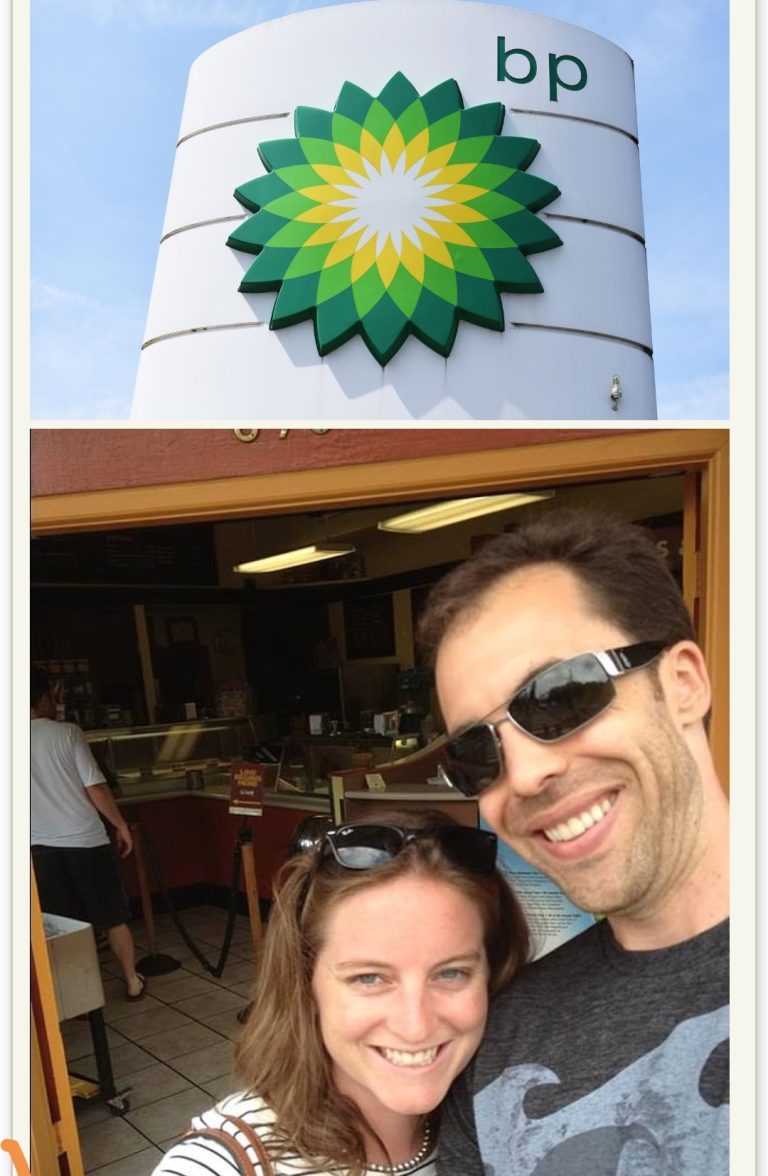
The Securities and Exchange Commission (SEC) said it charged Tyler Loudon with insider trading after he “took advantage of his remote working conditions” and profited from private information related to the oil firm BP’s plans to buy an Ohio-based travel centre and truck-stop business last year.

The SEC claims that Loudon, who is based in Houston, Texas, listened in on several remote calls held by his wife, a BP merger and acquisitions manager who had been working on the planned deal in a home office 20ft (6 metres) away.

The regulator said Loudon went on a buying spree, purchasing more than 46,000 shares in the takeover target, TravelCenters of America, without his wife’s knowledge, weeks before the deal was announced on 16 February 2023. TravelCenters’s stock soared by nearly 71% after the deal was announced. Loudon then sold off all of his shares, making a $1.8m profit.

Loudon eventually confessed to his wife, and claimed that he had bought the shares because he wanted to make enough money so that she did not have to work long hours anymore.

She reported his dealings to her bosses at BP, which later fired her despite having no evidence that she knowingly leaked information to her husband. She eventually moved out of the couple’s home and filed for divorce.

The case is expected to fuel arguments – particularly at US companies – for workers to return to the office, reversing the boom in home working prompted by the pandemic lockdowns. Banks such as Goldman Sachs have been forcing some staff to come in five days a week, while others such as Google are factoring office attendance into their regular staff performance reviews.

Concerns about security and confidential information could end up trumping studies that show working from home can deliver big health benefits, allowing people to eat more healthily, feel less stressed and have lower blood pressure.

Loudon did not deny the allegations outlined in the SEC complaint, which was filed at the US district court for southern Texas, and instead agreed to a partial judgment, subject to court approval. That partial judgment will ban him from taking company leadership roles, force him to repay the money he made from the trade – with interest – on top of an extra fine to be determined by the court.

He is facing criminal charges from the US attorney’s office for the southern district of Texas.

The SEC filing said Loudon, who is in his early 40s, is employed with an unnamed publicly listed company but is not in a sector supervised by the regulator.

Buhari, Not Tinubu Responsible For Rot In Nigeria, Says Igboho

0

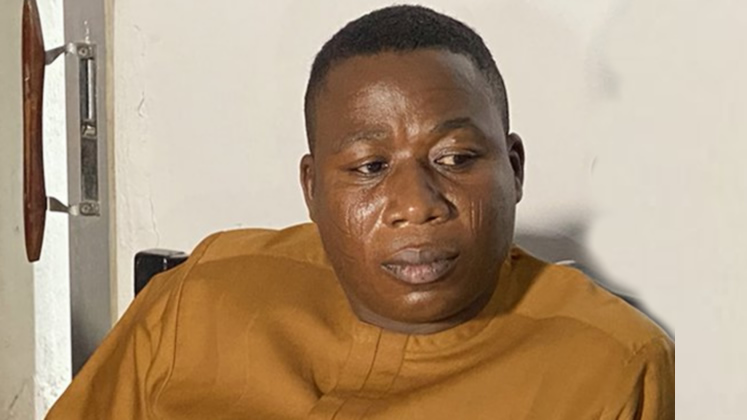
Yoruba nation agitator, Sunday Adeyemo, popularly known as Igboho, has described as incorrect, the assertion made by some Nigerians that President Bola Tinubu is responsible for the rot in the country.

Tinubu, who was sworn in on May 29, 2023, announced the removal of the subsidy during his first address, a decision that increased the cost of petrol and economic inflation.

This is against the backdrop that the Buhari-led government did not make provisions for petroleum subsidies in the 2023 budget.

Speaking during a visit to the palace of the monarch of Igboho town in Oyo State on Friday, Adeyemo said, “Some people believe it is Tinubu that spoils the country; it is not Tinubu. When Buhari was in government, I was shouting for us (Yoruba) to be united and free ourselves from slavery, saying that Buhari did not have anything to offer us.

“Let’s free ourselves and divide Nigeria. Some people were saying it is what he will eat that he is looking for. Buhari handed over spoiled Nigeria to Tinubu. Tinubu spent six months in office; we are cursing him. What did he do?”

On July 1, 2021, Igboho escaped from a deadly night raid on his Ibadan residence by the operatives of the Department of State Service.

He was subsequently arrested in Benin Republic on his way to Germany on July 19 together with his wife, Ropo. Igboho was, however, released in October 2023.

The Yoruba nation agitator returned to Nigeria about 30 months after for the burial of his mother, who died on July 22, 2023.

In a video that has since gone viral on social media, Igboho was spotted sitting on top of a car while being welcomed by a mammoth crowd in his home town of Oyo State.

While addressing his supporters at the monarch’s palace, he accused Buahari of sending the security agency to kill him because he was defending the rights of the Yoruba people.

He said, “Buhari sent his soldiers and DSS to arrest me in my house because I said Yoruba’s are not slaves to Fulani. Fulani cannot suppress us in our father’s land.

“Fulani can’t stop our fathers and mothers from going to their farms. Fulani can’t dare it. But, I’m back with the power of God and authority, not that of man. I use the power that God used to create the universe.”

CBN To Raise BDC’s Share Capital To ₦2 Billion

0

The Central Bank of Nigeria is considering increasing the share capital of Bureau De Change operators to N2bn and N500m for Tier 1 and Tier 2 licences.

The currency operators were previously charged N35m for a general licence.

This was contained in the draft paper of a “Revised Regulatory And Supervisory Guidelines For Bureau De Change Operations In Nigeria” published by the apex bank on Friday.

The new guidelines contain several new changes to the guidelines for BDC operations in the country and if endorsed will be effective at a date decided by the CBN.

Recently, operations of the currency operators have suffered heavy backlash following the free fall of the naira against the dollar.

Government officials have severely blamed the black market operators for this fall though liquidity remains a huge challenge.

This week, operatives of the Economic and Financial Crimes Commision arrested over 250 BDC operators in Abuja and many more in other states of the federation.

Under the minimum capital requirements, the central bank is introducing a two-tier license for BDC operators in the country.

The guidelines read, “A Tier 1 BDC is authorised to operate on a national basis can open branches and may appoint franchisees, subject to the approval of the CBN.

“A Tier 1 BDC (which is the franchisor) shall exercise supervisory oversight over its franchisees. All franchisees shall adopt their franchisor’s name, branding, technology platform, and rendition requirements.

“Also, a Tier 2 BDC is authorised to operate only in one state or the FCT. It may have up to three locations – a head office and two branches, subject to approval of the CBN. It is not permitted to appoint franchisees.”

Under Tier 1, operators are expected to have N2bn as minimum share capital while also depositing a Mandatory Caution Deposit of N200m.

“The application and licence fee is also N1 million and N5 million respectively.

Under Tier 2, operators are expected to have N500 million as minimum share capital while depositing a Mandatory Caution Deposit of N50 million. The application and licence fee are also N250,000 and N2 million respectively.”

The apex bank also stated that the prescribed minimum capital of BDCs and any subsequent capital injection shall be subject to verification by the CBN.