Thursday, May 14, 2026
Home Blog Page 214

Binance, Others Face Billions In Fines By SEC Over Currency Manipulations

0

Binance, Others Face Billions of Dollars in Fines By SEC Over Alleged Currency Manipulations

•Firm’s executives reportedly arrested, detained, passports confiscated

•Naira gains at both parallel, official windows at N1,500/$1, N1,609/$

James Emejo in Abuja and Nume Ekeghe in Abuja

The Securities and Exchange Commission (SEC) may slam huge fines running into billions of dollars on one of the world’s biggest exchanges, Binance, and other cryptocurrency firms operating in the country, THISDAY gathered yesterday.

SEC, alongside other security operatives is currently probing allegations that the crypto companies had engaged in currency manipulations activities against the Naira without underling transactions, a development which had contributed to the current FX liquidity crisis in the country.

Binance had previously been sanctioned by the US Government for repeatedly engaging in currency manipulations.

Following the crackdown by the federal government, the company yesterday reportedly suspended its operation and barred users from buying the USDT and USDC stablecoins with Naira following fresh investigations by the Central Bank of Nigeria (CBN) in collaboration with security agencies.

But the naira experienced an increase in value in both the parallel and official markets, on the back of the recent hike in the MPR rate, crackdown on currency speculators, foreign exchange (FX) allocation to BDCs, as well as crackdown on crypto firms.

The naira, on the parallel market, appreciated to N1, 500 from N1, 620 it exchanged on Tuesday, representing N120 gain.

The official Nigerian Autonomous Foreign Exchange Market (NAFEM) appreciated yesterday, closing at N1, 609.51, signifying a N6.43 gain compared with N1, 615.94 it closed on Tuesday.

The daily turnover recorded yesterday was $119.14 million, indicating a 22.7 per cent decline from $154.16 million, quoted on Tuesday. The highest spot rate yesterday was pegged at N1, 660, while the lowest recorded was N1, 401.

A report by Financial Times alleged that security operatives had cracked down and detained two Binance executives, including an American and a British-Pakistani, following an invitation for a meeting with officials from the Office of the National Security Adviser (NSA).

Two high-ranking officials of the exchange, who recently arrived in the country, were arrested and subsequently detained while their passports were also seized, according to the UK-based news outlet.

It was further gathered that during their interrogation by the NSA, the Binance executives were requested to provide data their naira operations covering seven years back.

The federal government also demanded that they delete naira information from their platform, a request that the Binance executives reportedly declined.

It was also reported that the federal government might have obtained court warrant to detain both Binance official for at least 12 days to facilitate further probe into their suspected malicious operations in the country as well as uncover their collaborators.

The crackdown on Binance followed ongoing investigations into the country’s foreign exchange market, which had reportedly endured years of distortions, manipulations, and speculations, leading to the continuous weakening of the naira against major currencies, particularly the US dollar, in recent times.

Speaking at the just concluded meeting of the Monetary Policy Committee (MPC), CBN Governor, Mr. Olayemi Cardoso, justified the bank’s recent clampdown on cryptocurrency platforms, particularly Binance, which he said allowed its platform to be used for speculative activities against the naira.

Cardoso explained that unidentified users accessed $26 billion on the platform in 2023 with all the attendant implications for monetary policy, especially the tendency to stoke inflation and make the naira further vulnerable.

He said there were also indications of illicit inflows and suspicious transactions, adding that the CBN has the responsibility to protect Nigerians from the disruptive activities of such crypto platforms.

The CBN governor stated that the apex bank was collaborating with different agencies, including the Economic and Financial Crimes Commission (EFCC), police, the Office of the NSA to crack down on the alleged economic saboteurs.

Cardoso said, “We are concerned that certain practices go on that indicate illicit flows going through a number of these entities and suspicious flows.

“In the case of Binance, in the last year alone, $26 billion has passed through Binance Nigeria from sources and users who we cannot adequately identify.

“There is a lot that is going on now as a result of collaboration between the different agencies, which includes the EFCC and the police, and, of course, the Office of the NSA and in due course, as we progress and have more information to share, we will certainly share, but suffice to say that we are determined to do everything it takes to ensure that we take charge of our market and do not allow others to manipulate our markets in a way that ends up distortionary.

“We will not accept it. And we will do everything possible to prevent any of these kinds of infractions from taking place.”

However, analysts warned that the crackdown could send mixed signals to foreign investors and further cause their confidence in the economy to plummet.

Referring to the exercise as a “terrible mistake” capable of chasing investors away, the analysts said the operation would have been carried out discreetly without public attention.

An online news platform, TechCabal, quoting someone privy to the meeting with Binanace officials wrote, “There was a meeting of crypto founders on Tuesday morning, and a number of them agreed to suspend the trades on their platform.”

At least two crypto exchanges relayed the troubling development to their customers.

A notification by one of the exchanges to customers read, “We are suspending the buying and selling of USDT and USDC for Naira. This means you can’t buy or sell USDT or USDC with naira.”

Prof. Ngozi Chuma-Udeh: Soludo’s Commissioner Goes Back To Secondary School

0
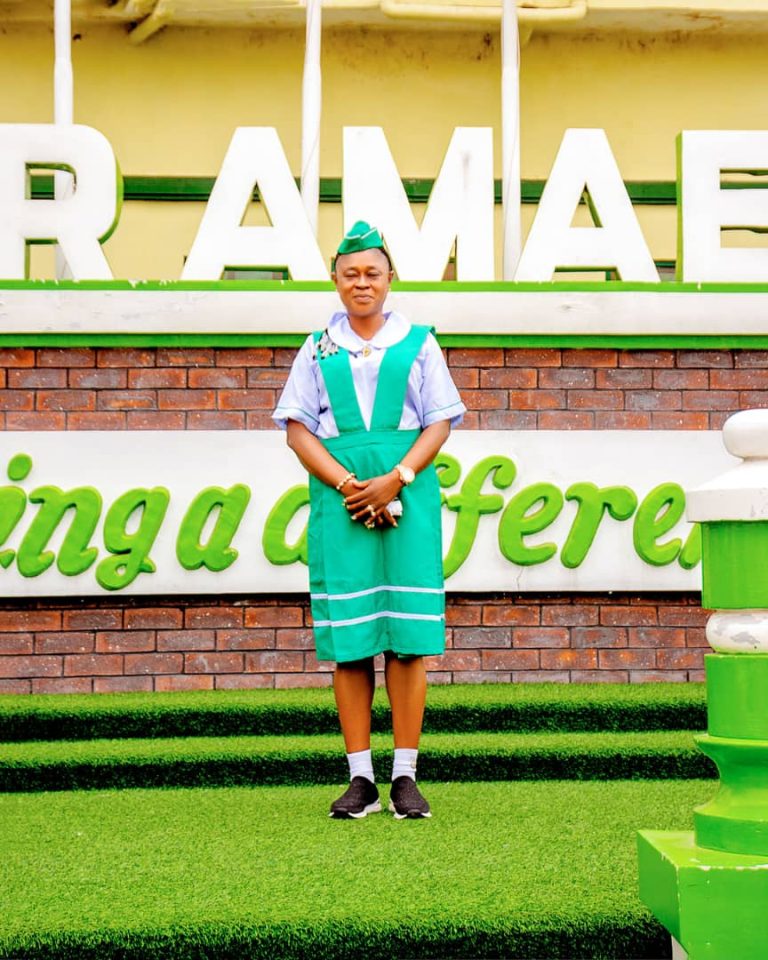
Highpoint of the event was the donation of some gift items to the school by the Commissioner, who looked cute and girly in her school uniform, school cap and a matching pair of sandal.

FG Pays $120m From Gas Debts As Blackout Spreads

0

The Federal Government has paid $120m out of the $1.3bn indebtedness to gas companies for the supply of gas to run gas-fired power plants across the country.

Nigeria is currently suffering from low power supply because many gas suppliers have reduced, while others stopped supplying the commodity to power-generating companies due to the indebtedness of the Gencos to gas-producing firms.

The Minister of Power, Chief Adebayo Adelabu, recently revealed that the crash in power generation and attendant poor supply since January was because gas suppliers stopped supplying gas for the generation of electricity due to the indebtedness of the sector to gas producers.

Nigeria gets more than 70 per cent of its electricity from thermal power plants that run on gas. The remaining amount of electricity comes from hydropower-generating plants.

Speaking at the ongoing 7th Nigeria International Energy Summit in Abuja on Thursday, the Director, Decade of Gas Secretariat, Ed Ubong, expressed excitement that the Federal Government had cleared $120m out of the $1.3bn gas debts.

The Decade of Gas Secretariat is under the Federal Ministry of Petroleum Resources (Gas). The Federal Government is subsidising electricity by paying for the gas used in generating power, as Nigerian power users are currently not paying the exact amount for electricity.

“As of last year, that (gas debts) was about $1.3bn, depending on how you add up the numbers. But I am pleased that between October and the end of January, the government has paid over $120m to offset some of that money,” Ubong stated.

On February 15, 2024, The PUNCH reported that the indebtedness of Nigeria’s power sector to electricity generating companies and gas producers had risen to about N3.3tn.

The report also stated that subsidy on electricity for 2024 would gulp about N3tn, whereas only N450bn was budgeted for this purpose in this year’s budget, adding that the government had stated that it was now very difficult to sustain power subsidy.

The power minister had said Nigeria must begin to move towards a cost-effective tariff model, as he revealed that the country was currently indebted to the tune of N1.3tn to electricity generating companies, while the debt to gas companies was $1.3bn.

Meanwhile, Ubong told delegates at the summit on Thursday that the government was developing a framework to address the lapses that often lead to such humongous gas debts in the power sector.

“More importantly, the government is also now working a framework that can mitigate most of that failure. That’s a piece of work that is ongoing and we hope that it will be approved and then the industry can move away from that legacy issue.

“We must build capacity for that. Capacity for the engineers, technicians that will work in this new gas sector that we are looking at for the next eight months. And as the secretary, we are committed to that,” he stated.

He said the Decade of Gas secretariat was sourcing competent personnel that would support the government in achieving the goals of Nigeria’s gas industry

“We are looking for interns, we are looking for young people who are willing to join us and then provide their time and energy supporting the wider and bigger goals of the sector.

“For the first time, we now have a ministerial committee. One that involves the Minister of State for Gas and the Ministry of Power, because power and gas, they go together.

“We are confident that when that becomes fully operational, that critical link between gas and power will lead to more sustainable solutions going forward,” Ubong stated.

NNPCL wants collaboration
The revelation by Ubong came as the Nigerian National Petroleum Company Limited called for deeper collaboration among upstream operators, especially independent producers, to find solutions to the challenges hindering the effective development of divested assets in the oil sector.

The company’s Executive Vice President, Upstream, Oritsemeyiwa Eyesan, made the call at a panel session in the ongoing summit in Abuja, while speaking on the theme, ‘Innovation, Collaboration, and Resilience: Empowering Independent Producers in the Dynamic Energy Era.’

Eyesan stated that past experiences with divestments and how the assets were operated had left much to be desired as most of them experienced a drop in production rather than growth.

“In the industry, if you want to measure success, there are some basic indicators that you utilise – production growth, reserves growth, and asset integrity. If I were to evaluate prior investment initiatives and scale the actors using these indices, I will be untrue to myself if I say everybody has done well.

“Yes, we acquired the assets, but today, we are worse off in terms of production than we were when we did the acquisition,” she stated.

Eyesan, however, acknowledged that there were some success stories in the operations of the independent producers.

She identified some of the challenges to include insecurity, lack of finance and lack of technological capacity, stressing that with collaboration among industry players, the challenges could be surmounted.

“Collaboration cannot be overemphasised. Somebody said we should be in a state of emergency, and I agree with that. It’s not by sitting here and talking about the challenges.

“I think we should have a war room where we raise the issues and set out concrete plans to resolve them rather than wait for stakeholders individually to take them on. We need collaboration, collaboration, and collaboration,” she stated.

Ramadan 101 Class 2 – What Invalidates Fasting – Islam for Muslims

0

This week, let’s talk about things that invalidate fasting. Things that invalidates the fast are of two types:

1- Some of the things that invalidate the fast involve things coming out of the body, such as intercourse, deliberate vomiting, menstruation and cupping. These things that come out of the body weaken it. Hence Allah has described them as being things that invalidate the fast, so that the fasting person will not combine the weakness that results from fasting with the weakness that results from these things, and thus be harmed by his fast or his fast no longer be moderate.

2- And some of the things that invalidate the fast involve things entering the body, such as eating and drinking. If the fasting person eats or drinks, he does not achieve the purpose of fasting. (Majmu’ al-Fatawa, 25/248)

Allah has summed up the things that break the fast in the verse where He says (interpretation of the meaning):

“So now have sexual relations with them and seek that which Allah has ordained for you (offspring), and eat and drink until the white thread (light) of dawn appears to you distinct from the black thread (darkness of night), then complete your Sawm (fast) till the nightfall.” [al-Baqarah 2:187]

In this verse Allah mentions the main things that invalidate the fast, which are eating, drinking and intercourse. The other things that break the fast were mentioned by the Prophet (peace and blessings of Allah be upon him) in his Sunnah.

There are seven things that break the fast, as follows:

– Intercourse
– Masturbation
– Eating and drinking
– Anything that is regarded as coming under the same heading as eating and drinking
– Letting blood by means of cupping and the like
– Vomiting deliberately
– Menstruation and nifaas

Nigerian Girl Wins Qur’an Recitation Competition In Jordan From 40 Countries – Islam for Muslims

0

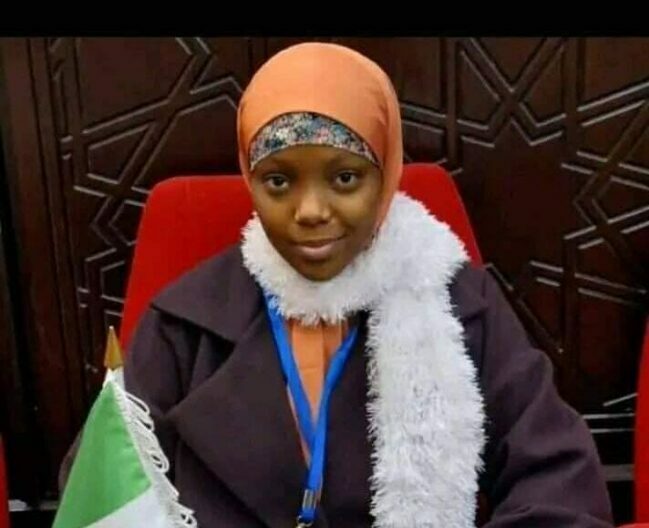
A 19-year-old woman from Gombe State, Hajara Ibrahim
Dan’azumi, has emerged as the overall winner of the
Women’s International Hashemite Competition for
Memorisation of the Holy Qur’an.
Hajara Dan’azumi, a 200-level Botany student at the Gombe
State University (GSU), beat 40 other contestants from 38
countries to clinch the first position at the 18th edition of
the competition held in the Kingdom of Jordan.
The student of Abubakar Siddiq Islamiyya School in Gombe
was selected to represent Nigeria at the competition and
emerged as the overall winner among other contestants in
the 60 Hizb with Tajwid category.
The competition was organised by the Ministry of
Endowments and Islamic Affairs of Jordan between February 17 and 22, 2024.

Hajara achieved an impressive score of 99.5, making
Nigeria the overall winner of the 18th edition of the
competition among the 40 participating countries.
Our correspondent reports that in 2020, Hajara Dan’azumi
obtained 4th position in 40 Hizb with a score of 97.1 at the
34th National Qur’anic Recitation Competition held in
Lagos State.
Her other siblings, Safiyya Dan’azumi clinched 8th position
in 20 Hizb, while Maryam Dan’azumi clinched 1st position
in 10 Hizb with Tangeem in the female categories at the
Lagos edition.
A total of 41 contestants from 39 countries participated in
the Jordan competition, which is organised under Royal
patronage, showcasing interest and appreciation for the
Qur’an as a guide in life.
The competition, launched in 1993, is one of the oldest
international competitions that has so far attracted 30,000
male and female participants worldwide.
Meanwhile, Governor Muhammadu Inuwa Yahaya expressed
excitement upon learning of the outstanding victory of the
young girl from Gombe State.
The governor conveyed his heartfelt congratulations to
Hajara Dan’azumi, her family and teachers and praised her
hard work and commitment to mastering the Qur’an.
He said the young girl’s achievement would serve as an
inspiration to countless others in Gombe and beyond.
He further stressed the importance of nurturing and
supporting the educational pursuits of young people,
particularly in the realm of religious studies, which he said,
“play a vital role in shaping their character and contributing
to the development of the society.”
“I am deeply proud of our Hajara’s exceptional
achievement on the global stage. Her triumph exemplifies
the vibrant academic heritage of Gombe State. Her victory
brings pride not just to us in Gombe, but to Nigeria as a
whole.
“I am convinced that this feat will inspire numerous others,
particularly our young girls,” Governor Yahaya said.

AFCON: The final was our worst game, the home support penalised us – Peseiro

0

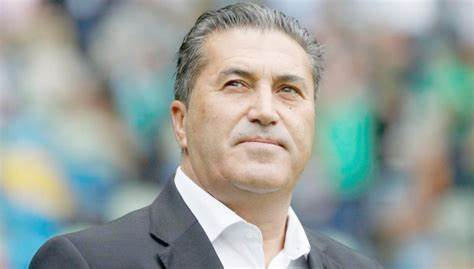
Super Eagles coach, José Peseiro, whose contract with the NFF expired on Thursday, in this interview with Goal.com talks about the pressure of managing Nigeria’s national team, his experience at the last Africa Cup of Nations, his relationship with Africa and his future with the team

First of all, how are you? Were you able to rest a little after the African Cup of Nations?

Yes, I rested and I am still resting. My contract ends in two days. The AFCON was an exhausting tournament, I must admit. We did a good job, me, the staff and the players. There was a lot of energy expended.

It was an AFCON with a lot of strong emotions. How did you experience this competition on a personal level?

It was a fantastic experience. It was my first AFCON. Some of my colleagues told me that it is different from other tournaments. The context changes. And I felt it. It was full of emotions. The public’s enthusiasm is unique. There was also some great competition. All the teams and players gave their all for their country. And African football was able to display all that it has in qualities. There was also a lot of pressure on the teams, not just from their fans but from their countries as well.

And what differentiates the AFCON from other tournaments you have played like the Copa America (with Venezuela) or the Asian Cup (with Saudi Arabia).

In terms of atmosphere, it is incomparable. Already, with Venezuela, there was none at all because we were playing during the Covid period. The stadiums were empty. In Asia, it’s different. I believe that here in Africa, there is greater proximity with the supporters or even the media. Which makes it more alive. But that also means there’s more pressure. And when it comes to the football produced, it’s different too, that’s for sure. The level of commitment and standards are different. This can be seen in particular with matches that are more open. Even teams that are less technically well equipped manage to provide beautiful football through the enthusiasm and commitment they offer. And then, it must be said that there are very good players in Africa. 90 per cent of them play in Europe, in very good championships. And the Europeans may be pretending not to be interested in this tournament, but I can tell you that they all have their eyes on it.

You reached the final with Nigeria. Did you think you could get this far before the tournament?

From the first day when the president of the federation called on me and I took a look at this team and the matches they played, I told everyone that I want to win the next AFCON because I was certain that we could do it. I believed it, my staff believed it, my players too, but not the people outside. And I’m happy because we did a fantastic job reaching the final. It has been shown that Nigeria still belongs to the best nations on the continent. And who wants to fight for trophies. On the other hand, I’m also sad because we lost.

Precisely, the feeling which predominates between satisfaction, pride and frustration in relation to the fact of not having won, which is it?

After the final, I was definitely sad. Because we are competitors and as soon as I took charge of this team, I wanted to win this tournament. We wanted to win it. During my first meeting with the players, which I did in the United States for my first match, I told them during my presentation that I came here to win the next AFCON. And since we didn’t manage to do it, I can’t be happy. But on the other hand, when I saw the way the Nigerian people and government welcomed us when we returned to Abuja after the AFCON, I could only be proud of what we achieved. People were satisfied and they thanked us. Everyone in the streets, and even the media, made us understand that they were happy with us. And that’s a good feeling. They saw our matches and they know what we did. We fought until the end and against the very big selections. We were not favorites at the start, unlike Ivory Coast or Senegal. And teams like Egypt, Algeria, Ghana and Cameroon, with very rich squads, came out quite early. We reached the final. So I am satisfied. But the satisfaction is not complete because we wanted to win.

What did you lack to win the competition?

There are two things. First there is the fact that Ivory Coast reached the final of the competition having avoided the worst each time. They were almost eliminated three times. In the final, they were more liberated. They weren’t under as much pressure as at the start of the competition. Second thing, I think the energy there was that day in the stadium touched us. If I had to rate our performance, it was perhaps our worst game. In previous matches, we have always been in control and we have created a lot of opportunities. But in this match, even at 1-0 for us, we were feverish. The atmosphere penalised my players. We didn’t have the same abilities. There were too many lost balls. If I had to analyse, I would say that two or three of my players played at their true level. They wanted to do their best, but they couldn’t.

How to explain this nervousness?

I’m sure if another final was played a week later, we would have won it. Because many players have never had the experience of a AFCON final. 14 of our players have never played in a AFCON final phase. While the Ivorians had experienced players. We tried to play down the event, trying to forget the pressure and the responsibilities that weighed on our shoulders, but it wasn’t enough. Yes, the final is about winning and we must seize this opportunity. But we still felt nervous, including in the semi-final against South Africa. Once again, the atmosphere made the environment not conducive to a great performance from us. And it’s also my responsibility, I should have made sure that they were more liberated. And I am still very happy with them and very proud. They did a great job. And no one can blame them. This new final will perhaps take place next year in Morocco.

How did you manage to transform a selection that was in difficulty before the competition into a team that was almost an African champion? What was the method?

The matches before the tournament were used to help the team progress. And despite this, we only lost to Guinea at home. And during a match where we created a lot of opportunities. In qualifying for the World Cup, it’s true that it wasn’t good. Against Lesotho, it was the same thing, we dominated a lot and they scored on one of their only two shots of the match. Against Zimbabwe, the conditions were bad. Many parameters impacted our performance there. Then, in our preparation for this tournament, I chose a different way to play. With my staff, we realized that we were playing offensively in our 4-4-2 system, that we were creating a lot of chances but that we were conceding avoidable goals on semi-chances. I felt that our team needed more solidity. More confidence in our defensive work and our organization.

And how did you go about making your team more balanced?

So I chose differently. We opted for 4-3-3 and 3-4-3 systems. We started working on these two diagrams in Abu Dhabi during our internship. And the guys very quickly understood what we wanted to do. From the first match against Equatorial Guinea, even if we didn’t win, it bore fruit. They put into practice what we had worked on. Everyone got into tune, following the offensive and defensive instructions to the letter. Unfortunately, we didn’t have time to work on the offensive aspect a little more. Defensively, there was nothing to say. The guys understood everything well. We were perfect until the final, where unfortunately two mistakes cost us dearly. And once again, I put it down to pressure. In 3-4-3, we played very well and it was best suited to our team. With wingers who help our attackers, and a 3-man defense which maintains our balance. And I told them that this system will allow us not to concede too many goals and to score one. This is what we did in the final at the start, by scoring first. It was very hard to create chances against us. But once again, offensively, we weren’t 100% of what we could do. I would say only 70 per cent. We would have needed a little more time to be completely up to speed with this plan.

Were you surprised by the level shown by some of your players during the competition? I’m thinking in particular of Lookman or goalkeeper Nwabali?

I don’t like to talk too much about individual performances. I prefer to talk about collective performances. Well, there is Victor Osimhen who didn’t score a lot, but what a collective job he did! Everyone talks about his ability to finish plays, but we don’t talk enough about the efforts he makes for the team. Overall, our team did an excellent job. So yes, Nwabali was excellent, making many decisive saves, but it’s not just him. It was a fantastic performance from everyone. Even the attackers contributed to our good defensive performance.

So there was a good group spirit…

Yes and I am very satisfied, even with those who have not played. They were all magnificent. Because to reach the final of such a tournament, everything must be perfect. You have to train well at 25, have a good atmosphere on and off the pitch. The key to our success was the excellent collective state of mind we had. Whether it’s from those who played a lot, those who played less or those who didn’t play at all. Everyone was impeccable. Nobody complained. Of course, there were some who were sad because it’s not easy to be in a big tournament and not play. But everyone sacrificed themselves for the collective. During training, they put themselves at the service of others. Even if they wanted their places, they helped them. In the investment, for 40 days, everyone was perfect. And it’s not easy to be during this whole period, especially when you are away from your families. They were resistant.

Nigeria is the most populous country in Africa. How do you manage popular pressure when you are Nigeria coach?

For me, considering my age and the experience I have, it’s not that difficult. I prepare in advance. I knew it. The media and social networks can have a positive side for our lives, but sometimes it is negative. But we have to be understandable. And also accept it, because we can’t change anything. Sometimes it wrongly criticizes us and it’s not pleasant, and it’s not only in football that we see this. But I can bear it. I never respond to criticism or fake news. It’s not easy playing for the Super Eagles. It’s a heavy jersey to wear. Not like the others. You have 200 million Nigerians behind you. And who put pressure on you and complain. Sometimes they also use bad terms when talking about players. Against me too, but I know how to manage. On the other hand, when it comes to the players, it upsets me. Because the players feel it and they suffer from it.

Are you trying to protect them from criticism?

Yes, by talking to them and telling them not to pay too much attention to it. There is often fake news coming from our country and I don’t know why. And to this is added the pressure that their own family puts on them. It is our role, with all my staff, to put them at ease and encourage them not to give importance to what is being said. And it’s not just criticism that can be dangerous. When people praise you and congratulate you, you can also lose your ground. You are in the clouds and you think you are too beautiful and that is also the best way to fall. You have to find the right balance and it’s not easy in football, especially for young players who have never set foot in Africa. Mental trainers are also there for that. And we, the coaches, protect them from that, by saying “only listen to us”. And my staff helped me a lot. My captains too, like Troost-Ekong, Omeruo and Musa. I asked them at the beginning to explain and show me how the players reason and how to adapt and what strategy to choose for everything related to the selection, not just the footballing side.

Seeing other national selections approach you, must that be flattering? Surely you are not insensitive?

Yes it’s good. Especially now and after this tournament. We lost in the final, but everyone recognizes our very good work. But it’s also thanks to the players and we can’t do anything without them. We are only coaches, we are not geniuses. I am happy. I am grateful to them and also to the staff. It’s hard work and it’s even harder in Africa. The players believed in us and gave their best, even those who didn’t play. And I apologize to those I was unable to satisfy, particularly in terms of playing time. I have always worked and chosen for the best in the national selection. If I could, I would have put 25 players on the field each time. Because they all had the potential to play. Thanks to them.

Do you enjoy the work of a coach more than that of a club coach?

These are different contexts. I like both. Before, I liked clubs more because we are in contact with the players on a daily basis. But I adapted to this new role as coach. I would say that I love both jobs equally. Coaching also means choosing players, watching a lot of matches throughout the week. But in both cases, we remain a coach. It’s the best activity in the world. It’s very motivating and it gives us a lot of emotion. In fact, the most important thing for me is the project.

What can we wish you for the future?

Earn. I would like to play in the World Cup, I would like to work in England, work in Brazil… I have already been to many countries. Nine countries and four continents. All the experiences I’ve had, I’ve enjoyed. Because there were connections and emotions, even in the teams where we did not have good results. I would like to continue working, with projects where we will be able to aim for success. And where I will continue to do my job because I love football.

More Than 100 Killed While Seeking Aid In Gaza, Overall Death Toll Passes 30,000

0


https://www.youtube.com/watch?v=MAaC0_jPXMU

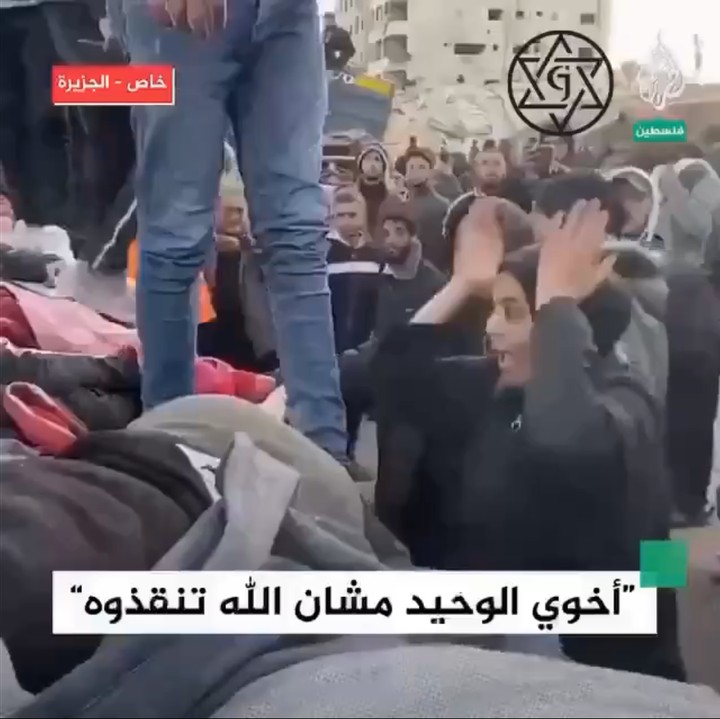
Gaza health authorities said Israeli forces on Thursday (Feb 29) shot dead more than 100 Palestinians as they waited for an aid delivery, but Israel blamed the deaths on crowds that surrounded aid trucks, saying victims had been trampled or run over.

At least 112 people were killed and more than 280 wounded in the incident near Gaza City, Palestinian health officials said.

The loss of civilian lives was the biggest in weeks. Hamas said the incident could jeopardise talks in Qatar aimed at securing a ceasefire and the release of Israeli hostages it is holding. When asked if he thought it would complicate the talks, US President Joe Biden said: “I know it will.”

Medics in Gaza said they could not cope with the flood of serious injuries, which came as the death toll in nearly five months of war passed 30,000, according to Palestinian health authorities.

Israel disputed the account provided by officials in Hamas-run Gaza, which has been bombarded by Israeli forces for months since the Palestinian militant group’s deadly rampage in southern Israel on Oct 7.

The Israeli military said the trucks were operated by private contractors as part of an aid operation that it had been overseeing for the past four nights.

One Israeli official said there had been two incidents, hundreds of metres apart. In the first, dozens were killed or injured as they tried to take aid from the trucks and were trampled or run over.

He said there was a second, subsequent incident as the trucks moved off. Some people in the crowd approached troops who felt under threat and opened fire, killing an unknown number in a “limited response”, he said. He dismissed the casualty toll given by Gaza authorities but gave no figure himself.

In a later briefing, Israel Defence Forces spokesman Rear Admiral Daniel Hagari also said dozens had been trampled to death or injured in a fight to take supplies off the trucks.

He said tanks escorting the trucks had subsequently fired warning shots to disperse the crowd and backed away when events began to get out of hand. “No IDF strike was conducted towards the aid convoy,” he said.

“The IDF was there conducting a humanitarian operation to secure the humanitarian corridor and allow the aid convoy to reach its designated distribution point.”

The US State Department said it was urgently seeking information on the incident as did the French foreign ministry.

White House says aid incident is ‘alarming’ and ‘tragic’

The White House said Biden discussed the “tragic and alarming incident” with the leaders of Egypt and Qatar, as well as ways to secure the release of Israeli hostages and a six-week ceasefire.

Palestinian President Mahmoud Abbas said it was an “ugly massacre” by Israel, and French foreign ministry spokesperson Christophe Lemoine said Israel was responsible under international law for protecting aid distribution to civilians.

One video shared on social media, whose location Reuters was able to verify, showed trucks loaded with many dead bodies as well as wounded people.

Another, which Reuters could not verify, showed bloodstained people being carried in a truck, bodies wrapped in shrouds and doctors treating injured patients on the hospital floor.

We don’t want aid like this. We don’t want aid and bullets together. There are many martyrs,” a man said in one of the videos.

The Pentagon expressed alarm but declined to assign any blame. “These are human beings that are trying to feed themselves” Air Force Major General Patrick Ryder, a Pentagon spokesperson, told a news briefing. “We’re all kind of looking at that and saying: ‘What happened here’?”.

Palestinian death toll tops 30,000

The Palestinian health authorities said 30,035 Palestinians were now confirmed killed and more than 70,000 wounded in Israel’s offencive, launched after the Oct 7 attack in which Israel said Hamas gunmen killed 1,200

Much of Gaza has been reduced to rubble and most of its 2.3 million population have been displaced from their homes at least once.

Aid deliveries to northern Gaza have been sparse and chaotic, passing through more active military zones to an area where the UN says many are starving, with videos showing desperate crowds surging around supply trucks.

https://www.asiaone.com/world/more-100-killed-while-seeking-aid-gaza-overall-death-toll-passes-30000

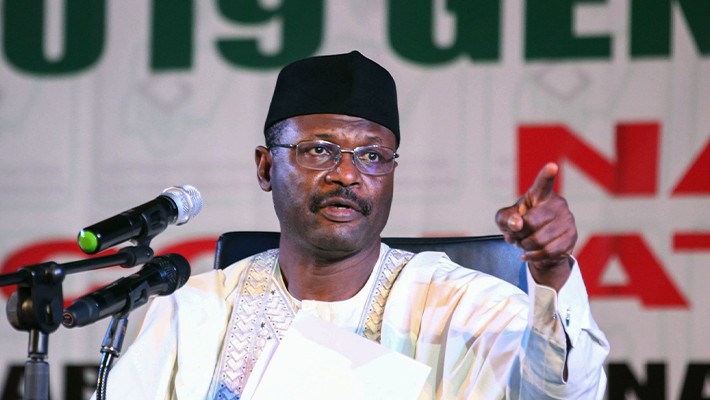
“Cure your visible ignorance”: INEC tells Nigerians abusing Yakubu

0

“While the report emphasises the significant impact of technological advancements on the integrity of the electoral process, especially the Bimodal Voter Accreditation System (BVAS) which reduced electoral fraud and bolstered the credibility of elections, the document also explained the challenges encountered with the INEC result viewing (IReV) portal during the presidential election.”

“With the report now in the public domain, we expect stakeholders to interrogate it and offer useful advice on how we can further improve the electoral system.”

He added that: “As for those persons who embarked on what they described as a ‘a day of curses’, my advice is that they should pay adequate attention to substantive issues, make more productive use of their time, and cure themselves of their visible ignorance of the laws governing the electoral system and the commission’s processes and procedures”.

BUA Cement Records 27.4% Revenue Growth Of ₦‎460bn Despite N70bn FX Loss

0

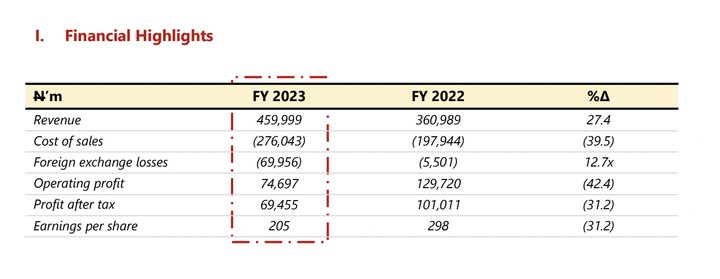
BUA Cement released its audited financial statements for the full year 2023, revealing robust revenue growth of over 27 percent, totaling N460 billion. This achievement comes amidst challenging economic conditions stemming from the Naira redesign policy.

Despite facing these significant hurdles, including Naira devaluation and persistent inflation, the company demonstrated resilience, posting a revenue growth of 27.4 percent. However, production costs soared by 39.5 percent to N276 billion, compared to N197.9 billion in 2022.

In the face of these challenges, BUA Cement reported a net foreign exchange loss of N70 billion, primarily attributed to finance costs related to the construction of additional 3mmtpa lines at its Obu and Sokoto plants, as well as foreign trade payables amounting to N17.5 billion. Nonetheless, the company managed to achieve a net profit after tax of N69.5 billion.

Yusuf Binji, the Managing Director/CEO, acknowledged the tough operating environment in 2023 but highlighted the company’s initiatives that contributed to revenue growth, including the BUA Cement Scratch and Win promo. Furthermore, the commissioning of new production lines and gas power plants at Sokoto and Obu plants, along with investments in distribution infrastructure, bolstered market presence.

Binji emphasized the company’s commitment to addressing Nigeria’s housing and infrastructure needs sustainably while striving to make cement more affordable. He also noted the completion of the new 70MW gas power plant in Sokoto and anticipated activation of the same plant in Obu during the first quarter of 2024.

In his words: “Clearly, the operating environment in 2023 was challenging, given the different headwinds confronted with at the start of the year and especially with the devaluation of the Naira. During the year, we launched the maiden edition of the BUA Cement Scratch and Win promo., among other initiatives, which saw BUA Cement further increase its share of the market and resulted to a 27.4 per cent rise in revenues to N460 billion from N361 billion in the prior year.”

“In addition, we commissioned the new 3mmtpa lines at the Sokoto and Obu Plants, activated a new 70MW gas power plant in Sokoto and eagerly await the activation of the 70MW gas power plant at Obu during the first quarter of 2024,”

Jacques Piekarski, the Chief Financial Officer, praised the company’s resilience in the face of economic challenges. Despite the foreign exchange loss, EBITDA increased by 9.6 percent to N169.3 billion, reflecting the company’s confidence in its business prospects and evolving strategy for growth.

NLC Suspends Protest Because Of Threats, Intimidation — Ajaero

0

The President of Nigeria Labour Congress, Joe Ajaero, on Wednesday, said that it could not proceed with its two-day nationwide protest due to intimidation and threats.

The NLC and other related unions commenced a national planned protest on Tuesday over the high cost of living, inflation, insecurity and hardship in the country.

The protesters headed to the National Assembly, where NLC President Joe Ajaero presented a letter of demands to President Bola Tinubu, through the leadership of the National Assembly.

However, in a communiqué issued at the end of the National Executive Council meeting and signed by its President, Joe Ajaero and General Secretary, Ismail Bello, on Tuesday, the NLC suspended the nationwide planned protest slated for Wednesday.

The NLC believed that the message from the protests was effectively communicated to the government.

However, Ajaero, at a press briefing on Wednesday, said the congress was intimidated and harassed to halt the protest.

He said, We were threatened with all manners of consequences that would be meted on us if we went ahead.

“We were, however, not perturbed, as lifting the heavy yoke of suffering upon Nigerian workers and masses left us with no option than to press on.”

The NLC president said the congress has evidence from Tuesday’s protest of the “importation of agents who were mobilised protest routes and grounds to cause violence against the peaceful protest.”