Sunday, May 10, 2026
Home Blog Page 163

What to know about Breakdancing, a new sport at Paris 2024 Olympics

0

Breakdancing is set to make its debut as a new sport at the Paris 2024 Olympics, marking a significant milestone for the dance community. This summer, 32 athletes will showcase their skills in what is commonly known as breakdancing, a dynamic fusion of athleticism and artistry.

Originating in the early 1970s at block parties in New York City, breakdancing, or “b-boying,” emerged as dancers incorporated elements from gymnastics, martial arts, and other styles into their routines. Today, it is more commonly referred to as “breaking,” preferred by those immersed in the culture.

Now, over 50 years later, breaking will take centre stage at the Summer Olympics in Paris, becoming the first dance sport ever included in the Games. Thirty-two athletes from around the world, including 16 men and 16 women, known as B-boys and B-girls, will compete for gold, silver, and bronze medals at the iconic Place de la Concorde.

Breaking gained international recognition after its successful debut at the Youth Olympics in Buenos Aires, Argentina, in 2018, drawing over a million viewers. The upcoming Olympics aim to replicate this success on an even grander scale.

Characterized by stylized footwork and athletic manoeuvres like back spins and head spins, breaking showcases the agility and creativity of its performers. Its roots can be traced back to the Bronx area of New York City, where DJ Kool Herc’s block parties served as the backdrop for early breaking performances.

To promote the sport’s inclusion in the Olympics, breakdancer sports ambassadors Kujo Leons Jacob and Maika Malik recently visited Nigeria. They emphasized the cultural significance of breaking and its ability to unite communities through dance.

In an interview on the AiT Kaakaki show, Malik highlighted the cultural and artistic aspects of breakdancing, expressing excitement about witnessing the Nigerian breakdancing community firsthand.

“Breakdance is important because it’s very cultural and we really want to be able to bring something cultural to the Olympics,” Malik said.

“As a sport, it’s a dance as well. It’s an art form and it’s just really beautiful to watch and do and has so much history dating from the 70s when children were coming from nothing in the eyes of the world but being able to invent something so rich in money.

“These children were able to just create something that’s worldwide and that has brought so many different cultures together.

“And I think that’s just really important to see on that stage at the Olympics especially seeing these different cultures and communities all come together and just dance to music and get down like we like to say.”

Jacobs elaborated on the journey to establish breakdancing as an Olympic sport, acknowledging the debate within the community over its classification. Despite differing opinions, he emphasized the importance of embracing both the sport and cultural aspects of breakdancing.

“It was a very long process and it required a bit of a shift in identity for a lot of the participants because as Maka said it’s cultural,” Jacob added.

“For example, there is a bit of disagreement in the community over whether it should be a sport and there’s no solid answer to that question and that’s okay because, for example, not everyone needs to participate in the sport aspect of breakdancing. We are free to participate solely in the cultural aspect of breakdancing.”

During their visit to Nigeria, Jacobs and Malik launched breakdancing clubs in Abuja and Lagos, identifying talented individuals and providing guidance for aspiring athletes to excel on the Olympic stage.

Their mission is to share expertise, inspire young dancers, and elevate the global profile of breakdancing, celebrating its rich history and cultural significance on the Olympic stage.

Here are four agripreneurs redefining farming in Nigeria

0

Nigeria is facing a double unemployment crisis – a lack of jobs for youths and a fast-rising young population.

However, agriculture – the country’s largest sector of employment promises opportunities for job growth and economic prosperity. Despite this, many young people are abandoning the sector in search of very scarce white-collar jobs in urban centres.

But four young Nigerians – Bintu Nakudu, Opeyemi Adeniyi, Samson Ogbole and Rildwan Bello are bringing glamour to the sector and redefining farming in Africa’s most populous country.

The four agripreneurs are operating in a sector other young Nigerians find less attractive and fear to tread owing to the absence of technology and foundational problems limiting productivity across value chains.

Farming in Nigeria is not a walk in the park, insecurity prevalent in the agric sector has made many farmers abandon their farms for safety. This has led to a shortfall in the production of key staples, causing food prices to surge to record highs.

There is also a lack of sufficient funding in the sector, which makes it unattractive to young people as well as the absence of technology in the sector.

Against these odds, some young entrepreneurs are succeeding whereas others fail to tread. On this note, BusinessDay has identified four young people making strides in the sector despite its many limitations.

Bintu Nakudu

Bintu Nakudu, managing director of Majestik Farms, is building one of Nigeria’s most modern, eco-friendly farms using tech to make farming easy.

The farm located in Kano state has over 45,000 birds and more than 10,000 catfishes. It operates with fully automated technologies and boasts an output of 1,000 crates of eggs per day. It also produces over 280 bags of locally produced chicken and fish feed daily.

Operations in Majestik Farms are powered by solar to control greenhouse emissions for the safety of the birds and animals on the farm. As part of that measure, all bi-products in the farm are recycled and used as manures for the crop part of the farm.

An entrepreneur to the core, she produces her own poultry and fish feeds to reduce the farm’s reliance on external sources, hence promoting local sourcing.

With a monthly egg production of about 300,000 crates per month, the farm contributes to Nigeria’s food ecosystem. It also has a capacity of 30,000 hectares of land for cat and tilapia fish farming.

Nakudu says she aims to build a farm beyond an agriculture venture, but one that aims to create sustainability, innovation and empower young women.

Aside from building a successful farm, Nakudu has a chef certification from Harvard University. She engages in culinary classes in Nigeria where she teaches the art of cooking to interested students.

Opeyemi Adeniyi

Opeyemi Adeniyi is the farm manager of Courage Farms and Agro, a fish, piggery and agro farm located in Ibadan, Oyo State.

Adeniyi took over the farm from her father after he died in 2022 and has been able to lead the farm into becoming a commodity exporter of smoked catfish to the United Kingdom and the United States.

The farm rears over 6,000 fish in earthen ponds and has been able to withstand erosion, and high feed costs affecting its smooth administration. It also boasts of monthly sales of over 100 fish locally.

Although she says government intervention will encourage more young people into the sector, Adeniyi has plans to make Courage Farms and Agro an international brand.

Adeniyi combines her job as a farmer with her job in the fashion design industry.

Samson Ogbole

Samson Ogbole is the team lead of Eupepia Place Limited, popularly known as Soilless Farm Lab located in Ogun State.


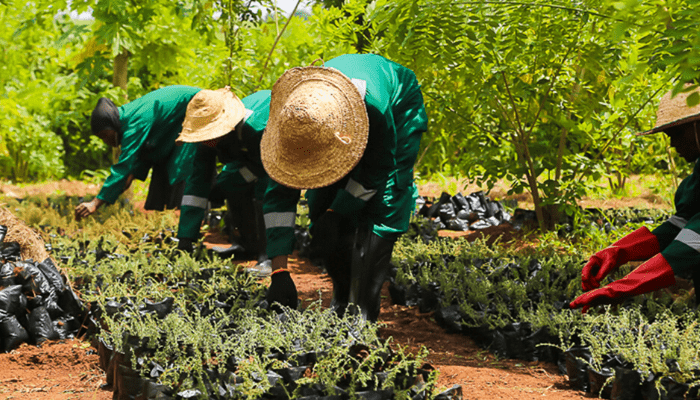
He runs a 300-acre farmland where he uses technology as an enabler for agriculture. Ogbole grows different vegetables and fruits, including tomatoes, and pawpaw, among others through greenhouse technology and alternatives to loamy soil.

Ogbole grows different species of hybrid soilless crops with coconut shafts, water and air. He has also trained over 100 students on farming and farm management.

He is a graduate of Biochemistry from Igbenedion University. His passion for Nigeria’s agricultural space led him to research ways technology can be adopted into farming while producing high yields.

The farm has 37 tons cold room capacity used to store commodities before delivery and is a distributor to local sellers.

For Ogbole, farming is beyond food production, it is a means of job creation, national development as well as sustainable development.

Rildwan Bello

Rildwan Bello is building a growing consulting and research start-up called Vestance that helps subsistence farmers and governmental bodies make better agric decisions that benefit both farmers and investors.

He is the founder and managing director of the firm, an agribusiness located in Oyo and specialises in training struggling Nigerian farmers on how to access agricultural grants, and farm management skills.

Passionate to see growth in the sector, Bello started Vestance in 2023 and has trained over 60 farmers on farm management, bookkeeping, and business proposals needed to access loans from banks.

Bello has on his team top professionals responsible for conducting in-depth research of the agric sector, helping many subsistence farmers in the country understand different planting seasons suitable for crops.

He says his goal is to see that grants are made accessible to farmers and that they also become vast in agricultural knowledge.


It May Be Difficult For Opposition To Stop Tinubu’s Re-election -Monday Ubani

0

Monday Ubani, a former second national vice-president of the Nigerian Bar Association (NBA), says it may be difficult for the opposition to defeat President Bola Tinubu in the next election.

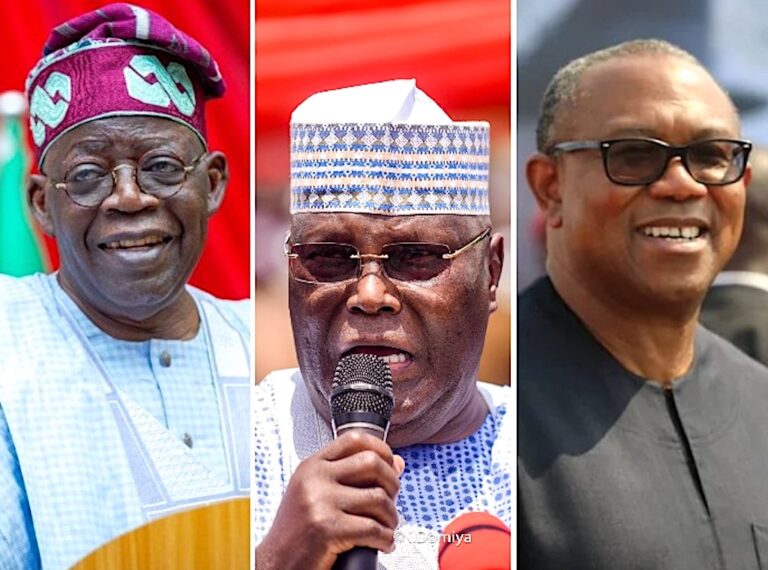
Talks of a merger of opposition political parties have returned to the front burner, following the meeting between Atiku Abubakar and Peter Obi, presidential candidates of the Peoples Democratic Party (PDP) and Labour Party (LP) in the 2023 elections.

Speaking with TheCable, Ubani said Nigerians are facing hardship now because some of the reforms of the Tinubu administration, such as the removal of fuel subsidy and unification of the forex windows, are still at their infancy.

On the possibility of the opposition coming together to form a merger, we have heard that several times. When we get to the bridge, we will cross it. At this stage, it is mere speculation,” he said.

“However, I strongly believe that if this present government, led by President Bola Tinubu, succeeds in turning around the economy and then continue with the reforms on energy sector…

“If the government can make sure the naira regains its value and turns Nigeria into a productive nation with lots of things to export which will earn us foreign reserves, it will be very difficult for any opposition to defeat the government in the next election.”

Ubani urged the Tinubu administration to utilise the monies realised from removal of fuel subsidy to better the lives of Nigerians.

“President Bola Tinubu has embarked on some reforms, some of them are a bit harsh for a reason but if they succeed in using the money we have saved from subsidy removal in developing the nation, building infrastructure, get our railway system working and give Nigerians uninterrupted power supply, it will be difficult for any politician or opposition to truncate his eight-year tenure,” he added.

“Presently, people are feeling the hardship of the reforms because those things are new and we have been used to having subsidy on fuel and electricity.

“Now, they have removed all that in order to free the money. If the people can see sincerity on the part of the government in making sure our resources are utilised for the benefit of Nigerians, no opposition can defeat this government in 2027.”

Industrial Court orders Publication firm to pay N7.4m Outstanding Salaries, Unremitted Pension

0

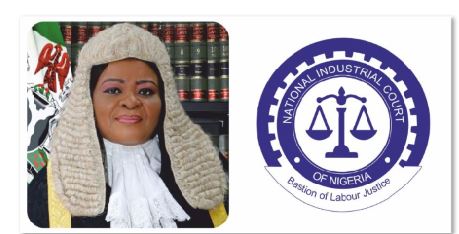
The Presiding Judge, Lagos Judicial Division of the National Industrial Court, Hon. Justice Maureen Esowe has directed Literamed Publications Ltd to pay to Mr Osobu Olaniyi the sum of N4,021,096.46 as the balance of the outstanding salaries, salary in lieu of notice and outstanding leave allowance for the year 2019, and to remit the sum of N3.4m unremitted pension to his pension fund manager.

The Court also ordered Literamed Publications to pay Mr Osobu Olaniyi the sum of N200,000.00 (Two Hundred Thousand Naira) as the cost of action and 10% interest on the judgment sum until final liquidation of the total sum. 

From facts, the Claimant- Mr Osobu Olaniyi had submitted that he requested a month’s salary out of the outstanding salaries owed him by Literamed Publications Ltd, but he received warning letters and a letter notifying him of a 50% downward review to his emoluments, entitlement, a position he protested. 

He averred that month later, the Literamed Publications terminated his employment without paying the outstanding salaries owed him and no evidence of remittal of his pension contribution.

In defense, the defendant- Literamed Publications Ltd maintained that Mr Olaniyi has enlarged his claim to include items he is not entitled to, and averred that Mr Olaniyi failed in his duty as the Chief Accountant of the firm to remit his pension and that of the other employees to the appropriate quarters, and he cannot cry foul as he is not permitted to benefit from his own wrong.

In opposition, Mr Olaniyi argued that his balances for outstanding salary, salary in lieu of notice, unpaid annual leave allowances and unused annual leave allowances and his unremitted pension remain uncontradicted and urged the Court to grant the reliefs sought.

Delivering judgement after careful evaluation of the submissions of both parties, the presiding Judge, Justice Maureen Esowe held that the facts admitted need no further proof and entered judgment in favour of Mr Olaniyi for the admitted sum by the Publications firm.

The Court ruled that Mr Olaniyi has adduced evidence and is entitled to the payment of his balances, for outstanding salaries, salary in lieu of notice, outstanding leave allowance, and his pension to his pension fund managers by the Publications firm. 

Justice Esowe described Literamed Publications’s disposition to Mr Olaniyi’s claims as commendable for not resorting to a tactic of hide and seek but admitted to where it was wrong and placed before the Court information that it is undergoing difficulties in its operations due to financial constraints, and it would appear injudicious in the face of the Defendant’s financial state to award damages.

visit the judgment portal www.nicnadr.gov.ng/judgement for full details

International conspiracy by western powers sabotaging Ajaokuta Steel Company – Ex Governor Tapgun

0

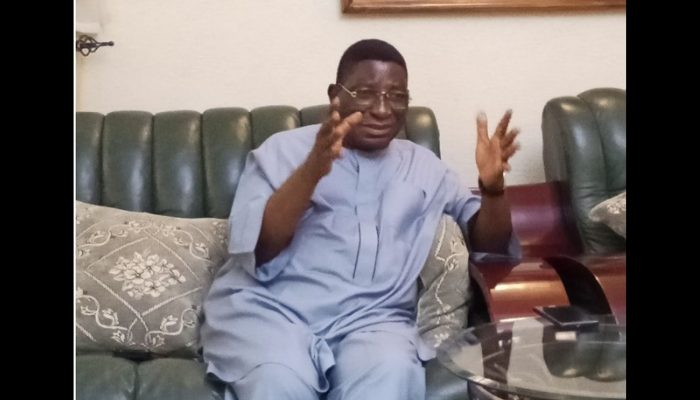
Fidelis Tapgun was elected governor of Plateau State in 1992 under the Social Democratic Party (SDP), appointed the Nigerian Ambassador to Kenya in January 2000, and was later confirmed as Minister of Industry in July 2005 under President Olusegun Obasanjo’s democratic regime. Born on November 1, 1945, in Shendamm Plateau State, Tapgun attended St. Theresa’s Boys School, Jos; the College of Mary Immaculate, Kafanchan; and later Ahmadu Bello University, Zaria, in 1970, from where he bagged a degree in political science in 1974. He also holds an Advanced Diploma in Development Studies from Manchester University, UK. He joined the state civil service of the then-Benue-Plateau after his NYSC and rose to the position of Permanent Secretary. He is also a founding member of the PDP and served as the Director-General of the Obasanjo-Atiku Campaign Organisation between 2002 and 2003. In this exclusive interview with BusinessDay’s NATHANIEL GBAORON in Jos, Tapgun spoke, among other issues, about politics, the growing insecurity in Nigeria, the need to establish state police, and how international conspiracy has stalled Ajaokuta Steel Company’s operations.

As a former governor, how do you assess the current state of the nation compared to when you were in office?

Well, Nigeria is still Nigeria. The country is growing; from that time to this time, so many things have happened. The population has increased, and a lot of things have become very complicated, dragging us backwards, especially insecurity. During our time as governors, the party was supreme and dictated to us what to do, both the Social Democratic Party (SDP) and the National Republican Party (NRC). There was a clear demarcation of functions, and because of this, the party was supreme. The governors had no authority to do anything they wanted until the party allowed them.

We were directed by the party, which was being funded by members. What has happened this time is that the people do not own the party. During our time, the people owned the party because when we went out to campaign at that time, the people were funding it all through. Nobody will ask you for anything. And on the day of the elections, there was no money spent; remember, Babangida’s election was option A4. So people just go out and line up behind the candidate of their choice, and they are counted.

There was no rigging, that’s all; the elections were free and fair. Everybody saw it; if you failed, you failed. But when Abdulsami Abubakar lifted a ban on campaigning in 1998, we rallied around to form another political party, which is now the Peoples Democratic Party (PDP). It was a combination of all shades of opinion, both conservatives and socialists, so to speak. We formed the PDP, and the difference is that the governors decided to take control of the party completely, and they were allowed to do so from the beginning.

But from that time to this moment, a lot of things have happened in this country. The population has increased, like I said. People have gotten more educated, poverty has gotten worse, and so many other things, so you can’t compare them at all. It was then very smooth, but this time so many things have happened and led us to where we are today. If the political parties are not people-oriented, then you have difficulties. If they don’t belong to the people, if the people don’t own it, then you have a problem. And that’s what we are facing in the present dispensation, particularly in our party, the People’s Democratic Party. What I think is that it is not easy to compare our time and this time because, when we were little, everything that was being done was guided and dictated by the military. When we formed the PDP, we thought it was going to be the same as we had in the past, but it turned out to be completely different. The governors took control of the party, and they decide what happens in the party, which is not helping us at all.

I think insecurity is the major thing that has hampered our progress in this country because, with this series of kidnappings, killings, and burning of houses, people don’t go to farms again, so you can’t produce. The economic activities of the people at the local level are disrupted completely. What is happening now did not happen during our time. Every local government chairman is a security man; all through, there has to be a security meeting every week.

Every local government had a security committee headed by the chairman; the secretary was there; all the chiefs were there; the ward heads were there; the market women, taxi drivers, truck pushers, SSS, police, and other security agencies were fully represented. The security meeting was held every week and mandated by all the local governments. Every week, you had to send a report to the state headquarters, and that was mandatory. If you don’t do it, you will be questioned.

The government was kept abreast of anything that was happening in each local government because if anything was being planned, you would get information either from the market women or from the taxi drivers. When these reports come from all the local governments in the states, they will be collated and sent to the headquarters in Abuja for the Secretary of the Federal Government’s office. Now, after collation from all the states, at the end of the month, they will send the comprehensive reports to every state. This means that if you get Plateau here, you will also get all 36 states, and you will read it and know exactly what is happening in other parts of the country.

If there’s an area where there’s going to be conflict, whether it’s about an increase in foodstuffs in the market or if it’s going to cause a problem, you will know immediately and take steps to check it. That security architecture has been neglected because, as I tried to find out when Jonah Jang was in office, it looks like it’s no longer there. But that architecture was very, very important because it helped to curb any crisis that was going to erupt anywhere; if there was going to be a crisis anywhere, you would know. But it has been neglected. Nothing happens to curtail these waves of banditry among the people. I hope that things will improve.


Drawing from your experience in governance, what do you see as key priorities in addressing the socio economic and political issues confronting Nigeria currently?

Since 1998, government revenue has risen significantly. While this should benefit local governments, their functionality remains a nationwide concern. The weakness seems to lie in the system itself. Many local councils are appointed based on connections to governors, hindering their autonomy. Additionally, state Houses of Assembly often lack oversight power, concentrating control with the governor. This centralization weakens checks and balances.

In contrast, during our time, limited resources forced us to prioritise spending. Even a small allocation like 100 million naira was significant. Unfortunately, the current situation seems focused on personal enrichment rather than development. Crumbling infrastructure and neglected services like healthcare and agriculture highlight this disconnect.

Addressing this issue requires a multi-pronged approach. Strengthening local government autonomy and fostering a culture of accountability within state governments are crucial steps. Perhaps a review of the current power dynamics could lead to a system that utilises increased revenue for the benefit of the people.

So what is the way forward?

The way forward is that insecurity has to be tackled seriously. I made this suggestion somewhere about how to collate information. What I told them was that you have to buy information; if you don’t pay, you can’t get information. Now, when I was governor here, what I did just to have information was that I had people in town that I just gave my numbers to—trusted and influential people in town. I said, If there is anything anywhere that is going to cause any problems, just call me directly, and it will help us a lot. If this architecture can be revived all over the country, from the local governments to the states, from the states to the national, and then from the national down, as far as I am concerned, it will help. The issue of kidnapping and banditry is not easing out at all, but if there are sensitive people around, they will always expose the information to you if they are carried along.

What are the key challenges you faced during your tenure as governor?

Financial constraints were a major hurdle. During my time, Nasarawa was still part of Plateau State, and resources were scarce. However, we prioritised aligning with the people’s needs – education being a top concern. We built about 34-38 new secondary schools, utilising existing primary school infrastructure. While lacking permanent structures, we provided essential materials and waived uniform requirements to ensure access. Even WAEC exam fees, a significant barrier for many families, were covered by the government. This initiative gave hope to students who might not have had the chance to continue their education. Seeing graduates succeed today is a testament to the program’s impact. Up until now, at functions, people acknowledge these efforts. Indeed, there’s nothing more empowering than a quality education for a child.

Apart from education, can you highlight some other major achievements or projects initiated under your leadership that have lasting impact in Plateau state?

Education was our top priority, aiming to develop the state’s human capital. To address textbook shortages, we partnered with a state-owned printing company to provide free exercise books and textbooks in Physics, Chemistry, Biology, English and Mathematics to all secondary school students. This initiative aimed to ease the financial burden on families and encourage school enrollment. Additionally, we invested heavily in infrastructure improvements, repairing roads and constructing landmarks. Notably, the Terminus roundabout with the Mama Tapgun statue, a suggestion by a local artist, became a symbol of the strength of Plateau women – a testament to our focus on both infrastructure and celebrating our cultural heritage

In the health sector, we cancelled consultation fees in the hospitals, and maternity fees for women. There are a lot of things we had put in place that we couldn’t implement. Before we came into office, Solomon Lar got a Midland bank loan, which he used in building hospitals and dams all over the place. We were paying back this loan.

When we came into office, Plateau and Imo states had the highest foreign debts. I and the Imo governor went and met Babangida and said, look, can you help us in this matter because we can’t survive? I think we had about $100 million to repay, and they were deducting it from our monthly allocation. When we met him, we said please, can you take off this loan for us, he said, okay, how much was it? We told him. He called the minister of finance and directed him to go and help these people and that was how the federal government took over the loan completely. From then, we started getting enough money for the state to do our projects.

When money started coming reasonably, we embarked on the Keffi water project, which went up to Nasarawa and to Doma. There’s a very large dam there that people use in farming even during the dry season. That’s all part of our project, because it was Colonel Madaki that initiated it and when I came, I also prioritised the project. When Abacha was commissioning the Dam, he called all of us that were the governors to attend, we were all there in Doma. At the commissioning, he said we were the initiators of this project, so we should be there. The little things we did impacted people’s lives. Some of the state high court judges that I appointed are at the peak of their career now. That’s in the area of manpower. In November, Abacha dissolved us. But like I said, what we did has impacted and is still impacting the state but I don’t sing about it because as a Christian, I just feel I was serving humanity.

How did you navigate the political landscape and foster cooperation between different ethnic and religious groups?

That’s very, very important. Like I said, you have to know the people, and they have to know you. What I said about going into every ward during our campaigns helped a lot in this matter. When we were sworn in, I did not discriminate against religions at all. My relationship with the Muslims started when I was secretary of the Jos local government. That was when I was in the civil service, because I spent a long time there. We were very close with them.

When I became governor, I did everything for the Muslims because my deputy was a Muslim from Nasarawa State. So we were always in dialogue. If there is anything bothering them, they will come. If I wasn’t on good terms with them, there would have been a riot in Jos at some point because of an incident that happened, but there was constant dialogue, and so many things were averted.

As a good leader, you must allow your people to meet you. You don’t sit in the government house all the time. As a governor, I drove myself to town just with my ADC; we drove around and went to places and people’s houses. We sit down, chat, and go so that if there’s any problem, you know how to manage it. Once you allow people to meet you and you meet people, you won’t have any problems at all. But when you sit down in a government house and people come to see you and they don’t see you, you won’t know what is happening and can’t avert it. Above all, the campaign method we adopted made us in touch with nearly every group, and they trusted us because we were fulfilling our promises. Basically, that was just the thing.

In 1993, Plateau state, under your leadership hosted the SDP presidential primaries, how did you do it?

Among the governors, we were divided into four for Abiola and four for Babagana Kingibe, but I don’t want to go into all the stories because a lot of things transpired. When we met, the governors made me the spokesperson. Anytime we were meeting, they made me the spokesperson. But when it came to even Iyorchia Ayu’s emergence as the candidate for Senate president, he wasn’t the one. It was somebody from Kogi, one Alhaji Ahmed. But our argument then was that you cannot have a Muslim President and a Muslim Senate President, so we must change. Another idea was to come to Plateau here and give it to Dangin, who was also a senator but was away on sick leave.

So everything came down to Ayu. How to inform Ahmed from Kogi became a problem because the man had spent a lot on this matter. So when the governors met, we said, Okay, Moses Adasu, Benue State governor, inform Ahmed because we didn’t know where to start. But Adasu insisted that I should take up the matter; I should be the one to inform him that things have changed. We called him, and we told him. This man cried, but we pleaded with him. The governors were very cordial because of what Babangida did; anything that was happening in one state, he would ask all of us to go there, even if it was in an NRC state. So we were very close to each other.


When it came to the presidential primaries, I had to organise them. I was very close to Kingibe; actually, Plateau organised it, and it went on very well because all the governors, senators, and House of Representatives members co-operated because we were all on the same page; it wasn’t any magic. When they came, I gave them accommodations and fed them. I insisted that Ayu should stay in the same place as Bola Tinubu because they were very good friends, even though Ayu was supporting Kingibe while Tinubu was supporting Abiola. But it was not that they were quarrelling; they were very good friends, but because of the different support base and other intrigues.

Your Excellency, how do you think our leaders can leverage your enormous experience for better outcomes on the Plateau?

It’s not just a plateau, but all over the country. I think the problem we have is leadership selection. There has to be a credible system. The screening that was done for us in SDP wasn’t small; it was very intense and thorough. Babangida and the military did not allow anybody with a stained record to be governor. They did not allow it. If they allowed you to be, they knew you were a clean person. That leadership selection process has to be created.

Since we came back in 1999, the first set of governors, especially in the PDP, did not go to primaries, and that created the sort of characters we had in that regime throughout. That is the first set of governors we had. When they came in, some of them had no clue about what to do. So this leadership selection process has to be looked at seriously by the political parties. Another thing is that money has come into politics and has destroyed nearly everything because it is money that determines who becomes what. If you don’t have money, you cannot go into politics, and not everybody who has money is competent.

So a lot of things have to be done, not just on the Plateau; it’s all over the country; honestly, it’s all the same thing. Until we have this leadership selection process that is refined and thoroughly done with honesty, then you get people that are competent to govern; otherwise, this is how it will continue. Our orientation is completely different, and that’s why we found it difficult to adjust.

In 2002, Plateau was among the five poorest states in Nigeria, but still targets N26 billion annual IGR. What should be done to improve the situation?

There are a lot of things. Honestly, it’s a complicated thing. I say this because you are dealing with human characters; no matter how much you try to fix it, you will find people at the other end who are not honest. What you hear is that people who work in the revenue office print government receipts of their own. They collect this money and put it in their pockets; it doesn’t go into government coffers. What I’m saying is that it’s a complicated process. Unless people are honest with themselves and patriotic, it will be difficult to check the excesses and leakages. We were not as complicated as what is happening now because, during our time, it was service.

In specific terms, how much was Plateau’s highest IGR during your time?

I can’t remember now, but it was not up to N10 million. But the revenue from federation accounts was N30 million, N50 million, N80 million, and the highest was N100 million.

What do you think is the root cause of insecurity on the Plateau, and what, in your opinion, can be done to curtail this?


Part of the problem is that governments stay distant from the people. What do I mean by that? The government is not as close to the people as possible. So you don’t know what they are feeling. The government must reactivate intelligence gathering, which was what we used during our time and succeeded. I don’t want to open up on the issue of insecurity, but the present leaders should involve all ethnic groups, religious leaders, market women, traditional leaders, etc. to fight the menace. Another thing that may solve the problem is the establishment of state police. The states should be allowed to have their own police, and that is my position.

What were your achievements as a Nigerian ambassador to Kenya?

As an ambassador, I didn’t really have much to do because Nigeria does not have many trade relations with Kenya. All we wanted to do was see if we could import their tea, but we didn’t want to compete with our own people in Mambila. But the relationship was cordial. We worked together at the United Nations. Anything that affects African countries, our voices were together. We also protected the Nigerians that were there. I was also Minister for Industry during Obasanjo’s regime, and privatisation was the major thing in that ministry at the time. Even though I was not comfortable with privatising some of the industries, it was government policy, and there was nothing I could do. And of course, there are a few other things that we initiated and implemented.

As a minister for industry, what did you do to revive Ajaokuta Steel Company?

As minister for industry? I went to the factory with my team, but that’s a bigger story for another day. But to be honest with you, when I went around the company and came back, I sat down and cried. My permanent secretary said, What is wrong? I said, No, no, no, we can’t do this to this country at all. The money that is expended in that place, even though it is an international conspiracy to kill the place, I think it is also a lack of strong-willed leadership from Nigeria to get the company working, and it’s very disheartening. We tried with one Indian firm, Global Steel. They had one very big steel company in India. They said they were going to be able to run it, and after finishing all the agreements, we came back. They came to Nigeria, but by the time they did everything, I had left office. There’s an international conspiracy by the western powers to make sure that steel factories don’t work because Nigeria is a potentially strong country. Once the steel factory starts producing, Nigeria has taken off and is heading to world power, and that’s what they don’t want.

 

1.6m applications received for consumer credit since launch — CrediCorp

0

Barely a month after the launch of the first phase of the Consumer Credit Scheme, at least 1.6 million Nigerians have submitted applications.

Uzoma Nwagba, the Managing Director/Chief Executive Officer of the Nigerian Consumer Credit Corporation (CREDICORP) who disclosed this on Tuesday during an interview on Channels Television’s Politics Today, described the volume of application as “overwhelming”.

“It has been overwhelming. We didn’t expect the volume of applications or expressions of interest when we put out an EoI just like a week after I was appointed.

“As of today, we have about 1.6 million Nigerians who indicated interest; they told us what they do, submitted their income information, and talked about what they need credit for. We didn’t even expect that volume, he said.

“So I think people have been listening to the utterances of the President and are quite expectant of this”, he added.

Nwagba said that CrediCorp is prepared to take a systematic approach to ensure that it continues to go through the demography of Nigeria.

President Bola Tinubu, in April, approved the take-off of the first phase of the Consumer Credit Scheme.

The credit scheme would enable willing working-class Nigerians to access loan facilities to meet their needs and repay over time. In many climes, credit scheme serves as the lifeblood of modern economies, as it enhances the quality of life of the citizens by helping them to access goods and services upfront.

The scheme is expected to facilitate crucial purchases such as homes, vehicles, education, and healthcare.

Through responsible repayment, individuals build credit histories, unlocking more opportunities for a better life. Additionally, the increased demand for goods and services stimulates local industry and job creation, according to the Presidency.

Aigboje Aig-Imoukhuede appointed president of France-Nigeria Business Council

0

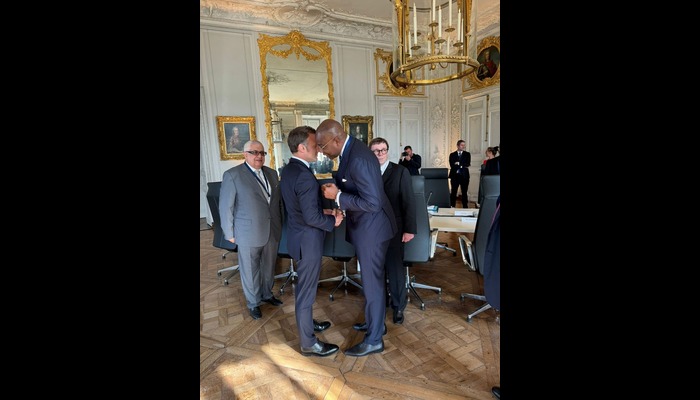
On May 13, 2024, at Choose France Summit 2024, Aigboje Aig-Imoukhuede, the chairman of Access Holdings PLC, was formally appointed as the President of the France Nigeria Business Council (FNBC) by the President of the French Republic, President Emmanuel Macron.

The France-Nigeria Business Council (FNBC) is a coalition of Nigerian private sector business leaders which aims to foster bilateral relations between Nigeria and France through the promotion of trade, investments, infrastructural development, job creation, and cultural integration. Since its inauguration in June 2021 by President Emmanuel Macron, the Council has leveraged the network of its members to advocate investments in key business sectors that would promote cultural integration and business growth between Nigeria and France. It has provided the impetus for some Nigerian businesses to commence the process of investing in France.

The Council is made up of 13 members namely Aigboje Aig-Imoukhuede (President), Abdul Samad Rabiu, Gilbert Chagoury, Mike Adenuga, Aliko Dangote, Jim Ovia, Tony Elumelu, and John Coumantaros. Others are Kola Karim, Leo Stan Ekeh, Daisy Danjuma, Gbenga Agboola, and Jean Haas (Secretary).

Aig-Imoukhuede’s appointment follows the demise of Herbert Wigwe, the immediate past President of the Council, in February 2024.

Choose France Summit is an annual event that brings together business leaders, investors, and government officials to discuss investment opportunities in France. The highlight of the Summit is the usual high-level engagement with the President at the Presidential Dinner, where commitments are made by both sides.

Nigeria gains additional territory on extended Continental shelf

0

The UN has approved Nigeria’s submission, granting sovereignty over additional square kilometres of maritime territory. This was revealed Tuesday after President Bola received the report of the High Powered Presidential Committee (HPPC) on Nigeria’s Extended Continental Shelf Project.

The team of experts had worked hard over the years to advance the project, which aimed at extending Nigeria’s maritime boundaries in accordance with the United Nations Convention on the Law of the Sea (UNCLOS), 1982.

The President while receiving the report, expressed his appreciation to the technical committee after the presentations by Larry Awosika, a marine scientist and member of the Committee, and Aliyu Omar, Secretary of the HPPC.

The experts have been involved in the project since Nigeria’s initial submission to extend its continental shelf to the United Nations Commission on the Limits of the Continental Shelf (CLCS) in 2009.

They informed the President that the UN has approved Nigeria’s submission, granting sovereignty over additional square kilometres of maritime territory.

”When the HPPC briefed former President Muhammadu Buhari in 2022 on the status of the project, the United Nations Commission on the Limits of the Continental Shelf (CLCS) was still considering Nigeria’s submission and having technical interactions with the HPPC,” Omar told the President.

”These interactions and consideration have now culminated in the approval for Nigeria to extend its continental shelf beyond 200M (200 nautical miles).

”As it stands now, the area approved for Nigeria is about 16,300 square kilometres, which is about five times the size of Lagos State.’’

He added that the official notification of the decision was conveyed to Nigeria by the UN Nations Commission on the Limits of the Continental Shelf (CLCS) in August 2023, shortly after President Tinubu assumed office.

Omar outlined the available options for Nigeria following the approval:

”The first option is to take the area gained and finalise the registration with the UN Secretary-General and close everything, meaning that we are satisfied with what we got. This will take at least one year.

”The second option is to take what we have right now, acquire more data, do a support write-up, and make a revised submission as recommended by CLCS for further consideration. This will take another four years.

”Either way, Nigeria will keep what has been approved.’’

In his presentation, Awosika explained that the approval came after years of meticulous scientific research on geophysics, geology, geography, and diplomatic efforts, which solidified Nigeria’s legal rights over a vast expanse of seabed and subsoil beyond its traditional territorial waters.

He also highlighted the economic potential of the newly acquired territory, which includes hydrocarbons, gas, solid minerals, and a wide variety of sedentary species.

He, however, cautioned against total disclosure of sensitive data acquired during surveys, noting that this will jeopardize confidentiality as Nigeria is expected to monetize the information to recover project expenses.

Responding, the President thanked the experts for their diligence, emphasizing the significance of the achievement for Nigeria’s economic and strategic interests.

‘‘This is big congratulations for Nigeria,’’ he said while recounting how former President Buhari had briefed him on the importance of the project.

”At COP28 in Dubai, I also exchanged views with President Lula of Brazil on the need for collaboration within our economic and maritime boundaries.

”Today, it is a great honour for me to receive this report. I have listened attentively to this very specialized report, and I know it took a whole lot of effort to get to this stage.

”I commend the team, and we must take advantage of this and invite you again to have a repeat of this knowledge exploration on geography, hydrography, and the marine life.

”Nigeria is grateful for the efforts that you put into gaining additional territory for the country without going to war. Some nations went to war, lost people and economic opportunities.

”We lost nothing but have gained great benefits for Nigeria. We will pursue the best option for the country,” the President said.


APC Professionals Council Hails Tinubu, Hon. Abba Kabir Abubakar Over Facilitation Of Construction of Kano Northern Bypass

0

APC Professionals Council has congratulated the President, Bola Tinubu for approving the construction of Kano Northern Bypass from Dawanau to Yankaba.

The Council in a statement signed by its Deputy Director General, Hon. Abba Rabee’u also congratulated member representing Bichi Federal Constituency of Kano State, Hon. Abba Kabir Abubakar for his painstaking effort in making the project a reality.

The council describes the approval as a commendable step towards infrastructural growth in the northern region of the country.

The release says, “We commend Hon. Abba Bichi for his exemplary dedication and hard work in serving the people he represents. His efforts have positioned him as a shining beacon among the members of the National Assembly. His commitment not only to Bichi, Kano, or Northern Nigeria but to the entire nation, speaks volumes about his leadership qualities.

“Hon. Abba Kabir Abubakar’s outstanding contributions leave an indelible mark on the landscape of Nigerian leadership. He sets a high standard for future leaders to emulate, transcending party lines and geographic boundaries to serve the collective interests of all Nigerians.

“We pledge our unwavering support to Hon. Abba Kabir Abubakar and urge others to join us in recognizing and encouraging his exceptional work. His legacy will inspire generations of leaders to come, and his dedication makes him a source of pride not only for Kano but for the entire nation.

“Thank you, Hon. Abba Kabir Abubakar, for your tireless efforts. You will always be the pride of Kano.”

FG Set To Restructure, Reform NYSC

0

The Federal Government has announced its plans to embark on a comprehensive review, restructuring and reform of the National Youth Service Corps (NYSC) in a bid to meet up with the demands of the future.

The Minister of Youth Development, Dr Jamila Ibrahim made this announcement at the opening ceremony of the maiden meeting of NYSC management with heads of corps-producing institutions in Nigeria, held at the National Judicial Institute in Abuja, on Monday.

According to the Minister, over 5000 corps members will have their entrepreneurial ventures funded with up to N10 million.

He explained, “Permit me to inform us very briefly on what is to come regarding NYSC reforms. I’m pleased to announce that I will be inaugurating a team to undertake the review, restructuring and reforms of the NYSC. The first of these reforms will be centred on reviewing participants with an entrepreneurship mindset and making skills development a core of the programme.”

He further explained that they envisioned a future where the NYSC programmes are not only self-sustained but also a revenue-generating programme within the next five years. To achieve this and would institutionalise the NYSC ventures as an investment and asset management outfit.

He also reaffirmed the NYSC’s commitment to the security and general welfare of corps members, appealing to corps-producing institutions, parents, and the general public to complement efforts in sensitising young graduates on call-up for national service.

“We urge you to use all available avenues to complement our efforts in sensitising young graduates on call-up for national service to avoid travelling at night when reporting to their states of deployment,” Ahmed said.

The Minister of the Federal Capital Territory, FCT, Nyesom Ezenwo Wike, in his address, welcomed the participants to Abuja and commended the NYSC management for choosing the city as the venue for the meeting.

Wike who was represented by the Mandate Secretary, Women Affairs Secretariat, FCT Administration, Mrs Adedayo Benjamins-Laniyi said, “NYSC has consistently symbolised our collective commitment to national development, unity, and integration. We must adopt innovative strategies to surmount challenges and enhance best practices for the engagement of our young graduates in national development efforts.”

He praised the NYSC’s efforts to enhance its operations through technology-driven approaches and urged the to actively contribute to the meeting’s success.