Sunday, May 10, 2026
Home Blog Page 16

Niger Delta Games Will Produce Future Olympians – NDDC Chairman

0

The Chairman of the Governing Board of the Niger Delta Development Commission, NDDC, Mr Chiedu Ebie, has expressed optimism that talents discovered at the Niger Delta Games will represent the country at international sporting events such as the Olympics, Commonwealth Games, and the All-Africa Games.

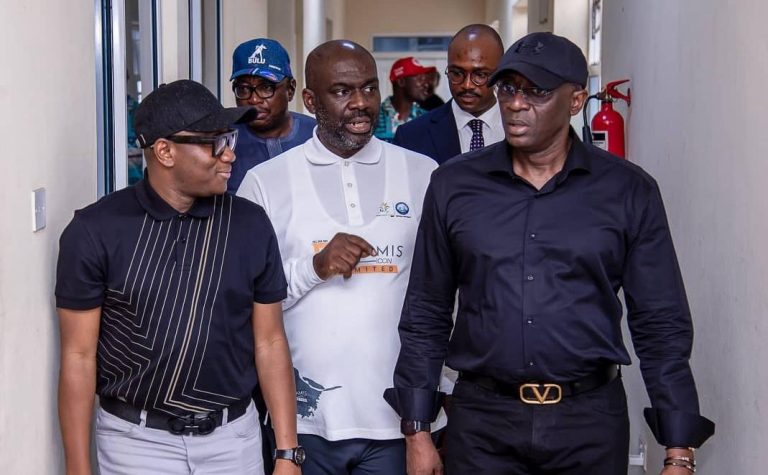
Speaking during a strategic retreat organised by the consultant for the 2nd Niger Delta Games, Dunamis Icon Limited, in Benin City, Edo State, Ebie endorsed the idea of holding sessions to review and project plans for successful games.

In a statement by Director, Corporate Affairs, Seledi Thompson-Wakama, he stated: “The Board of the NDDC wants to make the games our legacy project, such that there will come a time in the future when we can have athletes from the Niger Delta Games representing Nigeria at international events such as the Olympics.”

Addressing members of the Main Organising Committee and the Local Organising Committee, the NDDC Chairman commended the leadership of Dunamis-Icon Limited, noting: “When you want to institutionalise an event such as the Games, you have to hold such reviews to ensure that gaps are closed.”

Ebie also commended the Edo State Government for its proactive leadership in sports development and expressed confidence that the second edition of the Niger Delta Sports Festival would exceed expectations.

Speaking earlier, the Chairman of the Edo State Sports Commission, Hon. Amadin Desmond Enabulele, reaffirmed Edo State’s readiness to host the second edition of the Niger Delta Sports Festival.

He commended the NDDC under the leadership of Ebie for sustaining the initiative, describing sports as a powerful tool for unity, peace, and socio-economic development in the region. According to him, the Commission’s continued support reflects a clear understanding of the long-term benefits of sports development.

Reaffirming Edo State’s preparedness, the Sports Commission Chairman assured that facilities, logistics, and technical structures were in place to ensure a smooth and successful event. He added that Edo State was working closely with the NDDC and organisers to deliver a festival that would set new standards in organisation, athlete welfare, and competitive excellence.

In his welcome address, the Managing Consultant at Dunamis-Icon, Sir Itiako Ikpokpo, explained that the retreat was the second to be organised to review the past games in Uyo, Akwa Ibom State and correct mistakes for improvement.

“We are working to connect the dots, ask ourselves hard questions and see how we will organise a richer Games”, Ikpokpo said.

The 2nd edition of the games will be held from February 20-27 for the nine states that make up the Niger Delta region.
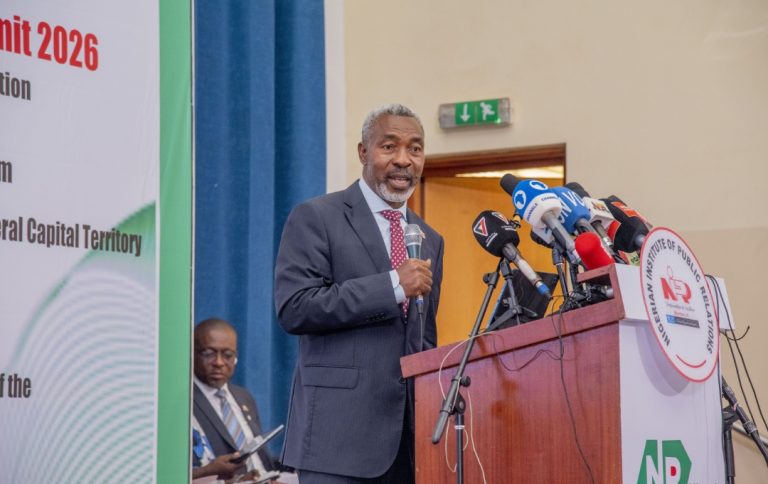
 

Reputation Summit: Information Minister, Fashola, NIPR, Others Seek Deliberate Efforts to Build National Image

0

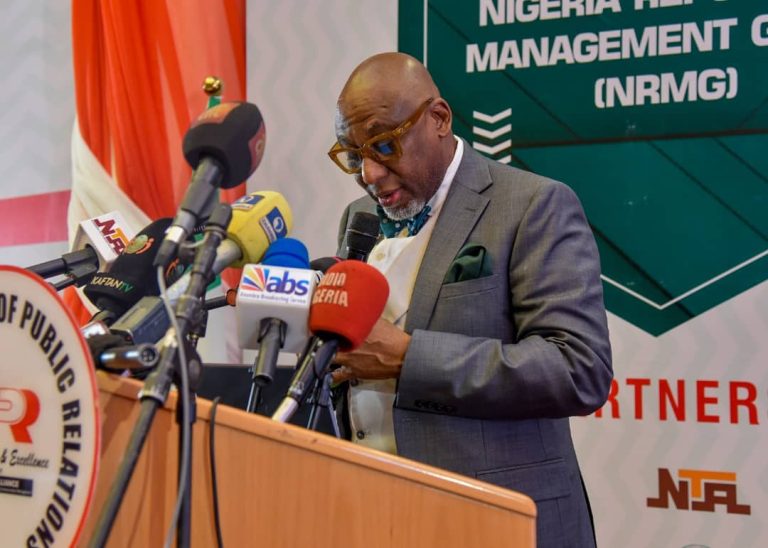
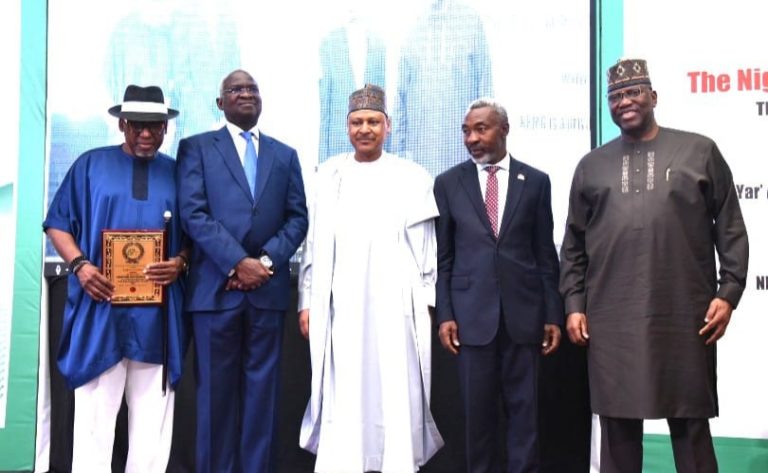
The maiden Nigeria Reputation Summit 2026 has successfully come to an end in Abuja with stakeholders outlining far-reaching insights on how citizens’ actions can help in improving the country’s reputation in global standing.

Organised by the Nigeria Reputation Management Group (NRMG), a private sector initiative of the Nigerian Institute of Public Relations (NIPR), the gathering highlights deliberate efforts aimed at improving the country’s image within domestic stakeholders and international partners.

Speaking at the event which held at Shehu Musa Yar’Adua Centre in the nation’s capital, Minister of Information and National Orientation, Alhaji Mohammed Idris noted that collective action and support from professional bodies such as NIPR is key in raising the nation’s reputation perception.

“Ultimately, reputation is earned through action, not slogans. It is built when policy meets purpose and when communication reflects truth. The government alone cannot build Nigeria’s reputation. It requires partnership with professionals, institutions, the private sector, and citizens”, the Minister said.

While reiterating the federal government’s commitment to continue to deploy effective diplomatic avenues to ease what he called wrong perceptions about the country, Idris assured the readiness of the country’s leadership to foster collaboration with international partners to improve security and enhance the general welfare of citizens.

“Redeeming Nigeria’s image is a national call to duty, involving all of us, requiring a collective denouncing of false narratives, and promoting our unity”, he noted.

In his keynote address, former Minister of Works, Babatunde Fashola urged Nigerians to use their public communications to positively project the country, noting that this is a key step towards improving the nation’s image within and before the global community.

Fashola, a two-time governor of Lagos State emphasised that though reputation is largely intangible, it directly affects citizens’ daily lives, stressing that films and media contents emanating from within should reflect values such as resilience, creativity and hardwork as against amplifying easy and unexplained wealth.

He further called for a proper orientation programme for the nation’s Ambassadors-designate to enable them better educate potential foreign investors about tax laws, regulations, incentives and other relevant information.

“Ambassadors should encourage investors to visit Nigeria and not the other way round. If there was a problem with development, it has to be here, not there. Those who want to do business with me must come and see where I live, feel my environment and know that my weather is warmer, instead of requiring public officials to spend scarce resources to visit where our Ambassadors are posted”, he advised.

He called for the deployment of MICE – Meetings, Incentives, Conventions and Exhibitions to drive the nation’s economy through hosting of sporting, music and other events that will attract global participants, an opportunity that gives them first hand information on who their host nations are and what they stand for.

In his remarks, President, Chairman of Council, Nigerian Institute of Public Relations (NIPR), Dr. Ike Neliaku described reputation as a national power which has immense implications on the citizens.

While further underlining that reputation is a soft subtle influence that drives the political economy and social engagements of nations, organisations and individuals, Dr. Neliaku said it affects borrowing costs, speed of investment inflow, confidence of visitors and tourists, as well as the credibility of diplomacy and dignity of citizens across borders.

“Nigeria’s reputation is not what we say about ourselves. It is what the world believes about our systems. It is what they feel and think when we are not in the room. And it is what our citizens experience every day”, he states.

In his national call to action to every Nigerian, Dr. Neliaku urged that the seven pillars; Culture, Leadership, Social Equity, Communication, Innovation, Performance and Credibility which shape how Nigeria is trusted and evaluated by the global community be given adequate attention.

The Chairman of Nigeria Reputation Management Group (NRMG) Board, Chief Yomi Badejo-Okusanya said the summit is aimed at focusing national attention on the importance of a conscious, deliberate, and coordinated approach to building and protecting reputation which he said is a key national asset and across government, business, institutions, and society.

“Reputation cannot be managed in silos. The government must work with the private sector. Institutions must work with the media. Professionals must work with regulators. We must replace reactive communication with strategic foresight. We must replace defensive posturing with earned credibility. And we must replace fragmented efforts with collaborative frameworks”, he noted.

A highlight of the event was the inauguration of the first female president of the Nigeria Institute of Marketing of Nigeria, (NIMN), Bolajoko Bayo-Ajayi and her Advertising Practitioners Council of Nigeria (APCON) counterpart, Dr. Olalekan Fadolapo as members of the Body of Advisers of NRMG. The Body has as Chairman Dr. John ‘Reputation’ Momoh, the founder of Channels Media Group.

Source: NIPR

NIPR Debunks Claims of Defending FG’s $9m US Lobbying Deal

0

The Nigerian Institute of Public Relations (NIPR) has denied reports suggesting that it defended the Federal Government’s alleged $9 million lobbying contract in the United States, describing such claims as misleading and taken out of context.

Speaking at the 1st Nigeria Reputation Summit held at the Yar’Adua Centre, Abuja, on Tuesday, the President of NIPR, Dr. Ike Neliaku clarified that the Institute neither defended nor endorsed the purported lobbying deal, stressing that no details were available to back the deal.

Reacting specifically to a January 16, 2026 Punch Newspaper headline titled “NIPR defends FG $9m US lobbying deal”, Dr. Neliaku said the report misrepresented his position.

“I could not have defended a deal I do not have details of,” he stated.

He added, “I do not know the full scope of the contract, the competence, credibility and track record of the vendors, the appropriateness of the pricing, or the key performance indicators attached to it. Without these, it is impossible to defend such an arrangement.”

He explained that his earlier comments during the unveiling of the Nigeria Reputation Perception Index (NRPI) 2025 Report were limited to a professional clarification that lobbying, as a practice, is a recognised public relations function globally and does not constitute a crime.

“Lobbying is a legitimate professional engagement tool used worldwide to influence goodwill and achieve defined outcomes. However, on the specific issue of defending a so-called $9 million deal,Baabu!”, he stated.

Dr. Neliaku further disclosed that there are legitimate concerns surrounding the contract, particularly regarding the process of engagement, vendor competence, and the methodology adopted, noting that these are issues that require transparency and proper scrutiny.

Speaking on the need for an improved national reputation, the NIPR President highlighted the recently released NRPI 2025 Report, which placed Nigeria’s overall reputation score at 35.2 out of 100, categorised as “Poor,” describing the country’s reputation paradox as one of “High Potential, Low Trust.”

He emphasised that the index was not designed to shame Nigeria but to provide a factual, evidence-based baseline for rebuilding national reputation.

He called for coordinated national reputation strategy involving government, the private sector, civil society, the media and citizens, urging that the Nigeria Reputation Summit should mark the beginning of a sustained movement rather than just another conference.

Nigeria Reputation Summit 2026 to Convene Leaders, Youth and Innovators in Abuja

0

Abuja, Nigeria- January 20, 2026 —The Nigeria Reputation Management Group (NRMG) has announced the inaugural Nigeria Reputation Summit 2026, scheduled to hold on Tuesday, January 20, 2026, at the Shehu Musa Yar’Adua Centre, Abuja, bringing together key leaders from government, business, and civil society to advance conversations around rebuilding Nigeria’s national reputation.

The summit will feature a keynote address by the former Governor of Lagos State and two-term Minister of the Federal Republic of Nigeria, His Excellency Babatunde Raji Fashola, SAN, delivered under the theme “Better Nigeria, Better Reputation.” The address is expected to highlight the role of leadership, governance, and institutional consistency in shaping Nigeriais perception locally and globally.

A key highlight of the summit is a special interactive session focused on young Nigerians, themed “The Power of Youth, Technology & Creativity in Rebuilding Nigeria’s Reputation.” The session will explore how innovation, digital platforms, and the creative economy can be leveraged to project a more positive and authentic image of Nigeria with Honourable Ministers responsible for Youth Development, Technology & Innovation, and Creative Economy & Tourism are expected to participate as speakers.

The Nigeria Reputation Summit is convened by NRMG, a private-sector–driven initiative of the Nigerian Institute of Public Relations (NIPR), established to harness the reputation drivers and levers that shape Nigeria’s image. The group seeks to promote deliberate, coordinated efforts that positively influence behaviours, narratives, and national consciousness.

Speaking on the summit, Chairman of NRMG, Yomi Badejo-Okusanya, fnipr, said the initiative was borne out of the need for a more intentional approach to managing Nigeria’s reputation.

“A nation’s reputation is not built by chance. It is shaped by leadership, institutions, citizens, and the stories we tell through our actions. The Nigeria Reputation Summit provides a platform to align these forces and take responsibility for how Nigeria is seen and experienced.”

Designed as an annual convening, the summit aims to bring together stakeholders to chart actionable strategies, track progress, and foster collaboration across sectors in support of a stronger national reputation.

About Nigeria Reputation Management Group (NRMG)

The Nigeria Reputation Management Group (NRMG) is a private-sector–driven initiative of the Nigerian Institute of Public Relations (NIPR), established to strengthen Nigeria’s national reputation by aligning values, behaviours, policies, and narratives that influence perceptions of the country at home and abroad.

Nigeria’s Reputation Under Global Scrutiny: 2025 Reputation Perception Index Reveals High Potential, Low Trust Paradox

0

The Nigeria Institute of Public Relations (NIPR), in collaboration with Reputation Perception Services (RPS), has released the Nigeria Reputation Perception Index (NRPI) 2025, a comprehensive, data-driven assessment of how Nigeria is perceived by domestic and international stakeholders across seven critical reputation pillars: Leadership, Performance, Credibility, Communication, Innovation, Social Equity, and Culture.

The Nigeria Reputation Perception Index (NRPI) 2025 is not an assessment of any government, administration, or reform programme, but an objective measurement of how Nigeria as a country is rated by its citizens and international stakeholders. The Index nonetheless recognises notable policy initiatives and reform efforts undertaken by government in the last three years, particularly in economic management, digital innovation, and institutional restructuring. However, the findings indicate that while such initiatives may positively influence short-term perceptions, their cumulative impact has not yet translated into measurable reputation gains, as reputation, unlike perception, is built slowly through sustained, consistent delivery and credibility over time.

The report reveals a persistent paradox: Nigeria remains highly visible and culturally influential, yet continues to face significant trust and credibility constraints. Nigeria’s overall Reputation Perception Score for 2025 stands at 35.2 per cent, reflecting moderate awareness but low trust conversion among both domestic and international stakeholders. Credibility deficits and a prevailing risk-first evaluation lens continue to shape perceptions across local and global audiences.

Governance-related pillars exert the strongest influence on trust outcomes, while Culture emerges as Nigeria’s most resilient reputation asset, amplifying global visibility, creative influence, and soft power. Despite this strength, weak performance outcomes, delivery gaps, and fragmented national communication continue to limit the conversion of potential into sustained reputation capital.

The study was conducted between 21 October and 23 November 2025 using a mixed-methods research design that integrates large-scale quantitative surveys with qualitative focus group discussions. A total of 3,911 respondents participated, covering all 36 states and the Federal Capital Territory, alongside international respondents across Africa, Europe, North America, Asia-Pacific, South America, the Middle East, and Oceania. This proportional and statistically robust sampling ensures national representativeness and global relevance.

Reputation Insights and Strategic Implications

The NRPI 2025 highlights constrained performance across key reputation drivers. While Leadership records moderate confidence, Performance, Credibility, Innovation, and Communication remain under pressure, reinforcing scepticism among stakeholders. Persistent media narratives focused on insecurity, corruption, and systemic challenges continue to overshadow gains in entrepreneurship, innovation, and cultural diplomacy.

The report concludes that Nigeria’s reputation challenge is not one of awareness, but of trust execution. Priority improvement areas include strengthening institutional credibility, improving consistency in policy delivery, aligning communication with verifiable outcomes, and adopting a coordinated national reputation management framework that integrates governance performance, media engagement, and cultural storytelling.

The Nigeria Reputation Perception Index (NRPI) 2025 provides policymakers, investors, media organisations, and development partners with a credible evidence base for understanding perception gaps and repositioning Nigeria more competitively on the global stage.

The Nigerian Institute of Public Relations and its consortium of partners under the Reputation Perception Services has promised to release the NRPI report annually following its first release in January 2026 at the National Assembly Library Complex, Abuja.

The Nigeria Institute of Public Relations (NIPR) is Nigeria’s statutory body for regulating public relations practice and advancing professional standards in reputation management and strategic communication. In collaboration with Reputation Perception Services (RPS), the Institute is advancing evidence-based national reputation intelligence to support informed decision-making and long-term trust building.

For access to the full report, visit: https://rpireport.com

© 2025 Nigeria Institute of Public Relations. All rights reserved.
Abuja, Nigeria — Thursday, 15 January 2026.

NIPR Unveils First Nigeria Reputation Perception Index

0

. ..As Deputy President of the Senate Describes Reputation as National Asset

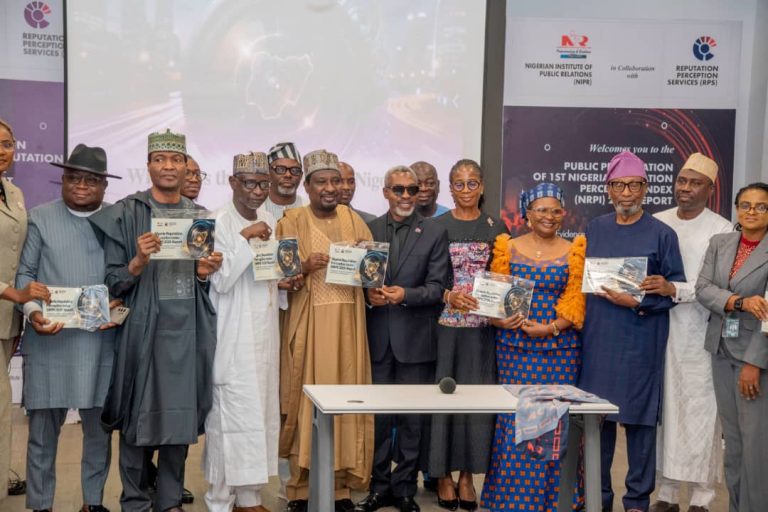
In line with its constitutional mandate, the Nigerian Institute of Public Relations (NIPR) in collaboration with the Reputation Perception Services (RPS) has unveiled the first Nigeria Reputation Perception Index 2025 Report as an international measure towards improving the nation’s reputation.

Speaking on Thursday at the public presentation of the NRPI Report in Abuja, the NIPR President, Dr. Ike Neliaku, said that the report, which is a seven-year intensive effort by the Institute stands as the first systematic and evidence-based national instrument for assessing Nigeria’s reputational standing.

“This survey, therefore, was initiated not as an academic exercise, but as a regulatory and policy-oriented intervention in the national interest. The exercise is designed to reposition reputation as a strategic national asset, one that should inform public policy, diplomatic national interest, investment attraction, and genuine national rebranding”, he said.

In his remarks, the Deputy President of the Senate, Federal Republic of Nigeria, Sen. Barau Jibrin, stated that the development of a data-driven framework for assessing Nigeria’s image across critical sectors strengthens institutional accountability.

Sen. Jibrin, who was the Chairman of the event said “I am particularly encouraged that this Index is not presented as a tool for blame, but as an instrument for learning, reform, and progress. Constructive self-assessment is the hallmark of mature democracies, and Nigeria must not shy away from honest conversations about its national image and the underlying realities that shape it”.

The Federal Lawmaker assured that the legislative arm of government will continue to support reforms that promote transparency, inclusiveness, national unity, economic resilience, and social justice, ensuring that legislative outputs align with global best practices, while remaining sensitive to Nigeria’s unique socio-political context.

Also speaking, former Nigerian Ambassador to the United States and National President of the Association of Retired Career Ambassadors of Nigeria, Amb. Joe Keshi said that leadership and governance remained key factors in reshaping the nation’s reputation.

He emphasised the need for Nigeria, which once enjoyed strong reputational capital as a result of its leadership role in Africa, contributions to decolonisation, peacekeeping missions and regional stability to reclaim its leadership position in global affairs.

The full details of the report, which has input from across the 36 states of the federation and the Federal Capital Territory, alongside international respondents across Africa, Europe, North America, Asia-Pacific, South America, the Middle East, and Oceania is available on the Institute’s website: https://rpireport.com

Stanley Ogadigo
Director, Public Relations
15-1-2026

Tinubu Ambo Support Group Calls for Increased Youth Participation in Politics

0

The Tinubu Ambo Support Group has issued a strong call to Nigerian youths to take active ownership of the nation’s political future through meaningful participation in party politics, particularly via the ongoing membership validation and new members’ e-registration exercise of the All Progressives Congress (APC).

This call was made on Monday, January 12, 2026, as the former Governor of Lagos State, Mr. Akinwumi Ambode, alongside his wife, Her Excellency, Mrs. Bolanle Ambode, officially validated their APC membership cards at Epe, Lagos State—an act widely described as a powerful demonstration of loyalty, consistency, and democratic commitment.

Speaking on the development, the Director-General of the Tinubu Ambo Support Group praised Mr. Ambode as a seasoned administrator, a bridge-builder, and a progressive leader whose record of service continues to inspire confidence among party faithful and the younger generation. According to him, the former governor’s participation in the exercise sends a clear message that leadership is rooted in party discipline, humility, and active engagement at all levels.

“The future of Nigeria belongs to the youths, and politics remains the strongest platform for shaping that future,” the Director-General stated. “We urge young Nigerians to seize this opportunity by registering, validating their membership, and becoming active stakeholders in governance rather than spectators.”

The Support Group further commended Mrs. Bolanle Ambode for her steadfast support and quiet strength, describing her as a pillar of encouragement whose presence reflects the importance of family values and unity in public service.

Observers at the event noted that the validation exercise in Epe witnessed significant youth turnout, reinforcing the growing enthusiasm among young people to align with progressive ideals and credible leadership.

The Tinubu Ambo Support Group reaffirmed its commitment to mobilizing, mentoring, and empowering youths across Lagos State and beyond, stressing that inclusive political participation remains the foundation for sustainable democracy and national development.

*As Nigeria continues its democratic journey, the group expressed optimism that with leaders like Akinwumi Ambode setting the example, youths will rise to the occasion and play decisive roles in building a stronger, more prosperous nation.*

NDDC Constitutes Project Verification, Payment Committee

0

The Management of the Niger Delta Development Commission, NDDC, led by Dr Samuel Ogbuku, has constituted a Project Verification and Payment Committee.

This followed one of the resolutions reached at the 9th meeting of the 7th Governing Board of the Commission held on December 8, 2025.

The Board approved the constitution of a Project Verification Committee by Management to verify all infrastructure, electrification, desilting, environmental, and water projects for the purpose of capturing them in the Commission’s Directorate of Finance and Accounts’ Digitised platform for payment purposes.

The setting up of the Committee was sequel to the Federal Government’s directive that all Ministries, Departments and Agencies (MDAs) of the Federal Government digitalise their operations and go paperless by December 31, 2025.

It was therefore imperative for the NDDC Management to conduct a comprehensive verification of all completed projects to capture the necessary information in the Commission’s Directorate of Finance and Accounts’ electronic database for payment purposes.

The Project Verification and Payment Committee would undertake a comprehensive verification of all completed projects in the region from inception to January 2023, to capture them in the Digitised database of the Directorate of Finance and Accounts for E-payments.

The projects to be verified include infrastructural, electrification, environmental, desilting, and water supply projects.

Members of the Committee are as follows: the Executive Director of Finance and Administration, Alabo Boma Iyaye, Chairman; the Executive Director of Projects, Sir Victor Antai, member; the Director of Legal Services, Mr. Victor Arenyeka, Secretary; the Director of Project Monitoring and Supervision, Engr. Gbenga Omowanle, member; Director Finance and Accounts, Mrs Kunemofa Asu, member; and the Director Internal Audit, Mr. Lucky Ogbuji, member.

NDDC Restates Commitment To Collaborate With PANDEF

0

The Niger Delta Development Commission, NDDC, has restated its commitment to work closely with the apex socio-cultural and political body of the Niger Delta region, the Pan Niger Delta Forum, PANDEF.

Speaking during a courtesy visit by a delegation from the umbrella organisation of Niger Delta people at the NDDC headquarters in Port Harcourt, the Commission’s Executive Director of Finance and Administration, Alabo Boma Iyaye, stressed the importance of partnership.

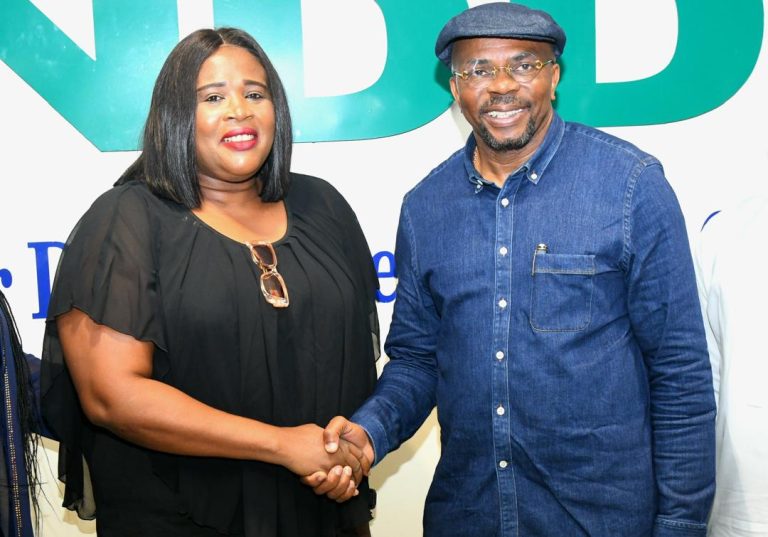
In a statement by NDDCs Director, Corporate Affairs, Seledi Thompson-Wakama, Mr Iyaye assured the delegation, led by the PANDEF National Treasurer, Mrs Ifeoma Agboma, that the NDDC would continue to collaborate with it, reiterating the group’s role as the voice of the Niger Delta people in the civic space.

He noted that 2025 was a remarkable year for the NDDC, as it marked its 25th anniversary, with series of activities, including the commissioning of completed projects.

The NDDC Executive Director Finance and Administration noted that the Commission was determined to complete its legacy projects, in line with the directive of President Bola Tinubu.

He commended the National Chairman of PANDEF, Ambassador Godknows Igali for always working in the interest of the Niger Delta region.
Speaking earlier, the National Secretary of PANDEF, Mrs. Ifeoma Agboma, lauded the NDDC Management, led by its Managing Director, Dr Samuel Ogbuku, for initiating projects and programmes that have impacted the people positively.

She emphasised the need to engage in activities that would keep the people of the Niger Delta region together as such solidarity had been beneficial to every one in the region. Agboma stressed that unity was critical to the development of the region.

January 8, 2026.

NDDC To Pay Compensation To Fast Track Work On Borikiri-Okrika Bridge

0

The Niger Delta Development Commission, NDDC, has assured residents of Ibifaka Polo community in Borikiri, Port Harcourt, of the imminent payment of compensation to those whose properties are on the right-of-way for the Borikiri-Okrika Bridge Project.

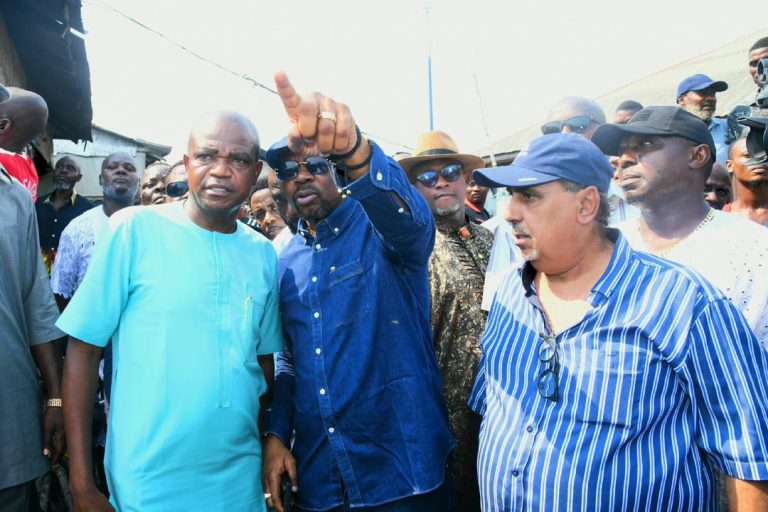
The NDDC Executive Director, Finance and Administration, Alabo Boma Iyaye made this known in the community during the inspection of the Borikiri alignment of the road and bridge project.

He noted: “As a delegation from the NDDC, we have come to properly inspect the ongoing Borikiri-Okrika Road and bridges. This project has suffered delays because of frequent changes in administration and funding challenges.

Iyaye said: “Although this project was awarded in 2012, it has faced delays for various reasons. Upon the inauguration of the current NDDC Board, we prioritised completing this significant project, viewing it as a legacy project.

“By the grace of God and the goodwill of President Bola Ahmed Tinubu, our administration was inaugurated, and this is one of the legacy projects we identified to be completed. Last year, we engaged the contractors who moved to the site almost immediately.”

The Borikiri-Okrika Bridge, which would link Port Harcourt and Okrika Local Government Areas in Rivers State, consists of three bridges: the Kolabi Bridge (180m) at the Etche Waterfront, the Abotoru Bridge (1120m), which is midway, and the Okpoka Bridge (490m).

The NDDC Executive Director further noted that although the Okrika alignment has made considerable progress, the Borikiri end was delayed.

He stated: “The Borikiri alignment has not made substantial progress. That is why we are here. We have interfaced with the consultant and the contractors, who have identified the paramount issue of compensation. This issue will be addressed and treated with immediate effect. Inspections have been done. Be rest assured that work will start from this end once all modalities are in place.”

Earlier in a courtesy visit at the palace of the Amayanabo of Ancient Borikiri Kingdom, King Berechiri Wilfred Yemaiyaye, thanked the Board and Management of the NDDC for the welcome development to his kingdom. “We thank the NDDC for remembering us, and we hope that more development efforts will accompany this.”

The Project Consultant, Engr. Azu Chukwuma noted that the project had received optimum support and acceptance from the community, “This will bring the desired development these communities require,” he stated.

In his own remarks, the Youth President of Ibifaka Polo, Mr. Precious Tobin George, thanked the NDDC for this long-awaited development. “We are certain that once this project is completed, it will attract socio-economic development to our community,” he stated.