Thursday, May 7, 2026
Home Blog Page 131

FG Eyes $500m W’bank Loan To Boost Education, Health Sectors

0

The Federal Government is targeting a $500m loan from the World Bank to tackle inadequate human resource issues in the country’s education and healthcare systems.

The proposed loan, part of the Nigeria Human Capital Opportunities for Prosperity and Equity Governance Programme, is intended to tackle long-standing staffing gaps and enhance the performance management of basic education teachers and primary healthcare workers.

According to the “Programme Information Document” for the appraisal stage of the Nigeria Human Capital Opportunities for Prosperity and Equity Governance Programme, obtained by Sunday PUNCH on Friday, the international lender is expected to give its final approval for the loan on September 26, 2024, and it has the Ministry of Budget and Economic Planning, Ministry of Education and Ministry of Health as the implementing agencies.

It showed the loan is to support strengthening financial and human resource management in the basic education and primary health care sectors

According to the document, the loan will focus on three major result areas, with the improvement of recruitment, deployment, and performance management of sector workers being a key component.

This effort is particularly important given Nigeria’s alarming human capital index, which indicates that a child born in the country will only achieve 36 per cent of their productive potential if current levels of health and education services persist.

The document reads, “Nigeria suffers from a shortage of qualified professionals, including teachers and health workers, when compared to the average for low- and middle-income countries. These are also highly unequal across regions/states. Frontline workers such as teachers and healthcare workers are technically employees of local governments, but states vary considerably in the extent to which they are managed at a central state level, creating blurred accountabilities.

“Moreover, human resource management suffers from a lack of planning, is often not properly costed and is not always based on merit and transparency. The deployment of these professionals is also suboptimal and not aligned to guarantee learning and basic health care for all. A 2015 service delivery study found that 14 per cent of teachers were absent from school, 19 per cent of those present were not teaching, and 32 per cent of health workers were absent from duty post.”

According to the document, one of the primary objectives of the loan is to incentivise improvements in workforce planning within the education and healthcare sectors.

It noted that the loan would provide the necessary financial resources to enhance the recruitment processes, ensuring that qualified professionals are adequately deployed where they are most needed.

The initiative will also address the significant disparities in staffing across Nigeria’s regions, a challenge that has long plagued both sectors.

In addition to workforce planning, the loan will support the adoption of new systems to improve payroll management and reduce fraud, including the implementation of the Central Bank of Nigeria’s Bank Verification Numbering system and National Identity Numbers platforms.

It added, “The HOPE Programme is a series of three interdependent operations strategically positioned to address different challenges, but all geared towards helping achieve the same set of development outcomes

“HOPE-GOV covers a subset of actions from the government program and would run from 2024 to 2028. These actions will mostly be at the state level, but with a few at the federal level. The Program will support Nigeria in addressing underlying governance weaknesses in the systems and procedures of government that constrain outcomes in basic education and primary healthcare service delivery.

“The focus will be on cross-sectoral issues, such as improved financial resource allocation, efficiency of resources, strengthened public financial management, fiscal transparency and accountability, and enhanced human resource management. In addition, an IPF component (US$20m) will finance the technical assistance component.”

A part of the PID noted that one of the expected results of the loan programme is improved recruitment, deployment, and performance management of basic education teachers and primary health workers.

The HOPE Governance Programme, under which this loan falls, is scheduled to run from 2024 to 2028, providing support for systemic reforms at both the state and federal levels, focusing on cross-sectoral issues such as financial resource allocation, public financial management, fiscal transparency, and accountability.

As part of the World Bank’s support, the loan will also incentivise the reduction of staffing gaps by 40 per cent, with a target that at least 30 per cent of recruits will be women.

The loan is part of a larger $2 billion government program that seeks to accelerate the provision of quality basic education and healthcare services across Nigeria.

$6.8 Billion Debt: We Are Not Owing Any International Oil Trader – NNPC

0

PRESS RELEASE

NNPC Ltd is not owing $6.8bn

The attention of the Nigerian National Petroleum Company Limited (NNPC Limited ) has been drawn to a media report that the company is indebted to international oil traders to the tune of $6.8bn and that it has not remitted revenues to the Federation Account since January, among other allegations.

Consequently, the following clarifications have become necessary:

1. That NNPC Ltd. does not owe the sum of $6.8bn to any international trader(s). In the oil trading business, transactions are carried out on credit, and so it is normal to owe at one point or the other. But NNPC Ltd., through its subsidiary, NNPC Trading, has many open trade credit lines from several traders. The company is paying its obligations of related invoices on a first-in-first-out (FIFO) basis.

2. It is not correct to say that NNPC Ltd. has not remitted any money to the Federation Account since January. NNPC Ltd. and all its subsidiaries remit their taxes to the Federal Inland Revenue Service (FIRS) regularly. This is in addition to payments of CIT to road contractors under the Road Investment Tax Credit Scheme. In all, NNPC Ltd. is the largest contributor to the tax revenue shared every month at the Federation Account Allocation Committee (FAAC).

3. On the issue of quality/quantity fiscalization of imported petroleum products, NNPC Ltd. has no role whatsoever as it is not a regulator. The Nigerian Midstream and Downstream Petroleum Regulatory Authority (NMDPRA), which is the relevant regulatory agency in charge of such issues, is an independent body and does not report to the NNPC Ltd.

4. That NNPC Ltd. is not averse to inquiries by the media into issues on and around its operations before dissemination to the public either through the print or electronic channels of communication as the company will, always, gladly take the opportunities to state the facts of the subject matter(s). This is in line with the company’s commitment to the Transparency, Accountability, and Performance Excellence (TAPE) philosophy as emplaced by the Mele Kyari-led management since stepping into the saddle in 2019.

Femi Soneye
Chief Corporate Communications Officer
NNPC Ltd.
Abuja

18 August, 2024

Senegal Successfully Launches First Satellite –

0

Senegal successfully launches first satellite

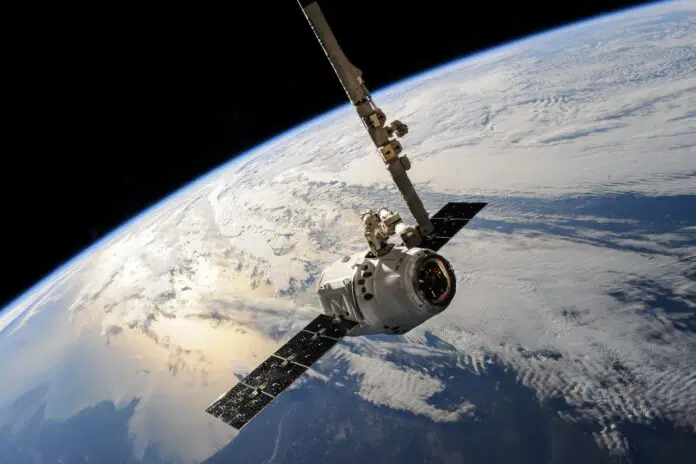
Senegal’s first satellite has been successfully launched into orbit, President Bassirou Diomaye Faye said.

He added that the move marked a major step towards the West African country’s “technological sovereignty”.

The GAINDESAT-1A satellite was launched at 6: 56 p.m., Friday from the Vandenberg base in California, Faye wrote in a post on X late Friday.

“The result of five years of hard work by our engineers and technicians. This advance marks a major step towards our technological sovereignty,” Faye said.

“I would like to express my pride and gratitude to all those who made this project possible,” he added.

Senegal’s public broadcaster, RTS, said the satellite was designed and manufactured by Senegalese engineers, in partnership with the French Montpellier University Space Centre, CSUM.

The broadcaster said a Falcon 9 rocket took off from Vandenberg base and launched a number of satellites, including the GAINDESAT-1A, into orbit.

RTS said the satellite will collect data for various state agencies including the Directorate for Water Resources Management and Planning, DGPRE, and the National Civil Aviation and Meteorology Agency.

₦‎150 Billion Airbus A330 Presidential Jet Lands At Abuja Airport – SR

0

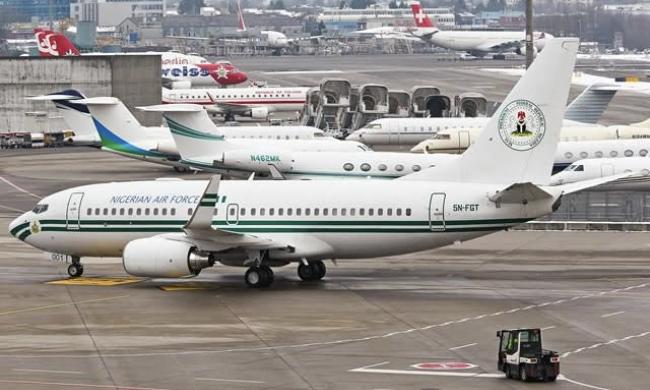
SaharaReporters learnt that the aircraft touched down at Nnamdi Azikiwe International Airport on Sunday evening, after departing from EuroAirport Basel-Mulhouse-Freiburg in France at 4:16 pm and landing in Abuja at 8:29 pm.

President Bola Tinubu will embark on a trip to France on Monday, August 19, departing from Abuja, the nation’s capital.

The President will return to the country after his brief work stay in France, a statement signed by Chief Ajuri Ngelale, Special Adviser to the President on Media & Publicity said on Sunday.

The President will travel on the newly acquired luxury Airbus A330 aircraft, which landed at the Nnamdi Azikiwe International Airport in Abuja at 8.29 pm on Sunday.

SaharaReporters reported earlier on Sunday that the aircraft touched down at Abuja airport on Sunday evening, after departing from EuroAirport Basel-Mulhouse-Freiburg in France at 4:16 pm.

This followed the release of the aircraft, which was one of the three presidential jets recently confiscated by a French court in favour of a Chinese firm over a dispute with Ogun State Government.

SaharaReporters reported on Friday that Zhongshan Fucheng Industrial Investment Co. Limited had announced the release of one of the three presidential aircraft belonging to Nigeria, which had been detained in France.

The Chinese company characterized the release of the aircraft as a goodwill gesture, citing the upcoming meeting between President Tinubu and French President Emmanuel Macron.

The company stated that it recognized the significance of the aircraft for the diplomatic engagement and took steps to ensure its availability, thereby facilitating the meeting.

In July, SaharaReporters reported the aircraft was in France and had been spotted at an advanced stage of preparation. The plane had been assigned a tail registration featuring the seal of the President of the Federal Republic of Nigeria and was ready for delivery.

The aircraft in question is an ACJ330-200, VP-CAC (msn 1053), registered as 5N-FGA.

It features a bedroom with an en-suite bathroom at the front, followed by an office and a conference and dining room. It also has an airline-style first-class and economy seating at the rear.

SaharaReporters on June 28 reported that the Nigerian government planned to spend over N150 billion on a new presidential jet, a move that sparked controversy.

The proposed expenditure came under scrutiny as the nation grappled with economic challenges and record inflation.

The Airbus A330 aircraft, was reportedly in possession of a German bank, and was acquired following a default on a multi-million-dollar loan by an Arab prince and businessman.

NNPC Battles Deepening Fuel Scarcity, Black Market Booms

0

The Nigerian National Petroleum Company Limited has vowed to end the queues for Premium Motor Spirit, popularly called petrol, by Wednesday, as the black market for PMS boomed on Sunday.

NNPC also declared that it did not owe international oil traders $6.8bn as claimed in some quarters, a development which some industry watchers described as a major reason for the widespread PMS scarcity in Nigeria.

But despite the national oil firm’s assurance that the queues for petrol would clear this week, oil marketers said on Sunday that the loading of products at depots had yet to improve.

Black marketers of petrol who sold the commodity in jerrycans took advantage of the situation, as they dispensed PMS for as high as N1,200 to N1,500/litre, depending on the area of purchase.

This came as the sole importer of the commodity (NNPC) blamed the petrol scarcity on evacuation challenges at PMS vessels.

NNPC is Nigeria’s only importer of petrol. Other dealers stopped importing the commodity due to their inability to access the United States dollar required for petrol imports.

The Chief Corporate Communications Officer of NNPC, Olufemi Soneye, told one of our correspondents that the oil firm was working hard to tackle the fuel supply challenges, stressing that the queues should clear by mid-week.

“It’s just an evacuation challenge out of Apapa (ports in Lagos) from the vessel. But we are working on it. It should be resolved. I’m very sure that fuel scarcity will be cleared out by Wednesday,” Soneye stated on Sunday.

He later issued a press statement on the matter, saying, “The NNPC Ltd regrets the tightness in fuel supply witnessed in some parts of Lagos and the FCT (Federal Capital Territory), which is as a result of distribution challenges.

“The company further urges motorists to shun panic buying as it is working round the clock with relevant stakeholders to restore normalcy.”

But operators told The PUNCH that the fuel supply situation at the depots had yet to improve as of Sunday.

An official of one of the top petroleum companies in Nigeria said the company was out of stock.

“We don’t have supply yet. For us and many depots in Apapa, it’s nil stock,” the official, who spoke in confidence due to lack of authorisation to speak on the matter, stated.

An oil marketer disclosed that the scarcity might get worse in Lagos during the week as there was no improvement in supply.

“The scarcity may get worse in Lagos during the week. Nothing is changing yet. Though motorists still get the product to buy although at very high rates,” the marketer disclosed.

A depot operator revealed that “depots will still get supplies this week, but definitely it will not be enough to meet desired demand to bring down the fuel crisis.”

The manager of a filling station in Abeokuta, the Ogun State capital, said a litre of petrol was N880 as of Friday.

The manager, who identified himself simply as Adeyanju, said his principal had not been able to get fuel since Friday, adding that the private depots were hiking the price of petrol.

On his part, the National Publicity Secretary of the Independent Petroleum Marketers Association of Nigeria, Chief Ukadike Chinedu, said the challenges in the downstream oil sector were compounded by the recent nationwide hunger protests.

“Aside from the fact that there is not enough supply, the recent protests disrupted activities in the downstream oil sector. We are still struggling to sort that one out and there is also the challenge of low supply of petrol,” he stated.

NNPC denies indebtedness

In a similar development, the national oil firm said on Sunday that it does not owe international oil traders $6.8bn.

The company also denied claims that it has not remitted funds into the federation account since January.

Soneye, in a statement, reacted to different allegations against the state-owned energy firm.

It was alleged that NNPC owed some of its suppliers, being the sole importer of petrol into Nigeria, though Soneye acknowledged that such transactions were done on credit.

“NNPC Ltd does not owe the sum of $6.8bn to any international trader(s). In the oil trading business, transactions are carried out on credit, so it is normal to owe at one point or the other.

“But NNPC Ltd through its subsidiary, NNPC Trading, has many open trade credit lines from several traders. The company is paying its obligations of related invoices on a first-in-first-out basis,” Soneye stated.

However, he did not state the financial obligations NNPC is currently attending to.

On remittances, he said, “It is not correct to say that NNPC Ltd has not remitted any money to the federation account since January. NNPC Ltd. and all its subsidiaries remit their taxes to the Federal Inland Revenue Service regularly.

“This is in addition to payments of CIT (company income tax) to road contractors under the Road Investment Tax Credit Scheme. In all, NNPC Ltd is the largest contributor to the tax revenue shared every month at the Federation Account Allocation Committee.”

Soneye maintained that the NNPC is not a regulator and has nothing to do with the quality of imported fuel.

“On the issue of quality/quantity fiscalisation of imported petroleum products, NNPC Ltd has no role whatsoever as it is not a regulator. The Nigerian Midstream and Downstream Petroleum Regulatory Authority, which is the relevant regulatory agency in charge of such issues, is an independent body and does not report to the NNPC Ltd,” he noted.

He explained that the NNPC is not averse to inquiries by the media into issues on and around its operations before dissemination to the public either through the print or electronic channels of communication.

“The company will, always, gladly take the opportunity to state the facts of the subject matter(s). This is in line with the company’s commitment to the Transparency, Accountability, and Performance Excellence philosophy as emplaced by the Mele Kyari-led management since stepping into the saddle in 2019,” Soneye said.

Queues in states

Despite NNPC’s assurance and defense, the queues for petrol lingered in many states and Abuja, while the cost of the commodity crossed N1,000/litre in some locations.

Fuel scarcity persisted in Abuja, Nasarawa, Niger, and neighbouring states. It resurfaced in Lagos on Sunday. The PUNCH observed that the queues to the Northwest filling station inward Gbagada stretched to the West End bus stop along the Gbagada-Oworonshoki Expressway.

The queues at the NNPC filling station at Ogudu stretched across the nearby bridge. It was the same scene at the MRS filling station at the Estate bus stop.

In Osogbo, Osun State, petrol was unavailable in most filling stations observed in Ayetoro, Old Garage, and Ota Efun Area, while a handful of independent marketers dispensing fuel sold the product for N800/litre.

Motorists and commuters decried the increase in petrol prices in Edo State. Independent marketers sold it for between N830 and N890/litre in the state capital while the outlets owned by major marketers sold for between N680 and N688/litre.

The cost of transportation worsened in Uyo as petrol sold for between N900 and N950/litre in the metropolis.

Residents of Gombe State lamented the increase in the cost of PMS across most filling stations in the state.

Petrol scarcity in Bauchi State did not change as customers stayed in long queues to buy the product on Sunday.

Residents of Lafia, the Nasarawa State capital, lamented the hike in the price of PMA and the scarcity of the product.

The scarcity was also pronounced in Sokoto State as many residents expressed frustration over the development.

The fuel scarcity in the Kaduna metropolis and its environs continued unabated on Sunday, causing untold hardship to motorists and other road users.

In Benue State, petrol was sold at between N960 and N980/litre in many filling stations.

Tinubu Approves NNPC’s Request To Use Dividends To Pay Subsidy – SR

0

The report which is based on a forecast from NNPC, obtained by the newspaper, indicated that the total petrol subsidy expenses from August 2023 to December 2024 will amount to N6.884 trillion, leaving the company unable to remit N3.987 trillion in taxes and royalties to the federation account.

Despite many denials by the Nigerian government on non-payment of fuel subsidies, President Bola Tinubu has given approval to the Nigerian National Petroleum Company (NNPC) Limited to use the 2023 final dividends owed to the federation to cover the cost of petrol subsidies, BusinessDay reports.

The president reportedly approved a halt on the payment of 2024 interim dividends to the federation to help boost NNPC’s cash flow.

The NNPC informed the president that due to the subsidy payments, it is currently unable to pay taxes and royalties into the federation account, referring to this as a “subsidy shortfall/FX differential”.

The report which is based on a forecast from NNPC, obtained by the newspaper, indicated that the total petrol subsidy expenses from August 2023 to December 2024 will amount to N6.884 trillion, leaving the company unable to remit N3.987 trillion in taxes and royalties to the federation account.

The exact number of dividends that would be withheld or put on hold could not be verified at the time of filing this report.

Utd Emerge Champions of Gov. Diri Pre Season Tournament

0

***Gov Diri Pledges more Support for Sports Development

Bayelsa United have emerged champions of the governor Douye Diri pre season Football tournament. The prosperity boys beat Bendel Insurance 7-6 on penalties to clinch the trophy and the prize money.

The Yenagoa based side piped Benin Arsenal 7-6 on penalties after a 1-1 stalemate at the end of regulation time on Sunday at the Samson Siasia Stadium, Yenagoa.

Loveday Saro gave Bayelsa United the lead on 28 minutes from Samuel Okon’s left footed cross as he scored to send the fans into celebration having missed a scoring opportunity to go ahead in the opening minutes.

Bendel Insurance responded immediately from Meyiwa Oritseweyinmi who meandered his way inside the danger zone to find the back of the net for the Benin Arsenals.

Earlier in the third place match, Akwa United beat Kwara United 4-2 on penalties after a barren draw in regulation time.

Champions Bayelsa United smiled home with #1.5 million naira, second placed Bendel Insurance got #1,000,000 naira while Akwa received #500.000 for finishing third.

Declaring the tournament closed, Bayelsa State governor, Senator Douye Diri, represented by his deputy, Senator Lawrence Ewhrudjakpo, said his administration would continue to promote the development of sports.

Senator Ewhrudjakpo noted that the only way to engage the youths in the state was to invest in education and sports, stating that his administration is not worried about the energy channeled towards the sports sector.

While congratulating the participating teams for their show of professionalism throughout the tourney, he lauded Bayelsa United and coach Ladan Bosso for the brilliant outing in the tournament, pointing out that he is satisfied with the performance of the team.

According to him, the government would soon organize pre pre-season tournament for the female Bayelsa Queens before the commencement of the Nigeria Women Premier Football League NWFL this year.

He announced that the governor Douye Diri pre season tournament would become an annual competition that would prepare Bayelsa United ahead of every season describing Bayelsa as the rallying point for sports in Nigeria.

The deputy governor commended the organizers of the tournament for the smooth organization of the tourney, advising the teams to see the outcome a no victor, no vanquished situation.

In his remarks, Chairman Central Organizing Committee, Mr. Ono Akpe said he is confident that Bayelsa United would have a fruitful season in the NPFL, noting that the essence of the tournament has been achieved.

He explained that apart from preparing Bayelsa United for the new season, the competition has also exposed more local players to some NPFL teams and disclosed that three players scouted from the 2024 Prosperity Cup would be traveling to Turkey and two to Finland in the coming days to professional careers.

Mr Akpe who described Bayelsa as the home of grassroots football appreciated the duo of Senator Douye Diri and his Deputy senator Lawrence Ewhrudjakpo for giving sports premium attention.

He equally thanked the commissioner for Sports Development, Dr. Daniel Igali and the Local Organizing Committee for translating the vision of the governor.

Also, Bayelsa United coach Ladan Bosso said the tournament has helped him to know the readiness of his team as well as to know his preferred starting eleven.

He thanked the Bayelsa State government and the organizers for the laudable initiative to organize the tournament.

Bendel Insurance coach Monday Odigie in his reaction, noted that the tournament has given him the opportunity to assess his team, adding that they will improve on their weaknesses going forward.

Air Peace: We’ll Respond To Nigeria’s Threat To Bar Our Carriers Soon – UK Govt

0

Air Peace: We’ll respond to Nigeria’s threat to bar our carriers soon –UK govt

•No airport slot allocation in Nigeria-UK BASA, findings show

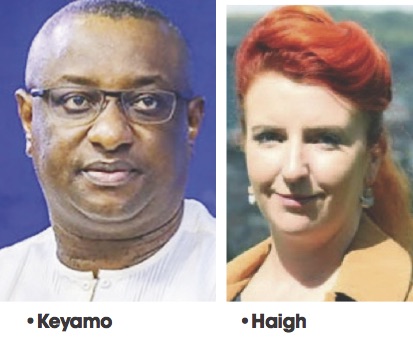
On August 1, 2024, Nigeria’s Aviation Minister, Festus Keyamo, issued a bold ultimatum to the United Kingdom government, setting the stage for a potential standoff between the two nations in the aviation sector. In his emphatic statement, Keyamo made it clear that unless the Nigerian airline, Air Peace, is granted the much-coveted landing slots at London Heathrow Airport, British Airways and Virgin Atlantic could face the possibility of being denied access to Nigeria’s major international gateways—Lagos and Abuja.

The minister’s warning is contained in a letter to UK Transport Secretary, Louise Haigh and reflects Nigeria’s growing determination to ensure fair treatment for its airlines on the global stage, emphasising that the nation’s aviation sector can no longer be sidelined in key international markets, especially as Air Peace has been forced to fly to Gatwick Airport.

Keyamo’s stance signals Nigeria’s readiness to assert its position, seeking reciprocity in international aviation agreements and standing firm against what is perceived as unequal access to lucrative routes.

This move, if acted upon, could disrupt the long-standing operations of British Airways and Virgin Atlantic, two of the most prominent international carriers servicing Nigeria. At the heart of the issue is Nigeria’s quest for equity and access to competitive markets, a challenge that Air Peace, one of Nigeria’s leading carriers, has faced in securing operational rights at one of the world’s busiest airports.

Keyamo told his UK counterpart giving Air Peace Gatwick airport was a blatant violation of the Bilateral Air Services Agreement (BASA) between both countries, which promotes reciprocal rights for airlines.

Keyamo said that while British carriers enjoy unrestricted access to Nigeria’s tier one airports, which are in Abuja and Lagos, Air Peace has been unable to obtain slots at Heathrow. He demanded immediate action to rectify the situation, warning that Nigeria will not tolerate the unfair treatment of its national carrier.

No response from the UK government

Daily Sun reached out to UK’s Transport Secretary, to verify if she has received Keyamo’s letter and what the UK government intends to do to resolve the dispute. In response, an email was sent by her researcher, Mr. Henry Smith, saying the Daily Sun’s request has been transferred to the Department of Transport. Daily Sun then sent a Freedom of Information request to the UK’s Department of Transport and the department acknowledged receipt of the request, saying a response will be issued in due time.

Daily Sun also contacted the Minister’s office to verify if there has been a response from the UK government on the issue and his Special Adviser on Media, Mr. Tunde Moshood, said none has been received yet.

Airport slot allocation

Following the demands made by the Minister in his letter, Daily Sun sought to verify the issues raised. This paper analysed the 38-page Nigeria-UK BASA signed in 1988, which is administratively still in force and it revealed a very significant oversight: the absence of provisions addressing airport slot allocation. Though the aspect of frequencies was clearly spelt out in the BASA, airport slot alocation wasn’t. There has been no change of rules since the signing in 1988 and Daily Sun understands that the omission of airport slot allocation may likely be attributed to the non-scarcity of slots at the time of the agreement’s drafting. The allocation of slots at Heathrow airport is managed by Airport Coordination Limited (ACL), an independent slot coordinator in which the UK government has no input and is subject to the International Air Transport Association (IATA) guidelines.

An industry stakeholder who prefers anonymity, echoed Daily Sun’s findings, telling the paper that the Nigeria-UK BASA designates city destinations rather than specific airports. The stakeholder said Heathrow cannot be explicitly mentioned in the agreement as it falls outside the purview of the Department of Transport and that given the UK government’s lack of involvement in airport slot allocation, Air Peace must independently address this issue.

“The BASA specifies city destinations not particular airports. In the case of the UK, this means a bilateral agreement will never specify Heathrow since this is not in the remit of the department of transport. The UK government plays no part in airport slot allocation, so, the onus is on Air Peace to fight this battle. The politics is complicated. It is a matter of fact that considerable debt for Nigerian airlines that operated in London remain as they still owe large sums of money to UK airports. By failing to acknowledge the truth of our circumstances and also the fact that it is our own fault that we are not taking full advantage of the BASA, we do ourselves no favours, “ the stakeholder said.

Daily Sun can also report that there was a review of the BASA in 2008 which allowed for multiple airlines from each country and a substantial number of weekly flights. The UK and Nigeria may designate up to four airlines each and frequencies are restricted to 21 passenger services per week to each side; UK airlines – between any points in the UK and Abuja, Kano, Lagos and Nigerian airlines, between any point in Nigeria and London. While UK carriers have taken full advantage of these provisions, Nigeria’s absence of a national carrier has significantly hindered its ability to capitalise on it. To compensate, domestic carriers are often designated as ‘flag or national carriers’ for the purpose of fulfilling these agreements like in the case of Arik Air.

However, the 2003 International Civil Aviation Oganisation (ICAO) conference highlighted the growing importance of airport slot management due to capacity constraints at major airports. The conference recommended addressing slot-related issues and suggested prioritising countries with non-slot-constrained airports. The body said the principles of fairness, non-discrimination, transparency, and stakeholder consideration should be prioritised for any slot allocation system.

Way forward

Industry experts who spoke to Daily Sun said the minister’s letter to his UK counterpart is a bold move. Their argument is that by limiting Air Peace to Gatwick, while British carriers enjoy access to Lagos and Abuja, the UK is effectively hindering the Nigerian airline’s commercial viability and competitive position. They however pointed out that a collaborative approach involving the aviation authorities of both countries, Heathrow Airport, and Air Peace is essential to resolve this issue. Aviation expert, Amos Akpan said that while potential disruptions to travelers and businesses are a concern, the Minister’s actions aims to level the playing field and ensure fair competition between Nigerian and British carriers. While Alex Nwuba says a resolution that secures Heathrow slots for Air Peace is crucial for the growth of the Nigerian aviation industry.

Akpan said the Minister’s proposal to relocate British Airways and Virgin Atlantic operations away from Lagos and Abuja should be carefully considered because of its potential consequences. He advised that contingency plans to address the diplomatic tensions likely to arise from such a decision must be developed. Additionally, he said, strategies to minimise the inconvenience for passengers and businesses connecting to destinations beyond London Heathrow should be prioritised.

“Our minister of aviation is well within his role by writing to the UK transportation secretary threatening to stop BA and Virgin from operating to Lagos Abuja unless Air Peace is given slots at Heathrow and he has a strong case. The Lagos and Abuja traffic is a good negotiation tool that will impact BA and VA dislocation on this route. By logic it is also the Heathrow traffic that will make Air Peace gain commercial viability on the route.

“The best option is for UK CAA, Nigerian CAA, Heathrow ACL, and Air Peace to meet and work out solutions. At worst, it may involve extra financial costs in the interim. Limiting Air Peace to Gatwick while BA and VA operates Lagos and Abuja and Heathrow violates the principle in the BASA between the UK and Nigeria. This restriction to Gatwick harms Air Peace potential commercial viability on the London route. It does not position Air Peace to be competitive with BA and VA on the route. Reciprocity is the cardinal principle in BASA. If the BASA is not specific about Heathrow, Lagos and Abuja as the designated entry ports for carriers between the UK and Nigeria, then our minister can use the reallocation to other airports in Nigeria.

“This action may throw up unpleasant consequences like a diplomatic row. The worst may be discomfort to travelers and traders that use London Heathrow airport as their gateway and transit. But they are the reason for the struggle in the first instance. The minister’s action will pressure the British aviation authorities to also pressure the Heathrow airport slot coordinators to find slots for Air Peace,” Akpan said.

Nwuba told Daily Sun that the Minister’s initial public threat to demote British Airways to a lower-tier airport was a strategic misstep, which may create a negative atmosphere for constructive dialogue. He said however that the Minister can achieve his goals through persistence and he must maintain a firm stance as the UK may adopt a tough negotiating position.

“The Minister can get what he wants by being persistent and unrelenting but he must stick to his guns. The UK will also play hardball with him but Nigeria is a very important market for UK carriers. He however shouldn’t have started with the supposed threat of banishing BA to a low tier airport and publicly because it sets a negative tone to begin serious discussions,” he said.

NNPCL Must Sell Locally-refined Petrol Now

0

The report that the Nigerian National Petroleum Company Limited (NNPCL) has set an open-ended time that the Port Harcourt Refining Company Limited will produce refined petroleum for local consumption has dampened the excitement among Nigerians that this year the scarcity of petrol would end. The report countered the hope that, after five missed timelines, petrol would flow from the refinery to dispensing stations across Nigeria before the end of this month. Now that we have entered into the last weeks of August, the company has said ambiguously that the process of producing petrol from the refinery was ‘on course.’

The Port Harcourt refinery has the capacity to refine 210,000 barrels of crude oil per day.

Such position demonstrates how the Ministry of Petroleum Resources and the NNPCL have been taking Nigerians for a ride by regularly extending the goal post for the renovation and revival of the government-owned refineries. Though, Nigerians have viewed with curiosity the fact that the country’s four refineries in Port Harcourt, Warri and Kaduna have all failed to refine crude oil at the same time since 2019, they had condoned the regular pledges by the public and civil servants in the sector that the country would begin to produce refined products in recent years.

For instance, in 2017, Emmanuel Ibe Ukachukwu, then Minister of Petroleum Resources under President Muhammadu Buhari, vowed to resign if Nigeria did not begin to refine crude oil by 2019, and export refined products by 2020. This did not happen. Instead, all the nation’s four refineries were shut down in 2019 because they did not have the capacity to refine products, though without fail the country paid huge sums for their annual Turn-Around Maintenance (TAM).

That same year, the federal government approved $1.5 billion for the repairs of the Port Harcourt Refinery, and the contract was awarded to an Italian firm, Maire Tecnimont. At the time, the Minister of Petroleum Resources, Timipreye Sylva, had said specifically that “Our objective is… to ensure that in the next few years, Nigeria stops fuel importation. From what we have seen here… Port Harcourt Refinery will come on board by the end of the year (2019). The first phase is to be completed in 18 months, which will take the refinery to a production of 90 per cent of its nameplate capacity… the second phase would be completed in 24 months and the third in 44 months.”

With such huge funding, hopes were raised that products would flow from the Port Harcourt Refinery before the end of the Buhari administration. The NNPCL Group Chief Executive Officer, Mele Kyari, for instance, told Nigerians that by the first quarter of 2023, the refinery would produce petrol. It did not happen. He later promised that petrol would be produced in the second quarter. That promise was not realised.

In August last year, the Minister of State for Petroleum Resources (Oil), Senator Heineken Lokpobiri, said the Port Harcourt Refinery would recommence operations in December. He made the promise during an inspection tour of the rehabilitation work at the plant. Based on that, he promised that Nigeria would stop petrol imports in February 2024.

As the December 2023 deadline failed, and Nigerians expected that in the early part of this year, NNPC Ltd would make good its promise. It did not happen. But while speaking before the Senate in July this year, Kyari said: “I can confirm to you, Mr. Chairman, that by the end of the year, this country will be a net exporter of petroleum products. Specific to NNPC refineries, we have spoken to a number of your committees, and it is impossible to have the Kaduna Refinery come into operation before December; it will get to December, both Warri and Kaduna, but that of Port Harcourt will commence production early August this year.”

From the foregoing, it is apparent that either the NNPC Ltd has failed to keep the contractors on their toes to keep to the timelines set for the completion of the Port Harcourt Refinery or that those who benefit from the shameful importation of petroleum products into Nigeria want to continue to extend the regime. But this is totally unacceptable to Nigerians who are at the receiving end of the chaotic and hide-and-seek activities in the midstream and downstream sector of the nation’s oil and gas sector. The high cost of the pump price of petroleum products and the frequent scarcity have both financial and economic consequences for the people. No other oil-producing country in the world faces this embarrassment. And yet, the federal government is reluctant to whip anyone into line.

The managers of the Nigerian oil and gas sector must stop taking Nigerians for a ride. It is obvious that the truth about the high cost of refined products, collapse of our refineries, fuel importation, non-repair of the refineries, and oil theft is still being concealed by those who are bent on making life extremely difficult for Nigerians. We hold both the Minister of Petroleum, Lokpobiri and NNPC Limited’s GCEO Kyari, to their promises that locally-produced petrol will be sold in August 2024. This is August 2024. There should be no further extension of the delivery date.

Bayelsa Utd Battles Insurance In Gov Diri Pre Season Tournament Final

0

…as Krusaders FC Shock Rivers Utd

Bayelsa United will face Bendel Insurance in the final of the governor Douye Diri pre season tournament on Sunday at the Samson Siasia stadium.

To qualify for the final, Bayelsa United beat Akwa United 1-0 to progress. Raphael Onwrabe’s 37 minute header from Saro Loveday’s beautiful cross was all the Prosperity Boys needed to record their second win in the group.

The Prosperity Boys qualified for the final from group “A” with six points after three games, losing one and winning two, Akwa United came second with four points same as Sunshine Stars of Akure.

Akwa United and Kwara United will slug out in the third place match of the tournament having finished second in their respective groups. Kwara United amassed five points in group B while the Promise Keepers got four points in group A with one win, a draw and a loss.

Sunshine Stars and Abia Warriors in the second match in group “A” shared the spoils. Kwara United held Bendel Insurance to a barren draw in group B at the Samson Siasia Stadium.

Non league side, Krusaders FC of Yenagoa produced the shocker of the tournament, beating former Nigeria Premier Football League, NPFL champions Rivers United 1-0 in the last game of the day.

David Weke’s 71 minute goal from a spot kick gave Krusaders FC the deserved 1-0 victory over Rivers United. Krusaders bow out of the tournament with their heads high having stunned Rivers United.

Some of the coaches in separate post match interviews gave thumbs up to the Bayelsa State government and the organizers of the tournament for the initiative.

Bayelsa United coach, Ladan Bosso said, his team are the biggest beneficiaries of the tournament, as the competition has helped him to identify his team’s areas of strength and weakness.

With the new NPFL season around the corner, Bosso believes that the team is ready to compete for the league, appreciating the government for sponsoring the tournament and described it as a worthwhile exposure for the prosperity boys.

On his part, Insurance coach, Monday Odigie attributed his team’s draw with Kwara United to their inability to take their chances, pointing out that the team is trying to blend in each game.

In his comments, Rivers United coach, Finidi George commended the Krusaders FC for their doggedness, noting that the Pride of Rivers States underrated their opponents, that lessons have been learnt from the defeat.

According to him, the tournament has exposed those players who are ready to play for the team, stressing that every mistake would be corrected before the commencement of the league.

A fulfilled Chairman Central Organizing Committee, Mr. Ono Akpe in an interview, asserted that the essence of the tourney was to prepare the premier league teams for the new season, saying that he is pleased with the quality of football witnessed so far.

Mr. Akpe noted that he was impressed to see a less fancied Krusaders FC producing the shocker of the tournament, describing it as the David and Goliath story in the bible.

He explained that the purpose of the tournament was beyond winning but preparing Bayelsa United for the new season.