


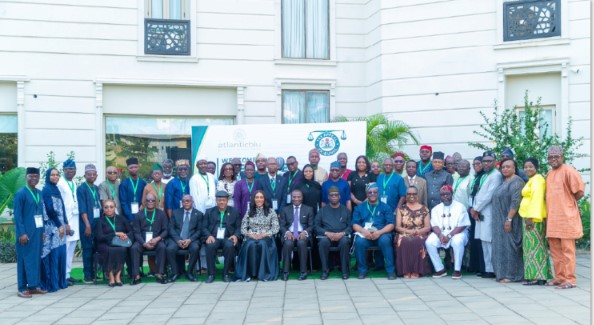
The Tax Appeal Tribunal (TAT) has held its 2026 Summit, bringing together tax professionals, legal practitioners, revenue authorities, judicial officers and other stakeholders to examine the role of the Tribunal in advancing tax justice under Nigeria’s evolving tax reform framework.
The three-day summit, held from October 27 to 29, 2026, was themed “The Tax Appeal Tribunal’s Role in Advancing Tax Justice under Nigeria’s Tax Reforms.” It provided a platform for stakeholders to examine emerging issues in tax administration, dispute resolution, fiscal policy and the implementation of Nigeria’s new tax laws.
The first day featured presentations on taxation of petroleum operations, anti-avoidance measures, business restructuring and trusts, as well as transaction taxes under the Nigerian Tax Act, including Value Added Tax (VAT), Stamp Duties and Capital Gains Tax.
A major highlight was a panel session titled “Taxing the Untaxed: The Nigeria Tax Act and Taxation of the Informal Sector, Digital Economy and High Net Worth Individuals – Enforceability vs Reality.” The session examined the challenges of expanding Nigeria’s tax base, particularly within the informal sector and digital economy, while addressing practical enforcement concerns.
The panel featured Mr Lanre Lassise-Phillips, Partner, Ukiri & Lijadu; Mr Chimenka Ezeribe of the Audit Department, Nigeria Revenue Service; Mr Olaleye Adebiyi, Country Managing Director, Andersen Nigeria; Mr Yomi Olugbenro, CEO, Deloitte West Africa; and Ms Lolade Ososami, Partner, Udo Udoma & Belo-Osagie.
On the second day, discussions focused on petroleum and solid mineral royalties, allowable and non-allowable deductions, capital allowance computations, and personal income tax bands and exemptions under the new tax laws.
Another significant presentation was delivered by Mr Fatai Abiodun, Chief Executive Officer of 4tune Technology, on “Digital Adjudication: Enhancing Tax Justice Delivery through the TAT E-Filing Platform.”
The presentation examined the role of digital technology in improving tax dispute resolution and strengthening the Tribunal’s adjudicatory processes through electronic filing and other technology-driven interventions.
Participants also examined the hurdles to judicial review of tax disputes under the new tax laws, highlighting the importance of understanding the legal framework governing tax administration and dispute resolution.
The third day featured technical sessions on the taxation of non-residents under the Nigeria Tax Act and Nigeria Tax Administration Act, VAT obligations of non-resident suppliers in Nigeria, and the implementation of the Global Minimum Tax from the Nigerian perspective.
A judicial perspective was introduced through a presentation on “Practical Guide to Writing Judgements” by Hon. Justice Nnamdi Dimgba of the Court of Appeal, which addressed the importance of effective judicial writing in the administration of justice.
Speaking on the essence and expected impact of the summit, the Coordinating Secretary of the Tribunal, Mrs Anita Erinne, said the programme was designed to strengthen the capacity of the Tribunal and other stakeholders in the tax administration and adjudication system, particularly in view of the far-reaching changes introduced by Nigeria’s ongoing tax reforms.
According to her, the summit provided an important platform for tax professionals, legal practitioners, revenue authorities and judicial officers to deepen their understanding of the new tax laws, exchange professional experiences and examine emerging challenges in tax dispute resolution. She noted that effective tax adjudication requires continuous knowledge development, a proper understanding of the evolving fiscal framework and a commitment to fairness, transparency and impartiality in the resolution of tax disputes.
Mrs Erinne further emphasised that the summit would contribute significantly to improving the quality, efficiency and effectiveness of tax adjudication in Nigeria. She explained that discussions on digital adjudication, judicial review of tax disputes and practical judgment writing would strengthen institutional capacity and promote a more accessible, responsive and technology-driven Tribunal.
She expressed confidence that the knowledge gained from the summit would translate into improved adjudicatory practices, greater public confidence in the tax dispute resolution system and enhanced delivery of tax justice in support of Nigeria’s economic and fiscal development.
The summit concluded with an in-house meeting coordinated by Mrs Erinne, followed by a gala night and official closure.
The 2026 summit underscored the importance of continuous professional development, institutional strengthening and technological innovation in ensuring that the Tax Appeal Tribunal remains an effective platform for resolving tax disputes and promoting confidence in Nigeria’s tax administration system.


