



Stakeholders have called for greater inclusion of women in leadership, governance and security, stressing the need to create more opportunities for women to contribute meaningfully to national development.
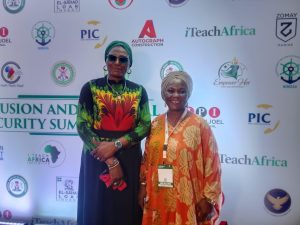
The call was made on Friday in Abuja at the ITeach Africa Initiative Summit 2026, held at the Federal Ministry of Foreign Affairs, under the theme, “Advancing Women’s Leadership and Inclusive Governance and Security.”
Presenting a welcoming remark, the Convener and Director-General, ITeach Africa Initiative and Empower Her for Governance Initiative, Alaibe-Elezieanya Ebimoboere, decried the persistent national insecurity.

According to her, kidnapping, banditry, terrorism, violent attacks and organised crime have impacted negatively on community residents, particularly vulnerable women.
She emphasised the need for the inclusion of women in decision-making on issues about national security as a means to fostering the early mechanisms in containing insecurity.
“A nation is safest when its people feel they have a stake in its peace, become a voice in its future and play role to ensure its survival, “ she said.
The Minister of Defence, Gen. Christopher Musa (retd), highlighted the need to advance women inclusion in governance to enhance nation-building.
Mr Musa, who was represented by the Gender Adviser in the ministry, Lt.-Col. Nneka Olimma, lauded the programme initiative, saying it was imperative for women to play a key role in tackling security challenges.
According to him, terrorism, banditry, violent extremism, kidnapping, and cybercrime, among others, require a holistic approach to ensure lasting solution.
The minister, therefore, stressed the need for women to contribute their quota to tackle complex security challenges within the country.
He also said that such roles should be focused on projecting women as partners in finding solutions to insecurity, rather than as victims of its consequences.
Mr Musa said, “Women are not only affected by insecurity, women are also part of the solution. Therefore, women must listen before conflict escalates.
Head of the Civil Service of the Federation, Esther Walson-Jack, represented by the Permanent-Secretary, Career Management Office of OHCSF, Nkiruka Jones-Nebo, said women’s participation in governance could strengthen growth.
She added that women’s participation in governance was key to creating room for more women to progress through mentorship, leadership training and creation of safe spaces in society.
She said governance institutions should move beyond celebrating few successful women and instead establish structures that would enable more women to grow in the rank and file, and even lead organisations.
Speaking as the Father of the Day, founding Executive Director of the African Centre for Leadership, Strategy and Development (Centre LSD), Dr Otive Igbuzor said Nigeria cannot achieve sustainable stability without inclusive governance and transformational leadership, warning that excluding women and other marginalised groups from decision-making poses a threat to national security.
Igbuzor said inclusive governance, transformational leadership and national security were deeply interconnected, stressing that greater participation of women was essential to building a stable, democratic and prosperous Nigeria.
Presenting a paper at the summit, Igbuzor explained that inclusion should not be viewed merely as a matter of political correctness, but as a critical requirement for Nigeria’s development and stability.
”Inclusion is a development imperative, a democratic necessity and a national security strategy,” he said.
According to him, Nigeria’s future stability would depend largely on its ability to reform leadership recruitment processes, strengthen institutions, deepen democracy, tackle poverty and inequality, manage diversity and increase women’s participation in governance.
He said the country stood at a crossroads, with one path leading to exclusion, weak institutions, widening inequality, declining public trust, electoral manipulation, insecurity and social fragmentation.
The alternative, he noted, was a system built on transformational leadership, accountable institutions, credible elections, gender equality, youth participation, inclusive development, human security and citizen engagement.
“The choice is ours. But time is not unlimited,” Igbuzor said, urging Nigerians and policymakers to embrace transformational rather than cosmetic reforms.
Also, presenting a paper titled “Inclusion as Security: The Niger Delta Model and its Imperative for Empowering Nigerian Women,” Former Managing Director of the Niger Delta Development Commission (NDDC), Timi Alaibe and Father of the Host, Dr Timi Alaebi explained that Nigeria’s experience in the region showed that sustainable national security requires more than military operations, but must be anchored on justice, economic opportunity and inclusion.
Alaebi argued that communities are more likely to protect systems in which they have a meaningful stake, stressing that addressing the underlying causes of insecurity is essential to achieving lasting peace and stability.
Reflecting on the Niger Delta crisis, he said what was initially treated largely as a security challenge was eventually understood as a deeper problem of development, justice and exclusion.
“The most important lesson is this, people are more likely to protect a system in which they have meaningful stake,” Alaebi said.
According to him, inclusion should no longer be viewed merely as a social policy, stressing that it has become a critical component of national security.
“Inclusion is not merely a social policy. Inclusion is a national security policy,” he said.
Alaebi noted that while soldiers, police, intelligence agencies and other security institutions remained necessary, sustainable security was about creating conditions that make violence less attractive.
He identified justice, opportunity and belonging as the three critical conditions, explaining that citizens must feel fairly treated, have access to jobs and livelihoods, and see themselves as participants rather than spectators in national development.
Using the Niger Delta as an example, he said years of environmental degradation, limited opportunities and the perception that local communities were excluded from the wealth generated from their environment contributed to instability.
“Force can contain violence, but it cannot by itself address the grievance that produced the violence,” he said.
Alaebi cited initiatives including the Presidential Amnesty Programme, Nigerian Content framework, Petroleum Industry Act and community-based pipeline surveillance as examples of efforts to move communities from the margins into Nigeria’s economic and security architecture.
However, he said one major weakness of the Niger Delta peace process was the inadequate inclusion of women.
He noted that women suffered significantly from conflict and environmental degradation, lost livelihoods and family members, and played key roles in sustaining communities, yet remained largely excluded from formal peace and negotiation structures.
“We define peace too narrowly around those who carry the weapons, rather than those who carry the consequences of the conflict,” Alaebi said.
He urged Nigeria to recognise women’s participation as a national capacity, democratic legitimacy and national security issue, noting that women often identify early warning signs of insecurity within communities.
Furthermore, the Director-General of the Plateau State Peace Building Agency, Julie Sanda, called for greater inclusion of women and young people in peacebuilding, governance and national security, stressing that communities cannot achieve lasting peace when critical segments of the population are excluded from decision-making.
Sanda said security and peacebuilding strategies must reflect the composition and realities of the communities they are designed to protect.
“Whatever you’re doing for the communities has to resemble the community. Is there any community in Nigeria that does not have women? No. Is there any community in Nigeria that does not have young people? No. So you must include women and young persons,” she said.
She noted that while not everyone could participate in security through the use of force, individuals could contribute based on their experiences, expertise and understanding of their communities.
“Everybody needs to be at the table. Everyone is affected by insecurity,” Sanda said, warning that solutions would remain ineffective if only one section of society framed security challenges and proposed solutions for everyone.
Sanda urged political leaders to make concrete commitments to women’s and youth inclusion ahead of the 2027 elections, particularly in formal peacebuilding and security structures.
She also called for dedicated funding to implement Nigeria’s National Action Plan on Women, Peace and Security and the Youth, Peace and Security agenda at federal, state and local government levels.
“We must make peacebuilding a national priority,” she said, noting that almost every state in Nigeria is affected by insecurity and the consequences of violence.
Meanwhile, giving a goodwill message, Ambassador Goodknows Igali applauded the orgnisers adding that Nigeria must take advantage of its young and female population to drive change.
He quoted from Kofi Annan, that the only tool for development of any country is the empowerment of its people adding that women should hold 50percent leadership positions.
We must have direct, targeted programs and activities to include women in all sectors of the nation particularly in the area of security’’ he said.
The Summit brought together government officials, diplomats, women in Politics, policy makers, NGOs and young people.


