


By Seyiwa Mausi Koshoedo
Tensions between Iran and the United States escalated on Tuesday after Tehran warned that it would take “any action” necessary to maintain control of the strategically vital Strait of Hormuz, even as US President Donald Trump held talks with Israeli Prime Minister Benjamin Netanyahu.
Iran’s Deputy Foreign Minister for Legal and International Affairs, Kazem Gharibabadi, said Tehran had no plans to negotiate with Washington and warned that any attempt to challenge Iran’s control of the waterway could trigger a renewed conflict.
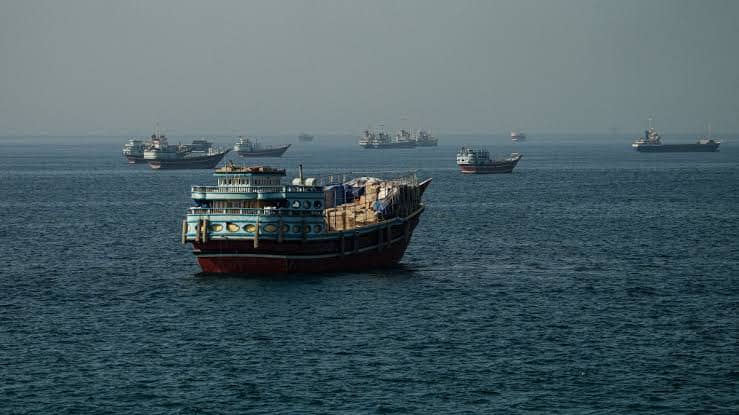
The Strait of Hormuz, a critical route for global energy shipments, has remained at the centre of the escalating confrontation between Iran and the United States.
The warning came as Netanyahu met Trump at the White House. Netanyahu described the meeting as “excellent”, while the White House characterised the talks as “positive and productive”.
The discussions reportedly focused on regional security and concerns over Iran’s nuclear programme, including Israeli claims about construction activities at the so-called Pickaxe Mountain site.
Iran launches missiles at US bases
The latest diplomatic developments were overshadowed by an Iranian missile attack on US military positions in the Middle East.
US Central Command said Iran’s Islamic Revolutionary Guard Corps launched multiple ballistic missiles in what it described as a “surprise attack” on American forces in the region.
According to CENTCOM, all the missiles were intercepted and US forces remained on a high state of readiness.
The attack triggered a sharp reaction in global oil markets, with US oil futures rising more than four per cent to above $82 per barrel. Brent crude also climbed above $88 per barrel.
The increase followed earlier declines in oil prices after Washington suspended air strikes against Iran, raising hopes that diplomatic efforts could lead to a broader de-escalation.
Saudi Arabia reports drone attacks
Saudi Arabia also reported a fresh security threat, saying its air defences intercepted and destroyed several drones launched from Iraqi territory towards oil facilities in the kingdom’s Eastern Province.
Saudi authorities blamed groups affiliated with Iran and vowed to defend the country and its strategic resources.
The Saudi Foreign Ministry urged the Iraqi government to prevent its territory from being used as a launchpad for attacks against the kingdom.
Oman proposes joint management of Hormuz
Amid the growing tensions, Oman has presented Tehran with a proposal for the joint management of the Strait of Hormuz.
The proposal reportedly includes a system of voluntary fees intended to prevent Iran from exercising exclusive control over the waterway while addressing Tehran’s security concerns.
The initiative is part of wider regional diplomatic efforts to prevent the conflict from escalating further.
Iranian Foreign Minister Abbas Araghchi also held talks with European Union foreign policy chief Kaja Kallas by telephone on Tuesday. The discussions focused on regional and international developments and possible measures to reduce tensions and promote stability.
Fighting continues in Gaza and Lebanon
The wider regional conflict also continued to affect Gaza, the occupied West Bank and southern Lebanon.
Gaza’s Health Ministry said Israeli attacks killed four Palestinians and injured 14 others in the previous 24 hours, while rescue teams continued efforts to reach victims trapped under rubble.
Israeli forces also carried out fresh attacks in southern Lebanon, targeting the border towns of Majdal Zoun and al-Mansouri, according to Lebanese state media.
In the occupied West Bank, Palestinian officials reported further attacks by Israeli settlers, including the kidnapping of two Palestinian men and attacks on homes and vehicles.
The developments underscore the fragility of the current pause in direct US-Iran hostilities, with regional actors continuing to push for diplomacy while military tensions remain high.


