Tuesday, April 21, 2026
Home Blog Page 946

Buhari spells out allocations to MDAs in 2020 budget

0

President Muhammadu Buhari has itemised allocations to Ministries, Departments and Agencies as laid out in the 2020 appropriation bill.

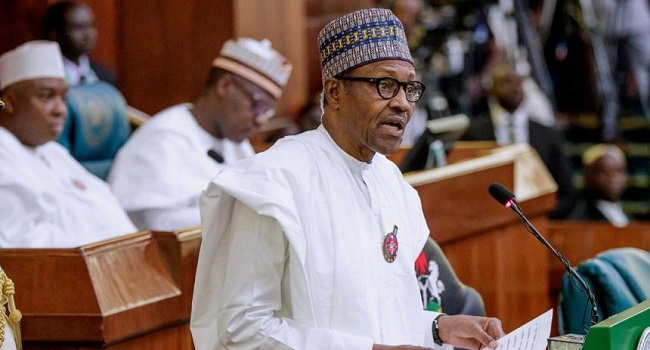
Speaking at the joint session of the National Assembly on Tuesday, the President, who named the bill a “Budget of Fiscal Consolidation for 2020,” noted that allocations to some MDAs as laid out in the budget are as follows:

Works & Housing — N262bn

Transportation — N123bn

UBEC — N112bn

Defence — N100bn

Agriculture — N83bn

Water — N82bn

Niger Delta – N81bn

Education — N48bn

Health — N46bn

NEDC – N38bn

SIP – N30bn

FCT – N28bn


UI Deputy Vice-Chancellor canvasses trans-disciplinary approach to produce competitive students

0

The Nigerian educational system needs to adopt trans-disciplinary approach to produce globally competitive students and fill the existing knowledge gap in the labour market.

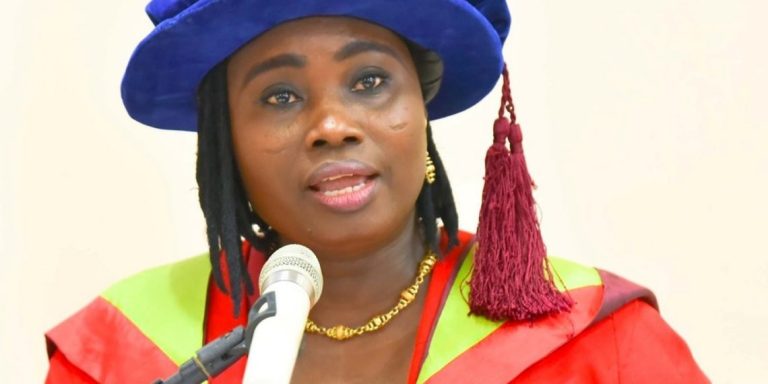
Prof Olanike Adeyemo, Deputy Vice-Chancellor, Research, Innovation and Strategic Partnership, University of Ibadan, stated this while speaking on human capital development for the institution’s students, on Tuesday in Ibadan.

Adeyemo, who noted that the world was going trans-disciplinary, however condemned the country’s educational system where students were categorised, even while in junior secondary school.

“By the time students are in JSS III, they are either in science students or art students, and this has been causing deficiency.

“There is a knowledge gap, and when you interrogate some university students who are in humanities, most of them don’t have any idea about medical science or science generally.

“Similarly, when you speak with some students in science, they don’t have social skills because they have been made to drop all the courses in humanities; they are so deficient, whereas they need all to have complete education,” she said.

She said that the institution, through its various programmes in innovations, had been equipping students with soft skills that would make them to be competitive in the job market and be employment providers.

“The gap we identified is that potential employers say graduates are not employable; so most organisations spend millions of naira in training graduates so that they can be functional.

Read Also:

“What we should have are graduates who will fit in at the job market as well as students with entrepreneurial mindset.

“I do tell my students that what education does for them is to open their minds, and I encourage them to be whatever they want to be.

“Now, the terrain outside is changing, and if our students must remain competitive, then we have to try to see how we can enrich their learning experience through trans-disciplinary approach.

“Through this, they will not just come to the university to learn only their courses of study but they will equally be endowed with other skills such as emotional intelligence, communication skills and negotiation skills that will make them competitive,” Adeyemo said.

The deputy vice-chancellor added that the university, through her office, was collaborating with private companies and other corporate bodies to fill the knowledge gap


EFCC RE-ARRAIGNS ATIKU’S SON-IN-LAW, ABDULLAHI BABALELE FOR MONEY LAUNDERING

0

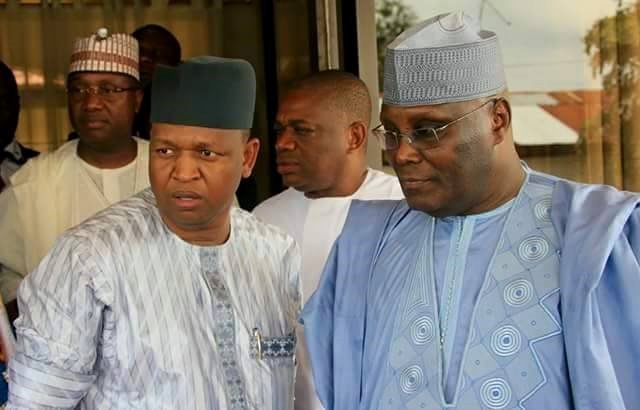
EFCC has re-arraigned Abdullahi Babalele, a son-in-law of the former Vice President and Presidential Candidate of the People’s Democratic Party, in the 2019 general elections, Atiku Abubakar.

Babalele was re-arraigned before Justice Chukwujekwu Aneke on a 2 count charge bordering on allegations of money laundering. According to the charge signed on behalf of the EFCC by its prosecutor, Rotimi Oyedepo, Mr Babalele committed the offence in February 2019.  When the charges were read to him, Babalele pleaded not guilty.

Then his lawyer, Mike Ozekhome (SAN) argued his application seeking the permission of the court for the release of his international passport to enable him to travel abroad for medical treatment. The EFCC prosecutor, Rotimi Oyedepo, raised objections to the request insisting that there was no materials placed before the court to warrant the application being granted.


Oyedepo also insisted that there is no evidence that the defendant cannot be treated in the country. He asked the court to dismiss the application and instead order for an accelerated trial. Justice Aneke has fixed Oct 11 for his ruling.

Babalele was first arraigned before Justice Nicolas Oweibo during the court’s annual vacation and was granted bail in the sum of N20m. Justice Nicholas Oweibo admitted Babalele to bail in the sum of N20million with one surety in like sum. The judge said the surety must be resident in Lagos and must produce evidence of means through an affidavit.  Babalele was also directed to deposit his passport, which has been with the EFCC, with the court.


The two counts against Abdullahi reads;  COUNT 1: That you Abdullahi Babalele on or about the 20th day of February 2019 in Nigeria within the jurisdiction of this Honourable Court. procured Bashir Mohammed to make a cash payment of the sum of $140,000. 00 (One Hundred and Forty Thousand United State Dollars) without going through a financial institution, which sum exceeded the amount authorized by Law and you thereby committed an offence contrary to Section 18(c) of the Money Laundering (Prohibition) Act, 2011 as amended and punishable under Section 16(2)(b) of the same Act.

Count 2: That you Abdullahi Babalele on or about the 20th day of February 2019 in Nigeria within the jurisdiction of this Honourable Court, aided Bashir Mohammed to make a cash payment of the sum of $140,000. 00 (One Hundred and Forty Thousand United State Dollars) without going through financial institution, which sum exceeded the amount authorized by Law and you thereby committed an offence contrary to Section 18(a) of the Money Laundering (Prohibition) Act, 2011 as amended and punishable under Section 16(2)(b) of the same Act.


BREAKING… President Buhari presents 2020 budget of N10.729 trn

0

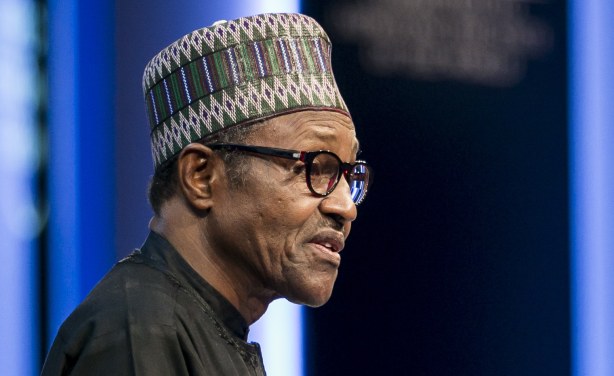
The President of the Federal Republic of Nigeria, Muhammadu Buhari on Tuesday presented the 2020 appropriation bill of N10.729 trillion before a joint session of the National Assembly.

Details later…


2020 budget: FG to service debt with N2.45trn

President Muhammadu Buhari has said debt servicing in the 2020 budget will gulp N2.45trn, out of which local debts would take N296bn.

Overhead cost will be N426.6bn, he said.

The President also said the National Assembly would spend N125bn in the next budget year, while the judiciary will get N110bn.

EFCC arrests five undergraduates, twelve others for alleged Internet fraud

0

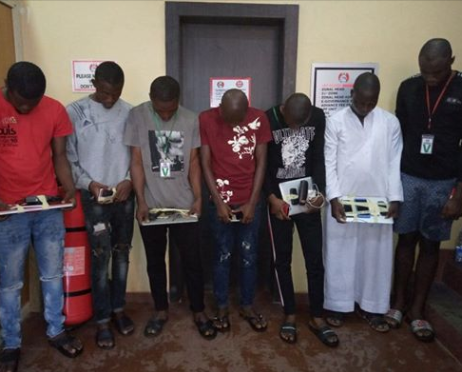
The Ibadan zonal office of EFCC on Monday, October 7, 2019, arrested 17 suspected internet fraudsters among whom were five who claimed to be students of the Federal Polytechnic, Ado Ekiti.


The suspects were arrested in Ado-Ekiti, the Ekiti State capital, following meticulous consideration of intelligence reports detailing their alleged involvement in internet fraud and other related offenses.

Before the arrest, operatives of the Commission in the zone had conducted preliminary investigations to ascertain the merits of the allegations against them. After establishing substantive facts, the EFCC sprang into action and effected the arrest on Monday.

While five of the suspects claimed to be students of the Federal Polytechnic, Ado-Ekiti, others said they were into various vocations. Some items used in perpetrating the crime were recovered from them and registered as exhibits to be tendered in court.

The suspects will be charged to court as soon as investigations are concluded.


Judge explains why she hugged ex-Dallas cop Amber Guyer and gave her a Bible in court after sentencing her for murder

0

Earlier this month, former Dallas police officer Amber Guyer was sentenced to 10 years in prison for fatally shooting her unarmed neighbor she mistook him for a burglar.

After her sentencing on  Wednesday, October 2, the victim Botham Jean’s brother Brandt Jean embraced her in the courtroom after he announced he has forgiven her. 

But Dallas judge Tammy Kemp who was in charge of the case was widely criticized by legal experts and the public after she embraced Guyger and gave her a Bible at the end of Guyger’s murder trial.

Explaining why she did it,  she said the former cop asked her for a hug and for help-seeking God’s forgiveness.


Kemp told The Associated Press that she believed her actions were appropriate since Guyger said she didn’t understand how to begin seeking God’s forgiveness for killing accountant Botham Jean, 26.

“She asked me if I thought that God could forgive her and I said, ‘Yes, God can forgive you and has,'” Kemp said. “If she wanted to start with the Bible, I didn’t want her to go back to the jail and to sink into doubt and self-pity and become bitter. Because she still has a lot of life ahead of her following her sentence and I would hope that she could live it purposefully.”

Kemp also went on to say she never acknowledged her Christian faith in court previously or provided a defendant with a Bible, but Guyger told her she didn’t have a Bible at the end of the trial and asked her for a hug twice.

“Following my own convictions, I could not refuse that woman a hug. I would not,” Kemp said defiantly.

Responding to the anger of Black people who questioned why she didn’t show the same empathy for Black defendants.

Kemp said: “I don’t understand the anger. And I guess I could say if you profess religious beliefs and you are going to follow them, I would hope that they not be situational and limited to one race only,


Nigeria: Few People in 5 States Control Nigeria’s Wealth, Buhari

0

President Muhammadu Buhari said yesterday that while Nigeria’s wealth is concentrated in the hands of a few people living in 4 or 5 states and the FCT, about 150 million others are languishing in poverty in the remaining 31 states.

He, however, noted that with the successful conduct of the 2019 general elections, and the commitment and vision of those who emerged winners, policies are being put in place that focus on delivering prosperity to all Nigerians through enhancing security and eliminating corrupt practices in the public service for an improved economy.

Buhari, who addressed delegates at the opening session of the 25th Nigeria Economic Summit (NES#25) in Abuja, said, “A significant proportion of Nigeria’s prosperity today is concentrated in the hands of a few people living primarily in 4 or 5 states and the FCT. Some of the most prosperous Nigerians are here in this room.

“This leaves the remaining 31 states with close to 150 million people in a state of expectancy and hope for better opportunity to thrive. This, in the most basic form, drives the migratory and security trends we are seeing today both in Nigeria and across the region.”

President Buhari said he was more committed to driving economic prosperity as opposed to economic growth.

He noted that a prosperous country is one where majority of the citizens have an acceptable standard of living and a decent quality of life as opposed to a society with a few wealthy people.

Buhari also said in addressing population growth, security and corruption matters in developing economies, policies and programmes must focus on promoting inclusivity and collective prosperity.

“During the elections, almost all candidates proposed their vision for the economy and for the country. Our party, the All Progressives Congress, put before the country policies that focus on delivering prosperity to all Nigerians through enhancing security, eliminating corrupt practices in public service, supporting sectors that will create jobs, and promoting socially-focused interventions to support the poorest and most vulnerable among us,” he said.

The 2019 NES#25, has as theme ‘Nigeria 2050: Shifting Gears’.

Those attending include captains of industry, high profile federal and state government officials, the media and other relevant stakeholders.

Huge population a liability – Sanusi

The Emir of Kano, Muhammadu Sanusi II, while speaking during a panel session of the summit, said Nigeria’s huge population was currently a liability to the country, but quickly added that it could be turned into assets.

The session focused on how demographic realities could be transformed into social and business opportunities as well as the implications on internal migration, sustainable peace and security.

“People talk that our population is an asset but we are yet to get there. Nigeria’s population is currently a liability because most of the root causes of problems such as kidnapping, armed robbery, Boko Haram, drug addiction are all tied to the population that we have and the question is how do you turn that into a productive one,” Sanusi said.

Summit gaining success – Ighodalo

Earlier in his remarks, chairman of the Nigeria Economic Summit (NESG), Dr. Asue Ighodalo, reeled out some of the summit’s previous successes to include the recommendation that caused the GSM revolution, the Pension Reform Act and the reforms in the agriculture among others.

He said Nigeria needed to rethink its development trajectory even as the NESG recommended a 31-year economic development plan to end in 2050.

He said the private sector was determined to lead the new vision if only government would provide the right enablers.

He also made a case against the perpetual deficit budget traditions. “Between the last summit and now, the real GDP growth rate improved marginally, but remained below our projections.

“We recorded a GDP growth rate of about 2% in the first half of 2019, and a decline in headline inflation from 15.1% to 11%. However, the rate of inflationary decline has slowed considerably, largely as a result of food inflation, which remained sticky at 13.2%.”

The NESG chairman said this had resulted in continued erosion of the real income of most people. “As such, there is an urgent need to address not just our perennial revenue-expenditure mismatches, but our overall productivity and growth as a nation.”

94.5m Nigerians live below poverty line – Oxfam

Elsewhere, Oxfam International has said about 94 million Nigerians live below the poverty line.

The Country Director, Mr. Constant Tchona, who gave the breakdown yesterday in Abuja, said at least 2.969 million Nigerians have been added to the growing extreme poverty rate in six months, between 8 April 2019 and 7 October 2019.

He said the figure now adds to the 91.5m Nigerians living below the poverty line thereby making the number of Nigerians living below the line to be 94.470m.

Tchona was speaking at the opening of the Oxfam’s Annual Programme Quality Review (PQR) Meeting themed ‘On the Road To Becoming an Influencing Hub’, meant to provide information on progress made on various programmes being implemented by Oxfam in Nigeria to participants and other programme stakeholders.

He, however, noted President Buhari’s intention to “lift 100 million Nigerians out of poverty over the next 10 years and set them on the path to prosperity” to “fundamentally shift Nigeria’s trajectory and place it among the world’s great nations.”

According to Tchona, the 94.5m Nigerians living below the extreme poverty line was based on the latest World Poverty Clock report.

He said those Nigerians living below poverty line depended on less than $1.90 daily benchmark or N684 daily.

He said, “the number of people that live below extreme poverty level as at April was 91,501,377, making Nigeria the world capital of poverty. As if that was not bad enough, at the moment, six months later, the number has jumped up to 94,470,535 people.

“What this means is that we have added 2,969,158 people more into extreme poverty. By comparison, this number is more than the population of Gambia and Cape Verde combined.”

He noted that at the current rate, Nigeria was not only off track to meet the Sustainable Development Goals (SDGs), but many now believe that up to 25 per cent of the world’s extreme poor will live in Nigeria by 2030.

SUBMIT


The Worldometer puts Nigeria’s total population at 200,963,599 people (about 201m), and is to become the world’s third largest country by 2050,” Tchona said.

He said if this comes to pass, Nigeria will shock the world if it achieved the SDGs.

Lagos, Kano among richest states

The top rich states with the highest number of middle class, according to reports include: Lagos, Rivers, Akwa Ibom, Kano, Ogun and Anambra. In 2015, the UN global multi-dimensional poverty index also named Lagos, Ogun, Anambra, Ekiti, Edo, Imo, Abia and Rivers as top rich states.

Budgetary records show that Lagos passed a N874 billion budget for 2019, Akwa Ibom N672bn, Rivers N480bn, Delta N390bn, Kaduna N239bn, Kano N219bn, and Anambra presented N137bn budget for 2020.

These states account for Nigeria’s major industrial hubs, and oil and gas facilities concentration.

A lecturer at the Lagos Business School, Dr. Bongo Adi, told our correspondent on phone that the “major challenge is to bake a bigger cake. If we have a bigger cake, then we can now use tax policies, fiscal policies, and maybe social policies to redistribute,” he said.

“The cake may be even big but we have very high level of policies the orchestrated inequality. If you followed the Oxfam report of two years ago, it shows that 98 per cent of bank accounts in Nigeria are owned by just 2 percent of the population,” the don stated.

 

Sir Alex Ferguson sends Arsene Wenger message over Manchester United and Arsenal rivalry

0

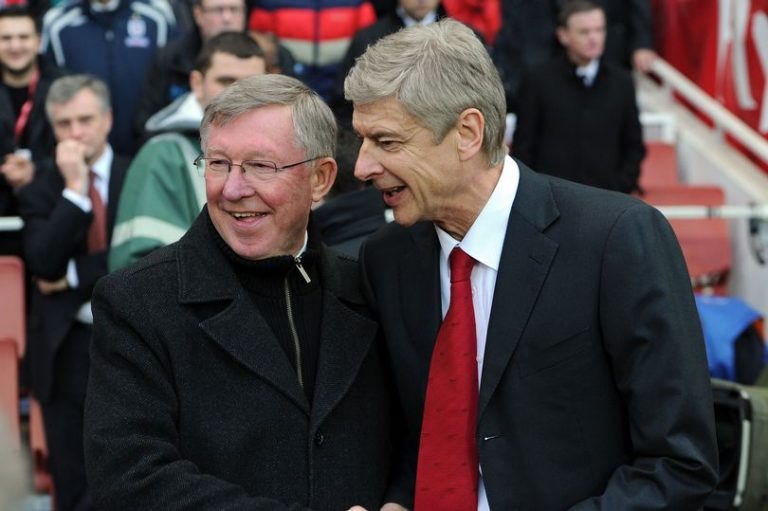
Sir Alex Ferguson has told Arsenal manager Arsene Wenger he loved the competition he faced against the Frenchman when the pair were in charge of their respective clubs.

The former Manchester United manager made the statement on Monday night as Wenger was named a ‘Legend of Football’ at the annual Nordoff Robbins charity award dinner.

The night saw the Frenchman celebrate his glittering managerial career, after claiming three Premier League titles, seven FA Cups and seven FA Community Shields in his 21-year tenure with the Gunners.

And for many of those years Wenger enjoyed a fierce rivalry with Ferguson, with the two often going toe-to-toe for honours in England’s top-flight.

Although the pair often appeared to take digs at one an other, Ferguson – who himself has been a past recipient of the ‘Legends of Football’ award – opened up on how he enjoyed the competition provided by the 69-year-old.


UNILAG suspends Boniface Igbeneghu, shuts down ‘Cold Room’ over alleged sexual harassment

0

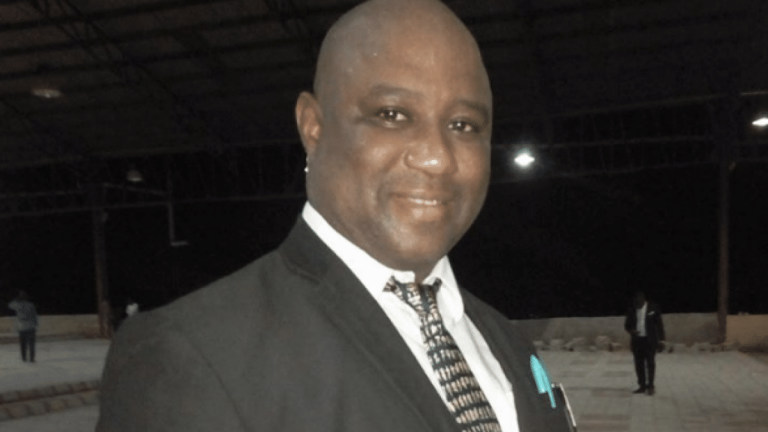
The University of Lagos, UNILAG, has suspended lecturer, Boniface Igbeneghu, a former sub-dean of th e Faculty of Art and head pastor of local Foursquare Gospel Church over a viral video where he was caught on camera allegedly demanding sex from a lady “seeking admission.”

His advances were captured in a 13-minute video by BBC Africa, courtesy of an undercover journalist, Kiki Mordi, who disguised as a 17-year-old admission seeker.

Igbeneghu disclosed that there is a place lecturers take female students to have fun – UNILAG Staff club, “They call the place cold room,” he said.

UNILAG in a statement announced the shut down of the ‘Cold Room’, where lecturers reportedly harass students sexually.

This was disclosed by Taiwo Oloyede, the Principal Assistant Registrar (Communication Unit) in a statement.

Oloyede also confirmed that Mr Igbeneghu has been suspended and barred from the university areas after a meeting held following the viral video.

The statement reads: “The University of Lagos management today suspended Dr. Bonigface Ighe of the department of European languages and integrated studies, Faculty of Arts who was caught in a sting operation by the British Broadcasting Cooperation, BBC titled, ‘Sex For Grades.’

“The trending video chronicled cases of sexual harassment of female students by some lecturers in some West African universities including the University of Lagos.

“Management at its emergency meeting of October 7th suspended Dr. Boniface from work immediately and barred him from the university academic areas while the suspension subsists unless invited by a panel constituted by the university to investigate the matter.

“In addition to this, the university management has ordered the shutdown of the staff club ‘Cold Room’ mentioned in the documentary for further investigation.

“The so-called ‘Cold Room’ is a function room that may have been abused because this is a deviation from the purpose for which it was created ( meetings, Seminars)”