Wednesday, April 22, 2026
Home Blog Page 941

Teacher docked for aiding student write WAEC

0

A 40- year-old teacher, Charles Adetunji, on Thursday appeared before an Ikeja Chief Magistrates’ Court for allegedly aiding a student to write her West Africa Senior School Certificate Examinations (WAEC).

Adetunji, who resides at No. 7, Oyewole St., Abule Egba, Lagos, is facing a two-count charge of conspiracy and examination malpractice, to which he pleaded not guilty.

The prosecutor, ASP Benson Emuerhi told the court that the defendant committed the offences on Sept. 16 at Meiran Community Junior High School, Meiran, Lagos.

Emuerhi said that the defendant assisted a teenage girl to solve all the questions on Literature in English during WAEC by sending the answers to her mobile phone.

“The examiner caught the girl using her phone, when it was checked the answers to the questions were there; when she was asked, she said the defendant sent them to her,” he said.

Emuerhi said the offences contravened Sections 324 and 411 of the Criminal Law of Lagos State, 2015.

The Chief Magistrate, Mrs Olufunke Sule-Amzat granted the defendant bail in the sum of N100,000 with two sureties in like sum.

Sule-Amzat adjourned the case until Dec. 5 for mention.


NAN

Sex for Grades: UNILAG sets up panel to probe lecturers

0

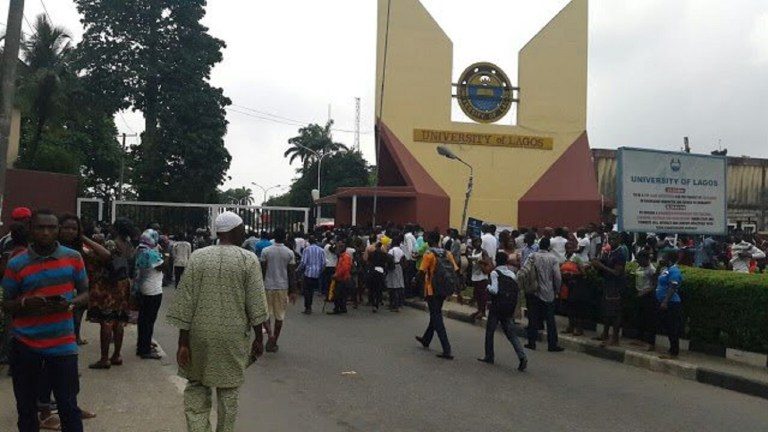
The management of the University of Lagos (UNILAG) has set up a panel to investigate the allegations against two of its lecturers indicted in the sex-for-grades scandal.

UNILAG, Sex for grade, Panel, Boniface Igbeneghu, a senior lecturer, and Samuel Oladipo, a lecturer in the department of economics, were exposed in a documentary on sexual harassment released by the BBC Africa Eye on Monday.

The two lecturers have been suspended by the university. In a statement on Wednesday, Taiwo Oloyede, principal assistant registrar, communication unit of UNILAG, said the panel is headed by Ayodele Atsenuwa, a professor and dean of the faculty of law.

The school said the process will be transparent and appropriate sanctions would be meted out if the need arises.

The university also encouraged students and members of staff that have relevant information concerning the incidents to come forward, assuring that their security is guaranteed.

“The Panel will probe into the allegations of sexual harassment levelled against Dr. Boniface Igbeneghu of the Department of European Languages and Integrated Studies, Faculty of Arts and Dr. Samuel Oladipo of the Department of Economics, Faculty of Social Sciences as well as other related cases,” the statement read.

Sexual harrassment bill bounces back in senate

As previously announced in the University’s Press Release dated Monday, October 7, 2019, Dr. Samuel Oladipo who was featured in the full version of the BBC broadcast, has been suspended from work with immediate effect and barred from the University academic areas until the conclusion of the Panel’s assignment.

Students and members of staff who have relevant information are encouraged to come forward. Their protection is assured. We firmly reassure all our students, staff, alumni, parents and guardians that this matter will be tackled with every sense of responsibility, and the seriousness it deserves. The whole process will be transparent and appropriate sanctions will be meted out to anyone found culpable.”

The statement added that the panel (pictured) set up to investigate another allegation of sexual harassment involving a professor in the university in June 2018 still subsists and is awaiting further information that will aid in concluding the investigation.


We’ve opted for negotiations with kidnappers of Kaduna students, police say

0

The Kaduna State Police Command said on Wednesday it has opted for negotiations to free six abducted female students and two teachers of Engravers College, Kaduna.

The command said they opted to negotiate the release of the victims with the kidnappers despite knowing the location of the gang, but cannot infiltrate their hideout or use a force to free the victims.

The State Commissioner of Police, Ali Janga, stated this at a press briefing at the command headquarters in Kaduna.

He said: “We are negotiating with the kidnappers to rescue these students and their teachers. We know the location of the kidnappers but we do not want to endanger the lives of the victims.

“Most of these kidnappers are operating under the influence of hard drugs, so killing is nothing to the. This is why we are still negotiating with them and as soon as the victims are released, we will go after them.

“We are assuring the people of Kaduna State that we will arrest these kidnappers very soon.”

Some unidentified gunmen had abducted six school girls alongside their vice principal and a housemistress in the early hours of last Thursday at the school premises in Kakau Daji, Chikun local government area of Kaduna State.

The kidnappers had earlier demanded a N10 million ransom to release the eight victims and later raised their demand to N80 million.


Zimbabwe quadruples electricity tariffs amid blackouts

0

Zimbabwe has raised its average electricity tariff by 320 percent to ramp up power supplies at a time of daily blackouts but the move will likely anger consumers already grappling with soaring inflation and stagnant wages.

The southern African country is experiencing its worst economic crisis in 10 years, seen in triple-digit inflation, 18-hour power cuts and shortages of US dollars, medicines and fuel that have evoked the dark days of the 2008 hyperinflation under late President Robert Mugabe.

Wednesday’s was the second increase in the price of electricity inside three months and follows sharp rises in fuel and basic goods prices in the last week. Salaries have not kept pace, prompting citizens to blame President Emmerson Mnangagwa’s policies for the crisis.

The Zimbabwe Energy Regulatory Authority (ZERA) said it had approved an application by Zimbabwe Electricity Transmission and Distribution Company (ZETDC) to raise the tariff to 162.16 cents ($0.11) from 38.61 cents.

ZERA said the tariff rise was necessary after inflation soared – the International Monetary Fund (IMF) says it was about 300 percent in August. Zimbabwe introduced an interim sovereign currency – the Real Time Gross Settlement dollar or Zimdollar – in February which quickly fell prey to black market speculation.

In an effort to support the Zimdollar, the government in June outlawed the use of foreign currencies in local transactions. But the move failed to curb the Zimdollar’s slide.

Consumers seem set for more price increases after the energy regulator said that, starting November, the power utility would index its tariff to the US dollar to enable it “to recover from inflation and exchange rate changes”.

The new tariff would allow ZETDC to raise money to repair its generators, as well as pay for imports from South Africa’s Eskom and Mozambique which cost $19.5m every month, the regulator said.

Hopes that Zimbabwe’s economy would quickly rebound under Mnangagwa, who took over after the late Robert Mugabe was deposed in a coup in November 2017, have faded fast as ordinary people grapple with eye-watering inflation that has eroded earnings and savings.

On Monday, treasury data showed the economy was worse off than initially thought. It is now projected to contract by up to six percent this year due to the power cuts, which have hit mines, industry and homes and an El Nino-induced drought that has left the country needing to import food.

Mnangagwa, whom critics accuse of lacking commitment to political reforms and using his predecessor’s heavy-handed tactics to stifle dissent, has pleaded for time and patience to bring the economy back from the “dead.”


Source: Al Jazeera


Nigeria’s rising fiscal deficits distorting monetary policy, say IMF officials

0

The officials of the International Monetary Fund (IMF), on economic assessment visit to Nigeria, have said serial deficits in the country’s yearly budgets are distorting monetary policies.Specifically, when the revenue projections failed, the officials noted that government had to fall back on the Central Bank of Nigeria (CBN), to raise revenue, which is expensive and results in huge interest payments.

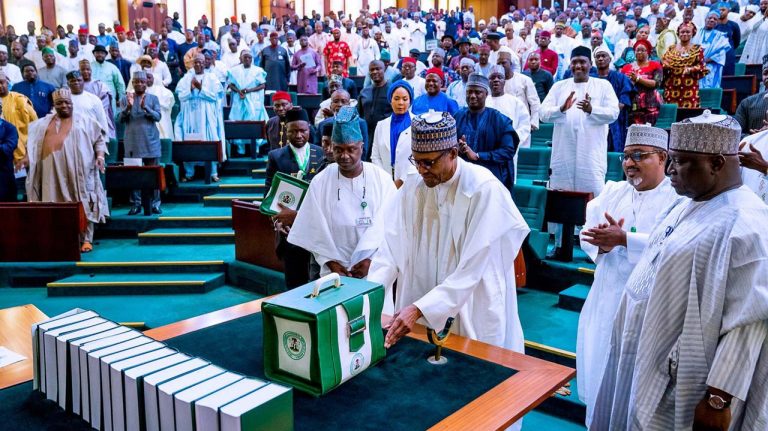
The observations, coincidentally, came barely 24 hours after the Nigeria’s 2020 budget, with another N2.8 trillion fiscal deficit was presented to the lawmakers by President Muhammadu Buhari. Presently, it would be difficult to point which year in the last 15 years that the country recorded a balanced budget.

The IMF staff team, led by the Senior Resident Representative and Mission Chief for Nigeria, Amine Mati, visited Lagos and Abuja, from September 25 to October 7, to discuss recent economic and financial developments, update macroeconomic projections, and review reform implementation.He said revenue initiatives planned under the 2020 budget like increase in Value Added Tax (VAT) rate, introduction of a minimum registration threshold and exemption of basic food products, will help partially to offset declining oil revenues and impact of higher minimum wages.

According to IMF, the carryover from 2018 to 2019 helped to increase public investment spending in the first half (H1) of 2019, but revenue underperformed significantly relative to the budget target during the period.They also noted the “over-optimistic revenue projections”, which have led to higher financing needs than initially envisaged, resulting in over-reliance on expensive borrowing from the CBN to finance the fiscal deficits.

Presently, the Federal Government’s interest payments continue to absorb more than half of revenues in 2019.Amine said the pace of economic recovery remains slow, as depressed private consumption and investors’ “wait-and-see” attitude kept growth in H1 at two per cent.He said the growth rate is significantly below population growth, although headline inflation has fallen, reaching its lowest level since January 2016, helped by lower food price inflation.

“Spurred by one-off increases in imports, the current account turned into a deficit in the first half of 2019 after three years of surpluses.“Gross international reserves have fallen to below $42 billion at end of August 2019, mainly reflecting a decline in foreign holdings of short-term securities and equity.

“The exchange rate in various windows remained stable, helped by steady sales of foreign exchange by CBN. “The outlook under current policies remains challenging. Growth is expected to pick up to 2.3 percent this year on the strength of a continuing recovery in the oil sector and the regaining of momentum in agriculture, following a good harvest,” he said.

While speaking on other findings, he said the deficit is expected to persist, while the pace of capital outflows continues to weigh on international reserves. “Inflation will likely pick up in 2020, following rising minimum wages and a higher VAT rate, despite a tight monetary policy.

“A comprehensive package of measures—whose design and implementation will require close coordination within the economic team and the newly-appointed Economic Advisory Council, is urgently needed to reduce vulnerabilities and raise growth.

“The increasing CBN financing of the government reinforces the need for an ambitious revenue-based fiscal consolidation that should build on the initiatives laid out in the Strategic Revenue Growth Initiative.“A tight monetary policy should be maintained through more conventional tools. Managing vulnerabilities arising from large amounts of maturing CBN bills, including those held by non-residents, requires stopping direct central bank interventions, the introduction of longer-term government instruments to mop up excess liquidity and moving towards a uniform market-determined exchange rate,” he added.


Navy alleges conspiracy against African over illegal fishing

0

Piqued by the manner at which foreign trawlers get away with illegal and irresponsible fishing in the Gulf of Guinea (GOG), the Nigerian Navy has affirmed that Nigeria and other member countries may be dealing with international conspiracy.

Hence, Maritime stakeholders from about 70 countries at the Global Maritime Security Conference, agreed that GOG states and the international community should put in place mechanisms that would ensure that resources that are illegally harvested or explored including stolen oil, and illegal fishery are internationally banned as the case of blood diamonds.

A communiqué issued at the end of the 3-day Global conference, yesterday, in Abuja, also stressed the need for GOG states to explore the possibility of designated maritime court to handle cases of sea robbery, piracy, and other maritime offences.The move, according to them, would ensure quick dispensation of cases, adding that they should also sensitise and build capacity of the judiciary on crucial relevant legislation.

The representative of the Chief of Naval staff, Rear Admiral Begroy Ibe-Ensor, while briefing journalists, said the Navy is also suspicious of the international conspiracy against African countries, and encouraged international communities to discourage their own people from participating in this kind of illegality. He said: “and that is why one of the recommendations clearly stated that we should designate it same status as blood diamond; maybe blood fish or bad fish.”

Affirming that the Nigerian Navy is incapacitated to effectively police the nation’s territorial waters given the large expanse, he said to improve surveillance they require ships, and maybe helicopters to sail out to sea and use their radar to see what is going on there. He added that beyond seeing what is going on at the sea, they are also not able to deploy ships and helicopters to effect arrest.

“It’s a work in progress; more ships are being bought by the government. Some other levels of collaborations even the fishery department is coming on board fully. To this extent, the Fishery Department of the Federal Ministry of Agriculture, had acquired two ships to be dedicated for anti-fishery operations.”


Senators fault Buhari’s budget, vow overhaul

0

    Lament higher debt servicing, lower capital expenditure
Say projection on increased oil production flawed
Fiscal plan is focused, APC chieftain insists

Senators yesterday criticised the N10.33 trillion 2020 budget presented by President Muhammadu Buhari for lacking the capacity to boost growth, declaring they would “take over” and “redirect” the economy.Leading the debate, Senate Majority Leader Yahaya Abdullahi said: “The Capital Budget to GDP Ratio is rather too small, (about two per cent of GDP).” According to him, “The injection of this amount is a mere drop in the ocean and is incapable of stimulating the economy to higher growth, wealth creation and employment generation.”

He noted: “The projections of increased oil production averaging 2.18 million barrels/day, in the medium term, are subject to very high risks that have had devastating consequences in recent times. Volatility, both at the international market and in the Niger Delta, is a factor that could make these expectations only tentative.”

Abdullahi reviewed the allocation for capital development in the budget bill, saying: “When viewed in terms of per capita, the 2020 capital expenditure of N2.46 trillion, is paltry.” He argued that the projected high deficit of N2.18 trillion for 2020 is a direct function of the economy-wide revenue shortfall, as well as the choice and cost of borrowing.

“Government, particularly the collecting agencies, must improve on their collection capacity. But to do this, there must be robust investments in the real sector so that it could grow to earn taxable revenues.”He faulted the Central Bank of Nigeria’s “baffling” pursuit of restrictive monetary policy “in the face of a clear economic necessity to reflate the economy, particularly by ensuring cheap money to power the real sector of the economy.”

“I have, on the floor of this chamber, repeatedly called for the realignment of the country’s monetary and fiscal policies to ensure the right structural momentum in the economy,” he said.

Minority Leader Enyinnaya Abaribe rose to speak thereafter, thanking Abdullahi for making his (Abaribe’s) job easier. He described a fiscal plan as “nothing but a budget of taxation,” wondering how Buhari could talk about job creation, having failed to invest in things that create jobs.He said: “Debt servicing, as a component, is higher than capital expenditure,” noting that the projected growth, as read by the president, is 1.9 per cent less than the population growth of 2.6 per cent.

“So, if you look at it globally, we are still struggling. That is why I was very happy when the Senate Leader said we may have to take over and redirect the economic policy of this government, having seen that the executive has not done anything.”Senator Gabriel Suswam warned that the economy should not be allowed to deteriorate further. “Our economy has come to a level that this Senate needs to take over and redirect its affairs,” he said. He further expressed concern that persistent borrowings would increase budget deficit.

Former Deputy Senate President Ike Ekweremadu advised lawmakers to fashion out a good budget that would grow the economy. “The president has done his job,” he said but added: “It is left for us to subject the budget to legislative scrutiny. We can’t blame the president if we fail to subject the budget to scrutiny.”

He further expressed disappointment that at a time the nation is seeking ways of diversifying its economy, the budget failed to place ample emphasis on solid mineral development.On his part, Senator Adamu Alewo (APC, Kebbi State) regretted that the budget does not address poverty. “The level of poverty is still very high therefore we should monitor whatever vote is allocated for social investment programmes,” he said.

He suggested increasing the benchmark from $57 per barrel to $60 per barrel to tackle poverty. He also urged the National Assembly to address the imbalance in the distribution of projects across geo-political zones.Senator Thompson Sekibo (PDP, Rivers) said Buhari should have pegged the budget at N8.1 trillion, advising: “Let us restrict ourselves to the money we can generate.” Besides, he noted that the president’s statistics on GDP and inflation reduction are very unrealistic.

In another reaction to the budget, the Chairman of the Society for Analytical Economics, Prof. Godwin Owoh told The Guardian that the president should have reflected the expected half-year spillover that would be cut off in the event that the 2020 plan comes into force on January 1 next year.

“There should be a quantitative recall of the cut-off value, so that it can be reflected on the spending items of the current budget, failing which might lead to abuse because this is already approved spending. Alternatively, he has to present a bill to extinguish the spillover spending, to avert a situation where this spending will be outside the government’s financial control and might affect economic variables,” Owoh said.

But the budget received commendation from Alhaji Shehu Kawo, a chieftain of the ruling All Progressives Congress in Niger State, who described it as “well focused.”

Speaking during an interview with the News Agency of Nigeria (NAN) in Minna yesterday, he said the content of the budget and its distribution to various sectors evidenced commitment, seriousness and transparency.He added that the early submission of the budget to the National Assembly would give the lawmakers ample time to work on the proposed estimates.

 

Brazil identify Iwobi as Nigeria’s potential threat on Sunday

0

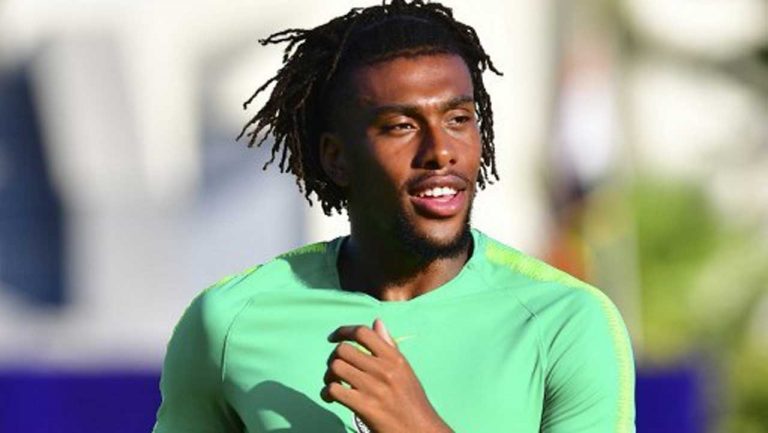
Brazil assistant coach Cleber Xavier feels Everton forward, Alex Iwobi is the man to watch out for when his team faces Nigeria in an international friendly match the National Stadium in Kallang, Singapore on Sunday, reports goal.com.

The two sides will be meeting for the second time ever, having previously played against each other in 2003 when Brazil won 3-0 in Abuja.Nigeria arrive in Singapore with in-form forwards Emmanuel Bonaventure Dennis of Club Brugge and Lille’s Victor Osimhen, but Tite’s assistant coach Xavier has picked Iwobi as Nigeria’s danger man.

“At Nigeria, Iwobi plays more of an inside role as a second striker than at Everton,” Xavier told BBC Sport.“He is the link in the counter-attack, drags opponents out of position and infiltrates well in the box.”Before playing the Super Eagles, Brazil will first clash with Senegal on Thursday.
Xavier feels Nigeria and Senegal provide the challenge they need to prepare for the 2022 Fifa World Cup qualification campaign

“Nigeria defend less than Senegal. The Senegalese are more about positioning with [Idrissa] Gueye marking strongly,” he added.“These two friendlies and the two November friendlies will allow us to test new players and to adjust and tweak some tactical details in attack and defence.“We did this in the preparation for the Copa America. We succeeded in the objective of winning and did so unbeaten.”For Nigeria and Senegal, they will be preparing for the 2021 Africa Cup of Nations qualifiers, which begin in November.

Meanwhile, Ola Aina has been ruled out of the match against Brazil. According to the Nigerian Football Federation (NFF), Aina picked up an injury after a domestic accident and will not be available for this weekend’s clash as a result. Aina has made 10 appearances for Italian Serie A club Torino across all competitions this season, coming off the bench in the club’s goalless draw at home to Napoli this past weekend. Nigeria return to action for the first time since holding Ukraine to a 2-2 draw in Dnipro, having ended third at the 2019 Africa Cup of Nations hosted in Egypt in July.

Aina played the full 90 minutes in Ukraine, having featured five times at the 2019 AFCON, including the bronze medal match in which the Super Eagles beat Tunisia 1-0 thanks to an Odion Ighalo goal. The players in the Nigerian camp, which opened yesterday in Singapore, are goalkeepers Francis Uzoho (Omonia FC, Cyprus); Ikechukwu Ezenwa (Heartland FC); and Emil Maduka Okoye (Fortuna Dusseldorf, Germany).

Also in the team are defenders Abdullahi Shehu (Bursaspor FC, Turkey); Chidozie Awaziem (CD Leganes, Spain); William Ekong (Udinese FC, Italy); Tyronne Ebuehi (SL Benfica, Portugal); Jamilu Collins (SC Padeborn 07, Germany); and Oluwasemilogo Ajayi (West Bromwich Albion, England).Iwobi (Everton FC, England) leads the midfield, which also has Anderson Esiti (PAOK Salonica, Greece); Oghenekaro Etebo (Stoke City FC, England); Wilfred Ndidi (Leicester City, England); Joseph Ayodele-Aribo (Glasgow Rangers, Scotland); and Ramon Azeez (Granada FC, Spain).

The forwards are Victor Osimhen (Lille OSC, France); Moses Simon (FC Nantes, France); Samuel Chukwueze (Villarreal FC, Spain); Efosa Solomon-Otabor (PFC CSKA Sofia, Bulgaria); Paul Onuachu (KRC Genk, Belgium); Emmanuel Dennis (Club Brugge, Belgium); and Peter Olayinka (SK Slavia Prague, Czech Republic).


Buhari inaugurates economic team, urges reliable data

0
  • Promises inclusive administration, receives Tor Tiv
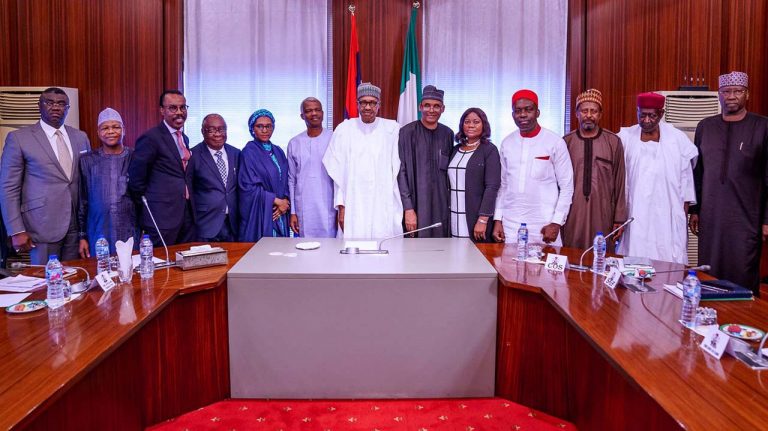
    President Muhammadu Buhari yesterday inaugurated members of the newly constituted Presidential Economic Advisory Council (PEAC) with a charge for reliable data that truly reflect the happenings in the country. He told the eight-man team chaired by Prof. Doyin Salami that: ‘’As you develop your baseline study, I would like you to focus on primary data collection.”

The president continued: ‘’Today, most of the statistics quoted about Nigeria are developed abroad by the World Bank, IMF and other foreign bodies.
‘’Some of the statistics we get relating to Nigeria are wild estimates and bear little relation to the facts on ground.

On the Social Investment Programmes (SIPs), he told members of the panel that his administration was working to measure the impact of the scheme targeted at improving the well being of millions of poor and vulnerable citizens.

Consequently, he directed the Minister for Humanitarian Affairs to commence a comprehensive data-gathering exercise in all Internally Displaced Persons (IDP) camps in the North East.

The president also ordered the advisory council to coordinate and synthesize efforts to lift 100 million Nigerians out of poverty in 10 years in collaboration with the various employment-generating agencies of government.He assured the panel of his administration’s readiness to meet its needs and requests before the next technical sessions in November.

In a related development, the president has promised to “carry everyone along on my last lap as a democratically elected leader.”He gave the assurance yesterday while some of the ministers who served under him as military Head of State between December 31,1983 and August 27,1985 visited the State House.

Also yesterday, the president decried the incessant herders-farmers clashes in parts of the country, blaming the development on social and cultural factors “grossly misunderstood as religion.” He spoke when he received a delegation of the Benue State Traditional Council led by the Tor Tiv, Prof. James Ayatse, at the Presidential Villa, Abuja. Buhari appealed for better understanding of the nation’s diverse cultures in order to engender healthier co-existence among the people. He restated the commitment of his administration to the unity of Nigeria.


We’re ready to pay new minimum wage, says Okowa

0

Governor Ifeanyi Okowa of Delta State has reiterated his administration’s readiness to pay the new N30,000 minimum wage once the Federal Government and organised labour finalise negotiations.He urged the organised labour to always disseminate appropriate information to the workers for industrial harmony in the polity.

Okowa stated this in Asaba yesterday when the new executive council members of Trade Union Congress (TUC) in the state visited him. The governor, in a statement by his Chief Press Secretary, Mr. Olisa Ifeajika, told the labour leaders that if they worked hard and made their mark, the people would recognise and appreciate them.

He expressed the belief that for the society to progress, there should be peace in the work place.“There has to be a lot of partnership between government and workers; when the partnership is real, the people will enjoy the benefits of government. So, organised labour should disseminate necessary information to workers to boost the partnership between workers and government.

“We need to re-assure Deltans and the working class that we will do our best to uplift the standard of living and ensure development in the state,” Okowa said.The chairman of TUC in the state, Martins Bolum, thanked the governor for his numerous achievements, and pledged that trade unions would help in enlightening workers on government’s activities.

In another development, the governor has urged the church to engage more in soul-winning programmes, as true Christians will become change agents in the society.He stated this yesterday in Asaba when the General Overseer of Omega Fire Ministry, Apostle Johnson Suleiman, visited him.

The governor said that the world was witnessing challenges, hence the need for more religious crusades to win souls that would contribute to national rebirth.“The global challenges have impacted on us as a nation and it calls for prayers; the church should continue to pray for our nation and keep hope alive.

“We must continue to intercede for our country, as God will make things better for us. We are happy that the prayers said at crusades not only win souls but also touch our land spiritually and positively. This soul-winning will help in the development of our society, because the people who are converted will become agents of change.”Earlier, the cleric had said that he was in Asaba for a crusade and thanked the governor for the enabling environment, which made it possible for such activities to take place.He described the governor as a “Godly man” who provided positive leadership in the state.