Saturday, November 28, 2026
Home Blog Page 91

Dangote Refinery’s Price Cut Can’t Reflect Instantly At Stations, PETROAN Says

0

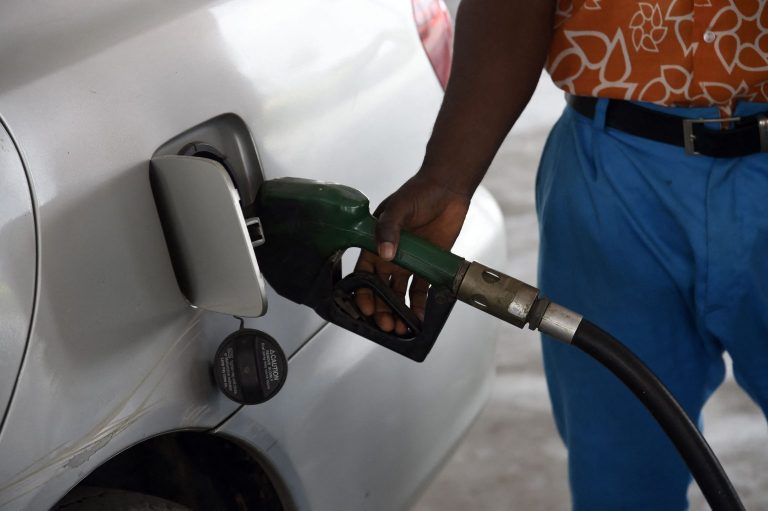
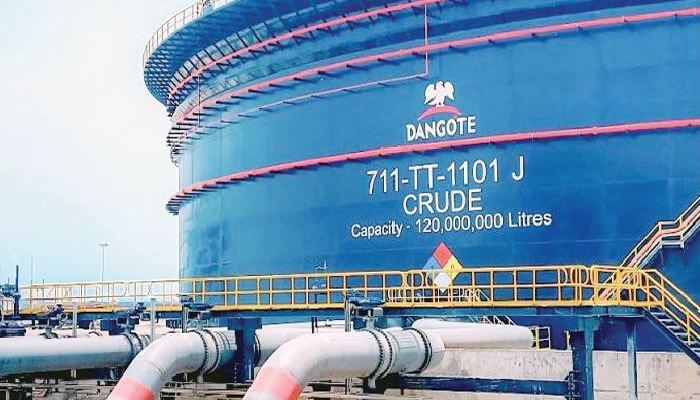
Petroleum Products Retail Outlets Owners Association of Nigeria (PETROAN) has indicated that the anticipated reduction in pump prices for petroleum products following Dangote Refinery’s recent ex-depot price cut may not reflect immediately in pump prices nationwide.

The National President of PETROAN, Billy Gillis-Harry, welcomed the depot price reduction by Dangote, but highlighted the challenges of implementing an immediate change in retail prices.

Recall that Dangote Petroleum Refinery announced a reduction in the ex-depot price of Premium Motor Spirit (PMS), popularly known as petrol from N950 to N890 per litre and the new price took effect on Saturday, February 1, 2025.

In a statement signed by Dangote Group’s Chief Branding and Communications Officer, Anthony Chiejina, the refinery attributed the price adjustment to positive developments in the global energy and gas markets, as well as a recent decline in international crude oil prices.

This reduction, according to the refinery, aligns with its commitment to transparency and fairness, as evidenced by a previous price increase on January 19, which was necessitated by rising crude oil prices at the time.

Dangote Refinery expressed confidence that the new pricing would lead to a significant reduction in the cost of petrol across the country. This, in turn, is expected to lower the prices of goods and services, ease the cost of living, and create positive ripple effects across various sectors of the economy.

“As part of Dangote Refinery’s unwavering commitment to transparency and fairness, this price revision reflects the ongoing fluctuations in global crude oil markets, as highlighted in the refinery’s statement on 19th January, when a modest increase was implemented due to the previously rising international crude oil prices.

“In addition, Dangote Petroleum Refinery calls upon marketers to collaborate in this effort, to ensure that these benefits are passed on to the Nigerian populace.

This collective initiative will contribute to the wider economic recovery plan led by His Excellency, President Bola Ahmed Tinubu, who is dedicated to making Nigeria self-sufficient in refined petroleum products and positioning the country as a leading oil export hub,” it stated.

The PETROAN President highlighted that while the price reduction might not immediately be reflected at the pumps, he urged members of the association to lower their retail prices accordingly when purchasing fuel at the reduced price.

He explained that many filling stations still had stock purchased at the previous higher price, which would make it difficult for them to adjust pump prices immediately.

“Price changes are not usually instantly applicable, but ultimately it will apply. You can’t see it immediately, because we have already bought products, we have already purchased different kinds of products in our retail outlets at the price it was prior to the changes made,” he said.

He, however, reiterated the association’s commitment to collaborating with the Dangote refinery and other stakeholders to ensure fair pricing and sustainability in the downstream petroleum sector.

He advocated that anyone buying at the new price from yesterday (Sunday) should endeavour to reflect that price in their retail outlets to ensure consistency and fairness in the market.

MEANWHILE, PETROAN has said its members are now loading petroleum products from the Port Harcourt and Warri refineries.

In a statement at the weekend, PETROAN’s spokesman, Joseph Obele, said the loading had doused previous doubts that the refineries owned by the Nigerian National Petroleum Company Limited (NNPC) were not fully operational.

“PETROAN members are now loading petroleum products, including Dual-Purpose Kerosene, Automotive Gas Oil, and Premium Motor Spirits,” he said.

“The resurgence of these refineries has sparked intense competition, expected to drive down petroleum prices.

“As Nigerians advocate for lower PMS prices, it is clear that competition is a crucial factor in triggering price reductions.

“The refineries’ revitalisation has brought numerous benefits, including the eradication of adulterated diesel and kerosene from the market.”

Obele said the lack of functional refineries resulted in the widespread circulation of counterfeit petroleum products, putting consumers at serious risk.

FEC Approves ₦‎4.8 Billion For HIV Treatment Amid US Policy Shift

0

Nigeria’s fight against HIV/AIDS has been significantly aided by international donors, particularly PEPFAR

The Federal Executive Council (FEC) has approved a N4.8 billion fund for the procurement of 150,000 HIV treatment packs, ensuring continuous care for those living with the virus.

This decision, announced after the FEC meeting on Monday, is part of the government’s efforts to strengthen domestic funding for HIV treatment.

It comes amid concerns over the potential impact of recent US policy shifts on the President’s Emergency Plan for AIDS Relief (PEPFAR), which has been a major source of HIV funding in Nigeria.

Speaking on the approval, the Coordinating Minister of Health and Social Welfare, Muhammad Pate, emphasised the importance of sustaining HIV treatment efforts, particularly as international aid dynamics shift.

Mr Pate noted that while global partners have played a crucial role in providing treatment support, the federal government is now taking deliberate steps to invest in life-saving interventions for People Living with HIV (PLHIV) in Nigeria.

“This is an important signal that the federal government is committed to ensuring that life-saving treatments remain accessible, despite the changing dynamics in external support,” Mr Pate said.

Funding concerns
Nigeria’s fight against HIV/AIDS has been significantly aided by international donors, particularly PEPFAR, which has provided billions of dollars in funding over the past two decades.

PEPFAR, which provides HIV treatment to over 20.6 million people worldwide, faced a temporary funding suspension due to President Donald Trump’s executive order on foreign aid.

The order halted many overseas assistance programmes, putting millions at risk.

However, US Secretary of State Marco Rubio recently granted an “emergency humanitarian waiver,” allowing PEPFAR to resume operations in 55 countries, including Nigeria.

In response to these uncertainties, Mr Pate reassured stakeholders that the Nigerian government is proactively developing a transition and sustainability plan to address potential funding shortfalls.

Reliance on foreign aid
Mr Pate disclosed that the FEC discussed the implications of US policy changes on health programmes, particularly those addressing HIV, tuberculosis, and malaria.

“In light of the US government’s ongoing 90-day review of its development assistance policies, we have set up a committee comprising the Ministry of Finance, Ministry of Health, Ministry of Defense, Ministry of Environment, and the Governors’ Forum to develop a transition and sustainability plan,” he said.

“This is to ensure that Nigerians receiving treatment do not face disruptions.”

The committee’s mandate is to assess the implications of the US policy shift and devise strategies to ensure the continuity of critical health programmes.

Mr Pate further acknowledged the significant contributions made by the US over the past two decades but stressed that Nigeria is preparing to reduce its reliance on foreign aid.

“While we greatly appreciate the contributions of the US government over the last 20 years and look forward to continued collaboration, Nigeria under President Bola Tinubu is focused on transforming the health sector through national systems and domestic financing,” he said.

He said the goal is to ensure that no patient currently receiving treatment is left without care.

China Retaliates With Tariffs On US Goods After Trump’s Move

0

China will impose tariffs of 15 percent on imports of coal and LNG from the US in retaliation for 10 percent levies on Chinese goods.

China will impose tariffs of 15 percent on imports of coal and liquefied natural gas (LNG) from the United States in retaliation for Washington’s 10 percent levies on Chinese goods.

China’s Ministry of Finance also announced on Tuesday that there would be 10 percent tariffs on imports from the US of crude oil, agricultural machinery, large-displacement vehicles and pick-up trucks.

The new measures were in response to the “unilateral tariff hike” by the US, it said, adding that Washington’s decision “seriously violates World Trade Organization rules, does nothing to resolve its own problems, and disrupts normal economic and trade cooperation between China and the United States”.

Beijing’s tariffs, which come into force on February 10, were announced shortly after US President Donald Trump said he would hold a call with his Chinese counterpart, Xi Jinping, in the next 24 hours.

On Saturday, Trump announced sweeping measures against its top trade partners, including Canada and Mexico, with goods from China facing an additional 10 percent tariff on top of the duties they already endure.

Trump said the measures aimed to punish countries for failing to halt flows of undocumented migrants and drugs, including fentanyl, into the US.

However, on Monday, he suspended his threat of tariffs on Mexico and Canada, agreeing to a 30-day pause in return for concessions on border and crime enforcement with the neighbouring countries.

“China’s retaliatory tariffs are a calibrated response rather than an outright escalation,” Julien Chaisse, professor at City University of Hong Kong specialising in international economic law, said.

“The measures demonstrate Beijing’s willingness to impose economic costs on Washington while maintaining flexibility for negotiation.

“The choice of a February 10 start date appears strategic. It allows time for a possible discussion between Trump and Xi which is creating space for last-minute diplomacy before the measures take effect. If talks between the two take place in the coming days, there is room for adjustments, partial exemptions or reciprocal gestures that could prevent a further spiral in trade tensions.

“That said, much will depend on Washington’s interpretation of these measures. If the US views them as a calibrated step leaving room for negotiation, this could set the stage for discussions rather than further escalation. However, if Trump sees this as a direct challenge, his administration could respond with additional trade restrictions. This would intensify the conflict.”

During his first term in 2018, Trump initiated a brutal two-year trade war with China over its massive US trade surplus, with tit-for-tat tariffs on hundreds of billions of dollars worth of goods upending global supply chains and damaging the world economy.

To end that trade war, China agreed in 2020 to spend an extra $200bn a year on US goods, but the plan was derailed by the COVID pandemic and its annual trade deficit widened to $361bn, according to Chinese customs data released last month.

Trump warned he might increase tariffs on China further unless Beijing stemmed the flow of fentanyl, a deadly opioid, into the US.

China has called fentanyl a US problem and said it would challenge the tariffs at the World Trade Organization and take other countermeasures, but also left the door open for talks.

Prosperity Cup Dg Felicitates With Sports Commissioner On Birthday, Emergence As Chairman Niger Delta Sports Commissioners Forum

0

…Celebrates The Niger Delta Sports Festival

The Director General of Nigeria’s largest grassroots football tournament, the Bayelsa Governor’s Football Tournament, tagged the “Prosperity Cup,” Mr. Ono K. Akpe, has congratulated the Commissioner for Sports Development, Dr. Daniel Baraladei Igali, on the occasion of his birthday.

In a birthday message, Mr. Akpe described Dr. Igali as a leader worth celebrating for his outstanding accomplishments as Commissioner for Sports Development. He noted that Dr. Igali’s appointment as Sports Commissioner has given sports a new direction in the last five years.

The statement lauded Dr. Igali’s outstanding contributions towards the growth and development of sports in Bayelsa State, describing his appointment as a perfect example of a round peg in a round hole. According to Mr. Akpe, the celebrated Olympian, Dr. Igali, is a global ambassador who has given Bayelsa a positive image globally.

Mr. Akpe pointed out that the younger generation of athletes is lucky to have Dr. Igali as a role model. He thanked Governor Douye Diri for appointing a renowned sports administrator as Sports Commissioner, highlighting Dr. Igali’s achievements, including ensuring Bayelsa’s podium finish at various National Sports Festivals and the National Para Games.

The statement also congratulated Dr. Igali on his emergence as Chairman of the Niger Delta Commissioners Forum. Mr. Akpe expressed confidence that Dr. Igali will deliver on his new assignment, noting that the region will witness significant development in the sports sector under his leadership.

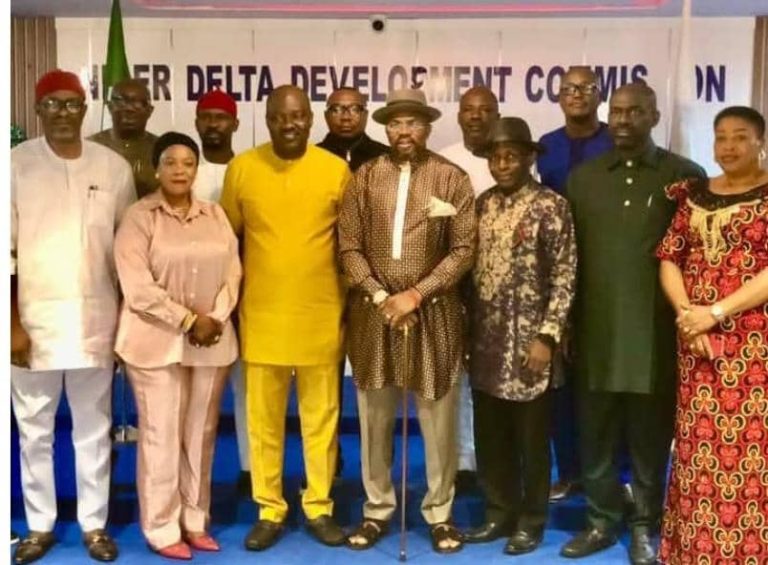
Furthermore, the DG appreciated the management and board of the NDDC led by the Chairman, Mr. Chiedu Ebie and the Managing Director Dr. Samuel Ogbuku, and Sir Itiako (Malik) Ikpokpo, CEO of Dunamis Icon, the Project Consultants, for initiating the Niger Delta Sports Festival. He praised their foresight in promoting sports development in the region.

The Prosperity Cup is Nigeria’s biggest grassroots football tournament, aimed at discovering and nurturing young football talents in Bayelsa State and beyond.

Debunking the News of Esa Oke and Ido Ayegunle Being at War

0

By Ibironke busuyi

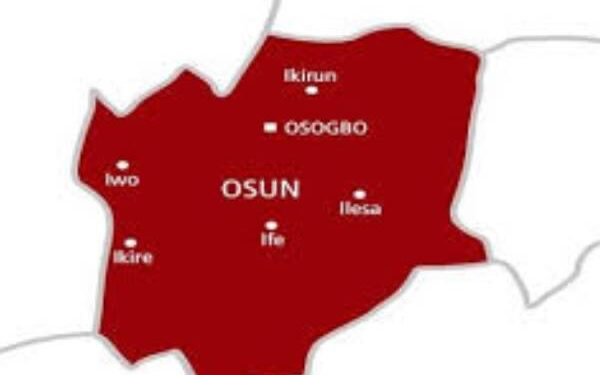
We would like to commend the efforts of the security forces and commanders for calming the situation in Ido Ayegunle. It is essential to set the record straight that Ido Ayegunle is a separate township from Esa Oke, with its own suburbs and recognized by the government of Osun State and Governor Ademola Adeleke.

The history of violence between Esa Oke and Ido Ayegunle dates back to 1995 when our father, the late King Adekanmi Ajayi Aselebe, was appointed as the 16th Oba of Ido Ayegunle. This led to his elevation as the Part 2 King of the Yoruba band in 2014. However, the King of Esa Oke at that time waged war against our father, destroying properties and lives, including schools and the palace.

After our late father’s passing four years ago, the Owa Omiran of Esa Oke, Oba Adeyemi Adediran, appointed Jonfolo Lawrence Adebisi Obanla of Esa Oke as the Baale of Ido Ayegunle, despite Ido Ayegunle having a Part 2 Oba since 2024. This decision is deceitful and has hindered the growth and development of Ido Ayegunle.

We sought government intervention and provided documentation to support our claims. The state government in pursuance of justice affirmed our claim, leading to the appointment of the new Olojudo. We are eternally grateful.

Unfortunately, the people of Esa Oke have continued to encroach on our land, leading to violent clashes. Recently, on January 31, 2025, a group of people from Ido Ayegunle were ambushed and beaten while trying to clean up their community hall.

We appreciate the efforts of the government in addressing this issue, and we are confident that the truth will prevail. Ido Ayegunle is a separate entity from Esa Oke, and we will continue to fight for our rights and freedom.

The new Olojudo has the full support of the people of Ido Ayegunle. This was demonstrated today when the people rose in defence of their town, tradition and their traditional ruler.

We have allowed the government to do its job. We thank God that justice has prevailed. We are not from Esa Oke, so I don’t know what is going on in Esa Oke. We implore people to read, and understand that the little town of Ido Ayegunle is not part of Esa Oke.

We are not in any way related to the Esa Oke crisis. Esa Oke are the ones in Ido Ayegunle, as I speak, but we believe the government will save our town from aggressors.

● Ibironke busuyi, one of chiefs of Ido AYEGUNLE, writes on behalf of the new Olojudo.

Lagos 2027: The Case for Akinwunmi Ambode’s Return as Successor To Babajide Sanwoolu By Adeboye Adebayo

0

As the political landscape of Lagos State begins to take shape ahead of the 2027 gubernatorial elections, many Lagosians are reflecting on past administrations, seeking a leader capable of revitalizing the state’s economic growth, infrastructural development, and social harmony.

One name consistently resurfaces in these discussions: Akinwunmi Ambode. Serving as Governor from 2015 to 2019, Ambode’s tenure left an indelible mark on Lagos, and there is a growing clamor for his return.

Akinwunmi Ambode’s administration was synonymous with groundbreaking infrastructure projects. His tenure saw the construction of major roads, bridges, and flyovers, including the Abule-Egba and Ajah flyovers, which significantly eased traffic congestion.

The Lagos Bus Rapid Transit (BRT) system expansion, and the introduction of the Oshodi Transport Interchange, were milestones that improved public transportation and mobility for millions.

Lagosians who traverse these routes daily still benefit from these initiatives, making a strong case for Ambode’s return. Infrastructure remains one of the state’s most pressing challenges, and Ambode’s proven track record makes him the ideal candidate to lead Lagos into a continued era of developmental projects after Babajide Sanwoolu.

Under Ambode’s leadership, Lagos State experienced remarkable economic growth.

His administration boosted the state’s Internally Generated Revenue (IGR) without significantly increasing taxes, a testament to his innovative economic policies. The creation of employment opportunities through initiatives like the Lagos Employment Trust Fund (LSETF) provided critical support to entrepreneurs and small businesses.

A return to Ambode’s economic policies could help furthering the economic of Lagos State, fostering a more business-friendly environment and attracting investment, gestures that will definitely build on Governor Babajide Sanwoolu’s current efforts.

Ambode’s government embraced technology and e-governance, introducing digital platforms that streamlined government services.

The introduction of the “Lagos Smart City” project aimed at transforming Lagos into a technologically advanced metropolis. The “Lagos State Residents Registration Agency” (LASRRA) under his watch was revitalized, laying the groundwork for improved service delivery and data-driven governance.

A renewed focus on technology-driven governance, by Ambode will continue to position Lagos as a leading smart city in Africa in line with agenda of Lagos developmental plan.

Ambode’s administration made significant strides in social welfare and environmental sustainability. His commitment to education, demonstrated through the construction and renovation of schools, and the employment of thousands of teachers, showcased his vision for human capital development.

His return could refine and reinvigorate these initiatives, ensuring that Lagos’ growth is both inclusive and sustainable.

Ambode is widely regarded as a leader who prioritized the collective interest over political divides. His non-confrontational, results-oriented leadership style earned him respect across various segments of Lagos society. At a time when political polarization threatens unity, Ambode’s return could help bridge divides and foster a collaborative environment.

Ambode’s abrupt exit from office in 2019 was marked by political challenges, but it also provided valuable lessons. His period out of office has allowed him to reflect on past challenges and strategies. Returning with a renewed vision and more experience, Ambode is better equipped to navigate the complex political terrain of Lagos.

The 2027 gubernatorial election presents a critical opportunity for Lagosians to re-evaluate their leadership choices. Akinwunmi Ambode offers a proven track record of infrastructure development, economic growth, and social progress.

His vision aligns with the aspirations of a dynamic, forward-looking Lagos that will continue its position as Nigeria’s commercial and cultural epicenter.

Bringing back Akinwunmi Ambode as Governor is not just about revisiting past successes, it’s about charting a bold, progressive future.

Lagos deserves a leader with the experience, vision, and commitment to propel the state to new heights by building on the achievements of the current administration under able Babajide Sanwoolu.

Ambode’s return is a call for continuity, excellence, and a better tomorrow for all Lagosians to continue the good works of Babajide Sanwoolu.

*_Adeboye Adebayo is a chieftain of the All Progressives Congress, APC in Agege, Lagos and was a spokesperson at the defunct APC, Tinubu/Shettima Presidential Campaign Council, Abuja._*

Trump Threatens To End Aid To South Africa Over Land Policy, Ramaphosa Responds

0

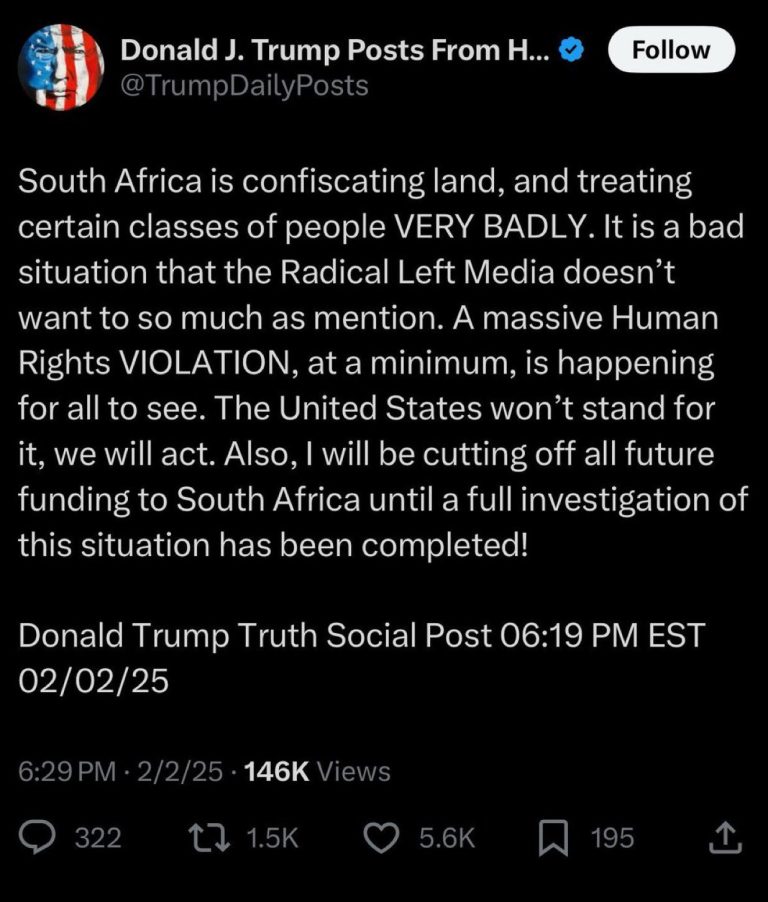
South Africa is a constitutional democracy that is deeply rooted in the rule of law, justice and equality. The South African government has not confiscated any land.


The recently adopted Expropriation Act is not a confiscation instrument, but a constitutionally mandated legal process that ensures public access to land in an equitable and just manner as guided by the constitution.


South Africa, like the United States of America and other countries, has always had expropriation laws that balance the need for public usage of land and the protection of rights of property owners.


We look forward to engaging with the Trump administration over our land reform policy and issues of bilateral interest. We are certain that out of those engagements, we will share a better and common understanding over these matters.

The US remains a key strategic political and trade partner for South Africa. With the exception of PEPFAR Aid, which constitutes 17% of South Africa’s HIVAids programme, there is no other funding that is received by South Africa from the United States.

Tems Wins Grammy Award For Best African Music Performance

0

Nigerian Afrobeats star Tems has secured her second Grammy Award, winning in the Best African Music Performance category at the 67th Recording Academy Awards 2025.

Her hit song Love Me Jeje triumphed in a category dominated by Afrobeats heavyweights, with Chris Brown as the only non-Afrobeats nominee.

Tems faced strong competition from fellow Nigerian artistes, including Burna Boy, Asake, and Wizkid for their collaboration MMS, as well as Yemi Alade and Davido, who featured alongside Lojay on Chris Brown’s Sensational.

This latest achievement further cements Tems’ status as one of Africa’s most celebrated global music icons.

Dangote Price Slash: Marketers With Imported Fuel Fear Losses.

0

The decision by the Dangote Petroleum Refinery to reduce the ex-depot price of Premium Motor Spirit (petrol) on Saturday night came at huge costs to many petroleum marketers, The PUNCH reports.


Marketers who spoke to our correspondent said the sudden price reduction by the Dangote refinery must have been occasioned by the recent warnings that some traders were planning to resort to importation if the foreign PMS remains cheaper than the ex-depot prices of locally refined products.


On Saturday night, the 650,000-capacity refinery told Nigerians that it had reduced its price from N950 to N890 per litre.


“In a bold move to drive economic relief for Nigerians, Dangote Petroleum Refinery has reduced the ex-depot price of Premium Motor Spirit, commonly known as petrol, from N950 to N890 per litre, effective from Saturday.


“This price adjustment is in response to favourable developments in the global energy sector and a significant decline in international crude oil prices. Dangote refinery’s decision reflects its commitment to aligning with market realities and ensuring that consumers benefit from changes in international crude oil prices,” a statement by the Group’s Chief Branding and Communications Officer, Anthony Chiejina, said.


The statement also noted that the price reduction would significantly lower the cost of petrol across the country, generating a positive ripple effect throughout the broader economy.


The refinery has also called on marketers across the country to ensure that the benefits of the reduced price are passed on to the Nigerian public.


However, marketers said the price reduction has both positive and negative effects on their business.


It was learned that some marketers who bought the product a few hours before the announcement would be forced to sell below the cost, incurring debts running into millions of naira.


In an interview with our correspondent, the Vice President of the Independent Petroleum Marketers Association of Nigeria, Hammed Fashola, said the price reduction is a good development but it will surely affect business in negative and positive ways.


Speaking about the negative effect of the reduction, Fashola said, “For instance, maybe a marketer purchased some product on Friday. I am sure the marketer would not have sold it before the new reduction happened. That is the negative aspect of it. But, we have to abide by it. We have to live with it. That is the beauty of deregulation.


“So, we have to be careful when we purchase our product. Where we purchase it from and the price we are getting it. And we must have adequate information on what is going on. So that we will not be losing money every day,” Fashola noted.


He emphasised that when a price reduction happens, the only option a marketer has is to reduce the price so as to let go of old stocks, or else he would be left with no buyers.


“When this happens, the only option a marketer has is to bring down the price. Because if you don’t do that, the competition will set in.


“Some marketers in your neighbourhood might be lucky to get their product tomorrow at N890. So, if you have a N950 product with you, within two to three days, you will not have an option but to bring it down. That is the situation marketers are facing now, but we have to cope with it. It is the marketer who bears the losses,” he stated.


Asked if there is a way to carry all stakeholders along before a major price review to reduce losses, the IPMAN leader replied, “There is no way one can do that in this competitive environment that we find ourselves in now. It is a competition.”


He recalled that some importers have recently threatened to boycott locally refined petroleum products because the imported ones were cheaper, saying Dangote refinery has reacted to that.


“Some marketers and importers were threatening that an imported PMS is much cheaper than a Dangote PMS. So, Dangote is reacting to this with the price reduction. That is the beauty of competition. There is nothing anybody can do about that. You want to sell and I want to sell. I think it is good for the sector.


“It is the public that will gain more because, by this, they will be getting cheaper fuel, which is good. That is what we have been pushing for. It has come. We don’t have to complain,” Fashola maintained.


Asked to speak more on Dangote reacting to the threat to import cheaper fuel, he said, “Of course, Dangote has to react to it. If it doesn’t react this way, if the imported one is cheaper, what will happen? Look at the investment there.


“I am happy it is happening this way. We believe that how can imported PMS be cheaper than Dangote’s PMS that is refined here locally? We know crude is being purchased here in naira, not in dollars; though we know that it is going to be in the official exchange rate, but we won’t be looking for dollars. The issue of transportation will not be there and some other charges too.


“I think we are getting there. We are facing reality. Everybody is facing reality, both big and small. We are all feeling it. It is good for the system,” he added.


On whether the Nigerian National Petroleum Company Limited would bring down its price too, he replied in the affirmative.


“They have to. If they want to remain in business, they have to. It is a reaction and it will go through the chain of supply. If NNPC says they don’t want to reduce their price, who will go there to buy? They have to reduce it.


“It is the same thing happening to the retailers, the marketers, and the filling stations. The same will happen to them. They have to react to the new market realities. Everybody will react to the new development,” he stressed.


Meanwhile, the National President of the Petroleum Products Retail Outlet Owners Association of Nigeria, Billy Gillis-Harry, also told The PUNCH that the NNPC might reduce its price too as a result of the competition in the market.


“There is an evident possibility that the NNPC will reduce prices,” he told our correspondent on Sunday.


According to him, PETROAN received the news of the Dangote refinery PMS price reduction with excitement because of gains to citizens and the economy.


Gillis-Harry, commended the management of Dangote refinery, saying this price reduction will alleviate the suffering of Nigerians, reduce the cost of living and transportation, and have a positive impact on the economy.


The PETROAN national president reaffirmed that competition is the beauty of a deregulated economy, expressing optimism that other operators of refineries and importers of PMS will reciprocate by reducing the current selling rate of PMS for them to remain in business.


“The reduction in PMS ex-depot price is expected to have a far-reaching impact on the lives of Nigerian citizens. With a decrease in the cost of petrol, the prices of goods and services are likely to decrease, leading to a reduction in the overall cost of living. This, in turn, will provide relief to households, who will have more disposable income to allocate towards other essential needs.


“The reduction in PMS price will also have a positive impact on the economy. A decrease in transportation costs will lead to increased economic activity, as businesses will be able to transport goods and services more efficiently and at a lower cost. Additionally, the reduction in PMS price will lead to an increase in demand for goods and services, which will have a positive impact on economic growth and development,” he said.


Gillis-Harry added that the reduction in PMS price will also have a positive impact on the country’s inflation rate.


In a recent interview with our correspondent, the National Publicity Secretary of IPMAN, Chinedu Ukadike, emphasised that the traders lose billions of naira whenever the prices of petroleum products like PMS and diesel are reduced.


He recalled that the Dangote refinery entered the market in early 2024 and crashed the price of diesel, forcing marketers to sell below their cost of purchase and running into huge debts.


The IPMAN spokesperson maintained that marketers are scared of lifting fuels to avoid collateral losses, having secured loans from banks.


“That is why marketers fear lifting fuel because of the price scare. They will not want to suffer collateral losses.


“Remember that when the Dangote refinery came in, it was reducing prices and marketers were losing money. Did anybody tell marketers not to sell again or that they are going to repay them the money lost? Nobody said so and nobody will say so,” he stressed.


He said marketers were left alone with their losses as they resorted to selling cheaper than they acquired their products.


“It’s like having to sell off because the monetary value of what you have and the interest rate of that will not be able to keep you up. The interest rate is going up faster now,” he noted.

Nigeria Spent N5.5trillion On Petrol, Diesel Imports In 4 Months – THISDAY

0

Reports have revealed that between October 1, 2024, and January 31, 2025, the Nigerian National Petroleum Company (NNPC) Limited and select marketers spent over N5.5 trillion on the importation of Premium Motor Spirit (PMS) and diesel (AGO).

Meanwhile, the management of the Dangote Refinery is currently in court with the Nigerian Midstream and Downstream Petroleum Regulatory Authority (NMDPRA), the NNPC, and other oil marketers, seeking to compel the industry regulator to halt the issuance of import licenses for fuel imports, despite adequate in-country supplies.

THISDAY learned on Friday that between October 1, 2024, and January 31, 2025, the NNPC and some oil marketers spent over N5.5 trillion on petrol and diesel imports, according to port documents.

However, the NNPC has consistently defended its purchasing decisions, stating that they are driven by economic factors, particularly pricing considerations.

“While NNPC prioritises sourcing products from domestic refineries, this is contingent upon economic viability. If local supply is cost-effective, it will be preferred, but the same principle applies to other marketers, who will also evaluate total costs when deciding whether to buy locally or import,” the NNPC said recently, while defending its continuous importation of products.

Industry data analysed on Friday revealed that over 3.2 million metric tonnes of petrol and 980,485 metric tonnes of diesel were imported between October 2024 and January 2025. This amounts to roughly 4.29 billion litres of petrol and over 1.153 billion litres of diesel, with a total cost exceeding N5.5 trillion.

Aside from the NNPC, other importers during this period included BOVAS, Eternal Oil, AA Rano, and others.

Despite the recent restart of the Warri and Port Harcourt refineries and the Dangote Petroleum Refinery becoming operational, imported products arrived through Lagos, Calabar, Warri, and Port Harcourt.

The Dangote Refinery has increased production to 550,000 bpd, sufficient for the Nigerian market and export. However, most crude oil refined at Dangote’s facility is imported due to the national oil company’s failure to meet the local supply agreement.

Under the deal, the Dangote refinery is expected to pay for crude oil in naira and sell the refined products to marketers in naira, eliminating currency and forex risks, while reducing the country’s reliance on the dollar for domestic transactions.

Although Nigerian authorities report an increase in crude oil production, sources from the Dangote Refinery indicate that crude oil supply to the $20 billion facility has actually decreased.

For example, in February 2025, only four cargoes were allocated, and in March, just two cargoes of 950,000 barrels each were booked, totaling 1.9 million barrels for the month.

This represents an allocation of 61,290 bpd, far below the 385,000 bpd target.

Sources close to the Dangote Refinery, preferring to remain anonymous, stated that the refinery continues to sell products to marketers in naira and absorb logistics costs to ensure uniform pricing across the country.

“The refinery has generously assumed an equalisation status, a responsibility typically undertaken by the government. This has been met with enthusiasm by our partners, such as MRS, Heyden, and Ardova.

“The Petroleum Products Retail Outlet Owners Association (PETROAN), recently, entered into an agreement with the refinery to distribute its Premium Motor Spirit (PMS) nationwide at a uniform price across all its filling stations,” one of the sources said.

It was learned that the Nigerian Upstream Petroleum Regulatory Commission (NUPRC) allocated only 1.4 million barrels for March. Of this, the NNPC received 17 cargoes (35 percent) of the total production, five were allocated to the Dangote Refinery, two to the Warri Refinery, and three to the Port Harcourt Refinery. Additionally, the remaining seven cargoes were allocated to various financiers as part of loan repayment, with no other local refineries receiving crude allocations for the period.

THISDAY was also told that despite the presidential order to sell crude oil in naira locally, transactions were still partially done using the greenback.

Subsequently, of the five cargoes allocated to the Dangote refinery, two are to be paid for using the local currency, while the remaining three will be settled in dollars from export proceeds.