Saturday, November 28, 2026
Home Blog Page 89

AWWDI launches Inclusive Climate Actions Team to advocate for Women and Persons with Disabilities

0

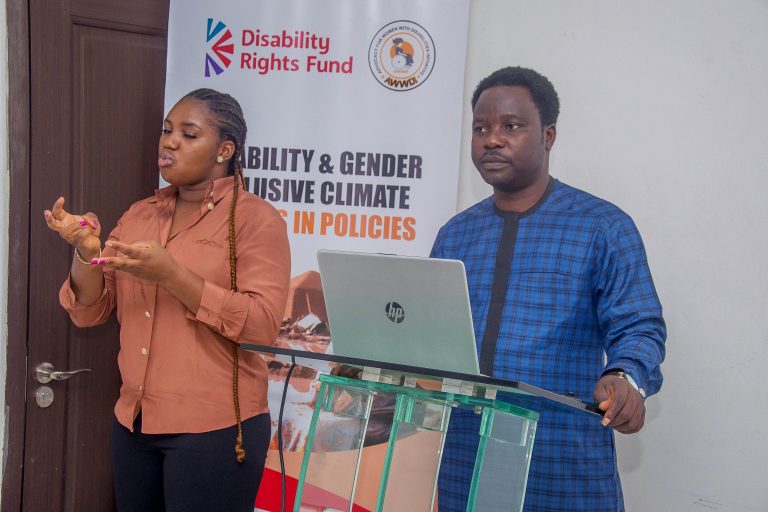
The Advocacy for Women with Disabilities Initiative (AWWDI) has officially launched an Inclusive Climate Actions Team during a one-day training in Abuja.

The initiative seeks to address the disproportionate impact of climate change on vulnerable groups, particularly women and individuals with disabilities, ensuring inclusivity in climate-related discussions and decision-making.

During the training, speakers highlighted the importance of integrating women and girls with disabilities into climate action planning. They stressed the need for accessible climate forecasts, noting that the lack of inclusivity in these crucial communications can put individuals with disabilities at greater risk during emergencies.

The team also focused on the importance of raising awareness about the vulnerability of women and persons with disabilities during climate disasters such as flooding. For instance, recent floods in Kwara State and other parts of Nigeria highlighted the challenges faced by these groups, who often struggle to access vital information and resources in emergency situations.

AWWDI emphasized the role of media partners in advocating for inclusive climate action, urging them to promote equitable climate actions and raise awareness about the needs of marginalized groups. The initiative called on participants to become ambassadors for change, ensuring that climate policies and programs consider the needs of women and girls with disabilities.

The Director General of FEMA FCT Abdulrahman Mohammed, expressed his thoughts on recent developments in disaster management, stressing the importance of proactive communication about potential disasters. He emphasized that it’s crucial to inform local governments about impending events, ensuring that the public is aware of the signs before disasters strike. He noted that disaster management should not only focus on response but also on prevention through awareness.

Reflecting on a past event, the DG shared his experience attending a program organized by the National Agency for Disabilities. He revealed how his perspective on disability inclusion was transformed, noting that as an engineer, he realized the significant lack of inclusive design in building structures. He underscored the need for partnerships with the National Society of Engineers to ensure that future designs accommodate people with disabilities. He called for a shift in mindset, urging that all new buildings should consider the needs of disabled individuals.

The DG also expressed his concern for climate change, stating that the signs of its impact are becoming increasingly evident. He highlighted the need for urgent action in addressing climate-related issues, particularly in disaster-prone areas.

Also speaking, The Director of AWWDI, Mrs. Patience Dickson, shared a heartbreaking update on the struggles faced by individuals with albinism in Nigeria, revealing that two people with albinism have already died this year due to skin cancer. Mrs. Dickson pointed out that the situation has become dire for one of her staff members, who is currently battling skin cancer. The staff member, who underwent surgery at the National Hospital in Abuja, was referred to Lagos for further treatment but has been away since November last year, undergoing extensive medical procedures.

She emphasized the link between the condition and climate change, noting that excessive sun exposure, a key factor in the development of skin cancer, is exacerbated by changing environmental conditions. Mrs. Dickson stressed that such challenges are compounded by the lack of adequate awareness and care for individuals with albinism.

In her remarks, Mrs. Dickson also expressed her gratitude for the recent unveiling of the 2025 seasonal climate prediction report by Nine Minutes, which she described as a significant milestone in addressing climate-related issues. She highlighted the importance of collaborations like this in addressing climate change and its impact on vulnerable communities.

Furthermore, Mrs. Dickson called for the implementation of an inclusive climate change policy that takes into account the needs of women and persons with disabilities. She highlighted the importance of inclusivity in both climate action and disability advocacy, drawing attention to the critical role of education and awareness in creating a more equitable society.

Meanwhile, Project Officer Mr. Kolawole Jayeoba led an intensive training session, equipping participants to serve as advocates for inclusion within their respective organizations and ensure that no one is left behind.

Birthday: Igbalaye Congratulates Hon. Adewale Morufu

0

By Kehinde Adeoye, Special Assistant on media to the Secretary to the Osun State Government

The Secretary to the Osun State Government, High Chief Teslim Igbalaye, has joined thousands of people both at home and abroad in congratulating Hon. Adewale Morufu Adebayo (Gangaria), Member of the House of Representatives representing the Irepodun/Orolu/Olorunda/Osogbo Federal Constituency.

The Osun SSG, who is also the Bobagunwa of Osogbo, expressed admiration for Hon. Adebayo’s remarkable representation, noting the impact of his work.

“I congratulate my dear brother and friend, the Honorable Representative for Irepodun/Orolu/Olorunda/Osogbo Federal Constituency and Chairman of the House Committee on Peacebuilding and Social Cohesion, Hon. Adewale Morufu Adebayo (Gangaria).”

“First, I would like to express my sincere appreciation for your invaluable representation on the floor of the House. The welfare of our people, your constituents, remains the primary driving force in your ongoing efforts to improve their lives.”

“Your position as Chairman of the Committee on Peacebuilding and Social Cohesion is a testament to the meaningful contributions you have made in advancing the interests of the people.”

“As you continue to advocate for the well-being of our people, I pray for renewed strength, good health, and divine grace to enable you to make even better decisions in the best interest of our people.”

“Congratulations once again!” he concluded.

False Reports Of Conflict Between NDDC Boss and FCT Minister

0

The attention of the Niger Delta Development Commission, NDDC, has been brought to reports circulating in online media platforms under a mischievous headline: “Uproar in NDDC As Ogbuku, Wike Fight Dirty.”

Nothing can be farther from the truth. We are, therefore, constrained to respond to the false story claiming that “there is rumbling in the Commission following the jostle for the position of the Managing Director currently occupied by Dr Samuel Ogbuku.”

In a statement by the NDDC Director Corporate Affairs, Seledi Thompson-Wakama noted that the NDDC Managing Director has a very cordial relationship not only with the Minister of the Federal Capital Territory, Chief Nyesom Wike, who is representing the region very well at the Federal Executive Council, FEC but also with all the leaders and key stakeholders in Niger Delta region.

Obviously, the fake news reported on online media platforms is masterminded by those who want to create confusion among the NDDC board members and pit the MD against the FCT Minister.

We also know that the perpetrators are attempting to drag the Senate President, His Excellency Senator Godswill Akpabio, into the phantom fray to present a crisis scenario in the NDDC and the entire region.

The same group of people who see nothing good in the region are also peddling the rumour that Chief James Ibori is also running for the position of Managing Director of NDDC.

We urge the public to disregard the false stories spread by mischief makers to derail the various innovations introduced by the NDDC Board and Management under the Chairman, Mr. Chiedu Ebie, and the Managing Director, Dr Samuel Ogbuku

It is rather curious that at a time the NDDC is busy pursuing innovative policies aimed at delivering services more efficiently to the people of the Niger Delta, some misguided and self-seeking individuals appear intent on distracting the Commission.

It is disturbing that those who could rightly be described as the enemies of progress are concocting false narratives to the effect that the tenure of the NDDC board was ending.

From all indications, those spreading this falsehood are all out to truncate the tenure of the NDDC Board, apparently because they are not happy that the board members are working harmoniously to deliver on the mandate of President Bola Ahmed Tinubu for the people of the Niger Delta region.

The truth, however, is that the current NDDC Governing Board was appointed for a four-year tenure, which started counting from August 29, 2023.

What the naysayers, ostensibly propelled by the satanic Pull Him Down syndrome, fail to understand is that Dr Ogbuku was actually re-appointed to serve for a four-year term, and the law fully backed this.

For the avoidance of doubt, section 4 of the NDDC Establishment Act provides that “a member of the board other than ex-efficio member, shall hold office for a term of four years at the first instance and may be reappointed for a further term of four years and no more.”

Ordinarily, there should be no reason for people to split their hairs over when the Managing Director completes his tenure, especially as the team is delivering quality projects and programmes.

The team spirit at the NDDC has been yielding dividends, and the management has been busy pursuing innovative policies aimed at delivering services more efficiently to the people of the Niger Delta.

The management is consistently working hard to showcase the myriad of projects, many of which have been lined up for commissioning in the next week.

What the detractors fail to realize is that a destabilised NDDC is a loss to the Niger Delta region. One of the causes of the poor development of the region has been traced to incessant changes in leadership.

Under the current leadership, the NDDC is deliberately improving the transparency of its processes, leveraging technology to increase accountability and efficiency, consulting stakeholders frequently, engaging proactively, and being creative about programmes designed to uplift the people and the region.

This is why we urge all men of goodwill who are particularly desirous about a sustained development of the Niger Delta region not to stand aloof and watch as some unscrupulous persons toy with the collective destiny of the region.

The NDDC Governing Board must remain resolute and refuse to be distracted in its resolve to do things differently and make a difference in the Niger Delta region.

We assure all Niger Delta leaders and its people that the NDDC board and management will continue to serve the general interest of the region. We also urge those bent on taking the region backwards to know that their agenda has failed and will continue to fail.

The board and management are focused on development issues, as President Bola Ahmed Tinubu envisioned, rather than being distracted by enemies of progress.


FG Gives Civil Servants Ultimatum For IPPIS Update

0

Federal Government Sets February 17 Deadline for Civil Servants to Validate IPPIS Identity

The Federal Government of Nigeria has set February 17, 2025, as the final deadline for civil servants to validate their identity on the Integrated Payroll and Personnel Information System (IPPIS).

This directive was outlined in a memo issued by the Office of the Accountant-General of the Federation (OAGF), warning that failure to comply could lead to suspension of salaries.

Purpose of the Validation Exercise

The IPPIS validation is part of the government’s broader efforts to:

1. Eliminate ghost workers from the federal payroll.
2. Enhance payroll transparency within the civil service.
3. Curb financial leakages and irregularities in salary payments.

The government has previously extended the deadline several times to accommodate civil servants yet to complete the process. However, this latest announcement indicates a firm stance on compliance.

Official Statement

A section of the memo reads:

“Following the Treasury Circular with Ref. No. TRY/A6&B6/2024-OAGF/CAD/026/Vol. V/910 dated 27th June, 2024, on the above subject matter and subsequent extension dated 16 August, 2024, I am directed to inform you that AGF has approved the extension of the OAF-IPPIS Payroll Validation Portal for an additional one week (10 – 17 February, 2025).”

Instructions for Civil Servants

All federal civil servants must confirm their details through designated IPPIS verification centers across the country.

Additionally, the government has urged ministries, departments, and agencies (MDAs) to ensure that all employees complete the verification before the cut-off date.

Failure to comply may result in delayed or suspended salaries, as the government intensifies efforts to sanitize its payroll system.

For more details, affected workers are advised to visit their respective MDAs or the nearest IPPIS center before the February 17 deadline.

Saudi Arabia Slams Visa Restriction On Nigeria, 13 Other Countries

0

Saudi Arabia has restricted Nigeria and 13 other countries to single-entry visas, limited to 30 days.

The changes apply to tourists, business travellers, and those visiting family members but exclude applicants for Hajj, Umrah, diplomatic, or residency visas.

Beyond Nigeria, the affected nations are Algeria, Bangladesh, Egypt, Ethiopia, India, Indonesia, Iraq, Jordan, Morocco, Pakistan, Sudan, Tunisia, and Yemen.

Explaining the rationale for the new regulations, Saudi Arabia cited the misuse of multiple-entry visas as a key reason for the policy shift.

It further noted that some travellers used long-term visas to stay in the country illegally or participate in Hajj without proper authorisation.

The Saudi government regulates Hajj attendance through a fixed quota per country, and unauthorised pilgrims have contributed to overcrowding.

Officials described the suspension of multiple-entry visas as a temporary measure but have not provided a specific timeline for its review.

The development comes ahead of the 2025 Hajj pilgrimage.

In 2024, over 1,200 pilgrims lost their lives due to extreme heat and congestion, a crisis authorities believe was exacerbated by unregistered attendees.

‎70,000 Minimum Wage: States’ Salaries Rise By 90% To ₦3.8 Trillion

0

The amount budgeted for personnel costs, including salaries and allowances to state civil servants, has increased from N2.036tn spent in 2024 to N3.87tn in the approved 2025 budget.

Although the 36 sub-national allocated a total sum of N2.8tn as salaries costs, it only paid out a total of N2.036tn within the 12 months of 2024, a reduction of N764bn, according to its budget implementation report.

According to data obtained from the 2025 approved budget of the 36 state governments, the increase occasioned by the implementation of the newly approved N70,000 minimum wage and spiralling political appointments reflects an increase of nearly 90.23 per cent.

The approved budgets are also contained in Open States, a BudgIT-backed website that serves as a repository of government budget data.

The budget report also indicated that at least 27 states of the federation would not be able to pay workers’ salaries this year without having to wait for federal allocations from the central government.

In July 2024, President Bola Tinubu officially approved a significant increase in the minimum wage for Nigerian workers, raising it from N30,000 to N70,000.

This decision came after several months of rigorous discussions and negotiations between the government and labour unions.

However, the implementation of this wage increase has been gradual across the country, with some states still yet to adopt the new minimum wage.

In response to this delay, the Nigerian Labour Congress issued a stern ultimatum to state governments, demanding that they fully implement the new wage structure by December 1, 2024.

Despite this pressure, several states have yet to initiate the payment of the revised minimum wage, further prolonging the financial relief workers were expecting.

An in-depth analysis of the budget document revealed significant variations in personnel costs across states: 20 states saw an increase in personnel expenses exceeding 50 per cent, while 16 states experienced a more modest rise, with salary increases remaining below the 50 per cent threshold.

A further breakdown showed that Abia, Cross Rivers, Ekiti, Niger, Rivers, and Taraba states got the highest increase in its payroll, exceeding 100 per cent of its 2024 personnel cost budget. While Gombe, Osun and Ondo got the lowest salary increase percentage, scoring below 15 per cent.

In a detailed examination of the salary increases across each state, Abia approved a notable increase in its personnel costs, with an escalation from N33.045bn to N77.34bn, representing a 134 per cent increase. Similarly, Adamawa’s personnel cost rose from N48.61bn to N74.23bn, marking a 52.7 per cent increase.

In Akwa Ibom, a sharp surge from N91.74bn to N126.69bn was approved, representing an impressive 38.1 per cent growth.

Anambra state, under Governor Charles Soludo, also approved a significant rise from N34.001bn to N63.41bn, indicating an 86.45 per cent increase.

Bauchi followed suit with an increase from N42.29bn to N70.41bn, showcasing an uplift of approximately 66.5 per cent.

Meanwhile, Bayelsa saw its personnel costs climb from N60.18bn to N114.21bn, a rise of over 89 per cent, signalling an emphasis on investing in its workforce.

In Cross River, the personnel cost grew sharply from N35.02bn to N106.12bn, reflecting a 202 per cent increase, one of the highest among the states. Delta also recorded a notable surge in its expenditure from N139.999bn to N185bn, signalling a growth of about 32.5 per cent.

Ebonyi followed with an increase from N23.076bn to N36.66bn, growing by 58.9 per cent.

Edo with its leap from N74.58bn to N101.29bn, reflected a 35.8 per cent increase, while Ekiti registered a substantial rise from N30.69bn to N62.51bn, almost doubling its personnel cost.

Enugu also saw a substantial rise from N47.988bn to N70.954bn, an increase of 48 per cent.

However, Gombe stood out with a negligible decrease in personnel costs, falling from N40.52bn to N40.28bn, a small dip of just 0.6 per cent.

On the other hand, Imo saw an increase from N41.92bn to N67.4bn, showing an upward trend of 60.9 per cent.

Jigawa experienced a jump from N51.445bn to N90.73bn, an increase of 76.4 per cent, while Kaduna’s personnel costs grew by 23.4 per cent from N68.010bn to N83.94bn.

Kano, one of the largest increases in this analysis, saw its personnel costs skyrocket from N89.97bn to a staggering N150.996bn, an impressive 67.8 per cent rise.

Katsina, which saw an increase from N29.69bn to N58.62bn, experienced a growth rate of 97.6 per cent. In Kogi, the personnel budget grew from N64.798bn to N109.96bn, an increase of 69.8 per cent.

Kwara followed a similar trend, rising from N51.045bn to N69.152bn, a growth of 35.5 per cent.

The largest increase came from Lagos, which saw its personnel costs more than double, from N225.114bn to N401.12bn.

In Nasarawa, personnel costs increased from N48.704bn to N80.456bn, a 65.2 per cent rise, while Niger recorded an even larger leap, from N25.36bn to N104.301bn, reflecting a growth of 311.5 per cent. Ondo saw an increase from N75.96bn to N139.726bn, an uplift of 83.9 per cent, while Osun also registered a significant rise from N55.571bn to N102.89bn, an 85.1 per cent increase.

Oyo experienced a massive increase, with personnel costs rising from N116.207 bn to N214.116bn, an 84.3 per cent increase.

Similarly, Plateau saw its personnel expenditure climb from N38.963bn to N67.144bn, marking a 72.5 per cent increase.

Rivers State, under Governor Siminalayi Fubara, recorded a staggering rise from N167.05bn to N343.196bn, a 105.6 per cent increase.

Sokoto also saw a substantial increase, from N55.32bn to N64.711bn, a 17 per cent rise.

Taraba experienced a significant increase from N36.319bn to N95.23bn, a 162 per cent rise, while Yobe recorded a 34 per cent increase, growing from N47.95bn to N64.12bn.

Zamfara saw a moderate increase, with personnel costs rising from N34.21bn to N58.38bn, a growth of 70.7 per cent.

Meanwhile, the substantial increase in salaries and allowances across various states has introduced a new set of challenges.

With the sharp rise in personnel costs, at least 27 states of the federation now face the stark reality that they will be unable to meet their payroll obligations without relying heavily on federal allocations from the central government.

This means only 9 out of the 36 state governments of the federation can independently pay their workers’ salaries without depending on federal allocations.

This is an increase from 24 states that couldn’t pay salaries without federal allocation in 2024, according to an analysis of the state governments’ approved budgets for the 2024 fiscal year.

The states with robust internal revenue are Lagos, Abia, Benue, Enugu, Ogun, Niger Kaduna, Kwara, and Osun.

According to the analysis of the budget data, 27 states cannot fund salary payments from their internally generated Revenue and, as such, may have to rely on Federal Government allocations or borrowing from banks and related institutions.

The development also means that the respective wage bills of the affected states surpassed their various IGRs, raising concerns about workers’ productivity and state governments’ efficiency in internal revenue generation.

Speaking with The PUNCH, the economist noted that the latest data further stress the need to reduce the cost of governance across the country.

Commenting, the director and CEO of the Centre for the Promotion of Private Enterprise, Muda Yusuf, noted that there are several arguments for the state’s low revenue generation and its bloated civil service workforce.

He said, “The IGR thing, first of all, we need to recognize that there are big disparities in the natural endowment of the states. Not all states are equally endowed. You know, you can’t compare a state that is a coastal state like Lagos or Delta where you have a lot of oil companies, and they pay taxes through P.A.Y.E.

“If you take a state like Jigawa or a state like Gombe or a state like Kogi, most of the businesses there are SMEs. Most of them are agricultural businesses because most of them are farmers. How much IGR can you get from these people? So what you discover invariably is that the IGR that they get in those states are only from the salaries of the workers.

“The second argument is that many of them have the bloated workforce, which they don’t need. If you go to some ministries, many of them are carrying ghost workers. Some of them don’t even show up in their offices.

“Some of them can run all these ministries with half of the government’s workforce. But because of political and other considerations, they have too many workforces that they don’t need.”.

A professor of economics at Babcock University, Segun Ajibola, said, “The states must do all they can to raise internally generated revenue without putting undue pressure on their citizens. Secondly, they must reduce the cost of governance, block wastages, do proper streamlining of ministries, departments, and agencies,numberrofligacy, and ensure accountability and transparency in government.

A former chief economist at Zenith Bank, Marcel Okeke, pointed out that the increase in the ministries and governance at the centre would trickle down to the subnationals and impact their wage bill.

“Most of the things these governors do are done out of political considerations and not economic ones, from the location of companies to the appointments of aides; special advisers, senior special advisers, and so on. There are notorious cases of governors appointing hundreds or thousands of assistants. What are those people doing, and are they paid money? Can they not do with a fewer number of them?

“Do you know we have bloated staff? In some ministries, that should only have about 100, they have 400 to 500, so a job that should be done by one person, you haveeee about five persons hanging around. What some people do is to carry files and they have no job. When these states do staff audits, they report ghost workers. If they look into this area, they can reduce cost,” he said.

Also, the Executive Director of the Rule of Law and Accountability Advocacy Centre, Okechukwu Nwagunma, lambasted Nigerian government officials for their lack of vision, sincerity, and patriotism.

Nwagunma pointed out that despite promises from the president to cut the cost of governance by reducing the number of appointees and ministries, the reality is the opposite—new ministries are being created, and a record number of appointees are being appointed.

He said, “The government at all levels in Nigeria is composed mainly of people who are visionless, insincere, unpatriotic, selfish, and insensitive to the suffering of the people they claim to serve.

“They do the opposite of everything they claim they will do. The president talked about reducing the cost of governance by pruning down the number of government appointees and ministries. But the president is busy creating new ministries and appointing the highest ever number of appointees, both as ministers and aides.

“The same thing is happening at the state levels. State governors appoint needless numbers of aides with almost every other aid having their aides. While the state of the economy continues to worsen, with government policies unable to alleviate the suffering of the majority of Nigerians who continue to groan in deprivation, poverty, and hunger, the same government officials continue to live in obscene and provocative opulence and extravagant lifestyles. And they ask Nigerians to be patient and to continue to make sacrifices.”

2027: 10 PDP Lawmakers In Delta State Set To Join APC – Omo-Agege

0

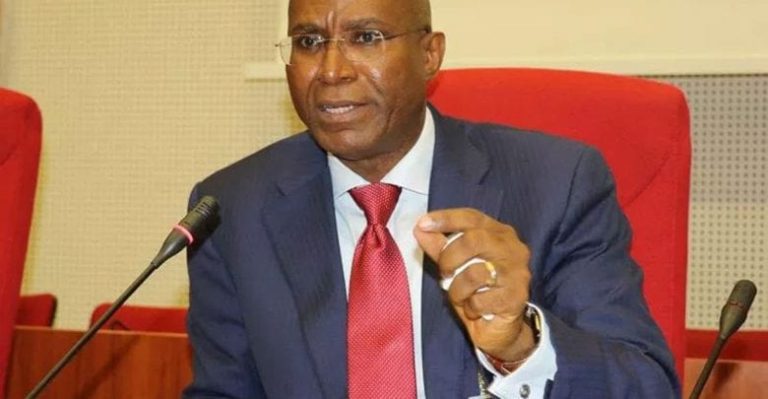
Former Deputy Senate President, Ovie Omo-Agege, has disclosed that 10 lawmakers from the Peoples Democratic Party (PDP) in the Delta State House of Assembly are set to defect to the All Progressives Congress (APC).

Omo-Agege, who was the APC governorship candidate in the 2023 elections, made the revelation on Saturday while welcoming a two-term chairman of Isoko South Local Government Area, Chief Itiako Ikpokpo (aka Malik), into the APC.

Speaking at the event in Uro-Irri, Omo-Agege declared that the PDP’s dominance in Delta State was “rapidly crumbling.”

“A major realignment in the power structure of the Delta State House of Assembly is looming as 10 lawmakers are set to dump PDP for APC,” he stated.

He explained that with seven APC lawmakers already in the House, the defection of 10 PDP members would increase APC’s numbers to 17, potentially shifting the House’s leadership in favour of the opposition.

Omo-Agege attributed APC’s growing strength in Delta State to the economic policies of President Bola Tinubu, which he claimed had boosted the state’s federal allocations to over N1trillion in just a year and a half.

“The financial improvements under Tinubu’s administration show that APC is delivering good governance. More politicians are aligning with the ruling party because of these achievements,” he said.

He described Chief Itiako Ikpokpo’s defection as a turning point for the APC.

“I have persistently pressured Ikpokpo to join the APC, and today, he has finally made the move,” he added.

In his remarks, Ikpokpo pledged to strengthen the APC’s structure in Delta State and expand its political influence.

“We must welcome new entrants with open arms because unity is key in defeating PDP in 2027,” he declared.

Supreme Court Dismisses Gov. Fubara’s Appeal Challenging Amaewhule-led Assembly

0

A five-man panel of the Supreme Court led by Justice Uwani Abba-Aji has dismissed the appeal filed by the Governor of Rivers State, Siminalayi Fubara, challenging the leadership of the Rivers State House of Assembly led by Martin Amaewhule.

Justice Uwani Abba-Aji while dismissing the appeal awarded a cost of two million naira against the governor payable to the Rivers State House of Assembly as the first respondent and Martin Amaewhule as the second respondent.

The dismissal of the appeal by Fubara was hinged on the withdrawal of the suit by his counsel, Yusuf Ali.

https://www.google.com/amp/s/www.channelstv.com/2025/02/10/supreme-court-dismisses-fubaras-appeal-challenging-amaewhule-led-assembly/amp/%3futm_source=webpush&utm_medium=push&utm_campaign=Supreme%2bCourt%2bDismisses%2bFubara’s%2bAppeal%2bChallenging%2bAmaewhule-Led%2bAssembly%25C2%25A0

Jonathan, Diri, Others Unveil WEEP Beneficiaries In Yenagoa

0

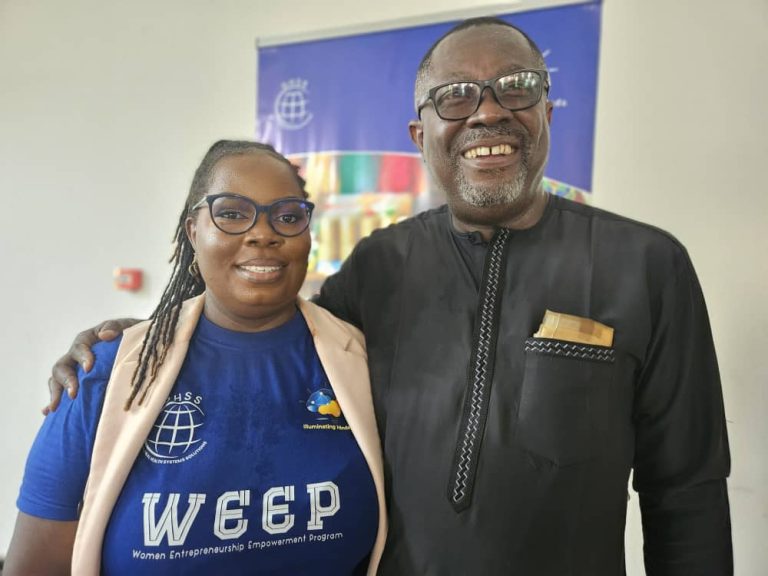
Former President of Nigeria, Dr. Goodluck Ebele Jonathan, GCFR, has launched the Women Entrepreneurship Empowerment Program (WEEP), a transformative initiative funded by Global Health Systems Solutions (GHSS) and implemented by Illuminating Minds.

Speaking as the Chief Special Guest at the launch in Yenagoa, Dr. Jonathan urged the 70 beneficiaries of the pilot program to remain resilient and excel in their chosen fields. He commended the facilitator of the project, Dr. Itari Turner, for her commitment to women’s empowerment and emphasized the need for an innovative model that would depart from traditional approaches to effectively uplift the girl child and combat poverty in local communities.

“The fate of the local economy rests in the hands of women entrepreneurs,” Dr. Jonathan noted, encouraging the beneficiaries to be intentional in their pursuits and serve as worthy ambassadors of the program.

Bayelsa State Governor, Senator Douye Diri, represented by the Secretary to the State Government (SSG), Prof. Nimibofa Ayawei, also commended Illuminating Minds for its targeted intervention in local communities. He reaffirmed the state government’s commitment to supporting the initiative and ensuring its long-term success.

Former Deputy Governor of Bayelsa State, Rear Admiral Gboribiogha John Jonah (retd), who chaired the occasion, and the keynote speaker, Dame Didi Walson-Jack, mni, Head of the Civil Service of the Federation, represented by Bayelsa State Head of Service, Barr. Biobelemeye Onyema, urged the beneficiaries to maximize the opportunity. They cautioned against the common practice of selling starter packs provided after training, stressing that the true impact of the program would be measured by their ability to create sustainable businesses and careers.

Providing an overview of WEEP, the Convener and Executive Director of Illuminating Minds, Dr. Itari Turner, described women’s empowerment as a necessity for societal progress. “Across the world, women have consistently demonstrated that when equipped with the right tools, resources, and opportunities, they can transform communities, economies, and entire nations. Empowering women means strengthening families, driving economic growth, and building resilient societies,” she stated.

She explained that WEEP was strategically designed to address barriers faced by women in business and professional development by offering structured and sustainable interventions.
“The program provides a holistic approach, equipping women with essential skills, financial support, and access to networks. Through business development, employability training, and vocational education, WEEP aims to create thriving communities where women-led enterprises can innovate and compete on a larger scale,” she added.

Also speaking at the event, the Executive Director of GHSS, Prof. Patrick Njukeng, emphasized the importance of giving women and girls a voice in a society that often sidelines their development. He encouraged beneficiaries to seize the opportunity to break free from poverty and societal limitations.
Several beneficiaries expressed gratitude to GHSS and Illuminating Minds, pledging to make the most of the program.

A key highlight of the event was the formal unveiling of the 70 beneficiaries, alongside a cultural display featuring a special dance and drama performance by the Izon cultural troupe.

Judge Blocks Trump’s Bid To Restrict Birthright Citizenship

0

‘Denial of citizenship will cause irreparable harm’ – US judge blocks Trump’s order on birthrighty.

A federal judge on Wednesday blocked the implementation of United States of America President Donald Trump’s executive order targeted at restricting birthright citizenship in the United States.

The ruling indefinitely halts one of Trump’s controversial policies, which was set to take effect nationwide on February 19.

According to The New York Times, District Judge Deborah Boardman stated that denying birthright citizenship would cause irreparable harm.

Judge Boardman emphasized that Trump’s order conflicts with the plain language of the 14th Amendment, which guarantees citizenship to anyone born in the country.

“The denial of the precious right to citizenship will cause irreparable harm.

“No court in the country has ever endorsed the president’s interpretation,” Boardman said, adding “This court will not be the first,” as reported by The New York Times.

The latest ruling follows a similar decision by a federal judge in Washington state, who issued a 14-day stay on the order in January.

Recall that Judge John Coughenour described the measure as “blatantly unconstitutional,” prompting Trump to announce his intention to appeal.

The legal challenge centres on the 14th Amendment, ratified in 1868, which grants citizenship to all individuals born in the United States.

DAILY POST reports that Trump’s executive order put forward the argument that those in the country illegally or on temporary visas were not subject to US jurisdiction and therefore not entitled to citizenship.