Thursday, May 7, 2026
Home Blog Page 838

Edo Election: Group Slams INEC Over REC Appointment

0

A rights and integrity advocacy group, Network for Best Practice and Integrity in Leadership (NEBPRIL), has called on the Independent National Electoral Commission (INEC) to douse the palpable apprehension among the Edo electorate over the appointment of Johnson Alalibo as Resident Electoral Commission (REC) to the state.

The group made the call in a letter dated September 3, 2020, to INEC chairman, Prof. Mahmoud Yakubu. It raised concern over the ongoing controversy over the recent redeployment of Alalibo, “who has had obvious political exposure, which is evident in his recent participation as an aspirant in governorship election in Bayelsa state, under the platform of the All Progressives Congress (APC), a major contender in the coming Edo election.”

It therefore called  on INEC management to “take urgent steps to review this obvious insensitive, controversial decision to reflect its core values  of impartiality, credibility and integrity, in order not only to do the right thing, but to be seen to have done the right thing in the interest of peace and democracy.”

The letter signed by its chairman, Hon. Afam Ogene, titled “urgent need to reverse the insensitive and seeming partial and constitutional breach in the appointment of the new Edo state Resident Electoral Commissioner (REC)”, and released to the media, questions the timing, legality and propriety of appointing a REC that was so politically exposed, especially coming at a time that the “major political parties in the state are already enmeshed in bitter rivalry, thus raising questions of the objectivity, sensibility and intent of such a controversial decision”

NEBPRIL told the INEC chairman that particular action by the electoral body is not only contributing to the rising “political tension in Edo state,  but also appears to contravene the provision of the 1999 constitution of the Federal Republic of Nigeria,as amended, that states that for anyone to qualify to be appointed as REC, such person must not be a member of a political party.

“The idea behind this particular amendment is to ensure impartiality is carrying out their duties in line with the core values of INEC, as published in its website and other documents, which include “impartiality: INEC shall ensure a level playing field for all political actors; credibility: INEC shall ensure that no action is taken in support of any candidate or political party”.

The group opined that while it accepted the fact that “it is within INEC’s rights to move its employees at any given time, to other stations as its administrative needs may demand, the timing of this particular appointment, close to the election date, his prior political exposure, especially in relation to membership of a major party in the coming election and the consequent partisan controversy, throw up not only constitutional questions, but also those of morality, propriety and fairness.

NEBPRIL emphasized  that “the final result of an election in itself, doesn’t authenticate a free and fair elections, rather the whole processes, before, during and after the election, including conducts of everyone involved in the election, especially decisions, negligence, actions and inactions of the electoral umpire, that may directly or indirectly inhibit fairness and equity, or compromise the integrity of the final outcome.

“We call your attention to the position of INEC in 2019 in a case of an INEC REC in Cross River, Frankland Briyai, who contested governorship election in Bayelsa state, as published by Premium Times on August 15, 2019. Dr. Festus Okoye, INEC’s Chairman, Information and Voter Education Committee, while responding to the question on the eligibility of the REC to remain a member of INEC after being identified as a member of a political party. “To emphasise the position of the commission, he paraphrased the Section 156(1)(a) and Paragraph 14(3)(b) of the constitution which noted that for one to be qualified for appointment as REC, one must not be a member of a political party.” Premium Times reported.

“So We ask INEC, what has changed from the time you chose to stand by the tenets of the constitution and democratic principles regarding retaining a REC that was exposed politically? Even if the Edo REC had probably resigned as member of APC, (which is still in doubt), is it not insensitive for him to be posted to Edo seemingly on the eve of an election in which major political parties in the state are already enmeshed in bitter rivalry, thus raising questions of objectivity and intent of such a controversial decision? This we fear may impact negatively not only the process and outcome of the election, but also the trust and belief of the electorate in INEC’s integrity as an unbiased umpire.” NEBPRIL stated.

Ugandan man sentenced to 17 years imprisonment for hacking wife to death

0

A Ugandan man has been sentenced to 17 years in prison for killing his wife over alleged extra-marital affair.

Simon Shimanya, who confessed he killed his 32-year-old wife and former nurse at International Hospital Kampala, was sentenced on Wednesday, September 2.

The Chief Magistrate of Nabweru Court in Wakiso District, Patricia Amoko, jailed Shimanya, reasoning that the manner in which he killed the deceased using an axe was traumatic and gruesome.

Shimanya was arrested on August 12 from Isingiro District and charged with manslaughter in connection with the August 1 violent murder of nurse Violet Kakai at their home in Bbumbu –Kiteezi, Wakiso District.

The 40-year-old teacher admitted using an axe to hack his 32-year-old wife and mother of three to death.

During the sentencing of Shimanya, the Chief Magistrate held that the accused caused a severe head injury that led to death of his wife.

She reasoned that the court had considered the fact that the children had already lost one parent and therefore needed someone to comfort them.

Shimanya appeared before court via video conference in a session held at Buganda Road Court.

While confessing to the crime, Shimanya explained that it was not his intention to kill his wife but it was anger resulting from provocation as the couple had escalating marital issues.

He had asked for a lenient punishment to enable him go back home to take care of his children.

JUST IN: FG adjusts curfew, introduces 4hrs movement restriction

0

The Federal Government has declared that it would be making adjustment on restrictions of both human and vehicular movements and introduced a new method of curfew expected to last for four hours daily.

It said that both human and vehicular movements were expected to end at 12 am and resume 4 am daily and that the move was to continue observing level of coronavirus transmission.

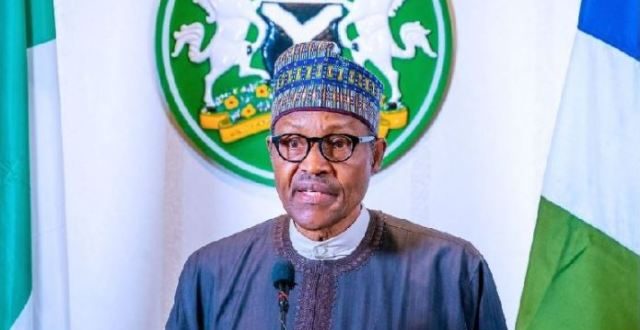
BREAKING: Buhari Approves Release Of 30,000 Tons Of Maize To Residents

0

Nigeria’s President, Muhammadu Buhari, on Thursday said he had approved the disbursement of 30,000 tons of maize from the national reserves.

Buhari said this would help in easing  the current high cost of poultry production amongst animal feed producers.

He stated this in a statement via his official Twitter handle obtained by Equity News.

Road safety must be considered a public health concern in Nigeria By Toyin Ojora Saraki

0

Road safety in Nigeria is both a global health issue and a matter calling for focused National concern: road traffic accidents are the leading cause of death in adolescents in Nigeria. More broadly, there has been an upsurge in the proportion of traffic fatalities witnessed in a number of developing countries while developed nations are witnessing downward trends.
That is why I welcome the United Nations General Assembly and member states in passing an historic resolution endorsing the “Stockholm Declaration”, aiming to improve and save lives on the world’s roads, today.

Nigeria has the second largest road network in Africa, and our latest figures show that Nigeria is among the top 50 countries with the highest road traffic deaths. According to the NRSS, population-road ratio was estimated to be 860 persons per kilometre roadway while vehicular density stood at about 39 vehicles per kilometre roadway. Nigeria recorded 337,301 road traffic crashes from 1990 to 2012, out of which 28.6% were fatal, 44.7% were serious, and 26.7% were minor. The overwhelming majority of road traffic deaths and serious injuries are preventable and, despite some improvements, they remain a major public health and development problem that has broad social and economic consequences which, if unaddressed, may affect progress towards the achievement of the Sustainable Development Goals (SDGs).

While each country has primary responsibility for its own economic and social development, the role of national policies, priorities and development strategies cannot be overemphasized in the context of reaching the SDGs. At the same time, international public finance plays an important role in complementing the efforts of countries to mobilize public resources, especially in the poorest and most vulnerable countries with limited domestic resources.

I acknowledge the work of the UN system, in particular the leadership of the World Health Organization, in close cooperation with the UN regional commissions, in establishing, implementing and monitoring various aspects of the Global Plan for the Decade of Action for Road Safety 2011–2020. I recognize the commitment of the United Nations Human Settlements Programme (UN-Habitat), the United Nations Environment Programme, the United Nations Children’s Fund and the International Labour Organization, among other entities, to supporting those efforts as well as that of the World Bank and regional development banks to implement road safety projects and programmes, in particular in developing countrie.

I hope that this historic resolution will encourage all Member States to promote multi-stakeholder partnerships. I point to my Wellbeing Foundation Africa’s anatomical simulation training techniques that aim to improve health workers’ skills to address the safety of vulnerable road users, the delivery of emergency care and first aid to victims of road traffic accidents. Notably, this must happen more aggressively in developing and least developed countries, and we must provide road traffic crash victims and their families with universal access to health care in the pre-hospital, hospital, post-hospital and rehabilitation and reintegration phases. In addition, I will do my part to raise funds to bring in the right equipment for road accident trauma training.

I must particularly commend the leading role of Oman and the Russian Federation in drawing the attention of the international community to the global road safety crisis. And, I must congratulate the Member States that have taken a leadership role by adopting comprehensive legislation on key risk factors, including the non-use of seat belts, child restraints and helmets, the drinking of alcohol and driving, and speeding, and drawing attention to other risk factors, such as low visibility, medical conditions and medicines that affect safe driving, fatigue and the use of narcotic drugs and psychotropic and psychoactive substances, mobile phones and other electronic and texting devices.

With the lessons learned from the Decade of Action for Road Safety 2011–2020, the Global Development Community recognises the need to promote an integrated approach to road safety such as a safe system approach and Vision Zero. We must pursue long-term and sustainable safety solutions, and strengthen national intersectoral collaboration, including engaging non-governmental organizations, civil society and academia, as well as businesses and industry, which contribute to and influence the social and economic development of countries. I hope that state and non-state actors and policy makers will commit to prevent road traffic injuries, while I appreciate the WHO and its Director-General, Dr Tedros Ghebreyesus for its role in implementing the mandate conferred upon it by the General Assembly to act, in close cooperation with the UN regional commissions, as a coordinator on road safety issues within the UN system.

Providing basic conditions and services to address road safety is primarily a responsibility of governments. This is especially in view of the decisive role that legislative bodies can play in the adoption of comprehensive and effective road safety policies and laws and their implementation. However I recognize nonetheless that there is a shared responsibility to move towards a world free from road traffic fatalities and serious injuries and that addressing road safety demands multi-stakeholder collaboration among the public and private sectors, academia, professional organizations, non-governmental organizations and the media. That is why I acknowledge that increasing road safety activities and advocating increased political commitment to road safety, will require working towards setting regional and national road traffic casualty reduction targets, elaborating global road safety-related legal instruments, including international conventions and agreements, technical standards, resolutions and good practice recommendations. It also requires domesticating and servicing 59 global and regional legal instruments that provide a commonly accepted legal and technical framework for the development of international road, rail, inland water and combined transport, to strengthen Nigeria’s national road safety management capacity.

As we approach the end of this Decade of Action for Road Safety, and start on the relevant road safety target dates set out in the 2030 Agenda, Nigeria must deepen national engagement with the new 2021-2030 time frame for a reduction in road traffic deaths and injuries. To push forward in the Second Decade of Action for Road Safety, with a goal of reducing road traffic deaths and injuries by at least 50% from 2021 to 2030, I support the call upon Member States and stakeholders to continue action through 2030 on all the road safety-related targets of the SDGs, including target 3.6, in line with the pledge of the 2019 High-Level Political Forum on Sustainable Development convened under the auspices of the General Assembly. We must especially take into account the remaining decade of action to deliver the SDGs by 2030 in their entirety.


Source: toyinsaraki.org

Twitter Account Linked To Indian Prime Minister, Modi, Hacked

0

Twitter has said that an account for the personal website of Indian Prime Minister Narendra Modi has been hacked.

A series of tweets were sent from the account asking followers to donate cryptocurrency to a relief fund.

Twitter said it was aware of the activity and had taken steps to secure the compromised account.

This is the latest high-profile Twitter security breach after similar attacks in July on US presidential hopeful Joe Biden and Tesla founder Elon Musk.

The account, with more than 2.5m followers, is the official Twitter handle for Mr Modi’s personal website.

His personal Twitter account, which was unaffected by this incident, has more than 61m followers.

“We are actively investigating the situation. At this time, we are not aware of additional accounts being impacted,” a Twitter spokeswoman told the BBC in an emailed statement.

The tweets, which have now been taken down, asked followers to donate cryptocurrency to the PM National Relief Fund.

Less than two months ago Twitter said 130 accounts had been targeted in a major cyber-attack of celebrity accounts. But only a “small subset” of those 130 accounts had control seized by the attacker.

The security breach saw accounts including those of Barack Obama, Elon Musk, Kanye West and Bill Gates tweet a Bitcoin scam to millions of followers. The FBI was called in to investigate.

The apparent scam spread to mainstream celebrity accounts such as Kim Kardashian West and those of corporations Apple and Uber.

Attackers were able to bypass the accounts’ security because they had gained access to Twitter’s own internal administration tools.

Twitter said: “Since the attack, we’ve significantly limited access to our internal tools and systems to ensure ongoing account security while we complete our investigation.”

Despite it being obvious to many that it was a scam, the hackers received hundreds of transfers, worth more than $100,000 (£75,000).

Cryptocurrencies are extremely hard to trace and the account the cyber-criminals used had quickly been emptied.

BBC

We Can’t Afford $1m Registration Fee, Nigerian Traders In Ghana Tell Gbajabiamila

0

The Nigerian Union of Traders in Ghana have told Femi Gbajabiamila, Speaker of the House of Representatives, that majority of their members cannot pay the $1 million registration fee mandated by the Ghanian government.

This position was made known when Gbajabiamila met with the leaders of the union and selected stakeholders at the Nigerian High Commission in Accra, the Ghanaian capital, on Wednesday, according to a statement by Lanre Lasisi, the Special Adviser to the Speaker on Media and Publicity.

The Speaker arrived in Ghana on Wednesday for a two-day official visit to his Ghanaian counterpart, Professor Mike Oquaye, for what he described as “legislative diplomacy”.

Speaking on behalf of the traders, Chukwuemeka Levi Nnaji, leader of the traders union, was quoted to have said that Nigerian traders had been subjected to hardship by the Ghanaian authorities since 2007.

Nnaji said many Nigerian traders could not afford the latest $1 million trade registration fees, noting that those that have not paid still had their shops under lock and key.

He explained that Nigerian traders had their businesses registered with appropriate agencies while they pay their taxes as and when due, yet they were still subjected to harsh treatment by the Ghanaian authorities.

He appealed to Gbajabiamila to ensure that the resolutions arrived at are implemented by the Ghanaian authorities.

The Ghanaian Speaker, while receiving his Nigerian counterpart, expressed confidence that an amicable resolution would be reached on the issues.

Responding, Gbajabiamila said he was hopeful that Nigeria and Ghana would arrive at mutually acceptable resolutions on the trade dispute.

He said: “Brothers will always have squabbles, healthy ones. National interests on both sides will always come to play. But it is not the misunderstanding that matters; it is how you resolve it that matters.”

JUST IN: Buhari Declares November 1 As National Youth Day

0

President Muhammadu Buhari has declared 1 November of every year as the National Youth Day.

This was announced in a post on Twitter by Sunday Dare, Minister of Youth and Sports Development, on Wednesday.

According to the minister, President Buhari made this known during the Federal Executive Council meeting on Wednesday.

“Today, President Buhari in Council approved November 1st every year as the National Youth Day to celebrate, draw attention to and find solutions to the issues that affect the Youth. Mr. President as again demonstrated his commitment to supporting youth-focused policies. Thank You,” Dare tweeted.

Although the meeting was virtual, Buhari presided from the Council Chamber of the Presidential Villa, Abuja while some ministers participated virtually from their offices.

Buhari Blames ‘Corrupt Middlemen’ For Increase In Prices Of Foodstuffs

0

President Muhammadu Buhari has blamed the increase in prices of foodstuffs in the country on corrupt middlemen.

He also blamed other food traders, who serve as the link between farmers and consumers in Nigeria.

In a statement on Wednesday, Garba Shehu, presidential spokesperson, said the President will address the price hike.

According to Shehu, the administration has started putting in place measures to ameliorate the situation.

“While Providence has been kind to us with the rains and as such an expectation that a bumper harvest would lead to crashing of food prices and ease the burdens on the population, government’s concern is that the exploitative market behaviour by actors has significantly increased among traders in the past few years and may make any such relief a short lived one,” the statement read.

“This year has indeed tested us in ways that globalization has never been tested since the turn of the century.

“These challenges have disrupted lives and supply chains all over the world, and Nigeria has not been spared.

“These challenges have disrupted lives and supply chains all over the world, and Nigeria has not been spared.

“The effect has been deeply felt in the delays encountered in procurement of raw materials for local production of fertilizer (damaging standing crops before harvest) and the speculative activities by a number of rice processors who are ready to pay for paddy at any price to keep their mills running non-stop.

“But of all these problems, the most worrisome are the activities of “corrupt” middlemen (with many of them discovered to be foreigners) and other food traders who serve as the link between farmers and consumers found to be systematically creating an artificial scarcity so that they can sell at higher prices.

“In dealing with these problems, the administration has, in line with its ease of doing business mantra, avoided imposing stockholding restrictions, in order not to discourage investments in modern warehousing and cold storage.

“The President has just approved the release of food items from the strategic reserves, including 30,000 tons of maize to animal feeds producers to ease the high cost of poultry production.

“President Buhari’s administration has raised some of these issues with the various food producer associations involved, particularly those of rice and other grains.

“With their cooperation, the high food prices should soon be a thing of the past.

“In addition, investments in the agro-allied sector by the private sector will significantly increase domestic production of farming inputs especially fertilizer, further crash prices, create employment and ease the pressure on our foreign reserves.

“One of these major investments is the Dangote Fertilizer plant which is projected to come on stream by the 4th quarter of 2020.

“Additionally, key government agencies and policymakers with the responsibility and visibility on market activities remain focused on removing structural impediments to the production and free movement of agricultural products.

“President Buhari once again assures Nigerians of his dedication to bringing this issue to a swift end.

“Nigerians have already suffered grave economic losses owing to the coronavirus pandemic, and the Buhari administration will do all in its power to ensure that our people do not continue to suffer additionally from high food prices.”

NBA wades into the reported case of refusal by the Federal correctional centre to allow lawyers access to Yahaya Sharif-Aminu, who was sentenced to death by the kano state upper sharia court

0

The President of the Nigerian Bar Association, Mr. Olumide Akpata, in response to the allegations on the social media by Nigerians and calls by members of the Nigerian Bar Association on the Federal Correctional Centre, Kano to allow Yahaya Sharif-Aminu have access to his lawyers, has set up a two-man Fact-Finding Committee made up of the NBA 1st Vice President, Mr. John Aikpokpo-Martins and the National Welfare Secretary, Mr. Kunle Edun. The committee was mandated to urgently embark on a fact-finding mission to the Federal Correctional Centre in Kano.

On the 2nd day of September 2020, the 1st Vice President and the National Welfare Secretary visited the said Correctional Centre and sought audience with the Controller of the Correctional Centre.

Recall that Yahaya Sharif-Aminu was recently sentenced to death by the Kano Upper Sharia Court having been convicted for blasphemy. The Governor of Kano State has been reported to have promised to sign the execution warrant if Yahaya Sharif-Aminu fails to appeal the death sentence within the statutory time allowed by law.

At the Correctional Centre, the NBA National Officers were informed that the Controller of the Correctional Centre was not available. They were granted an audience by the Second in command.

The NBA National Officers informed the said Second in Command about their mission at the Federal Correctional Centre, Kano. They requested to see Yahaya Sharif-Aminu in order to ascertain the veracity of the allegation that lawyers were not allowed to gain access to him. The said Second in Command informed the said National Officers that he does not have the authority to grant the access sought, but would seek the permission of his boss, the Controller (who was not available as at the time of the visit) before allowing the National Officers access to Yahaya Sharif-Aminu.

The afore-mentioned National officers were eventually denied access to Yahaya Sharif even after the said Second in Command made the call to his superior.
However, the said National Officers were able to confirm that Yahaya Sharif-Aminu has been denied access to any lawyer since his conviction. They were further informed that Yahaya Sharif-Aminu was not represented by a lawyer during the trial at the Upper Sharia Court.

The Nigerian Bar Association states that since the visit was a fact finding mission, the NBA shall take further steps in ensuring that Yahaya Sharif-Aminu is given the requisite opportunity to exercise his constitutional right of appeal and his right to be represented by a lawyer of his choice. It is imperative that Yahaya is granted access to a lawyer of his choice.

Dr. Rapuluchukwu Ernest Nduka
National Publicity Secretary, Nigerian Bar Association