Friday, May 1, 2026
Home Blog Page 79

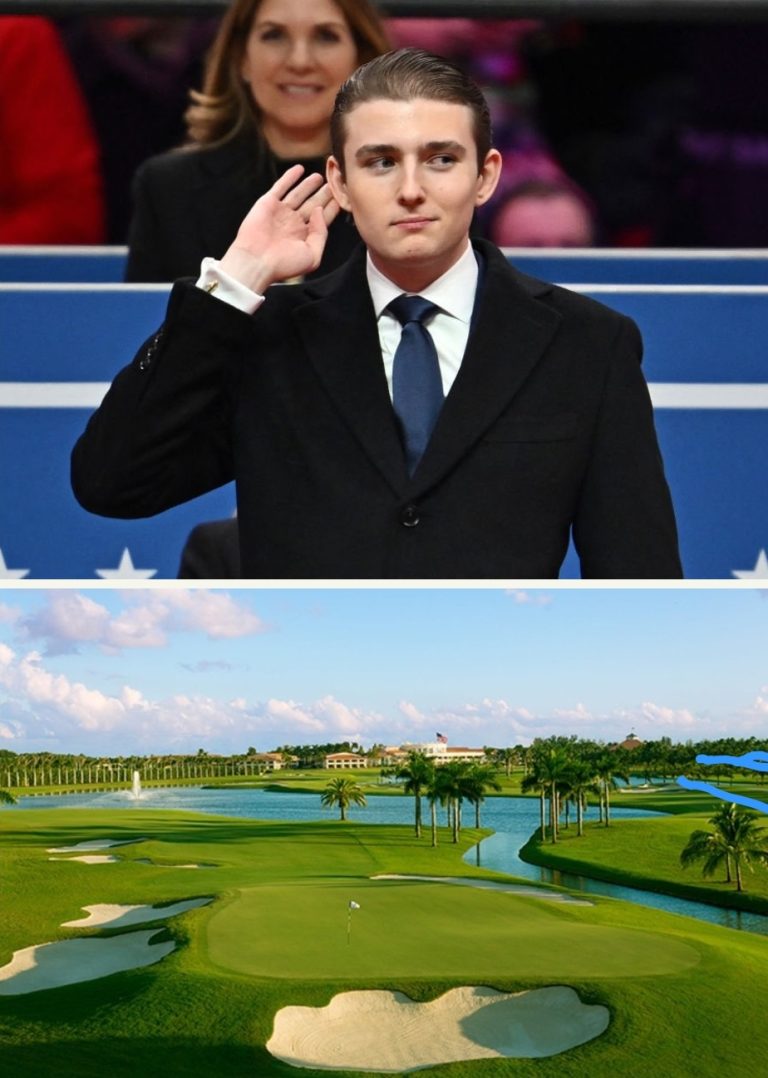
Barron Trump Is Launching His Own Luxury Real Estate Company

0

Barron Trump, 18, appears to be following in his father’s footsteps — as he’s preparing to launch a luxury real estate venture with two young business partners.

The youngest son of President Donald Trump briefly incorporated his business, Trump, Fulcher & Roxburgh Capital Inc., last July in Wyoming, but the company was dissolved just four months later after Donald’s election win, according to a report in Newsweek.

The venture, which had listed Mar-a-Lago in Palm Beach as its principal address, according to records obtained by The Post, is reportedly set to relaunch in spring 2025

Barron’s co-founder, Cameron Roxburgh, told the outlet the company was paused to avoid election-related media attention — but will eventually focus on high-end real estate projects, including golf courses and properties in Utah, Arizona and Idaho.

When reached for comment, Roxburgh — a high school classmate of Barron — told The Post they were “working out logistics,” and “might relaunch” in the spring.

Prosperity Cup Season Six In Retrospect

0

… As Teams Purchase Registration Forms.

The Bayelsa Governor’s Football Tournament christened the “Prosperity Cup”, season six may have come and gone but the sweet memories of champions Ogboinbiri FC of Southern Ijaw Local Government Areas is still fresh in the minds of football enthusiasts across the nation.

According to a renowned philosopher, Albert Cullum Aesop “Good things come in small packages”. The tournament, which started with 106 teams in 2015, then called Restoration Cup, has today become Nigeria’s  biggest grassroots soccer competition, with over 200 teams.

Last year Ogboinbiri FC emerged champions of the 6th edition of Nigeria’s biggest grassroots football spectacle, the oil rich-Ogboinbiri side beat Nembe City FC 3-0 to lift the tournament in a final watched by then Minister of Sports Development, Senator John Enoh, as well as the President of the Nigeria Football Federation (NFF), Alhaji Ibrahim Gusau.

Ogboinbiri FC joined Ewo-ama FC of Brass in 2015, Peretorugbene FC of Ekeremor 2018 and Okolobiri FC in 2019/2020. The competition returned in 2022, after a brief break occasioned by the COVID 19 pandemic that ravaged the world, with Eternal Grace Ministry EGM FC emerging champions.

Krusaders Feeders FC of Ekeremor were crowned champion in 2023 after beating De Grace FC of Yenagoa by 4-3 on penalties after 1-1 draw in regulation time at the Samson Siasia Stadium.

Apart from participation and winning trophies the showpiece has continued to positively engage the youths in Bayelsa as well as engendering unity among grassroots players, coaches and communities in the state.

Ogboinbiri FC qualified from the Amassoma center having taken their opponents to the cleaners in the preliminary round, and went ahead to triumph as Local Government champions, spanking Adulama FC 2-0 in a final decided at the Southern Ijaw headquarters, Oporoma.

Champions Ogboinbiri FC in the quarter finals came from a goal down to beat Wodu FC, who earlier ended the participation of Mover’s FC of Otuasega in the 2024 Prosperity Cup at the Nembe City Stadium, Nembe, by 3 goals to one.

The oil rich-Ogboinbiri side went ahead to pip Bayelsa United Feeders 1-0 in the semi finals while Nembe City FC got to the final of the showpiece with a victory over their eastern rivals, Kongho FC of Brass LGA 1-0 to set up the clash with Ogboinbiri FC.

The Bayelsa State Governor’s Football Tournament, tagged Prosperity Cup, season six, also for the first time witnessed local government finals. In Ogbia LGA Mover’s FC of Otuasega beat Anyama FC 2-1 to become Ogbia champions, Ogboinbiri FC of Southern Ijaw spanked Adulama to lift the LGA trophy at Oporoma town.

In Yenagoa, Bayelsa Medical University BMU FC beat Afini FC 2-1 to emerge the local government champions, Agbere FC of Sagbama triumphed in Sagbama LGA against a youthful Bayelsa United Feeders side by 5-4 on penalties after a barren draw, Kongho United, Nembe City, Odi United and Krusaders Feeder FC won in their respective LGA finals.

Niger Delta University NDU Queens were crowned champions in the women’s category of the tournament, Peremo Soccer Academy came second while Afini Ladies went home with the third prize money. Leave Am For Me FC triumphed in the Para Soccer category of the championship.

In the meantime, the 7th edition of Nigeria’s biggest grassroots football spectacle will have three categories in the competition, namely male, female and the para category.

According to the organizers, the prize money has been increased from N20 million in previous editions, to N50 million this year!

The best male team will smile to the bank with a hefty N10 million, the first runners up will receive N5 million, second runner up will go home with N2.5 while the 4th placed team gets N1.5 million. The sum of one million Naira has been set aside for consolation prizes, bringing the total prize money in this category to N20,000, 000.

In the female category, the sum of N10 million is up for grabs as the winners are expected to receive the sum of N5 million, the second placed team will run home with N2.5 million while the third placed team will be N1.5 million richer. The fourth placed team will receive the sum of N500,000. The same amount of N500,000 will be available as consolation prize money in this category.

The sum of N3 million has been set aside as prize money for the para category.

The champions at the local government level will receive the sum of one million Naira while the runners up will go home with the sum of N500,000.

Sale of registration forms is currently ongoing at N25,000 for the male category and N15,000 for the female category.

US Oil Imports From Nigeria To Drop As Trump Plans Energy Emergency Order

0

US oil imports from Nigeria to drop as Trump plans energy emergency order

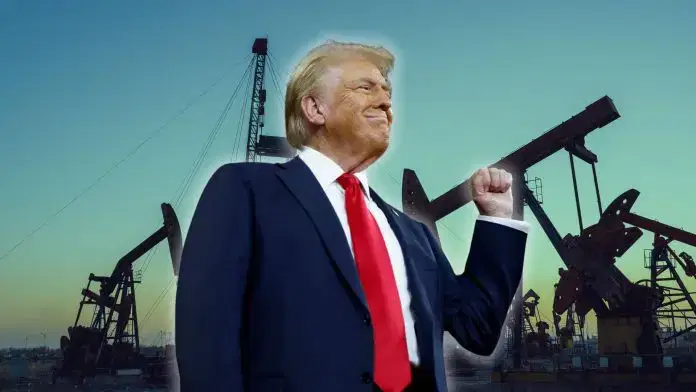
THE President Trump planned an executive order and declaration of a national energy emergency, targeted at enhancing the United States oil and gas production could impact on Nigeria’s oil demand and revenue generation.

This was even as prices of oil, including Nigeria’s Bonny Light dropped to $80 per barrel from $83 per barrel, yesterday, as traders await U.S. President-elect Donald Trump’s inauguration in the hope of some clarity on his policy agenda.

However, the United States used to import a bulk of its crude oil from Nigeria, but the commencement of shale oil, deliberate government policy and other factors, reduced the nation’s oil and gas import in recent times.

Despite the reduction, recent data indicated that the United States oil and gas import from Nigeria was worth $4.73 billion in 2023.

According some experts, the revenue would likely decrease in 2025 and beyond following President Trump executive order and declaration of a national energy emergency.

In an interview with Vanguard, yesterday, an economist and Chief Executive Officer, Centre for the Promotion of Private Enterprise, CPPE, Dr Muda Yusuf, said: “Naturally, if investments in oil and gas increase in the United States and the US of course is a major oil producer that will increase the global supply. If global supply increases, energy prices are likely to fall.

“So, if energy prices fall, of course, that has implications for our own revenue. So it’s likely to negatively impact on our oil price, on our oil revenue but it may be positive for businesses because a reduction in crude oil price or commodity or global oil price typically reduces the cost of petroleum products, including the Premium Motor Spirit, PMS, also known as petrol, diesel and jet fuel.

“However, it’s a double-edged sword as changes, if the price increases; it will favour the government and penalize the private sector, who uses energy. If the price drops, it penalizes the government and benefits the citizens and investors because their energy costs will drop.

“That is one implication of the Trump presidency. The second implication is, if he’s able to calm down the situation between Russia and Ukraine. Russia is a major oil producer as well, a major gas producer.

“So, he’s able to calm down Russia and Ukraine and he has the potential to do that because it is part of the commitment that he has made.

Trump revokes ‘nearly 80 destructive radical executive actions’ of Biden administration
“If he’s able to do that, then we are likely to see more production of oil. We are likely to see the lifting of sanctions on Russia and if that happens, oil production will increase and prices will fall. Again, that will affect revenue negatively, but it will benefit businesses because cost of energy will drop.

“So, that is the nexus for me between what is happening with Trump policies and our domestic economy, especially the oil and gas sector.”

On his part, a Port Harcourt-based energy analyst, Dr. Bala Zakka, said: “Major importers from Nigeria, indirectly encourage our nation to be lazy, exporting crude oil instead of processing to add more value to the economy.

“I strongly believe that by reducing importation through his policies, President Trump would encourage increased refining in Nigeria and other African nations. We need to expand our refining capacity to refine more petroleum product and derivatives, capable of adding value to the domestic economy.”

Also, the National President of Oil and Gas Service Providers Association of Nigeria, OGSPAN, said: “Every nation continuously reviews its environment and takes decisions on the best ways and means to grow its economy. Nigeria should do the same in order to reduce dependence on oil and other economies.”

Meanwhile, the Petroleum Products Retail outlets Owners Association of Nigeria, PETROAN, has assured consumers that the coming on stream of the Dangote Refinery and the NNPC Limited owned Port Harcourt refinery would ensure easy flow of petrol during the Yuletide season.

PETROAN in a statement by its National Public Relations Officer, Dr Joseph Obele said the petrol supply agreement reached with the 650,000 barrels per day Dangote Refinery would avert any possible shortage of premium motor spirit during the period.

This, according to Dr Obele, is due to the efforts of PETROAN distribution technical committee incharge of planning and execution of zero-fuel scarcity strategy.

“We are happy that Nigerians are going to travel effortlessly during this period of the year”, the Group added.

Recall that the National President of PETROAN, Dr Billy Gillis-Harry, on Monday 2nd December 2024 led the negotiation team of the association to a fruitful strategic business meeting with the management of Dangote Refinery in Lagos.

PETROAN noted that the “sealing of a transactionary deal with Dangote Refinery was the aftermath of a successful buyer-seller negotiation and agreement secured by PETROAN at the strategic meeting.

“PETROAN National President commended the Vice President of Dangote group & Managing Director of Dangote Refinery, Mr. Devakumar V. G. Edwin, for his cooperation and strategies deployed so far to make petroleum products available to all Nigerians throughout the end of year festivities and beyond.”

CBN Vows To Tackle Buying, Selling Of Naira Notes

0

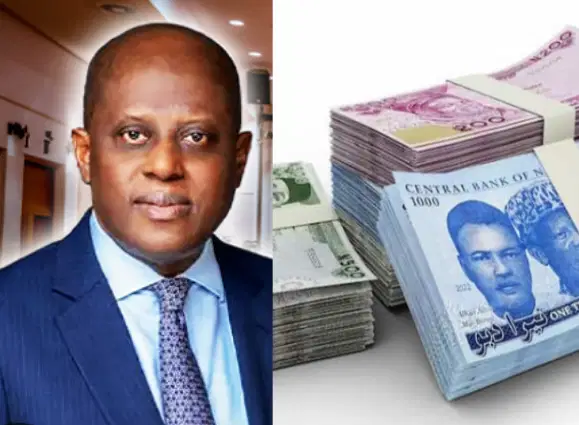
Governor of the Central Bank of Nigeria (CBN), Dr. Olayemi Cardoso, has vowed to tackle the commoditisation ( buying and selling) of Naira notes, which has become widespread in the country.

CBN Governor, Mr. Olayemi Cardoso made this vow in a keynote address at the inaugural Stakeholders’ Conference of the Committee of Heads of Banks Operations (CHBO) in Lagos, with the theme “Commoditization of Naira: The Way Forward.”

Represented by the Senior Special Adviser to the CBN Governor, Fatai Kareem, Cardoso stated that commoditization of the Naira poses a significant threat not only to the banking sector but also to the daily lives of Nigerians who rely on the currency for transactions.

He described Naira commoditization as a process by which the national currency is being treated as a tradable asset with its intrinsic national value being subjected to the principles of capitalism rather than being seen as a means of exchange for economic and items of value.

According to him, “The Naira is not merely a currency; it embodies our national identity. Its stability is vital for economic growth and development.” Recent trends, however, have seen the Naira treated as a commodity rather than fulfilling its primary function as a medium of exchange.

“The commoditization of the Naira, our national legal tender, has become a critical challenge for Nigeria’s financial ecosystem. It is a problem that not only affects the operations of the banking industry but also the lives of every Nigerian that relies on the currency for his day to day transactions.”

He said the apex bank’s strategies to tackle the commoditization of the Naira are: enhancing public engagement awareness on the responsible use of the Naira; strengthening cash management system to ensure fair distribution across the country; collaborating with law enforcement agencies to enforce existing regulations and bring perpetrators to book; promoting digital payment channels to reduce the use of cash transactions and the need to escalate digital errors to the banks and the CBN.

Chairman of the Executive Committee of CHBO, Abraham Aziegbe attributed the commoditization of the Naira to severe scarcity which led to its monetisation.

He noted that over the past two years, Nigerians have faced significant challenges due to cash shortages, leading to instances where citizens pay premiums for everyday transactions. This situation raises concerns about cash availability and potential hoarding practices among banks.

KPMG Advisory Report, A Tool For NDDC’s Transformation – Ogbuku

0

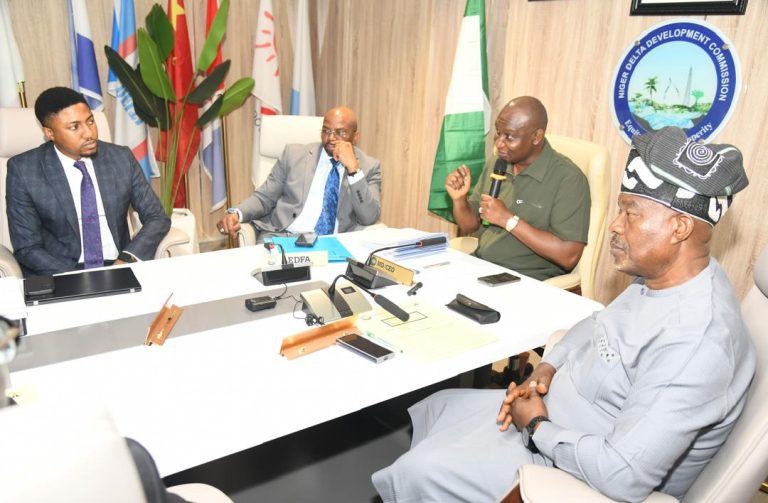
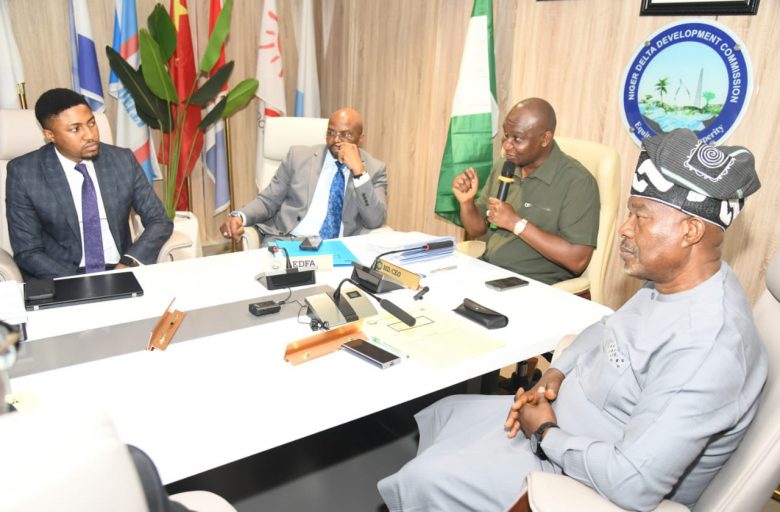
The Managing Director of the Niger Delta Development Commission, NDDC, Dr. Samuel Ogbuku, says that the Governance Advisory Report from the multinational business management consultancy firm KPMG provides the tool for the realisation of the Commission’s transition from transaction to transformation policy.

In a statement on Tuesday, 21st January 2025, signed by the NDDC Director of Corporate Affairs, Seledi Thompson-Wakama, Ogbuku noted this while speaking during the presentation of the KPMG advisory report at the NDDC headquarters in Port Harcourt, expressed the Commission’s eagerness to proceed to the implementation phase of the new governing system.

Emphasising the document’s importance, he said: “This report will serve as a guide once the board adopts it. When approved, it becomes a policy statement that every directorate and department of the NDDC can use.”

“Be assured that when it comes to the implementation stage, we will follow it to the letter. This document is coming at the right time when the NDDC has a functional budget, and it will work side by side with the budget.”

The NDDC Managing Director, Dr Samuel Ogbuku (right), speaking during the presentation of the KPMG advisory report at the NDDC headquarters in Port Harcourt. With him are the NDDC Executive Director, Finance and Administration, Alabo Boma Iyaye (2nd left); the Executive Director of Corporate Services, Hon. Ifedayo Abegunde (right); and a KPMG Manager, Mr. Olugbenga Afuwape.

He stated that the NDDC must ensure that a new institutional culture anchored on sound ethics and good corporate governance is in place to improve its internal processes and institutional protocols.

The NDDC boss said the report would provide advisory services to the Commission on global best practices, corporate governance culture, and internal processes. He noted that the governance structure would strengthen the Commission by instituting lasting internal regulations.

Speaking earlier, a KPMG Manager, Mr. Olugbenga Afuwape, said the Governance Advisory Report was structured into seven policy documents, including six charters, covering risk management, internal controls, stakeholder engagement, board policies, and key management policies.

He promised that KPMG would continue to offer its skills and experience to improve NDDC’s internal processes and ensure accountability and transparency.

In his remarks, the Executive Director of Finance and Administration, Hon. Alabo Boma Iyaye, commended the initiative to review the Commission’s governing structure, describing it as timely and assuring that all recommendations would be implemented.

He noted that the Governance Advisory report would enhance the service delivery of the NDDC, which will result in stakeholder satisfaction.

Similarly, the Executive Director of Corporate Services, Hon. Ifedayo Abegunde, applauded KPMG for its thorough work and stated that the partnership with the NDDC would help the Commission reform and transform.

France to fund Nigeria’s geological data exploration, to upgrade the country’s geological laboratory

0

France has pledged to support the Nigerian Geological Survey Agency (NGSA) in its geological data exploration efforts.


The announcement was made by Kehinde Bamigbetan, special adviser to Dele Alake, Nigeria’s minister of solid minerals development, in a statement on Monday, January 20.


The funding commitment stems from a memorandum of understanding (MOU) on mining activities signed by Nigeria and France in December 2024. During President Bola Tinubu’s visit to Paris, the MOU was established to diversify critical value chains in the solid minerals sectors of both nations.


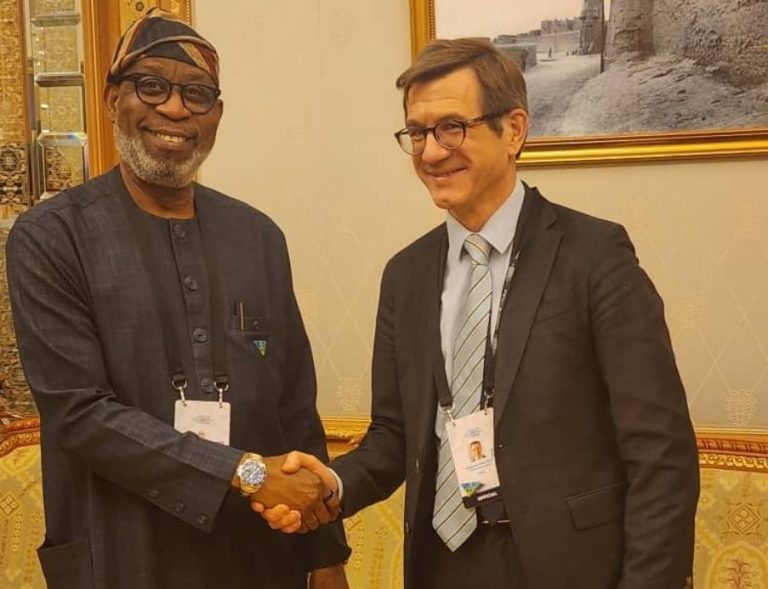
At the Future Minerals Forum in Riyadh, Saudi Arabia, Alake met with Benjamin Gallezot, head of France’s inter-ministerial delegate for strategic minerals, to advance the MOU’s implementation. Both sides agreed to exchange information on mining laws and explore joint solutions to challenges such as illegal mining and cadastral management.


Bamigbetan revealed that France is currently screening a list of French companies interested in investing in Nigeria’s mining sector. Verified investors will be forwarded to Nigeria’s ministry of Solid Minerals Development. Additionally, both nations’ geological agencies plan to collaborate on specific mineral exploration projects to develop comprehensive databases.


The meeting covered topics including sustainable mining, artisanal mining, geological exploration, cadastral management, training, and funding. Olusegun Ige, director-general of the NGSA, highlighted the agency’s need for advanced technological equipment to expedite mineral exploration. Ige emphasized the importance of upgrading Nigeria’s laboratory capabilities and fostering local expertise through international training programs.


Simon Nkom, director-general of the Nigerian mining cadastral office, called for a comparative analysis of mining laws between Nigeria and France to benefit the ongoing review of Nigerian regulations. Nkom also urged French investors to explore opportunities in Nigeria’s mining sector through the MOU framework.


Fatima Shinkafi, executive secretary of the Nigerian Solid Minerals Development Fund (SMDF), proposed co-funding early-stage exploration projects with French financial institutions. She noted that the SMDF has already acquired valuable data and practices through its collaboration with the Africa Finance Corporation (AFC).


Christophe Poinssot, deputy director of the French Geological Agency, announced Nigeria’s inclusion in France’s funding program for African geologists, which has supported over 1,000 professionals over the past eight years. Poinssot also promised to upgrade Nigeria’s geological laboratory to international standards as part of France’s commitment to empowering mining countries.


Both countries agreed to finalize program development and review implementation progress at the upcoming annual Indaba in Cape Town, South Africa.

NCC Approves Request By MTN, Airtel, Others For Tariff Adjustments

0

The commission’s ultimate goal is to ensure the long-term sustainability of Nigeria’s telecommunications industry while continuing to expand the country’s digital economy.

The Nigerian Communications Commission (NCC) has approved a tariff adjustment request by major telecom operators, including MTN and Airtel, in response to rising operational costs.

The decision, which follows the provisions of the Nigerian Communications Act (2003), will allow operators to increase tariffs by a maximum of 50%—far lower than the over 100% hikes initially requested by some companies.

The approval is a strategic move to address the widening gap between rising operational costs and current tariff rates, which have remained unchanged since 2013.

Despite the adjustments, the NCC emphasised that tariffs will stay within the limits set by the 2013 NCC Cost Study and will be reviewed on a case-by-case basis in line with its standard practices.

NCC director of public affairs, Reuben Muoka, noted that while the adjustment is necessary, it is designed to balance the interests of consumers and telecom operators.

“These adjustments will enable operators to continue investing in infrastructure and innovation, ultimately benefiting consumers with improved services, better network quality, and enhanced customer care,” Muoka said.

The decision comes after extensive consultations with public and private sector stakeholders, addressing the financial pressures on Nigerian households and businesses.

The NCC acknowledged the public’s concerns and pledged that operators must implement the tariff changes transparently and in a way that ensures fair treatment for consumers.

While operators are permitted to raise tariffs, the NCC emphasised that improvements in service delivery must be evident.

Tariff adjustments to boost service quality and sustainability – NCC

The Commission’s 2024 Tariff Simplification Guidance requires telecom companies to inform the public about the new rates and ensure measurable service enhancements.

“The NCC remains committed to fostering a resilient and innovative telecom sector that supports not only consumers but also the ecosystem of indigenous vendors and suppliers critical to the industry’s growth,” Muoka added.

The commission’s ultimate goal is to ensure the long-term sustainability of Nigeria’s telecommunications industry while continuing to expand the country’s digital economy.

This tariff adjustment marks a significant shift in the telecom sector, aiming to strike a balance between the sustainability of operators and the protection of consumers as Nigeria navigates economic challenges.

Trump Pardons 1,500 January 6, 2021 Defendants –

0

Trump issues 1,500 broad pardons for Jan. 6 defendants: ‘Going to release our great hostages’

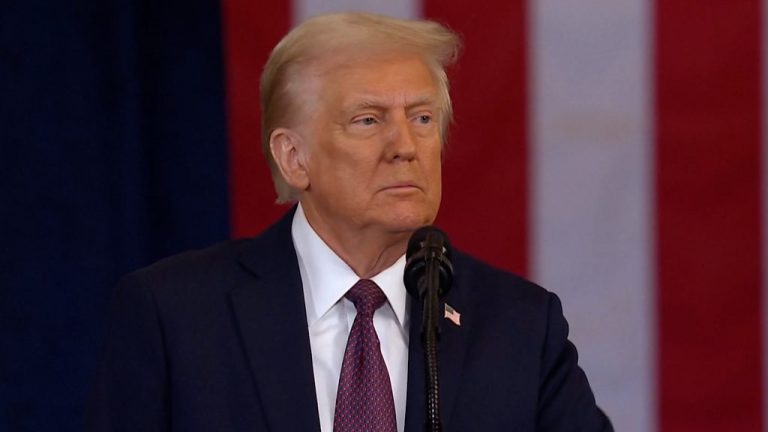
President Trump issued pardons Monday night to hundreds of participants in the Jan. 6, 2021, Capitol riot — staying true to his promise to grant clemency to people involved in halting the counting of Electoral College votes that day.Trump, 78, signed what he said was “approximately 1,500” pardons after returning to the White House from a day of inaugural festivities, telling reporters present that “I hope they come out tonight.”The newly sworn-in 47th president said he issued “six commutations” in addition to the pardons and declined to answer if any beneficiaries had assaulted police.“I will say this, they’ve been in jail for a long time already. I see murderers in this country get two years, one year and maybe no time. So they’ve already been in jail for a long time. These people have been destroyed. What they’ve done to these people is outrageous,” Trump said.

“Even people that were aggressive, and in many cases, I believe they happen to be outside agitators. But what do I know? But I think they were. I think they were outside agitators. They were outside agitators. And obviously, the FBI was involved.”

The Justice Department criminally charged 1,575 people in connection with the riot, which broke out after Trump, while serving the final days of his first term, told thousands of supporters that the 2020 election was being “stolen” from him.Asked if anyone would not get clemency, Trump said, “the commutations would be the ones, and we’ll take a look, and maybe it’ll stay that way, or it’ll go to a full pardon.

Federal judges allow Jan. 6 rioters to return to Capitol for Trump inauguration
The orders require the Federal Bureau of Prisons to immediately release the inmates.“They’ve been treated very unfair. The judges have been absolutely brutal. The prosecutors have been brutal. And nobody’s ever treated people in this country like that,” Trump said on the first day of his second term.

The 45th and 47th president, whom the House of Representatives impeached seven days after the riot for allegedly inciting the mob, said participants were treated unfairly compared to people who committed crimes during anti-police riots in 2020.“What happened in Seattle where they took over a big portion of the city? What happened in Portland, where they burned out of the city every day and people died? Nothing happened to anybody, but they go after these people violently,” he said.

“It’s Washington, DC. People go into a trial and they say, ‘I have a wonderful lawyer, and I didn’t do anything wrong.’And they end up in shackles almost immediately and jail. No, we’re not going to let it happen.”

Trump announced the plan before returning to the White House, telling thousands of supporters at an event that served as a stand-in for the traditional inaugural parade, “We’re going to go to the Oval Office, we’re going to release our great hostages that didn’t do — for the most part, they didn’t do stuff wrong.”
Trump had vowed on the campaign trail he would consider the pardons on a case-by-case basis — but long expressed anger at the rioters being imprisoned for years and said he would go about reviewing the pardons “in the first hour that I get into office.”One non-violent offender, Philip Sean Grillo of New York City, shouted, “Trump’s gonna pardon me anyways,” when he was sentenced to one year in prison in early December for walking around the Capitol building and shouting “charge” into a megaphone.A majority of the charges related to unlawful entry and disorderly conduct, but some were handed multi-year sentences for assault or other crimes.About 562 rioters were sentenced to time in federal prison as of August 2024, per the Department of Justice.Proud Boy leader Enrique Tarrio was given one of the longest sentences — 22 years for seditious conspiracy, even though he was not present at the Capitol on the day of the attack.Four of Trump’s supporters died during the riot — including Ashli Babbitt, 35, who was fatally shot by a cop as she climbed through a busted-out window in the House Speaker’s Lobby.

Another Trump supporter, Rosanne Boyland, 34, died after collapsing in the Rotunda during clashes between rioters and police.

Two other Trump supporters — Benjamin Philips, 50, and Kevin Greeson, 55 — died of medical emergencies during the riot.Capitol Police officer Brian Sicknick, 42, himself a Trump voter, died of a stroke one day after the attack. Two police officers died by suicide within days of the violence.
Trump hinted at issuing pardons to Jan. 6 rioters as early as 2022, before he had officially announced his run for re-election.“If I run, and if I win, we will treat those people from Jan. 6 fairly,” Trump said at a January rally that year in Conroe, Texas.

“And if it requires pardons, we will give them pardons,” he added. “Because they are being treated so unfairly.”

Trump doubled down as he got closer to assuming the White House once more, saying the pardons would likely be a Day One action.“I’m going to be acting very quickly. First day,” Trump told NBC’s Kristen Welker, adding, “they’ve been in there for years, and they’re in a filthy, disgusting place that shouldn’t even be allowed to be open.”

He noted there may be “exceptions” for those who were “radical” or “crazy” — but said otherwise the “system is a very nasty system” and that some were forced to plead guilty.Trump was outraged after former President Biden issued a sweeping pardon to his son Hunter, writing on Truth Social, “does the Pardon given by Joe to Hunter include the J-6 Hostages, who have now been imprisoned for years? Such an abuse and miscarriage of Justice!”

50% Tariff Hike: Nigerians May Spend ₦‎6.74 Trillion On Calls

0

The Nigerian Communications Commission approved a 50 per cent increase in call tariffs on Monday, which may raise the average cost of calls to N16.5 per minute.

Based on the 2023 national telephone traffic data, this hike could generate over N6.74tn in revenue for telecom operators in 2025 if call volumes remain stable, hence Nigerians may pay this amount to the firms.

However, this projection excludes the impact of free and discounted call promotions, which may alter actual revenue figures.

An analysis of data from the latest 2023 Subscriber/Network Performance Report by the NCC showed that in 2023, total outgoing telephone traffic was 205.3 billion minutes, while incoming traffic stood at 203.2 billion minutes.

The report read, “As of December 2023 total outgoing Local and National Traffic was 205,298,114,995.11 minutes while Total incoming Local and National Traffic was 203,187,588,876.00 minutes. MTN had the highest total outgoing and incoming Traffic of 122,667,600,437.00 and 123,762,501,615.00 minutes respectively in 2023.”

This implies that Nigerians spent about 408.5 billion minutes making local calls in 2023.

Since there was no fresh data yet for 2024, our analysis was based on the available data for 2023, which might vary for 2025.

Our analysis also excluded international calls, although Nigerians spent 1.5 billion minutes on international calls in 2023, according to the NCC.

Further analysis showed that MTN led the market, recording 122.7 billion minutes of outgoing traffic and 123.8 billion minutes of incoming traffic.

At the new rate of N16.5 per minute, MTN’s combined revenue from outgoing and incoming calls is projected to exceed N4tn, making it the primary beneficiary of the tariff adjustment and accounting for over 60 per cent of the market’s total revenue.

Airtel is expected to follow with a projected revenue of approximately N1.78tn, reflecting its strong share of both outgoing and incoming traffic.

Glo, the third-largest operator, is estimated to generate N536.2bn.

Smaller players, including Smile and Ntel, are expected to earn N5.7bn and N13.1bn respectively, affirming their minimal market influence.

9mobile (EMTS) is likely to generate about N105.6bn from its traffic volumes.

The projected N6.74tn revenue highlights the significant impact of the tariff increase.

Outgoing calls alone are expected to bring in N3.28tn, while incoming calls will contribute an estimated N3.23tn.

Despite the growing popularity of data services and over-the-top messaging platforms, voice calls remain a significant revenue driver for telecom operators.

MTN’s dominance in outgoing and incoming traffic reinforces its leadership position, with Airtel and Glo following as major contributors.

In contrast, smaller operators continue to face challenges, with limited market penetration and a smaller customer base impacting their revenue potential.

The PUNCH further observed that the 50 per cent tariff hike approved by the NCC will likely raise the average cost of an SMS to N6, and significantly boost revenue for telecom operators in Nigeria.

Based on the 2023 SMS traffic data, the projected earnings for 2025 could surpass N137.84bn, assuming traffic remains unchanged.

According to the NCC’s 2023 annual report, a total of 22.97 billion SMS were sent and received during the year, representing an 11.38 per cent decline from the 25.92 billion recorded in 2022.

MTN accounted for the highest SMS traffic, with 8.21 billion sent messages and 8.57 billion received, bringing its total to 16.79 billion SMS.

With the revised tariff of N6 per SMS, MTN is expected to earn approximately N100.72bn, making it the likely largest beneficiary of the hike.

The telecom giant’s share of SMS traffic represents over 73 per cent of the total market, securing its position as the dominant player in the sector.

Airtel is projected to generate N26.26bn in revenue from its total SMS traffic of 4.38 billion, comprising 2.01 billion sent messages and 2.37 billion received.

This accounts for 19 per cent of the projected industry-wide earnings. Glo, with a total SMS count of 1.35 billion, is expected to earn N8.10bn, representing 5.88 per cent of the total revenue.

Meanwhile, smaller operators such as EMTS and Smile are likely to see modest revenues.

EMTS, with 458 million SMS, is projected to earn N2.75bn, while Smile, which recorded just 1.2 million SMS, is expected to generate N7.36m.

Combined, these smaller players contribute less than two per cent of the total projected revenue for 2025.

The telecom industry is projected to earn N137.84bn from SMS in 2025, driven by the tariff hike.

However, the new pricing may affect consumer behaviour, as more Nigerians may shift towards over-the-top messaging platforms such as WhatsApp and Telegram, which offer cost-free alternatives.

The Nigerian Communications Commission approved a 50 per cent tariff adjustment for telecommunications operators in response to increasing operational costs and prevailing market conditions.

According to a statement made on Monday by the NCC’s Director of Public Affairs, Reuben Muoka, the decision was made under the NCC’s regulatory powers as stipulated in Section 108 of the Nigerian Communications Act, 2003.

The approved adjustment falls significantly below the over 100 per cent increase initially requested by some network operators.

The NCC stated that the decision was carefully calibrated to balance the rising costs faced by operators with the need to protect consumers from excessive price hikes.

The adjustment will adhere strictly to the tariff bands outlined in the NCC’s 2013 Cost Study and the newly issued Guidance on Tariff Simplification, 2024.

The statement read, “The Nigerian Communications Commission, pursuant to its power under Section 108 of the Nigerian Communications Act, 2003 to regulate and approve tariff rates and charges by telecommunications operators, will be granting approval for tariff adjustment requests by Network Operators in response to prevailing market conditions.

“The adjustment, capped at a maximum of 50 per cent of current tariffs, though lower than the over 100 per cent requested by some network operators, was arrived at taking into account ongoing industry reforms that will positively influence sustainability.

“These adjustments will remain within the tariff bands stipulated in the 2013 NCC Cost Study, and requests will be reviewed on a case-by-case basis as is the Commission’s standard practice for tariff reviews. It will be implemented in strict adherence to the recently issued NCC Guidance on Tariff Simplification, 2024.”

According to the commission, tariff rates have remained static since 2013, despite inflation and rising operational costs that have strained the telecommunications industry.

The adjustment is expected to address this gap, enabling operators to invest in infrastructure and innovation while maintaining the quality of services provided to consumers.

The NCC emphasised that the changes would bring improvements in network quality, customer service, and connectivity coverage.

According to the statement, extensive consultations with stakeholders in both the public and private sectors informed the decision.

The NCC assured that the adjustments would be implemented transparently, with operators mandated to educate consumers about the new rates and ensure measurable improvements in service delivery.

The statement concluded, “As a regulator, the NCC will continue to engage with stakeholders to create a telecommunications environment that works for everyone—one that protects consumers, supports operators, and sustains the ecosystem that drives connectivity across the nation.”

The Minister of Communications, Innovation, and Digital Economy, Bosun Tijani, during a recent appearance on national TV, revealed that while telecom operators were pushing for a 100 per cent hike in tariffs, the government was only considering an increment of between 30 and 60 per cent.

“It should not be more than anywhere between 30 per cent to 60 per cent,” he said, noting that the proposed increase is less than what operators had requested.

However, with an approved 50 per cent increase, the average cost of phone calls will likely rise from N11 to N16.5 per minute, SMS charges will increase from N4 to N6, and the cost of 1GB of data will jump from N350 to N525.

Legal action

The President of the National Association of Telecoms Subscribers, Adeolu Ogunbanjo, has rejected the imposition of a new duty on the telecom sector, warning that it would worsen the taxation burden and negatively impact Nigerians.

“There was no agreement reached at the meeting with stakeholders,” Ogunbanjo said. “We presented our case, but nothing concrete was resolved during the meeting with the NCC in Abuja.”

The association has vowed to take legal action if the proposed duty is implemented without addressing subscribers’ concerns.

Ogunbanjo noted that while the association might accept a tariff increase of 5 to 10 per cent, anything beyond that would be unacceptable.

“If this new duty is implemented, we will take the matter to court. This kind of policy cannot stand,” he declared.

He suggested alternative funding mechanisms for telecom operators, such as raising capital through Initial Public Offerings.

“Let Nigerians be part of the business by buying shares. MTN has already gone public, and others can follow. This way, operators can raise funds without overburdening subscribers,” he said.

Ogunbanjo also highlighted the critical role the telecom sector plays in Nigeria’s economy, noting its contribution to foreign direct investment and GDP growth.

“Apart from oil, telecommunications is the only sector attracting significant investment. We cannot allow policies that will collapse the industry,” he stated.

He appealed to the minister to reconsider policies that could further impoverish Nigerians, citing poor electricity and economic conditions as ongoing challenges.

“A 50 per cent increase will cripple Nigerians. We will not accept this. A moderate increase is enough, and operators should explore other ways to generate funds,” Ogunbanjo insisted.

The Association of Telephone, Cable TV, and Internet Subscribers of Nigeria stated that with such an increase in tariff, there is a need for significant improvements in service quality.

President of the consumer group, Sina Bilesanmi told The PUNCH that the regulators including the NCC, and the minister were part of a virtual meeting in the morning where the decision for tariff hike was made.

Bilesanmi stated that the new tariff is to be implemented in February and warned that service providers must enhance their infrastructure and service quality within two weeks of the rollout.

“If we don’t see tangible improvements, we will take legal action against the telcos, the NCC, and the Federal Government,” he said.

The association’s support for the adjustment was driven by several factors, including the need to prevent the telecom sector from collapsing and to foster economic growth.

However, Bilesanmi made it clear that their acceptance is contingent on improved service delivery. “We urge our members to accept the tariff adjustment, but only if it results in better service. Otherwise, we will hold the authorities accountable,” he added.

Acknowledging the pressure in making the decision, Bilesanmi noted that stakeholders argued that rejecting the hike could lead to a shutdown of services. “I don’t want to be seen as an enemy of the economy,” he stated.

As February approaches, the association said it will closely monitor developments and remains committed to protecting consumer interests through all available legal means if service quality falls short of expectations.

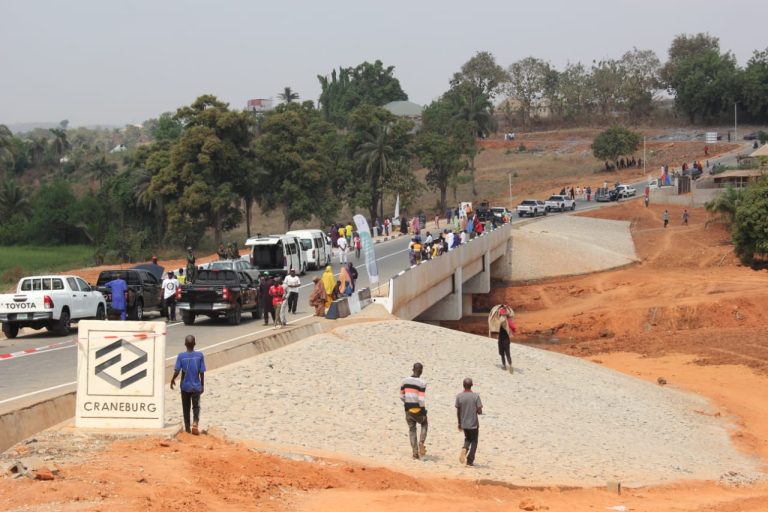
Wike Commission Naharati Rivers Ukya Access Road In Abaji

0

...Emphasizes fulfilment of presidential promises

The FCT Minister, Barrister Ezenwo Nyesom Wike, has stated that projects executed in the Area Councils of the Federal Capital Territory (FCT) represent the fulfillment of promises made by President Bola Ahmed Tinubu to FCT residents.

During the commissioning of the Naharati Rivers Ukya Access Road with two span river bridges in Abaji Area Council on Monday, January 20, 2025, Minister Wike emphasized that this project was a direct response to the needs of the people of Abaji, as conveyed by the Council Chairman, Hon. Abubakar Umar Abdullahi.

“We did consult you,” Minister Wike said, “and the Chairman requested this road as a crucial need for the community. This is a fulfillment of that request.”

The Minister assured residents that all promises made by President Tinubu for the FCT will be fulfilled. He highlighted other commitments, including the provision of two additional police divisions in Abaji and infrastructure development at the Abuja University, stating, “We flagged off the road construction in January 2024 and today, in January 2025, we are commissioning it. And in the next few months, we will also come back and hand over the two police divisions.”

Barr. Wike emphasized that no part of the FCT will be neglected, with a focus on even development across all areas, including the satellite towns. “Throughout this week, from Monday to Friday, we will devote ourselves to the commissioning of projects in the six area councils,” he announced.