Thursday, April 30, 2026
Home Blog Page 71

Debunking the News of Esa Oke and Ido Ayegunle Being at War

0

By Ibironke busuyi

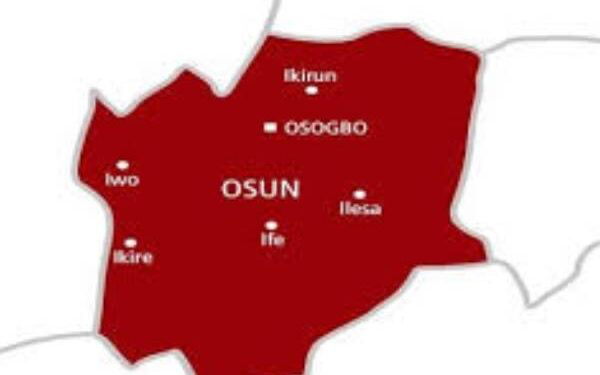
We would like to commend the efforts of the security forces and commanders for calming the situation in Ido Ayegunle. It is essential to set the record straight that Ido Ayegunle is a separate township from Esa Oke, with its own suburbs and recognized by the government of Osun State and Governor Ademola Adeleke.

The history of violence between Esa Oke and Ido Ayegunle dates back to 1995 when our father, the late King Adekanmi Ajayi Aselebe, was appointed as the 16th Oba of Ido Ayegunle. This led to his elevation as the Part 2 King of the Yoruba band in 2014. However, the King of Esa Oke at that time waged war against our father, destroying properties and lives, including schools and the palace.

After our late father’s passing four years ago, the Owa Omiran of Esa Oke, Oba Adeyemi Adediran, appointed Jonfolo Lawrence Adebisi Obanla of Esa Oke as the Baale of Ido Ayegunle, despite Ido Ayegunle having a Part 2 Oba since 2024. This decision is deceitful and has hindered the growth and development of Ido Ayegunle.

We sought government intervention and provided documentation to support our claims. The state government in pursuance of justice affirmed our claim, leading to the appointment of the new Olojudo. We are eternally grateful.

Unfortunately, the people of Esa Oke have continued to encroach on our land, leading to violent clashes. Recently, on January 31, 2025, a group of people from Ido Ayegunle were ambushed and beaten while trying to clean up their community hall.

We appreciate the efforts of the government in addressing this issue, and we are confident that the truth will prevail. Ido Ayegunle is a separate entity from Esa Oke, and we will continue to fight for our rights and freedom.

The new Olojudo has the full support of the people of Ido Ayegunle. This was demonstrated today when the people rose in defence of their town, tradition and their traditional ruler.

We have allowed the government to do its job. We thank God that justice has prevailed. We are not from Esa Oke, so I don’t know what is going on in Esa Oke. We implore people to read, and understand that the little town of Ido Ayegunle is not part of Esa Oke.

We are not in any way related to the Esa Oke crisis. Esa Oke are the ones in Ido Ayegunle, as I speak, but we believe the government will save our town from aggressors.

● Ibironke busuyi, one of chiefs of Ido AYEGUNLE, writes on behalf of the new Olojudo.

Lagos 2027: The Case for Akinwunmi Ambode’s Return as Successor To Babajide Sanwoolu By Adeboye Adebayo

0

As the political landscape of Lagos State begins to take shape ahead of the 2027 gubernatorial elections, many Lagosians are reflecting on past administrations, seeking a leader capable of revitalizing the state’s economic growth, infrastructural development, and social harmony.

One name consistently resurfaces in these discussions: Akinwunmi Ambode. Serving as Governor from 2015 to 2019, Ambode’s tenure left an indelible mark on Lagos, and there is a growing clamor for his return.

Akinwunmi Ambode’s administration was synonymous with groundbreaking infrastructure projects. His tenure saw the construction of major roads, bridges, and flyovers, including the Abule-Egba and Ajah flyovers, which significantly eased traffic congestion.

The Lagos Bus Rapid Transit (BRT) system expansion, and the introduction of the Oshodi Transport Interchange, were milestones that improved public transportation and mobility for millions.

Lagosians who traverse these routes daily still benefit from these initiatives, making a strong case for Ambode’s return. Infrastructure remains one of the state’s most pressing challenges, and Ambode’s proven track record makes him the ideal candidate to lead Lagos into a continued era of developmental projects after Babajide Sanwoolu.

Under Ambode’s leadership, Lagos State experienced remarkable economic growth.

His administration boosted the state’s Internally Generated Revenue (IGR) without significantly increasing taxes, a testament to his innovative economic policies. The creation of employment opportunities through initiatives like the Lagos Employment Trust Fund (LSETF) provided critical support to entrepreneurs and small businesses.

A return to Ambode’s economic policies could help furthering the economic of Lagos State, fostering a more business-friendly environment and attracting investment, gestures that will definitely build on Governor Babajide Sanwoolu’s current efforts.

Ambode’s government embraced technology and e-governance, introducing digital platforms that streamlined government services.

The introduction of the “Lagos Smart City” project aimed at transforming Lagos into a technologically advanced metropolis. The “Lagos State Residents Registration Agency” (LASRRA) under his watch was revitalized, laying the groundwork for improved service delivery and data-driven governance.

A renewed focus on technology-driven governance, by Ambode will continue to position Lagos as a leading smart city in Africa in line with agenda of Lagos developmental plan.

Ambode’s administration made significant strides in social welfare and environmental sustainability. His commitment to education, demonstrated through the construction and renovation of schools, and the employment of thousands of teachers, showcased his vision for human capital development.

His return could refine and reinvigorate these initiatives, ensuring that Lagos’ growth is both inclusive and sustainable.

Ambode is widely regarded as a leader who prioritized the collective interest over political divides. His non-confrontational, results-oriented leadership style earned him respect across various segments of Lagos society. At a time when political polarization threatens unity, Ambode’s return could help bridge divides and foster a collaborative environment.

Ambode’s abrupt exit from office in 2019 was marked by political challenges, but it also provided valuable lessons. His period out of office has allowed him to reflect on past challenges and strategies. Returning with a renewed vision and more experience, Ambode is better equipped to navigate the complex political terrain of Lagos.

The 2027 gubernatorial election presents a critical opportunity for Lagosians to re-evaluate their leadership choices. Akinwunmi Ambode offers a proven track record of infrastructure development, economic growth, and social progress.

His vision aligns with the aspirations of a dynamic, forward-looking Lagos that will continue its position as Nigeria’s commercial and cultural epicenter.

Bringing back Akinwunmi Ambode as Governor is not just about revisiting past successes, it’s about charting a bold, progressive future.

Lagos deserves a leader with the experience, vision, and commitment to propel the state to new heights by building on the achievements of the current administration under able Babajide Sanwoolu.

Ambode’s return is a call for continuity, excellence, and a better tomorrow for all Lagosians to continue the good works of Babajide Sanwoolu.

*_Adeboye Adebayo is a chieftain of the All Progressives Congress, APC in Agege, Lagos and was a spokesperson at the defunct APC, Tinubu/Shettima Presidential Campaign Council, Abuja._*

Trump Threatens To End Aid To South Africa Over Land Policy, Ramaphosa Responds

0

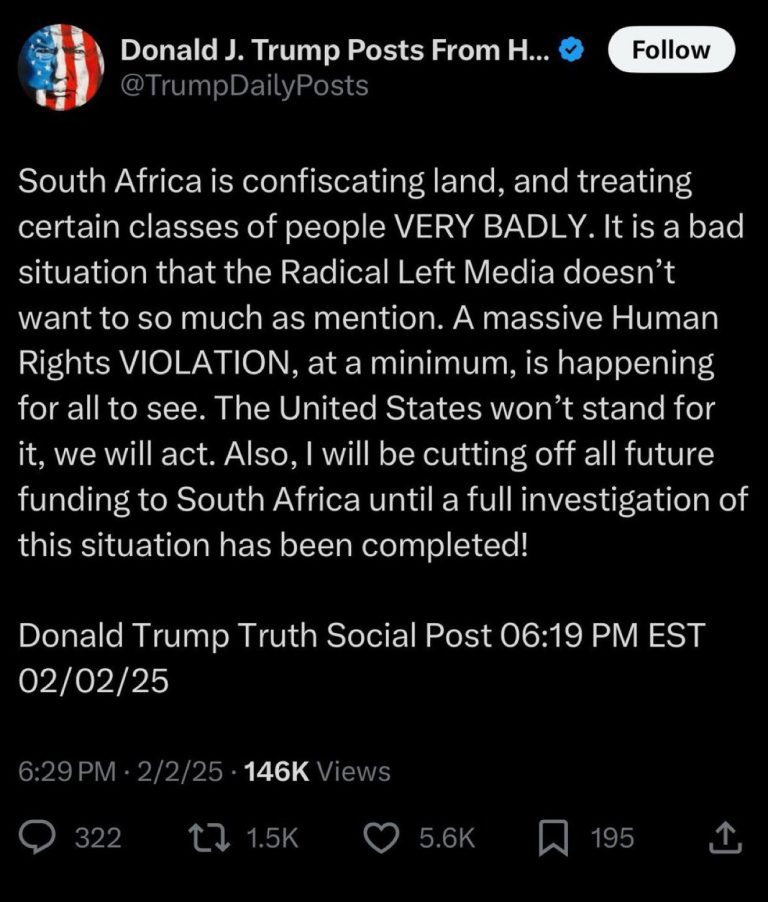
South Africa is a constitutional democracy that is deeply rooted in the rule of law, justice and equality. The South African government has not confiscated any land.


The recently adopted Expropriation Act is not a confiscation instrument, but a constitutionally mandated legal process that ensures public access to land in an equitable and just manner as guided by the constitution.


South Africa, like the United States of America and other countries, has always had expropriation laws that balance the need for public usage of land and the protection of rights of property owners.


We look forward to engaging with the Trump administration over our land reform policy and issues of bilateral interest. We are certain that out of those engagements, we will share a better and common understanding over these matters.

The US remains a key strategic political and trade partner for South Africa. With the exception of PEPFAR Aid, which constitutes 17% of South Africa’s HIVAids programme, there is no other funding that is received by South Africa from the United States.

Tems Wins Grammy Award For Best African Music Performance

0

Nigerian Afrobeats star Tems has secured her second Grammy Award, winning in the Best African Music Performance category at the 67th Recording Academy Awards 2025.

Her hit song Love Me Jeje triumphed in a category dominated by Afrobeats heavyweights, with Chris Brown as the only non-Afrobeats nominee.

Tems faced strong competition from fellow Nigerian artistes, including Burna Boy, Asake, and Wizkid for their collaboration MMS, as well as Yemi Alade and Davido, who featured alongside Lojay on Chris Brown’s Sensational.

This latest achievement further cements Tems’ status as one of Africa’s most celebrated global music icons.

Dangote Price Slash: Marketers With Imported Fuel Fear Losses.

0

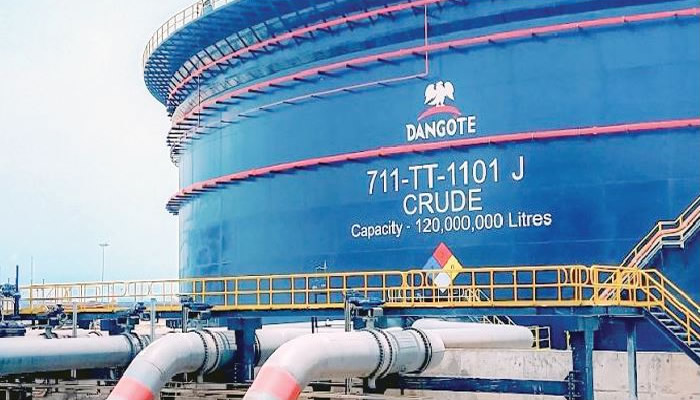
The decision by the Dangote Petroleum Refinery to reduce the ex-depot price of Premium Motor Spirit (petrol) on Saturday night came at huge costs to many petroleum marketers, The PUNCH reports.


Marketers who spoke to our correspondent said the sudden price reduction by the Dangote refinery must have been occasioned by the recent warnings that some traders were planning to resort to importation if the foreign PMS remains cheaper than the ex-depot prices of locally refined products.


On Saturday night, the 650,000-capacity refinery told Nigerians that it had reduced its price from N950 to N890 per litre.


“In a bold move to drive economic relief for Nigerians, Dangote Petroleum Refinery has reduced the ex-depot price of Premium Motor Spirit, commonly known as petrol, from N950 to N890 per litre, effective from Saturday.


“This price adjustment is in response to favourable developments in the global energy sector and a significant decline in international crude oil prices. Dangote refinery’s decision reflects its commitment to aligning with market realities and ensuring that consumers benefit from changes in international crude oil prices,” a statement by the Group’s Chief Branding and Communications Officer, Anthony Chiejina, said.


The statement also noted that the price reduction would significantly lower the cost of petrol across the country, generating a positive ripple effect throughout the broader economy.


The refinery has also called on marketers across the country to ensure that the benefits of the reduced price are passed on to the Nigerian public.


However, marketers said the price reduction has both positive and negative effects on their business.


It was learned that some marketers who bought the product a few hours before the announcement would be forced to sell below the cost, incurring debts running into millions of naira.


In an interview with our correspondent, the Vice President of the Independent Petroleum Marketers Association of Nigeria, Hammed Fashola, said the price reduction is a good development but it will surely affect business in negative and positive ways.


Speaking about the negative effect of the reduction, Fashola said, “For instance, maybe a marketer purchased some product on Friday. I am sure the marketer would not have sold it before the new reduction happened. That is the negative aspect of it. But, we have to abide by it. We have to live with it. That is the beauty of deregulation.


“So, we have to be careful when we purchase our product. Where we purchase it from and the price we are getting it. And we must have adequate information on what is going on. So that we will not be losing money every day,” Fashola noted.


He emphasised that when a price reduction happens, the only option a marketer has is to reduce the price so as to let go of old stocks, or else he would be left with no buyers.


“When this happens, the only option a marketer has is to bring down the price. Because if you don’t do that, the competition will set in.


“Some marketers in your neighbourhood might be lucky to get their product tomorrow at N890. So, if you have a N950 product with you, within two to three days, you will not have an option but to bring it down. That is the situation marketers are facing now, but we have to cope with it. It is the marketer who bears the losses,” he stated.


Asked if there is a way to carry all stakeholders along before a major price review to reduce losses, the IPMAN leader replied, “There is no way one can do that in this competitive environment that we find ourselves in now. It is a competition.”


He recalled that some importers have recently threatened to boycott locally refined petroleum products because the imported ones were cheaper, saying Dangote refinery has reacted to that.


“Some marketers and importers were threatening that an imported PMS is much cheaper than a Dangote PMS. So, Dangote is reacting to this with the price reduction. That is the beauty of competition. There is nothing anybody can do about that. You want to sell and I want to sell. I think it is good for the sector.


“It is the public that will gain more because, by this, they will be getting cheaper fuel, which is good. That is what we have been pushing for. It has come. We don’t have to complain,” Fashola maintained.


Asked to speak more on Dangote reacting to the threat to import cheaper fuel, he said, “Of course, Dangote has to react to it. If it doesn’t react this way, if the imported one is cheaper, what will happen? Look at the investment there.


“I am happy it is happening this way. We believe that how can imported PMS be cheaper than Dangote’s PMS that is refined here locally? We know crude is being purchased here in naira, not in dollars; though we know that it is going to be in the official exchange rate, but we won’t be looking for dollars. The issue of transportation will not be there and some other charges too.


“I think we are getting there. We are facing reality. Everybody is facing reality, both big and small. We are all feeling it. It is good for the system,” he added.


On whether the Nigerian National Petroleum Company Limited would bring down its price too, he replied in the affirmative.


“They have to. If they want to remain in business, they have to. It is a reaction and it will go through the chain of supply. If NNPC says they don’t want to reduce their price, who will go there to buy? They have to reduce it.


“It is the same thing happening to the retailers, the marketers, and the filling stations. The same will happen to them. They have to react to the new market realities. Everybody will react to the new development,” he stressed.


Meanwhile, the National President of the Petroleum Products Retail Outlet Owners Association of Nigeria, Billy Gillis-Harry, also told The PUNCH that the NNPC might reduce its price too as a result of the competition in the market.


“There is an evident possibility that the NNPC will reduce prices,” he told our correspondent on Sunday.


According to him, PETROAN received the news of the Dangote refinery PMS price reduction with excitement because of gains to citizens and the economy.


Gillis-Harry, commended the management of Dangote refinery, saying this price reduction will alleviate the suffering of Nigerians, reduce the cost of living and transportation, and have a positive impact on the economy.


The PETROAN national president reaffirmed that competition is the beauty of a deregulated economy, expressing optimism that other operators of refineries and importers of PMS will reciprocate by reducing the current selling rate of PMS for them to remain in business.


“The reduction in PMS ex-depot price is expected to have a far-reaching impact on the lives of Nigerian citizens. With a decrease in the cost of petrol, the prices of goods and services are likely to decrease, leading to a reduction in the overall cost of living. This, in turn, will provide relief to households, who will have more disposable income to allocate towards other essential needs.


“The reduction in PMS price will also have a positive impact on the economy. A decrease in transportation costs will lead to increased economic activity, as businesses will be able to transport goods and services more efficiently and at a lower cost. Additionally, the reduction in PMS price will lead to an increase in demand for goods and services, which will have a positive impact on economic growth and development,” he said.


Gillis-Harry added that the reduction in PMS price will also have a positive impact on the country’s inflation rate.


In a recent interview with our correspondent, the National Publicity Secretary of IPMAN, Chinedu Ukadike, emphasised that the traders lose billions of naira whenever the prices of petroleum products like PMS and diesel are reduced.


He recalled that the Dangote refinery entered the market in early 2024 and crashed the price of diesel, forcing marketers to sell below their cost of purchase and running into huge debts.


The IPMAN spokesperson maintained that marketers are scared of lifting fuels to avoid collateral losses, having secured loans from banks.


“That is why marketers fear lifting fuel because of the price scare. They will not want to suffer collateral losses.


“Remember that when the Dangote refinery came in, it was reducing prices and marketers were losing money. Did anybody tell marketers not to sell again or that they are going to repay them the money lost? Nobody said so and nobody will say so,” he stressed.


He said marketers were left alone with their losses as they resorted to selling cheaper than they acquired their products.


“It’s like having to sell off because the monetary value of what you have and the interest rate of that will not be able to keep you up. The interest rate is going up faster now,” he noted.

Nigeria Spent N5.5trillion On Petrol, Diesel Imports In 4 Months – THISDAY

0

Reports have revealed that between October 1, 2024, and January 31, 2025, the Nigerian National Petroleum Company (NNPC) Limited and select marketers spent over N5.5 trillion on the importation of Premium Motor Spirit (PMS) and diesel (AGO).

Meanwhile, the management of the Dangote Refinery is currently in court with the Nigerian Midstream and Downstream Petroleum Regulatory Authority (NMDPRA), the NNPC, and other oil marketers, seeking to compel the industry regulator to halt the issuance of import licenses for fuel imports, despite adequate in-country supplies.

THISDAY learned on Friday that between October 1, 2024, and January 31, 2025, the NNPC and some oil marketers spent over N5.5 trillion on petrol and diesel imports, according to port documents.

However, the NNPC has consistently defended its purchasing decisions, stating that they are driven by economic factors, particularly pricing considerations.

“While NNPC prioritises sourcing products from domestic refineries, this is contingent upon economic viability. If local supply is cost-effective, it will be preferred, but the same principle applies to other marketers, who will also evaluate total costs when deciding whether to buy locally or import,” the NNPC said recently, while defending its continuous importation of products.

Industry data analysed on Friday revealed that over 3.2 million metric tonnes of petrol and 980,485 metric tonnes of diesel were imported between October 2024 and January 2025. This amounts to roughly 4.29 billion litres of petrol and over 1.153 billion litres of diesel, with a total cost exceeding N5.5 trillion.

Aside from the NNPC, other importers during this period included BOVAS, Eternal Oil, AA Rano, and others.

Despite the recent restart of the Warri and Port Harcourt refineries and the Dangote Petroleum Refinery becoming operational, imported products arrived through Lagos, Calabar, Warri, and Port Harcourt.

The Dangote Refinery has increased production to 550,000 bpd, sufficient for the Nigerian market and export. However, most crude oil refined at Dangote’s facility is imported due to the national oil company’s failure to meet the local supply agreement.

Under the deal, the Dangote refinery is expected to pay for crude oil in naira and sell the refined products to marketers in naira, eliminating currency and forex risks, while reducing the country’s reliance on the dollar for domestic transactions.

Although Nigerian authorities report an increase in crude oil production, sources from the Dangote Refinery indicate that crude oil supply to the $20 billion facility has actually decreased.

For example, in February 2025, only four cargoes were allocated, and in March, just two cargoes of 950,000 barrels each were booked, totaling 1.9 million barrels for the month.

This represents an allocation of 61,290 bpd, far below the 385,000 bpd target.

Sources close to the Dangote Refinery, preferring to remain anonymous, stated that the refinery continues to sell products to marketers in naira and absorb logistics costs to ensure uniform pricing across the country.

“The refinery has generously assumed an equalisation status, a responsibility typically undertaken by the government. This has been met with enthusiasm by our partners, such as MRS, Heyden, and Ardova.

“The Petroleum Products Retail Outlet Owners Association (PETROAN), recently, entered into an agreement with the refinery to distribute its Premium Motor Spirit (PMS) nationwide at a uniform price across all its filling stations,” one of the sources said.

It was learned that the Nigerian Upstream Petroleum Regulatory Commission (NUPRC) allocated only 1.4 million barrels for March. Of this, the NNPC received 17 cargoes (35 percent) of the total production, five were allocated to the Dangote Refinery, two to the Warri Refinery, and three to the Port Harcourt Refinery. Additionally, the remaining seven cargoes were allocated to various financiers as part of loan repayment, with no other local refineries receiving crude allocations for the period.

THISDAY was also told that despite the presidential order to sell crude oil in naira locally, transactions were still partially done using the greenback.

Subsequently, of the five cargoes allocated to the Dangote refinery, two are to be paid for using the local currency, while the remaining three will be settled in dollars from export proceeds.

FG Plans Fresh Electricity Tariff Hike

0

The federal government says plans are ongoing to increase electricity tariffs “over the next few months”.

It, however, said that the planned increase needed to be balanced by subsidies for less-affluent electricity users.

Bloomberg quoted the Special Adviser to President Bola Tinubu on Energy, Olu Verheijen, as giving this hint at the Africa Heads of State Energy Summit in Dar es Salaam, Tanzania, where Nigeria presented a $32 billion plan to expand electricity connections by 2030.

The fresh move to raise tariffs comes amid mounting pressure from Nigeria’s debt-burdened electricity distribution companies for tariffs to be cost-reflective so they can improve their finances.

Last year, the federal government approved a threefold increase in electricity tariff for customers under the Band A classification.

The Nigerian Electricity Regulatory Commission (NERC) had in April 2024 effected a 300 per cent rise in electricity tariff for Band A customers from N68 KWh to N225KWh.

While making the announcement, the Vice Chairman of NERC, Musliu Oseni, said the increase affected 15 per cent of electricity customers while insisting that the decision was taken to ensure stability in the power sector.

Similarly, the Minister of Power, Adebayo Adelabu, while defending the increase said continuous payment of subsidy for the category would jerk up the government’s subsidy payment to N2 trillion annually if nothing was done.

But the tariff has been reduced since then and currently pegged at N209.50.

On the latest plan to increase the electricity tariff, the presidential aide said Nigeria was trying to resolve the transition to a cost-efficient but cost-reflective tariff to attract private investors.

She said: “One of the key challenges we are looking to resolve over the next few months is transitioning to a cost-efficient but cost-reflective tariff.

“So, the sector generates revenue required to attract private capital, while also protecting the poor and vulnerable.”

Increase will not lead to efficient service delivery – Consumers

Meanwhile, the President of Nigeria Consumer Protection Network, Kunle Olubiyo, said no matter the amount of increase in the electricity tariff, it would not result to efficient service delivery.

Speaking with Daily Trust, Olubiyo said the country had witnessed over 500 per cent tariff increase since the sector was privatised but services remained poor in the country.

He said the country continued to grapple with less than 6, 000 megawatt of electricity which is not sufficient to meet the needs of Nigeria’s population.

“The efficiency level is static or stagnated and what we are seeing is that we have seen different demands for increase in electricity tariff over the years from 2013 to date. There have been over 500 per cent increase in electricity tariff and even if electricity tariff is N1, 000 per kilowatt hour, it is not a guarantee for improvement in quality of service or hours of supply of electricity. So, it leaves much to be desired.”

According to him, “In the past, we thought cost reflective tariff will be complementary to service reflective performance but we were wrong. So, we will still be in the same situation. The truth of the matter is that even in band A, that is a major concern and so, the more we are able to have access to rooftop facility, like solar for domestic use, the better and the more we will get more captive or embedded generation for the industrial cluster.”

He added that ineptitude in the sector had made Nigerians familiar with technical terms like line tripping, grid collapse, high current, among others, which is not supposed to be so as Nigerians should have nothing to do with the process of electricity generation.

The Convener of Powerup, Adetayo Adegbemle, also said the planned increment of the tariff is a way of the federal government saying it can no longer foot the bill for electricity consumption in the country.

“This is federal government saying we don’t have money to continue to pay the blanket subsidy. This is not tariff increment. This is just right pricing the products. Everybody has come to terms with buying fuel at the current rate and we are sure that the federal government cannot turn around tomorrow to tell us that they are paying a single dime in subsidy.

“So, what government is just saying now is that, hey, we are tired of paying blanket subsidy. So, what they have done now is, okay, we are going to do right pricing. And we are going to give support of 50 kilowatts per month to Nigerians. So, Nigerians should expect that their first 50 kilowatts in a month is subsidised. But anything you buy after that, you buy it at full cost.”


Nigeria Governors’ Forum Congratulates Gov Diri

0

The Nigeria Governors’ Forum (NGF) has congratulated the Governor of Bayelsa State, Senator Douye Diri, on his emergence as chairman of the South-South Governors’ Forum.

Governor Diri was elected last Tuesday at a meeting of the region’s governors held at the Government House, Yenagoa, the Bayelsa State capital.

His Cross River counterpart, Senator Bassey Otu, also emerged as Vice Chairman of the forum.

The NGF in a congratulatory letter signed by its chairman and Governor of Kwara State, AbdulRahman AbdulRazaq, said Diri’s election was a recognition of his “leadership, dedication to governance, and commitment to the progress of the South-South
region.”

The letter read in part: “Your election, alongside His Excellency, Governor Bassey Otu of Cross River State as Vice Chairman, reflects the confidence your colleagues have in your ability to contribute meaningfully to the development and unity of the region.

“I am confident that your collaborative efforts will foster policies and initiatives that will
drive economic growth, security, and infrastructural advancement across the South-South states and Nigeria as a whole.

“As you take on this new responsibility, please be assured of the support and partnership of the Nigerian Governors’ Forum. We look forward to working closely
with the Forum in strengthening intergovernmental relations and ensuring that governance continues to positively impact the lives of our people.”

[Birthday]: Igbalaye Hails Olawale Rasheed’s leadership and media prowess.

0

By Kehinde Adeoye, Special Assistant on media to the Secretary to the Osun State Government.

The Secretary to the Osun State Government, High Chief (Hon) Teslim Igbalaye, has today congratulated Mallam Olawale Rasheed, the Spokesperson to the Osun State Governor and Special Adviser to the Governor on Media, celebrating his outstanding contributions to the state’s media and public relations landscape.

In his special message, Igbalaye lauded Mallam Rasheed for his exemplary skill in navigating the complexities of political communication, his strategic foresight, and his unyielding dedication to both the Governor’s vision and the people of Osun.

“In a world where communication is key to shaping public perception and effecting change, Mallam Olawale Rasheed stands as a master of his craft,” Igbalaye remarked.

Recognizing Rasheed’s remarkable ability to balance media and political dynamics, the SSG praised his vital role in enhancing the media presence of the state. His efforts have not only elevated Osun’s visibility but also set a high standard for excellence in public relations, one that serves as a model for others in the field.

“Through every press release, briefing, and media interaction, Mallam Rasheed continues to embody professionalism and an unwavering commitment to transparency and truth,” said Igbalaye. “He is a bridge between the government and the people, ensuring that the people of Osun remain informed, engaged, and empowered.”

Igbalaye further commended Rasheed for his adeptness in shaping narratives and managing public relations crises with political acumen, which has helped amplify the positive strides Osun has made under the Governor’s leadership.

The Bobagunwa of Osogbo land expressed his deepest appreciation for Mallam Olawale Rasheed’s continued contributions to the growth of Osun State and the broader political discourse in Nigeria. He also wished him further success and fulfillment in the years ahead.

“Happy Birthday, Mallam! May this year bring you even greater success and happiness, as you continue to lead with purpose, passion, and dedication.”

Prosperity Cup DG Attributes Tournament Success To Gov Diri’s Love For Sports Development

0

Director General of Nigeria’s biggest grassroots football tournament, the Bayelsa Governor’s Tournament, tagged the Prosperity Cup, Mr. Ono Akpe has attributed the success recorded in the tournament to governor Diri’s unwavering passion to grassroots sports development.

This year’s spectacle is expected to kick off this month across the eight local government areas in the state in 24 centers in a three category competition, which has male, female and the para category.

Mr. Akpe in an interview with journalists ahead of the tournament’s kick-off, said the governor is passionate to see that the youths in the state earn a living through sports, pointing out that the state helmsman’s love for sports was the reason behind the tournament’s continuous innovation.

According to him, the governor’s direct involvement in the competition has driven members of the Central Organizing Committee (COC) to give their very best, maintaining that the local government level of the competition was the governor’s idea to ensure that players who did not make it to the money-spinning stage will also have the opportunity of being watched by foreign scouts.

He noted that apart from increasing the prize money of one million naira for local government champions and five hundred thousand naira for runner up, that this edition would see all the outstanding players in the LGA’s selected to form a team that would move to the second round, describing last LGA final as a resounding success.

On the selected local government teams, Mr. Akpe explained that the essence of the local government selected teams was to ensure that no good player is left out because he exited the tournament in the preliminary round, saying that this year’s edition would witness Most Valuable Player award (MVP) in every match.

With the sale of registration forms for season seven currently ongoing, the DG believes that more players from this season would join the players who are on the verge of traveling to Turkey, Malta and Lithuania for greener pasture, noting that five players from the previous scouting programme are set to leave the country with their visas already sorted out.

Mr. Akpe asserted that the vision of the organizers at the end of the season seven was to see more than ten players plying their trade with different European clubs, stating that the organizers of the showpiece are desirous to give the youths in the state a better life.

He stressed that the reports from the security agencies whenever the competition is on, speaks volume of the impact the showpiece has made in the state.

He further explained that each team is entitled to sets of jerseys in both male, female and para soccer including coaches, goalkeepers as well as tournament match balls, maintaining that over 250 teams receive sets of jerseys every year and another set of jerseys for any team that qualifies to the next phase of the competition.

Mr. Akpe hinted that talks are ongoing with Spanish La Liga for a potential partnership to train local coaches in the state. The reason for the exposure is to make our coaches great gaffers in the future and as well market the brand, prosperity cup to foreign clubs.