Sunday, April 26, 2026
Home Blog Page 56

Marketers Worry As Five-Month Fuel Imports Hit ₦‎6 Trillion

0

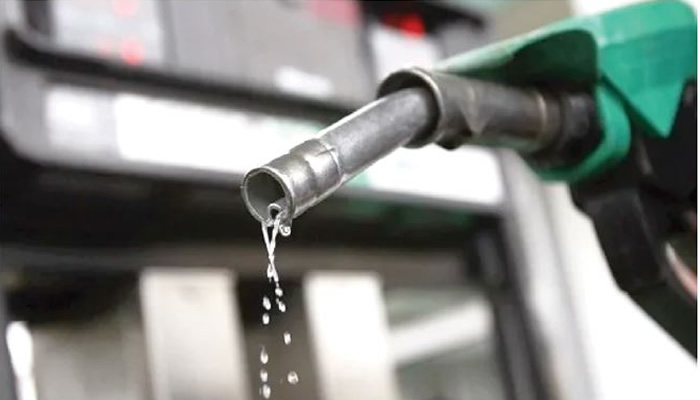
Despite improved domestic refining capacity in Nigeria, major oil marketers have continued to import refined petroleum products, as they imported 6.38 billion litres of Premium Motor Spirit (petrol) and Automotive Gas Oil (diesel) in five months.

But independent marketers and retailers, through their various associations, kicked against the development, as the importation of these commodities gulped about N6tn, a development that further piled pressure on the country’s forex.

The dealers spoke under the aegis of the Independent Petroleum Marketers Association of Nigeria and the Petroleum Products Retail Outlet Owners Association of Nigeria.

A[b] detailed advertorial in The PUNCH on Wednesday quoting tanker vessels’ movement into Nigerian ports showed that fuel importers utilising scarce foreign exchange brought in over 5.01 billion litres of petrol and 1.37 billion litres of diesel between October 2024 and November 2025.
[/b]
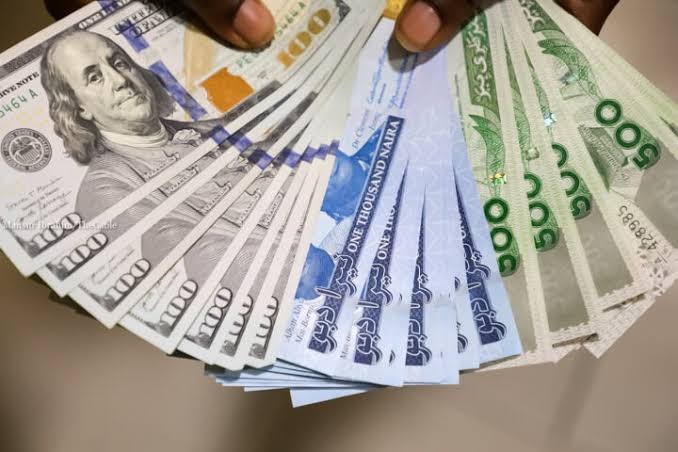
With an average price of N900 per litre, importers may have spent N4.51tn on PMS import and N1.51tn on diesel, using an average price of N1,100/litre. This indicates a cumulative amount of N6.02tn.

The six-page advert analysing the importation of PMS and AGO further disclosed that the imported products arrived through four seaports, with the Apapa and Tin Can seaports in Lagos receiving the highest amount of 3.86 billion litres of fuel.

This was followed by Port-Harcourt port receiving the second highest of 5.63 billion fuel. 1.39 billion litres of fuel berthed at the Calabar port, while the Warri received the lowest import of 389.52 million litres of fuel.

The latest development came despite the fact that Nigeria currently has a combined domestic refining capacity of 985,000 barrels per day, a figure enough to meet daily consumption of 50 million litres per day, according to the Nigerian Mid-stream and Downstream Regulatory Authority.

On November 26, 2024, the government announced that petrol production had commenced at the Port Harcourt refinery after a long period of rehabilitation. During the unveiling of the refinery, NNPC officials conducted stakeholders around the facility where they took samples of petrol, diesel, and kerosene.

It said truck loading began immediately. The Port Harcourt refinery comprises two units, with the old plant having a refining capacity of 60,000 barrels per day and the new plant 150,000bpd, both summing up to 210,000bpd.

Within the space of a month, the NNPCL also announced that the Warri refinery had commenced operation after a long period of inactivity.

“WRPC will focus on producing and storing critical products, including Straight Run Kerosene, Automotive Gas Oil, and heavy and light Naphtha,” a statement from the presidency stated.

Earlier in the year, the 650,000 bpd Dangote Petroleum Refinery commenced operations. The commencement of refinery operations prompted Nigerians and stakeholders to call for a halt in the importation of petroleum products.

However, major oil marketers have continued the importation of fuel to bridge the domestic shortfall.

An analysis of the document detailing the amount of fuel imported into the country showed that aside from the NNPC, oil marketers listed as importers during the period include BOVAS, Eternal Oil, AA Rano, Fatgbems, Matrix Energy, Ibeto, Swift, Raj, T-Time, Wosbab Energy, NorthWest, Sobaz, TS Logistics, Shorelink, Stockgap, MEJ, Nepal, Rainoil, AYM Shafa, among others.

Last month, the NNPCL Group Chief Executive Officer, Mele Kyari, said the company hadn’t imported a single litre of fuel in 2025 and has depended on local sources to supply its customers.

Further analysis revealed that in October, a total of 1,034,446 metric tonnes of PMS representing 1.39bn litres, was imported, with Lagos ports getting the highest share of 580,122 mt (777.94m litres), Calabar received 64,000mt (85.8m litres), Port-Harcourt port received 94,224mt (126.35m litres) and Warri with 296,100mt (397.1m litres).

For diesel, 285,519mt was imported, representing 335.77m litres.

In November, a total of 1,065,925 metric tonnes of petrol, indicating 1.43bn litres, was imported, while 258,000 of AGO was imported, representing 303.41m litres.

This figure reduced to 746,127 metric tonnes of petrol and 248,100 of diesel in December 2024. Applying standard conversion factors (1,341 litres per metric tonne for PMS and 1,176 litres per metric tonne for AGO), the total volume of imported fuel amounted to 1m litres of petrol and 291.77m litres of AGO.

By January 2025, the amount was further reduced to 367,199 metric tonnes for petrol and 146,866mt for AGO. This means 492.4m litres of petrol and 172.71m litres of AGO were imported.

Similarly, the recent import data for February 2025 indicates that Nigeria imported 523,300 metric tonnes of PMS and 226,086.11 metric tonnes of diesel. The total volume of imported fuel amounted to 701.75m litres of PMS and 265.88m litres of diesel.

The amount imported for petrol confirms the 50m daily shortfall data announced by the NMDPRA last month. A summation for 28 days indicated that 700m was needed for the month.

Marketers kick

Marketers of petroleum products kicked against the importation of petroleum products into Nigeria, especially as it impacts the nation’s foreign exchange.

The National President of the Petroleum Products Retail Outlet Owners Association of Nigeria, Billy Gillis-Harry, said the stakeholders have once agreed to promote local content instead of importing fuel into Nigeria, wondering why some are yet to abide by the resolution.

According to him, anyone importing fuel now could not have sourced forex from the Central Bank of Nigeria.

“We have collectively, as stakeholders, decided that we must be pro-local content. We must do everything possible to encourage local production and local consumption. I recall that all the associations took that decision under the leadership of NNPC to stop importation. So, whoever is importing at this time may not be doing that with the CBN’s dollar approval because CBN doesn’t have $600m now to give anybody to import petroleum products,” Gillis-Harry said.

According to him, stakeholders are now focused on growing the Dangote refinery, Port Harcourt refinery, and other local refineries in Nigeria.

He declared that PETROAN is not in support of importation when there is enough refining capacity.

“All of us in the industry today are focused on growing what Dangote, the NNPC are and other refineries like Azikel refinery, Edo refinery, Niger Delta refinery, Watersmith refinery. So, you can see clearly that there’s quite a lot of attraction of foreign investors in this downstream sector because it’s easy for Nigeria to become the hub of refined product exportation, which will certainly strengthen our naira and reduce our dependence on foreign exchange.

“The largest percentage of our forex expenses is for refined products. So, we don’t encourage fuel importation. We are focused on patronising Dangote refinery, the NNPC, Azikel, Edo refinery, Watersmith, Niger Delta refinery, and others,” Gillis-Harry submitted.

Similarly, the spokesperson of the Independent Petroleum Marketers Association of Nigeria, Chinedu Ukadike, said IPMAN members are not the ones importing fuel into Nigeria.

According to him, independent marketers now source their products locally to promote local investments and create jobs. He described the heavy fuel importation as recounting a stage the country has passed through.

“With what is happening in this industry now, I don’t think we should be looking at the past, we should be looking at Dangote, NNPC, and other refineries. We also should be looking at other competitive industries, especially the other refineries that are springing up. The issue of importation has been settled. So, it does not have anything to do with our deregulation process. That is my own stance,” he stated.

He said independent marketers now focus on products from local refineries.

“As IPMAN, we are now focusing on products being distributed by both NNPC and Dangote. Our members are not the ones importing petrol into Nigeria. We are encouraging people to look inwards instead of looking outwards; let’s encourage our local content. This will have a very robust effect on our economy, especially in terms of growing our forex and GDP and taming the unemployment level of the country.

“We are encouraging more countries to come into Nigeria and invest in refineries and reduce unemployment while boosting the standard of living. More investment will bring more jobs into the country. We cannot be here with crude oil while we are creating jobs for other countries elsewhere. Nigeria needs these jobs. Let Nigeria’s job remain for Nigerians. So, anything that can encourage local content and drive the domestic economy, we, the independent marketers, are in support of that,” Ukadike declared.

However, the Executive Secretary of the Major Energies Marketers Association of Nigeria, Clement Isong, stated that importation promotes competition, helping drive down the price of PMS.

Isong said he could not speak to the figures on what was imported in February, saying, “I have no understanding of these numbers.”

Commenting on fuel importation, he explained, “What importation does for us is that it contributes to the market’s competitiveness. The price movements you are enjoying and the market competition are the result of importation. Importation is useful.

“We want local refining. Let’s be clear. We want local refining. What ensures that we have the most competitive price is that locally refined fuel prices have to compete with imported prices. That is what keeps our prices at the pump as low as possible,” the MEMAN leader asserted.
As Obasa Returns To Lagos Assembly

0

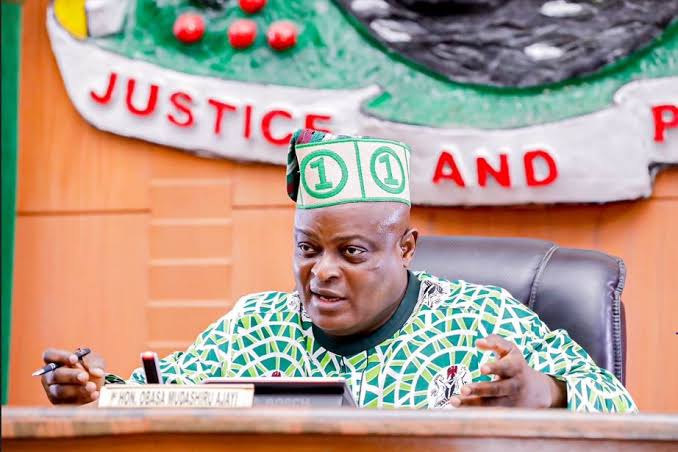
NO matter how often Nigerian politicians parrot the word “democracy”, only a few are true democrats. Monday’s melodrama at the Lagos State House of Assembly proves this. That day, Mojisola Meranda’s 49-day reign as speaker ended abruptly. Mudashiru Obasa, impeached on January 13, returned to the seat.

That set off a gale of farcical resignations and inaugurations of the same persons. The lawmakers who chanted: “We reject Obasa, we reject him in totality,” in February voted to have him back a week later.

The All Progressives Congress lords said they had resolved the Lagos Assembly crisis. This stands truth on its head. What they did was a brazen attack on democracy and an abuse of their privileges. They made the assembly look spineless and toothless, portraying the lawmakers as no better than neophytes.

On January 13, 36 of the 40-member House removed Obasa, though in absentia, accusing him of gross misconduct and abuse of office. There were even allegations of corruption.

Obasa pushed back, saying his removal did not follow due process. He even sued his colleagues. He was in his right. Lawmakers should iron out their differences with one another without external interference. That is the way of democracy and the rule of law.

Sadly, that is not the way of typical political godfathers and their ilk, especially in these parts. With Obasa making moves to retake the speaker’s seat, and his suit pending in court, Bisi Akande and Segun Osoba, former governors of Osun, and Ogun States, and close allies of President Bola Tinubu, prevailed on Meranda to step down for Obasa to return.

It was reported that, as part of the deal, Obasa and Meranda would resign for a new speaker and deputy. Obasa denied this.

Some say this is Politics 2027 playing out. It is hard to imagine a more bizarre intervention.

This is contemptuous of democracy and an assault on legislative independence. Lawmakers should be free to choose their leaders.

Frustratingly, egalitarianism and fairness are practised in the breach across the country. Speakers are imposed and impeached by forces outside the electorate and legislature. This is tantamount to state capture and political rascality.

Civil society organisations and the electorate should resist it. A tiny portion of people should not be allowed to determine the fate of 233 million citizens.

Obasa’s return raises questions. What becomes of the fraud allegations against him? Is there some dirt on him? If so, he can be prosecuted because he has no immunity of any sort. If he is clean, his accusers owe him more than an apology.

Have the APC bigwigs calmed the storm in the House? Or did they paper over the cracks that threatened the foundation of the Assembly chamber?

What happened on Tuesday as Obasa resumed did not offer much hope. The speaker reportedly turned up hours late and offered no apology to the House but remarked that they were not happy about his return. One lawmaker said such an attitude was one reason they wanted him out.

“Obasa’s return was not a selfless decision by us. It was done simply because we respect our leaders like Baba Bisi Akande and Aremo Olusegun Osoba. In our hearts and souls, we do not want him up till this moment,” the lawmaker said.

In her resignation, Meranda said she was not a quitter but only toed the party line for peace to reign. That does not sound like someone who would run from a fight or who thinks there is nothing to fight for. Like her colleagues, Meranda will let sleeping dogs lie.

There are disagreements, even brawls, in every legislature worldwide, but such rifts are resolved in-house. Meddlesome anti-democratic forces and their collaborators should steer clear of legislative chambers and give democracy a chance.

OPEC Oil Output Rises In February As Nigeria Exceeds Quota By 70,000 BPD

0

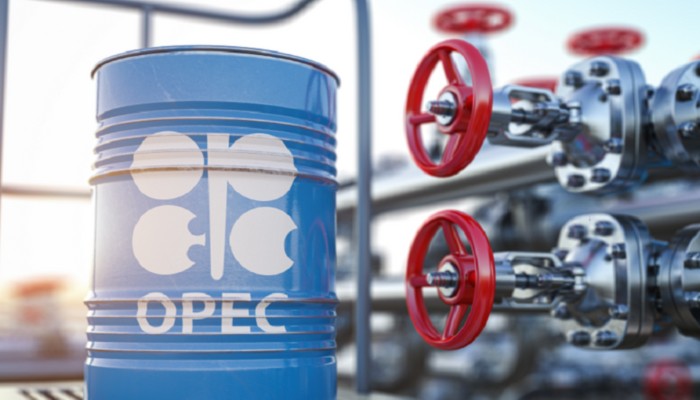
Nigeria’s oil production surged in February, exceeding its OPEC quota of 1.5 million barrels per day by 70,000 bpd, and contributing to the cartel’s increased output in February, a Reuters survey has found.

The survey, released on Wednesday, revealed that Nigeria recorded the second-largest production increase among members of the Organization of the Petroleum Exporting Countries (OPEC), contributing to the bloc’s overall rise in output.

OPEC reportedly pumped 26.74 million bpd last month, up by 170,000 bpd from January’s total, with Iran contributing the highest increase of 80,000 bpd.

The increase in Nigeria’s output is attributed to a rise in crude oil exports and an increase in domestic consumption, particularly at the 650,000 bpd Dangote refinery.

OPEC+, a group that includes OPEC, Russia, and some other oil-producing partners, is keeping production cuts in place through March because of concerns about weak demand and increasing oil supply from non-member countries.

However, on Monday, the group confirmed its decision to begin increasing production in April as planned.

The increase in Nigeria’s output despite OPEC’s production cuts shows that the largest oil producer in Africa is improving its status in the global oil market.

Nigeria has struggled with fluctuating production due to oil theft, pipeline vandalism, and operational inefficiencies in recent years, making February’s output growth a significant development.

Iran leads OPEC production increase, slight decrease in Saudi
Iran led OPEC’s production increase in February with an 80,000 bpd boost, reaching 3.30 million bpd. This came despite renewed U.S. efforts to curb Iranian oil exports by President Donald Trump, who has vowed to reinstate strict sanctions earlier imposed by his predecessor.

The survey found that oil production in Saudi Arabia, OPEC’s largest producer, slightly decreased, while Iraq’s output saw a small increase. However, both countries are still producing below their OPEC+ quotas.

Meanwhile, the United Arab Emirates produced slightly more than its target. While January data provided by OPEC’s secondary sources indicate that the UAE and Iraq are staying close to their assigned quotas, other estimates, including those from the International Energy Agency, suggest their actual production levels may be much higher.

Reuters noted that its “survey aims to track supply to the market and is based on flows data from financial group LSEG, information from other companies that track flows such as Kpler, and information provided by sources at oil companies, OPEC and consultants.”

What you should know
Nairametrics reported that Nigeria slightly exceeded its OPEC quota in January 2025, when it produced an average of 1,539,000 bpd, according to OPEC’s Monthly Oil Market Report.

The Nigerian government has maintained its commitment to boosting oil output in 2025, from 1.5 million bpd to above 2 million bpd. However, experts say this may be difficult if issues such as oil theft in the Niger Delta and low investment persist.
The government is looking to explore offshore drilling and the resumption of oil exploration in Ogoniland, among other options, to boost production.

Nigeria Lost ₦‎94 Trillion To Business Closures, Multinational Divestments

0

The Nigerian Economic Summit Group (NESG) has stated that the harsh economic environment in the country has led to the closure of about 30 per cent of Nigeria’s Micro and Small Medium Enterprises.

Dr. Segun Omisakin, Chief Economist and Director of Research at NESG, made the disclosure yesterday during the launch of the 2025 Private Sector Outlook, highlighting key economic trends, challenges, and opportunities for businesses navigating the evolving Nigerian economy.

According to him, “Between 2023 and 2024, multinational divestments and business closures led to an estimated 94 trillion Naira economic loss. Additionally, 30% of Nigeria’s 24 million registered MSMEs shut down during this period, underscoring the country’s economic vulnerability.”

Providing an in-depth analysis of the private sector’s performance and economic risks in 2024, he noted that while foreign exchange availability improved due to policy reforms, Nigeria’s currency depreciated significantly, with the official exchange rate averaging 1,479.9 Naira to the U.S. Dollar in 2024.

He noted that although trade surpluses and increased foreign capital inflows were recorded, fiscal constraints persisted, with public debt rising to 142.3 trillion Naira as of September 2024.

Looking ahead to 2025, Omisakin stressed the need for businesses “to adapt to economic uncertainties and employ strategic measures for growth and resilience.”

The Group also called for “Stronger collaboration between the public and private sectors, and ensuring that business associations like the Nigerian Association of Small and Medium Enterprises (NASME), the Nigerian Association of Small-Scale Industrialists (NASSI), and the Nigeria Employers’ Consultative Association (NECA) be actively involved in economic decision-making.”

Naira Appreciates To N1,512/$ In The Black Market

0

The Naira yesterday appreciated to N1,512 per dollar in the parallel market from N1,515 per dollar on Tuesday.

However, the Naira depreciated to N1,505 per dollar in the Nigerian Foreign Exchange Market (NFEM).

Data published by the Central Bank of Nigeria, CBN, showed that the indicative exchange rate for the naira rose to N1,505 per dollar from N1,502 per dollar on Tuesday, indicating N3 depreciation for the naira.

Consequently, the margin between the parallel market and NFEM rate narrowed to N7 per dollar from N13 per dollar on Tuesday.

Don’t Invite Insecurity To Rivers State, Reconsider Your Position In People’s Interest, IYC Tells Political Gladiators

0

The Ijaw Youth Council Worldwide (IYC) has called on gladiators in the current political crisis in Rivers state to put aside their differences and work together in the interest of the people of the state.

In a statement issued on Thursday, morning in Warri, Delta state, the spokesman of IYC, Comrade Bedford Berefa Benjamin, said doing otherwise is an invitation to insecurity which the Niger Delta region cannot afford at this critical time of the nation.

The statement explained :”The peace enjoyed in the Niger Delta about two decades now has been taken for granted, and matchants of crisis are not happy about the relative peace in the oil rich region.

“The recent happenings in Rivers State call for an urgent rethink giving the serial blackmails, politically motivated media attacks, and the latest court verdicts, pressuring the region to forment avoidable crisis in the region for machants to capitalise on the oil rich region to service their interest will not be accepted.

“The disposition of some paid majority in the Rivers state House of Assembly calls for concern for the political health of the state and, by extension, the region.

“A situation where one man’s position is against the vast majority population dwindles the lean patrotic fate of the democracy practised to the ‘alleged highest bidder’ will not be condoned.

“As the conscience of the youth group in the Niger Delta region, We weep with utmost dismay that the future promised by our leaders to be handed over to the next generation is in doubt, with the current happening.

“As a youth group with huge population in Nigeria geographical locations, our dream seems mortgaged on by some selfish sponsored power drunks leaders.

The spokesman of the Ijaw Youth Council condemns the sponsored publications by enemies of the region to instigate ethical wars in Rivers state, describing it as dead on arrival.

According to Bedford, the unscrupulous elements parading as Ijaw Youth leaders to give the Rivers state crisis an ethnic colouration just stop forthwith.

The Rivers people are wiser and conscious of who have them at heart to bridge the needed developmental gaps in the state.

“The democracy is government of the people, and the people of Rivers state shall defy ethical differences to defend the course of democracy in the state.

“The issue in Rivers state does not affect the Ijaws alone, but rather, the entire ethic structures of the state must defend the course of democracy to be free from political tyranny.

The IYC spokesman amonishes the Rivers people to remain united beyond political affliations and fight for the total liberation from tyranny and political slavery.

“The allegedly hypnotised 27 errand boys should know that it is between them over four million Rivers people.

“The federal government should know that if Rivers state burns as a result of this easy -to -solve political tussle, it is a slap on their well laconic, Renewed Hope Agenda message preached by the administration under President Bola Ahmed Tinubu and a total rape on democracy.

“Avoid insecurity in River State and Reconsider the conscience of the people to avert possible breakdown of law and order,”the statement added.

Prosperity Cup Coaching Clinic Begins In Yenagoa

0

…..Eguavoen, Participants, applaud Bayelsa Govt

A coaching clinic for grassroots coaches in Bayelsa State put up by the organizers of Nigeria’s biggest football showpiece, the Bayelsa Governor’s Football Tournament tagged the “Prosperity Cup” has commenced in Yenagoa, the state capital.

The exercise, which is in its 3rd edition, is in collaboration with Nigerian Football Federation and the Bayelsa State Football Association and is aimed at preparing local coaches ahead of the season seven edition of the Prosperity Cup.

Declaring the clinic opened, chairman of the Bayelsa State Football Association, Barr Poubeni Ogun, said grassroots coaches in the state are fortunate to have a platform that is capable of making them better coaches.

While commending the organizers of the Prosperity Cup for the programme, Barr Ogun hinted that henceforth no coach would be allowed to manage a team without a CAF B-License coaching certificate.

He noted that the state football-ruling body and the organizers of the Prosperity Cup are working out modalities to ensure that grassroots coaches in the state have NFF coaching D-License certificate, stating that the National Institute of Sports, NIS certificate is no longer a criteria to manage a team.

Earlier, Director General of the Prosperity tournament, Mr. Ono Akpe in an address of welcome, remarked that the exercise was a preliminary workshop to prepare the coaches for the eventual (NFF) D coaching licence programme slated for later this year.

According to him, the clinic was designed to train coaches in Bayelsa to realize their potentials as gaffers and to as well earn proper certification in coaching, noting that about fifty coaches have been selected for the NFF D coaching programme.

He explained that the essence of the exercise was to sharpen the technical abilities of grassroots coaches in the state, and expressed joy that the Prosperity Cup is achieving its objectives apart from winning trophies.

Mr. Akpe lauded the governor, Senator Douye Diri and his deputy, Senator Lawrence Ewhrudjakpo, the commissioner for Sports Development, Dr. Daniel Igali for providing the platform for grassroots coaches in the state to enhance their capacity.

Resource person and NFF Technical Director, Augustine Eguavoen asserted that he is positive that the programme would improve grassroots coaches in the state, maintaining that his dream is to see these coaches manage big players in the future.

He commended the Bayelsa State government and organizers of the tournament for conceiving the vision to impact the coaches.

Two coaches, Awala Kpunpamo of Bayelsa FA and Anthony Robert of Afini FC expressed gratitude to the governor, Senator Douye Diri and organizers for investing in the coaches.

The duo noted that the programme would equip grassroots coaches in Bayelsa with modern coaching techniques and also improve the quality of football during the tournament.

The exercise which would end on Friday enters day two on Wednesday, with the venue at the NUJ Press Centre, Azikoro Road, Ekeki, Yenagoa.

A total of fifty coaches are participating in the exercise.

NDDC Advocates Inclusive Approach To Conflict Management

0

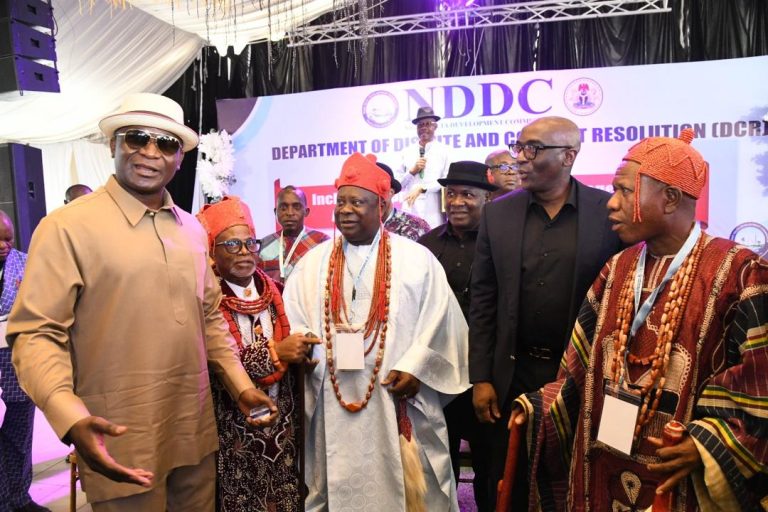
The Niger Delta Development Commission, NDDC, is advocating an innovative approach, which will be inclusive, for conflict management and dispute resolution in the Niger Delta region.

According to a press release signed by the NDDC Director, Corporate Affairs, Seledi Thompson-Wakama, speaking during a capacity-building programme in Port Harcourt, the Chairman of the NDDC Board, Mr. Chiedu Ebie, said it was necessary to equip traditional rulers, clergy, and community leaders with effective strategies for resolving disputes and fostering regional peace.

He identified peace as a catalyst for development and crisis as a significant hindrance. He urged community leaders to adopt dynamic approaches to conflict resolution and commended the NDDC Managing Director, Dr Samuel Ogbuku, for initiating the new approach.

Dr Ogbuku underscored the importance of proactive conflict management in his remarks, stating: “Let us not wait until conflicts arise; we must be proactive. Our responsibility is to equip community leaders with the necessary tools to prevent and manage disputes effectively.”

He highlighted the NDDC’s broader role beyond infrastructure development, noting that the Commission was equally committed to human capital development. “As an interventionist agency, our mandate extends beyond projects and road construction. We are also investing in people, fostering regional integration, and strengthening conflict resolution mechanisms to ensure sustainable peace,” he noted.

The NDDC boss stressed the need for regional cooperation, citing ecological degradation as a common challenge uniting the Niger Delta states. “Despite our linguistic differences, we share issues such as conflicts and environmental challenges. Without peace, development cannot thrive,” he said.

The Managing Director urged the clergy to promote peace through their teachings and encouraged traditional rulers to foster inclusivity and generosity within their communities. He identified greed and exclusion from decision-making as key drivers of conflict and urged leaders to engage their people transparently to build trust and harmony.

In his welcome address, the NDDC Acting Director of Conflict Management and Dispute Resolution, Mr. Goddy Ogedegbe reiterated that crisis prevention was crucial to sustainable development. “We should not wait for conflicts to escalate before seeking solutions. In any environment plagued by crisis, progress is impossible,” he said.

The traditional ruler of the Elelenwo community, Eze Samuel Chukwu praised the NDDC for fostering dialogue among stakeholders. He urged communities to protect NDDC projects and discourage vandalism, emphasising the critical role of local leaders in maintaining peace.

President Tinubu Upgrades VP Shettima’s Aides

0

President Bola Tinubu has approved the upgrade of Mr Temitola Adekunle-Johnson as Special Adviser (SAD) to the President on Job Creation & MSME in the Office of the Vice President, and Mrs Uju Anwuka as Senior Special Assistant to the President on Public Health (Office of the Vice President).

According to a statement by the spokesman of the vice president, Stanley Nkwocha, on Wednesday, the appointments were in continuation of efforts to actualise the Renewed Hope Agenda of the Tinubu administration, especially in the respective sectors.

Prior to their upgrade, Mr Adekunle-Johnson and Mrs Anwuka served in the same portfolios as Senior Special Assistant and Special Assistant to the President, respectively, all in the office of the Vice President.

As Senior Special Assistant, Mr Adekunle-Johnson had diligently driven some of the administration’s policies and programmes in areas of job creation and development in the micro, small and medium enterprises space in Nigeria.

Key initiatives implemented under his supervision included the Expanded National MSME Clinics, and the Shared Facility Initiative, among others.

Mrs Onwuka, on the other hand, had industriously anchored the administration’s vision in combating malnutrition and hunger, especially in vulnerable communities across the country, while serving as Special Assistant. A key programme under her watch is the recently launched Nutrition 774 Initiative.

Their latest appointments as Special Adviser and Senior Special Assistant, respectively were with immediate effect.

LAMATA And NRC Collaborate To Provide Better Rail Services

0

Fed Govt is committed to modern train development, says Opeifa

The Managing Director of the Nigerian Railway Corporation (NRC),@info_NRC Dr Kayode Opeifa, has reiterated the commitment of the federal government to the sustenance of modern train development.

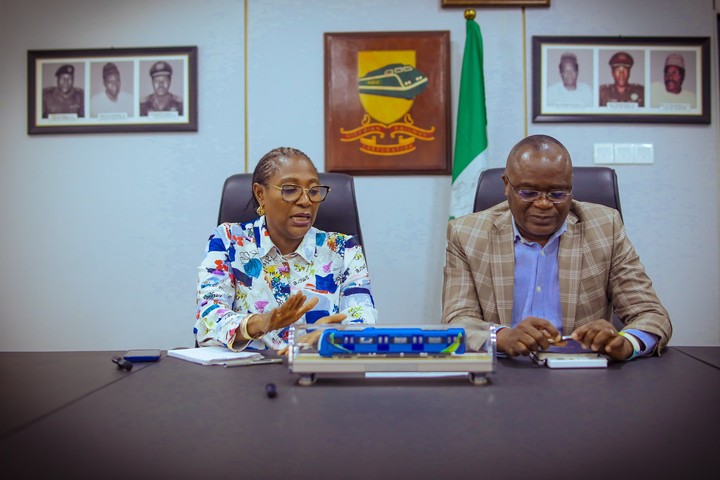
He said this while playing host to the Managing Director of the Lagos Metropolitan Area Transport Authority (@Lamataonline Engr Mrs Abimbola Akinajo), who led top management of the agency on a courtesy visit.

Opeifa said the @officialABAT administration would in the coming month unveil its plans on the development of railway infrastructure.

He disclosed further that the Federal Government under the Renewed Hope Agenda would put its full weight behind all state governments willing to develop intra-city rail networks from the national rail corridor in their state.

Opeifa lauded the Lagos State Government which through LAMATA has been operating the Red and the Blue train lines, based on the licenses issued by the Corporation, adding that LAMATA is proving to the world that nothing is impossible.

“The Blue line is an example that nothing is impossible. That is a line that runs exclusively on electricity and LAMATA has been able to keep it in operation for two years non-stop. In the next five years a lot of things will change in this country and soon, Nigerians will be able to even enjoy a new generation rail system. “In our generation, we shall be able to operate all modes of modern rail systems comparable to anywhere in the world,” Opeifa added.

The Managing Director who lamented that Nigeria built about 3,500 kilometres of rail tracks in 60 years and stopped for another 60 years, said this administration under its Renewed Hope Agenda is determined to put a stop to that and ensure that it sustain massive investments on rail transportation infrastructure.

He said as facilitator of trade and business, the corporation will continue to give priority to areas that would lessen the burden of transportation on the people, reduce poverty, and lower the rising inflation, adding that he looked forward to the time when all states of the federation will be able to run train Services round the clock, which would lessen the burden on the NRC and allow it to concentrate on freight movements.

He disclosed that he would continue to give Lagos State and other federating states expeditious approvals and partner with those interested in investing in rail developments.

He disclosed that four more states – Plateau, Niger, Bauchi, and Ogun States – are at various stages of readiness to join Lagos State as train-friendly states.

Opeifa, who was excited to receive the LAMATA team, said as a Lagosian, he is determined to push the corporation to continue to support all LAMATA’s initiatives, adding that with him at the helm of affairs at NRC, Lagos should consider the corporation as a ready and willing partner.

In her own remarks, LAMATA’s Managing Director Mrs Abimbola Akinajo said her team had considered it necessary to pay the new NRC Managing Director a visit because of the cordial relationship between the Corporation and LAMATA.

She said LAMATA is happy that a Lagosian and a member of the LAMATA family is now at the helm of affairs at the NRC.

“We are happy about your appointment and we are looking forward to more fruitful working relationship with the NRC. We are happy that both the NRC and LAMATA are driven by the passion to make rail transportation a viable alternative for Nigerians.

She said Lagos State has continued to make judicious use of the licences given to the state for both the Red and Blue Line as well as the track access approval granted it on the Red Line.

“We decided to pay you a visit and warmly welcome you back into the transportation family, knowing that under you, the Nigerian Railway Corporation would continue to play a major role in Lagos State’s transportation initiatives, especially relating to the rail development,” Mrs Akinajo said.

https://x.com/DrOpeifaKayode/status/1897023453078978853?t=yQ6pn7AGr7VB5odUUT7UqA&s=19