Tuesday, November 24, 2026
Home Blog Page 5

Stakeholders Demand Disability Inclusion in Nigeria’s Climate Laws

0

By Ere-ebi Agedah

Stakeholders have called for the integration of persons with disabilities, PWDs into Nigeria’s climate change policies, legislation and emergency response systems, warning that their continued exclusion exposes them to heightened risks from climate-related disasters.

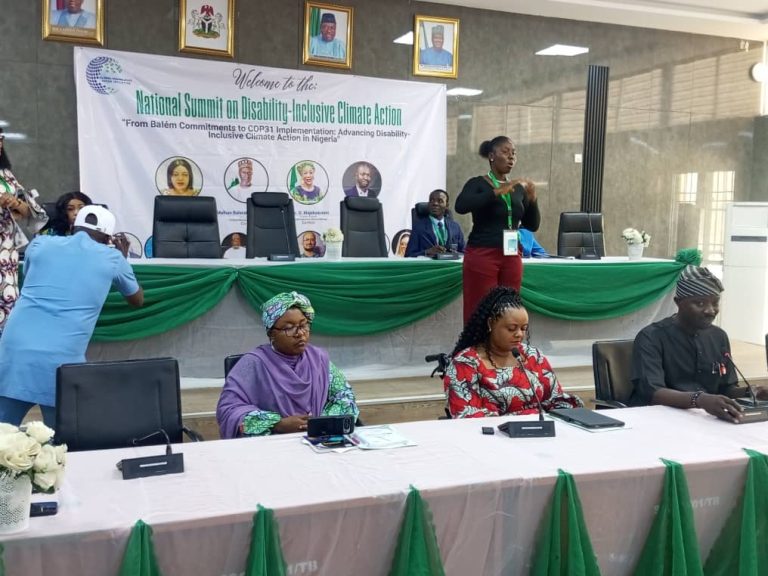
The call was made at the National Summit on Disability-Inclusive Climate Action, organised by the Global Disabilities Green Initiative, GDGI in Abuja on Wednesday, where participants advocated enforceable policies, accessible climate information and increased participation of PWDs in climate decision-making.

Presenting a welcoming address, the President of GDGI, Angelina Ugben, said persons with disabilities were among the most affected by climate change but remained largely overlooked in climate planning, disaster preparedness and public awareness campaigns.

Citing flooding in Borno and Niger states, Ugben lamented the lack of disability-specific data to identify affected persons and ensure appropriate emergency interventions.

“Do we know what happened to them? Nobody knows because they were not mentioned. The data was not there,” she said.

She warned that conventional emergency alerts and evacuation arrangements often failed to accommodate persons with visual impairments and wheelchair users, calling for accessible early-warning systems and inclusive evacuation plans.

Ugben also urged stakeholders to recognise PWDs not merely as beneficiaries but as active participants, innovators and decision-makers in developing climate solutions.

She said the summit would promote practical interventions, including inclusive climate policies, accessible green jobs, renewable energy, climate-smart agriculture and resilient communities.

Also speaking, the Senior Special Assistant to the President on Climate Technology and Innovation, Omamide Fadish, said Nigeria must move beyond climate commitments to practical implementation, investment and measurable outcomes.

Fadish said the forthcoming COP31 presented opportunities to strengthen international cooperation, mobilise climate finance and demonstrate how climate action could improve livelihoods and community resilience.

“The success of climate policies should be measured by their impact on people’s lives, employment opportunities created, technologies deployed and resilience built within communities,” he said.

Similarly, the Director-General of the National Council on Climate Change, Tenioye Majekodunmi, represented by Saadatu Madaki, said PWDs must be meaningfully involved in climate dialogue, policy development, adaptation planning and implementation.

She described the proposed Abuja Declaration on Disability-Inclusive Climate Action as an opportunity to strengthen accountability and accessibility across climate governance, financing and resilience programmes.

The Chairman of the House of Representatives Committee on Disability Matters, Bashiru Daudu, described disability inclusion as a civil rights issue rather than charity, disclosing that amendment of the disability law was ongoing.

He urged Nigerians to comply with the Discrimination Against Persons with Disabilities (Prohibition) Act, 2018, and encouraged PWDs to understand its provisions to better advocate for their rights.

Meanwhile, the Country Director of Christian Blind Mission Nigeria, Samuel Omoi, represented by Fwangshak Guar, said disability inclusion must be prioritised in government policies and financial plans.

“For millions of Nigerians with disabilities, climate change is not simply an environmental issue. It is a human rights issue,” he said, noting that climate shocks worsened existing inequalities and threatened access to food, water, shelter, healthcare and livelihoods.

The summit was supported by the United Nations Development Programme, Christian Blind Mission, the Federal Ministry of Environment, the International Labour Organisation and other development partners.

Participants are expected to advance recommendations for the proposed Abuja Declaration to guide disability-inclusive climate action in Nigeria.


Nigeria’s mining investment promises ring hollow as jupiter lithium dispute exposes a troubling contradiction

0
By Biliyaminu Suraj
Biliyasuraj1980@yahoo.com
Nigeria’s renewed courtship of American investors in the mining sector deserves more than applause. It deserves scrutiny.
On September 24, 2026, Minister of Solid Minerals Development Dele Alake announced on X that Nigeria and the United States had signed a framework agreement on mining investment. He said it was signed in New York with US Deputy Secretary of State Christopher Landau and covers geological data and exploration, mineral development and processing, infrastructure and technical capacity. Minister Alake valued Nigeria’s mineral resources at about $700 billion. As reported, the announcement named no project and stated no investment figure.
That raises an uncomfortable question: what does a promise of a welcoming investment environment mean for investors who have already committed years of work and resources to developing Nigeria’s mineral wealth? The dispute over a major lithium project in Kaduna State offers a sobering answer.
In July 2024, American Resources Corporation’s subsidiary, ReElement Technologies, announced a joint development agreement with UK-based Jupiter Lithium Ltd to commercialise what the companies described as a world-class lithium deposit in Southern Kaduna.
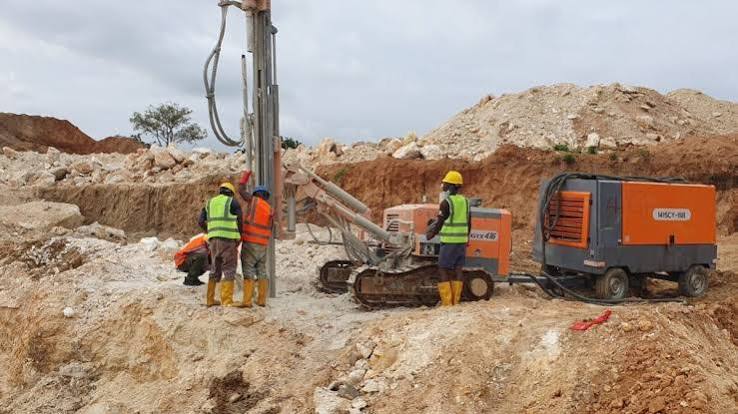
The project, held through Nigerian companies Basin Mining Limited and Range Mining Limited, covers about 442 square kilometres near Kafanchan under granted mining leases the companies said run to 2074 plus several mining lease applications awaiting grant by the Minister.
The announcement was ambitious. Jupiter planned to move from contract mining to large-scale operations, starting with 55,000 tonnes of spodumene concentrate a year and rising to 167,000 tonnes within two years, with first production projected for early 2025. It is not clear that production ever began.
ReElement planned a processing facility in Nigeria to produce battery-grade lithium carbonate using the lithium concentrate produced from the Jupiter project, and the companies promised a continuation of community projects including potable water, electricity, agriculture and scholarships which Basin and Range had been implementing for several years. That is the domestic processing and industrial development Nigeria says it wants.
The project has since become an international investment dispute. Mid-last year, Jupiter alleged Nigerian authorities had unlawfully revoked its mining rights and seized the project. The firm also alleged that the government purportedly revoked 70 per cent of its mining leases and failed to decide on further mining lease applicationss within the 45 days the Mining Act requires, leaving the applications waiting more than two years. It further claims authorities forcibly escorted its personnel off the tenements. These are allegations, not findings.
The government’s case deserves a fair hearing. In a statement issued in early August 2026, the minister’s media adviser, Kehinde Bamigbetan, said the revoked titles belonged to Basin Mining Limited, a Nigerian company. He said they were revoked for failure to pay statutory annual service fees of ₦1.223 billion in 2024 on five mineral titles, a liability that rose to about ₦2.494 billion by the time the licences were revoked.
The ministry says it has no legal or contractual relationship with Jupiter Lithium, Basin and Range’s UK parent company, because the Nigerian Minerals and Mining Act 2007 prohibits licences to foreign companies. But the government’s account leaves important questions unanswered.
First, the ministry says it has no relationship with Jupiter Lithium Ltd and that Jupiter is unknown to the mining authorities, yet its own aide has described Basin Mining as an alleged Nigerian subsidiary of Jupiter and has acknowledged that Jupiter filed arbitration over the revocation.
If a foreign mining company cannot directly hold a mining title how then does it invest in a mining project in Nigeria if not through a local Nigerian subsidiary? Second, by the ministry’s own figures the arrears roughly doubled before the licences were revoked.
The company alleges it had been denied access to its tenements for more than two years and questioned why it should pay annual fees if it could not access its tenements and could not develop the mineral assets it had discovered after years of exploration and investment. Third, why did the Ministry not grant the mining lease applications within the stipulated 45 days but reject the applications without notice nor reason after more than two years? Finally, the ministry has answered critics by calling their campaign blackmail, rather than publishing the records that would settle the matter.
The legal consequences are already in motion. The italaw docket lists a notice of intent dated July 1, 2025 and a request for arbitration dated December 1, 2025, under the 1990 Nigeria-United Kingdom Bilateral Investment Treaty. The International Centre for Settlement of Investment Disputes (ICSID), part of the World Bank Group, has the case as Jupiter Lithium Ltd and Others v. Federal Republic of Nigeria, Case No. ARB/26/27, and it is pending.
The Tribunal has been constituted but is yet to hear submissions on Jupiter’s allegations or Nigeria’s defence.
An investor-state arbitration over a strategically important critical minerals project is not a minor administrative disagreement. It raises questions about regulatory predictability, the security of mineral titles and the confidence investors can place in Nigeria’s legal and investment framework.
The government may argue it is simply enforcing the law, and it can make that case before the tribunal. But investors and the Nigerian public are equally entitled to ask whether enforcement was transparent, proportionate and consistent with the stated commitment to long-term investment.
There is also a contradiction in the government’s messaging. Nigeria is seeking American capital and presenting itself as an emerging destination for mining investment, while an existing major project that attracted international technical and commercial partners sits in an arbitration. What assurance can the government give a new American investor if the future of a project established under an international investment treaty with Nigeria’ is contested?
The slump in trade between Nigeria and the UK of -45% in 2025 may reflect the diminishing confidence Nigeria’s traditional trading partners place in Nigeria while Nigeria looks towards China with trade up 38.4% in 2025.
Investors do not make investment decisions on speeches, memoranda or official photographs. They study how companies already in the market have fared. Security of title, predictability and consistency in mining regulations are critical. The significant increases in mining licence fees in 2025 without mining industry consultation saw exploration licenses experiencing fee increments as high as 2,000 percent and mining leases seeing increases of 4,000 percent.
The consequences run both ways. If the revocations are found to have violated the UK-Nigeria Bilateral Investment Treaty which provides investment protections, confidence in Nigeria’s mining sector would suffer and the country could face potentially significant financial liability in the Jupiter case. If the government shows the revocations were lawful and justified by genuine breaches, it reinforces the principle that investors must obey Nigerian law. Either way, the dispute demands transparency and documentary evidence, not public relations battles.
The Jupiter case is a litmus test for investment from reputable international mining companies. It demands transparency from both the Federal Government and the mining company.
The Federal Government should clarify the status of the affected tenements and respond to the allegations about third-party access to the project area, the companies’ several petitions to remove illegal miners, the extraordinary delay in addressing the applications for mining licences and the MCO award of several licences over the companies’ valid tenements to third parties. The same standard applies to Jupiter: its claims, however serious, must be backed by verifiable evidence and tested independently and they appear to be doing that by taking their claim to the World Bank’s arbitration platform, The International Center for Settlement of Investment Disputes (ICSID), an expensive process that is not undertaken lightly..
The US-Nigeria September agreement may open real opportunities. Its value will be measured not by the enthusiasm around its signing, but by whether investors can operate under clear rules enforced consistently and fairly. Attracting foreign investment is only half the challenge. Protecting the credibility of the investment environment is the other half.
Until that contradiction is addressed, every new promise of a mining-sector investment boom deserves a pinch of salt.
Biliyamu Suraj is a mining expert and writes from Abuja the nation’s capital

MD/CEO Of Red Sapphire Celebrates Ambassador Ogan On His Birthday

0
‎‎…Describes Celebrant as a Thoroughbred Professional and Dynamic Businessman
‎
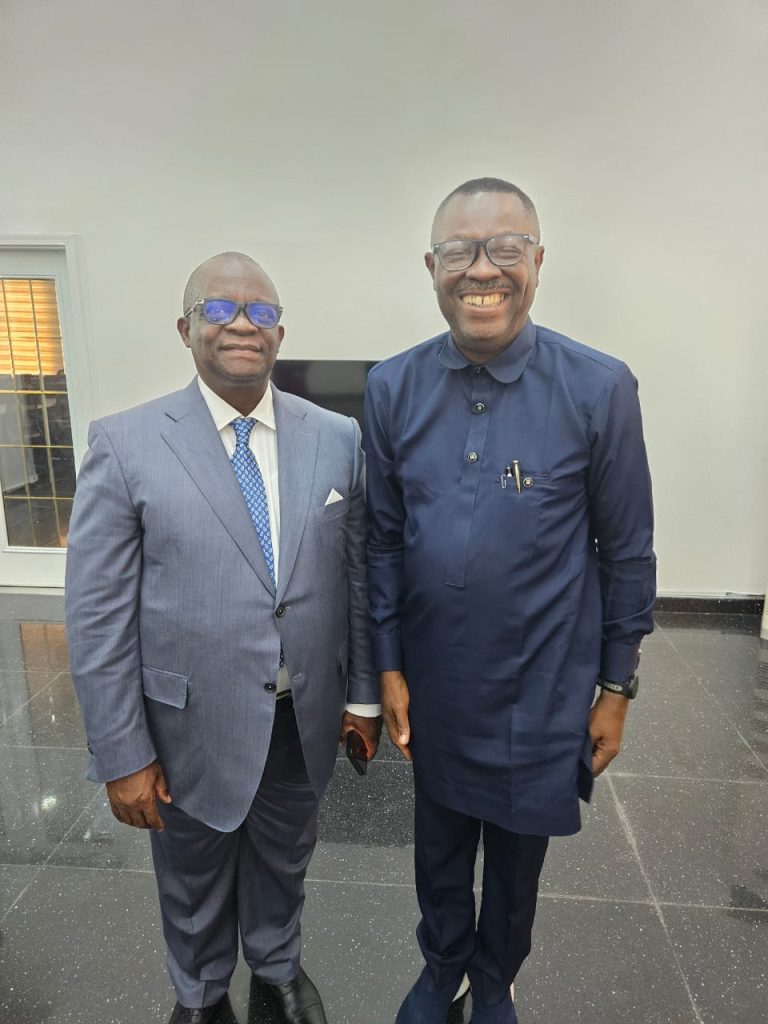
‎The Managing Director and Chief Executive Officer of Red Sapphire Nigeria Limited, Mr. Ono Akpe, has congratulated the Chairman of the Niger Delta Chambers of Commerce, Industry, Trade, Mines and Agriculture (NDCCITMA), Ambassador Ideare Gogo Ogan, on the occasion of his birthday.
‎
‎In a congratulatory message, Mr. Akpe, who also serves as the Director-General of the Bayelsa Governor’s Football Tournament, popularly known as the Prosperity Cup, and a board member of Bayelsa United Football Club, described the celebrant as a thoroughbred professional, a motivational leader, and a dynamic businessman.
‎
‎Mr. Akpe and Ambassador Ogan are both alumni of the University of Port Harcourt, a shared academic background that underscores their connection and commitment to professional excellence and development.
‎
‎He noted that Ambassador Ogan embodies wisdom, industriousness, and exceptional leadership qualities, adding that his commitment to enterprise development and passion for the economic emancipation of the Niger Delta region have distinguished him as a patriot and an advocate of progress.
‎
‎According to Mr. Akpe, the birthday celebration provides another opportunity to recognise Ambassador Ogan’s invaluable contributions to business development, entrepreneurship, investment promotion, and the creation of opportunities for economic prosperity across the Niger Delta region.
‎
‎He also drew inspiration from the Bible, citing Proverbs 9:11, Psalm 138:8, and Isaiah 46:4 as scriptural assurances of long life, divine preservation, and the fulfilment of God’s purpose.
‎
‎Quoting Proverbs 9:11, he stated: “For by me thy days shall be multiplied, and the years of thy life shall be increased.”
‎He further referenced Psalm 138:8, which declares, “The Lord will perfect that which concerneth me,” and Isaiah 46:4, which assures believers of God’s continued care into old age.
‎
‎“On this special day, I celebrate your life of impact, your sterling character, and your inspiring journey of excellence,” Mr. Akpe stated.
‎
‎“As you mark another year, we pray that Almighty God grants you renewed strength, sound health, greater wisdom, and divine favour to continue making meaningful contributions to the development of the Niger Delta and Nigeria at large,” he added.

NDDC Restates Commitment To Quality Service Delivery

0
The Niger Delta Development Commission, NDDC, has restated its commitment to uphold the highest standards of professionalism and continually seek innovative ways to improve service delivery to stakeholders in the development of the Niger Delta region.
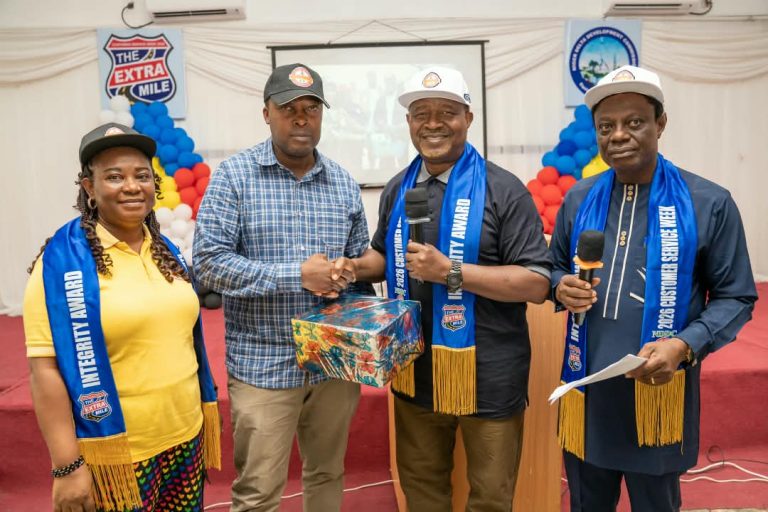
Speaking during a programme commemorating Customer Service Week in Port Harcourt, the NDDC Executive Director, Corporate Services, Hon. Ifedayo Abegunde, said excellent customer service remains an essential component of the Commission’s mandate and its commitment to responsive, people-oriented development in the Niger Delta Region.
A statement by Seledi Thompson-Wakama, NDDCs Director, Corporate Affairs noted that he assured stakeholders and communities across the Niger Delta Region that the NDDC was committed to delivering the dividends of democracy to everyone, stating: “This commitment is evident in the kind of projects the Commission has delivered in the past three years through the Managing Director, Dr Samuel Ogbuku, and the management team.”
Abegunde commended President Bola Ahmed Tinubu for his bold, visionary leadership in steering the nation’s affairs at this challenging time. He noted: “His Renewed Hope Agenda has laid a solid foundation for economic growth, national unity and inclusive development.”
The NDDC Deputy Director, SERVICOM, Dr Irene Okezie, said the special occasion provided an opportunity to celebrate customer service professionals and recognise their important roles in building trust, strengthening relationships and ensuring effective service delivery.
According to the Director: “The NDDC management commends customer service personnel and other frontline staff for diligence, dedication, patience and commitment to assisting stakeholders, particularly in challenging circumstances.”
“We are delivering service to the region. We are service givers and takers; we ensure that things are done well; we comply with processes,” she said.
Okezie said the NDDC was using the occasion to appreciate its dedicated staff and Stakeholders who go the extra mile to support development in the region. She said, “This is the first time the Commission is observing the customer service week, and it will serve as a stepping stone for improvement in the future.”
The NDDC Deputy Director, SERVICOM, Abuja liaison office, Kikelomo Aina, advised staff to show empathy to vulnerable customers, saying it is important to help people who have challenges and need assistance.
Aina said, “It is good to be available for service delivery even when not on duty.” Inconvenience yourself to satisfy customers.”
She said going the extra mile to assist others was desirable and satisfying, but not a compulsion or requirement, just a choice.
The programme’s consultant, Pastor Benson Eghaire, emphasised the need for teamwork. He advised staff to work as a unit to be effective and efficient.
Eghaire also said that perseverance and determination would lead to success. He asked staff to be more resilient and committed in discharging their duties.

NDDC Joins Geneva-Based WAPPP To Boost PPP Drive In Niger Delta

0
The Niger Delta Development Commission, NDDC, has been admitted as a full institutional member of the World Association of PPP Units and Professionals, WAPPP, a Geneva-based global body for Public-Private Partnerships, strengthening its drive for public-private collaborations, investments and sustainable development across the Niger Delta.
In a joint statement, WAPPP President Ziad-Alexandre Hayek and NDDC Managing Director Dr Samuel Ogbuku noted that full membership makes NDDC one of the few Nigerian public agencies and one of only about 40 PPP Units globally to belong to the exclusive network of over 300 PPP professionals from 60 countries.
Hayek said: “On behalf of WAPPP, I warmly welcome the NDDC as it joins our platform. We look forward to working together to advance sustainable development and impactful projects across Nigeria’s Niger Delta Region.
The NDDC Managing Director, Dr Samuel Ogbuku, said the membership validates the reforms undertaken by the current Board and Management to reposition the Commission for efficiency and effectiveness, according to a statement by Seledi Thompson-Wakama, NDDCs Director, Corporate Affairs
He said: “NDDC is pleased to join WAPPP and looks forward to working with fellow members to advance public-private collaboration and sustainable development across the Niger Delta region.”
“Partnership is one of the major ways to achieve sustainable development in the region, and it is important that NDDC stays at the forefront of building the right partnerships.”
“Since our inception, we have tried to deliver on our mandate, but we realised NDDC cannot shoulder the enormous responsibility of developing the Niger Delta alone,” Ogbuku said.
The full membership of WAPPP aligns with resolutions of the 2026 Partners for Sustainable Development (PSD) Conference, where the Minister of Regional Development, Engr. Abubakar Momoh, stressed that no single institution can address the region’s complex infrastructure challenges alone.
WAPPP brings together PPP Units, infrastructure agencies, long-term investors, and consultants on a neutral platform to share knowledge, drive innovation, and promote climate-resilient, people-first infrastructure in line with the United Nations Sustainable Development Goals.

N1.825bn EFCC Forfeiture: Fresh Claims Surface Against Ex-Navy Chief Ezeoba

0

By Emmanuel Obisue

Fresh claims have emerged concerning former Chief of Naval Staff, Vice Admiral Dele Joseph Ezeoba (retd.), years after the Economic and Financial Crimes Commission (EFCC) secured the final forfeiture of N1.825 billion linked to the former naval chief.


The EFCC had in 2017 obtained an order of the Federal High Court in Lagos for the permanent forfeiture of the N1.825 billion to the Federal Government.


The money was traced to an account associated with Chukwuka Onwuchekwa and Aquila Leasing Limited, with the anti-graft agency alleging that the funds were proceeds of money diverted from the Nigerian Navy.


According to the EFCC, Ezeoba allegedly used Onwuchekwa’s name in opening an account while retaining control of the funds.


The commission further alleged that Ezeoba subsequently entered into a memorandum of understanding with Onwuchekwa to acquire shares in Aquila Leasing Limited, in an arrangement the agency said was connected to the funds.


The EFCC put the value of the shares at N2.4 billion, while N1.825 billion had been recovered in drafts in favour of the Federal Government.


Justice Muslim Hassan subsequently ordered the final forfeiture of the N1.825 billion after the EFCC satisfied the requirements for the order.


The forfeiture followed an earlier interim order directing the commission to publish the proceedings in a national newspaper to allow any interested party to appear before the court.


Ezeoba’s counsel did not oppose the final forfeiture application but maintained that his client was not involved in fraud, arguing that the money represented his savings and had been provided for the purchase of shares.


The historical EFCC case has now resurfaced following fresh claims by top sources familiar with the matter and close to Ezeoba, alleging that proceeds associated with the financial activities were used to develop a luxurious apartment in Abuja.


The high-ranking source who spoke to our correspondent on condition of anonymity, identified the property as “Vicidini Palazzo, located at No. 1 Vicidini Close, off Amazon Street, Maitama, Abuja”, and said it was established with funds connected to the financial arrangements examined during the EFCC investigation.


The source described Vicidini Palazzo as a luxurious apartment and provided supporting photographs of the property which had not been verified as at the time of writing this report.


The claim concerning Vicidini Palazzo was not contained in the 2017 court proceedings cited in contemporary reports and could not independently be established from the records reviewed by our correspondent.


The EFCC’s recovery and final forfeiture of N1.825 billion, however, remain matters documented in the Federal High Court proceedings and contemporary reports of the case.


The fresh claim has therefore raised renewed questions about the movement and eventual use of funds examined during the earlier investigation.


Ezeoba has not been shown in the court proceedings cited to have been convicted of the broader allegations contained in the fresh claim, while his response to the allegation concerning Vicidini Palazzo was not available at the time of filing this report, as all efforts to reach Ezeoba on telephone, as he was out of the country, proved abortive.

FC Barcelona Officials Commend Bayelsa Govt

0
‎‎… As Starlets Begin Preparations for N-Youth League
‎
International Partners of Bayelsa Starlets, FC Barcelona of Spain have commended the Bayelsa State Government for the practical steps it has taken to ensure implementation of the MoU it signed with the government.
FC Barcelona officials particularly commended the government for the facilities it has put in place for the comfort of Starlets’ players, pointing out that players’ comfort was not negotiable if they must perform well on the field of play.
‎They made this known during their three-day visit to Bayelsa while assessing the Onopa facility located behind Government House.
They expressed satisfaction with the temporary camp of the team situated at Onopa in Yenagoa, the Bayelsa State capital.
‎
‎In the course of the visit, which coincided with the State’s 30th anniversary celebrations, Bernat Villa-Gorriz,Technical Director FC Barcelona for Europe and Africa, said he was impressed with facilities and the hostels he saw and that the facility reflects the government’s commitment to the Memorandum of Understanding, Mou signed in May this year.
‎
‎According to him, the environment is not only conductive, but is equally spacious for an academy and that beyond football the accommodation would create a strong bond amongst players as they are determined to see players combine their talents and education.
‎
‎He also applauded the Management of the Starlets for the  quality of football displayed by the players in the two matches he watched, pointing out that the team has improved tremendously compared to the last time he visited.
‎
‎Gorriz commended the Director General of the Prosperity Cup and his team for their determination and steadfastness in ensuring that the lads realized their potential, stressing that the academy has given the kids a means of livelihood.
‎
On his part, Mr. Sylvester Okonkwo of Whiz-Kid Ventures, Netherlands, who brokered the deal between the Spanish football giants and the Bayelsa State Government, noted that the temporary structure of the academy was indicative of  government’s readiness to set-up the Bayelsa Starlets Academy in line with the MoU that was signed between FC Barcelona and the government.
‎
‎Also speaking, Director General of the Prosperity Cup Mr. Ono Akpe appreciated the State Governor, Senator Douye Diri, the Deputy Governor, Dr. Peter Akpe and the Commissioner for Sports Development, Dr Daniel Igali for providing the facilities as well as the funds the government has extended to the team since the academy took off.
Akpe said immediately after the MoU was signed the management of the Starlets swung into action to assemble a team from the season eight of the tournament, stressing that the selection was headed by a group of coaches led by former international, Edema Fuludu.
‎
‎He explained that the painstaking step that was taken by the coaches was gradually yielding results having emerged champions in the NLO Youth League that was held in Yenagoa and the players have been in camp since then, with the organization being professionally run as an academy.
‎
‎In separate interviews, Secretary of the Bayelsa State Football Association, Mr Diseye Nwankwe and member of the Central Organizing Committee COC, Mr Zuzu Ebimotimi, urged the lads to be disciplined and be professional in the discharge of their duties.
Meanwhile, the Bayelsa Starlets Academy have been fine-tuning their preparations for the N-Youth League with a series of training matches with neighbouring clubs.
‎
‎Bayelsa Starlets Academy, affiliated to FC Barcelona of Spain, will kick-start their N-Youth League campaign away to Supreme Kings FA on the 13th of October, 2026 before returning home to face PSMA Pepperest on the 20th of October, at the Samson Siasia Stadium, Yenagoa.

NDDC Reaffirms Commitment To Inclusive Development

0
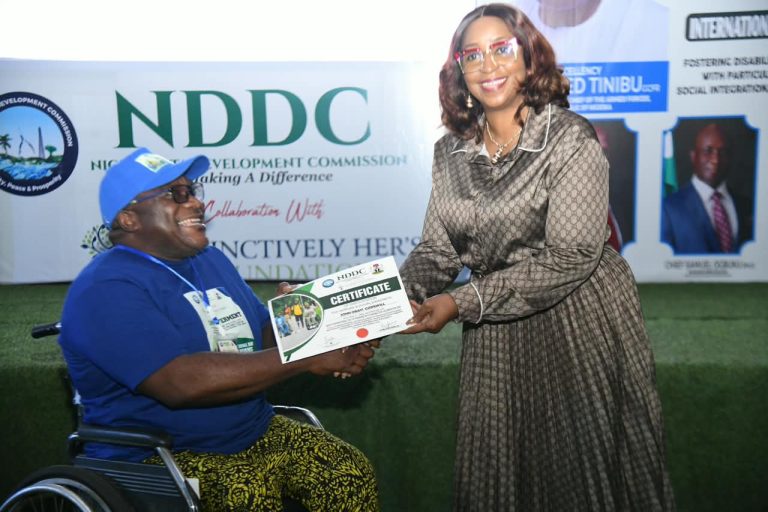
The Niger Delta Development Commission, NDDC, has restated its commitment to inclusive development, especially with regard to Persons Living with Disabilities, PWDs, in Rivers State, to enhance their skills, boost their economic independence and participation in society.
Speaking during an empowerment outreach for youths and women living with disabilities in Rivers State, the Director of the NDDC Rivers State Office, Engr. Okezie Ule, represented by Mrs Patience Opuebi, said the Commission recognised the importance of ensuring that persons with disabilities were consciously included in its development interventions in the region.
The initiative, organised in Port Harcourt to mark the International Day for Persons with Disabilities, brought together stakeholders, government representatives and beneficiaries to promote inclusion and address the challenges confronting persons with disabilities.
In her own remarks, the NDDC Director of Culture and Women Affairs, Mrs Ahunna Imoni, called for sustained efforts to remove barriers that limit the participation of persons with disabilities in education, healthcare, entrepreneurship and employment.
She noted: “This initiative is part of the Commission’s broader commitment to skills acquisition, advocacy and the creation of opportunities for underserved groups across the Niger Delta. We have listened carefully and learnt a lot with keen observation. We might not be wholly there yet, but we are on the right track, taking crucial steps to ensure inclusion in all that we do.”
The programme featured lectures from both town and gown. One of the Ministry of Justice facilitators, Evelyn Member, commended the NDDC for its inclusive initiatives. She noted, “We need to go beyond empowerment programmes and economic inclusion. If we genuinely want inclusion, we must create opportunities for PWDs to be involved in decision-making”
Another facilitator, and also a PWD, Ms Ndifreke Andrew-Essien, encouraged beneficiaries to look beyond their disabilities. She said: “Insert yourself into conversations and movements. You have to make yourself, your abilities and the pros of your disabilities known. It is with this that you can make notable change for yourself.”
The programme underscores the NDDC’s continued efforts to extend its development interventions to underserved groups and promote greater participation in the Niger Delta’s socio-economic advancement.

NDDC Empowers 100 Akwa Ibom Women With Digital, ICT Skills

0
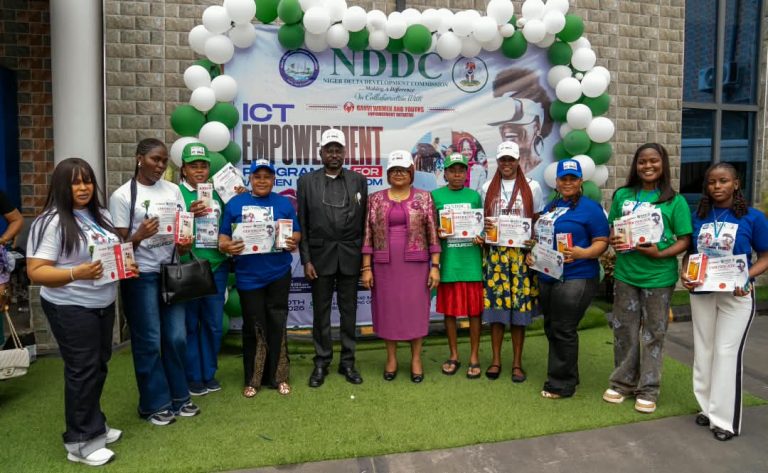
The Niger Delta Development Commission, NDDC, has empowered 100 women in Akwa Ibom State with Information and Communication Technology (ICT) and digital marketing skills to enable them to expand their businesses and access online markets.
Speaking during the two-day training programme in Uyo, Akwa Ibom State, the NDDC Director of Commercial and Industrial Development, Mrs Lyna Okara, said the initiative reflected the Commission’s commitment to empowering women with the knowledge and tools needed to thrive in the digital economy, according to a statement by, Seledi Thompson-Wakama, NDDCs Director, Corporate Affairs
She said the ICT training was designed to equip women with practical digital skills for online business, marketing and networking. The beneficiaries came from different professions and sectors, including tailoring, catering, agriculture, photography, and other businesses.
Okara stated, “We are here to train and graduate 100 women selected from Akwa Ibom State and teach them ICT skills for digital marketing and online businesses. This will help them take their products to the global market, where they can interact, network and connect with potential customers.”
The NDDC Director explained that the Android phones provided to the beneficiaries as starter packs would enable them to create business pages, design flyers and promote their products and services online.
She urged the beneficiaries to share the knowledge acquired during the programme with other women in their communities who did not have the opportunity to participate.
“The resources may not go round to everyone, but those of you who are here today should ensure that others benefit. Let what you have learnt here today cascade to other people who do not have the opportunity to be here,” she said.
Also speaking, the NDDC Director, Akwa Ibom State Office, Mr Evong Evong, explained that the programme was organised to train women to use online platforms effectively to enhance their businesses and improve their access to wider markets.
He expressed confidence that the digital exposure would enable the beneficiaries to expand their customer base, reach global clients and take advantage of new business opportunities available through online platforms.
One of the facilitators, Engr. Yireobong Akpaba, emphasised the importance of establishing a strong online presence for businesses. He walked participants through using online business applications, email addresses, and unique brand identities, among other digital tools.
He also explained the importance of having a domain name and noted that domains had been created for the participants to enable them to commence their businesses online after the training.
An ICT expert Mr. Godwin Sunday, also took the women through practical aspects of ICT and the use of digital tools to improve their businesses.
The participants expressed appreciation to the NDDC for the initiative. In her vote of thanks, one of the beneficiaries, Mrs. Obonodo Ini Uko, said the women were delighted with the knowledge acquired and the Android phones provided as starter packs.
Another beneficiary, Esther Augustine, a young photographer, commended the NDDC for putting together a programme that empowered women not only with knowledge but also with practical tools to apply what they had learnt
She said the ICT skills acquired during the training would help her restructure her photography business, improve her online presence and reach more customers.

NDDC Advances Digital Transformation, Activates Electronic Memo Portal

0
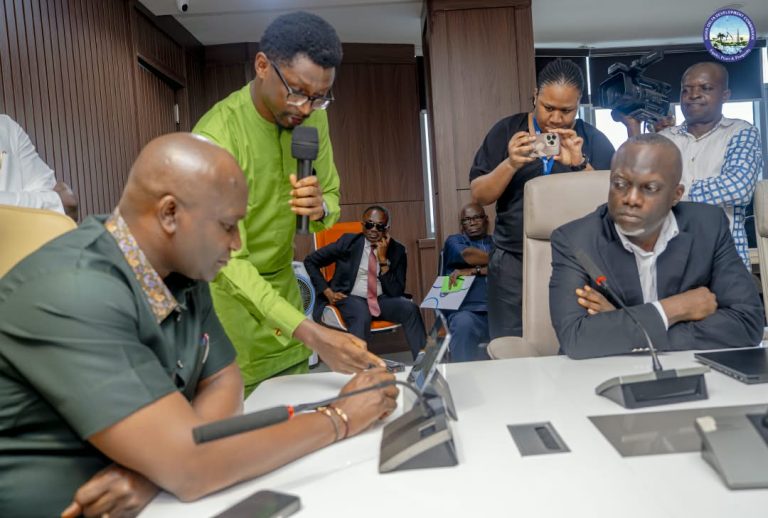
The Niger Delta Development Commission, NDDC, has begun fully implementing its Electronic Memo (e-Memo) Portal, with the Information, Technology and Innovation (IT&I) Department formally onboarding the Managing Director, Dr Samuel Ogbuku, onto the platform.
Speaking during the onboarding exercise, at the NDDC headquarters in Port Harcourt, Ogbuku described the digitalisation of the Commission’s operations as part of the transition from “transaction to transformation”, noting that the initiative would help eliminate human errors, missing files, unnecessary bottlenecks, and delays associated with manual processes.
A statement by NDDCs Director, Corporate Affairs, Seledi Thompson-Wakama noted that he said that the onboarding exercise marked another significant step in the Commission’s ongoing digital transformation drive, aimed at improving efficiency, automating internal processes and strengthening the delivery of its mandate across the Niger Delta region.
According to the NDDC Chief Executive Officer, adopting digital processes would enable the Commission to work more efficiently and ensure critical documents and processes move through the system in record time.
He emphasised the importance of compliance with the new system, noting that Directors had already undergone training, while other staff would follow. He urged all Directors and relevant officers to fully embrace and comply with the digital workflow as the Commission moves towards a more automated operating environment.
The Director of Information Technology and Innovation, IT&I Department, Engr. Emeka Ani, explained that the Commission’s digital transformation initiative had been expanded across its directorates and departments following an assessment of existing processes.
He said the Commission reviewed the processes, aligned them with approved Standard Operating Procedures (SOPs), and then automated them to improve efficiency and accountability.
Ani disclosed that the E-Memo platform officially went live on September 22, 2026, and that Directors were being onboarded onto the system as part of the implementation process. He added that further guidance would be provided to enable users to understand and effectively utilise the platform.
He said further: “The E-Memo Portal is expected to provide a more streamlined and efficient mechanism for processing, reviewing, and approving official memoranda within the Commission, while reducing reliance on physical documentation and improving the speed and traceability of administrative processes.
“The initiative reinforces the NDDC’s commitment to leveraging technology to modernise its operations, enhance institutional efficiency and deliver on its mandate more effectively.”
In another development, the Amalgamated Union of Public Corporation, Civil Service, Technical and Recreational Services Employees, AUPCTRE, presented an award of excellence to the NDDC Managing Director, Dr Ogbuku.
Presenting the award on behalf of the AUPCTRE leadership, the Chairman of the NDDC Staff Union, Comrade John Achoreturi, said the award recognised Ogbuku’s contribution to infrastructural development in the Niger Delta region and his commitment to the welfare of NDDC staff.
The chairman of AUPCTRE commended the NDDC boss for what he described as “his exceptional leadership and performance in the development of the Niger Delta region.