Tuesday, May 12, 2026
Home Blog Page 206

Emefiele: Documents Used To Pay Election Observers $6.2m Forged, Says Forensics

0

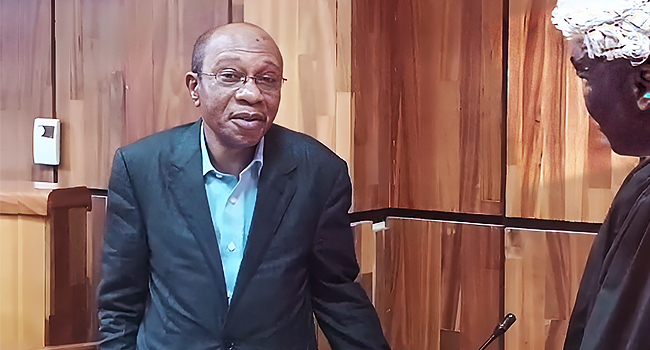
The trial of former Central Bank of Nigeria (CBN) Governor, Godwin Emefiele, continued on Thursday before Justice Hamza Muazu of the Federal Capital Territory High Court in Abuja as a forensic analyst confirmed that the documents used to request the payment of $6.2million for foreign election observers were forged.

The witness, Bamaiyi Meriga, called by the Economic and Financial Crimes Commission (EFCC), informed the court that following forensic analysis of the disputed documents, he discovered that there was clear evidence of forgery of signature, and the seal of execution were different from the original.

He also confirmed that the signature were not those of former President Muhammad Buhari and ex-Secretary General of the Federation, Boss Mustapha.

The two documents, presidential directive on foreign observer election and presidential directive on foreign observer election tendered in evidence was admitted in evidence by the trial judge, justice Muazu.

Under cross-examination by counsel for Emefiele, the witness said he was not a staff of the EFCC, and was not being paid by the anti-graft agency but his salary was domiciled with the Nigeria Immigration Service.

Counsel for Emefiele, Matthew Burkaa, expressed displeasure over the conduct of the witness, saying that the witness misled the court by evading questions.

However, the Prosecution Counsel, Rotimi Oyedepo, was not not happy with the defence counsel.

The trial has been adjourned till March 11 for continuation.

EFCC Reviews Tactics As Appeal Court Stops Orji Kalu’s Fraud

0

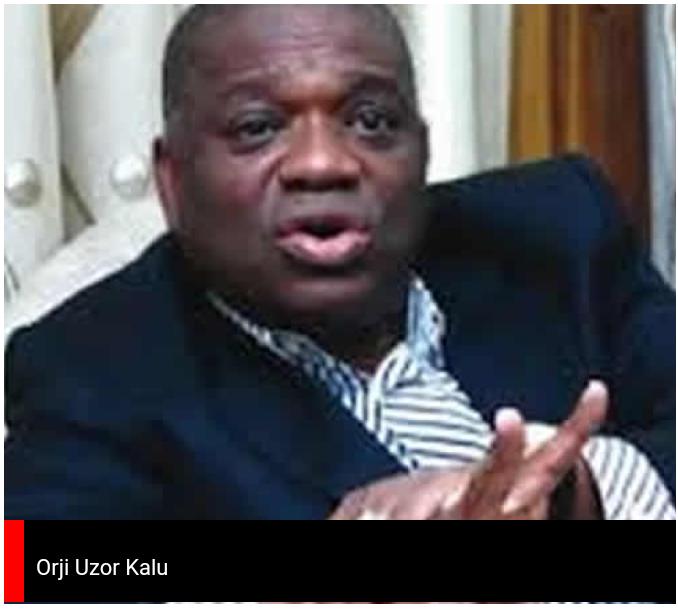
The Economic and Financial Crimes Commission has said it will fix the loopholes in its tactics as the Court of Appeal, on Wednesday, rejected the attempt to reopen the N6.7bn fraud case against a former Abia State governor, Orji Uzor Kalu.

The appellate court, in a pronouncement by Justice Joseph Oyewole, held that the records brought forward by the EFCC were unreliable to grant the request for Kalu’s fresh trial.

Speaking to journalists after the judgment, EFCC lawyer, Oluwaleke Atolagbe said the commission would fix the loopholes the court pointed out.

“The court did not go into the merit of the appeal. The court did not go into whether Kalu and Slok cannot be tried.

“The merit of the matter has not been resolved. We have the opportunity to come back appropriately. As it is, we can still come back to the court of appeal for the merit of the case to be determined after putting in place what the court noted,” Atolagbe said.

The Federal High Court in Lagos had on December 5, 2019, convicted Kalu, his company, Slok Nigeria Limited, and a former Abia State Government House Director of Finance and Accounts, Jones Udeogu of the N6.7bn charges.

The court, in a judgment by Justice Idris Mohammed (now a Justice of the Supreme Court), sentenced Kalu to 12 years imprisonment; Udeogu, 10 years imprisonment, while it ordered the winding up of Slok Nigeria Limited and the forfeiture of its assets to the Federal Government.

However, displeased with the judgment, Udeogu filed an appeal, contending that as of the time Justice Idris concluded the 12-year-long trial and pronounced his judgment he had already been elevated from the high court to the Court of Appeal.

In a May 8, 2020 judgment, the Supreme Court agreed with Udeogu and nullified his conviction by Justice Idris, holding that the constitution does not permit a judge elevated to a higher court to return to a lower court to conclude a part-heard case.

Justice Ejembi Eko, who delivered the lead judgment of the panel led by Justice Olabode Rhodes-Vivour (retd.), also declared as unconstitutional the provision of Section 396(7) of the Administration of Criminal Justice Act, 2015, which the then President of the Court of Appeal, Justice Zainab Bulkachuwa (retd), relied on to authorise Justice Idris to return from the Court of Appeal to the high court to conclude the trial.

The panel unanimously directed the Chief Judge of the Federal High Court to assign the case to another judge of the court for the trial to commence afresh.

In June 2020, riding on the Supreme Court’s judgment in favour of Udeogu, Kalu approached the Federal High Court in Lagos to demand his freedom from prison.

The prosecuting counsel for the EFCC, Rotimi Jacobs (SAN), said he would not oppose Kalu’s application to be freed but prayed Justice Mohammed Liman to ensure that the order of the Supreme Court for a fresh trial should be complied with.

Following his release from prison, Kalu, however, filed another suit to stop the EFCC from trying him afresh.

He contended that the retrial order was only applicable to Udeogu and not him, adding that trying him afresh would amount to double jeopardy.

In a September 29, 2021 judgment, Justice Inyang Ekwo of the Federal High Court in Abuja agreed with Kalu and stopped the EFCC from trying him afresh.

Displeased, the EFCC proceeded to the Court of Appeal, which, however, on Wednesday, dismissed the appeal on the grounds that the EFCC did not produce sufficient records to sustain the appeal.

Delivering judgment on Wednesday, Justice Oyewole said, “The record of appeal brought by the Federal Government was incompetent and unreliable for any court to use to grant the request of the government.

“The name of the person who compiled signed, and certified the record was not reflected as required by law.”

24 States Can’t Pay Salaries Without FG Allocation

0

At least 24 states of the federation will not be able to pay workers salaries this year without having to wait for federal allocations from the central government, [/b]findings by The PUNCH have revealed.

Only [b]11 out of the 36 state governments of the federation can independently pay their workers’ salaries without depending on federal allocations, according to an analysis of the state governments’ approved budgets for the 2024 fiscal year.

The states with robust internal revenue are Lagos, Kano, Anambra, Edo, Enugu, Imo, Kaduna, Kwara, Osun, Ogun and Zamfara.

The approved budgets are also contained in Open States, a BudgIT-backed website that serves as a repository of government budget data.

While the budgets of 35 states have been made public, Rivers State budget could not be accessed neither has it also been uploaded the platform.

According to the analysis the budgets data, 24 states cannot fund salaries payments from their Internally-Generated Revenue and, as such, may have to rely on the Federal Government allocations or borrowing from banks and related institutions.

The development also means that the respective wage bills of the affected states surpassed their various IGRs, raising concerns about workers productivity and state governments’ efficiency in internal revenue generation.

The 24 states are Bayelsa, Ondo, Yobe, Sokoto, Taraba, Plateau, Oyo, Niger, Nasarawa, Kogi, Kebbi, Katsina, Jigawa, Gombe, Ekiti, Ebonyi, Borno, Benue, Bauchi, Adamawa, Akwa-Ibom, Cross River, Abia, and Delta.

The development is coming amidst clamour for wage increase by labour unions at both the federal and state levels, following the rising cost of living on the aftermath of fuel subsidy removal and unification of the foreign exchange markets by the current administration.

The Nigerian Labour Congress has consistently maintained that if inflation continues to rise, the organised labour may have no choice but to insist on a new minimum wage of N1m for Nigerian workers. The government however has rejected the demand.

In the first half of 2023, state governments borrowed about N46.17bn from three banks to pay salaries between January and June 2023. The findings were based on an analysis of the half-year 2023 financial statements of Access Bank Plc, Fidelity Bank, and Zenith Bank Plc

The PUNCH observed that the states borrowed the most from Access Bank in six months, with a record of N42.97bn loan.

This was followed by Zenith Bank (N1.78bn borrowed) and Fidelity Bank (N1.42bn borrowed) within the six-month period.

In 2023, state governors got the most FAAC allocations in at least seven years. The rise in FAAC allocations to the three tiers of government especially states followed the petrol subsidy removal and currency reforms of the current administration. The reforms have reportedly led to a 40 per cent boost in income.

Experts believe the projected revenue increase should have reduced state governments’ appetite for more borrowings.

In an interview recently, Kaduna State Governor, Uba Sani, claimed that state governments were borrowing to salaries in the past but the removal of fuel subsidies had put an end to such borrowing.

“Every governor in Nigeria is getting more money than we used to get. Before President Bola Tinubu removed the fuel subsidy, in Kaduna State, precisely in May 2023, we were borrowing to pay salaries but immediately after the subsidy removal, after paying salaries without borrowing, we had a surplus of money.”

However, despite the improved funding, no fewer than 32 states indicated plans to borrow N2.78tn from domestic and external institutions to fund their 2024 budget.

According to further analysis of the states budgets, the affected 24 states will spend N1.48tn on salaries in 2024, while they plan to make N914bn IGR. This means the states will need N566bn from either federal allocations or borrowing to complete the payment of salaries.

The breakdown of data shows that Bayelsa State with projected IGR of N23.9bn will need money to pay its workers N69.12bn this year. Ondo State with projected internal revenue of N33.6bn will also need extra money to fund its N56.76bn annual wage bill, while Yobe State will fund its N42.86bn wage bill from its projected IGR of N14.55bn and federal allocation or borrowing.

Sokoto is expected to pay N46.9bn salaries from its anticipated internal revenue of N37.1bn and partial funding from allocation/loan, while Taraba will obtain extra funding to pay its workers N54.47bn from its internal revenue of N27.8bn. Plateau with a projected revenue of N38.89bn must get federal government allocation o clear its wage bill of N52.25bn.

Also, the Oyo State will pay N132.67bn to workers after generating N92.79bn in its coffers. The state will need additional funding to complete this. Niger State with projected revenue of N61.87bn will need help to pay its civil servants N70.24bn while Nasarawa will pay its workers N54.45bn from its projected revenue of N43.3bn and another source.

Further analysis of the budget showed that states such as Kogi will pay its workers N65.07bn from its revenue of N30.23bn and federal allocation, while Kebbi will pay N37.3bn as salaries from its N17.8bn internal revenue and partial federal allocation. Katsina will spend N56.3bn on salaries from its N40bn internal revenue and federal allocation, while Jigawa will pay its workers N64.84bn from its revenue of N50.64bn and federal allocation.

Gombe must pay salaries worth N35.27bn from its anticipated revenue of N22.32bn and federal allocation. Ekiti will spend N2.78bn on salaries from its N1.5bn revenue and federal allocation. Ebonyi’s N28.16bn wage bill surpasses its revenue of N25.1bn, while Borno will pay its workers N50.28bn from its revenue of N27.5bn and federal allocation.

Furthermore, Benue State with revenue of N23.9bn will pay N56.9bn as salaries, while Bauchi must pay salaries worth N46.9bn from its anticipated revenue of N37.1bn and federal allocation; Adamawa will spend N52bn on salaries from its N26.9bn revenue and allocation; Akwa-Ibom will spend N127.8bn on salaries from its N60bn revenue and allocation while Delta with projected revenue of N110.3bn must seek assistance to pay its workers N164.3bn.

Also, Abia with a revenue of N32.14bn will pay N47.83bn as salaries while Cross Rivers with projected revenue of N34.7bn must seek assistance to pay its workers N67.75bn.

According to the budget data, the 11 states which have higher IGR will conveniently fund their combined 980.68bn wage will their internal revenue of N2.34trn

Experts speak

In different forums, financial experts have raised concerns about states’ spending on recurrent expenditure highlighting the need to embrace financial innovations.

A development economist, Aliyu Ilias, said many states had yet to fully develop themselves as industrialised and marketable to attract investors.

Ilias urged governors to develop an area of strength they could leverage to attract foreign investments.

He said, “Going forward, what they could do is to identify one area of strength. For instance, Bayelsa has oil and should be able to attract investments. I think it is about policy. They should give the policy a chance that would allow people to come and invest. They should also create an attraction and develop an economic summit that will make sure they showcase and attract investors.”

An economist and former Vice-Chancellor of the University of Uyo, Prof Akpan Ekpo, also stressed that, “states have to think of new ways of increasing their IGRs. If they continue borrowing to pay salaries, it is not good for the economy.”

He urged the states to increase their revenue by increasing service delivery, which will attract more revenue.

Also reacting, the Managing Director of the Centre for the Promotion of Private Enterprise, Muda Yusuf, said that the report indicated that a majority of states were not financially sustainable and were at risk of insolvency if there was no boost in investment.

He said, “This issue is a fiscal sustainability problem, showing that many states are not fiscally sustainable and need to work towards it; and that the states need to do a lot more to attract more investments to their states so that their level of dependence on the Federal Allocation Accounts Committee would reduce.

“Even as we speak, many of them are also in debt and by the time they pay salaries and service their debts, there is not much left to improve on infrastructure. It’s in the interest of the sustainability of the states for them to be more creative in generating more revenue and attracting more investment to their states so that they can generate more revenue.

“Secondly, we also need to address the issue of fiscal federalism because some of the states don’t have power over some resources in their domain and can’t bring investors into it. For instance, mining is controlled mainly by the federal government, you get permission from them and revenue is remitted to them. So we need to revisit the issue of restructuring to help states have more control over resources within their domain.

Continuing, the economist stated that the state governors should take a cue from the Federal Government to reduce its bloated staff and political appointees.

“Most of these states have heavy overhead and they have very bloated bureaucracy, political appointees and they are putting a lot of pressure on their resources, so they have to do some rationalisation on their staff, many of them don’t need more than 50 per cent of their workforce but for political reasons, they put all manner of characters on their payroll including the local government. They have to look at that and take a cue from the Federal Government on the Oronsaye report.”

How Wigwe Saved Me During My Dethronement As Kano’s Emir – Tearful Sanusi

0

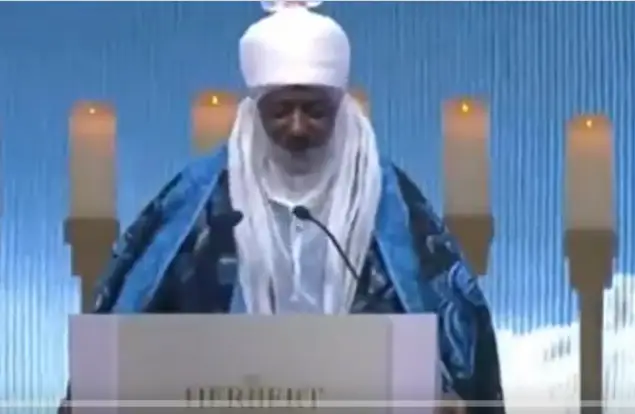
Former Central Bank Governor of Nigeria, Sanusi Lamido Sanusi, broke down in tears while paying tribute to the late Herbert Wigwe and his family.

Sanusi refle[/b]cted on his deposition as the Emir of Kano and used it to highlight Wigwe’s loyalty to those who were close to him (the deceased).

He made the remarks on Wednesday while addressing a crowd of mourners in Lagos during the funeral service for Wigwe.

His words: [b]“You know when I had problems in Kano, I called him about six months before I was told to leave Kano and I said to him, Herbert, I know you did all your best to solve all this problem, but I’m convinced that this is what is going to happen.

“He said to me, Your Highness don’t worry, whatever happens, don’t worry, we’re here for you. On the day I heard on the radio that I was dethroned, the night before, I knew this was going to happen and I called him and said I want to come to Lagos when it happens.

“The announcement was made at about 9 a.m. by noon Herbert had a plane on the terminal in Kano. The plan then was to give me to excel for many years. I put my family on that plane. No message, no phone call, nothing. Just put them on that plane and send them to Lagos. Herbert received them. Put them in a hotel. Later got them flats, and got them accommodation. For months when I came we stayed there. I can go on and on. Sola (Wigwe’s P. A) is here. Herbert said to me, Your Highness you want to travel to Sola? I just call Shola and I get a jet. So much so that people believe I own the jet. So people believe.”

Sanusi also shared another story on why he placed Wigwe in charge of a trust fund he set up for his children.

He added, “I’m placing you in charge of this trust for the education of my children because I know that even if I died I did not leave any money, you would educate my children.”

Tinubu Signs Executive Orders On Oil, Gas Reforms

0

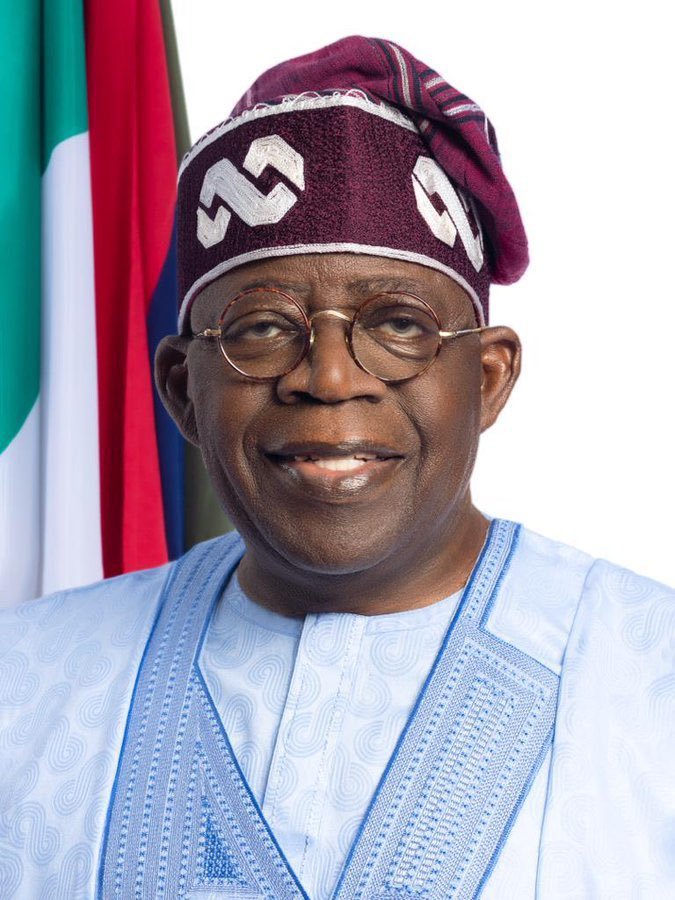
President Bola Tinubu has approved three new directives in the oil and gas sector to introduce fiscal incentives for related projects, reduce contracting costs and timelines, and promote cost efficiency in local content requirements.

This followed “extensive engagements, analyses, and benchmarking with other jurisdictions” a statement signed by the President’s Special Adviser on Media and Publicity, Ajuri Ngelale, read Wednesday.

The statement is titled ‘President Tinubu signs executive orders on oil and gas reforms.’

According to Ngelale, Tinubu approved the “Introduction of fiscal incentives for non-associated gas, midstream and deepwater developments.

“Streamlining of contracting process to compress the contracting cycle to six months.

“The application of the local content requirements without hindering investments or the cost competitiveness.”

Wednesday’s directive is in keeping with his efforts to remove obstacles to investments in Nigeria, harness the nation’s resources and diversify the economy for the benefit of Nigerians, said the Presidency.

It is also expected to improve the investment climate and position Nigeria as the preferred investment destination for the oil & gas sector in Africa, the statement further explained.

Ngelale noted that these incentives were developed in collaboration with the Federal Ministries of Justice, Finance, Petroleum, Budget and Economic Planning, Federal Inland Revenue Service, the Nigerian National Petroleum Company Limited, the Nigerian Upstream Petroleum Regulatory Commission, the Nigerian Midstream and Downstream Petroleum Regulatory Commission, and the Nigerian Content Development and Monitoring Board.

The details of these Policy Directives will be gazetted and communicated by the Federal Ministry of Information and National Orientation even as the Special Adviser to the President on Energy, Mrs Olu Verhijen, has been directed to “continue coordinating the aforementioned stakeholders to ensure the implementation of these directives within a stipulated timeframe.”

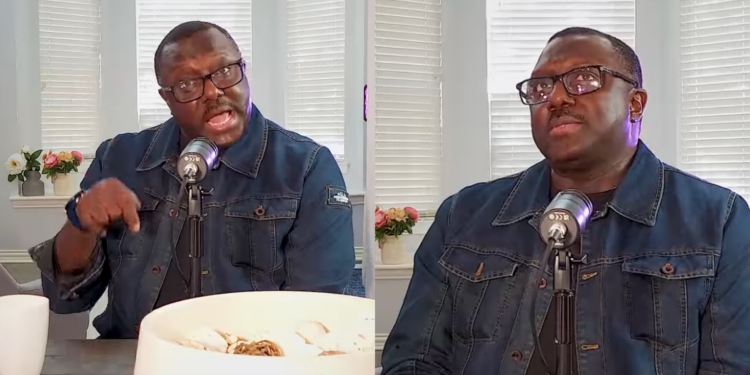
JAPA: “I Regret Relocating Abroad” – Femi Brainard Opens Up On Being Uber Driver

0

Why I regret relocating abroad – Femi Brainard opens up on being Uber driver [VIDEO]

Nigerian film actor Femi Brainard has opened up about life while living abroad. The thespian granted an interview with Teju Oyelakin, aka, Teju Babyface on his podcast.

Speaking on the perks as well as the disadvantages attached to relocating abroad, especially being a celebrity, Femi Brainard said it is better to be celebrated and be a prince in Nigeria than to move abroad and be a nobody. He also noted that his wife does not love it at all.

While speaking with the comedian, Brainard noted that anytime he is driving, his Nigerian passengers in particular can’t help but stare at him in disbelief and wonder if he is the star they know.

The actor added that the curious ones would approach him to be sure he was the famous actor they knew in Nigeria.

Femi Brainard said the bills are a lot and he has things like rent to think about. The actor who celebrated his 10th wedding anniversary in May of 2023 explained that he was so broke to an extent once that he went to the parking lot and burst into tears.


https://www.youtube.com/watch?v=5xXUpqrIpx4

Access Bank Funded N50B Contract Awarded To Wigwe’s Wife By Abia Government

0

Facts have emerged that the Craneburg Construction firm owned by the late Mrs Chizoba Doreen Wigwe, wife of the late Dr Herbert Wigwe of Access Bank had used a loan from the bank to finance contracts across the country.

Herbert Wigwe, who was the Group Chief Executive Officer (GCEO) of Access Holdings Plc, had his late wife serving on the legal board of the bank before venturing into the establishment of the Craneburg Construction in 2016.

A document obtained by SaharaReporters on Wednesday shows how Craneburg Construction Company received a loan from Access Bank to finance N50 billion contracts awarded by the Abia State government.

In one of the several letters that Access Bank wrote to the Abia State government through the Commissioner for Finance in the state, the bank stated that the Borrower was Craneburg Construction Company Ltd (CRANEBURG) while the Lender was Access Bank Plc (the Bank” or “the Lender”wink.

The letter titled: “Consent Letter”, dated October 1, 2023, states: “Further to the application from Craneburg Construction Company Limited for a credit facility and our subsequent discussions, we are pleased to inform you that the Management of Access Bank Plc (the Lender”wink, an Institution regulated by Central Bank of Nigeria, has approved a N50 Billion term loan (facility) under the following terms and conditions:

“Borrower: Craneburg Construction Company Ltd (CRANEBURG); Lender: Access Bank Plc (the Bank” or “the Lender”wink; Contract Employer: Abia State Government (ABSG); Facility Type: Term Loan- Contractor Infrastructure Development Scheme (CIDS); Amount: N50,000,000,000.00 (Fifty Billion Naira Only).

“Disbursement: The facility shall be availed and disbursed only into the account of Craneburg, nominated by ABSG (Abia State Government) upon Craneburg and ABSG meeting all conditions precedent to drawdown. Every disbursement shall be authorized by ABSG.”

“Purpose: To finance the Construction of several roads awarded by the Abia State Government. Tenor: 42 (Forty-Two) months. Processing fee: 1% flat payable upfront upon acceptance of offer and pre-disbursement of the facility,” the document also reads.

Meanwhile, some residents of Abia State have condemned the borrowing, insisting that the contract didn’t go through the official bidding and approval process.

A source privy to happenings in the state government said it was not approved by the state House of Assembly.

The source said “the N50 billion heist called borrowing from Access Bank has no specific road mentioned to be used for it, rather by implication Craneburg Construction Company will determine how many roads will consume our N50 billion.

“This is fraudulent, if there was a House of Assembly; just like Chuba Okadigbo, the House should have summoned Otti and issued an impeachment notice if he failed to offer a logical explanation concerning these unnecessary loans”.

Efforts to reach the state information commissioner, Okey Kanu and Chief Press Secretary to Governor Otti, Kazie Uko, for comments and clarifications failed. They did not answer calls and also did not reply to the text messages sent to them.

Edo: We wish Shaibu well on his journey to Court – PDP Deputy Spokesperson

0

The Peoples Democratic Party (PDP) said it was not worried about the threat of the deputy governor of Edo State, Philip Shaibu, seeking redress in court over the recognition of Asue Ighodalo as the authentic candidate of the party in the coming September governorship election in the state.

Shaibu last week stormed the national headquarters of the party and demanded that he be recognised as the authentic governorship candidate of the party.

The deputy governor had also raised the alarm that he was being threatened with impeachment for insisting that the right thing be done in the PDP in Edo State.

Recall that Shaibu and Ighodalo emerged as governorship candidates of the PDP in Edo State after parallel primaries were conducted in the state on February 22, 2023.

But the PDP had insisted that Ighodalo remain the only candidate of the party and had presented the certificate of return to him.

But speaking on the action and threat by Shaibu, the Deputy National Publicity Secretary of the PDP, Ibrahim Abdullahi, told Daily Trust that the party is not deterred by the threat of the deputy governor.

He said, “We are not worried. We wish the deputy governor well on his journey to the court. We are waiting for him. We cannot continue to run this party like this. Is he the only one who contested the primary? Why is he going on like this?”

The PDP deputy spokesman said other aspirants who contested the primary have decided to rest their case and wondered why the deputy governor refused to be pacified.

He said, “There were ten of them that bought the form; the rest have accepted the reconciliation move of the party. Have you heard any of them say they were coming to the party to ask for a certificate of return? This is a recipe for a crisis. We cannot waste our time if someone is not ready for reconciliation. We have a legal department.”

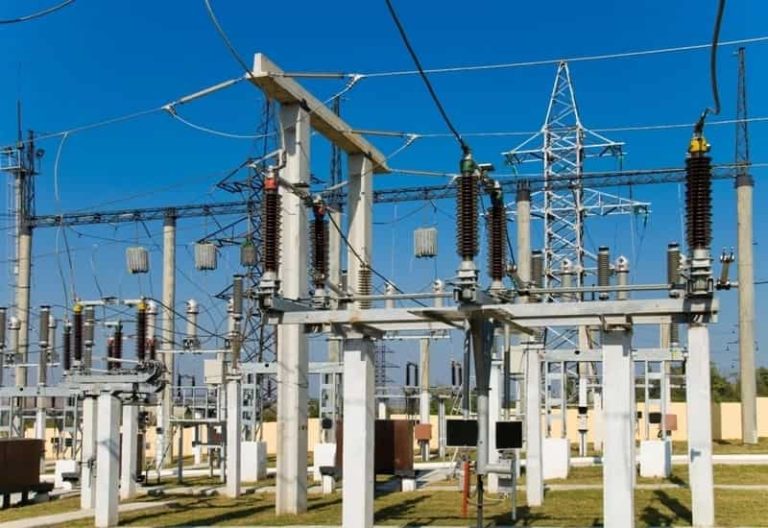
FG threatens to revoke license of DisCos over poor power supply

0

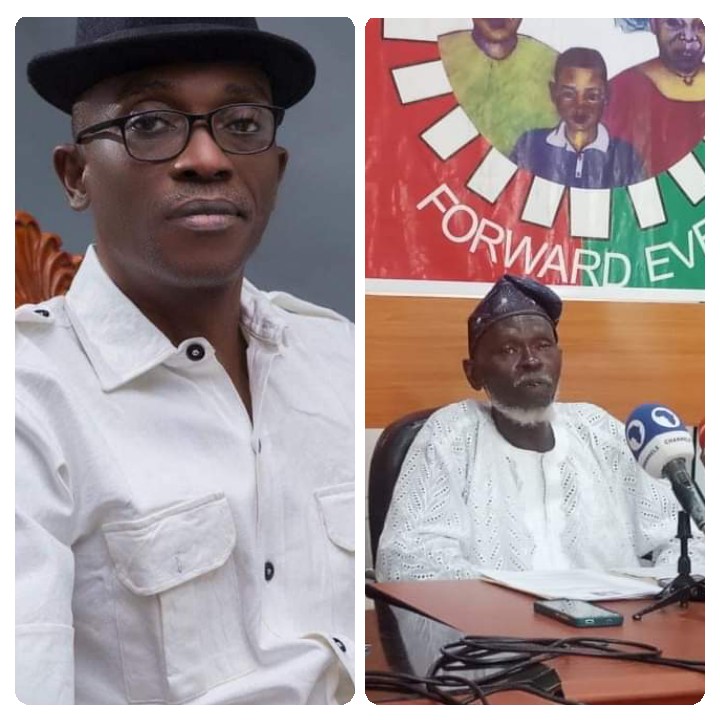
LP: Court affirms Abure as National Chairman, orders Apapa to pay N1m

0

The Court Of Appeal in Abuja has affirmed Julius Abure as the Chairman of the Labour Party (LP).

The Appellate Court also set aside the decision of the Federal Capital Territory (FCT) High Court which last year, restrained Abure and two others from parading themselves as national officers of the party.

In the judgement delivered by Justice Hamma Akawu Barka JCA, the Appellate Court held that the high court was wrong to have assumed jurisdiction on the matter.

The Appellate Court also awarded a cost of One million Naira in favour of Abure and against the respondent, Lamidi Apapa.

Justice Hamza Muazu of the Federal Capital Territory High Court had last year, granted and ex-parte order, ordering that Abure and two other national officers stop parading themselves as leaders of the party for allegedly forging national documents but the Appellate Court set the verdict aside.

The Appellate court held that Abure’s appeal has merit and was thereby allowed.

Following the 2023 presidential poll with LP’s Peter Obi coming third, Abure has been in a protracted legal conflict with Apapa who laid claim to the party’s chairmanship.

On February 21, Abure was arrested in Benin City, the Edo State capital, with viral videos showing him being manhandled by policemen, even as LP supporters fought to prevent his arrest.

The police had said Abure was arrested for attempted murder, illegal possession of firearms, and related offences. The LP chairman was later released on bail the following day after protests by LP members.