Friday, May 8, 2026
Home Blog Page 148

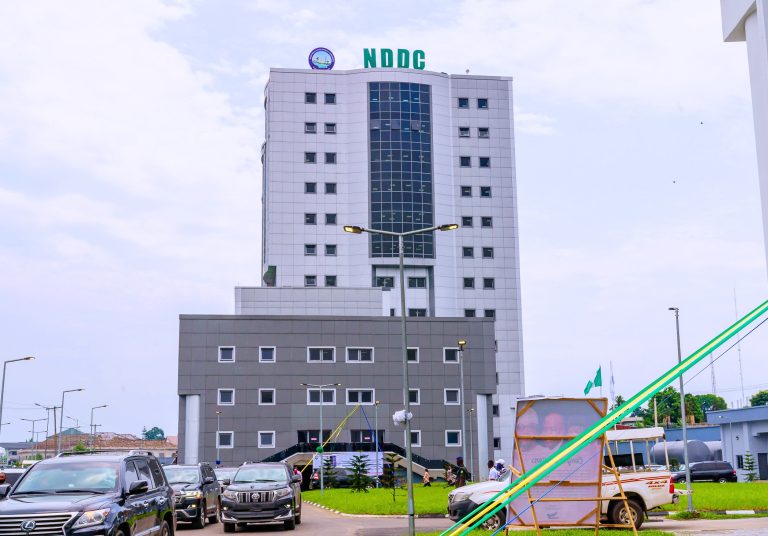
NDDC To Restore Failed Sections Of East-West Road

0

The Niger Delta Development Commission, NDDC, has pledged to restore the failed sections of the East West Road between Ahoada and Ula-Okobo town in Ahoada West Local Government Area of Rivers State, to provide urgent relief to motorists who are now forced to divert to community roads.

The NDDC Managing Director, Dr Samuel Ogbuku, who inspected the failed sections of the road along with other directors of the Commission, described the situation as deplorable.

He expressed shock at the level of devastation, pledging that the NDDC will collaborate with the Federal Ministry of Works to commence remedial action on the road immediately.

Ogbuku, noted that it was important to work in tandem with the Ministry of Works because they were currently constructing huge culverts at the sections that were washed away during the 2022 flood.

The NDDC boss recalled that the Commission had engaged SETRACO, a road construction company to undertake remedial works on the damaged sections of the East West Road after it was ravaged by flood in 2022.

Ogbuku assured that the Commission would engage and complement the efforts of the construction company working for the Federal Ministry of Works to urgently fix the failed and unmotorable section of the road to restore the links between Rivers, Bayelsa and Delta states.

He stated: “As an interventionist agency, we shall compliment the efforts of both the Federal and State Governments by taking measures to ease the stress commuters face on a daily basis.”

The project Manager of the construction company at the site, Engr. Kingsley Oyeama, described the damage on the road as extensive and huge. He, however, assured that the company would take all necessary measures to make the road motorable in the shortest possible time.

The President of Ijaw Youth Council, IYC Worldwide, Sir Jonathan Lokpobiri, thanked the NDDC for responding promptly to the distress calls of Niger Deltans who were bearing the pains of the damaged road.

He appealed to the Federal Government to make the East-West Road its priority and repair it immediately, noting that the road was the only major link between the South-East, South-South and the South-West region.

A truck driver, who was among many others stuck at Okobo, narrated their ordeals while plying the East-West Road. He said apart from the numerous accidents that had been recorded on the road due to the bad spots, they were most times trapped in the traffic for several hours.

He lamented that the East-West Road had become a nightmare to motorists and passengers.


The Pendulum of Precedent: Examining the Supreme Court’s Oscillating Stance on the Applicability of Limitation Laws to Employment Contract

0

In recent years, the Nigerian Supreme Court has issued a series of seemingly
conflicting decisions regarding the applicability of limitation laws, particularly the Public Officers Protection Act (POPA), to employment contracts. This jurisprudential vacillation has created a climate of uncertainty among legal practitioners and lower courts alike, calling into question the principle of legal certainty that underpins our judicial system.

The discourse began in earnest with the 2018 decision in N.R.M.A. & F.C. v.Johnson (2019) 2 NWLR (Pt. 1656) 247. In this landmark case, the apex Court held that
Section 2 of the POPA, which stipulates a three-month limitation period for suits
against public officers, does not apply to employment contract disputes. Hear their
Lordships on pages 270 – 271, paras. F –B of the law report:‘

There is no doubt, a careful reading of the Respondents’ claim will show clearly that it is a contract of service. It is now settled law that Section 2 of the Public Officers Protection Act does not apply to cases of contract.

I have no slightest difficulty in holding that the appellants are not covered by
the Public Officers Protection Act as to render the Respondents’ action statute
barred.

In sum I hold that the learned Justices of the court below are right in holding
that the Appellants do not enjoy the umbrella of Pubic Officers Protection
Law in the contract of service involving the Respondents.

This ruling was widely interpreted as a definitive statement on the matter, leading
many practitioners like myself to abandon jurisdictional challenges based on
limitation periods in employment cases before the National Industrial Court.

However, the legal landscape shifted in 2020 with the decision in Abdulrahman v.
N.N.P.C. (2021) 12 NWLR (Pt. 1791) 405. While primarily concerned with interpreting Section 12(1) of the NNPC Act, the Apex Court made an obiter dictum suggesting that the 12-month limitation period for suits against the NNPC should apply
to employment termination cases. This pronouncement, though not binding,
introduced a note of ambiguity into what had seemed a settled area of law. Please see page 419, paras. C – D of the law report:
‘’Since the suit or relief sought was not against the termination of his
employment, which suit or right would have abated 12 months after the termination of his employment on 26/4/2000, that is, since on 26/4/2001, the right to pension and medical benefits having been earned and owed as contained in the condition of service of the respondent, the action cannot be said to be statute barred. Thus, the allusion and reliance on Section 12(1) of the NNPC Act amounts to chasing the air by the Respondent.’’
The waters were further muddied in 2021 with the judgment in Idachaba v. University
of Agriculture, Makurdi (2021) 11 NWLR (Pt. 1787) 209. In a direct contradiction to
its earlier position, the Supreme Court unequivocally held that Section 2 of the POPA does indeed apply to employment contract cases. Please hear their Lordships on pages 226 – 227, paras. H – G:

’In the instant appeal, by the facts, pleadings and parties, it is deducible that
the Appellants were employees of the 1st Respondent. It has been conceded
by the Appellants already that both the Appellants and Respondents are public officers of the Federal Republic of Nigeria; the former in contract of employment or contract of service under the latter. It is without argument that they were both regulated by the Public Officers Protection Act…

Whatsoever might have brewed between the Appellants and the Respondents,
what I have before me is that the Appellants’ appointments with the 1st
Respondent were terminated sometime around 30/4/1999. By the above provision, they Appellants were by law supposed to institute their grievances, if any, within 3 months, of the purported termination of their employment. It is noted that the cause of action arose supposedly on 30/4/1999. Thus, the Appellants’ action was maintainable only within 3 months after the cause of action arose.’’

This decision represented a clear departure from the principle established in N.R.M.A.& F.C. v. Johnson (supra).

The Court of Appeal, grappling with these conflicting precedents, attempted to
reconcile them in Tertiary Education Trust Fund (TETFUND) & Anor v. Dr. Aminu
Abdulrahman Anas (2022) LPELR-58704 (CA). The Court reasoned that the Idachaba decision, being more recent, superseded the earlier decision in N.R.M.A. & F.C. V. Johnson. Consequently, it applied Section 2(a) of the POPA to find the suit before it was statute-barred. Please see pg. 39 – 47 of the law report, where his Lordship, Peter Olabisi Ige, JCA held that:
“It is true that the Apex Court held in the case of N.R.M.A. & F.C. v. Johnson
& Ors (2019) 2 NWLR (Pt. 1656) 247 at 270, D – H to 271, A – C per Ariwoola, JSC (Now Ag. CJN) that Public Officers Protection Act would not apply to contract of service…
However, the Apex Court appears to have moved away from the position it
took in the above-cited case in the recent case of Mr. Idachaba & Ors v.University of Agriculture, Makurdi (2021) 1 SCM 53 at 64, H – I to 66, A…

The law is now trite that where there are two conflicting decisions of the Apex
Court, this Court is bound to follow the latter decisions
I am of the firm view that having regard to the decision of the Supreme Court
in IDACHABA’s case supra, the provision of the Public Officer Protection Act,
Section 2(a) thereof and Section 13 of the Tetfund Act are applicable to the Respondent’s suit and the said suit having been instituted well over 3 months
after the letter of the Respondent’s retirement was issued and served on the
Respondent, the Respondent’s suit instituted on 18/1/2021 is statute barred
and the right to sue had been extinguished.”
I am aware that in several cases, the National Industrial Court has also applied the
Idachaba precedent. Notable examples include Goddy Ezezobu Obaneke v. NDLEA
unreported Suit No: NICN/ABJ/77/2023 delivered on the 20th day of July 2023 and
Akudo Akwarandu v. Jbis Integrated Resources Limited unreported Suit No:
NICN/PHC/04/2023 delivered on the 29th May 2024, where the National Industrial
Court held that limitation laws are indeed applicable to employment contracts and
declined jurisdiction to entertain the suits for being statute barred.

Just when it seemed the issue had been settled, the Supreme Court introduced a new twist with its 2nd December 2022 decision reported in Rector Kwara Poly v. Adefila (2024) 9 NWLR (Pt. 1944) 529. In what appears to be a reversal of Idachaba, the Court reverted to its original position that the POPA does not apply to employment contracts. Please see pg. 544, paras. E – H of the law report, where it was held that:
From the facts on record, it is not in contention that the controversy between
the parties herein relates to the contract of employment between them. The
respondents as plaintiffs commenced the instant suit challenging the alleged
alteration of their retirement age from sixty-five years to sixty years by the
appellants contrary to what the parties have agreed.

It has long been settled by this court that the Public Officers (Protection) Law
the appellants rest their challenge to the competence of this suit does not
apply in breach of contract cases

In Rahamaniya United Nigeria Limited v. Minister of Federal Capital
Territory, (2021) LPELR – 55633 (SC); (2021) 17 NWLR (Pt. 1806) 481, this
court pointedly restated the principle that the Public Officers Protection
Act/Law is not intended by the legislature to apply to contracts. Accordingly,
since respondents’ instant action is grounded in contract, the defence the
appellants seek to raise remains legally unavailing. I so hold.”

This latest pronouncement of the Apex Court has reignited the debate and deepened the existing legal uncertainty.
The current state of affairs presents a clear conflict between two lines of Supreme Court decisions: N.R.M.A. & F.C. v. Johnson and Rector Kwara Poly v. Adefila on one
side, and Idachaba v. University of Agriculture, Makurdi on the other. This inconsistency has created a challenging environment for litigants, legal practitioners, and lower courts, all of whom must navigate these conflicting precedents.

The situation is particularly precarious for the Court of Appeal, which serves as the
final arbiter for decisions from the National Industrial Court. As demonstrated in the
Tetfund case, the Court of Appeal may find itself in the unenviable position of dismissing an appeal based on what it believes to be the current Supreme Court
position, only to have that position subsequently reversed.

Legal certainty, a cornerstone of our juridical system, is undoubtedly compromised by these fluctuating precedents. It is imperative that the Supreme Court seize the next available opportunity to provide a definitive and consistent ruling on this matter. Only
then can we hope to restore clarity and predictability to this crucial area of
employment law.

As the legal community awaits such a clarifying decision, practitioners must remain
vigilant, carefully scrutinizing each new pronouncement from the apex court. In the
interim, the prudent approach may be to advise clients to err on the side of caution,
initiating actions within the shorter limitation periods where applicable, while being prepared to argue for the non-applicability of such limitations if necessary.

As we navigate these turbulent waters, it is our collective responsibility as members
of the legal profession to continue engaging in robust discourse on this issue. Through such dialogue, we can hope to influence the eventual resolution of this jurisprudential conundrum, contributing to the development of a more coherent and predictable body of employment law in Nigeria.

Tunde Ahmed Adejumo
3rd July 2024

Cancer Now Curable, Late Presentation Cause Of Deaths, Say Oncologists –

0

Specialists in the field of oncology have said cancer-related deaths are highly preventable when the disease is detected early and presented for treatment.

The experts, who underscored the importance of regular screening identified late presentation as a major cause of death in cancer patients.

Cancer is an abnormal growth of body cells that kills normal cells and stops them from functioning properly which might lead to death.

The physicians in separate interviews with PUNCH Healthwise, pointed out that cancer is no longer a death sentence.

One of the experts, the Medical Director of Me Cure Cancer Centre, Dr Adeoluwa Adeniji, said there was a need for people to know that cancer is no longer a death sentence.

Adeniji, who is a clinical radiation oncologist, said people are still dying of cancer in Nigeria due to late presentation.

Harping on the importance of regular health checks, the oncologist, said, “Screening of cancer is the way to detect cancer early, to ensure that people diagnosed with cancer have access to care.

“Cancer is no longer a death sentence especially when it is detected early and that is the purpose of the screening.”
The oncologist said people are still dying of cancer in Nigeria due to late presentation.

“The issue is that a lot of people don’t come for screening programs and they don’t come when the cancer is still small. They come around in Nigeria, in Africa when cancer has taken over the entire body.”

Adeniji noted that when presented late, treatment of cancer would not be as effective as when it was presented early for treatment.

“At that point, even the best of the centres all over the world may not be able to cure it.

“What we are emphasising now is screening and early detection. Once an individual can come for screening annually and cancer is detected early, then it is no longer a death sentence, it can be cured and that is what we are saying at this point.

“And it does not mean once they are diagnosed with cancer, that is the end of the whole thing. They need to see a specialist who will give them all the information that they need about the diagnosis, the staging, and the treatment”, he explained.

According to him, cancer screening is affordable, urging women to examine their breasts every month after seeing their menstrual cycle.

Adeniji lamented that the number of new cancer cases recorded in Nigeria annually was worrisome.

The oncologist noted, “The number of new cases of cancer that we have in Nigeria every year is above 140,000.
The recent findings talk about 140,000 new cancer cases in Nigeria annually and that tells you that the number is huge to have that in one year.

“The pathetic part of it is that Nigeria has few oncologists and centres to take care of cancer patients unlike in the developed world where they have adequate manpower and infrastructures to take care of them.”

He further urged Nigerians with symptoms of the killer disease to seek help early and do away with the misconception that cancer is a death sentence.

Also speaking, the Chief Clinical Director, Nigeria Sovereign Investment Authority and the Lagos University Teaching Hospital, Idi-Araba, Cancer Centre, Dr Habeebu Muhammad, said early detection is crucial to reducing cancer deaths in the country.

According to him, the reason why people die from cancer is because they arrive late to the hospital when the disease is at an advanced stage.

The oncologist assured that early detection saves lives, reiterating that early detection was crucial in reducing cancer mortality and the huge financial cost associated with the management of the disease.

According to him, people need to know about cancer, know the early signs, present early, and do screening so that they can save lives.

The challenge we have is that patients present late. They present late because first, they are not aware of the signs and symptoms.

The bleeding from the vagina or weight loss and all the other symptoms associated with cancer are ignored and people don’t present on time.

Once you present late, the likelihood that the oncologists and the team of cancer care specialists will be able to achieve a cure is lower. So that is the challenge in Nigeria.

“The top four cancers that we are dealing with are breast cancer, prostate cancer, cervical cancer, and colon cancer”, he said.

Nnamdi Kanu Agrees To Comply With Tinubu Government’s Terms Of Release

0

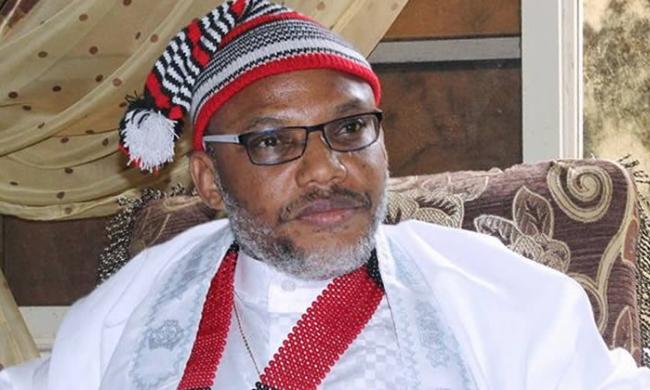
IPOB Leader, Nnamdi Kanu Reportedly Agrees To Comply With Tinubu Govt’s Terms Of Release

The detained leader of the Indigenous People of Biafra (IPOB), Nnamdi Kanu, has reportedly agreed to comply with the conditions set by President Bola Tinubu-led Nigerian government for his release from the custody of the Department of State Services (DSS).

This was disclosed by Senator Enyinnaya Abaribe representing Abia South Senatorial District on Wednesday after their recent meeting between the South-East Senators and the Attorney-General of the Federation and Minister of Justice, Lateef Fagbemi (SAN) on Kanu’s release.

Led by Senator Abaribe, approximately 15 federal lawmakers participated in the closed-door meeting.

Senator Abaribe, speaking on behalf of his colleagues after the meeting, expressed optimism that the Attorney-General would influence the Federal Government to consider releasing Kanu.

He emphasised that Kanu’s prolonged detention was contributing to heightened insecurity and unrest in the South-East region.

Vanguard reports that Senator Abaribe disclosed that he had personally met with Kanu at the DSS headquarters, where Kanu expressed readiness to comply with any conditions set by the government for his release.

The senators’ meeting with the Attorney-General followed the South-East governors’ decision to appeal directly to President Tinubu for Kanu’s freedom.

Earlier, a group of 50 members from the House of Representatives had urged President Tinubu to instruct the Attorney-General to use Section 174 of the Constitution to terminate the terrorism-related charges against Kanu in court.

Nnamdi Kanu’s legal saga began with his initial arrest in Lagos in October 2015, subsequent bail in April 2017, and eventual escape from the country amid his trial. He was re-arrested in Kenya in June 2021 and has since remained in custody of the DSS.

Despite the Court of Appeal’s order for his release in October 2022, the Supreme Court later overturned this decision in December 2023, allowing the Federal Government to proceed with the trial on seven remaining charges.

This ongoing legal battle continues to attract significant attention and advocacy efforts from lawmakers and leaders in the South East region of Nigeria.

National Assembly Pushes For Two More South East States

0

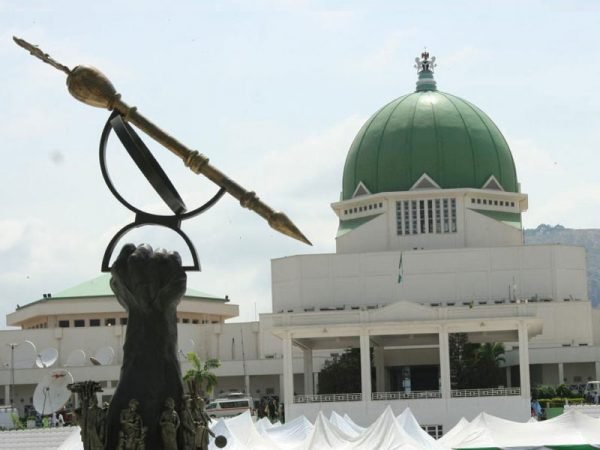
The Senate, on Tuesday, passed for first reading bills seeking to create two additional South-East states to increase states in the region to seven.

This was as a bill seeking the creation of Etiti State in the South-East geo-political zone was read for the first time on the floor of the House of Representatives during plenary on Tuesday.

The development comes about three weeks after another bill seeking the creation of Orlu State out of Imo, Abia, and Anambra states similarly passed the first reading on June 6.

The states proposed separately by Senators Ned Nwoko (PDP, Delta North) and Okechukwu Ezea (LP, Enugu North) are the Anioma and Adada states, respectively.

Nwoko’s bill seeks to alter three sections of the 1999 Constitution, to delete the word 36 and replace it with the word 37 to accommodate the new state and to insert the word Anioma, immediately after Delta in the list of states contained in the Constitution.

The proposed Anioma State would encompass the local government areas of Aniocha North, Aniocha South, Ika North-East, Ika South, Ndokwa East, Ndokwa West, Oshimili North, Oshimili South, and Ukwuani, with Asaba designated as the state capital.

The Delta Senator added, “I am presenting a bill for the creation of Anioma State to correct this historical oversight. Anioma is composed of nine local government areas, six of which are rich in oil and gas resources.

“The region also boasts significant human capital, making it a viable and sustainable candidate for statehood. Creating Anioma state is not just about increasing the number of states; it is about ensuring fair representation and resource allocation for the South East.”

In the House of Representatives, five members of from the South-East, proposed the creation of Etiti State to be carved out of the present Abia, Anambra, Ebonyi, Enugu and Imo states.

It will have 11 local government areas drawn from the five states with the capital to be located at Lokpanta.

The sponsors of the bill are Amobi Ogah, Miriam Onuoha, Kama Nkemkama, Chinwe Nnabuife and Anayo Onwuegbu.

They want an alteration of Section 36 of the 1999 Constitution, by replacing 36 states with 37 states.

The bill also seeks to alter the listing of local government areas according to states and transfer the 11 local government areas from their current states to the proposed Etiti State.

The local governments to be affected if the state is created are Isuikwuato and Umu-Nneochi (Abia), Orumba North and Orumba South (Anambra), Ivo and Ohaozara (Ebonyi), Aninri, Awgu and Oji River (Enugu) as well as Okigwe and Onuimo (Imo).

The bill comes about three weeks after one seeking the creation of Orlu State to be carved out of Imo, Abia, and Anambra states, passed the first reading in the House of Representatives on June 6.

The bill was sponsored by the lawmaker representing Ideato North/Ideato South Federal Constituency, Imo State, Ikenga Ugochinyere, and others.

The bill also seeks to amend the 1999 Constitution by inserting a new paragraph, which will include 28 local government areas, namely Orlu, Orsu, Oru West, Oru East, Ideato North, Ideato South, Njaba, Nkwerre, Nwangele, Isu, Oguta, Ohaji Egbema, Onuimo, Ihiala, Uga, Ihiala, Uli, Ozubulu, Akokwa, Arondizuogu, Umuchu, Umunze, Umuaku, New Ideato North, Nwabosi West, Nwabosi East, Owerre Nkworji, Alaoma, Amaifeke, and Owerrebiri Umuowa.

Ugochinyere, a member of the Peoples Democratic Party, appealed to his colleagues at the National Assembly to support the bill to ensure its passage through a second reading.

He stated that the creation of Orlu State would lead to the emergence of Ideato as a senatorial district. In the current political configuration, the North-West comprises seven states while the North-East, North-Central, South-South and South-West consist of six states each. Only the South-East has five states.

However, the South-West is seeking the creation of Oke-Ogun State, which, when created, would bring it at par with the North-West.

https://www.google.com/amp/s/punchng.com/nassembly-pushes-for-two-more-seast-states/%3famp

In another development, youths in Aniocha and Oshimili in Delta state protest the exclusion of their area into the South East Development Comission Bill.


https://www.youtube.com/

2027: Gov. Diri Not Interested In Greek Gift

0

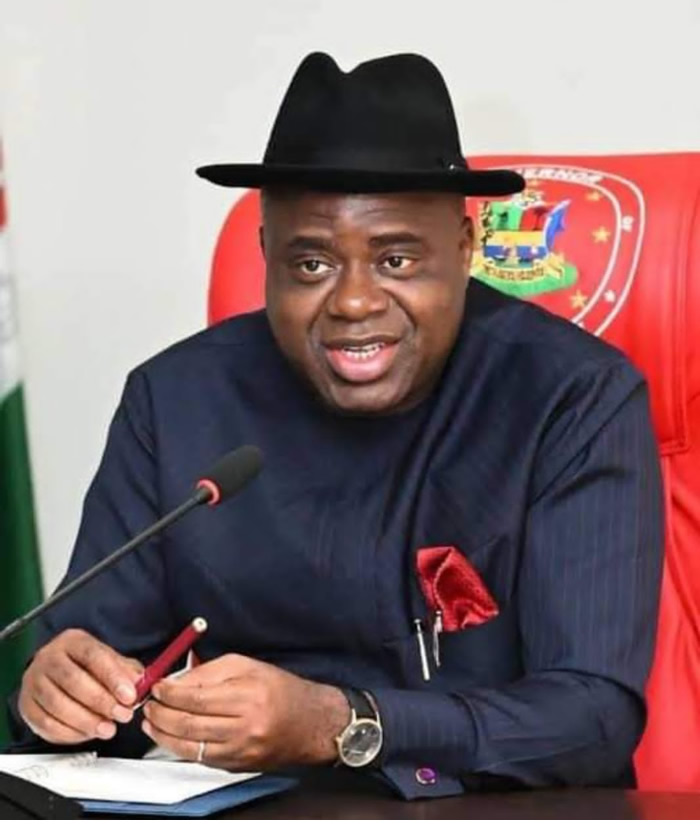
Governor of Bayelsa State, Senator Douye Diri, has shut down the call on former Vice President of Nigeria, Alhaji Atiku Abubakar, to pick him as his running mate in the 2027 presidential election.

A faceless group, which sarcastically named itself Diri Angels, in a statement, had made the suggestion to Alhaji Abubakar, who was the Peoples Democratic Party (PDP) candidate in the 2023 presidential election while expressing the hope that he would emerge the party’s candidate again in 2027.

Governor Diri described the suggestion as a Greek gift from political jobbers and that it should be completely disregarded.

In a statement by Chief Press Secretary to the Governor of Bayelsa State, Daniel Alabrah, the Bayelsa governor said the aim of the group, which he believes is non-existent, was to cause disaffection in some quarters and that the plot had failed.

He emphatically stated that God had always guided him on his political journey and that he was not swayed by any advocacy that was inconsistent with his godly and political principles.

Diri assured of his commitment to delivering the dividends of democracy to the people of Bayelsa State based on the mandate they first gave him in 2019 and re-affirmed on November 11, 2023.

He urged people of the state not to worry about the antics of political buccaneers whose intention was to cause confusion in an attempt to distract him.

“I am not swayed by such calls. In my political journey, I have always relied on God and not on political jobbers with devious intentions.

“The aim of those behind this act is to cause disaffection but the plot is dead on arrival as I’m not interested in such a Greek gift.

“I remain committed to the mandate given to me by the Bayelsa people and I’m single-mindedly focused on delivering the dividends of democracy to them. My administration will not be distracted by those who do not mean well for our state.”


Disability Rights: JONAPWD calls for govt action to uphold, Inter-sectionalize rights

0

By Ere-ebi Agedah

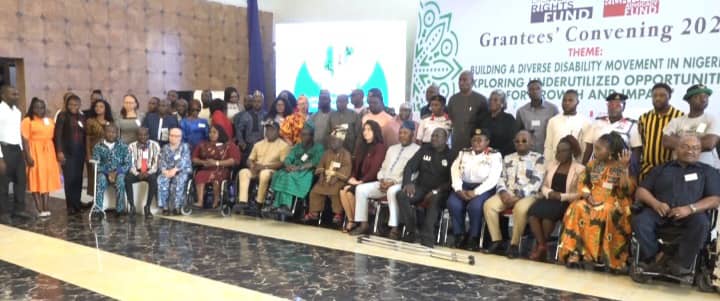
The Joint National Association of Persons with Disabilities, JONAPWD has reiterated its call to government at all levels on upholding the rights of persons with disabilities adding that it should consciously sectionalize the approach towards varied disability issues.

This, JONAPWD said, will ensure that no one is left behind in the pursuit of inclusive policies and practices.

Speaking on Tuesday, during the Disability Rights Advocacy Funds Nigerian Grantee Convening 2024, President of JONAPWD, Mr. Abdullahi Usman emphasized on the importance for the government to ensure that persons with disabilities become self-reliant.

According to Mr Usman, with over 35 million PWDs in Nigeria which are engaged in various fields and endeavors, the government must consciously improve on protection of the fundamental rights of PWDs.

He emphasized on the need for comprehensive support for persons with disabilities adding that it is crucial to train even those who are not educated.

He further highlighted the importance of education, pointing out that many children with disabilities are out of school. “A lot of organizations and advocates speak about the number of out-of-school children in Nigeria, but if you look closely, the majority are either children with disabilities or children of persons with disabilities,” he added.

He therefore stressed that persons with disabilities deserve equal rights alongside their non-disabled peers and called for a concerted effort to address these critical issues.

Mathilde Quellet, Secretary of the High Commission of Canada in Nigeria, emphasized on the importance of promoting the rights of women calling for comprehensive efforts to implement and review Nigeria’s National Disability Law to reflect the specific needs of women.

She acknowledged that, despite efforts for full inclusion for Women with disabilities in areas such as political participation, access to infrastructure, and employment has yet to be achieved in Canada and other Western countries.

Quellet however noted that Canada has a stand on fostering inclusion and equality, which she described as critical to building a more peaceful and prosperous world.

Meanwhile, Program Manager for West Africa at the Disability Rights Fund, Mr. Theophilus Odaudu, noted that disability rights are human rights. He stressed the importance of building a formidable disability movement to further advance the implementation of the Disability Act and related laws across the country.

Stressing on the diversity within the PWD community, Odaudu noted that they are not a homogenous group. “It is crucial to adopt intersectional approaches to ensure that no one is left behind,” he said.

As he urged both government and society to consider the needs and rights of PWDs in all interventions and policies.

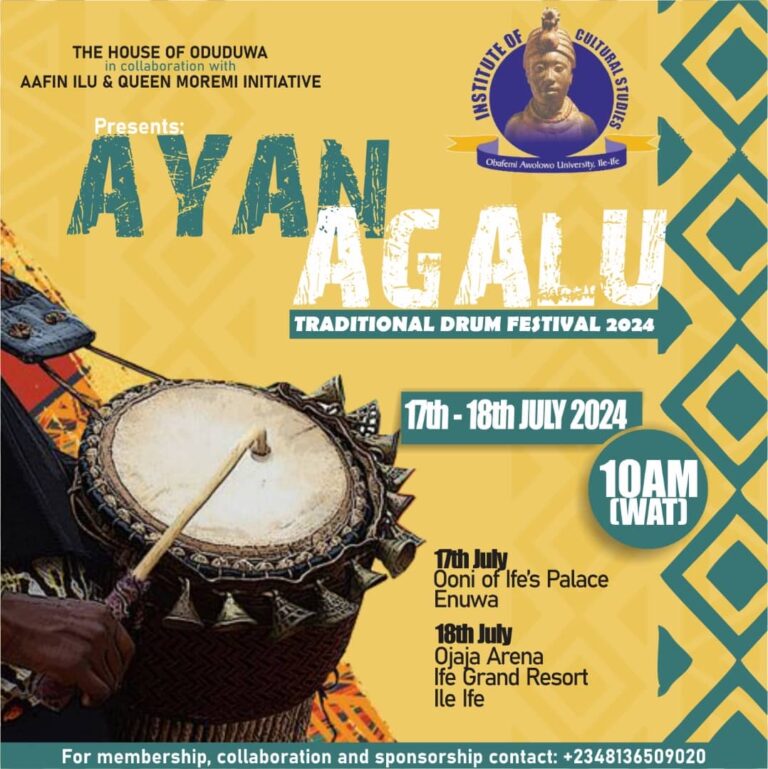
AYANAGALU 2024: Ooni set to host AyanAgalu drum festival this month July 17th and 18th

0

The Paramount Ruler of Ife, Ooni of Ife, His Imperial Majesty, Ooni Adeyeye Enitan Babatunde Ogunwusi, Ojaja II, Custodian of Yoruba culture and traditions, alongside Olori Aderonke Ademiluyi-Ogunwusi, cultural ambassador of the AyanAgalu Traditional Drum Festival, The Ooni of Ife is set to host this year AyanAgalu Traditional Drum Festival 2024 this month July 17th and 18th. The event will be held on July 17th and 18th, 2024 at the palace and Ife Grand Resort in Ile-Ife.

The festival will take place in Ile-Ife, the ancient city and traditional headquarters of the Oduduwa race. Following the success of its inaugural edition last year, this year’s festival is highly anticipated. The main celebrations will occur at the Ojaja Arena within Ife Grand Resort, where the vibrant sounds of drums will create an electrifying atmosphere.

AyanAgalu, revered as one of the deities sent by Olodumare to the earth for the progress, development, and happiness of mankind, holds a significant place in the cultural identity of the Oduduwa race. Seeking divine guidance, AyanAgalu consulted the Oracle through Orunmila, the deity of divination, to receive blessings for honor, wealth, and celebration among people and other deities. Ifa divination revealed the sacred drumming tools and materials, such as sticks, skin, and drum belts, used for AyanAgalu’s revered sacrifices—a tradition that remains central to drumming ceremonies to this day.

The Oduduwa race, renowned as pioneers of drumming and music, shares an extraordinary connection with AyanAgalu. As deities call upon AyanAgalu to grace their ceremonies, the rhythmic beats and soul-stirring melodies bring joy and illumination to these auspicious occasions, in harmony with the ancient prophecies divined by Ifa.

In an effort to foster cultural exchange and global appreciation for traditional rhythms, the Ooni has extended an invitation to drummers and cultural enthusiasts from Nigeria and beyond to join in the Annual AyanAgalu Festival on July 17th and 18th, 2024, at Ife Grand Resort in Ile-Ife.

The world awaits an enchanting display of culture and heritage as the AyanAgalu Drums Festival draws near, promising an unforgettable experience that will resonate with the hearts of attendees and pay homage to the rich tapestry of traditions woven through time.

In a move to ensure the success of one of Nigeria’s most iconic cultural events, the House of Oduduwa has appointed Prince Adewale Laoye as the Chairman of the Local Organizing Committee for the upcoming Ayan Agalu Festival 2024.

The prestigious two-day festival, slated for July 17th and 18th in the ancient city of Ile-Ife, celebrates the rich drumming heritage of the Yoruba people. As a respected personality and CEO of Aafin Ilu, Prince Laoye’s leadership is expected to elevate the festival’s significance and promote unity.

In a statement, Prince Laoye expressed his deep honour at the appointment, stating, “The Ayan Agalu Festival is a cherished event that promotes peace, harmony, and pride in our cultural identity. I look forward to working with the talented organizing committee to curate an exceptional experience showcasing our drumming traditions to the world. I also thank His Imperial Majesty and Her Royal Majesty for their trust in my capabilities.”

Under his guidance, the 2024 festival will feature performances by master drummers, expert-led workshops, displays of various Yoruba drumming styles, and a grand finale uniting all participants in a powerful show of unity.

The sacred Ayan Agalu drum has historically served as an instrument for communicating the message of peaceful coexistence globally. This year’s event aims to amplify that message through rhythmic celebrations and competitions drawing talent from across Africa.

Her Royal Majesty Olori Aderonke Ademiluyi Ogunwusi voiced confidence in Prince Laoye’s abilities, saying, “His wisdom and commitment will make the Ayan Agalu 2024 Festival a resounding success. His leadership will ensure this sacred tradition uplifts our community while radiating our values of unity and harmony worldwide.”

Festival Overview:
The Ayan Agalu Festival 2024 will take place over two days, 17th and 18th July, 2024 in the historic city of Ile-Ife, the spiritual homeland of the Yoruba people.

Day 1:

●Arrival and registration of participants
●Accommodation and meals provided
●Traditional homage and offerings to Ayan Agalu
●Auditions for the drumming competition
●Rehearsal for general performance

Day 2:

●Performances and competitions by various drumming groups, including the Association of Professional Drummers of Nigeria (APDON).
●Workshops and lectures by experts on stage presence, costuming, and drumming techniques, with a speaker from the Dramatic Arts department at Obafemi Awolowo University.
●Introduction and showcasing of various Yoruba drumming rhythms, including Dundun, Bata, Bembe, Aran Ifa, Agogo, Sekere, Gangan, Agidigbo, Igbin drum, Dundun drum, Agere, and Apinti.
●Performances dedicated to the rhythms and oriki (praise poetry) of the Ooni of Ife and also Yoruba deities such as Obatala, Sango, Oya, Sanponna, Ogun, Esu, Aje Olokun, and Osun.
●Danceable rhythms for youth and elders.
●Grand finale with all drummers playing together in a powerful display of unity (general performance).

Special Highlights:

●A specially commissioned “Mother Drum” of Dundun (Iyaalu Dundun) with full saworoide (beaded adornments) and the drum belt with the logo and colors of the House of Oduduwa/Ayan Agalu Festival, to be played by the Kaabiyesi (the Ooni of Ife). This special drum with a stand will be placed in front of the Kaabiyesi every year.
●Decorated drum belts of Dundun and Bata with the logo and colors of the House of Oduduwa/Ayan Agalu Festival alongside cash prizes, will be presented to the top three winners of the competition.
●Drum hangers and cabinets showcasing various drums, including the Kaabiyesi’s drum.
●All performances by the participants (individual or groups) will have a title related to the theme of the edition. This will encourage meaningful and well-curated performances and also document them for generations to come.

Ignore Politicians In Gab Of CSO Seeking Bello’s Persecution, Focus On Court Process, Arewa Youths Urge EFCC

0

Youths from nineteen northern states under the auspices of Arewa Youth for Good Governance (AYGG) have called on the anti-corruption agency, the Economic and Financial Crimes Commission (EFCC) not to listen to politicians masquerading as members of civil society organizations, who are bent on persecuting the former governor of Kogi State, Alh Yahaya Bello.

AYGG instead told EFCC to focus on its court process and let the judicial process flow seamlessly to its logical conclusion and shun embittered politicians pressuring it to explore extra-judicial means to persecute the Kogi former governor as against prosecuting him.

This is contained in a release on Monday signed by the AYGG National Coordinator, Dr Ahmed Mailafia and its Secretary General, Comrade Takum Elias.

This came as a response to a statement credited to one ~Jacob Nadeco~ and ~Onuma Peter~ both of whom are sympathizers of the defeated Social Democratic Party (SDP) candidate in the 2023 governorship election in Kogi, Muri Ajaka. In their statement, the SDP agents had attempted to explore blackmail to pressure the EFCC to abandon its prosecution of Bello and toe the path of persecution.

In the release jointly signed by Dr Ahmed Mailafia and Comrade Takum Elias, they queried why the prosecution of Yahaya Bello has become the only project SDP as an opposition party through its agents has continued to bandy about just to validate their existence in the state since its fatal defeat in the November last year governorship election.

AYGG also wondered why Ajaka who lost in the election has chosen to jeopardize the career path of Mr. Onuma, a staff of Federal Airport Authority of Nigeria (FAAN) by hiring him to embark on such a demeaning and disgusting assignment for him (Ajaka) in contravention of civil service rule.

“We are shocked that a party so boldly rejected by the voters at the polls has continued to chase shadows by launching a campaign of calumny against Yahaya Bello. SDP, its rejected candidate and wounded agents have not failed to show how much of bad sportsmen they are since the people of Kogi picked APC’s Usman Ododo over them.

“They have continued to weep over spilled milk by their desperation to pull the former governor down. We find this worrisome, preposterous and the height of uncivility.

“One would have imagined that these wounded political actors posing as members of civil society will allow the judiciary do its work under most objective and unbiased atmosphere. We have not seen this, instead we see a multi-layered desperation to tag a dog a bad name just to hang it.

“Since they are sure that Yahaya is guilty of financial misconduct allegation against him, they should allow the court decide, instead of deploying blackmail against the EFCC, the court and the judiciary in general$, AYGG says.

It therefore called on Ajaka to stop promoting inter-ethnic rivalry, tribe-induced hate, and political prejudice against Yahaya Bello, saying such actions will undermine efforts to build a Kogi that will be the envy of others states. The group cautioned that the ethnic hate the desperate SDP agents are promoting has tendency to cause crisis that may consume the peace of the state.

Floods: NDDC Boss Advocates Collaborative Efforts To Mitigate Disaster

0

Managing Director of the Niger Delta Development Commission (NDDC) Dr. Samuel Ogbuku has called for collaborative efforts in mitigating the effects of perennial flooding in the Niger Delta region.

Ogbuku made the call during a one-day workshop on the implementation of flood disaster emergency response strategy across the Niger Delta region, organized by the NDDC Directorate of Environmental Protection and control in Port Harcourt.

This was contained in a statement by Director, Corporate Affairs Seledi Thompson-Wakama on Tuesday.

The NDDC Chief Executive Officer workshop, which focused on the theme: “Enhancing Resilience; Mitigating Flood Disasters in the Niger Delta,” showed the importance the Commission attached to the need to address the challenges of flood disasters in Nigeria’s oil-rich region.

He stated: “The Niger Delta, characterised by its distinctive topography and proximity to water bodies, experiences frequent flooding. Coastal and riverine communities, situated in low-lying areas, are especially at risk. Recent data indicates that from January 2021 to April 2023, flooding led to more than 100 fatalities in the region. As we approach the peak of the rainy season, urgent measures are necessary to minimize flood impact.”

Ogbuku stressed the need for proactive measures in dealing with flood disaster management, noting that all intervening organisations must demonstrate commitment to ensuring a safer and more resilient future for Niger Deltans.

He observed: “Our success in mitigating flood disasters hinges on collaboration. We must work closely with local communities, state governments and Non-Governmental Organisations, NGOs, as well as international partners.”

The NDDC boss acknowledged the existential threat posed by Climate Change, noting that it was capable of causing huge devastation in the Niger Delta region, with enormous socio-economic impacts.

He remarked that the NDDC was currently building multi-purpose emergency shelters across the Niger Delta region, stating that the project was conceived as a response to the frequent flooding challenges faced by Niger Deltans.

According to Ogbuku, the emergency shelters, which could accommodate over 1,000 persons, was designed to serve as a temporary place of refuge during flood emergencies.

According to him, the facility includes essential amenities such as a school, hospital, cafeteria, police post, and recreation center, which would provide comprehensive support to the communities in times of distress.

“When completed, the emergency shelters will provide temporary accommodation and necessary services to the communities in the event of emergencies. We realised that during flood periods, displaced people take shelter in school buildings and this comes at a great cost because the schools are forced to suspend academic activities.”

In his Keynote address, a former National President, Nigerian Cartographic Association and keynote speaker, Professor Andrew Obefemi, advised intervention agencies to initiate more enduring measures to mitigate the perennial flood in the Niger Delta region, noting that the challenge of ravaging flood in the region would be addressed holistically.

Prof. Obafemi, who spoke on: Understanding the Niger Delta Context, Present Data on Historical Floods, Vulnerable areas and Existing Infrastructure, harped on the need for information and relevant data to ward off flood disasters. He said that projects such as the Niger Delta Environmental Survey were necessary for a reliable data bank.

Earlier in his welcome address, the NDDC Director, Environmental Control and Protection, Engr. Onuoha Obeka, lamented that the Niger Delta region, known for its rich biodiversity and vital economic contribution to Nigeria, has unfortunately been plagued by recurring flood disasters.

He highlighted the need for a robust and efficient emergency response strategy to mitigate the impact of the disasters and to protect the lives and livelihoods of the people in the region.

Obeka said that the workshop would help NDDC to find ways to enhance a collective capacity to respond effectively to disasters and fortify the resilience of communities in the face of adversity.

He explained:“This workshop serves as a platform for us to share knowledge, best practices and innovative strategies aimed at bolstering our emergency response mechanisms and promoting sustainable recovery efforts in the aftermath of flood disasters.”

“Implementing initiative of providing water level gauges/sensors at strategic positions around the river sytem in the region will provide an early warning mechanism that can help to evacuate people before considerable havoc is wrecked during the flood events.”

“Let us embrace the spirit of unity. empathy and determination. Let us draw inspiration from the resilience and strength of the people of the Niger Delta and commit ourselves to building a more resilient and prepared region that can withstand the trials of nature and emerge stronger in the face of adversities.”