Friday, May 8, 2026
Home Blog Page 146

Fuel Scarcity Looms As Depots Raise Petrol Price To ₦‎720/Litre

0

Fuel scarcity is gradually surfacing in Lagos and other parts of the country as private depot owners hiked the ex-depot price of petrol from N630 to N720 per litre.

This came as fuel scarcity deepened in Abuja and the adjoining states on Sunday with some filling stations dispensing PMS as high as N900/litre.

Our correspondents report that a number of filling stations in Lagos, Ogun and some states have run out of stock as they refused to buy high-priced fuel from the private depots.

Speaking in an interview with one of our correspondents on Sunday, the National Vice President of the Independent Petroleum Marketers Association of Nigeria, Hammed Fashola, said many filling stations did not open for business because they had no fuel in their tanks.

He said the Nigerian National Petroleum Company Limited, which is the sole importer of petrol at the moment, should explain to Nigerians what was happening with the product.

“Those that shut their stations do not have fuel to sell. When you don’t have fuel, you cannot open your station. That is the problem. You know the NNPC is the sole importer of this product. I think it is in the best position to tell us what is actually going on.

Currently, independent marketers cannot buy what the private depots are selling. They are selling fuel between N715 and N720 per litre. How much will marketers sell the product? Look at the cost of bringing it to their depots; with transportation and other depot expenses, it will be too costly for them. That is why the stations are shut down. Some marketers refuse to go and buy because they know the masses cannot afford high-priced petrol in this economy. That is the situation for now,” the IPMAN leader stated.

Our correspondents learnt that the third parties, who are private depot owners, used to sell PMS to independent marketers at the rate of N630-650/litre before now, while the NNPC sells petrol to major marketers at a price below or around N600.

On many occasions, leaders of IPMAN have appealed to the NNPC to supply them with petrol directly like they do to major marketers, but the NNPC has yet to yield to that call.

Fashola appealed to Nigerians to avoid panic buying, saying they should buy what they need so that the fuel in circulation could go round.

It was gathered that the major marketers sold petrol below N650 while the independent marketers sold between N750/litre and N800 /litre.
Multiple officials confirmed to one of our correspondents that officials of the Nigerian National Petroleum Company Limited stormed the various depots in Apapa on Friday, mandating depot owners to prioritise fuel supply to the Federal Capital Territory, Abuja, where the fuel queues were initially noticed on Friday.

Abuja prioritised

On Saturday and Sunday, many trucks were reportedly directed to Abuja to reduce the queues in the FCT, leaving Lagos and other places with little supply.

One of the officials disclosed that the NNPC was rationing PMS to depots due to the fuel supply gap.

This is coming barely three days after a report by Reuters claimed that Nigeria’s debt to suppliers of Premium Motor Spirit had surpassed $6bn, doubling what it was since early April, as the NNPC struggled to cover the gap between fixed pump prices and international fuel costs.

Although this was denied by the NNPC, the Reuters report stated that the national oil company began struggling early this year when late PMS payments surpassed $3bn.

The company, it said, had yet to pay for some January imports which traders put between $4bn and $5bn.

“The only reason traders are putting up with it is the $250,000 a month (per cargo) for late payment compensation,” one industry source said.

At least two suppliers were said to have stopped participating in recent tenders after hitting self-imposed debt exposure limits to Nigeria, meaning they will not send more PMS until they receive payments.

It was reported that Nigeria’s tenders to buy gasoline in June and July were smaller, traders told Reuters. NNPC will import via tender about 850,000 tonnes in July, according to the Reuters report quoting sources, down from the typical one million tonnes in previous months.

Meanwhile, PUNCH findings show some marketers have refused to supply petrol to independent marketers, who own the larger percentage of the filling stations in Nigeria. This, it was gathered, was because the depots/marketers were getting limited supplies from the NNPC.

ECONOMIC CRISIS AS FEDERAL, RATHER THAN STATES’ BURDEN ~ By Sheriff Abdulahi

0

The strategy of blaming state governors rather than the federal government for the national economic crisis is increasingly becoming a failed one no matter the depth of love one may have for President Bola Ahmed Tinubu. It is clearly a misplaced tactic to want to shift blame of hyper- inflation, food insecurity and national economic hardship on the states because the statutory task of managing the national economy is that of the federal rather than state governments.

The configuration of the Nigerian state clearly places management of macro and micro economic structures on the lap of the Federal Government. Handling of national currency, the exchange rate and Central banking are all federal tasks. State governments cannot be held responsible for economic policies that are not working as they should.

Additionally, security is principally a federal mandate as the centre controls all the security apparatuses. Runaway inflation and reduced food production occasioned by farm insecurity is directly and indirectly the turf of the Federal Government. Armed security services are directly commanded from Abuja.

The interesting reality was directly voiced out by a member of the ruling party. He must have seen the hollowness of blaming state governments for failure of federal policies. Mr Olatunbosun Oyintiloye, a chieftain of the All Progressives Congress (APC), was forced to appeal to President Bola Tinubu to urgently address the issue of high cost of food items in the country as he said that Nigerians were hungry and living below the poverty line.

The APC chieftain said that scores of Nigerians were disillusioned wondering where the next meal will come from due to the extreme economic hardship. While urging the president not to ignore the United Nations’ prediction that 82 million Nigerians (about 64 percent of the country’s population) may go hungry by 2030, he said that the National Bureau of Statistics(NBS) data revealed that the food inflation rate in the country hit a record high of 40.
66 per cent in May, surpassing the previous month’s 40.53 increase.

Oyintiloye, a former member of the defunct APC Presidential Campaign Council (PCC), said the common household food items were getting out of the reach of the common man due to the hike in prices. He noted that despite the Nigerians working hard under different dehumanizing working conditions, what they were earning was still not enough to support themselves and their families due to inflation.

According to him, despite the abundance in natural and human resources the country is blessed with, successive governments failed to drive the economy productively. He said corruption and over-dependence on the system of sharing crude oil revenue by the tiers of government was hindering them from running a productive and self-sufficient economy for the benefit of the masses..

The above is about the first self confession by an APC activist that the ball stops at the desk of the Federal rather than state governments. This news item opens up the field to determine who actually likes or hates Mr President. By lying and shifting blame, some federal officials are distracting the President from addressing the source of the economic crisis.

Mr President must have noticed that failed strategy when he set up the new Presidential Economic Council to address the worsening national economic crisis. The new approach may go a long way to address the root of the crisis which are clearly federal in nature.

One is not suggesting that the states have no role to play in resolving the economic hardship. The subnationals have critical roles to play. They must direct resources to both soft and hard infrastructures and must curb corruption at all cost.

The core of the matter however remains that the solution must come from federal review of economic and financial policies. The states cannot be scapegoated. Such diversionary tactic is a very weak approach and strategy which on the face of it , manifests deceitful blame games which cannot achieve the goal of blacklisting the states, but rather deepen public criticism of the Presidency.

●Sheriff Abdulahi writes from Abuja

Bayelsa Governor’s Football Tournament: Harnessing Football Talents For Sustainable Development

0

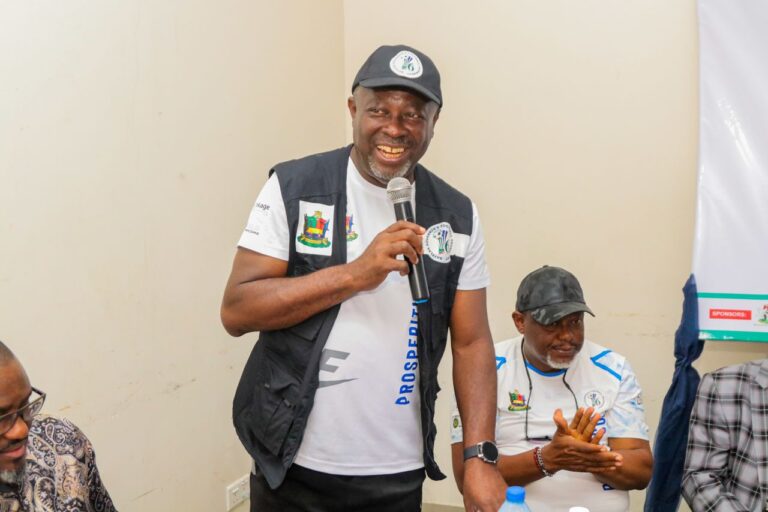
Ono K. Akpe, Director General of the Bayelsa Governor’s Football Tournament (Prosperity Cup), shares the vision for grassroots football development in Bayelsa under the leadership of the sports loving Governor Senator Douye Diri. Since 2015, the tournament has discovered talented players now playing professionally in Nigeria, Africa, Europe, and beyond. Read how the tournament has grown and its future plans.”

From Bassey Willie, Yenagoa

Ono Kevin Akpe, has over the years been actively involved in grassroots football talent hunting and development, in the past 9 years, as Director General, Bayelsa Governor’s Football Tournament, he has been the brain behind the tournament otherwise called ‘Prosperity Cup’ where several young talents discovered are already playing professional football in different leagues across Nigeria, Africa, Europe and other parts of the world. He shared his experiences with sports, where he spoke about his motivation and how more young football talents can be discovered from grassroots competitions as well as Governor Douye Diri’s massive support and passion for sports development. Excerpts;

You conceived the idea of the Bayelsa governor’s Cup in 2015, nine years after how has it been?

First, I want to thank the Lord Almighty for this vision to organize the Bayelsa Governor’s Cup, also thank Governor Douye Diri for his passion and support for football development, as well as the Governor, Senator Lawrence Ewhrudjakpo and Commissioner for Sports, Dr. Daniel Igali. we actually tried to put it together in 2014 but we couldn’t, we finally hosted it in 2015, it was born out from the resolve of us as government appointees to be involved in physical activities, at a stage we realize that the passion which we exhibited and was supported by the youths of Bayelsa State was the enormous passion and skills that abound in the state, we believed that these talents were going to waste if not properly harnessed, so I and a few others came together and put this tournament together to see how it will help engage our youths in football talent development, so we put our own resources together to kick-start it and after we started the activities, we got the from the government, Governor of Bayelsa State then, Senator Seriake Dickson who supported us and we started the first edition in Nembe, since then the competition has been very interesting, very exciting but equally very challenging.

Nine years after, what has been the results achieved with the governor’s Cup, in terms of talents discovery?

I will use this opportunity to go through a small trajectory of the tournament, first after the 2015 edition, we had the 2016 edition and the 2018 edition and then 2019 edition which was the most successful, because then Minister of Sports, Sunday Dare came in and was invited as a special guest in the final, when he saw the participation of the youth teams, he described it as the ‘largest grassroots football tournament’ which has been a name that has stucked to the tournament. It is arguably the largest football tournament in Nigeria and indeed in Africa with the number of teams that have registered for it. In that edition, we sent a selected team of players to Cape Verde, African Youths Cup and that team came third in the whole of Africa, that was an enviable feat, that team came back and we kept them in camp and they eventually played the Bayelsa League Cup and against all odds they defeated all fancied teams to emerge winners, so that really encouraged us to know that our youths in Bayelsa have lots of talents to be developed and propelled to greater heights and so we continued with it in the new administration of Senator Douye Diri, and I must really commend the Governor who was once a Commissioner for Sports, for his unravelled commitment to the development of sports, especially football and the Prosperity Cup. When he came in, he first sent for me and asked how the arrangements for the tournament and I briefed him, and he said he was very interested to ensure that more youths of Bayelsa are developed and propelled to greater heights in their chosen careers. He stated that he wanted the youths to channel their energies and talents to earn meaningful livelihood in sports. Then we started to build the tournament around talent discovery and pushing these discovered talents to greater heights, that is why coaching and talents scouting programmes were further expanded and developed to ensure we get the best for our youths. You could recall that even from the 2015 edition, you have exciting players like Okardi, who was our most valuable player, his team won the pioneer cup and he went up to play for other teams before going abroad, he is in France now playing professional football, we have Nestor who is in Bosnia, we have quite a lot of others abroad, now we have scouts from all over Europe and even Africa including South Africa coming to scout our players and we have seen quite a bit of success in that.

What about the scouting programmes?

In the past few years, we have also organized various scouting programmes alongside the tournament. In 2022, we hosted Gregory Paul of ASPIRE Football Academy from France, Passi Gerald of Olympique Marseille, Thembele of South Africa and a team from FDC VISTA Academy Russia including; Nikita, Poliakov, Dimitri Churkin, National team coach, Kennedy Boboye and Imama Amapakabo amongst others. In 2023, the LOC sponsored two teams of 40 players and officials to participate in international scouting tournaments organized by SPOCS, a German Sports firm, at Remo Academy in Ikenne and Abuja We also organized two scouting programs in Yenagoa with teams from the South-South and South-East participating. A total of 10 players were selected for professional football abroad. Two players are presently engaged through the SPOCS Academy in Gambia, and two others are billed to sign juicy contracts in the premier league in England. A number of players have been scouted from this competition and now play in different clubs all over the country. In Bayelsa United, about seven players are currently there with the team. The likes of Gabriel Biriduba, Bob Philip, Monday Bassey and Biweribo Tarabina – Vice Captain of the team and Christian Mizo who only recently moved to Al Hilal in Libya, all featured in the competition. Junior Christopher and Akpos Godbless the highest goal scorer and MVP of the 2023 edition respectively now play for Bendel Insurance, while Endurance Ebedebiri plays for Rivers United. The likes of Egah Saviour, Prince Ebiobowei, Onyesom Precious, Bright Peremene, and others who have gone abroad, equally played in the previous editions.
Presently, we just completed the most intensive scouting programme and coaching clinic organised in collaboration with Tristone Agency, OTP Finland and Red Sapphire Ltd.

Who are these international scouts and coaches.

The scouts who are UEFA certified coaches and instructors include; Mindaugas Malinauskas of Lithuania, a retired Lithuanian goalkeeper and coach; Augustine Jibrin head coach, OTP United, Simas Kumza, Sports Director, FK Babrungas Plunge, Lithuania; Harry Azodo, Sporting Director OTP of Finland; Ahmet Ozein, agent and scout from Turkey; ex-international Peter Nieketen, Hakan Uyanmis, agent and CEO H.Sports Management agency and Sporting Director of Sakaryaspor; Glenn Stahl International Football Scout and Kelvin Etemike, CEO Tristone Sports/ OTP of Finland and of course Ladan Bosso, Coach of the Under 20 National Team as well as Club owner and FIFA agent, Datti Ahmed.

How have you been able to manage this tournament?

The tournament started in 2015 with 110 teams, now we have over 200 teams that are playing, last year we introduced the female and para-soccer editions, so we now have three tournaments in one, the female edition started with just four teams last year, now we have over 20 registered female teams in the tournament which is equally another impressive development which I’m proud of, in both female and male edition we have depth of talents in the state that if clearly well harnessed and will be able to do great things for the state in terms of professional career in football, of course from the last edition, we begin to see some other females discovered talents being invited to Bayelsa Queens and other clubs where they are plying their trades.

What are the exciting things that you observed in the ongoing edition compared to the previous editions?

We have talked about the three editions in one that we have here presently, based on the pressure to enhance the capacity and skills of our players and officials, we introduced the referee course, that was done in May, we brought in international referee facilitators and accessors from the referees’ council to Yenagoa to organize a refresher course for the referees preparing them for the tournament, they sharpened their brains in the recent updates in refereeing and football, it was very exciting, it has greatly improve the quality of officiating in this tournaments.

Looking at the future, how do you intend to see this tournament?

Prosperity Cup has turned into brand, it is a brand that is known globally now, we got calls from Europe, from UK, from Germany, in fact we have a proposal to take our players to Ghana in a tournament organized by German organization this year, we also have proposal to select some players and take them to Portugal, so all these things are in the cards and the table, but we are looking out for a time when we will have a brand sponsor that will take over the sponsorship of this tournament, without government putting any reasonable resources, maybe just the trophy and prize money, we are looking for the brand sponsor that will take up the bills and make sure that youths of Bayelsa pull of the streets and begin to be gainfully engaged, so we will like to call on the corporate world, the oil multinational companies to key into this tournament to engage our youths, but Governor Douye Diri, who has given us all the supports has promised to develop ten community fields in the state, because if the players play in a very standard field, their level of football will increase. We also want to see our players in national teams, Super Eagles, Flying Eagles, and the Golden Eaglets.

Application of Statute of Limitation To Employment Cases: The Need For Prompt Reporting Of Judgment Of Superior Courts- Ajibola Bello

By:

Ajibola Bello, Esq.

The Nigerian Legal system without a doubt is one that is still developing. But as I have always maintained, a system is only as good as the humans behind it decides to improve it. Moreso, for as long as we do not realize and appreciate the essence of the legal system being one that should be for the benefit of the citizens in the advancement of social justice, we would continue to lag behind and the interest of the citizens would continue to suffer.

To dive straight into it, the essence of this write up is to call to attention the need to improve law/judgment reporting under the Nigerian judicial structure. The reason behind this call is simply because there was a matter on employment relation that was decided by the Supreme Court on the 2nd of December, 2022 but was only reported on the Nigerian Weekly Law Reports Platform in July 2024.  The delay in the report is not the main grouse, it is the injustice that the delay in the reporting has caused litigants whose cases had been wrongly dismissed between 2021 – 2024 owing to the fact that judges of the National Industrial Court had not been aware of the judgment of the Supreme Court delivered on 2nd December. 2022.


For sake of clarity, one of the principle regulating access to the court is that the case to be brought before the court must not be caught up by a statute of limitation, subject to certain exceptions. Another principle is that of judicial precedent whereby the decision of a higher court binds the lower court. In the realm of employment cases, there had always been a quagmire as to whether or not statute of limitation such as the Public Officers Protection Act (POPA), applies to cases of employment. The Back and forth has always brought about different outcomes for litigants because the Supreme Court does not have a settled position in that regard and it is wherever their decision swings that the National Industrial Court is bound to follow.

Within the last ten years, there has been a dangling position of the Supreme Court on the matter. As far back as 2015, the Supreme Court had in the case of University of Jos v Dr. Sani Muhammad Adam (2015) 5 ACELR 106 held with exception that the Public Officers Protection Act renders a cause of action based on termination of employment statute barred and unenforceable where brought outside the prescribed three months period.

By 2019, the same Supreme Court came up with a decision in the case of N.R.M.A. & F.C. v Johnson (2019) 2 NWLR (Pt. 1656)  SC 247 which suggests that cases on contract of service are not to be caught up by statute of limitation including POPA. Although with some sort of ambiguity which I critiqued in another article, Judges of National Industrial Court nonetheless started to sway their decisions in favour of the 2019 position to proceed with cases of employment on ground that they are not caught up with statute of limitation.

By January 2021, the same Supreme Court had in the case of Michael Idachaba & Ors v.  The University of Agriculture, Makurdi & 4 Ors. (2021) LPELR-53081 (SC) changed the direction and goal post again by holding that limitation law applies to contract of service. I personally relied on this authority in having a case dismissed sometime in 2023. A twist of fate is that as I write this piece, I await two pending rulings at the National Industrial Court on the subject and I am not sure what the outcome would be in view of the uncertainty in law. I have to, as quickly as possible, bring to the attention of the Judges what I just found on the platform of the NWLR.

The judges of the National Industrial Court of Nigeria (NICN) had since 2021 been clinging onto the authority of Idachaba in dismissing cases caught up by statute of limitation. In fact, the President of the National Industrial Court in his authored text book titled “Labour Adjudication in Nigeria: The Present and the Future”, published in 2023 posited in page 37 that “the new law is that the limitation law applies to contract of service i.e. employment contracts”.

Although the erudite President condemned the fact that the case of Idachaba failed to reckon with the decision of the Court in   N.R.M.A. & F.C. v Johnson and never said it was moving away from it, what is worrisome is that the publication was made at a time when the Supreme Court had already presented a position different from what was said in idachaba’s case.

Unbeknownst to so many legal stakeholders, including the President of the NICN, the Supreme Court had, since the 2nd of December, 2022 in the case of Rector Kwara Poly v. Adefila (2024) 9 NWLR (Pt. 1944) 529, negated the position held in Idachaba’s case by restating that Public Officers (Protection) Law does not apply to breach of contract cases as it was not intended by the legislature to apply to contracts. The contract in question being one of contract of service, means the position in  N.R.M.A. & F.C. v Johnson (2019) had been restored.

While the foregoing authority was just been reported in July 2024 by NWLR, the said decision is not yet on hard copy reports and other electronic  reporting platforms such as Law Pavillion and it may be difficult for judges of the NICN to have become aware of the decision in guiding their judgments.

What is most worrisome is that beyond the fact that NWLR and Law Pavilion who are private entities, owe no particular obligation to the government of Nigeria in terms of reporting  judgments,   the Court system in Nigeria has no modality of disseminating decisions within the system, especially from higher courts to lower courts.

As far back as 2018 when I published the text titled “Modern Nigerian Legal System” (Lawlords Publication), I had recommended in chapter five of the text (page 301) that with the advent of technology and improvement in law reporting, the Supreme Court and most especially, Court of Appeal, with its series of conflicting decisions given by various divisions, should synchronize its decision on various principles through the use of software application.  I added that the software can guide the lower court and save precious time and guarantee certainty. Also, any decision that is overruled should be eliminated from the software and dissenting position should be clearly indicated.

Assuming the system is to continue in the analog pattern or pending the introduction of the technology, I strongly recommend that where the Supreme Court delivers a judgment on a peculiar subject, for instance employment, the Chief Registrar of the Supreme Court should promptly send certified copies of the judgment to the President of the National Industrial Court who should then intimate all the judges of the Court on the latest position of the Supreme court. That way, innocent citizens would be saved from being shut out of the court, arising from the kick of an authority that is already dead.

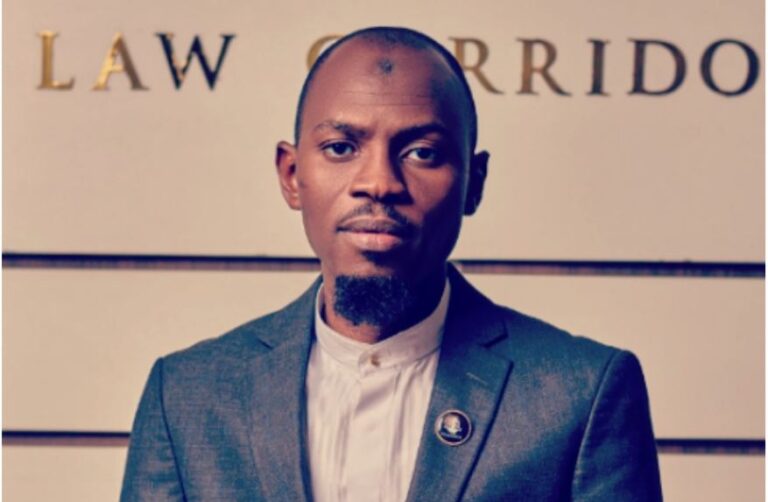
Ajibola Bello, Esq., is a Legal Practitioner and

Deputy Managing Partner, at

Law Corridor, Abuja.

ajibola.bello23@gmail.com

Former ANAN Chairman, Omoniyi Set To Unveil New Book on Budget 

0

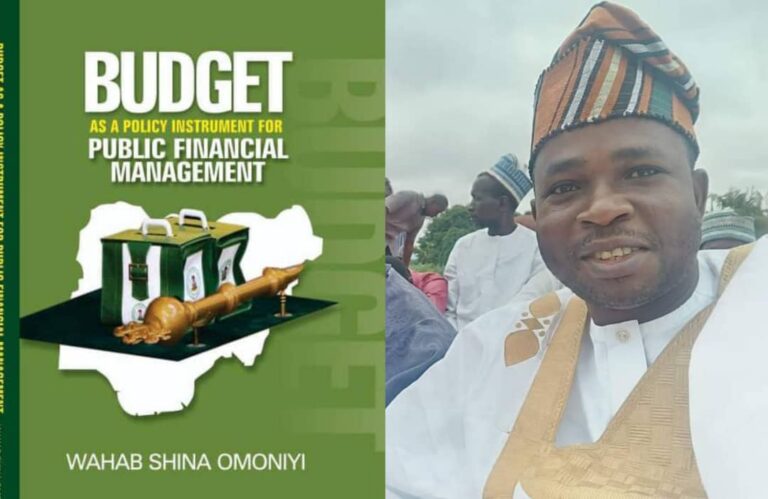
The immediate past Chairman of Association of National Accountants of Nigeria (ANAN), Abuja Branch, Mr. Wahab Shina Omoniyi is set to unveil a new book.

Title, “Budget As A Policy Instrument For Public Financial Management”, the book offers insight on the effective management of public finances using instrumentality of budgeting in mobilization, allocation, distribution, and utilization of resources by governments including its significant implications for national economic stability and societal well-being.

The 142 page masterpiece also also elucidates the principles involved in budgeting, the nexus between budget and policies of government, the budgeting processes and practices, the problems and challenges of budgeting and lastly, fiscal federalism and the prospects of enshrining good budget practices.

It will be unveiled on Wednesday, July 24, 2024 at Merit House, Maitama Abuja.

Omoniyi of the Finance and Accounts department of the Nigerian Geological Survey Agency (NGSA) headquarters Abuja had also in 2020 unveiled a book titled The Boundary.

It highlights the needs for individuals, communities and nations to have a distinctive understanding of their limits as not to spark rivalry and possible tension when encroachment occurs.

The public unveiling of “Budget As A Policy Instrument For Public Financial Management” will witness the presence of key stakeholders from the country’s financial and economic sector, as well as the academia.

Reformist Masoud Pezeshkian Elected Iran’s President

0


https://www.youtube.com/watch?v=WC8EtS48-mw

Reformist Masoud Pezeshkian has been elected as Iran’s new president, beating his hardline conservative rival Saeed Jalili.

The vote was declared in Dr Pezeshkian’s favour after he secured 53.3% of the more than 30 million votes counted. Mr Jalili polled at 44.3%.

The run-off came after no candidate secured a majority in the first round of the election on 28 June, which saw a historically low voter turnout of 40%.

The election was called after Iran’s previous president Ebrahim Raisi was killed in a helicopter crash in May, in which seven others also died.

The leaders of China, India and Russia have all congratulated Dr Pezeshkian on his victory.

Even before the final results were declared by Iran’s interior ministry, Dr Pezeshkian’s supporters had taken to the streets in Tehran and a number of other cities to celebrate.

Videos posted on social media showed mostly young people dancing and waving the signature green flag of his campaign, while passing cars sounded their horns.

Dr Pezeshkian, a 71-year-old heart surgeon and member of the Iranian parliament, is critical of Iran’s notorious morality police and caused a stir after promising “unity and cohesion”, as well as an end to Iran’s “isolation” from the world.

He has also called for “constructive negotiations” with Western powers over a renewal of the faltering 2015 nuclear deal in which Iran agreed to curb its nuclear programme in return for an easing of Western sanctions.

His rival, Saeed Jalili, favours the status quo. The former nuclear negotiator enjoys strong support amongst Iran’s most religious communities.

Mr Jalili is known for his hardline anti-Western stance and opposition to restoring the nuclear deal, which he says crossed Iran’s “red lines”.

Turnout in the latest round of voting was 50% – higher than the first round last week, when the turnout was the lowest since the Islamic revolution in 1979 amid widespread discontent, but still considerably low.

Widespread discontent meant that millions of people boycotted the elections.

Lack of choice in the candidates, dominated by Islamic hard liners, and the impossibility of real change as long as the supreme leader tightly controls policies added to their frustration.

Some people who did not vote in the first round were persuaded to cast their ballot for Dr Pezeshkian this time round to prevent Mr Jalili from becoming the president.

They feared that if he won, Iran would be heading for more confrontation with the outside world and that he would bring Iran more sanctions and further isolation.

In order to stand, both candidates had to make it through a vetting process run by the Guardian Council, a body made up of 12 clerics and jurists that hold significant power in Iran.

That process saw 74 other candidates removed from the race, including several women.

The Guardian Council has previously been criticised by human rights groups for disqualifying candidates who are not loyal enough to the regime.

After years of civil unrest – culminating in anti-regime protests that shook the country in 2022-23 – many young and middle-class Iranians deeply mistrust the establishment and have previously refused to vote.

On Iranian social media, the Persian hashtag “traitorous minority” went viral, urging people not to vote for either of the candidates and calling anyone who did a “traitor”.

But Supreme Leader Ayatollah Ali Khamenei has rejected suggestions that the low turnout represents a rejection of his rule.

“There are reasons [behind the low turnout] and politicians and sociologists will examine them, but if anyone thinks that those who did not vote are against the establishment, they are plainly wrong,” he said.

In a rare move, he acknowledged that some Iranians do not accept the current regime. “We listen to them and we know what they are saying and it is not like they are hidden and not seen,” Mr Khamenei said.

Electricity Supply Partly Restored In Nigeria Hours After National Grid Collapse

0

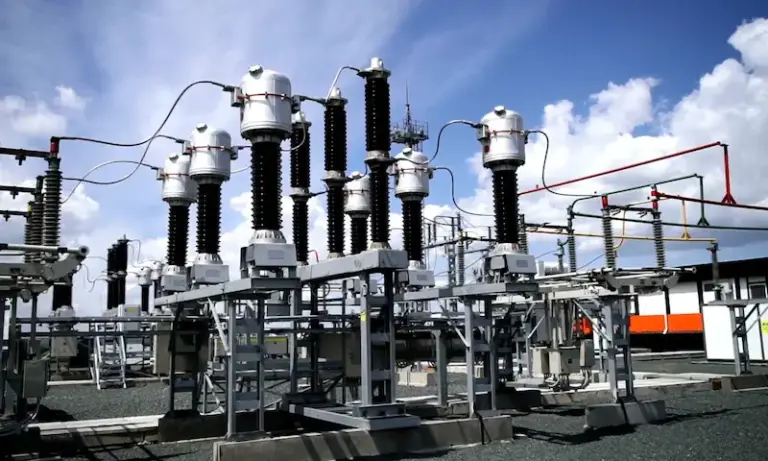
Electricity supply has been partly restored in Nigeria hours after the national grid collapse.

Emeka Ezeh, Head of Corporate Communications at Enugu Electricity Distribution Company confirmed this in a statement on Saturday.

DAILY POST reports that there was a nationwide blackout in Nigeria around 3 pm on Saturday.

However, Ezeh, in an update, said bulk supply was partially restored by Transmission Company of Nigeria around 6:54 pm on Saturday.

“This is to inform you of partial supply restoration after the system collapsed earlier today(Saturday), 6th July 2024.

“So far, Awada and GCM TCN stations received supply at 18:54 hours; Nibo TCN station and Agu Awka TCN station received supply at 18.55 hours and 18:56 hours respectively; while Oji River TCN station received supply at 19:22 hours.

“We are still standing by, anticipating full and normal restoration of supply to other interface TCN stations, ” Ezeh stated.

CAC Extends Deadline For Registration By FINTECH Operators

0

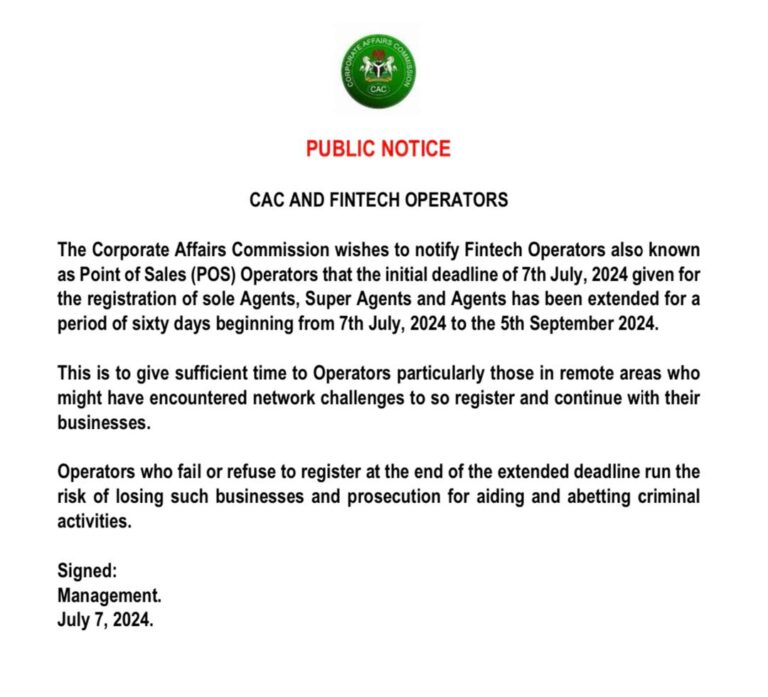
CAC and CBN has approved and extended deadline for registration by two months. This is to enable those who haven’t done so to comply.

VP Shettima asks investors to unlock potential in Nigeria’s non-oil sector

0

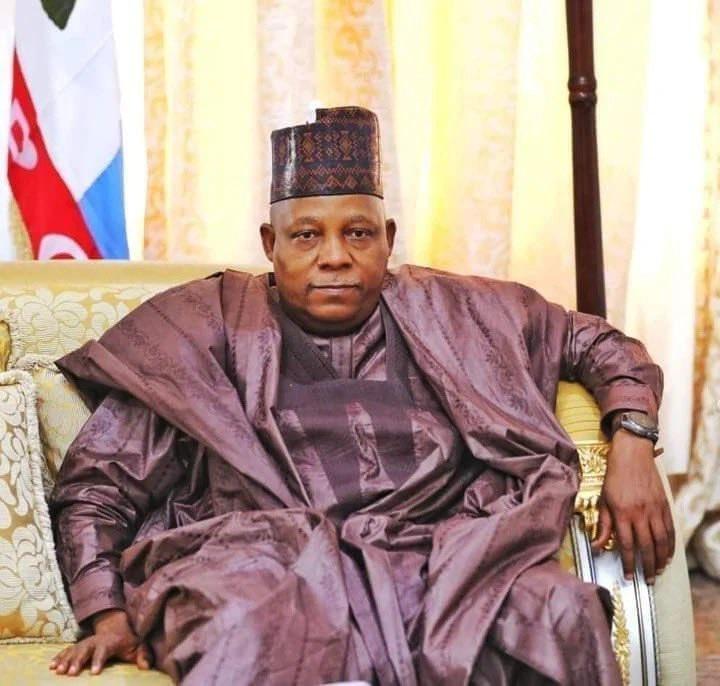
Vice President Kashim Shettima has called for a significant shift from dependence on oil to other critical sectors with attractive investment returns in Nigeria.

He identified agriculture, manufacturing, renewable energy and digital innovation, among other sectors, as potential investment grounds to explore, saying they align with the nation’s development priorities outlined in the Economic Recovery and Growth Plan (ERGP).

The Vice President, who stated this on Friday during the Existing Foreign Direct Investors Roundtable at the Banquet Hall of the Presidential Villa, Abuja, noted that the eight-point agenda of the Renewed Hope administration of President Bola Ahmed Tinubu “signals diverse avenues for investment, from agriculture to renewable energy.”

“Through targeted incentives and public-private partnerships, we aim to unlock the full potential of these sectors, catalysing job creation and socio-economic empowerment across the country,” he added.

Senator Shettima assured the investors and other development partners of a business environment characterised by transparency, accountability, and regulatory certainty, even as he implored them to “recognize the indispensable role of public-private partnerships in mobilizing resources, sharing expertise, and mitigating investment risks.”

The VP observed that with the non-oil sector contributing 93.62 percent to Nigeria’s GDP in the first quarter of 2024, it is imperative to explore other critical sectors of the nation’s economy.

He said, “It is not by chance that the non-oil sector contributed 93.62% to the nation’s GDP in the first quarter of 2024. This significant shift from our oil dependency invites us to explore diverse sectors such as agriculture, manufacturing, renewable energy, and digital innovation.

“These sectors not only promise attractive returns but also align with our national development priorities outlined in the Economic Recovery and Growth Plan (ERGP) and subsequent blueprints.”

VP Shettima further said the Tinubu administration adopted some mechanisms for the ease of doing business which, according to him, “stimulate investment across critical sectors and strengthen the capacity of public institutions, ensuring that industry stakeholders are never undermined.”

Emphasizing the importance of investment in the life of a country’s economy, Shettima noted that it is not just about financial returns but also “building lasting legacies and making enduring contributions to society,” just as he told the investor that their investments are capable of uplifting “communities, creating sustainable livelihoods, and driving inclusive growth.”

He noted: “The life of every economy is defined by the volume of investments it accommodates and attracts. Investments are the lifeblood that fuels innovation, drives growth, and creates opportunities for prosperity.

“Today, as we gather for this roundtable with our esteemed foreign direct investors, we celebrate not just the capital that flows into our nation but the confidence, trust, and partnerships that these investments represent”.

Senator Shettima further stressed that President Tinubu’s visionary leadership and pro-business background were added incentives to investing in Nigeria under the present dispensation.

Earlier in his welcome address, the Deputy Chief of Staff to the President (Office of the Vice President), Sen. Ibrahim Hadejia, commended the development partners, foreign investors and other stakeholders for participating in the meeting.

Senator Hadejia outlined some of the efforts made by the administration of President Tinubu to boost the investment climate in Nigeria.

He said most of the measures already adopted by the administration were at different phases of implementation, and would yield fruits in the coming years for existing and aspiring investors to see.
In her remarks, the Technical Adviser to the President on Foreign Direct Investment (FDI), Princess Zahrah Mustapha-Audu presented the summary report of a survey conducted to aggregate views about foreign investments in Nigeria, noting that the outcome of the exercise would be critical to the efforts by the Tinubu administration to boost the investment environment in the country.
She explained that the programme – ‘Existing Foreign Direct Investors Roundtable’- is centered around seeking ways of retaining and scaling up investments in Nigeria, noting that the outcome of deliberations at the forum would be harnessed to boost existing frameworks and policies aimed at encouraging foreign direct investment in Nigeria.
Also present at the roundtable were the Minister of Finance and Coordinating Minister of the Economy, Mr Wale Edun; Minister of Industry, Trade and Investment, Dr Doris Uzoka-Anite; the Managing Director of the Nigeria Sovereign Investment Authority (NSIA), Mr. Aminu Umar-Sadiq; CEO of Nigeria Investment Promotion Commission (NIPC), Aisha Rimi; the Comptroller General of Nigerian Immigration Service (NIS), Kemi Nandap; the representative of the CBN Governor and representatives of other federal government agencies.
Other participants include the UAE Ambassador to Nigeria, H.E Salem Saeed AlShamsi, the leadership of the American Business Council, other members of the diplomatic corps and technical partners.

CBN Faults Binance For Carrying Out Banking Services Via Naira P2P in Nigeria

0

CBN faults Binance for carrying out banking services through Naira P2P feature in Nigeria
by Nnaemeka Onyekachi

Story highlights
The Central Bank of Nigeria (CBN) criticized Binance for unauthorized deposits and withdrawal services, typically reserved for banks and licensed financial institutions.

Binance and its executives face allegations of money laundering, foreign exchange contravention, and conspiracy to conceal financial proceeds, with the government highlighting transactions worth $35,400,000.
The trial revealed that Binance facilitated peer-to-peer transactions involving naira without authorization, and concerns were raised about its impact on Nigeria’s exchange rate and compliance with regulations.

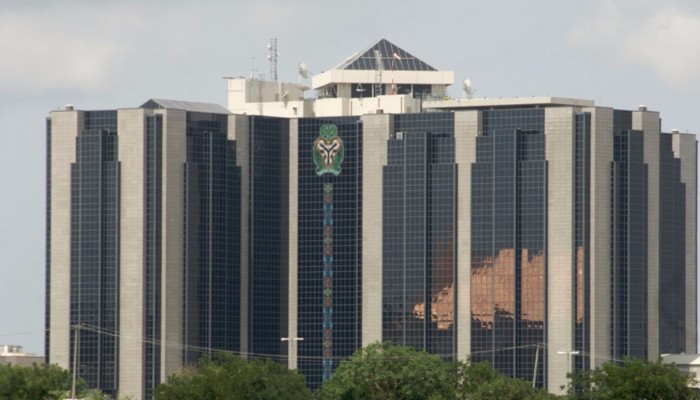
The Central Bank of Nigeria (CBN) has faulted the Binance cryptocurrency platform for carrying out deposits and withdrawal services meant for banks and other authorized financial institutions on its platform, without authorization.

Dr. Olubukola Akinwunmi, Head of Payment Policy and Regulation Division at the CBN, told Justice Emeka Nwite of the Federal High Court, Abuja on Friday that the deposits and withdrawal transactions done on Binance platform was what banks in Nigeria were authorized by the apex bank to do.

Nairametrics reports that the Nigerian government had accused Binance and its executives, Tygran Gambaryan and the fleeing Nadeem Anjarwalla, of allegedly conspiring amongst themselves to conceal the origin of the financial proceeds of their alleged unlawful activities in Nigeria, including $35,400, 000.

The Nigerian authorities allege they committed an offence contrary to Section 21 (a) and punishable under Section 18(3) of the Money Laundering (Prevention and Prohibition) Act, 2022.

What transpired during the trial
Led in evidence by counsel for the Economic and Financial Crimes Commission (EFCC), Ekele Iheanacho, the CBN staff told the court that the Binance website convinced many Nigerians to swiftly deposit and withdraw NGN or naira on Binance via a cash link.

He added that statements on the Binance website also stated it “does not charge deposit fees. For each withdrawal, a flat fee is paid by users to cover the transaction cost of moving the cryptocurrency out of their Binance account.”

He explained that “depositing and withdrawing naira is a regulated activity carried out by banks and other financial institutions duly licensed by Central Bank of Nigeria.”

He maintained that Binance was not given the authorization to carry out such transactions on its platform.

He also said that Binance facilitated conversion from naira to dollar, adding that that kind of service also required authorization by the CBN, either as an authorized giver or as a Bureau de Change.

He also told the court that traders who deal in foreign exchange on Binance “normally trade in pseudonyms” thereby hiding their identities in contravention of relevant laws.

The witness explained,

“The selling party will provide a bank account to which the buying party can send or transfer the naira amount into the account provided by the selling party.

“Once the buying party transfers the amount agreed, it clicks on a particular icon on the Binance platform to communicate the fact that he has transferred the amount.

“The Binance platform will on the side of the selling party, await confirmation based on which it will release the cryptocurrency or fiat currency.

“The Binance platform facilitated all these processes for the (naira)peer-to-peer transaction.”

After the witness’ examination, the court adjourned to July 16 for cross-examination by the defence.

Justice Nwite also ordered the Nigerian Correctional Services to produce the medical reports of the Tigran Gambaryan that day, warning the correctional service against non-compliance to the court’s directives.

He added that the medical practitioner at the prison service will have to appear in court if the medical report is not produced.

More insights
A director from the Securities and Exchange Commission (SEC) had told the court that the Binance platform became a reference point for determining Nigeria’s exchange rate.

SEC is a Federal Government agency that carries out registration of all capital market stakeholders, instruments to be traded on the market, and all the trading platforms.

In addition, the SEC makes rules and regulations on the capital market, conducts investigations, investigates enforcement as well as monitors the market.

Nairametrics reports that a popular method of buying and selling crypto is through Peer-to-peer, otherwise known as P2P.

The seller and buyer are connected in what can be likened to a marketplace.

Binance and its executives are faced with two separate suits by the FIRS and EFCC; the former bordering on tax evasion while the latter on money laundering and foreign exchange contravention.

Nairametrics recalls that the executives have also instituted a fundamental rights case against agencies of the Nigerian government, citing a violation of their constitutional right to liberty.

On February 28, Nigerian authorities detained two senior Binance executives, Nadeem Anjarwalla, a 37-year-old British-Kenyan who serves as the regional manager for Africa, and Tigran Gambaryan, a 39-year-old American who is the head of financial crime compliance at Binance.

Backstory
Recently, Nigeria’s National Security Adviser (NSA) classified cryptocurrency trading as a national security issue.

Following this, the Central Bank of Nigeria (CBN) directed four fintech startups operating in the country—Opay, Moniepoint, Paga, and Palmpay to block the accounts of customers engaging in cryptocurrency transactions and to report those transactions to law enforcement agencies.

Earlier in February this year, crypto trading platform, Binance, had to disable its peer-to-peer feature for Nigerian users as it came under the searchlight of the Nigerian government over allegations of currency manipulation and money laundering.

Meanwhile, SEC, during a virtual meeting with the Blockchain Industry Coordinating Committee of Nigeria (BICCoN), called for a new cryptocurrency measure that aims to remove the naira as a currency pair from cryptocurrency peer-to-peer platforms.

The Acting Director General of the SEC, Dr. Emomotimi Agama, who made the call, emphasized the need to clean up the virtual assets space from illegal trading activities and safeguard the integrity of the Nigerian capital market.

Agama noted that the recent surge in peer-to-peer (P2P) crypto trading has reportedly impacted the Naira’s exchange rate, prompting the SEC to consider delisting the Naira from P2P platforms to curb market manipulation.