Thursday, May 7, 2026
Home Blog Page 125

FG Begins Construction Of 500 Housing Units In Kano – Properties

0


The Federal Ministry of Housing and Urban Development has commenced the construction of 500 housing units in Kano State.

Named Renewed Hope Estate, it is located at lambu village of Tofa Local Government Area.

The project will see the construction of blocks of 2-bedroom semi-detached, 1-bedroom semi-detached and 3-bedroom semi-detached bungalows.

Speaking, the Minister, housing and urban development, Ahmed Musa Dangiwa, who was on an assessment visit to the site expressed dissatisfaction over the slow phase of the work urging the contractor to sit up or risk losing the job.

“We are not happy with the level of work being carried out here. We expect you to be way ahead of where you are now. You need to sit up or by next week if we come back here and there is no progress, we take up the ones you have not started and give to someone.

“We know you have the capacity that’s why you were selected to do the job. So many people are looking for job. Employ more hands because you are expected to complete in five months. By the end of this year we want this work to be commissioned.”

On his part, the contractor represented by the Project Manager, Haruna Lawal, assured the minister of change and proactiveness on the job so as to meet the deadline.

Air Peace, Others Barred From Flying Into The US

0

Nigeria has been delisted from the United States Federal Aviation Administration Category One Status (USFAA CAT 1) In­ternational Aviation Safety Assessment programme (IASA), investigation by Dai­ly Independent can reveal.

With this removal, no Nigerian air­line, including Air Peace, which planned to commence direct flight from Lagos to New York “soon,” can operate directly to any city or airport in the US until the country is re-audited and re-certificated by the FAA and returned to its former status.

Nigeria gained the USFAA CAT One Status in August 2010 after a rigorous exercise that spanned about five years, but due to the combined factors of drop in standards and the failure of any Nigerian airline to operate directly to the US for seven years, some stakeholders said the country lost the rating.

The new USFAA law says that the failure of any country’s air­line to operate directly to the US for two years or vice-versa would lead to the loss of the Cat­egory One Status.

It is not clear how long Nige­ria had fallen off from the prime status, but a source close to the Ministry of Aviation and Aero­space Development, confided in Daily Independent over the weekend that it was “before the 2023 general elections.”

This newspaper gathered that Hadi Sirika, the immediate past Minister of Aviation, had told the agencies’ heads then and some major stakeholders not to divulge the removal of the country from the status to the public in order not to affect the then impending general elections in 2023.

It was a secret well-kept by those who were aware of the country’s removal by the US­FAA until Daily Independent in­vestigation exposed its delisting.

Arik Air, the sole Nigerian on the Lagos-New York route, had on February 3, 2017, sus­pended operations to the US, a few days before its takeover by the Asset Management Corpo­ration of Nigeria (AMCON).

However, two United States carriers, United Airlines and Delta Air Lines, still operate direct flights to Nigeria from their bases.

While Nigeria is out of the list, seven other Af­rican countries still retain the USFAA Category One Status.

The countries are Cabo Verde, Egypt, Ethiopia, Kenya, Morocco, Rwanda and South Africa.

Further investigation by Daily Independent re­vealed that in the updated list of USFAA, there are 83 countries either in Category One or Two of the list, but Nigeria is con­spicuously missing on either of the two categories.

Investigation revealed that at present, there are 78 countries on USFAA Category One Status, including the above mentioned seven African countries, while another five countries are on Category Two Status.

Some of the countries in the Category One Status include Argentina, Aruba, Azerbaijan, Bahamas, Belgium, Bermuda, Bolivia, Brazil, Canada, Domin­ican Republic, Ecuador, El Sal­vador, France, Germany, Israel, Italy and Ireland.

Others are Kuwait, Japan, Jordan, Panama, Portugal, Phil­ippines, Romania, Samoa, Sam Marino, Poland, Suriname, Taiwan, Ukraine, United Arab Emirates (UAE), United King­dom UK), Uzbekistan, Vietnam and many more.

The only five countries on Category Two are Venezuela, Thailand, Russia, Organisation of Eastern Caribbean States and Bangladesh.

However, an industry expert who didn’t want his name in print explained that the remov­al of Nigeria from the US FAA Category One Status was due to one of the new rules by FAA, which bars countries whose air­lines had not flown into the US for two or three years.

This, he said, led to the re­moval of Nigeria from the list.

The industry expert equally reiterated that it was not due to the failure of infrastructure, safety, and aero-politics, but regretted the removal of the country from the status.

He said: “The sad thing about Nigeria is that since we signed ‘Open Skies’ agreement with the US, we were not operating to the country and they gave us five years to establish ourselves before they start operating into Nigeria, but we couldn’t do that. Then, Category One was signed under Dr. Harold Demuren and Arik Air stopped operating into the US in 2017 under Category One.

“Recall that Arik Air was used as one of the test airlines for Nigeria to achieve Category One and since Arik Air stopped, no Nigerian airline has operat­ed to the US. The fact is that other countries upgraded their rules, while Nigeria stopped. The fact of the matter is Nigeria has not infringed on any rule, but with their new rule, you have to comply.”

He, however, said that for any Nigerian airline to commence direct flight into the US, the Nigeria civil aviation would be re-audited by the USFAA, including the technical staff strength, safety and security apparatus layout.

Grp. Capt. John Ojikutu (rtd), the Chief Executive Offi­cer (CEO), Centurion Aviation Security Limited, confirmed that Nigeria lost the status about two years ago.

But Ojikutu attributed the delisting of the country to neg­ligent on oversight and enforce­ment of the safety and security regulations and programmes by the government.

For instance, Ojikutu men­tioned the recent safety and security audits of the civil aviation industry by the Inter­national Civil Aviation Organ­isation (ICAO), where Nigeria performed below industry standards and with numerous open items.

He emphasised that the country’s prime airport, Murta­la Muhammed Airport (MMA), Lagos, was lacking in security fence for over 20 years without any major improvement, while cases of incursions into the airport had climbed in recent times.

All these, he pointed out would result in the US FAA stopping Nigerian airlines from operating into the US.

He added: “The major prob­lem in the Nigerian civil aviation administration and manage­ment is the inconsistency of the appointments into the manage­ment positions and progression of the professional staff.

“We must prepare the Ni­geria Civil Aviation Authority (NCAA) again for another US FAA/Transportation Security Administration (TSA) Catego­ry One audit within a year from now to be able to pave the way for any designated flag carrier to fly to the US. Otherwise, the plan of Air Peace to go to the US can not materialise. As at now, the NCAA has no skills for any US FAA/TSA Category One audit.

“There are also other silent reports made to ICAO by the foreign airlines, which are not complementary to the NCAA oversight and enforcement of the safety and security in par­ticular.”

Engr. Femi Adeniji, the Chief Executive Officer (CEO), NIGAME Aircraft Consultancy Incorporation based in Florida, USA, explained that the delist­ing of Nigeria from Category One Status would affect the plan of Air Peace with its interna­tional flights to the US.

For Nigeria to return to the prime status, he advised the government to equip the NCAA with trained inspectors, experi­enced and complete re-organi­sation of the agency, including digitisations of regulations, which, he said, would give easy access to operators.

Besides, Capt. Mohammed Badamasi, an aviation analyst, purported that the recent incon­sistencies in safety and security in the industry may be responsi­ble for the loss of the Category One Status.

Badamasi queried the last time the NCAA carried out an internal audit of its activities that were supposed to prepare it for the mandatory external au­dit by any external bodies, won­dering if the agency was able to close all the gaps noticed in the last safety and security audits of Nigeria by ICAO.

Also, he explained that the Federal Airports Authority of Nigeria (FAAN) had failed in its responsibility of properly main­taining the infrastructure like buildings, runways, taxiway, lights and others, while security and safety at the airport perime­ter had also taken a flight.

He added: “In my own view, I see something wrong adminis­tratively. There are people who feel betrayed administratively. Internal wrangling. Leadership problems.

“A lot of hard work needs to be done with sincerity of pur­poses, having listed the grey ar­eas. Let them take a look at their visions and missions to deter­mine if they are still available.”

An AISA Category One rating means a country has the laws and regulations nec­essary to oversee air carriers in accordance with minimum international standards and that its civil aviation authority equivalent to the FAA for civil aviation matters meets interna­tional standards for technical expertise, trained personnel, record keeping and inspection procedures.

There are eight critical ele­ments required to be fulfilled before a country can scale the FAA audit. They are legislation, regula­tions, organisations, technical staff, technical guidance tools, licensing, continuous surveil­lance and resolution of safety concerns.

NNPCL $6 Billion Debt: Suspend Kyari, Save Nigerians – Arewa Group Tells Tinubu

0

Amid the controversial $6 billion debt being owed to petrol suppliers by the Nigerian National Petroleum Company Limited, NNPCL, a Northern group, Arewa Democratic Front, ADF, has urged President Bola Tinubu to take decisive action.

DAILY POST recalls that the Chief Communications Officer of the NNPCL, Mr. Olufemi Soneye, confirmed the debt, highlighting the severe financial strain it had imposed on the company’s operations.

The confirmation comes at a time fuel crisis has persisted in the country despite promises by the NNPCL.

In a statement made available to DAILY POST on Monday, the ADF, through its National Coordinator, Engr. Mustafa Yusuf and the National Secretary, Malam Muazu Haruna said Nigerians had suffered enough under the Mele Kyari-led NNPCL.

The Arewa group said it was compelled to speak out against the current fuel crisis and the disastrous mismanagement of the petroleum sector under the NNPCL.

According to ADF, “It is both alarming and deeply disheartening that under the watch of Mele Kyari, the Group CEO of NNPCL, Nigerians are being forced to purchase Premium Motor Spirit (PMS) at exorbitant prices exceeding N1,000 per liter in some areas.

“This situation, which has pushed many citizens to the brink of despair, is a direct consequence of the gross inefficiency that has come to characterize the NNPCL.”

“The suffering inflicted on the masses, who have already been battered by economic hardships, cannot be overstated.

“It is a travesty that a country as rich in oil resources as Nigeria should find itself in such a deplorable situation,” ADF lamented.

It added that the NNPCL’s alleged failure to manage the petroleum sector effectively was evident in the long queues at petrol stations across the country, which served as a daily reminder of the company’s ineptitude.

“The most damning evidence of this failure is the revelation of a staggering N6 billion dollars debt due petrol to ‘secret’ subsidy payments, despite the supposed cancellation of fuel subsidies over a year ago.

“This debt, which has been accumulated under the guise of subsidy payments, raises serious questions about the transparency and accountability of the NNPCL under Kyari’s leadership.

“Furthermore, the ADF is outraged by the blatant implementation of unfair subsidy practices, racketeering, and middlemen trading, all of which have exacerbated the fuel crisis and further undermined the credibility of the NNPCL.

“The recent shady acquisition of OVH Energy Marketing by NNPCL, coupled with the indiscriminate issuance of licenses to private operators, points to a deeply entrenched culture of corruption that has taken root within the corporation.

“These practices not only betray the trust of the Nigerian people but also pose a serious threat to the integrity of the Tinubu administration’s agenda.

“Mele Kyari’s failure to revive Nigeria’s moribund refineries, despite being provided with all necessary resources and support by the Tinubu administration, is yet another testament to his unsuitability for his position.

“The recent suggestion to hand over the management of these refineries to private firms is nothing but another scheme to defraud the nation under the guise of privatization.

“This proposal, if implemented, would only serve to deepen the crisis in the petroleum sector and further impoverish the Nigerian people.

“Kyari’s actions demonstrate a clear lack of respect for the rule of law and highlight his determination to operate with impunity. Such conduct is unacceptable from a public official, and it must not be tolerated.

“Given these grave concerns, the ADF calls on President Bola Ahmed Tinubu to act swiftly and decisively.”

ADF said to pave the way for a thorough investigation, President Tinubu should suspend Kyari.

“The Nigerian people have suffered enough under the weight of this fuel crisis.

“The continued presence of Mele Kyari at the helm of NNPCL is a clear and present danger to the nation’s economic stability.

“It is clear that he has run out of ideas and lost the moral authority to lead. The time has come for a complete overhaul of the NNPCL’s leadership.

“A new team, free from the taint of corruption and committed to transparency and accountability, must be appointed to steer the company— and by extension, the nation, towards a brighter future.

“The ADF stands with the suffering masses of Nigeria and will not relent in its advocacy for justice, equity, and the rule of law.

“We call on all well-meaning Nigerians, civil society organizations, and international partners to join us in this demand for accountability.

“Let the poor breathe. Let the suffering cease. The future of our nation depends on it,” the group further stated.

DAILY POST reports that several other Nigerians, including former Vice President, Atiku Abubakar, human rights lawyer, Femi Falana, have all demanded a thorough probe of the issues surrounding the fuel subsidy payment.

Tinubu Names New Board For Bank Of Industry

0

President Bola Ahmed Tinubu has appointed a new board for the Bank of Industry (BoI) Limited, signaling a fresh start for the nation’s premier development finance institution.

This was contained in a statement on Monday by Special Adviser to the President on Media and Publicity, Ajuri Ngelale and obtained by News360 Nigeria .

Dr. Mansur Muhtar, a veteran finance expert and former Minister of Finance, will chair the 13-member board, which includes seasoned professionals from various fields.

Dr. Olasupo Olusi takes the reins as Managing Director/Chief Executive Officer, bringing his wealth of experience to the helm of the bank.

Other members of the board include Mrs. Ifeoma Uz’Okpala, Executive Director, Large Enterprises; Mr. Shekarau Omar, Executive Director, Micro, Small & Medium Enterprises; Mr. Usen Effiong, Executive Director, Corporate Services; Ms. Mabel Ndagi, Executive Director, Public Sector & Intervention Programmes; and Mr. Rotimi Akinde, Executive Director, Corporate Finance & Risk Management.

Non-Executive Directors on the board are Mallam Tajudeen Datti Ahmed, representing the Ministry of Finance Incorporated; Mr. Adedamola Olufemi Young, representing Central Bank of Nigeria; Reverend Isaac Adefemi Agoye, representing Manufacturers Association of Nigeria; Mallam Muhammad Bala, representing Federal Ministry of Industry, Trade & Investment; Mr. Oreoluwa Adeyemi, Independent Non-Executive Director; and Mr. Sulaiman Musa Kadira, Independent Non-Executive Director.

Tinubu tasked the new board with working harmoniously and diligently to achieve the bank’s objectives, saying “the nation expects nothing but the best from this critical institution”.

The appointments take effect immediately, with the new board set to commence work on the bank’s strategic plans and programs.

“President Bola Tinubu has approved the appointment of the following qualified Nigerians to the board of the Bank of Industry Limited:

[b]“Dr. Mansur Muhtar, OFR, — Chairman; Dr. Olasupo Olusi — Managing Director/Chief Executive Officer; Mrs. Ifeoma Uz’Okpala — Executive Director, Large Enterprises; Mr. Shekarau Omar — Executive Director, Micro, Small & Medium Enterprises; Mr. Usen Effiong — Executive Director, Corporate Services.

“Others are Ms. Mabel Ndagi — Executive Director, Public Sector & Intervention Programmes; Mr. Rotimi Akinde — Executive Director, Corporate Finance & Risk Management; Mallam Tajudeen Datti Ahmed — Non-Executive Director, representing the Ministry of Finance Incorporated; Mr. Adedamola Olufemi Young — Non-Executive Director, representing Central Bank of Nigeria; Reverend Isaac Adefemi Agoye — Non-Executive, representing Manufacturers Association of Nigeria; Mallam Muhammad Bala — Non-Executive, representing Federal Ministry of Industry, Trade & Investment; Mr. Oreoluwa Adeyemi — Independent Non-Executive Director; Mr. Sulaiman Musa Kadira — Independent Non-Executive Director.
[/b]
“Dr. Muhtar’s career spans decades in finance, international development, public service, and academia.

“He served as Minister of Finance, Budget and Economic Development from 2008 to 2010 and was Vice-President, Operations of the Islamic Development Bank, before his recent appointment.

“The President expects the new board of the Bank of Industry to work harmoniously, diligently, and with utmost fidelity to the nation in driving the mandate of this critical institution as a development vehicle for providing support for projects that enhance job creation, poverty alleviation, and the socio-economic conditions of Nigerian families,”the statement reads.

Industrial Court affirms jurisdiction on pre-employment matter, orders Abia Judicial Commission to proceed with appointment of Judges

0

The Presiding Judge of the National Industrial Court, Owerri Judicial Division, Hon. Justice Nelson Ogbuanya has declared that Abia State Judicial Service Commission has the power to call for further expression of interest and shortlist suitable candidates for recommendation to the National Judicial Council for appointment as Judges of Abia State Judiciary, as the requisite approval for the 2024 exercise has been obtained from the National Judicial Council.

The Court granted an order restraining Mr. Agwulonu and Nkume Oluchi representing herself and the 2022 shortlisted candidates for appointment of judges in the Abia State Judiciary, whether by themselves, agents, servants or privies, from further interfering with the Abia State Judicial Service Commission power to call for further expression of interest and shortlist suitable candidates for recommendation to National Judicial Council for appointment as Judges of the Abia State Judiciary, the requite approval for the 2024 exercise, having been obtained from the National Judicial Council.

Justice Ogbuanya ordered the Abia State Judicial Service Commission to continue with the process of appointment of Judges of the Abia State Judiciary, the requisite approval for the 2024 exercise, having obtained approval from the National Judicial Council.

From facts, the claimant- Abia State Attorney General had sought among others for an order directing the Abia State Judicial Service Commission to continue with the process of appointment of Judges of the Abia State Judiciary, having obtained the necessary approval from the National Judicial Council.

The 2nd and 3rd defendants- Mr Agwulonu and Nkume Oluchi challenged the jurisdiction of the Court to hear and determine the subject matter of the suit which touches on pre-employment matters and does not involve any employer/employee relationship, and further, that the suit discloses no cause of action because they were not yet Judicial Officers in the Employment of the Abia State Judicial Service Commission & National Judicial Council.

Mr Agwulonu and Nkume Oluchi contended that there cannot be another judicial appointment process distinct from the 2022 process, questioning the exercise of the power of the Abia State Judicial Service Commission to initiate another appointment process, such as the 2024 exercise.

Counsel to Mr. Agwulonu and Nkume Oluchi submitted that the Abia State Attorney General is litigating in the same subject matter, as that of the earlier one filed at the Federal High Court, and therefore the suit herein constitutes an abuse of court process. Counsel urged that the matter be stayed pending the matter before the Court of Appeal in respect of matters decided at the Federal High Court over the issue of appointment of Judges of Abia State.

In opposition, the 1st Defendant- Abia State Judicial Service Commission argued that Abia State Attorney General is not a party to the matters at the Court of Appeal, and averred that the Abia State Attorney General or the Abia State Judicial Service Commission herein were not aware of the existence of the matter at Federal High Court before the suit was instituted at the Industrial Court, and further that the appeals pending at the Court of Appeal are on issue of locus standi and not on the substantive issue as to the right of the parties. Counsel urged the Court to dismiss the Application with substantial cost.

Delivering judgment after careful evaluation of the submissions of both parties, the presiding Judge, Justice Nelson Ogbuanya held that dispute around judicial appointment exercise or removal from office, is nowhere nearer the jurisdiction of the Federal High Court than it is to the National Industrial Court, which is the Court vested with exclusive jurisdiction over employment and incidental matters, such as the issues arising in the instant suit.

While leveraging on the expanded and espoused jurisdiction of the National Industrial Court under the current legal regime in Nigeria, Justice Ogbuanya reasoned that all matters involving issues of employment, ranging from pre-employment, subsisting-employment, to post-employment disputes, inclusive of disputes on matters of appointment or removal of judicial officer, being in statutory employment, are within the exclusive jurisdiction of the National Industrial Court, by virtue of its Constitutional mandate vested on the Court under S.254C (1) of the 1999 Constitution

Justice Ogbuanya held that the subject matter of the dispute in the instant suit, which involves employment policy issues arising from the further call for expression of interest for the appointment of judicial officers for the Abia State Judiciary is connected with employment, and therefore, falls within the jurisdictional scope and competence of the National Industrial Court of Nigeria.

“Thus, the often mischievous practice by some legal practitioners in approaching the Federal High Court or even objecting to the jurisdiction of the National Industrial Court on matters constitutionally falling within the jurisdictional circumference of the National Industrial Court, as witnessed in this suit, and acceptance of same for adjudication at the Federal High Court despite provision for transfer to the National Industrial Court, to say the least, does not augur well for the expected entrenching of the evolving and espoused labour law jurisprudence in Nigeria, even over a decade of the constitutional intervention that elevated the National Industrial Court to a pride of place, among the Superior Courts of Record in Nigeria, vide the 3rd Alteration 2010, effective 4th March 2011. I so hold.” The Court ruled


Furthermore, Justice Ogbuanya clearly distinguished that it is the 2024 exercise, that is the subject matter before the court which borders on the exercise of the 1st Defendant’s power to call for fresh expression of interest for a fresh exercise of appointment of judicial officers for the Abia State Judiciary, after the previous exercise was marred by controversy, and the Mr Agwulonu and Nkume Oluchi could not show how the said pending suits would be affected by this suit.

The Court maintained that the 2024 exercise is not a continuation or repeat of the 2022 exercise, as separate approval was obtained from the 4th Defendant (National Judicial Council) along with other approvals for the 2024 exercise, as shown in the exhibits filed before the court.

Justice Ogbuanya held that the 2022 exercise was stalled at the NJC interview stage, as there was no evidence of any interview held at the NJC or any candidate emerged and recommended to the Governor for the appointment, and its within the competence of the powers of the Abia State Judicial Service Commission to commence a fresh exercise which it has powers to so initiate to navigate from the previous exercise which had got stalled at the NJC due to the allegations of corruption and unresolved litigations around that exercise.

“This is where this Court, the National Industrial Court of Nigeria, acting within its constitutional mandate as a Policy Court of first instance on employment matters, can judicially intervene to break forth the logjam, as it is of public interest that judicial appointment in Abia State is not kept in suspense ad infinitum, while other States in the country have been involved in producing Judges, who are also being eligible for elevation to the Court of Appeal, since the last exercise around 2020, over 4 years ago. The career choice of other aspirants cannot also be hanged and trapped in quagmire, and administration of justice hampered by the depletion of Judicial Officers in the Abia State Judiciary.” Justice Ogbuanya ruled.

Visit the judgment portal for full details

The Minister of State for Petroleum Resources, Heineken Lokpobiri has directed that the Nigerian National Petroleum Company Limited(NNPCL) must sell petrol above the landing cost, which currently stands at N1,117 per litre, to prevent the smuggling of the products to neighbouring countries. Lokpobiri who disclosed this in Abuja, adding that security agencies are complicit in smuggling activities. He said unless the NNPC Ltd imports and sells petrol above the landing cost, smugglers would continue to move petroleum products to neighboring countries. Recall that the group chief executive officer of the NNPCL, Mele Kyari had last month met the Comptroller General of Nigeria Customs Service (NCS), Bashir Adewale Adeniyi on the rapid impact of the NCS’ “Operation Whirlwind” in reducing the smuggling of Premium Motor Spirit (also known as petrol) across Nigeria’s border communities. During the meeting, Kyari said PMS evacuation to border states had decreased from 32 million litres per day to about 25 million litres within just two months. The federal government had, in May 2023, removed the subsidy on petrol, which raised the price from about N197 to about N650 per litre. While PMS is sold at an average of N701.99 in Nigeria, it is sold at an average of N1,672.05 in the Republic of Benin and N2,061.55 in Cameroon. In other countries around the region, the price of PMS ranges from N1,427.68 in Liberia to N2,128.20 in Mali, averaging N1,787.57, according to the fuel price data obtained from trading economics statistics. This development had heightened PMS smuggling out of Nigeria. Lokpobiri’s stated at the event that NNPC’s sale of imported fuel at a price above the landing cost will bridge the potential profit gap and curb smuggling of the product to neighbouring countries for high profit-making by those involved in the shady business.

0

The Minister of State for Petroleum Resources, Heineken Lokpobiri has directed that the Nigerian National Petroleum Company Limited(NNPCL) must sell petrol above the landing cost, which currently stands at N1,117 per litre, to prevent the smuggling of the products to neighbouring countries.

Lokpobiri who disclosed this in Abuja, adding that security agencies are complicit in smuggling activities.

He said unless the NNPC Ltd imports and sells petrol above the landing cost, smugglers would continue to move petroleum products to neighboring countries.

Recall that the group chief executive officer of the NNPCL, Mele Kyari had last month met the Comptroller General of Nigeria Customs Service (NCS), Bashir Adewale Adeniyi on the rapid impact of the NCS’ “Operation Whirlwind” in reducing the smuggling of Premium Motor Spirit (also known as petrol) across Nigeria’s border communities.

During the meeting, Kyari said PMS evacuation to border states had decreased from 32 million litres per day to about 25 million litres within just two months.

The federal government had, in May 2023, removed the subsidy on petrol, which raised the price from about N197 to about N650 per litre.

While PMS is sold at an average of N701.99 in Nigeria, it is sold at an average of N1,672.05 in the Republic of Benin and N2,061.55 in Cameroon. In other countries around the region, the price of PMS ranges from N1,427.68 in Liberia to N2,128.20 in Mali, averaging N1,787.57, according to the fuel price data obtained from trading economics statistics.

This development had heightened PMS smuggling out of Nigeria.

Lokpobiri’s stated at the event that NNPC’s sale of imported fuel at a price above the landing cost will bridge the potential profit gap and curb smuggling of the product to neighbouring countries for high profit-making by those involved in the shady business.

Lagos Drives DNA Testing Surge In Nigeria, 27% Of Paternity Results Negative

0

Lagos leads the way in DNA testing across Nigeria, as 27% of all paternity tests conducted across the country proved negative indicating that in over one in four cases, the man tested was not the biological father.

This is according to the newly released report by Smart DNA titled Smart DNA 2024 report.

The report, which covers the period from June 2023 to June 2024, reveals that the bustling state accounted for a staggering 73.1% of all DNA tests conducted, dwarfing other states like Oyo (5.5%), Ogun (5.3%), Rivers (4.0%), and Delta (3.5%).

This finding highlights the complex realities and doubts surrounding family structures in Nigeria, where DNA testing has become increasingly sought after to resolve paternity issues.

According to the report, 73.0% of tests returned positive results, confirming the biological relationship between the child and the tested father. Lagos particularly on the Mainland recorded 67.5% compared to the Island of 32.5%.

The report points to the purchasing power of Lagosians as the primary driver behind this geographical disparity.

Reasons for the tests
The report also provided insights into the reasons behind the surge in DNA testing, with 85.9% of tests categorized under ‘Peace of Mind,’ indicating that individuals primarily seek DNA confirmation for personal reasons rather than legal or immigration purposes.

Notably, DNA tests for immigration purposes grew by 11.5% during the period compared to previous years, reflecting the ongoing trend “Japa” syndrome where Nigerians seek greener pastures abroad, often necessitating DNA verification for their children’s emigration.

Gender dynamics
The report reveals a stark gender disparity among those initiating DNA tests. Men overwhelmingly dominate the statistics, making up 88.2% of the first contacts, while women accounted for just 11.8%. This suggests that men are more likely to have doubts about paternity or other familial relationships, prompting them to seek testing.

However, the report cautions that the data might not be representative of the broader population. “People who come to us usually have valid reasons for questioning paternity, which creates a clear sample bias,” the report notes. This means that the instances of paternity fraud uncovered in their tests could be higher than in the general population.

Cultural trends
Furthermore, the report highlighted the demographic distribution of test requesters, with the Yoruba ethnic group accounting for the highest percentage of tests (53%), followed by Igbo (31.3%), Hausa (1.2%), and others (14.5%). Most tests were conducted on male children (52.8%), possibly indicating a cultural preference for confirming the paternity of male offspring.

In terms of age, the majority of DNA tests were conducted on children aged 0-5 years (54%), followed by those aged 6-12 years (24%), suggesting that parents often seek to establish paternity early in their children’s lives

Another interesting finding is the gender of the children tested, with slightly more tests conducted on male children (52.8%) than female children (47.2%). This may suggest a cultural preference for confirming the paternity of male offspring.

What you should know
Paternity scandals are a growing issue in Nigeria, causing significant social and legal impacts across families and communities. Traditional expectations place immense value on family lineage and the legitimacy of children, the pressure to maintain the appearance of a stable family unit can be overwhelming. This societal emphasis often leads individuals to conceal paternity issues rather than confront them openly.

Despite growing suspicions, many people hesitate to seek DNA testing due to the prohibitive costs. According to findings from Nairametrics, conducting a paternity or maternity test in Nigeria can cost approximately ₦280,000 for a father/mother, and child, this price tag remains out of reach for many families.

Consequently, the cost of testing becomes a significant barrier, preventing some individuals from obtaining the answers they need and perpetuating the cycle of uncertainty and mistrust within the family structure.

NNPC Retail Outlet Adjusts Pump Price To ₦855/Litre In Lagos

0

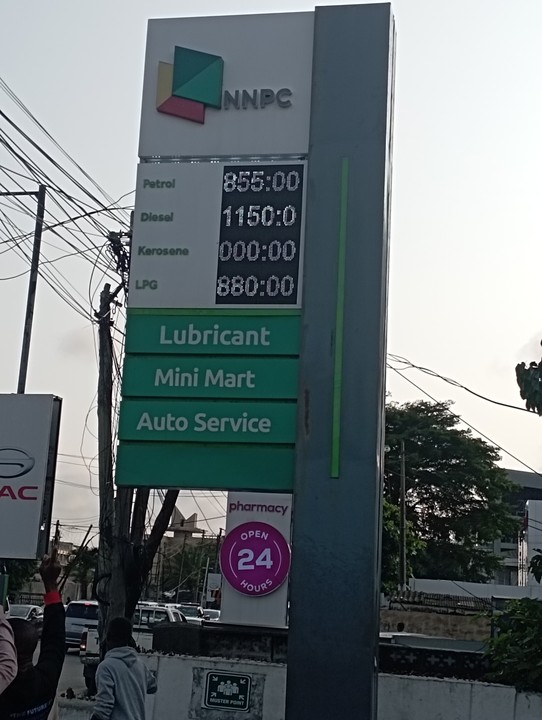
Was just walking past one NNPC outlet by my office in lagos and i saw people shouting.
Went to check,NNPC have adjusted their pump price to 855/Litre.

I wonder how much other marketers will be selling now.

God abeg.

CBN sees dwindling finances pushing Nigerians into debt

0

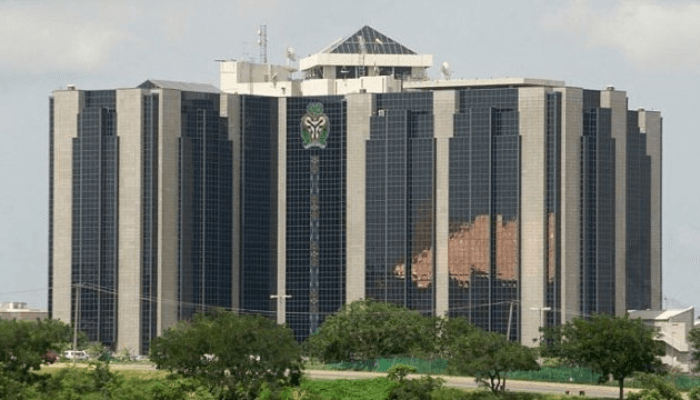
Nigerians expect to spend their savings or incur debt over the declining financial situation, according to a recent report by the Central Bank of Nigeria (CBN).

In the report titled; “July 2024 Household Expectations Survey”, Nigerians were pessimistic about the economic situation over the next three months.

“At -9.1 points, consumers’ overall confidence was pessimistic for the next three months. This is attributed to declining economic conditions and declining family financial situation as consumers opined that they will be drawing down on savings or getting into debt. They, however, anticipate improvement in the total family income as the index stood at 1.6 points,” the report stated.

The survey, which was done in July 2024, sampled 1,665 households and had a 99.7 response rate.

Respondents also expected inflation to continue rising in August 2024, and three months after. However, the prices of goods may begin to moderate after six months, the report stated.

“Drivers of inflation for the next three months were Transportation (69.3), Purchases of Car/Motor Vehicle (68.7 points), Medical Expenses (67.3 points), Rents (67.1 points) and Purchase of House (67.0 points),” the report stated.

Households also expect to spend over 50 percent of their income on food and household items, while seeking to cut costs on big purchases such as vehicles, houses, home appliances, savings and investments.

“This trend is expected to continue into the next three months as consumers expect to spend a substantial amount of their income on similar items: Food and Other Household Items (56.0 points), Education (35.2 points).”

“Additionally, they do not plan to spend a substantial income on Investment (-45.6 points) and Savings (-33.8 points). This reflects their family’s financial situation in the current month and reaffirms their stance that they will be drawing down on their savings or getting into debt,” the report stated.

Although Nigerians did not expect to make big purchases like landed properties and houses in July and August, the optimism to do so in six months was higher.

“Consumers expect the naira to depreciate in the current month, next month and next three months but appreciate in the next six months,” the report stated.

Zenith Bank’s H1 profit rises 98%, hits N577bn

0

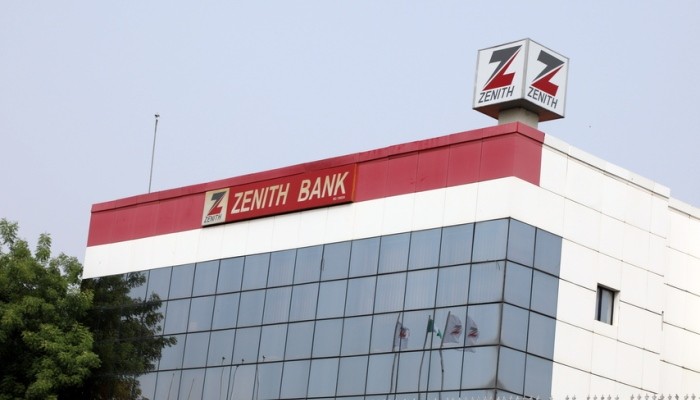
Zenith Bank, a tier-one bank in Nigeria, has reported a 98% rise in its after-tax profit in the first half (H1) of 2024.

According to the bank’s financial statement, its after-tax profit increased to N577.9 billion in H1 from N291.7 billion in the corresponding period of last year.

The bank reported a 117.6% increase in its gross earnings to N2.1 trillion in H1 2024 from N967 billion in the same period of 2023, driven by an acceleration in both interest income and non-interest income.

Propelled by the growth of and by the effective pricing of risk assets, interest income surpassed the N1 trillion mark, a half-year record, growing by 177 percent from N415.4 billion in H1 2023 to N1.1 trillion in H1 2024.

Non-interest income grew by 74% from N515.7 billion to N899.3 billion.

The bank’s interest expense surged 183.6 percent to N434 billion from N153.5 billion, driven by the high-interest rate environment.

A further breakdown of the financial statement showed that Zenith’s interest income grew by 174.6% in H1, as all major contributory lines recorded increases in loans and advances to customers (141.1% to N610 billion), treasury bills (272.8% to N261 billion), and government and other bonds (221% to N193 billion).

“In furtherance of its expansion plans, the Group has received regulatory approval for the establishment of a third-country branch in Paris, France, which, when fully operational, will enhance its product offerings in international markets,” the bank said in a statement.

During the period, the bank recorded a 173.9% growth in net interest income to N715 billion from N261 billion. Net fee and commission income increased to N109.6 billion from N43.9 billion.

Items in fees and commission income include: fees on electronic products (N41 billion), account maintenance fees (N32.7 billion), foreign withdrawal charges (N31 billion), commission on letters of credit (N14 billion), income from financial guarantee contracts issued (N13.9 billion), commission on agency and collection services (N7 billion), among others.

The bank during the period reported that operating expenses increased to N333.2 billion from N148 billion, on the back of an increase in Asset Management Corporation of Nigeria’s surcharge amounting to N92 billion.

Total tax expenses increased by 156.8% to N149 billion from N58 billion. Earnings per share increased to N18.41 kobo from N9.29 kobo in the first six months of last year.

The statement noted that the group continued to strive for operational efficiency, resulting in only a marginal increase in the cost-to-income ratio y/y from 38.5% to 39.4%.

It said, “The heightened risk environment has fuelled a growth in impairment levels, thus mildly elevating the cost of risk from 8.8% to 9.7%. Cost of funds grew Year on Year (YoY) from 2.6% to 4.4% given the high-interest rate environment. This also resulted in growth in interest expense from N153.6 billion in H1 2023 to N434.4 billion in H1 2024. Despite this, net interest margin grew by 49% from 5.9% in H1 2023 to 8.8% in H1 2024, underscoring the efficient repricing of interest-earning assets and interest accruing liabilities.”

Read also: Zenith Bank targets N1trn profit in 2024 with new growth strategies

Total assets grew to N27.5 trillion from N16 trillion on the back of loans and advances to customers amounting to N9.2 trillion.

Deposits from customers totalled N19.6 trillion while the bank’s total liabilities also rose to N24 trillion, leaving its shareholders fund at N3.1 trillion.

Net cash flows from operating activities fell to N177 billion from N986 million.

Cash and cash equivalents at the end of the period totalled N4.38 trillion from N2.46 trillion.