Wednesday, May 6, 2026
Home Blog Page 120

Insecurity: 19 Northern Govs, Monarchs In Meeting With Chief Of Defense Staff

0

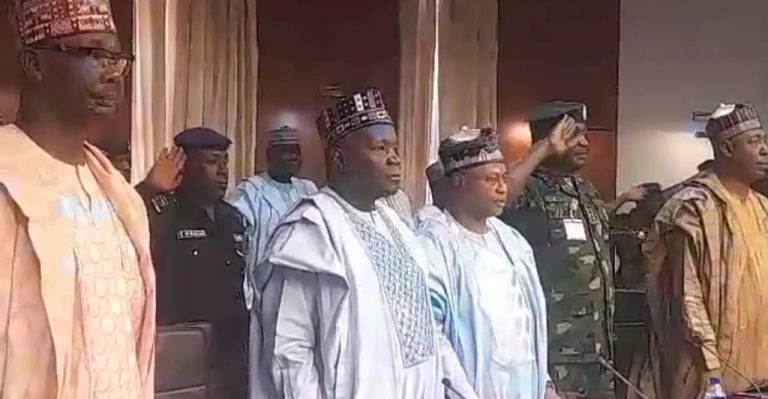
In response to mounting insecurity and socio-economic issues in Northern Nigeria, governors from the region’s 19 states convened on Monday with the Chief of Defence Staff (CDS), General Christopher Musa, for crucial deliberations, News360 Nigeria reports.

Key issues on the agenda included escalating poverty, a growing number of out-of-school children, and persistent insecurity.

The meeting, chaired by Gombe State Governor and Chairman of the Northern States Governors’ Forum, Inuwa Yahaya, was hosted by Governor Uba Sani at the Sir Kashim Ibrahim Government House in Kaduna.

Governors from Kaduna, Zamfara, Nasarawa, and other Northern states attended, along with deputy governors and traditional rulers.

General Musa briefed the attendees on the military’s ongoing efforts to curb banditry, terrorism, and other threats plaguing the region.

Traditional leaders, including the Sultan of Sokoto, Shehu of Borno, Emir of Zazzau, and others, also participated, underscoring the urgent need for collaborative action to tackle these challenges.

In opening statements, Governors Yahaya and Sani stressed the critical impact of insecurity on Northern Nigeria’s economy and called for concerted efforts to restore stability and development in the region.

Manchester United Sack Manager Erik Ten Hag! –

0

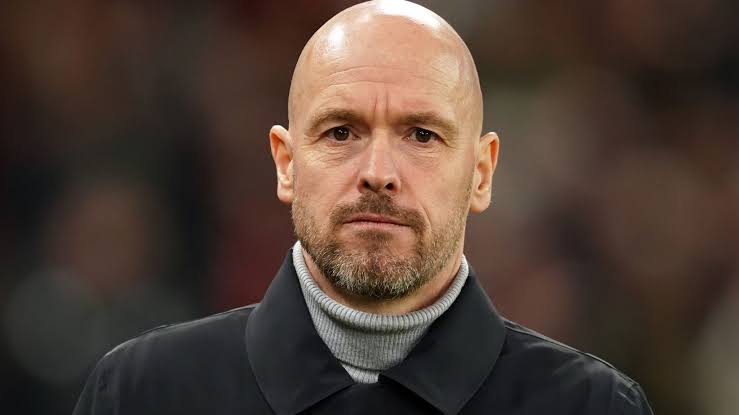
Manchester United have sacked manager Erik ten Hag following two and a half years in charge of the club.

The Dutchman was informed of the decision by the club’s board on Monday morning, fewer than 24 hours after the club’s defeat by West Ham at the London Stadium on Sunday afternoon.

Ruud van Nistelrooy, who joined the club as Ten Hag’s assistant last summer, has been named as interim manager.

United’s 2-1 defeat at West Ham left the club 14th in the Premier League with just three wins from their opening nine matches, while they are 21st of 36 teams in the Europa League table.

NLC To IMF: You‘re Behind Nigeria’s Economic Woes

0

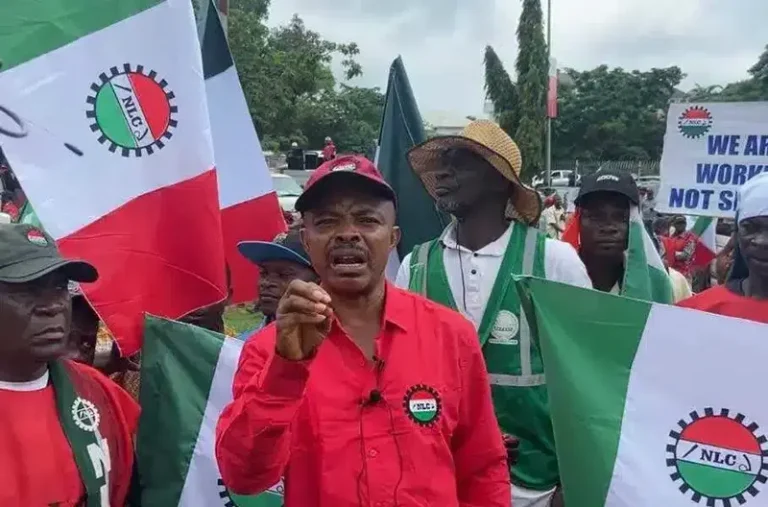
Nigeria Labour Congress, NLC, has dismissed the International Monetary Fund, IMF, denial of any role in Nigeria government’s removal of petrol subsidy and the implementation of other anti-people economic policies, insisting that the body is behind the country’s economic woes.

According to the NLC, the IMF and its cousin in economic mischief – the World Bank remain the twin forces that have a longstanding pattern of recommending harsh and unworkable economic policies to developing nations.

In a statement yesterday, the President of NLC, Joel Ajaero, urged the World Bank and IMF to remove their knees from our necks so that we can breathe as a nation.

The statement reads: “Nigeria Labour Congress (NLC) believes that it is cynical and indeed typical of the International Monetary Fund’s (IMF) to recently deny responsibility for the Nigerian government’s removal of petroleum subsidy.

“IMF and its cousin in economic mischief – the World Bank remains the twin forces that have longstanding pattern of recommending harsh and unworkable Economic policies to developing nations. In their usual subterfuge, they have continued to present these advisories as growth strategies but which have unfortunately often led to increased socioeconomic hardship and stagnation in Nigeria and other nations that have had the misfortune of drinking their poisoned chalice.

“At a press conference during the IMF and World Bank Annual Meetings in Washington DC, United States, Abebe Selassie, IMF’s African Region Director, described the decision to remove fuel subsidy by Nigeria’s government as a domestic one.

IMF’s recent statement is a display of subterfuge and evasion. This denial of involvement in Nigeria’s subsidy removal, coupled with the assertion that it was a “domestic decision,” disregards the extensive influence that the IMF wields in policy formation within many developing countries. Despite this assertion, the IMF’s policy dialogues often suggest subsidy cuts as necessary steps toward fiscal sustainability.

“For Nigeria, where successive governments have frequently yielded to these recommendations, the IMF’s disavowal rings hollow, as it underplays the fund’s direct impact on the nation’s economic policies.

“The NLC has become more worried over this denial at this time which is another signpost of the already disturbing policies by the Nigerian government at the behest of the IMF and World Bank and which IMF is now trying to distance itself.

“It shows that the institution is working very hard to stay away from the blame or the backlash that its policy directions will bring in the future. IMF must know that Nigerians are not fools and we are always aware of the destructive influences its awful policy paths for Nigeria and indeed Africa has been.

“It is pretentious and truly too late to begin to deny complicity because we warned the government about the consequences of implementing IMF and World Bank-driven policies.

As IMF and World Bank continue to pretend not to know the apparent obviousness of the social costs of its policy recommendations another layer of concern is added to the entire denial.

“While the IMF acknowledges the “significant social costs involved,” it casually suggests that governments can mitigate these hardships through its idea of expanded social protections which is a system that beggars the people forcing them to dwell on handouts in this case RICE that never gets to the people. The reality in Nigeria has continued to reveal a profound disconnect – subsidy removal and price hikes have pushed essential goods beyond the reach of many, with government-provided social safety nets remaining woefully inadequate.

“This gap between IMF recommendations and the lived experiences of Nigerians highlights a
fundamental and deliberate oversight in the fund’s approach to economic policy.

“In distancing itself from Nigeria’s subsidy removal, the IMF also demonstrates an unsettling inconsistency in its advice to developing nations. It has repeatedly pressured Nigeria to undertake austerity measures, only to distance itself from the results when these recommendations bring hardship to the populace.

“This shifting narrative not only undermines the IMF’s credibility but also raises questions about the sincerity and reliability of its economic prescriptions for third-world nations. The IMF’s insistence that Nigeria is in full control of its economic policies stands in stark contrast to its historical and continued influence, which has often been accompanied by economic turmoil and hardship.

“NLC emphasizes the need for Nigeria and other developing countries to reclaim their economic sovereignty, resisting externally imposed policies that fail to consider local contexts and the needs of the masses.

“The NLC’s stance reflects a broader frustration with the World Bank and IMF’s recurring interventions, which prioritize fiscal metrics over social welfare. By advocating for policies that genuinely benefit Nigerians, we challenge the IMF’s influence and underscore the importance of economic autonomy in building a just, sustainable future.

“This once again is a powerful reminder to our leaders of the impact of international financial institutions on our people and the need to be circumspect in walking their path. “The IMF’s denial of involvement in Nigeria’s subsidy removal rings hollow, considering its decades-long history of recommending similar austerity measures

“We hope that our Economic handlers have learnt or are learning the appropriate lessons to sufficiently know that when “shit hits the fan”, IMF and World Bank will wash its hands off and leave the Government carrying the burden and holding the wrong end of the stick. “Nigeria must pursue policies that reflect the real needs of our citizens prioritize economic policies that drive growth, social welfare, and equity, not austerity measures that lead to further economic quagmire and social unrest.

“Once again, we call on the World Bank and IMF to remove their knees from our necks so that we can breathe as a nation. They have become the major problem we have as a nation and we may be forced to soon demand that they leave Nigeria entirely as their policies have continued to undermine our Economy and sabotage the people and the nation.

“IMF should not worry for we know that the Petrol price hike and the Electricity tariff hikes were domestic decisions but we also know that it is a case of “Esau’s Hands but Jacob’s voice”. IMF should not present itself cowardly but should stand up and own up! That is what is called honesty and transparency which is
the bedrock of IMF’s much-vaunted institutional integrity!”

Tinubu Bought Refurbished Jet – Bayo Onanuga

0

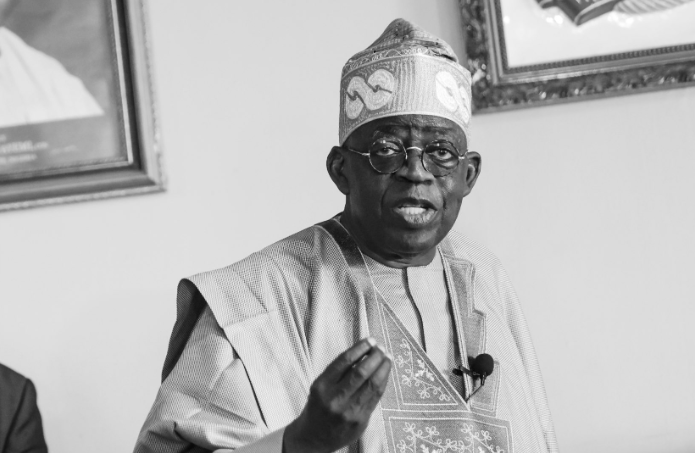
The Presidency on Sunday said President Bola Tinubu acquired a refurbished official jet.

Tinubu’s spokesman, Bayo Onanuga, issued the explanation when he was featured on Channels Television’s programme, Inside Sources, anchored by Laolu Akande.

Onanuga said some jets in the presidential fleet, like a 19-year-old Boeing B737-700 purchased under ex-President Olusegun Obasanjo, are all in bad condition, and their maintenance costs were outrageous.

Hence, instead of spending a bogus amount of money on aircraft maintenance, the President sought the approval of the National Assembly for a refurbished jet still in good condition.

He disclosed that the new presidential jet belongs to Nigeria because Tinubu won’t take it along after leaving office.

Onanuga said: “The president did not buy a new jet; what he has is a refurbished jet—it has been used by somebody else before he got it but it is a much newer model than the one President Buhari used. The one President Buhari used was bought by President Obasanjo some 20 years ago.

“There was a time the President went to Saudi Arabia, that plane developed some problems and the President had to leave with a chartered jet to The Netherlands. It’s not President Tinubu’s plane; it belongs to the people of Nigeria; it is our property.”

Nigeria’s Stock Market Surges by 38% in Nine Months, Adding ₦‎15.66 Trillion

0

Amidst turbulent economic challenges, Nigeria’s stock market has demonstrated remarkable resilience, posting impressive gains that underscored investor confidence and market vitality.

Precisely, with just one trading day left to the end of the first nine months of 2024, the Nigerian stock market has gained N15.66 trillion as investors continued to invest in blue-chip companies.

The double-digit inflation rate, unstable foreign exchange market, soaring Monetary Policy Rate (MPR), among other macroeconomic challenges could not deter investors as they continued to take advantage of the opportunities the stock market offers.

The Nigerian economy has witnessed inflation that moved from 28.92 per cent as at December 2023 to 32.15 per cent as of August, while the naira exchange rate against the dollar closed on Friday at N1,637.69/$.

Also, the Central Bank of Nigeria (CBN) has increased the MPR by 850 basis points to 27.25 per cent from 18.75 per cent last year with a focus on moderating inflation.

Despite these challenges, the overall market capitalisation of the Nigerian Exchange Limited (NGX) as of September 27, 2024, closed at N56.578 trillion, which was an increase of N15.66 trillion or 38.27 per cent when compared to the N40.918 trillion it closed for trading at the end of 2023.

In addition, the NGX All-Share Index (NGX ASI), an indicator that tracks the general market movement of all listed equities on Exchange, including those listed on the Growth Board, regardless of capitalisation closed on Friday, at 98,458.68 basis points, about 31.7per cent average investors return from 74,773.77 basis points the stock market closed for trading 2023.

The reported 31.7 per cent Year-till-Date (YtD) gain in NGX ASI meant the Nigerian stock market was one of the best Exchanges in Africa, ahead of Johannesburg Stock Exchange, and Egypt Stock Market.

Analysts also argued that some reforms by the federal government and the CBN played a critical role in the stock market performance in nine months. Specifically, they noted that reforms in the foreign exchange market, and hikes in MPR impacted trading in the fundamentals of companies listed on the Exchange and contributed to foreign investors’ uptick in the market.

Foreign investors’ participation in the stock market stood at 18.86 per cent as of August 2024 when compared to 9.22 per cent, reducing domestic investors’ dominance to 81.14 per cent as of August 2024 from 90.78 per cent as of August 2023.

The aggressive foreign investors’ participation impacted on highly capitalised stocks such as Dangote Cement Plc, and Airtel Africa Plc, among others that triggered the N15.66 trillion market capitalisation in nine months of 2024.

As at September 27, 2024, the share price of Dangote Cement closed at N532 per share, an increase of 66.3per cent from N319.9 it closed in 2023, while Airtel Africa closed at N2,200 per share as of September 27, 2024, about 17per cent hike from N1,887.00 per share it closed 2023.

The gain in Dangote Cement, among others stocks, impacted on the NGX Industry Index that closed September 2024 at 3,847.83 basis points, a growth of 42per cent from 2,712.27 basis points it opened for trading 2024.

Also, the ongoing banking sector recapitalisation as directed by the CBN, coupled with impressive 2024 half year corporate earnings also influenced investors’ decisions in taking positions in banking stocks.

For instance, Guaranty Trust Holding Company Plc recently completed a N400.5 billion public offer which saw its stock price at N47.4 per share as of September 27, 2024, about 17per cent increase from N40.50 it opened for trading.

The contribution of this stock impacted on NGX Banking Index which increased to 933.79basis points as of September 27, 2024, 4.1per cent YtD growth from 897.2basis points it closed 2023.

THISDAY further gathered that reforms in the Oil and Gas sector was also driving the NGX Oil & Gas Index performance. With the gain in Seplat Energy Plc to N4,103.10 per share as at September 27, 2024 from N 2,310.00 per share it opened this year, the NGX Oil & gas Index closed September 27, 2024 at 1,990.84 basis points, representing an increase of 91per cent from 1,043.06basis points

Commenting on the stock market performance in the first nine months of 2024, the Vice President, Highcap Securities Limited, Mr. David Adnori, argued that investors were trading based on sentiment.

He stated that the emergence of President Bola Tinubu further energised the stock market, arguing that market participants have hope in his ability to rejig the economy and implement economy-friendly policies.

Adnori, however, was optimistic that the stock may maintain its positive momentum on the backdrop of banking sector recapitalisation and expected positive first half 2024 corporate earnings to be released by banks to further strengthen the performance of the bourse.

Amid the hike in MPR to 27.25 per cent, capital market experts stated that its impact has created sentiment trading among investors who see the fixed-income market as an alternative investment opportunity to hedge against double-digit inflation.

Investment Banker & Stockbroker, Mr. Tajudeen Olayinka, stated that the N15.66 trillion market capitalisation gain in nine months of 2024 tells us the presence of huge liquid funds in the hands of institutional investors who currently dominate activities in the stock market.

“It also holds the fact that the future is bright for some of the listed companies, hence, investors are positioning their portfolios for that brighter future. This is also the reason the market remains resilient in spite of the high interest rate regime,” he said.

On the stock market projection for the rest of the year, he said, “It is going to be more of a balanced market, with investors exercising their rights to additional shares and/or taking new shares to maintain a balance.”

APC Will Take Over Rivers, Ganduje Declares

0

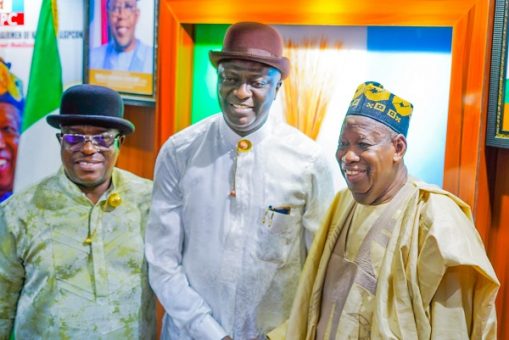
The national chairman of the All Progressives Congress (APC), Abdullahi Ganduje, has expressed confidence that Rivers state will soon be under party’s control.

Speaking at an event in Abuja, Ganduje emphasised that the party’s chapter in Rivers state would be “rebuilt and repositioned” to establish a stronghold in the state.

Ganduje made this statement when Dr. Dawari Ibietela George, the 2023 governorship candidate of the Action Alliance (AA), officially rejoined the APC.

During their discussion, the leaders focused on rebuilding the party’s Rivers state chapter and making it a platform to effectively serve the people of the state and the country.

Ganduje highlighted the party’s commitment to embracing diverse interests while ensuring fairness.

He described George as a “big fish” and commended his political acumen, expressing confidence in his ability to strengthen the party’s influence.

Rivers State will be completely APC,” Ganduje declared, underscoring his expectations from George’s return to the party. He welcomed George and assured him that a robust structure would be established to accommodate him and other returning members. 

“You are now equal members with every other member of the party. We are bent on widening democracy in the country,” Ganduje added.

The event at the APC national headquarters saw the attendance of several prominent party figures, including members of the National Working Committee, such as Chief Hon Victor Giadom, Vice Chairman South-South, Hon Titsi Ganama, the 2023 APC Deputy Governorship Candidate in Adamawa State, and several former colleagues of Dr. George in the House of Representatives.

Among them were Hon Bimbo Daramola, Hon Bello Ibrahim, Hon Nadu Karibo, and Hon Robinson Uwak. Barr. Tonnie Anierohwom, AA’s 2023 Deputy governorship candidate in Rivers state, was also officially received into the APC.

The party leaders from Rivers state gathered to witness and welcome George and his team back to the party.

Earlier, Dr. George paid a thank-you visit to the National Chairman of the Action Alliance, Chief Ken Udeze, to officially inform him of his decision to return to the APC.

Udeze appreciated the visit, commending George for the courtesy of updating the party on his political moves.

He remarked: “The respect and cordiality we share will remain positively memorable for both of us.”

Udeze also commended George and his team for their dedication and contributions to the growth of the Action Alliance, noting that their efforts in the party’s development would leave an indelible mark.

FG Plans Tax Overhaul To Access $750m World Bank Loan

0

The Federal Government is pressing ahead with critical tax reforms not just to boost tax revenue and efficiency but also to meet the requirements for a $750m loan from the World Bank.

This loan project is a part of the broader $2.25bn approved by the World Bank for Nigeria on June 13, 2024, to bolster Nigeria’s economic stability and support its vulnerable populations.

The other second part of the loan package was for the Nigeria Reforms for Economic Stabilisation to Enable Transformation, Development Policy Financing Programme project.

For the second loan, The PUNCH earlier reported that the Federal Government had obtained $751.88m out of the approved $1.5bn so far.

However, there has yet to be a disbursement for the first loan of $750m.

PUNCH Online observed that disbursement for the first loan is tied to specific fiscal and governance conditions under the Accelerating Resource Mobilisation Reforms programme.

The ARMOR programme includes three main result areas: implementing tax and excise reforms to increase Value-Added Tax collections and excise rates on health and environmentally friendly products; strengthening tax and customs administrations to enhance VAT compliance and audit effectiveness; and safeguarding oil and gas revenues by increasing transparency and net revenue contributions.

PUNCH Online obtained a copy of the signed loan agreement between Nigeria (through the Ministry of Finance) and the World Bank on Sunday.

The agreement document read in part, “The bank agrees to lend to the borrower the amount of $750,000,000 as such amount may be converted from time to time through a currency conversion (“Loan”), to assist in financing the programme described in Part 1 of Schedule 1 to this Agreement (“Programme”) and the project described in Part 2 of Schedule 1 to this Agreement (“Project”, and together with the Programme, hereinafter jointly referred to as the “Operation”).

“The borrower may withdraw the proceeds of the loan in accordance with Section IV of Schedule 2 to this Agreement. All withdrawals from the loan account shall be deposited by the Bank into an account specified by the Borrower and acceptable to the bank.”

According to the Disbursement Linked Indicators set out in the loan agreement, the loan will only be released upon achieving measurable progress in key areas.

These include raising VAT collection through improved regulations, increasing excise taxes on health and environmental products, and boosting corporate tax compliance through enhanced digital infrastructure.

Central to the ARMOR programme is the government’s plan to increase VAT rates and expand taxpayer compliance.

Some of the loan targets include increasing VAT collections to 1.8 per cent of non-oil Gross Domestic Product, unlocking $105m of the loan.

Also, there is a target to register 660,000 VAT filers, which will release $30m from the loan.

An e-invoicing system for VAT traders, once launched, will trigger $20m, with an additional $45m upon 30 per cent trader adoption.

In an effort to boost VAT revenue, the Federal Government is considering a bill proposing an increase in the VAT from 7.5 per cent to 10 per cent by 2025.

VAT refers to a consumption tax on goods and services levied at each stage of the supply chain where value is added.

In the executive bill seen by PUNCH Online, the legislature also intends to increase the VAT to 12.5 per cent by 2026 through 2029.

“VAT shall be charged on the value of all taxable supplies at the following rates (a) 2025 year of assessment 10 per cent; (b) 2026, 2027 2028, and 2029 years of assessment 12.5 per cent (c) 2030 year of assessment and thereafter 15 per cent,” the document reads.

Also, a copy of the Stakeholder Engagement Plan for Nigeria – Accelerating Resource Mobilisation Reforms programme dated March 2024 showed that the government is required to reintroduce the excises on telecom services, EMT levy on electronic money transfers through the Nigerian Banking System among other taxes.

Further findings by PUNCH Online also showed that one of the tax bills at the National Assembly included this excise tax.

The Federal Government has proposed a five per cent excise duty on telecommunications services, gaming, and betting activities as part of a new bill to overhaul Nigeria’s tax framework.

The bill, titled “A Bill for an Act to Repeal Certain Acts on Taxation and Consolidate the Legal Frameworks relating to Taxation and Enact the Nigeria Tax Act to Provide for Taxation of Income, Transactions, and Instruments, and Related Matters,” was dated October 4, 2024.

An analysis of the proposed legislation showed that it seeks to introduce excise duties on services such as telecoms, gaming, gambling, lotteries, and betting provided in Nigeria.

Also, the program outlines specific allocations for technical assistance, with $5m each going to the Federal Inland Revenue Service and the Nigeria Customs Service to support their capacity to implement these new measures effectively.

This includes the development of systems for better data sharing, risk-based audits, and compliance processes, as well as substantial investments in program management and capacity building.

There will also be $10m for project management, tax policy capacity-building and other expenses.

In total, the amount makes the $20m investment financing before the release of $730m in line with fiscal targets met.

The FIRS will receive $5m to develop and implement critical initiatives aimed at enhancing its operations and revenue collection capabilities.

This funding will support the development and implementation of a robust third-party data sharing platform, along with administrative control programs to streamline operations and enhance efficiency.

Also, the FIRS will develop a VAT lottery system and an e-invoicing system, both of which rely heavily on advanced software and extensive communication planning. These systems are designed to boost VAT collections and improve compliance among taxpayers.

The funding will facilitate the creation of a risk-based audit assessment program for VAT and Corporate Income Tax, aimed at enhancing the effectiveness and efficiency of audit processes within the agency.

Similarly, the NCS will receive $5m to enhance its administrative processes and improve compliance.

This funding will be used to design and implement new administrative processes, including the establishment of sanctions for non-compliance with excise rules.

The NCS will also develop centralised control room systems equipped with backup and disaster recovery capabilities, ensuring operational continuity and resilience in case of emergencies.

Moreover, the funding will support capacity-building initiatives, enabling the NCS to effectively manage and implement these new systems and processes, ultimately leading to improved compliance and operational efficiency.

The loan also focuses on customs reforms to improve trade compliance and increase revenue.

Directing 15 per cent of cargo through the Green Channel will unlock $35m, while a compliant trader programme under the Authorized Economic Operator framework is linked to $15m.

Other loan-linked targets include reducing tax expenditures by eliminating corporate bond interest exemptions and rationalising the Pioneer Status Industry Tax Incentive scheme by the end of 2024, each unlocking $10m.

Also, excise taxes on health-related products and environmentally harmful goods will increase. A presidential order to introduce these excises will trigger $10m, with an additional $30m if revenue from green taxes reaches 0.2 per cent of non-oil GDP.

The Federal Government recently inaugurated a Joint Committee of staff of the Nigerian Investment Promotion Commission and FIRS to review the current guidelines for the administration of the PSI, validate the cost of the incentive to Nigeria, and recommend changes to the qualification and administration.

The Taiwo Oyedele-led Presidential Committee on Fiscal Policy and Tax Reforms plans to replace the abused pioneer status with priority sector incentives, rewarding companies based on their investments in the economy.

Also, in one of the executive bills, the Federal Government plans to introduce an Economic Development Incentive Certificate as a tax incentive for companies investing in capital projects.

As outlined in the bill, firms seeking the certificate must submit their applications through the Nigerian Investment Promotion Commission, accompanied by a non-refundable fee of 0.1 per cent of the capital expenditure, capped at N5m.

The NIPC will review and recommend the applications to the Minister for approval, after which the Minister may forward the recommendation to the President.

A part of the bill read, “The application shall be accompanied by a non-refundable fee of 0.1% of the qualifying capital expenditure incurred or to be incurred, subject to a maximum of N5,000,000.00 and no further fee shall be payable in respect of such application.

“The NIPC shall recommend the application to the Minister, for approval or otherwise, including the projected tax expenditure impact report in its recommendation.”

The tax bill noted that approval from the President is mandatory before the certificate is issued.

Once granted, the NIPC is required to submit an annual report detailing the sectors and companies that benefited from the scheme to the Minister, who must present the report to the President and the National Economic Council within 30 days.

Nigeria Wrestling Federation: 3rd Gov Douye Diri National Wrestling Classics/13th National Wrestling Classics

0

NIGERIA WRESTLING FEDERATION
Presents… 3RD GOVERNOR DOUYE DIRI NATIONAL WRESTLING CLASSICS/13TH NATIONAL WRESTLING CLASSICS – YENAGOA 2024

DATE: 3RD – 10TH NOVEMBER, 2024.

HEROES OF NIGERIAN WRESTLING

The 3rd Governor Douye Diri National Wrestling Classics is set to take place in Yenagoa, Bayelsa State, from November 3 to 10, 2024.

This exciting event will gather over 800 athletes and 200 officials, highlighting Nigeria’s rich wrestling talent and fostering sportsmanship across the nation.

Spotlight on BLESSING OBORUDUDU

Blessing Oborududu is a remarkable figure in Nigerian wrestling, born on March 12, 1989, in Gbaraun, Bayelsa State.

She has made history as the first Nigerian woman to win an Olympic medal, securing a silver in the women’s freestyle 68 kg category at the 2020 Tokyo Olympics

Achievements:

• Fourteen-time African Champion (2010-2024)

• Bronze medalist at the 2014 Commonwealth Games and gold medalist at the 2018 and 2922 Commonwealth Games in the 68 kg category.

• Winner of gold at prestigious events like the Islamic Solidarity Games (2017) and the Yasar Dogu Tournament (2022).

• Most recently, she clinched gold at both the 2024 All African Games and the African Wrestling Championships in Alexandria, Egypt.

Inspiring Journey:
Oborududu’s path to success was not easy; her parents initially discouraged her from pursuing wrestling, believing it was a sport meant for boys.

Inspired by Canadian-Nigerian wrestler Daniel Igali, she persevered and proved her talent on the international stage. Her dedication and achievements continue to inspire young athletes across Nigeria.

Join us in celebrating this incredible event and honouring our wrestling heroes!

Libya Set To Appeal CAF Verdict On Botched Super Eagles AFCON Qualifies

0

Following the Confederation of African Football’s decision pertaining to the cancelled Africa Cup of Nations second leg qualifier against Nigeria, the Libya Football Federation (LFF), will appeal the decision to rule in favor of Nigeria.

A source revealed to Brila.net that the LFF is preparing to contest the ruling, believing it does not accurately reflect the circumstances surrounding the forfeited match.

The source indicated that Libya’s appeal is likely to be filed within the stipulated three-day window and will be handled discretely, without media fanfare.

“They will respond to CAF with a special lawyer without any media show,” the source noted.

On Saturday, an official by CAF confirmed that its Disciplinary Board found Libya guilty of breaching several regulations, resulting in the forfeiture of the October 15 match.

The decision was made after the Nigerian team faced severe logistical challenges, including an unexpected diversion of their flight to Al-Abraq International Airport, where they were stranded for over 18 hours with no basic amenities.

The LFF is now faced with the challenge of mounting a compelling case against CAF’s ruling.

While the specifics of their appeal strategy remain unclear, it is evident that they are intent on reversing the decision that has placed them at the bottom of Group D in the AFCON qualifiers.

Though it seems unlikely that the appeal will change the outcome, all eyes will be on CAF’s response as Libya prepares to take this step.

The Federation’s reaction will determine whether they uphold their initial ruling or reconsider the circumstances of the match.

The outcome of this appeal could have significant implications for the ongoing qualification process, particularly for Nigeria, who currently needs only one more point to secure their place in the 2025 AFCON in Morocco.

2023: Atiku Gave No Reasons 4 Dropping Wike, I Only Got Insults – Bala Mohammed

0

Another angle to this crisis involves former Vice President Atiku Abubakar. What’s your relationship with him in this situation?

BM: Well, Atiku is our leader, and he has shown remarkable maturity. Since this issue began, have you heard Atiku’s voice in it? He’s stayed quiet.

But could he be working behind the scenes?

BM: Behind-the-scenes politics is normal. Haven’t I also been working behind the scenes? What I say publicly is only about 10% of what I’m doing behind the scenes, and that’s how it is for most of us. Even in boardrooms, there’s always politics. Take, for instance, how someone becomes chairman of a board-there’s always some behind-the-scenes manoeuvring.

Initially, I sympathised with Wike because he was hurt by Atiku’s candidacy. Remember during the primaries? Wike had supported others before. If he had told me he was running, I wouldn’t have ran. I believed in him as a friend because he contributed so much to the PDP’s development. But things changed. When I saw how hurt he was, I felt for him. Some of our governors even withdrew to pave the way for Atiku, but I didn’t. I didn’t want the ticket to become a northern affair.

Why didn’t you withdraw for Wike at that stage?

BM: Because I’m a nationalist. I don’t represent just the North or the South-I represent the entire country. I was approached by [former PDP Chairman, Dr. Iyorchia) Ayu to withdraw for Atiku, but I refused. Why should I withdraw after getting so far? If I were to step aside, it wouldn’t be for Atiku. I even told Atiku, “Leave it for me, as your younger brother-I’ll do it for you.”

We worked together closely (with Wike). Remember, he hosted me in Port Harcourt, and I also hosted him (in Bauchi). We both lost during the primaries, and I encouraged Wike to work with us. He agreed, and Atiku even set up a committee to choose a vice-presidential candidate. Everyone-the governors, the NWC, and all the stakeholders-recommended Wike. But Atiku refused; which hurt us deeply.

Did Atiku give you any reasons for this?

BM: No! There were no reasons; just insults. That’s why I pitied Wike. He was humiliated at the primaries, and then this happened. We expected him to make a significant contribution to the party, but it didn’t happen, which led to the formation of the G5. There’s a lot of under-current within that group.

So, while I sympathised with Wike initially, I believe our elder brother, Atiku, was wrong in how he handled the situation. But to his credit, Atiku has remained statesmanlike, staying quiet and not imposing himself. That’s why I respect him. I believe Wike should also respect himself-he’s a skilled politician. Politics is about live and let live. It’s an opportunity for everyone, and we should allow space for others to rise.