Sunday, April 19, 2026
Home Blog Page 12

‎Prosperity Cup 2026: Organizers Fix Date For Medical, Referees Training, Others

0

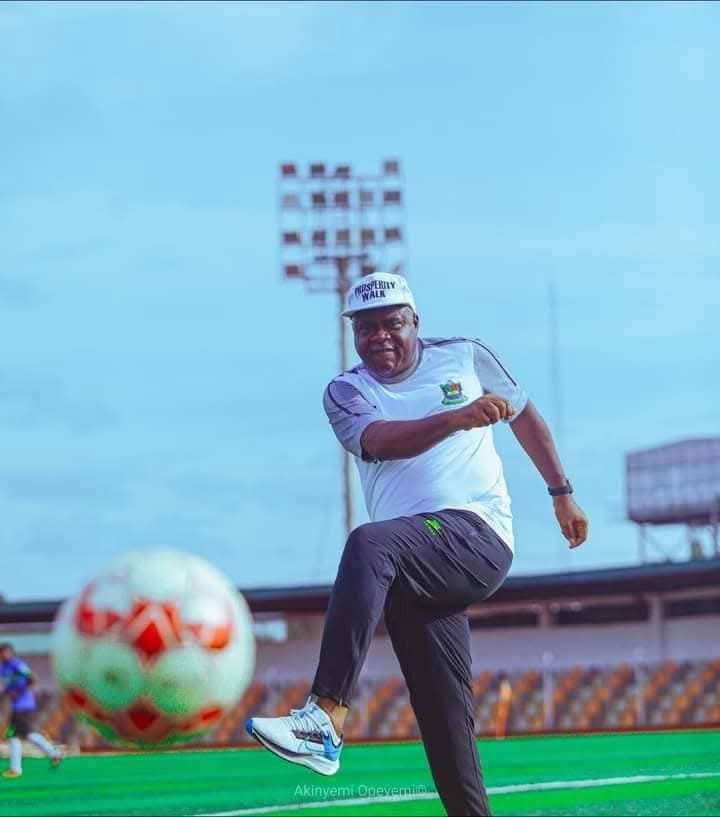
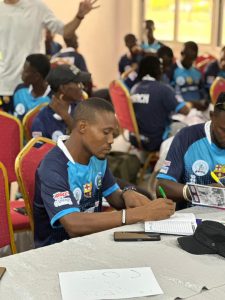
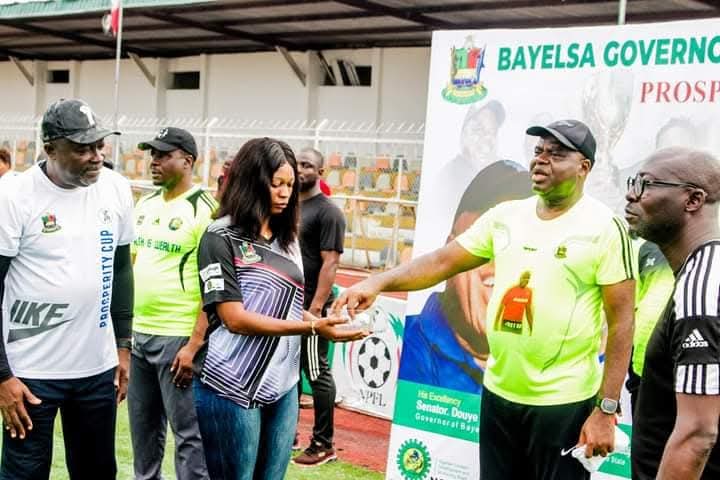
Organizers of Nigeria’s biggest grassroots football spectacle, the Bayelsa Governor’s Football Tournament, say it is inviting all medical personnel serving as Medics in the tournament and participating teams to register for the forthcoming intensive medical training ahead of the competition.

‎This was contained in a statement signed by the Director General of the tournament, Mr. Ono Akpe in preparation for Season 8 of the tournament.

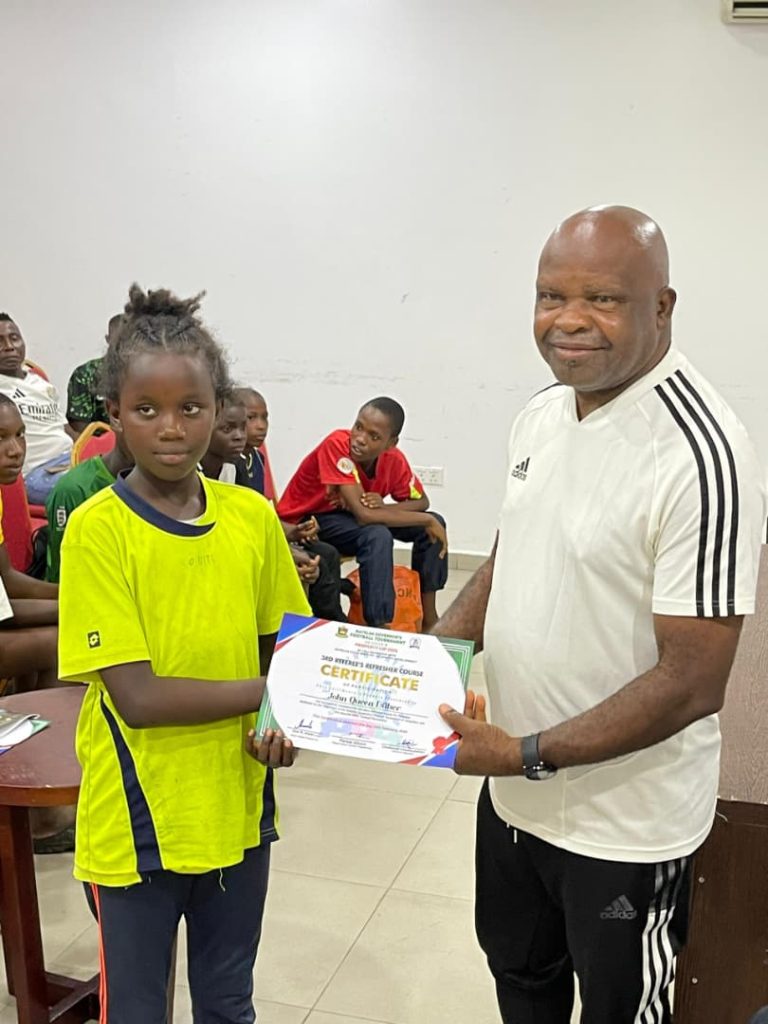
‎According to him, the training would start from the 19th through the 21st of February, 2026 at the Government House clinic in Yenagoa, pointing out that the essence of the programme is to equip all the medics with the fundamentals before the commencement of the tournament.

‎He noted that apart from prize money and the ultimate trophy, the organizers are working round the clock to ensure that every department is equipped with knowledge in order to be acquainted with contemporary trends while discharging their duties.

‎It explained that the programme aligns with the visionary philosophy of the “Assured Prosperity” Government, led by Governor Douye Diri which is aimed at strengthening the capabilities and expertise of Bayelsans.

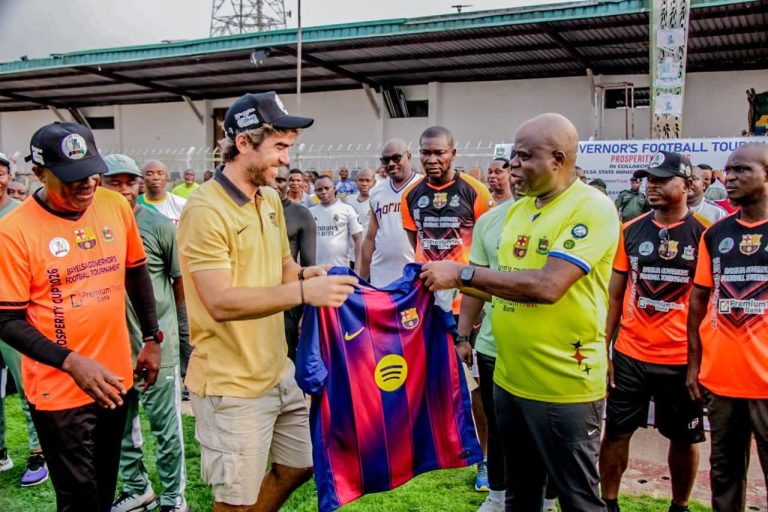
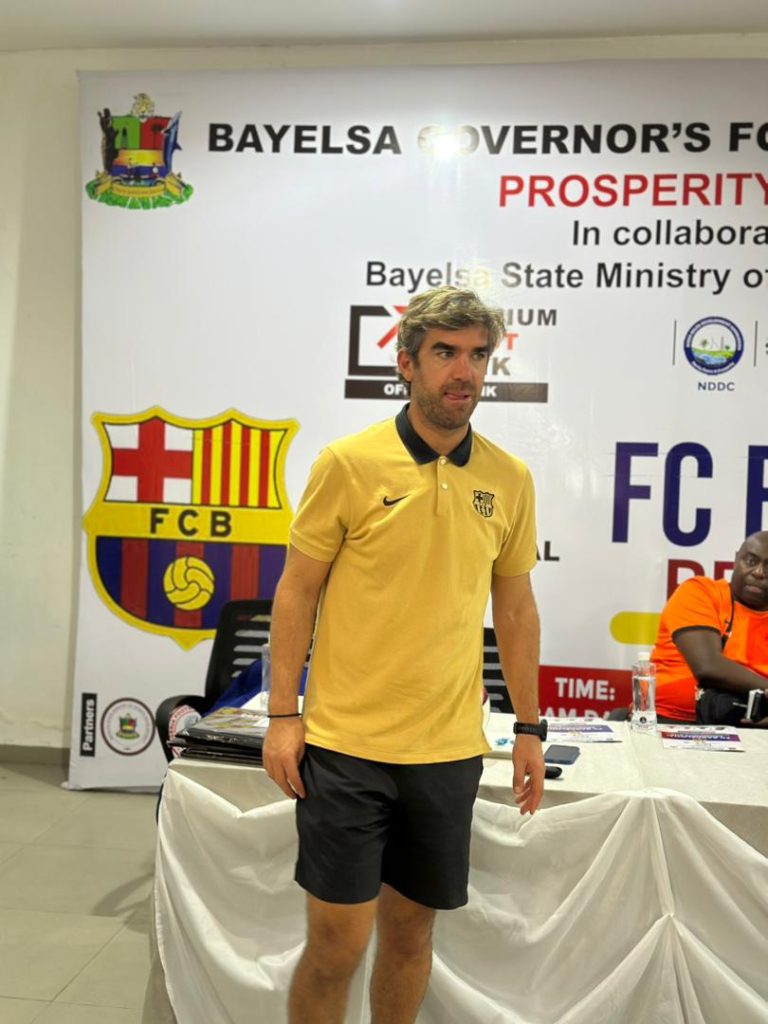
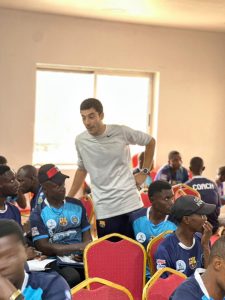
‎He further explained that the exercise would be conducted alongside other capacity-building initiatives for referees, coordinators, media personnel, and an international training programme for coaches, to be handled by a team from FC Barcelona.

‎Mr. Akpe also said interested participants are to send their names, phone numbers, contact addresses, emails and medical specialty to the Director of Finance, Mr. Martins Warepre Diegbegha on 08033121571 and Head of Marketing Mrs. Ajewole Morenikeji on 0803 3711689.

‎Prosperity Cup 2026 is a special edition that is being used to celebrate the 30th anniversary of the creation of Bayelsa State and it will also mark the sixth anniversary of Governor Douye Diri’s Assured Prosperity Administration.

‎Champions in the male category of this special “Bayelsa @ 30” edition of the competition will receive the sum of N30 million while runners-up will smile home with the sum of N10 million and in the female category, the winners will smile to the bank with the sum of N10 million while the runners-up will be five million Naira richer.

Governor Diri Acknowledges NDDC’s Support At Deputy’s Burial

0

Governor of Bayelsa State, Senator Douye Diri, has expressed appreciation to the Niger Delta Development Commission, NDDC, and its Managing Director, Dr. Samuel Ogbuku, for supporting to the State Government, which contributed significantly to the success of the burial ceremony of the late State Deputy Governor, Senator Lawrence Ewhrudjakpo.

The Governor made the remark during the burial ceremony of the late Bayelsa State Deputy Governor, at St. Paul’s Catholic Church in Sagbama Local Government Area of Bayelsa State.

In a statement by Seledi Thompson-Wakama, Director, Corporate Affairs, the governor commended the NDDC for supporting the State Government and ensuring that the solemn occasion was conducted with dignity and honour.

Ogbuku, who led a delegation from the NDDC, including the Bayelsa State Representative on the NDDC Board, Senator Dimaro Denyanbofa, and other Directors of the Commission, joined other eminent personalities at the ceremony to pay respect to the late Deputy Governor.

At the funeral Mass, Most Rev. Hyacinth Egbebo delivered a homily in which he extolled the virtues of the late Deputy Governor. He described Senator Ewhrudjakpo as a man of love, kindness, and service to humanity, urging politicians and leaders to emulate his exemplary traits in both public and private life.

Recall that the NDDC Chief Executive Officer, Dr Ogbuku, also led a delegation from the Commission in December 2025 to pay a condolence visit to the Bayelsa State Governor shortly after the death of the Deputy Governor.

At that occasion, Ogbuku described the late Senator Ewhrudjakpo as a man whose dedication to duty and service to the state were outstanding.

He noted that the late Deputy Governor excelled in the various places he worked, “especially as Commissioner for Works in Bayelsa State, where he played a pivotal role in advancing infrastructure development, and in his distinguished service as Senator representing Bayelsa West in the 9th Senate of the Federal Republic of Nigeria.”

The NDDC boss affirmed that the Commission was committed to supporting the state government during the mourning period and the burial activities.

We Need Healthy Niger Deltans Says NDDC Boss

0

The Niger Delta Development Commission, NDDC, has emphasised the importance of nurturing a healthy population for the holistic development of the Niger Delta region, stressing that the region needs a healthy people.

Speaking during the Sickle Cell Health Promotion and Sensitisation programme at the Rivers State University Teaching Hospital, Port Harcourt, the NDDC Managing Director, Dr Samuel Ogbuku, observed that Sickle Cell Disease remains a major public health concern in Nigeria, particularly in the Niger Delta.

Ogbuku, who was represented by the Director of Education, Health, and Social Services, Dr Patience Ezugu, noted that the sensitisation programme was dedicated to strengthening awareness to ensure prevention and care for Sickle Cell Disease in the Niger Delta.

The Managing Director stated: “As a Commission mandated to enhance the well-being of our people, the NDDC recognises that sustainable development is impossible without a healthy population.

“This programme reinforces our commitment to preventive healthcare, early diagnosis, and community education. For our youths, knowing your genotype early is essential. For patients, we reaffirm our support for improved access to care. For health professionals, we appreciate your dedication and encourage continued collaboration in research, counselling, and community outreach.”

Ogbuku said that the goal of the NDDC was to ensure that “every young person understands genotype compatibility, that every family has access to screening, and that every patient receives care without stigma. Prevention is achievable, and informed choices save lives.”

He said further: “As we deepen awareness on Sickle Cell Disease, I urge our youths to prioritise genotype testing, our patients to remain hopeful, and our health professionals to continue their invaluable service. The NDDC remains committed to strengthening healthcare systems, empowering communities, and building a healthier Niger Delta.”

Speaking earlier, the Founder of Sickle Cell Awareness Initiative Ireland-Nigeria, SCAIIN, Mrs Esther Pepple Onolememen, commended the NDDC for investing in public health and for recognising that sickle cell disease was not only a medical issue but also a social and developmental one.

She stated that SCAIIN, a non-governmental organisation, was focused on breaking the cycle of pain, stigma, and silence surrounding sickle cell disorder through research, education, and community mobilisation.

According to Onolememen, the sickle cell health promotion and sensitisation programme would strengthen health outcomes and build public trust, stating: “Together, we are rewriting the story of sickle cell in Nigeria from silence to knowledge, from stigma to support, and from neglect to action.”

Expressing gratitude, the father of one of the children living with the sickle cell disease, Mr Derefaka Yemiesibo, thanked the NDDC for helping families build resilience through advocacy and support for awareness programmes.


Ogu Kingdom Fetes NDDC MD For Driving Development

0

The people of Ogu Kingdom in Ogu-Bolo Local Government Area of Rivers State have bestowed a prestigious chieftaincy title on the Managing Director of the Niger Delta Development Commission, NDDC, Dr Samuel Ogbuku, describing him as a catalyst for “abundant development” in the Niger Delta region.

Speaking during the installation ceremony at the palace of the Amanyanabo of Ogu, the Chairman of the Ogu Divisional Council of Chiefs, Chief Lawrence Egbelekpeke, said Ogbuku was being honoured for his exceptional service, leadership, and commitment to community development in the Niger Delta region.

In a statement by Seledi Thompson-Wakama, Director, Corporate Affairs, he declared: “By the authority vested in me as Chairman of the Ogu Divisional Council of Chiefs, and acting on behalf of the Amanyanabo-in-Council of Ogu Kingdom, I hereby install you as a Chief of Ogu Kingdom, and confer upon you the revered title of ‘Pere Se Bobo, ‘ meaning ‘He Who Comes with Abundance.’

Egbelekpeke stated: “Among the Wakirike, abundance is measured not only in wealth, but in peace, goodwill, unity, progress and development.”

Reviewing the attainments of the NDDC Managing Director, the Chairman of the Installation Planning Committee, Senator George Sekibo, stated that “under Ogbuku’s stewardship, the NDDC had been repositioned from a transactional agency to a transformational institution, anchored on transparency, accountability, inclusiveness, and sustainable growth.”

“His administration has strengthened corporate governance, enhanced service delivery, fostered stakeholder confidence, and deepened collaboration with oil companies, state governments, traditional rulers, civil society organisations, youth groups, and development partners across the Niger Delta.”

He said further: “The visible commitment of this distinguished son of the Niger Delta to infrastructural development, institutional strength, and community empowerment aligns perfectly with our values, traditions, and aspirations.”

Responding, Ogbuku said that the honour done to him was an expression of appreciation by the people and a call on him to do more in developing the Niger Delta region.

He thanked the people of Ogu Kingdom for recognising his contributions and honouring him, stating that the credit should be given to President Bola Tinubu for giving him the opportunity to serve the people of the Niger Delta.

Ogbuku restated the commitment of the NDDC to positively transform the region, reassuring that he would continue to work hard to drive the sustainable development of Nigeria’s oil-rich region.

He stressed: “We must unite and work in one accord to surmount the development challenges that confront our people. We are determined to succeed, and with your support and cooperation, we will achieve our goals.”

In his remarks, the NDDC Executive Director, Finance and Administration, Alabo Boma Iyaye, described Ogbuku as “a visionary and a dedicated public servant whose contributions to the development of our region are commendable. We are privileged to have him as the NDDC Chief Executive Officer.

“We celebrate Chief Ogbuku not only for his personal achievements but also for his unwavering dedication to the betterment of our region. Through his visionary leadership, we have witnessed tremendous strides in infrastructure development, community empowerment, and sustainable growth.”

In his goodwill message, the Chairman of Ogu-Bolo Local Government Area, Chief Vincent Nemieboka, commended Ogbuku’s achievements in the infrastructural development of the Niger Delta region and Ogu-Bolo communities in particular.


NDDC To Automate Procurement Processes, Ogbuku Assures

0

The Managing Director of the Niger Delta Development Commission, NDDC, Dr Samuel Ogbuku, says that the Commission’s processes will be fully automated by the end of the first quarter of this year.

Ogbuku announced this during the Mandatory Continuous Procurement Capacity Development Training Programme, organised by the Bureau of Public Procurement, BPP, at the PTDF Centre for Skills Development in Port Harcourt.

He stated: “We will soon automate our procurement processes to ensure compliance, transparency, and better service delivery. We have recently reformed our corporate governance structure and internal processes.”

According to the Managing Director, the NDDC had commenced implementation of a new Governance Advisory Service to ensure accountability and transparency in service delivery.

Ogbuku observed: “Holding this training in the Niger Delta demonstrates that there is peace in the region, which translates to peace in Nigeria. We have transitioned from transaction to transformation, and this is evident in our public procurement processes.”

“In NDDC, we take public procurement very seriously. Last year, we collaborated with BPP in training some of our staff. Training and retraining are essential in every organisation. We are also training our staff in ICT to enhance their digital knowledge.

He noted that the NDDC had 35 BPP-certified Procurement professionals in the Commission’s Procurement unit. We try in various ways to train our staff on procurement processes.

Highlighting some of the achievements of the NDDC, Ogbuku stated that the Operation Light Up the Niger Delta, one of the Commission’s flagship programmes, had been very successful. We undertake projects based on needs assessment. “Mr President loves the Niger Delta, and we are doing our best to bring his programmes home to the people,” he said.

In his welcome address, the Director-General, Bureau of Public Procurement, Dr Adebowale Adedokun, lauded President Bola Ahmed Tinubu for his unwavering commitment to strengthening procurement reforms and fortifying transparency, which helped the BPP to elevate professionalism and position procurement as the strategic engine of the Renewed Hope Agenda.

He said that the Capacity-Building programme demonstrated the Bureau’s sustained commitment to institutionalise trained, certified and accountable procurement professionals; a programme designed to strengthen competence, ethical standards and professionalism within the Nigerian Procurement System.

Adebowale said: “The training is in line with the requirements of the procurement act. PPP, as a regulatory body. This programme is meant to enhance your capacity. Procurement is a distinct cadre that provides the background for project delivery.”

He urged all participants to engage fully in the programme to sharpen their expertise and reaffirm ethical resolves as Nigeria needs competent and courageous procurement officers to uphold due process at all times, and wished all participants a productive and transformative training programme.

In his keynote address entitled: “The role of Procurement Officers in the Delivery of the Renewed Hope Agenda,” the Chairman of FCT Civil Service Commission, Engr. Emeka Ezeh, noted that procurement was a tool for good governance, as well as a mechanism to fight corruption.

He emphasised: “You must internalise the eight priority areas of the Renewed Hope Agenda of President Tinubu’s administration.”


Niger Delta Games Will Produce Future Olympians – NDDC Chairman

0

The Chairman of the Governing Board of the Niger Delta Development Commission, NDDC, Mr Chiedu Ebie, has expressed optimism that talents discovered at the Niger Delta Games will represent the country at international sporting events such as the Olympics, Commonwealth Games, and the All-Africa Games.

Speaking during a strategic retreat organised by the consultant for the 2nd Niger Delta Games, Dunamis Icon Limited, in Benin City, Edo State, Ebie endorsed the idea of holding sessions to review and project plans for successful games.

In a statement by Director, Corporate Affairs, Seledi Thompson-Wakama, he stated: “The Board of the NDDC wants to make the games our legacy project, such that there will come a time in the future when we can have athletes from the Niger Delta Games representing Nigeria at international events such as the Olympics.”

Addressing members of the Main Organising Committee and the Local Organising Committee, the NDDC Chairman commended the leadership of Dunamis-Icon Limited, noting: “When you want to institutionalise an event such as the Games, you have to hold such reviews to ensure that gaps are closed.”

Ebie also commended the Edo State Government for its proactive leadership in sports development and expressed confidence that the second edition of the Niger Delta Sports Festival would exceed expectations.

Speaking earlier, the Chairman of the Edo State Sports Commission, Hon. Amadin Desmond Enabulele, reaffirmed Edo State’s readiness to host the second edition of the Niger Delta Sports Festival.

He commended the NDDC under the leadership of Ebie for sustaining the initiative, describing sports as a powerful tool for unity, peace, and socio-economic development in the region. According to him, the Commission’s continued support reflects a clear understanding of the long-term benefits of sports development.

Reaffirming Edo State’s preparedness, the Sports Commission Chairman assured that facilities, logistics, and technical structures were in place to ensure a smooth and successful event. He added that Edo State was working closely with the NDDC and organisers to deliver a festival that would set new standards in organisation, athlete welfare, and competitive excellence.

In his welcome address, the Managing Consultant at Dunamis-Icon, Sir Itiako Ikpokpo, explained that the retreat was the second to be organised to review the past games in Uyo, Akwa Ibom State and correct mistakes for improvement.

“We are working to connect the dots, ask ourselves hard questions and see how we will organise a richer Games”, Ikpokpo said.

The 2nd edition of the games will be held from February 20-27 for the nine states that make up the Niger Delta region.


Reputation Summit: Information Minister, Fashola, NIPR, Others Seek Deliberate Efforts to Build National Image

0

The maiden Nigeria Reputation Summit 2026 has successfully come to an end in Abuja with stakeholders outlining far-reaching insights on how citizens’ actions can help in improving the country’s reputation in global standing.

Organised by the Nigeria Reputation Management Group (NRMG), a private sector initiative of the Nigerian Institute of Public Relations (NIPR), the gathering highlights deliberate efforts aimed at improving the country’s image within domestic stakeholders and international partners.

Speaking at the event which held at Shehu Musa Yar’Adua Centre in the nation’s capital, Minister of Information and National Orientation, Alhaji Mohammed Idris noted that collective action and support from professional bodies such as NIPR is key in raising the nation’s reputation perception.

“Ultimately, reputation is earned through action, not slogans. It is built when policy meets purpose and when communication reflects truth. The government alone cannot build Nigeria’s reputation. It requires partnership with professionals, institutions, the private sector, and citizens”, the Minister said.

While reiterating the federal government’s commitment to continue to deploy effective diplomatic avenues to ease what he called wrong perceptions about the country, Idris assured the readiness of the country’s leadership to foster collaboration with international partners to improve security and enhance the general welfare of citizens.

“Redeeming Nigeria’s image is a national call to duty, involving all of us, requiring a collective denouncing of false narratives, and promoting our unity”, he noted.

In his keynote address, former Minister of Works, Babatunde Fashola urged Nigerians to use their public communications to positively project the country, noting that this is a key step towards improving the nation’s image within and before the global community.

Fashola, a two-time governor of Lagos State emphasised that though reputation is largely intangible, it directly affects citizens’ daily lives, stressing that films and media contents emanating from within should reflect values such as resilience, creativity and hardwork as against amplifying easy and unexplained wealth.

He further called for a proper orientation programme for the nation’s Ambassadors-designate to enable them better educate potential foreign investors about tax laws, regulations, incentives and other relevant information.

“Ambassadors should encourage investors to visit Nigeria and not the other way round. If there was a problem with development, it has to be here, not there. Those who want to do business with me must come and see where I live, feel my environment and know that my weather is warmer, instead of requiring public officials to spend scarce resources to visit where our Ambassadors are posted”, he advised.

He called for the deployment of MICE – Meetings, Incentives, Conventions and Exhibitions to drive the nation’s economy through hosting of sporting, music and other events that will attract global participants, an opportunity that gives them first hand information on who their host nations are and what they stand for.

In his remarks, President, Chairman of Council, Nigerian Institute of Public Relations (NIPR), Dr. Ike Neliaku described reputation as a national power which has immense implications on the citizens.

While further underlining that reputation is a soft subtle influence that drives the political economy and social engagements of nations, organisations and individuals, Dr. Neliaku said it affects borrowing costs, speed of investment inflow, confidence of visitors and tourists, as well as the credibility of diplomacy and dignity of citizens across borders.

“Nigeria’s reputation is not what we say about ourselves. It is what the world believes about our systems. It is what they feel and think when we are not in the room. And it is what our citizens experience every day”, he states.

In his national call to action to every Nigerian, Dr. Neliaku urged that the seven pillars; Culture, Leadership, Social Equity, Communication, Innovation, Performance and Credibility which shape how Nigeria is trusted and evaluated by the global community be given adequate attention.

The Chairman of Nigeria Reputation Management Group (NRMG) Board, Chief Yomi Badejo-Okusanya said the summit is aimed at focusing national attention on the importance of a conscious, deliberate, and coordinated approach to building and protecting reputation which he said is a key national asset and across government, business, institutions, and society.

“Reputation cannot be managed in silos. The government must work with the private sector. Institutions must work with the media. Professionals must work with regulators. We must replace reactive communication with strategic foresight. We must replace defensive posturing with earned credibility. And we must replace fragmented efforts with collaborative frameworks”, he noted.

A highlight of the event was the inauguration of the first female president of the Nigeria Institute of Marketing of Nigeria, (NIMN), Bolajoko Bayo-Ajayi and her Advertising Practitioners Council of Nigeria (APCON) counterpart, Dr. Olalekan Fadolapo as members of the Body of Advisers of NRMG. The Body has as Chairman Dr. John ‘Reputation’ Momoh, the founder of Channels Media Group.

Source: NIPR

NIPR Debunks Claims of Defending FG’s $9m US Lobbying Deal

0

The Nigerian Institute of Public Relations (NIPR) has denied reports suggesting that it defended the Federal Government’s alleged $9 million lobbying contract in the United States, describing such claims as misleading and taken out of context.

Speaking at the 1st Nigeria Reputation Summit held at the Yar’Adua Centre, Abuja, on Tuesday, the President of NIPR, Dr. Ike Neliaku clarified that the Institute neither defended nor endorsed the purported lobbying deal, stressing that no details were available to back the deal.

Reacting specifically to a January 16, 2026 Punch Newspaper headline titled “NIPR defends FG $9m US lobbying deal”, Dr. Neliaku said the report misrepresented his position.

“I could not have defended a deal I do not have details of,” he stated.

He added, “I do not know the full scope of the contract, the competence, credibility and track record of the vendors, the appropriateness of the pricing, or the key performance indicators attached to it. Without these, it is impossible to defend such an arrangement.”

He explained that his earlier comments during the unveiling of the Nigeria Reputation Perception Index (NRPI) 2025 Report were limited to a professional clarification that lobbying, as a practice, is a recognised public relations function globally and does not constitute a crime.

“Lobbying is a legitimate professional engagement tool used worldwide to influence goodwill and achieve defined outcomes. However, on the specific issue of defending a so-called $9 million deal,Baabu!”, he stated.

Dr. Neliaku further disclosed that there are legitimate concerns surrounding the contract, particularly regarding the process of engagement, vendor competence, and the methodology adopted, noting that these are issues that require transparency and proper scrutiny.

Speaking on the need for an improved national reputation, the NIPR President highlighted the recently released NRPI 2025 Report, which placed Nigeria’s overall reputation score at 35.2 out of 100, categorised as “Poor,” describing the country’s reputation paradox as one of “High Potential, Low Trust.”

He emphasised that the index was not designed to shame Nigeria but to provide a factual, evidence-based baseline for rebuilding national reputation.

He called for coordinated national reputation strategy involving government, the private sector, civil society, the media and citizens, urging that the Nigeria Reputation Summit should mark the beginning of a sustained movement rather than just another conference.

Nigeria Reputation Summit 2026 to Convene Leaders, Youth and Innovators in Abuja

0

Abuja, Nigeria- January 20, 2026 —The Nigeria Reputation Management Group (NRMG) has announced the inaugural Nigeria Reputation Summit 2026, scheduled to hold on Tuesday, January 20, 2026, at the Shehu Musa Yar’Adua Centre, Abuja, bringing together key leaders from government, business, and civil society to advance conversations around rebuilding Nigeria’s national reputation.

The summit will feature a keynote address by the former Governor of Lagos State and two-term Minister of the Federal Republic of Nigeria, His Excellency Babatunde Raji Fashola, SAN, delivered under the theme “Better Nigeria, Better Reputation.” The address is expected to highlight the role of leadership, governance, and institutional consistency in shaping Nigeriais perception locally and globally.

A key highlight of the summit is a special interactive session focused on young Nigerians, themed “The Power of Youth, Technology & Creativity in Rebuilding Nigeria’s Reputation.” The session will explore how innovation, digital platforms, and the creative economy can be leveraged to project a more positive and authentic image of Nigeria with Honourable Ministers responsible for Youth Development, Technology & Innovation, and Creative Economy & Tourism are expected to participate as speakers.

The Nigeria Reputation Summit is convened by NRMG, a private-sector–driven initiative of the Nigerian Institute of Public Relations (NIPR), established to harness the reputation drivers and levers that shape Nigeria’s image. The group seeks to promote deliberate, coordinated efforts that positively influence behaviours, narratives, and national consciousness.

Speaking on the summit, Chairman of NRMG, Yomi Badejo-Okusanya, fnipr, said the initiative was borne out of the need for a more intentional approach to managing Nigeria’s reputation.

“A nation’s reputation is not built by chance. It is shaped by leadership, institutions, citizens, and the stories we tell through our actions. The Nigeria Reputation Summit provides a platform to align these forces and take responsibility for how Nigeria is seen and experienced.”

Designed as an annual convening, the summit aims to bring together stakeholders to chart actionable strategies, track progress, and foster collaboration across sectors in support of a stronger national reputation.

About Nigeria Reputation Management Group (NRMG)

The Nigeria Reputation Management Group (NRMG) is a private-sector–driven initiative of the Nigerian Institute of Public Relations (NIPR), established to strengthen Nigeria’s national reputation by aligning values, behaviours, policies, and narratives that influence perceptions of the country at home and abroad.

Nigeria’s Reputation Under Global Scrutiny: 2025 Reputation Perception Index Reveals High Potential, Low Trust Paradox

0

The Nigeria Institute of Public Relations (NIPR), in collaboration with Reputation Perception Services (RPS), has released the Nigeria Reputation Perception Index (NRPI) 2025, a comprehensive, data-driven assessment of how Nigeria is perceived by domestic and international stakeholders across seven critical reputation pillars: Leadership, Performance, Credibility, Communication, Innovation, Social Equity, and Culture.

The Nigeria Reputation Perception Index (NRPI) 2025 is not an assessment of any government, administration, or reform programme, but an objective measurement of how Nigeria as a country is rated by its citizens and international stakeholders. The Index nonetheless recognises notable policy initiatives and reform efforts undertaken by government in the last three years, particularly in economic management, digital innovation, and institutional restructuring. However, the findings indicate that while such initiatives may positively influence short-term perceptions, their cumulative impact has not yet translated into measurable reputation gains, as reputation, unlike perception, is built slowly through sustained, consistent delivery and credibility over time.

The report reveals a persistent paradox: Nigeria remains highly visible and culturally influential, yet continues to face significant trust and credibility constraints. Nigeria’s overall Reputation Perception Score for 2025 stands at 35.2 per cent, reflecting moderate awareness but low trust conversion among both domestic and international stakeholders. Credibility deficits and a prevailing risk-first evaluation lens continue to shape perceptions across local and global audiences.

Governance-related pillars exert the strongest influence on trust outcomes, while Culture emerges as Nigeria’s most resilient reputation asset, amplifying global visibility, creative influence, and soft power. Despite this strength, weak performance outcomes, delivery gaps, and fragmented national communication continue to limit the conversion of potential into sustained reputation capital.

The study was conducted between 21 October and 23 November 2025 using a mixed-methods research design that integrates large-scale quantitative surveys with qualitative focus group discussions. A total of 3,911 respondents participated, covering all 36 states and the Federal Capital Territory, alongside international respondents across Africa, Europe, North America, Asia-Pacific, South America, the Middle East, and Oceania. This proportional and statistically robust sampling ensures national representativeness and global relevance.

Reputation Insights and Strategic Implications

The NRPI 2025 highlights constrained performance across key reputation drivers. While Leadership records moderate confidence, Performance, Credibility, Innovation, and Communication remain under pressure, reinforcing scepticism among stakeholders. Persistent media narratives focused on insecurity, corruption, and systemic challenges continue to overshadow gains in entrepreneurship, innovation, and cultural diplomacy.

The report concludes that Nigeria’s reputation challenge is not one of awareness, but of trust execution. Priority improvement areas include strengthening institutional credibility, improving consistency in policy delivery, aligning communication with verifiable outcomes, and adopting a coordinated national reputation management framework that integrates governance performance, media engagement, and cultural storytelling.

The Nigeria Reputation Perception Index (NRPI) 2025 provides policymakers, investors, media organisations, and development partners with a credible evidence base for understanding perception gaps and repositioning Nigeria more competitively on the global stage.

The Nigerian Institute of Public Relations and its consortium of partners under the Reputation Perception Services has promised to release the NRPI report annually following its first release in January 2026 at the National Assembly Library Complex, Abuja.

The Nigeria Institute of Public Relations (NIPR) is Nigeria’s statutory body for regulating public relations practice and advancing professional standards in reputation management and strategic communication. In collaboration with Reputation Perception Services (RPS), the Institute is advancing evidence-based national reputation intelligence to support informed decision-making and long-term trust building.

For access to the full report, visit: https://rpireport.com

© 2025 Nigeria Institute of Public Relations. All rights reserved.
Abuja, Nigeria — Thursday, 15 January 2026.