Sunday, November 29, 2026
Home Blog Page 109

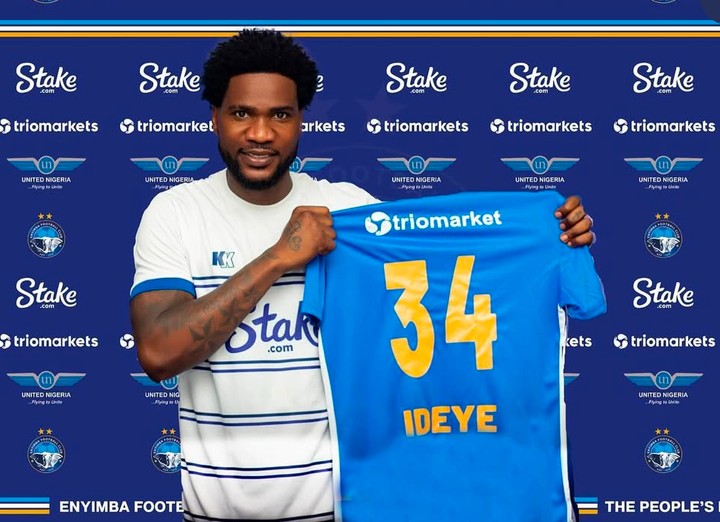
Brown Ideye Finds The Net For Enyimba In CAF Victory

0

Former Super Eagles forward and new Enyimba FC signing Brown Ideye netted his first goal for the club in the CAF Confederation Cup, scoring in the 67th minute to turn the game around for the People’s Elephants.

goal was a crucial turning point in Enyimba’s 4-1 victory over Black Bulls of Mozambique, securing their first win in the group stage of the competition.

The Nigerian striker’s experience and clinical finishing proved to be invaluable for his new team.

This performance bodes well for Enyimba’s hopes in the CAF Confederation Cup and highlights the impact that Ideye can have on the team.

As the competition progresses, fans will be eager to see if he can continue to deliver goals and contribute to the team’s success.

Nigerian Gospel Artiste, Nathaniel Bassey Invited To Trump’s Inaugural Event

0

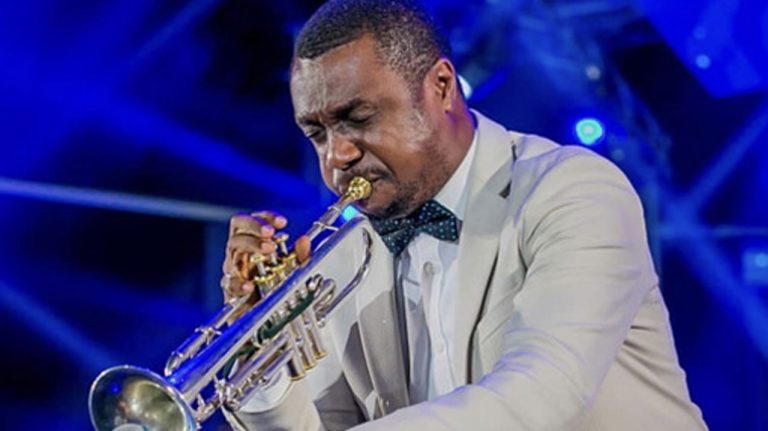
Renowned Nigerian gospel minister and pastor, Nathaniel Bassey, has been invited to minister at the U.S. Presidential Inaugural Prayer Breakfast on January 20, 2025, in Washington, D.C.

The non-political and faith-based event will be hosted by Reverend Merrie Turner ahead of President-elect Donald Trump and Vice President-elect JD Vance’s swearing-in ceremony.

The prayer breakfast, to be held at the prestigious Waldorf Astoria Presidential Ballroom, will feature a distinguished lineup of speakers, including Dr. Alveda King and Pastor Mario Bramnick.

Confirming his participation on Instagram, Bassey stated, “Let’s raise a sound in America. See you on January 20, 2025.”

Bassey, celebrated for his music and ministry, is also known for the Hallelujah Challenge, an online worship movement.

In 2024, the Mayor of Albany, New York, honored him by declaring October 6 as “Pastor Nathaniel Bassey Day.”

The event emphasizes prayer and worship as a spiritual support for the U.S. government and presidency.

I Will Complete The Eastern Rail Line – President Tinubu Reaffirms

0

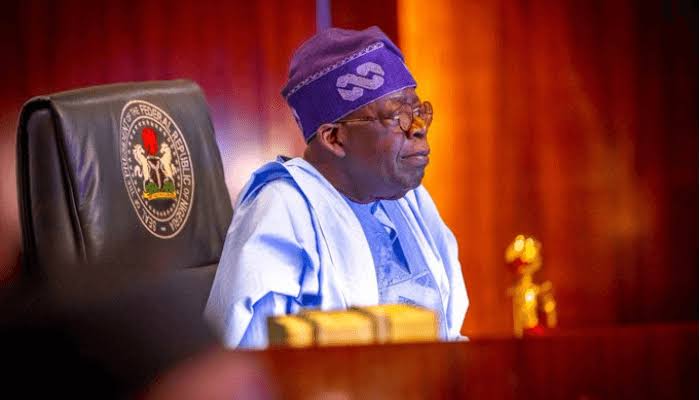
As part of his administration’s development strategy, President Bola Ahmed Tinubu has reiterated his commitment to finishing the Eastern Rail Line, which runs from Port Harcourt to Maiduguri.

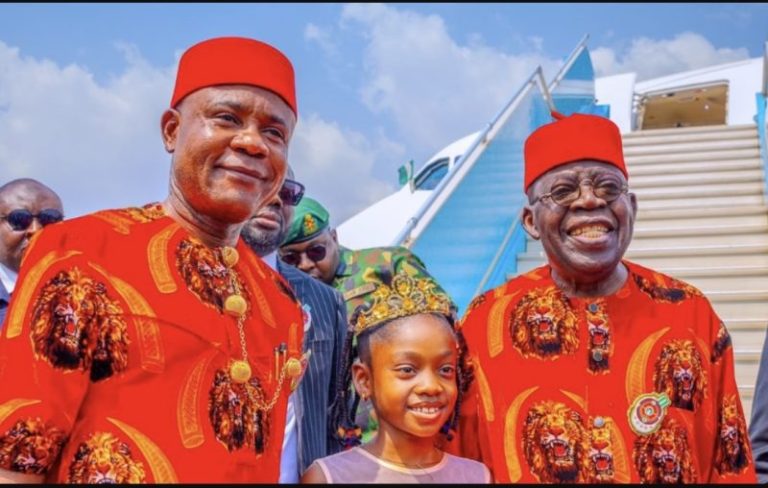
At his official visit to Enugu State on Saturday, the President made this commitment at a dialogue with leaders from the South-East.

President Tinubu also pledged to give the development of the Anambra Basin, a vital energy reserve, first priority in a statement issued by Presidential Spokesperson Mr. Bayo Onanuga. With an estimated 30 billion cubic feet of natural gas and 1 billion barrels of oil, the basin has the potential to greatly support Nigeria’s energy industry.

The president reassured the leaders of his administration’s commitment to promoting economic growth and development in the South-East.

Former Power Minister Professor Chinedu Nebo and Enugu State native Chris Ugoh made demands during the meeting, and President Tinubu listened carefully and promised to address their problems.

Nebo urged “the President to prioritise the completion of the remaining portions of the rail link” while praising the Tinubu administration for finishing the Port Harcourt to Aba segment of the Eastern rail line.

Growth of the Economy

He emphasized how the train link may increase Nigeria’s economic growth and non-oil exports.

Chris Ugoh pointed out that industrial feedstocks and electricity generation might be supported in the Anambra Basin.

In order to benefit the southeast as well as other parts of the nation, such as the Middle Belt and the North, he urged the Nigerian government to exploit the resource.

Contemporary Security Techniques

The Nigerian government was asked to adopt contemporary security measures in the area, similar to the statewide CCTV system and patrol vans equipped with surveillance cameras in Enugu State, by Onyemauche Nnamani, the National Commissioner for the South East in the Police Service Commission.

“It is inefficient and exposes our security personnel to attacks by non-state actors,” Nnamani said, urging the government to lessen the emphasis on the expansion of checkpoints and roadblocks in the area.

“It is a work in progress,” President Tinubu assured the crowd in response to the rail line request. I’m determined to find solutions to some of these pressing issues that I inherited.

“On the gas infrastructure’s assistance.” Yes, gas is a substitute for gasoline. Investing more on it is a better use of time than wasting it. We’ll work together, and I’m fortunate to have capable governors.

The Agenda of Nigeria

President Tinubu praised former Senate President Ken Nnamani for rescuing Nigeria’s democracy from those who sought to destroy it with the Third Term project, while also acknowledging the presence of other dignitaries from the Southeast, such as governors, traditional leaders, captains of industry, and current and former presiding officers of the National Assembly.

After launching a number of state government projects, President Tinubu praised Governor Peter Mbah for his development strategy and ideology.

Encouragement

He promised that Enugu and other states would continue to get assistance from the Nigerian government in their endeavors to grow.

The GTC Smart Green School, New Haven/Bisalla Road, the International Conference Center, the Command-and-Control Center, and 150 patrol cars with security cameras installed are among of the projects the President has officially opened.

Other noteworthy projects from the Enugu State Government House were also virtually commissioned by the president.

“Investing in security will bring rapid development,” the president stated at the Command-and-Control Center’s inauguration.

“This is a powerful example of what we can do when we work together. It gives me peace of mind that additional money flowing to local and subnational governments is not a waste. It’s for growth.

“We have dedicated leaders like Peter Mbah guiding Enugu toward the development of the twenty-first century, elevating the city to new heights, and constructing our future now.”

“The sight of the kids I just met at the Smart Green School will never leave me.

“I have witnessed vehicles and devices equipped with 21st-century technology. You are, in fact, laboring for the present, the future, and tomorrow.

The President said, “My good friend Peter, we can go places together to build Nigeria and build the future.”

“It is bold to have this house equipped with technology, and they are ready to use,” he remarked. I am aware that you work in the private sector, and we need to encourage more private sector individuals to enter politics in order to boost investment.

“Investors will be your friend if you are confident in security and development and provide value for money.”

Accolades

The governor, a Peoples Democratic Party (PDP) member, was also praised by President Tinubu for exhibiting an unwavering dedication to human development.

“I don’t care which party you belong to; you are my friend,” stated President Tinubu. Abia State’s Alex Otti is also performing admirably. It has nothing to do with linguistic and geographic distinctions.

“The mother tongue is not within any of our control. God made us, and you might be in Lagos, Onitsha, or Enugu. Although we all reside in separate rooms of the same house, we are all part of the same large family known as Nigeria.

“In order to meet our present and future needs, we must construct this house.”

A real Federalist

Governor Mbah characterized President Tinubu as a true federalist at the interactive session.

He praised the Tinubu administration for liberalizing the electrical industry with the electrical Act (Amendment) and creating the South East Development Commission.

Your credentials as a true federalist are impressive, and your accomplishments will garner you a lot of praise for a long time.

“You liberalized the production, transmission, and distribution of energy by signing the energy Act (Amendment) Bill. That one deed will always be remembered as a lasting legacy.

The fact that Enugu State was the first sub-national to receive regulatory control over the local power market from the NERC is notable. That shows how quickly we are working toward our objectives,” he remarked.

The Governor claims that the South East Development Commission will complement the numerous development advancements taking place around the state by addressing the ecological and infrastructure issues in the area.

The Economy of Enugu

In order to place Enugu State among the top three states in Nigeria in terms of GDP, Governor Mbah reaffirmed his goal of growing the state’s economy from $4.4 billion to $30 billion in just four years.

He claimed that when residents have access to reasonably priced healthcare, high-quality education flourishes, and security is ensured, his lofty goal can come true.

The governor described the state’s daring efforts to improve public safety, which included lifting the unlawful sit-at-home order that a criminal group and non-state actors had imposed throughout the Southeast.

No sitting at home

“We no longer observe sit-at-home in Enugu,” he stated. We no longer follow commands from non-state actors, and our employees report to work every day of the week.

In order to provide children with 21st-century capabilities, the governor informed the president that some of the Smart Green Schools that were commissioned during the state visit were a component of the contemporary schools that his administration had established throughout 260 wards.

According to the governor, his administration has prioritized primary healthcare, modernizing all 260 basic healthcare facilities to ensure constant quality, especially in outlying locations.
[quote]
“Your audacious efforts are mostly responsible for all of these infrastructure advancements.

The abolition of the gasoline subsidy, the unification of the foreign exchange, and the other social interventions that your government still provides for the citizens of this nation are examples of the brave statements you made to free up monies for development.

“Now that those funds have been released, we can basically finish these projects. Additionally, social and digital infrastructure are ongoing, in addition to physical infrastructure, Governor Mbah underlined.

How States Shared ₦5.3tr Federal Allocation In 2024

0

 How Delta, Rivers, A/Ibom, Lagos, Bayelsa raked in N1.8tr

• Allocation grew by 95.49% in two years

by Nduka Chiejina, Abuja

The Federation Account Allocation Committee (FAAC) disbursed a total of N5.38 trillion to the 36 states and the Federal Capital Territory (FCT) between January and December 2024, according to figures obtained by The Nation.

This amount represents an increase of about N1.46 trillion over the N3.92 trillion received by the states and the FCT in the previous year.

The states received a total of N412.09 billion in January; N406.96 billion in February; N454.70 billion in March and N428.24 billion in April.

A total of N463.04 billion got to them in May; N365.81 billion (lowest allocation for the year) in June before going up to N461.98 billion in July and N473.48 billion in August.

Others were as follows: September: N422.86 billion; October: N453.72 billion; November: N490.70 billion and December: N549.79 billion which was the highest allocation for the year.

These variations in allocation were influenced by overall revenue performance and the criteria used by FAAC to calculate the allocations.

In comparison, 2023 allocations were much lower, peaking at N396.21 billion in January and hitting a low of N259.50 billion in April.

The discrepancies highlight improved revenue generation in 2024, driven by the removal of fuel subsidies, increased oil sales and better earnings from non-oil sectors, including taxes and royalties.

Among the states, Delta received the highest allocation in March 2024 with N62.7 billion, followed by Rivers State with N41.7 billion, and Akwa Ibom State with N41.6 billion. The oil-producing states benefit from the derivation principle, which ensures a part of oil revenue goes directly to Niger Delta states.

The increase in allocations is expected to assist state governments in enhancing infrastructure, education, healthcare and economic development. Stakeholders have urged responsible spending to ensure improvement in citizens’ quality of life.

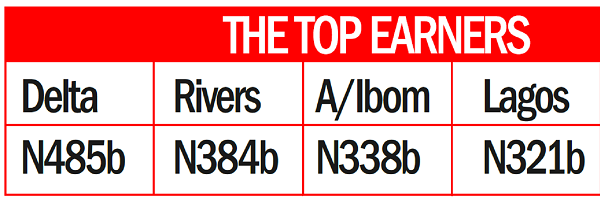
A breakdown of the state by state allocations shows that Delta, Rivers, Akwa Ibom, Lagos and Bayelsa received the highest allocations

Delta got a total of N485bn; Rivers, N384bn; Akwa Ibom, N338bn; Lagos, N321bn and Bayelsa, N293bn.

Other top revenue allotees are: Kano, N166bn; Edo, N124bn; Ondo, N122bn; Anambra, N115bn and Oyo N113bn.

With a total of N5.38 trillion allocated in 2024, experts are optimistic about continued revenue growth into 2025.

Analysts believe that diversifying the economy and improving revenue collection methods could sustain or exceed last year’s accomplishments.

Looking at trends from 2022 to 2024, governmental allocations have significantly increased since June 2023, indicating more effective resource mobilization and equitable distribution of national revenues.

The Federal Government received N3.42 trillion in 2022, N3.96 trillion in 2023 and N4.65 trillion in 2024. Over these two years, it recorded a cumulative increase of 35.84 per cent.

State governments also benefited greatly during this period, receiving N2.75 trillion in 2022, followed by N3.92 trillion in 2023, and N5.38 trillion in 2024, therefore, the state governments received a 95.49 percent cumulative increase of FAAC allocations from 2022 to 2024.

The 774 local governments received N1.995 trillion in 2023 and N2.285 trillion in N3.994 trillion.

The LGAs experienced a 14.51 per cent increase in allocations in 2023 compared to 2022 period, reflecting a steady rise in funds allocated to grassroots governance.

There was a 74.76 per cent increase between 2024 and 2023, which shows a significant boost in revenue directed towards local development efforts.

Interestingly, over the two years (2022 to 2024), LGAs recorded a cumulative increase of 100.26 per cent, doubling their allocation.

Beneficiaries of 13 per cent Derivation Fund were not left out of the surge in FAAC allocations. In 2022, they received N601.049 billion, N454.677 billion in 2023 and N1.135.802 trillion in 2024.

Between 2022 and 2023, a 24.34 percent decrease was observed, reflecting possible fluctuations in oil revenue or derivation parameters. In 2023 and 2024, the allocation surged by 149.84 percent, marking a significant rebound and surpassing the 2022 figure.

From 2022 to 2024, the derivation fund recorded a cumulative growth of 88.93 per cent, emphasising the growing importance of the fund in fostering resource control.

The overall rise in FAAC allocations indicates the Federal Government’s commitment to fair revenue sharing across all levels of government. The increases in funding for states and LGAs reveal efforts to enhance service delivery and local governance.

The surge in these allocations also represents a hopeful trend in Nigeria’s federal revenue generation and distribution. However, it is crucial for state governments to manage these resources effectively and transparently to foster sustained growth and improve the quality of life for all Nigerians.

Tax Reform: Tinubu sends emissaries to leaders as Northern Govs remain adamant

0

In response to mounting opposition, President Bola Tinubu has started sending emissaries to the northern elite to clear the way for the passage of the tax reform bills, Sunday PUNCH reports.

Sources in the Presidency said Tinubu was also consulting with the political class for support on the bills.

An official, who spoke on condition of anonymity because he was not authorised to speak to the press on the matter, said, “What I know is that he (President Tinubu) has been consulting with some of the northern elite at individual level and as groups, even before the holidays.”

Another top source said the President was using “back channels” and other means to win over opposition to the bills.

“He is reaching out through different channels that are available to him to make sure that the grey areas of the bill are smoothened out,” the source added.

However, northern governors have insisted that nothing will change their minds on the bills.

While saying they remained unmoved by Tinubu’s overtures, they demanded that the bills be withdrawn from the National Assembly for further consultation.

The tax reform bills were introduced to the National Assembly by the executive in October 2024.

They include the Nigeria Tax Bill 2024, the Nigeria Tax Administration Bill, the Nigeria Revenue Service (Establishment) Bill, and the Joint Revenue Board (Establishment) Bill.

Northern govs adamant

Following the introduction of the bills, the Northern Governors Forum immediately rejected them, arguing that the proposed model for the distribution of Value Added Tax would severely disadvantage the region.

In a communiqué released on October 28, the forum expressed deep concern, stating, “The forum notes with dismay the contents of the recent Tax Reform Bills forwarded to the National Assembly. The reforms, particularly the proposed amendment to the distribution of VAT to a derivation-based model, are detrimental to the interests of the north and other sub-nations.”

The communiqué further explained that under the proposed system, VAT is remitted based on the location of a company’s headquarters and tax office, as well as where the services and goods are consumed.

The governors argued that the approach would undermine the region’s economic well-being.

As a result, the forum unanimously rejected the proposed amendments and urged members of the National Assembly to oppose any bill that could harm the interests of the people of the North.

The Bauchi State Governor, Bala Mohammed, during an interview took a swipe at Tinubu over the bills, describing them as “anti-northern” and favouring only a section of the country.

The governor warned that if the policies continued, the northern region would “show its true colours” in response.

However, President Bola Tinubu, during a media chat in December, said he had no intention of withdrawing the bills.

He said, “Tax reform is here to say. We cannot just continue to do what we were doing yesteryears in today’s economy. We cannot retool this economy with the old broken tools.

“You cannot satisfy uniformly the larger community of tax evaders. This tax reform is pro-poor; the vulnerable are not to pay taxes. All we are asking for is to widen the tax net and bake the cake larger so that we can share a larger meal.

“They will still ask for this consultation no matter how long I delay it. The hallmark of a good leader is the ability to do what you have to do at the time it has to be done. That is my philosophy.”

In an interview with Sunday PUNCH, the Chairman of the Northern Governors Forum, Governor Muhammad Yahaya, reaffirmed that the northern governors had not relented in their opposition to the bills.

Yahaya, who also serves as the Governor of Gombe State, said the governors would remain “adamant” until the President changed his stance.

A spokesperson for the governor, Ismaila Misilli, said, “The governors of the northern region have already spoken about their position, and they remain adamant.”

He emphasised that even before people became familiar with the contents of the bills, Yahaya had raised concerns, expressing his perspectives on the matter.

“That position has not changed.

“The governor will not be confrontational about it, as he serves as chairman to colleagues in both the APC and the PDP,” Misilli added.

Also, Governor Babagana Zulum of Borno State, maintained his opposition to the bills.

Zulum’s Senior Special Assistant on New Media, Abdulrahman Bundi, reiterated on Friday that the governor’s stance remained unchanged.

“The governor has clearly stated his position, and he is not changing his mind. It is not in his character to play double standards,” Bundi affirmed.

“We have weighed all the options, considered the pros and cons of the bills, and have arrived at this decision. Therefore, the stance remains. There is no plan for him to back down or alter his position.”

Also, the Senior Special Assistant on Public Affairs to Governor Abdullahi Sule of Nasarawa State, Peter Ahemba, said northern governors were united in their opposition to the bills.

Ahemba, in an interview with Sunday PUNCH, said the North had observed that the tax reform bills would only be favourable to states in the South.

He noted that the plan to stop the bills was not the idea of a single governor or National Assembly member, but “the collective responsibility for all political players from Northern Nigeria.”

He said, “You could see the Senators from the North and House of Representatives members from the North speaking in one voice. It is the North speaking in one voice on the matter.

“Also, the stand of the Northern Governors Forum is very clear on the matter. They are urging the President to step down the tax reform bills and allow for further consultations. They want him to consult widely so that people will actually see reasons with the bills.

“For now, the perception is that the tax reform bills will only favour some states like Lagos and others while the North will be shortchanged, and in that regard, the President needs to convince the North about the bills. The Tax Reform Bills that we are talking about is beyond an individual governor. The entire Northern Governors Forum and members of the National Assembly are speaking on this matter with one voice.”

Also, the Kano State Government described the bills as detrimental to the welfare of Nigerians, particularly the northern region.

“The Deputy Governor, Aminu Abdulsalam, who represented the governor at the occasion, had made the position of the government clear on the tax reform bills,” he said.

Governor Abba Yusuf, who was represented by the Deputy Governor, Abdussalam, declared the government’s position during the 2025 New Year celebration at the Filin Mahaha, Kofar Naisa Open Theatre on Tuesday night.

The governor had said, “This tax reform bill is not the solution to our economic challenges. Kano State stands firmly against any policy that negatively affects the welfare of our people.”

He described the proposed tax hike as “ill-timed, lopsided, and inimical to the unity of the country.”

“Nigerians in general and the north, in particular, are groaning under hyperinflation and unprecedented insecurity, therefore the presidency should rather concentrate its time and attention on tackling extreme poverty and hunger, especially in the northern part of the country,” he added.

‘Suspend reform bills’

Meanwhile, the Deputy National Chairman of the New Nigeria People’s Party, Prince Nwaeze Onu, called on President Tinubu to suspend the tax reform bills for wider consultations with stakeholders.

In a New Year’s message to Nigerians released on Friday, he emphasised that such sensitive reforms should not be rushed through the legislature.

He urged the government to reconsider its approach, stressing that the people of Nigeria were already struggling under the current economic conditions.

“The President has to urgently halt the tax reform bills before the National Assembly considering the precarious state of the economy today and how people pay through their noses for daily bread.

“The tax reform bills should be dropped, and there should be wider consultation with stakeholders. We also urge Nigerians to remain hopeful as the only way to overcome the hardship in the country,” Onu said.

He also condemned what he described as the government’s attempts to stifle opposition parties, arguing that a healthy democracy requires a viable opposition to hold the government accountable and offer constructive recommendations.

A current affairs analyst, Jide Ojo, argued that the tax bills were not designed with the northern region’s interests in mind.

Speaking with Sunday PUNCH, he advised the Federal Government to withdraw the bills to allow for further consultation.

“I have followed the controversy for some time now, and I believe President Tinubu needs to err on the side of caution. No one has a monopoly of wisdom. The North has a legitimate reason to be concerned about these tax bills,” Ojo said.

“I agree with the governors that the bills should be withdrawn for more consultation. The argument that the bills should go through public hearings and people can vent their views at that stage smacks of hypocrisy.”

In an interview with one of our correspondents, the lead partner at Perfect Pitch Consults, an accounting and tax consulting firm, Andrew Echono, echoed Ojo’s position, emphasising the need for broader consultation on the tax bills.

While expressing support for the ongoing tax reforms, he argued that the Oyedele-led committee was overlooking a crucial step in the engagement process.

“I am fully in support of the ongoing tax reforms, but I believe that the committee, led by Oyedele, is skipping a very vital step in the engagement process. Given the sensitive nature of these bills, the Federal Government should step down the bills to allow for wider consultation and inputs from all stakeholders,” he advised.

Southern lawmakers reject calls

However, some members of the National Assembly from the Southern part of Nigeria have countered the call for the withdrawal of the tax reform bills, arguing that such a move would not be in the nation’s best interest.

The lawmakers contend that any concerns about the bills can be addressed when they come up for debate in the House of Representatives when plenary resumes this month.

In an interview with Sunday PUNCH, a member of the House from the South-West, Bamidele Salam, stated that any conflicting clauses in the bills could be discussed and amended during public hearings or at other stages of the legislative process.

“I do not support those calling for the withdrawal of the bills,” Salam said.

“That would be akin to throwing out the baby with the bath water. There is no issue in the bills that cannot be corrected during public hearings and the subsequent legislative stages. We should not delay this important reform as we did with the Petroleum Industry Bill, only to lose golden opportunities for two decades.”

Similarly, another House of Rep member, Oluwole Oke, emphasised that it would be up to the federal lawmakers to decide the fate of the bills.

“In a democracy, the minority will have their say, and the majority will have their way. The representatives of the Nigerian people in Parliament will determine the fate of these four executive bills, not bystanders,” Oke insisted.

Tinubu replies “angry” governors

Meanwhile, President Tinubu has dismissed some governors’ opposition to the key policies of his administration.

Tinubu said he was aware that some governors were angry with him but he would live with their “noise.”

The President spoke on Saturday while on a one-day official visit to Enugu State.

Tinubu brushed aside the opposition of the governors to his administration’s policies, reaffirming his commitment to addressing Nigeria’s challenges and implementing reforms.

He said, “I inherited some of these critical problems and I’m going to do it. I’m lucky I have good governors, though some may be angry with me locally, but we just have to push. Yorubas will say, ‘The pig will get to the slaughter but there will be a lot of noise,’.. I’ll live with the noise.”

The President also said he would not allow the negative comments against his administration to deter him from his mission to rebuild Nigeria.

“This house (Nigeria), we must build it, build it to satisfy our immediate need which is not going to be enough yet, but our tomorrow too, that is why the removal of the fuel subsidy was necessary. You cannot spend the future of our generations yet unborn in advance, don’t bankrupt the nation before they’re are born.

“People will fight, grumble, abuse me and everything but I asked for the job, I have what it takes, I believe in myself, that is why I gathered a very good team to build the nation.

“It is our country; we have to work really hard for it to be the nation that we can be proud of. Negative comments about Nigeria, I’m not taking that, I’m very proud of Nigeria, you all should be proud of Nigeria,” Tinubu said.

Umar Sadiq Set To Join Valencia On Loan

0

Nigerian striker Umar Sadiq is set to join Valencia on loan from Real Sociedad.

The forward is currently undergoing his medical with the Spanish club, with the loan deal including a buy option.

This move will provide Sadiq with an opportunity to showcase his talents in La Liga and contribute to Valencia’s success.

Further details regarding the loan deal, including the duration and the buy-option clause, are expected to be announced soon.

MTN Nigeria To Increase Call, Data Tariffs By 100 Percent

0

The Chief Executive of MTN Nigeria, Karl Toriola, has said the telecommunications firm has sent a proposal to the Nigerian Communications Commission for a 100 percent service tariff increase.

He disclosed this during an interview on Arise TV on Thursday.

However, the CEO expressed that it remains uncertain whether the Nigerian Communications Commission, the telecom regulator, will approve the proposal owing to existing economic hardship in the country.

“We’ve put forward requests of approximately 100 percent tariff increases to regulators.

“I doubt they’re going to approve that quantum of increases because they are very, very sensitive to the current economic situation in the country,” Toriola said.

This comes amid heightened speculation of an imminent telecom service tariff hike in Nigeria, this year.

The Chairman of the Association of Licensed Telecommunications Operators of Nigeria (ALTON), Gbenga Adebayo, recently threatened a shutdown of operations without a tariff hike.

However, telecom subscribers rejected any move to hike tariffs.

Falana: Why Yar’adua Cancelled Sale Of Port Harcourt Refinery To Dangote

0

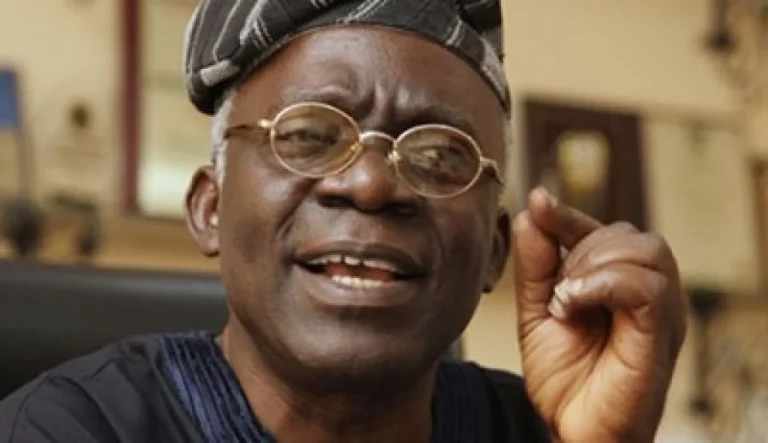
Human rights lawyer Femi Falana has revealed the reason former President Umaru Yar’Adua did not sell the Port Harcourt refinery to a consortium led by Dangote.

Falana said the reversal was a pivotal step to address the legal and ethical breaches surrounding the transaction and to protect Nigeria’s national interest.

The senior lawyer, in a statement, explained that under the Privatisation and Commercialisation Act, the Vice President is the chairman of the National Council on Privatisation, NCP, the body responsible for overseeing the privatisation of public enterprises.

Falana, however, alleged that former President Olusegun Obasanjo bypassed this legal requirement by sidelining then-Vice President Atiku Abubakar and directly managing the privatisation of several state-owned enterprises.

“On May 17, 2007, President Obasanjo sold a 51 per cent stake in the Port Harcourt refinery to Bluestar Oil for US$561 million. In another transaction that took place on May 28, 2007, President Obasanjo sold 51 per cent shares in Kaduna Refinery to Bluestar Oil for $160 million,” Falana revealed.

The human rights activist stressed that the deals drew sharp criticism from key stakeholders, including the National Union of Petroleum and Natural Gas Workers, NUPENG, and the Petroleum and Natural Gas Senior Staff Association of Nigeria, PENGASSAN.

According to him, the unions raised concerns over due process and alleged that the country had been shortchanged.

He further explained that they also alleged that the nation had been shortchanged as the shares acquired in the Port Harcourt refinery for $516 million were worth $5 billion.

“It is on record that the cancellation of the privatisation was not challenged in any court as it was carried out contrary to the letter and spirit of the Privatisation and Commercialisation Act,” Falana stated.

He further commended the role of NUPENG and PENGASSAN in advocating for national interest and called on them to remain vigilant amid renewed calls for the privatisation of Nigeria’s refineries.

Falana’s statement emphasised the ongoing debate over privatisation in Nigeria, with advocates stressing the need for transparency and due process in managing the country’s public assets.

Nasarawa Governor Sule Sacks All Commissioners, SSG

0

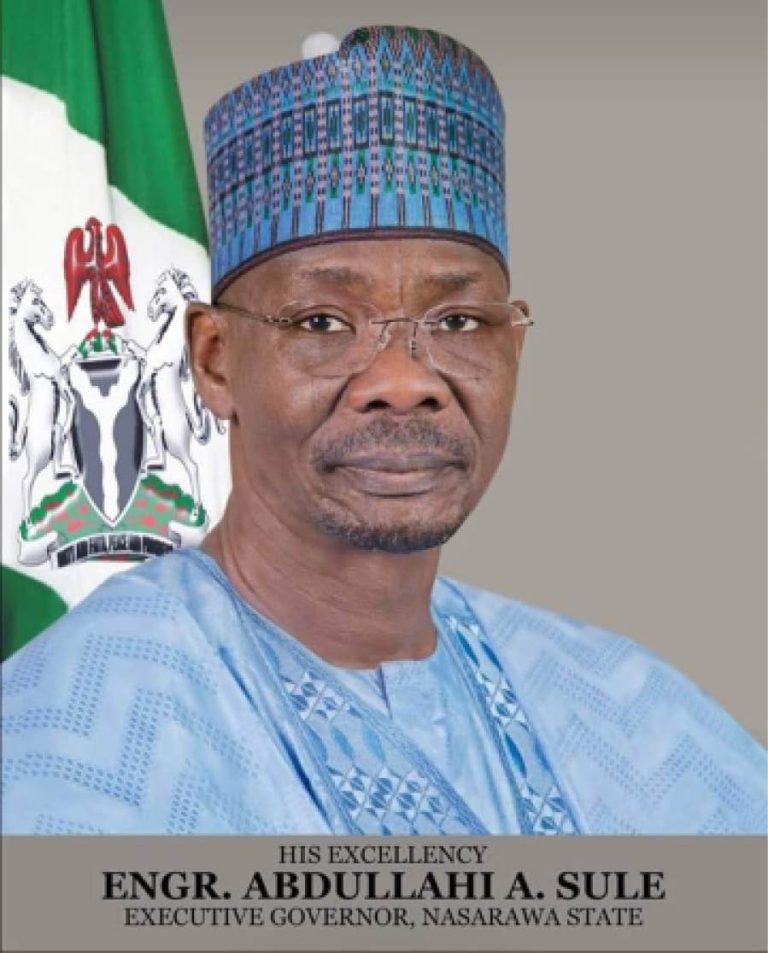
Nasarawa State Governor, Abdullahi Sule, has dissolved the state executive council comprising his commissioners and sacked Secretary to the State Government (SSG), Barrister Muhammad Aliyu-Ubamdoma.

Weekend Trust reports that the decision was announced by the governor at a special emergency executive meeting in Government House, Lafia, on Friday, shortly after the departure of Vice President Kashim Shetima, who was in the state for a one-day working visit to inaugurate some projects in the state.

A top government official, who preferred anonymity, told our correspondent that although the exact reasons for the dissolution were not yet clear, he said the governor was known for restructuring the state’s administration.

Our correspondent reports that in 2021, Sule dissolved the state executive council, citing the need for a more effective and efficient governance structure.

“As the situation unfolds, citizens of Nasarawa State await further clarification on the implications of this decision and the future direction of the state’s administration,” the source added.

Meanwhile, a statement signed by Mohammed Iliyasu-Idde, permanent secretary cabinet affairs and special services, said Governor Sule expressed his gratitude to the outgoing council members for their contributions towards the growth of the state and wished them well in their future endeavours.

The statement read in part, “All the outgoing council members are to hand over the affairs of their ministries and government property in their possession to the permanent secretaries in their respective ministries while the SSG is to hand over to the permanent secretary cabinet affairs and special services.”

The governor had in July 2023 submitted the names of 17 commissioner-nominees to the Nasarawa State House of Assembly for screening and confirmation as members of the State Executive Council.

Ghana Announces Visa-free Entry For African Passport Holders

0

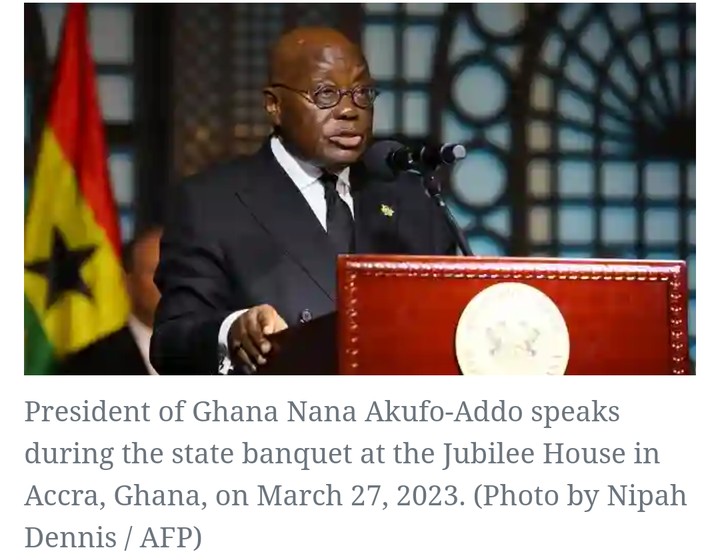
Ghana’s outgoing President Nana Akufo-Addo Friday announced visa-free travel for all African passport holders from the start of this year, marking a step towards continental economic integration.

The announcement came during his final state of the nation address as he prepares to step down on January 6 after two terms in office.

“I am proud to have approved visa-free travel to Ghana for all African passport holders, with effect from the beginning of this year,” Akufo-Addo said in his speech to parliament.

“This is the logical next step to the African Continental Free Trade Area (AfCFTA) and the workings of the largest trading bloc in the world,” he said.

“All these are essential elements to the realisation of the AU’s Agenda 2063, which envisages an integrated and connected Africa by 2063,” he added, referring to the African Union’s development blueprint for a 50-year period.

Ghana joins Rwanda, Seychelles, Gambia and Benin in offering visa-free entry to African travellers.

Ghana had previously allowed visa-free access to citizens of 26 African nations and visas on arrival for travellers from 25 others, while only two African countries — Eritrea and Morocco — required a visa before entry.

The visa-free policy builds on Ghana’s efforts to strengthen its international reputation, particularly through initiatives like the 2019 Year of Return, which celebrated the African diaspora and commemorated 400 years since the transatlantic slave trade.

The campaign attracted thousands of visitors, including celebrities, to Ghana and led to some receiving citizenship, bolstering the country’s global profile as a cultural and tourism hub.

Akufo-Addo also used his last address to trumpet economic progress under his leadership, citing an increase in Ghana’s gross international reserves to $8 billion, from $6.2 billion in 2017, and significant GDP growth in 2024.

“Economic growth has returned to the pre-Covid trajectory,” he said, projecting a 6.3-percent growth rate for 2025.

“I leave behind a Ghana that is thriving, one that has navigated significant global challenges with remarkable tenacity, whose economy is steadily rebounding, and whose institutions are operating effectively,” he said.

The oil-and-gold-rich West African nation is one of the most stable democracies in Africa.

Since 2022, it has been battling one of its worst economic crises in decades and is currently under a $3-billion International Monetary Fund relief programme.

The outgoing president hands over power to John Mahama, who won the December elections.