Wednesday, May 6, 2026
Home Blog Page 107

Igali Thumbs up Bayelsa United over Niger Tornadoes victory

0

The commissioner for Sports Development, Bayelsa State, honourable Daniel Igali, has commended the resounding victory of Bayelsa United over Niger Tornadoes

Honourable Igali while speaking to journalists on Wednesday after the game lauded the approach of Bayelsa United to the game which enabled them to convincingly beat Niger Tornadoes 4-1 in Yenagoa to return to winning ways after a two-match winless run.

According to Igali, the victory is a testament to the quality the team possess while he calls for consistency and sustainability of such momentum as they next face El-Kanemi Warriors on the road.

“I was really impressed with the performances of Bayelsa United against the Tornadoes today, 4-1 impressive victory and what I was more satisfied with is the fact that we didn’t take our foot off the ground from the beginning to the end and it could have been easily 7-1.

I hope we can take this form to El-Kanemi Warriors this weekend.” Igali said.

Tinubu Nominates Three New Board Members For CCB

0

In a move to enhance oversight mechanisms, President Bola Tinubu has nominated three new members to fill existing vacancies on the board of the Code of Conduct Bureau (CCB), News360 Nigeria reports.

The announcement was made in a formal letter addressed to the Senate President.

A statement by Special Adviser to the President, (Information & Strategy), Bayo Onanuga, listed the nominees as Alhaji Fatai Ibikunle from Oyo State, Kennedy Ikpeme from Cross River, and Justice Ibrahim Buba, a retired judge of the Federal High Court.

Established in 1979, the Code of Conduct Bureau plays a critical role in maintaining integrity within public service and ensuring compliance with the country’s ethical standards.

The Bureau operates with a 10-member board.

On October 23, 2024, President Tinubu swore in the chairman of the board, Dr. Abdullahi Usman Bello.

The current board includes: Barr. Muritala Aliyu Kankia, Hon. E J Agbomayinma, Barr. Ben Umeano, and Prof. Juwayriyya Badamasiuy.

Other members are Bulus I Zephaniah, and Hon. Abdulsalam Taofiq Olawale.

The development comes on the heels of back-and-forth moves by both the Senate and House of Representatives to sack Umar Danladi as chairman of the Code of Conduct Tribunal over allegations of corruption and misconduct.

Last Wednesday, the Senate led by the Majority Leader, Opeyemi Bamidele, invoked Section 157 (1) of the Nigerian Constitution as the legal basis for the resolution.

Like the Senate, the House of Representatives on Tuesday invoked the provision of paragraph 17 (3), Part 1, fifth schedule to the constitution for the removal of Danladi.

However, on Tuesday, the Senate admitted that the section invoked pertained to the removal of specific public officials, not the CCT chairman.

During plenary, the Senate Leader admitted what they described as a mistake.

Bamidele called on the Senate to rescind the earlier constitutional provision and adopt the correct legal references. He explained that the appropriate sections to support the resolution were Section 17 (3) of the Nigerian Constitution and Section 22 (3) of the Code of Conduct Bureau and Tribunal Act 2004.

Under Section 17 (3), the Senate and the House of Representatives must pass an address supported by a two-thirds majority to advise the President on the removal of certain public officers. Bamidele also highlighted the need for concurrence from the House of Representatives to ensure the resolution’s effectiveness.

“The Senate erroneously based its resolution on Section 157 (1), which does not apply to the chairman of the Code of Conduct Tribunal. The correct provisions are Section 17 (3) of the Constitution and Section 22 (3) of the Code of Conduct Bureau and Tribunal Act 2004. We must correct this for the resolution to take legal effect,” Bamidele told his colleagues.

The Senate unanimously agreed to Bamidele’s motion to correct the error and adjust the resolution accordingly.

The resolution which has enjoyed concurrence by the House of Representatives, has formally advised President Tinubu to remove Danladi from office. The allegations against the CCT chairman include corruption and misconduct.

Industrial Court nullifies employment termination of Mr Chendu, 99 others from College of Education

0

The Presiding Judge, Jos Judicial Division of the National Industrial Court, Hon. Justice Ibrahim Galadima has declared the purported suspension and termination, nullification and cancellation of Mr Dake Chendu and 99 others’ from the College of Education Gindiri by the Plateau State Governor as unlawful, illegal, null and void, and without any effect.

The Court declared that the Plateau State Governor has no power or authority to suspend, terminate, nullify, or interfere in any way with the employment and appointments of Mr Dake Chendu and 99 others duly engaged in the services and employment of the College of Education Gindiri.

Justice Galadima granted an order reinstating Mr Dake Chendu and 99 others to their respective positions as staff and employees of the College of Education, Gindiri, in accordance with their respective letters of appointment.

The Court also awarded the sum of N5,000,000.00 (Five Million Naira) as general damages against the Plateau State Governor, Its Attorney General and  College of Education Gindiri jointly and severally for the collective pain and suffering imposed on Mr Dake Chendu and 99 others’ by the respondents with the sum of N100,000 cost of action within 30 days.

From facts, the claimants- Mr Dake Chendu and 99 others’ had submitted that they were offered various employment positions in 2020 at the Gindiri College of Education, and were reportedly suspended by the Plateau State Governor, who later allegedly terminated their employment through announcements.

They averred that when new leadership took over the Plateau State, the Plateau State Governor announced the suspension of all Plateau State government employees hired from October 2022 to May 29, 2023, which included the applicants.

Mr Dake Chendu and 99 others’ contended that the termination of their employment by the Plateau State Governor was not justified by any regulatory instruments or current laws governing their employment with the College.

In defence, the defendants- Plateau State Governor and 2 Others averred that no advertisement was placed to indicate the vacant positions in the college before Mr Dake Chendu and 99 others were purportedly employed which made their employment inconsistent with the rules and regulations of the 3rd respondent institution. Accordingly also, Mr. Dake Chendu and 99 others’ were never interviewed by the Appointment and Promotion Committee as prescribed by the law regulating the College.

The Plateau State Governor and 2 others posited that when Mr Dake Chendu and 99 others were suspended, they were still on a 3-year probation period and had not yet achieved permanent employment status with the College. Therefore, the rules of service of the 3rd respondent do not entirely apply to them.

Plateau State Governor and 2 others filed a notice of preliminary objection and urged the Court to dismiss the case for want of requisite jurisdiction on the ground that Mr Dake Chendu and 99 others were employed by the College of Education Gindiri, but their appointment were yet to be confirmed, and also that the matter cannot be sustained by the applicants jointly claiming the reliefs against the respondents individually.

In opposition, the learned counsel to Mr. Dake Chendu and 99 others’, NANTOK DASHUWAR; E.S. BUF; M.L. KYEMANG posited that only the employer has the authority to dismiss their clients, and urged the Court to grant the reliefs sought.

Delivering judgment after careful analysis of the submissions of both parties, the Presiding Judge, Justice Ibrahim Galadima overruled the Plateau State Governor’s objection and held that despite Mr Dake Chendu and 99 others’ being on probation, their rights stemming from their statutory employment remain intact, and such employment must be managed in accordance with the statutes and relevant regulations of the Gindiri College of Education.

The Court agreed that Mr Dake Chendu and 99 others’ employment could be terminated during the probationary period, but the defendants must adhere to the specified provisions guiding such employment.

Justice Galadima stated that the defendants’ arguments that the claimants’ employment was not advertised and was tainted with irregularities, and alleged failure to follow proper employment procedures was the responsibility of the 3rd respondent, not the applicants.

Justice Galadima noted that the manner in which the Plateau State Governor treated Mr Dake Chendu and 99 others as if they were political appointees serving at the 1st respondent’s discretion was legally indefensible.

The Court held that the action of the Plateau State Governor and 2 others constituted an executive wrongdoing for which the Plateau State Governor must be held accountable to ensure justice.

On the claimants’ claim for salary, the Court held that Mr Dake Chendu and 99 others’ lack of evidence to substantiate the claim for unpaid salaries is detrimental to their case as there is no evidence to support the claim that Mr Dake Chendu and 99 others were not paid their salaries or to indicate the last month they received payment.

visit judgment portal for full details.

Port Harcourt Refinery’s Petrol Price Higher Than Dangote’s By ₦75/ltr — PETROAN

0

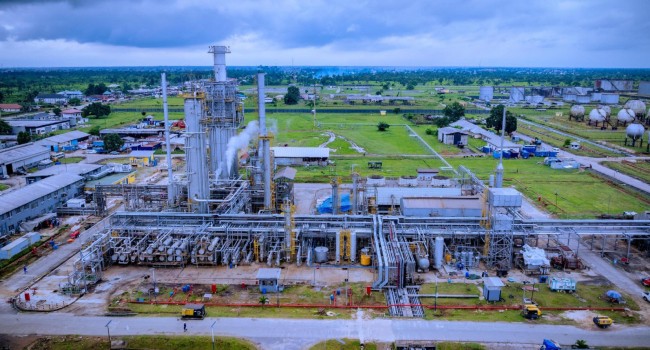
The Petroleum Products Retail Outlets Owners Association of Nigeria (PETROAN) has said the price of Premium Motor Spirit churned out by the old Port Harcourt Refinery which resumed production on Tuesday, is ₦75 per litre higher than that sold by the Dangote Refinery.

This was revealed by the association’s Public Relations Officer, Dr. Joseph Obele, during the official reopening ceremony of the refinery, which is now operating at a capacity of 60,000 barrels per day.

Dr Obele, a former chairman of the Independent Petroleum Marketers Association of Nigeria (IPMAN) at the Port Harcourt Deport who initially applauded the federal government for revitalising the old refinery, expressed concern over the pricing disparity between petrol supplied by the Nigerian National Petroleum Company Limited (NNPCL) and the Dangote Refinery.

According to him, while Dangote Refinery sells petrol to marketers at ₦970 per litre, NNPCL’s price stands at ₦1,045, a difference of ₦75 per litre.

He said the ₦75 price differential is a steep margin for businesses, particularly for an industry where profitability hinges on competitive pricing.

He, however, described the refinery’s restoration as a significant step in reducing Nigeria’s dependence on imported petroleum products.

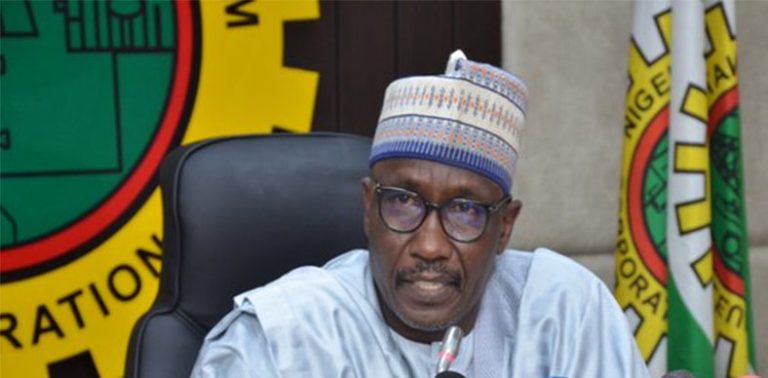
Obele revealed that the Group Chief Executive Officer of NNPCL, Mele Kyari, has promised to address the issue and harmonise prices to mitigate the impact on marketers and consumers.

The reopening of the Port Harcourt Refinery is expected to enhance local production capacity and reduce reliance on imports, a move welcomed by stakeholders across the sector.

However, concerns over pricing disparities underscore the need for continuous reforms to stabilise the downstream sector of the petroleum industry.

Alleged ₦‎110 Billion Fraud: EFCC Arraigns Ex-Kogi Governor Yahaya Bello

0

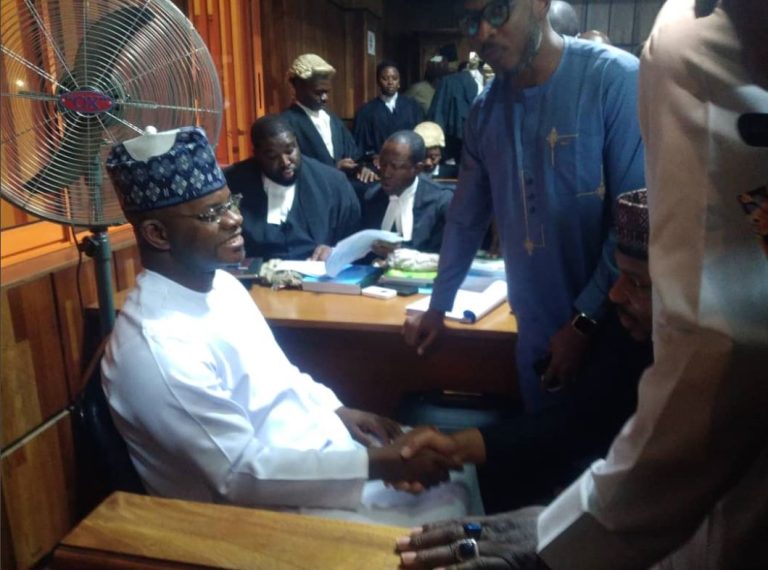
The Economic and Financial Crimes Commission, EFCC, has produced the immediate past Governor of Kogi State, Alhaji Yahaya Bello, before a High Court of the Federal Capital Territory sitting at Maitama for arraignment, News360 Nigeria reports.

Bello is billed to enter his plea to a 16-count charge ordering on his alleged complicity in a N110billion fraud.

The erstwhile governor’s whereabouts remained unknown till yesterday when he surrendered himself after a protracted hide-and-seek game between him and the anti-graft agency.

Dressed in white caftan and blue cap, was marshalled into the court premises by armed operatives of the EFCC before 9am, for his arraignment.

He will be docked before trial Justice Maryann Anenih, alongside his two co-defendants, Umar Oricha and Abdulsalami Hudu.

The charge against the defendants, marked: CR/7781, borders on conspiracy, criminal breach of trust and possession of unlawfully obtained property.

Specifically, the EFCC alleged that the former governor misused state funds to acquire properties, including No. 35 Danube Street, Maitama District, Abuja (N950 million), No. 1160 Cadastral Zone C03, Gwarimpa II District, Abuja (N100 million), and No. 2 Justice Chukwudifu Oputa Street, Asokoro, Abuja (N920 million).

Other properties the defendants allegedly acquired with funds stolen from the Kogi state treasury, included Block D Manzini Street, Wuse Zone 4, Abuja (N170 million), Hotel Apartment Community: Burj Khalifa, Dubai (Five Million, Six Hundred and Ninety-Eight Thousand, Eight Hundred and Eighty-Eight Dirhams), Block 18, Gwelo Street, Wuse Zone 4, Abuja (N60 million), and No. 9 Benghazi Street, Wuse Zone 4, Abuja (N310.4 million).

More so, the defendants were accused of transferring $570,330 and $556,265 to TD Bank, USA, and possessing unlawfully obtained property, including N677.8 million from Bespoque Business Solution Limited.

Moroccan Defender, Hakimi Eyes CAF Player Of The Year Award Over Lookman

0

Morocco and Paris Saint-Germain full-back, Achraf Hakimi, has backed himself to win the CAF Player of the Year award over Ademola Lookman, Soccernet.ng reports.

The 26-year-old defender has experienced success with every club he’s played for, from his academy days, winning the UEFA Champions League and UEFA Super Cup with Real Madrid, the DFL Super Cup with Borussia Dortmund, the Serie A with Inter Milan alongside multiple trophies with PSG.

Hakimi, alongside Nigeria and Atalanta’s Ademola Lookman, Serhou Guirassy, Simon Adingra, and Ronwen Hayden-Williams made the final five CAF Player of the Year nominees shortlist.

The former Real Madrid man revealed that even if he doesn’t win the Player of the Year award, the nomination is enough inspiration to spur him to aim higher in the future.

“It’s a source of pride and satisfaction, especially knowing that the work I’ve been doing for a long time will be rewarded with this nomination. It’s true that it’s an important trophy on an individual level, but I’m happy to be here,

I hope I can win it, but if not, I’m happy to be here, and it makes me want to keep working,” he told Brut via maliactu.net.

The winner of the CAF Player of the Year award will be known on Monday, December 16th when the Awards Ceremony will be hosted in Marrakech, Morocco.

In the past year, Hakimi has won the French Ligue 1, Coupe de la Ligue, and the French Super Cup trophies, whilst sealing a bronze medal for Morocco in the men’s Olympic football competition.

States Tackle NNPCL Over Extra ₦‎1 Trillion Subsidy Payment

0

The Nigerian National Petroleum Company Limited has requested an additional subsidy refund of N1.19 trillion for July 2024, citing exchange rate differentials on Premium Motor Spirit importation and joint venture taxes, according to findings by The PUNCH.

But state governments tackled the national oil company over the latest request, as they raised concerns over NNPCL’s accounting practices.

These findings were based on the Federation Account Allocation Committee Postmortem Sub-Committee report for September 2024, which was obtained by The PUNCH on Monday.

The report revealed that exchange rate differentials stood at N4.56tn as of June 2024 (due to under-recovery on petrol imports between August 2023 and June 2024), but this figure increased to N5.31tn by July 2024.

The NNPCL attributed the rise to fluctuations in foreign exchange rates and unresolved subsidy payments from previous months.

The total figure adds to concerns over the fiscal impact of subsidy payments on the Federation Account.

Exchange rate fluctuations and the rising cost of importing PMS have continued to strain government revenues, raising questions about the sustainability of the partial subsidy framework.

Committee raises concerns

The FAAC Sub-Committee raised concerns over NNPCL’s accounting practices, noting discrepancies in the figures submitted.

The NNPCL’s report included N1.19tn as a balance brought forward, contributing to the overall claim of N5.31tn.

However, the Sub-Committee noted that this amount had not been included in earlier FAAC reports and was therefore not recognised in its deliberations.

The report read, “As of June 2024, the Exchange Rate Differentials stood at N4,558,597,379,030.6. This amount increased to N5,309,418,715,637.13 as of the July 2024 Federation Account.

“Note that NNPCL’s request for the application of Weighted Average Rate covers the period August to June 2024. Also, recall that all outstanding payments against NNPCL as of May 2024 were referred to the Presidential Alignment Committee for reconciliation.

“However, the Sub-Committee observed that NNPCL in their report included the sum of N1,186,540,693,485.36 as an amount brought forward totalling N5,309,418,715,637.13 in their ledger. FAAC Postmortem did not recognize the Balance Brought Forward because it was not included in the FAAC report earlier submitted.”

During the September meeting with agencies, the NNPCL informed the FAAC Postmortem Sub-Committee that the N1.19tn figure was an actual under-recovery amount, which included adjustments for June and July 2024.

This amount, the NNPCL said, was used as the opening balance in its report.

In response, the Sub-Committee recommended that the NNPCL re-submit the figure for consideration at the next plenary.

The report noted, “During the monthly reconditioning meeting with Agencies, NNPCL informed the meeting that the amount submitted to the Presidential Alignment Committee for under-recovery was estimated. The actual under-recovery of N1,186,540,693,485.36, including June and July 2024, resulted in the opening balance in the NNPCL report.

“The Sub-Committee resolved that since NNPCL’s earlier report to FAAC did not include the sum of N1,186,540,693,485.36 brought forward, NNPCL should re-submit the amount for FAAC Plenary noting.”

Missing documentation

Further scrutiny of the NNPCL’s claims revealed additional issues. Minutes of a previous FAAC meeting indicated that as of June 2024, the NNPCL had reported an outstanding claim of N4.34tn against the Federation.

The claim, which was tied to exchange rate differentials, lacked essential details, including the volume of PMS imported, pricing, and sales values.

The Federal Commissioner of the Revenue Mobilisation, Allocation, and Fiscal Commission stated that the omission of these details made it difficult for the Sub-Committee to justify the figures submitted.

Consequently, the sub-committee directed the NNPCL to provide all relevant information to enable further assessment of its claims.

The FAAC Postmortem Sub-Committee has emphasised the need for transparency and accountability in subsidy-related reporting.

It noted that the discrepancies in the NNPCL’s submissions had delayed the reconciliation process, which had already been referred to the Presidential Alignment Committee.

The sub-committee also urged the NNPCL to ensure the inclusion of all outstanding amounts and a comprehensive breakdown of its PMS importation records in future reports.

The minutes for one of the FAAC meetings, which was seen by The PUNCH, noted, “The Federal Commissioner, RMAFC, informed the meeting that NNPC Limited reported to the Sub-committee that it had an outstanding claim of N4,344,519,176,167.32 against the Federation as a result of exchange rate differentials as at June 2024.

“He stated that the Sub-committee observed that the details of the PMS volume, price, and sales value were not provided in the June 2024 Report of NNPC Limited to justify the exchange rate differentials recorded. He concluded that the Sub-committee had resolved to request NNPC Ltd to provide the relevant information for further consideration.”

The PUNCH earlier reported that Nigerian National Petroleum Company Limited demanded a refund of N4.71tn from the Federal Government to settle outstanding debts used to import Premium Motor Spirit, popularly called petrol, into the country.

However, the NNPCL clarified that the N4.71tn was just an estimate, and the actual figure was N4.34tn, which increased to N5.31tn by July 2024.

This development means that the government has been supporting fuel imports by covering the difference between the projected rate and the actual expenses incurred by the NNPCL for importing petroleum products into the country.

This difference in cost, which ordinarily should be reflected in the retail price of the product and borne by final consumers, contradicts the government’s claims that subsidies have been eliminated.

This revelation also comes amid challenges faced by the petroleum company to ensure the adequate supply of PMS to marketers for distribution nationwide.

On May 29, 2023, during his inauguration, President Bola Tinubu publicly declared that “subsidy is gone,” signalling the end of barriers that had been restricting the nation’s economic growth.

However, this claim has been contested by the International Monetary Fund, the World Bank, and other authoritative figures, who argue that the government had quietly reintroduced fuel subsidies.

In June, a proposed economic stabilisation plan document stated that the government planned to spend about N5.4tn on fuel subsidies.

The N5.31tn demanded by the NNPCL for petrol under-recovery is about 98.33% of what the Federal Government had planned to spend on fuel subsidies this year.

Between January and June 2023, the Federal Government spent about N3.6tn on fuel subsidy, which was far more than the N2tn spent for the entire year of 2022.

In the approved Medium-Term Expenditure Framework, the Federal Government admitted that the petrol subsidies have remained a major challenge.

It noted that the final 2023 dividend for the Federal Government from the NNPCL was withheld to settle fuel subsidies.

The MTEF document noted, “Despite recent reforms, petrol subsidies continue to have a significant adverse impact on oil revenues. Recently, the 2023 final dividend due to the federation was withheld for payment of fuel subsidies.”

Amidst the increasing cost burden on the government for petrol under-recovery, and despite promising to bring down the price of petrol during his campaign, President Bola Tinubu has repeatedly increased petrol price by about 505.71 per cent – from N175 in May 2023 to N1,060 in October 2024 – inflicting more pains on the already impoverished Nigerians.

Anambra Secures Over $500 Million Investments At Summit – ANSIPPA

0

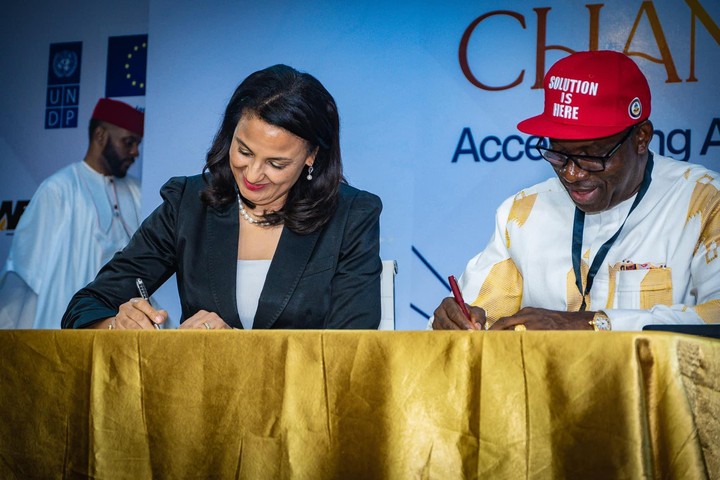
The Anambra government said it has secured investment funding and strategic partnership of over $500 million from the various agreements signed at the end of the second edition of its investment summit held on November 14.
Areas of investments
Okoye said investment commitments were made in healthcare, tourism/hospitality, natural gas networks, and urban development.

According to him, Anambra holds 30 trillion cubic feet of natural gas, representing approximately 15% of Nigeria’s total reserves.
He said the State plans to develop backbone gas pipelines with partnerships to maximise gas distribution efficiency.

“We have agreements to build a specialized cancer treatment facility, the management of Awka International Convention Centre, revitalization of Agulu Lake Hotel, and the development of a statewide gas distribution system.
Managing Director of Anambra State Investment Promotion and Protection Agency (ANSIPPA), Mr Mark Okoye, who gave the post-summit summary on Sunday in Awka said the State was poised to become a leading economic hub in Nigeria.
The summit had the theme “Changing Gears: Accelerating Anambra’s Economic Transformation” with development partners, financial institutions, captains of industries, and government officials in attendance to discuss investment opportunities in the State.
With over $500 million in funding commitments and strategic partnerships, Anambra is poised to become a leading economic hub in Nigeria, we invite investors, and development partners to join this transformative journey,” he said.

Afreximbank investment
Okoye said in 2023, Anambra also secured $250 million from Afreximbank to finance infrastructures for its major projects including the Anambra Mixed-Use Industrial City (AMIC) master plan, and Anambra Intra-City Rail among others.
“AMIC is positioned to catalyse industrialization in the region, with a strong focus on import substitution, exports, and innovation-driven development”, he said.

said the AMIC master plan was already completed and awaiting groundbreaking while the route selected had been completed for the intra-city rail project and the Awka shopping mall was on track for completion in the second quarter of 2025.
Okoye said Anambra was partnering with UNDP to establish maker’s space, a hub for technology and entrepreneurship while agreements were reached with Genesis Energy and VFD Energy to develop Independent Power Plants.
“The African Development Bank is supporting critical infrastructures, including major roads, fencing, and signature gates for the Special Agro-Processing Zone within AMIC.

“Solar Energy is being deployed in underserved areas of Anambra and public-private-community collaboration is in progress for potable water projects.

“We are expanding the automotive industry with an assembly plant for dual fuel vehicles at Umunya while NKO Farms is establishing;agro-processing facilities for export-focused production.

“Effort is underway to operationalise the Onitsha River Port and facilitate trade as well as develop the Onitsha New City project,” he said.

Fostering industrial growth
Okoye said Gov. Chukwuma Soludo’s administration was dedicated to transforming Anambra into a livable and prosperous smart megacity, creating an investor-friendly climate that would foster industrial growth, and promote sustainable development.

He said the measures included ease of doing business reforms, diversification of the economy across agriculture, healthcare, energy, and tourism as well as encouraging public-private partnerships for long-term sustainability.
On the issue of energy challenge, Okoye said a firm was establishing a N200 billion infrastructure fund to support pipelines and IPPs to ensure reliable electricity for industrial zones, major markets, and gated residential areas.

Floating Of Naira A Risky Move – Africhange CEO, Ajala

0

Floating of naira a risky move – Africhange CEO, Ajala

Chief Executive of Africhange, a platform that cross-border payments, David Ajala, tells FELIX OLOYEDE about some of the challenges Africans in the diaspora face sending money home

Can you tell me more about the story behind Africhange and the problems it set out to solve?

When I started Africhange, I wasn’t just trying to build a remittance company. I just wanted to solve a problem I, myself, had lived through. I arrived in Canada in 2010, after years of trying to emigrate, and I came with little money and no idea where I’d stay that first night. I got through those early days on the kindness of strangers, other African immigrants who knew exactly what I was going through. A Sierra Leonean woman I met on the bus gave me a place to sleep that first night and eventually helped me find my next job. Members of my local African church chipped in donations so I could eat while I was in school. I saw firsthand how the African community looked after its own, and it made me realise that immigrants rely not only on their resilience but on the strength of these informal networks.

But over time, I noticed how much financial pressure immigrants face. Many of us come with almost nothing, and while we’re trying to establish ourselves, we’re often also supporting families back home. These aren’t luxuries we’re sending back; it’s money for rent, medical bills, and school fees. And for immigrants, every dollar counts. But existing remittance services were charging fees that chipped away at those dollars or pounds—money that people’s families depended on. I kept thinking about the community support I’d received, and I thought, “What if I could create a service that not only kept remittance fees low but was built with the same sense of community that had helped me?”

That’s where Africhange started. I launched it in 2020 in Canada, to help African immigrants send money home without getting gouged by high fees. We built Africhange with the immigrant experience in mind. From day one, we focused on keeping our rates affordable and transparent. Our goal wasn’t to make money off each transaction but to give immigrants a way to support their families without unnecessary costs weighing them down.

Today, Africhange is in Canada, Nigeria, Australia and The United Kingdom but our vision is global. The immigrant journey isn’t unique to any one country, and neither are the challenges. We’re planning to expand to the U.S. and EU very soon because wherever immigrants are, we want to be there, helping them keep their connections back home strong.

Africhange has just acquired an IMTO licence from the CBN. What does this mean?

With our new IMTO license, we are now able to handle remittances directly into Nigeria without going through intermediary partners. Cutting out the middlemen might sound simple, but it’s a big shift. Now, we can partner directly with local banks, which means fewer steps in the settlement process, lower costs of processing, and faster service for our customers. For Nigerians, this means better rates and more value in every transaction. And while we’re moving quickly, we’re also keeping a close eye on compliance—making sure everything’s secure and well regulated. This licence lets us build a better remittance experience that gives people more value for their money, every step of the way.

What specific challenges do Nigerians face in receiving or sending remittances?

Regulations force people into using channels that skim off value with high rates. Fees are absurdly high, making it painful to send small amounts, and delays are routine thanks to unreliable infrastructure. On top of it all, fraud is rampant, and inflation eats away at whatever is left. It’s a mess that traps money in inefficiencies and makes it harder for the people who need it most.

All the problems we’ve talked about are the kind of things a good product should solve and that’s what we are doing with Africhange.

Nigeria ranks among the top 10 countries worldwide for diaspora remittances. In your view, what factors contribute to this?

Nigeria’s position as a top remittance recipient feels almost inevitable when you look at the factors driving it. Millions of Nigerians live abroad—close to 1.7 million in the U.S. alone—and many send money home regularly, supporting family or funding education, healthcare, or housing. Last year, remittances into Nigeria hit $20bn, around four per cent of the country’s GDP. But it is not just family support; it is also a form of investment. Nigerians in the diaspora are sending money not only to help their families survive but to help their communities thrive. A good portion of remittances are going into property, tech startups, and small businesses, especially in sectors like real estate and agriculture where returns are promising in a young, growing economy.

And it is not just happening in isolation—the technology shift in remittances plays a big role. New digital platforms have cut costs and sped up the process, making it easier and more affordable for people to send money directly home. With inflation on the rise and job opportunities still limited for many, these remittances are more than just family support; they are lifelines that provide immediate relief while also fuelling long-term economic resilience and opportunity.

Given the current currency volatility, have you noticed any impact on the flow and volume of remittances?

As the naira weakens, more people are sending money back to Nigeria to take advantage of the favourable exchange rate. The weaker naira makes it more attractive for Nigerians abroad to remit funds, as their foreign currency (such as the Canadian dollar or Great British Pound) holds more value when converted into naira. This increase in remittance volume not only provides crucial financial support for families but also contributes to strengthening Nigeria’s foreign exchange inflows.

What are your thoughts on the floating of the naira?

Floating the naira is a big, risky move. For years, Nigeria’s exchange rate has been artificially set, and it created all sorts of distortions. Businesses struggled to get access to dollars, and people had to find creative (often expensive) ways to get their hands on foreign currency. By floating the naira, the idea is to let the market decide its value, which could improve things like forex access, investment, and transparency.

In the short term, this is going to be messy. The naira will lose value before it finds its equilibrium. Currency fluctuations could get wild, and inflation might spike as the cost of imported goods rises. That is not exactly a recipe for stability, and people will feel it—in fact, it is all playing out already.

The key to this working in the long run is what comes next. If Nigeria can fix some of its deeper structural issues—like oil production inefficiencies, a reliance on foreign currencies, and an underdeveloped manufacturing sector—then floating the naira could be a good thing. But if the government just sits back and lets the naira float without addressing these issues, the move could backfire.

So, while floating the naira might seem like a bold step forward, it is really just the beginning. The real question is whether Nigeria can create the conditions that make this painful transition worth it in the long term. The promise of a more market-driven, competitive economy is real, but only if the country can stabilise the ship after it starts rocking.

How do you think Nigeria can address its forex challenges?

Nigeria’s forex challenges stem from a simple but deep-rooted problem—it is not producing enough of what the rest of the world wants. More than 80 per cent of Nigeria’s foreign exchange inflows come from oil exports, which is a risky dependency. When oil prices fall, as they did recently, the whole economy feels the pinch. In a way, Nigeria’s economy is like a tech startup with only one major customer. It’s profitable when that customer is spending, but if they stop, the business has no backup.

The most straightforward way to fix this would be diversification. If Nigeria produced other things that the world wanted—more agricultural exports, manufactured goods, or even tech services—the economy wouldn’t be held hostage by the price of oil. This would take time, though, because building new industries and export channels isn’t something that happens overnight. It’s like trying to grow new branches on a tree that’s always been pruned a certain way.

Nigeria has another option: attracting foreign investment. Recent efforts by the government have focused on reforms to make the economy more accessible for foreign investors. However, investors need stability and predictability. Imagine you are an investor with $10m. You’re looking for places to invest, but every time you glance at Nigeria, you see exchange rate fluctuations and shifting regulations. You’d probably think twice before investing in such a climate, and that is what’s happening. The reforms are a step in the right direction, but they need time and consistency to work.

Then there is the quicker fix—foreign loans. Nigeria has explored partnerships with countries that have plenty of forex to spare, like the Gulf states. These partnerships, if successful, could bring in much-needed liquidity to the forex market. But loans are only a temporary fix, like taking on a big credit card balance to cover expenses. Eventually, they have to be paid back, often with interest, which means the problem is only postponed, not solved.

Finally, Nigeria could try to solve part of the problem by maximising its oil and gas production. The issue isn’t just global prices—it’s also about efficiency. Oil theft, outdated infrastructure, and lack of transparency have all eaten into Nigeria’s revenue from oil. Fixing these would be like closing the leaks in a revenue pipeline that’s already in place. The way forward probably isn’t any one of these options alone, but a combination.

Intra-African payment is still a major issue. How can the continent solve this challenge?


The problem with intra-African payments is that they’re way harder than they should be. When a business in Nigeria tries to pay a supplier in Kenya, it can’t just send money directly in local currency. It typically has to go through a third-party currency—often dollars or euros—handled by intermediaries, and each step of the process adds cost, time, and complexity. That is a bottleneck, and it slows everything down.

At its core, the issue is fragmentation. African countries use different currencies, different banking systems, and different regulations. These systems aren’t set up to communicate, and the result is a payment infrastructure that is practically designed to discourage trade between African nations. This lack of a unified framework is holding the continent back.

There is a solution, though. It starts with creating an integrated system for payments that doesn’t rely on dollars or euros. The Pan-African Payment and Settlement System is a promising first step in this direction. PAPSS allows direct settlement in local currencies. A Nigerian company could pay a Ghanaian one directly in their respective currencies, with PAPSS handling the exchange. It is not just faster; it removes the dependency on outside currencies, giving African economies more autonomy over their transactions.

Of course, just having the infrastructure isn’t enough. For PAPSS to work, it needs adoption. That means getting every central bank and financial institution in Africa to connect to it and making it part of the standard banking systems in each country.

In the long run, the goal should be to create a network for African payments that’s so seamless it doesn’t feel like cross-border trade at all. When it’s easier for a Kenyan to buy goods from Nigeria than from Europe, we’ll know we’re there. That change would open up vast new trade possibilities across Africa, unlocking economic potential on a scale that’s hard to imagine right now.

What are Africhange’s plans in the coming months?

We are gearing up for a funding round in early 2025 to fuel growth and build out our product. Right now, we are in the final stages of moving into the U.S. and EU markets. It is a big step—expanding there opens up access to more customers and strengthens our cross-border payment capabilities. The timing feels right; we’ve got the momentum and a clear path to make an even bigger impact.

How do you see the Nigerian remittance landscape evolving in the next few years?

The future of Nigeria’s remittance landscape feels like watching the next phase of tech evolution unfolds, but in a space that is traditionally been painfully slow to change. The forces at play—regulation, tech innovation, and market demand—are all converging in a way that could completely reshape how money moves into Nigeria.

First, there is the regulatory angle. Recent policy shifts by the Central Bank of Nigeria show signs of adaptation. The CBN has been encouraging more official channels for remittance inflows, even allowing international money transfer operators to access Nigeria’s official FX window. This is a small change with potentially big consequences, as it might stabilise exchange rates in ways that benefit both the sender and recipient. But it’s a balancing act. On one hand, more official routes could help make remittances more transparent, while on the other, Nigerians are used to finding alternative pathways that work, even if they’re informal.

Now, here is where it gets interesting—the technology. There is a strong push for digital solutions in the remittance space, where mobile wallets and fintech apps are starting to outshine traditional methods. These innovations could cut fees, something crucial when average costs are still around 6-8 per cent per transaction. We are likely to see more competition from new players, and with competition comes efficiency. It’s reminiscent of how startups in the early 2000s disrupted older, less efficient industries—except here, the goal is to make it easier for people to send small but vital amounts of money home. With rising digital adoption, stablecoins could become a popular remittance option, especially if supportive regulatory frameworks emerge, enhancing control in Nigeria’s remittance ecosystem.

The big idea on the horizon is the concept of regulatory harmonisation across Africa, spearheaded by initiatives like the PAPSS. It’s one of those infrastructural improvements that people will barely notice but could unlock a lot of value. In a way, it’s like what the MainOne’s internet did for data flow—making it possible for information to cross borders without as much overhead or restriction.

Lastly, migration has an impact. With more Nigerians moving to the UK, US, and other countries, remittance flows will likely grow. Recent visa data shows more Nigerians working abroad, which means more money being sent home. This sustained volume could mean more pressure on Nigeria to keep up with global standards in remittance infrastructure—think better exchange rates, more efficient transactions, and lower fees.

All in all, Nigeria’s remittance landscape could look very different a few years from now. If regulation, tech innovation, and migration trends align, we might see a system where sending money to Nigeria is faster, cheaper, and more integrated with the broader African economy.

Bauchi Govt, CCECCE Sign Agreement For 30MW Solar Power And Distribution Network

0

CCECC sealed an agreement for a 30MW solar power project in Bauchi State, Nigeria! This project includes the installation of centralized PV modules, energy storage systems, the construction of a new energy control center, and the development of transmission lines and distribution facilities. Upon completion, it will not only help alleviate the power supply shortage in Bauchi but also stimulate the local economy and promote sustainable development.